

Dr Roshan Daniel
MBBS, MD, DM Medical Genetics, ECMGG
Dr. Roshan Daniel, founder of Genetidoc Genetic Clinic and DNA Testing Lab, is among India’s most qualified and accomplished clinical geneticists. With extensive experience across pediatric and adult genetic disorders, reproductive and cancer genetics, and DNA testing, he is recognized for his expertise in both clinical care and advanced genomic diagnostics. He currently serves as Head of the Department of Medical Genetics at KIMSHEALTH Hospitals, Trivandrum.
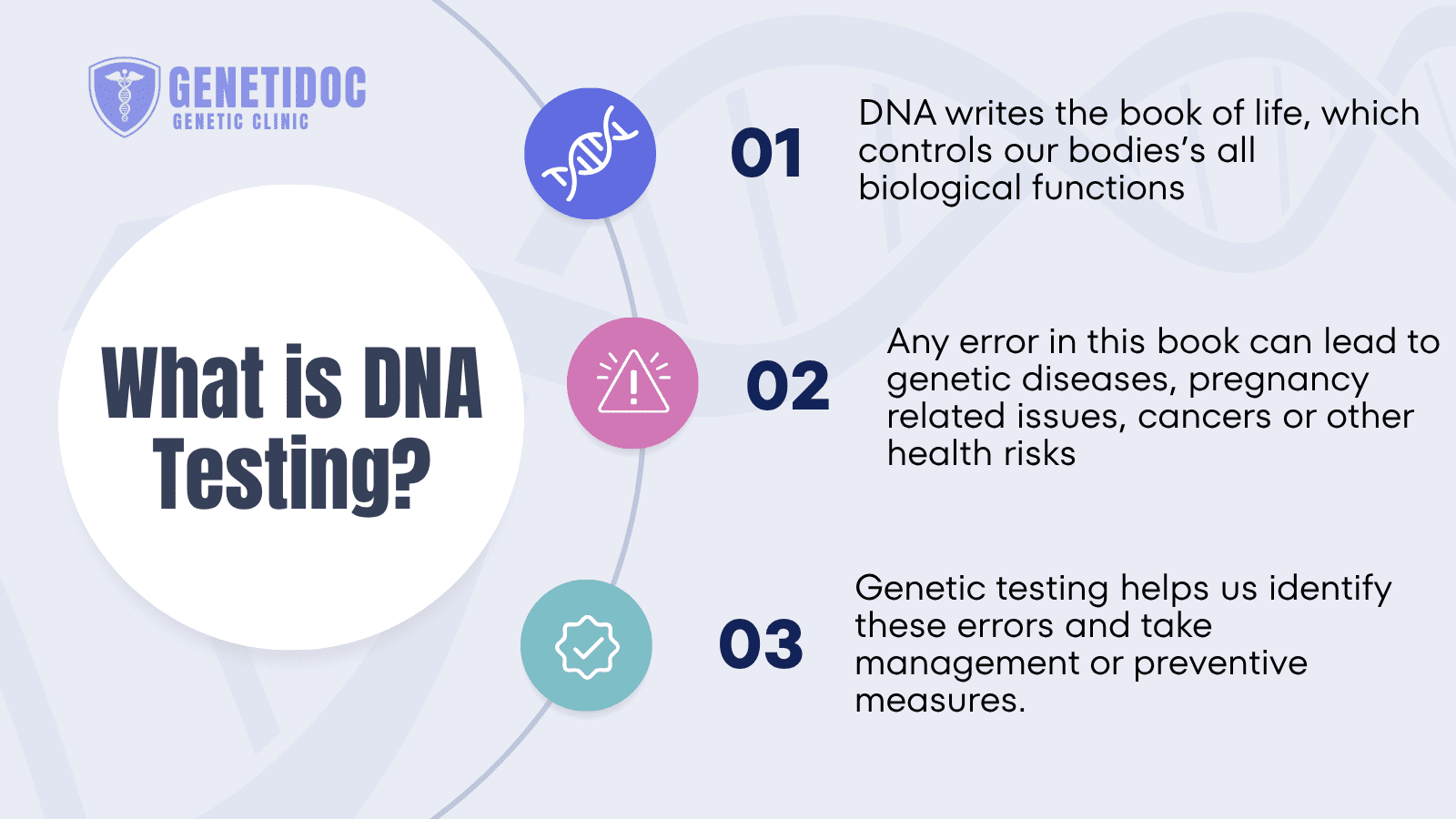
Have you ever wondered why you have your mom’s smile or your dad’s curly hair? 🤔 It’s all because of your DNA! Your DNA is like a giant instruction book inside every tiny cell of your body. It has all the recipes and instructions that make you, you.
Sometimes, there can be a tiny spelling mistake, or "typo," in that instruction book. Most of the time, these typos don't cause any problems. But sometimes, they can lead to health conditions that might run in a family or show up unexpectedly.
Genetic testing, also known as DNA testing, is like having a super-smart scientist carefully read parts of your body’s instruction book. When you test your dna, they look for any of those specific typos that might affect your health.
In India, more and more families are using genetic testing to find answers. In my clinic, I see firsthand how the right test can provide incredible clarity for families. They might use it to:
- Plan for a healthy baby. 👶
- Understand a child’s health problem.
- Check for a risk of getting cancer that runs in a family.
But getting a useful answer from a DNA test depends on how and where it’s done. You need good labs, the right machines, and expert doctors who know how to read the results.
At Genetidoc Genetic Clinic and DNA Testing Lab, a special genetics doctor is with you for every step. This makes sure your results are right, your information is kept private, and that you get simple, clear explanations you can trust when you decide to check your dna.
What Is Genetic Testing? Let's Look Closer
Genetic testing is a special test that looks at your genes and chromosomes from a small sample of your blood or saliva (spit). It’s easy and doesn’t hurt! This process of looking at your specific gene makeup is also called genotype testing.
Let’s imagine your DNA instruction book again.
- Chromosomes: Think of these as the different volumes or books in a big encyclopedia set. Humans have 23 pairs of these "books" in each cell.
- Genes: Think of these as the individual recipes inside each book. You have about 20,000 recipes! Each recipe tells your body how to do one specific job, like building your heart or fighting off a cold.
- DNA: This is the ink and paper everything is written on. It’s made of special letters that form the words in your recipes.
A DNA test can look for different kinds of typos. It might find one wrong letter in a recipe, a whole recipe that’s missing, or even an entire extra book that shouldn't be there. Finding these typos helps doctors understand your health better. In our clinic, we test over 100 patients every month for different genetic conditions.
What a Genetic Test Can (and Can’t) Tell You
Genetic testing is an amazing tool, but it’s not a magic crystal ball. 🔮 It’s important to know what it can and can’t do before you test your dna.
What Genetic Testing CAN Help With:
- Find out if a health problem is genetic. If someone has symptoms of a disease, a DNA test can check if it’s caused by a typo in their instruction book. This gives a clear answer and helps doctors know how to help.
- See if you "carry" a gene problem that could affect your child. Some people carry one copy of a typo but are perfectly healthy. This is called being a "carrier." But if two carriers have a baby, their child could get two copies of the typo and have a serious health problem. A genetic test called carrier screening can check for this.
- Guess your risk for some diseases. If cancer runs in your family, genotype testing can see if you have a typo that gives you a higher chance of getting it. This doesn't mean you will get sick, but it helps you and your doctor make a plan to stay healthy with early check-ups.
- Help doctors choose the best medicine for you. Have you ever noticed how the same medicine can work great for one person but not for another? Your genes can affect this! This special type of genetic testing helps your doctor pick the safest and most effective medicine for you right from the start.
- Check on a baby's health during pregnancy. For expecting parents, DNA testing can screen for certain health conditions in the baby. This helps families prepare and make decisions with their doctor.
What Genetic Testing CANNOT Do:
I often get people coming to my OPD thinking genetic testing is a horoscope and all things can be found in it. It is true that we can predict many diseases, but not always.
- It can’t tell you exactly when you’ll get sick. Even if a genetic test finds a risk, it can’t predict your future. Your lifestyle, your habits, and your environment (like the food you eat and the air you breathe) also play a big part in your health.
- It can’t tell your personality or how smart you are. Things like being funny, good at math, or kind are super complex. They come from a mix of many, many genes and your life experiences. No DNA test can predict these things.
- It can’t find every single genetic typo. Some tests look for a few specific typos, while others look at thousands of genes. But no test can check everything. It’s like proofreading a book for spelling mistakes—you might still miss one.
- A "normal" result doesn't mean "zero risk." A normal result from genetic testing is great news! It means the test didn't find the specific typos it was looking for. But it doesn’t rule out all possible health problems.
It's always best to talk with a genetics doctor or counselor before and after you check your dna. They help you understand what your results really mean for you and your family.
Who Should Think About Genetic Testing in India?
Not everyone needs to test their dna, but for some families, it can provide life-changing answers. Genetic testing is most helpful when the results can lead to clear actions for your health or family planning. Here are five groups of people who can benefit the most.
1. For Couples Planning a Family or Expecting a Baby
If you are thinking about having a baby or are already pregnant, DNA testing can give you valuable information to help you build a healthy family. It's like getting a peek into the family's "health instruction book" to spot any important notes ahead of time. You should consider this if:
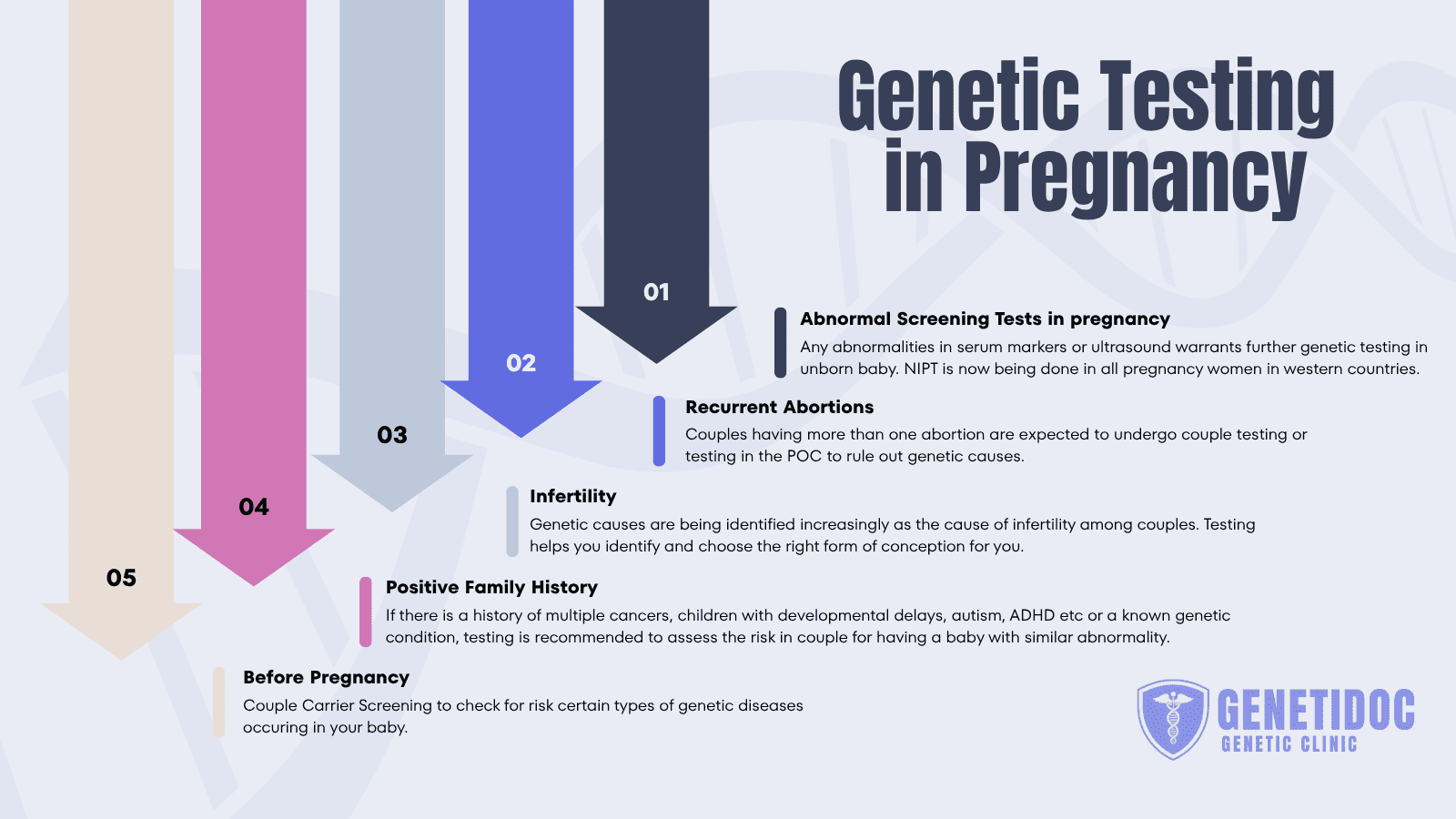
- You want to check for hidden risks (Carrier Screening): You and your partner can be perfectly healthy but still be "carriers" of a hidden gene typo. If both of you carry the same typo, there is a 1 in 4 chance your baby could be born with a serious health condition. Carrier screening is a simple genetic test done before or during pregnancy to check for this. It’s especially important in India for conditions like Thalassemia and Spinal Muscular Atrophy (SMA).
- You are married to a relative (Consanguinity): In many Indian communities, it's common for cousins to marry. Because you share some family DNA, the chance of both partners carrying the same hidden typo is higher. For these couples, carrier screening is strongly recommended.
- You are using IVF: In-vitro fertilization (IVF) is a wonderful way for many to have children. A special genetic test called PGT (Pre-implantation Genetic Testing) can be done on the tiny embryos in the lab. This helps doctors select the healthiest embryo, which lowers the risk of miscarriage and increases the chance of a successful pregnancy.
- You have had miscarriages before: I frequently come across cases where a couple has faced multiple heartbreaking losses, and finding a genetic cause through testing is the first real step toward planning a successful pregnancy.
- You want to check the baby's health during pregnancy: Tests like NIPT (a simple blood test for the mom) can screen the baby for common chromosome conditions like Down syndrome early in the pregnancy. This helps families and their doctors prepare.
2. For Parents Worried About Their Child's Health
It can be stressful and confusing when your child has health problems that doctors can't easily explain. You might go from one specialist to another searching for an answer. Genetic testing can often be the key that unlocks the mystery. Consider a DNA test for your child if they have:
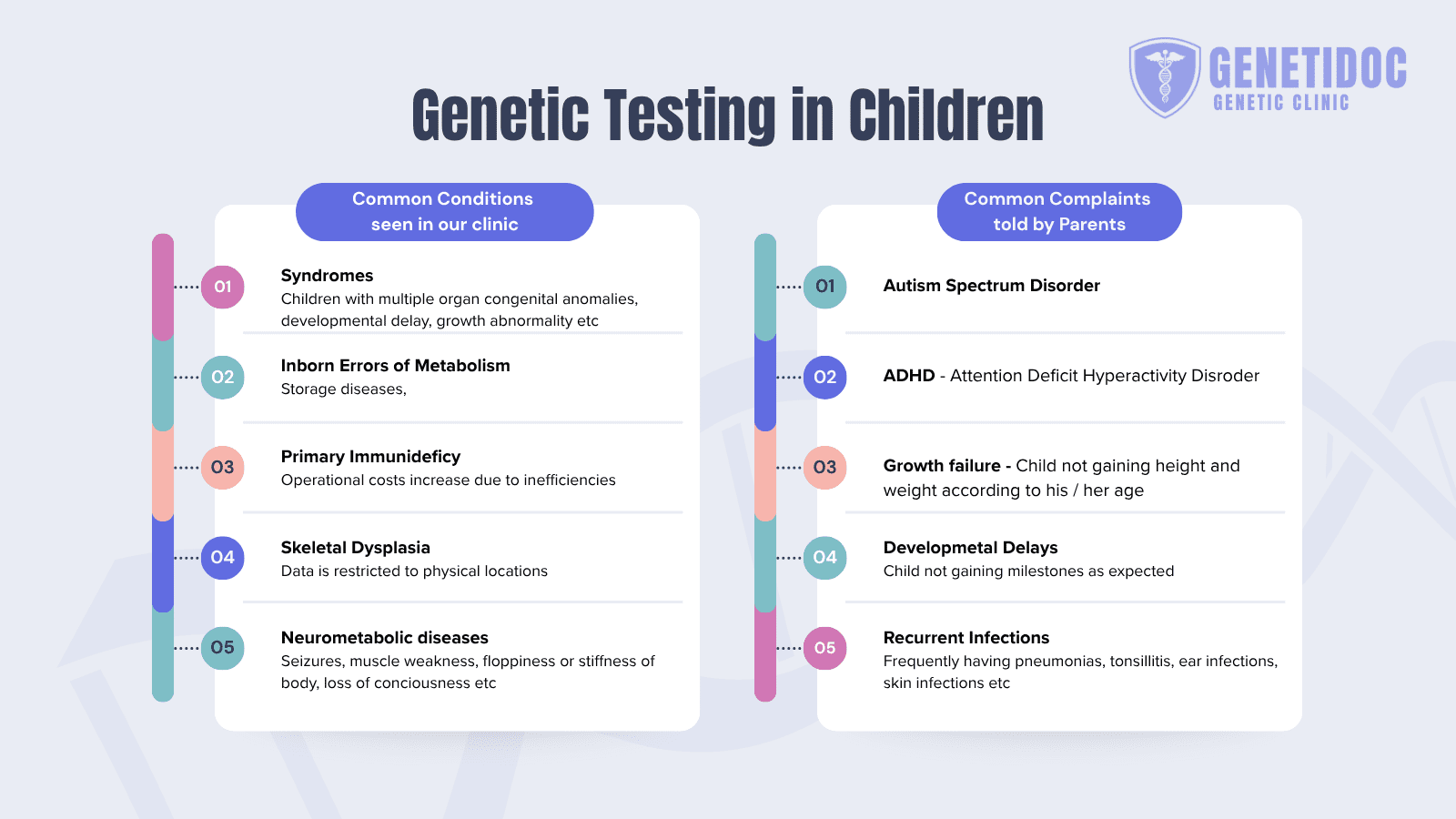
- Delays in learning: For example, if they are much later than other kids in learning to sit, walk, or talk.
- Autism with other physical differences: Such as unique facial features or being very tall or short for their age.
- Health problems from birth: Like issues with their heart, kidneys, or limbs.
- Unexplained seizures or muscle weakness: When standard tests don't show a clear cause.
A single, powerful genetic test, like Whole Exome Sequencing, can scan thousands of your child's genes at once. Finding a genetic cause can end the long search for answers and help your doctor find the right therapies and support for your child.
3. For Adults with Unusual or Family-Related Diseases
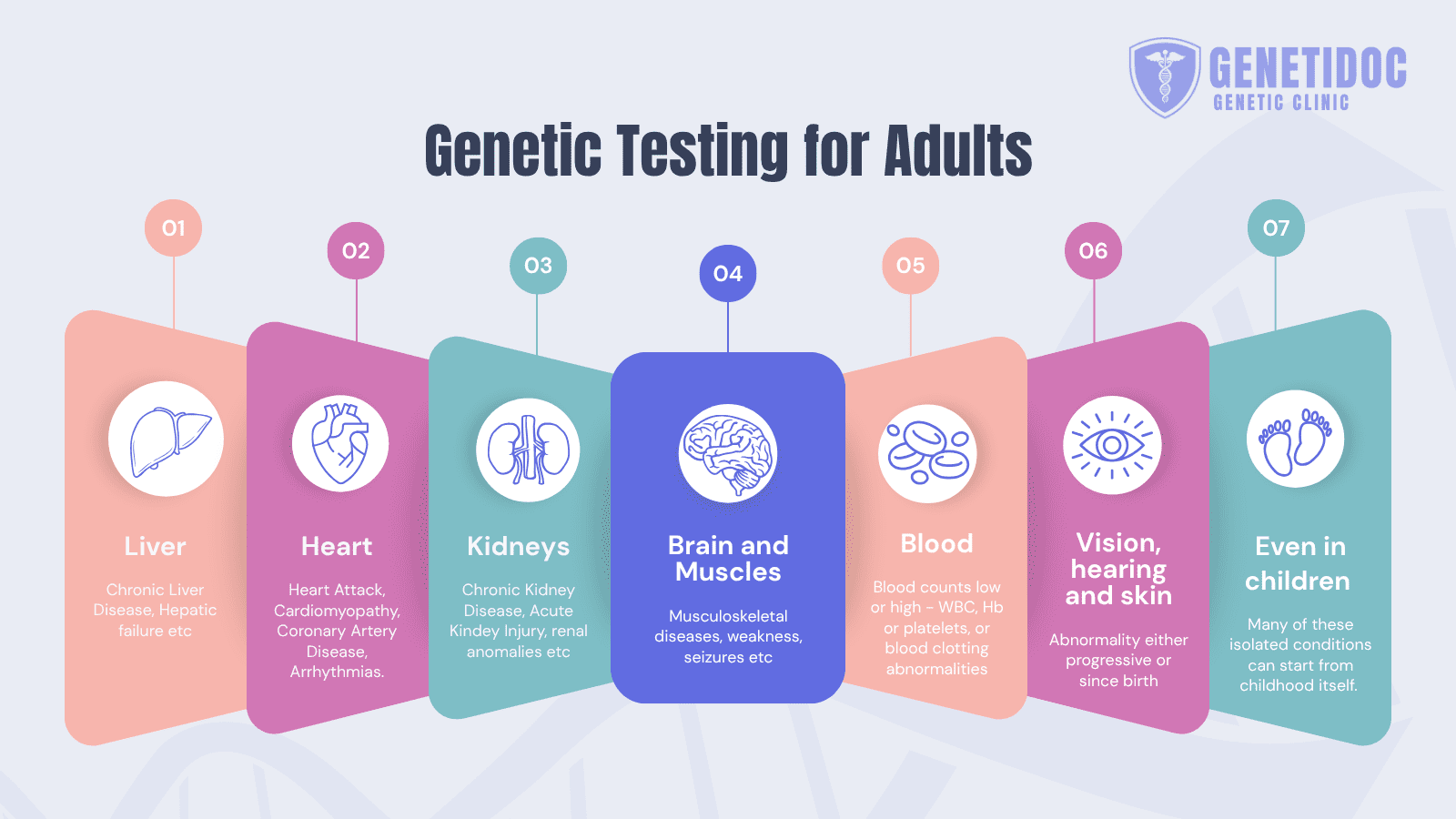
Sometimes, a health problem is a clue that something genetic might be going on. If you check your dna, you can find out if a disease is written into your family's instruction book. This is especially true if:
- A disease appears too early: Health issues that usually affect older people, like a heart attack, stroke, or serious kidney disease, shouldn't happen to someone in their 30s or 40s. If it does, a genetic testcould find the reason.
- A condition runs strongly in your family: If many relatives have the same health problem, like very high cholesterol that doesn't improve with a healthy diet, it might be due to an inherited gene typo.
- Doctors can't explain your illness: When all the basic tests come back normal but you still have unexplained symptoms, a deeper look with genotype testing might reveal the underlying cause.
Finding a genetic reason for an adult disease not only helps you get the right treatment but can also alert other family members that they should get checked, too.
4. For Families Concerned About Cancer
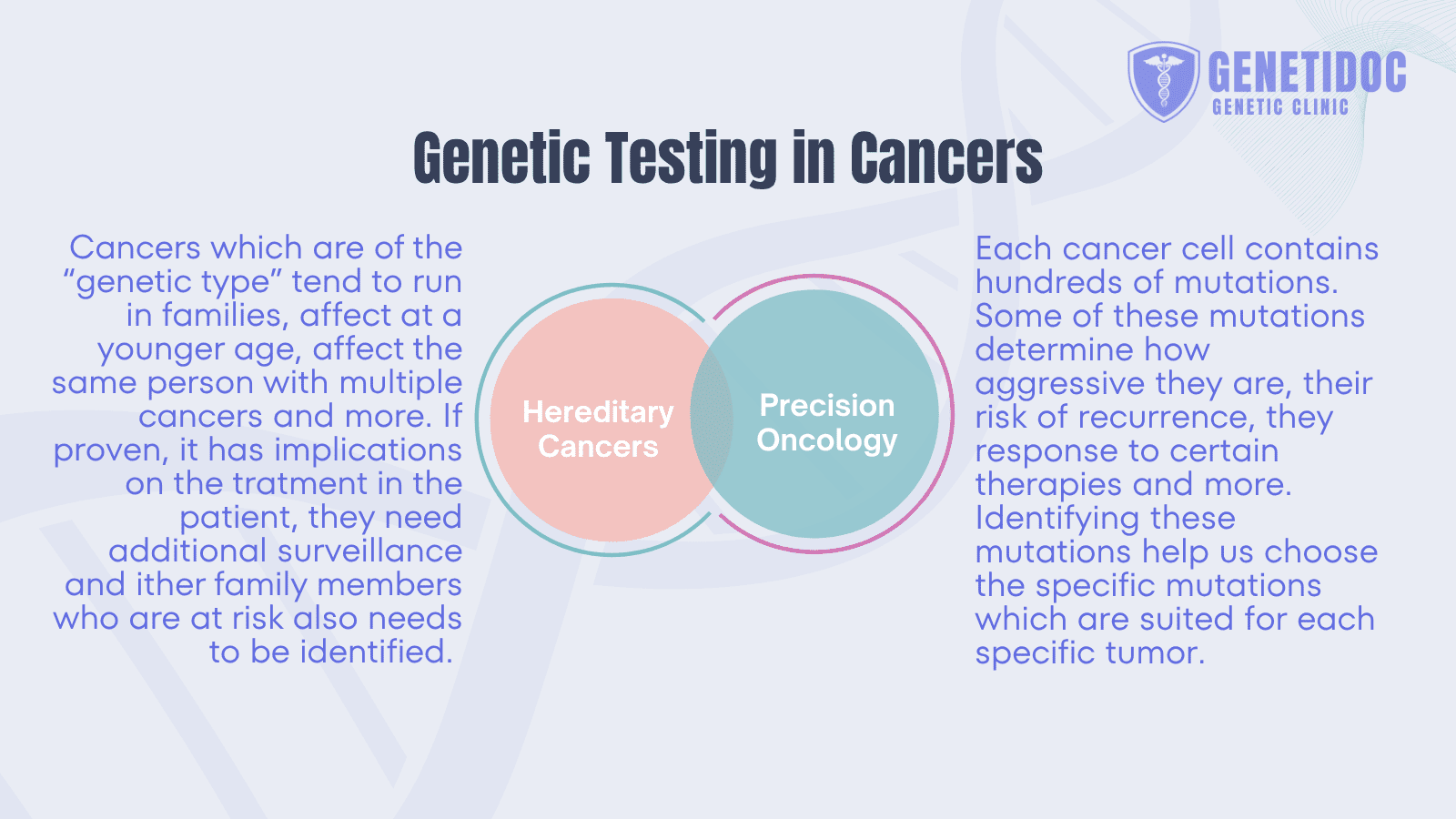
Genetic testing has changed the way we fight cancer. It can help in two very important ways: prevention and treatment.
- Finding an Inherited Risk (Hereditary Cancer): About 1 in 10 cancers are caused by a gene typo passed down in a family. If you have close relatives who got cancer (especially breast, ovarian, colon, or uterine cancer) at a young age, you can test your dna to see if you inherited that same risk. This type of genotype testing doesn't mean you will get cancer. It means you are empowered with knowledge. You can work with your doctor to get earlier, more frequent check-ups to catch any problems when they are small and easier to treat.
- Guiding Cancer Treatment (Precision Oncology): This is a different kind of genetic test that is done on the cancer tumor itself. The test looks for the specific typos that are making the cancer grow. Think of it like finding the cancer's "weak spot" or "off-switch." The results help doctors choose smart, targeted medicines that attack the cancer cells directly. This modern approach, called precision oncology, can be more effective and often has fewer side effects than older treatments.
5. For People Who Have Problems with Medicines
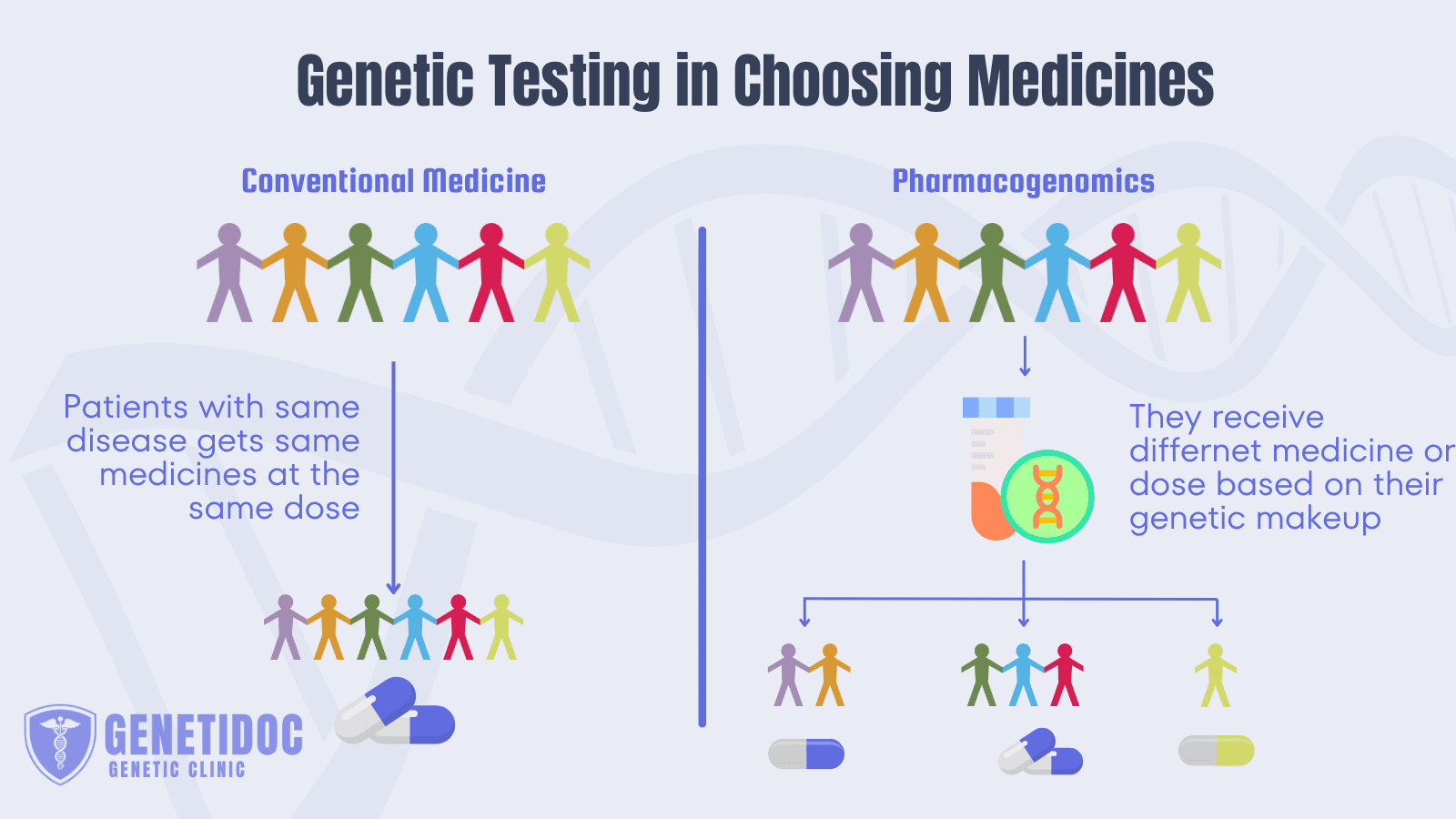
Have you ever wondered why a medicine works perfectly for your friend but does nothing for you, or even gives you bad side effects? The answer is often in your genes!
- Your DNA has "recipes" that tell your body how to break down and use medicines. If there's a typo in one of these recipes, your body might process a drug too quickly (so it doesn't work) or too slowly (so it builds up and causes side effects).
- A special DNA test called pharmacogenomics can read these recipes. It helps your doctor predict which medicines will work best for you and which ones to avoid.
- This is useful for many common medications, including blood thinners, antidepressants, pain relievers, and some chemotherapy drugs. This helps you get on the right treatment faster and more safely.
If you are not sure if it's right for you to test your dna, talking to an expert at Genetidoc Genetic Clinic and DNA Testing Lab is a great first step.
What Kinds of Genetic Tests Are Used?
There are many different types of genetic tests, each designed as a special tool to answer a specific health question. Here are the main kinds of tests and the technology they use, explained simply.
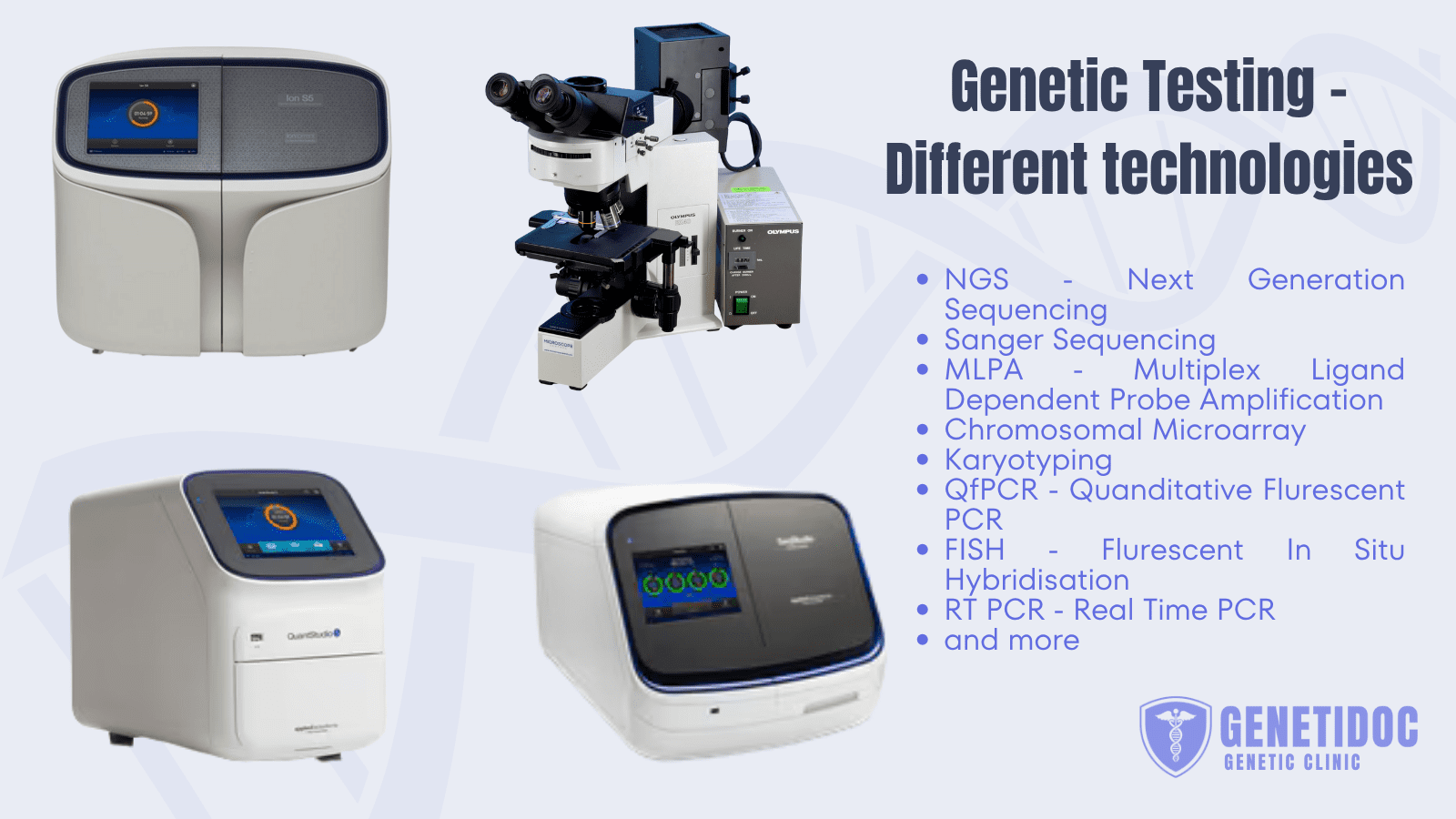
1. Tests for Family Planning & During Pregnancy
These tests help you plan for a healthy family and check on the baby's health. The lab tools used are very advanced but the goal is simple: to get clear information.
- Carrier Screening: To see if you or your partner are healthy "carriers" of a hidden gene typo, labs use a combination of powerful tools on a blood sample:
- NGS (Next-Generation Sequencing): This is the main tool. It acts like a super-fast spellchecker, reading hundreds of your gene "recipes" at once.
- MLPA: This test is like a proof-reader that specifically checks if any whole gene "recipes" are missing.
- Karyotyping: Sometimes, doctors also look at the parents' chromosomes with this test to get a "big picture" of their genetic health.
- IVF & Embryo Testing (PGT): For couples using IVF, doctors test the tiny embryos before transfer. They use NGS technology to carefully count the embryo's chromosome "books" to make sure there are no extra or missing volumes (a condition called aneuploidy). This helps them choose the healthiest embryo.
- Pregnancy Diagnosis (CVS & Amniocentesis): When a screening test shows a high risk, a tiny sample is taken from the pregnancy. The lab then uses a few methods to get a clear answer:
- QF-PCR: This is a super-fast check that can count the most common chromosome "books" (like chromosome 21 for Down syndrome) and often gives a result in just a day or two.
- Chromosomal Microarray (CMA): This is the "magnifying glass" test that looks closely for any small missing or extra "pages" in the baby's chromosome books.
- NGS: If there's a concern about a specific single-gene disease, labs may also use NGS to read that one "recipe" very carefully.
- Miscarriage Testing: When a pregnancy sadly ends, doctors can investigate the cause in a few ways:
- They can use CMA or NGS on the tissue itself (called Products of Conception or POC) to see if a problem with the baby's chromosomes was the cause.
- Alternatively, they can do Couple Karyotyping (checking both parents' chromosome pictures) and Carrier Screening by NGS to see if the parents carry a shared risk.
2. Tests for Children with Health Mysteries
When a child has unexplained health issues, doctors use these powerful detective-like tests to find the genetic cause.
- Chromosomal Microarray (CMA): This test is great at spotting if small sections or "pages" of a child's chromosome "books" are missing or have been duplicated, which can explain developmental delays.
- Whole Exome Sequencing (WES): This is one of the most powerful forms of genotype testing. It reads all 20,000 of your child's gene "recipes" at once to find the single typo responsible for a rare disease.
3. Tests for Cancer Risk & Treatment
DNA testing for cancer uses different tools to either find an inherited risk or to guide the treatment of an existing tumor.
- Hereditary Cancer Testing: To check if you were born with a higher risk for cancer, doctors use a blood test with NGS panels. These panels read a specific list of genes known to be linked to cancer (like BRCA1 and BRCA2). They often add a test called MLPA to double-check that no whole gene "recipes" are missing.
- Tumor Testing (Precision Oncology): To find a cancer's "weak spot," scientists use a whole toolbox of tests on the tumor itself:
- NGS: Reads the tumor's genes to find typos that can be targeted by "smart drugs."
- FISH: Uses glowing highlighters to see if the tumor cells have too many copies of a certain cancer-causing gene.
- Karyotyping: Takes a picture of the tumor's jumbled-up chromosomes to help diagnose the cancer.
4. Tests for Choosing the Right Medicine
This type of DNA test, called Pharmacogenomics, helps doctors figure out how your body will handle certain medicines. Depending on what they need to know, they can use:
- NGS-based Panels: These look at a whole list of important medicine-related genes all at once, giving a broad overview of how you might react to many different drugs.
- Specific RT-PCR Tests: If a doctor is only curious about one specific medicine, they can use this faster, more focused test. It looks at just the one or two gene "recipes" related to that single drug.
When You Might Want to Think Twice Before Getting Tested
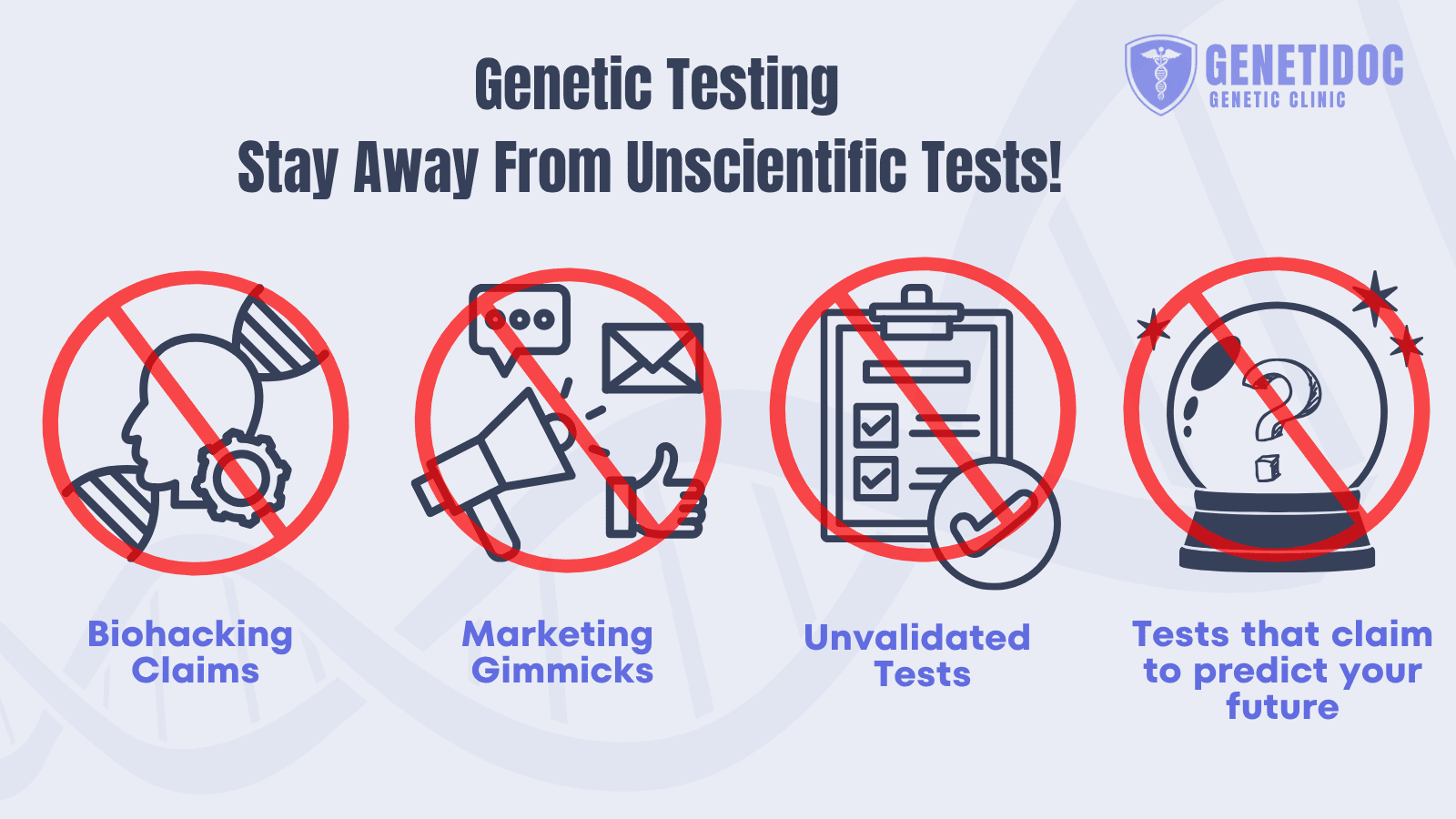
While genetic testing is a powerful tool, not all tests are created equal. It's important to be a smart consumer and not fall for marketing tricks from companies that sell tests for things that aren't scientifically proven, especially in India. I often have patients coming to me with one of these reports, and I have to unfortunately counsel them that the test they have done, spending so much money, is not scientifically valid and doesn't mean much clinically, and then prescribe them the right test again.
Tests That Predict Common Diseases Without a Family History
You might see ads for a DNA test that claims it can predict your risk for common conditions like a heart attack, Alzheimer's, or diabetes, even if no one in your family has it. Here’s the problem with these tests in India right now:
- They Need the Right Data: For these predictions to be accurate, the lab needs to compare your DNA to the DNA of thousands of other people from India. Think of it like a puzzle – you need the right reference picture to see where your piece fits. Currently, we don't have large enough datasets for the Indian population.
- Wrong Data Means Wrong Guesses: Many labs use data from people in Europe or America. Using this data for an Indian person is like using a map of London to find your way around Mumbai – it’s just not accurate. The genotype testing results can be misleading.
When the Results Don't Change Anything (or Just Cause Worry)
Many of these direct-to-consumer tests give you results that are not very helpful and can create unnecessary panic.
This reminds me of one of the cases I saw recently in my clinic. A patient came to me panicked about a "1.44x increased risk" of pancreatic cancer from an online test. That sounds scary! But when we looked at the real numbers, the baseline risk in the general population is a tiny 6 in 1,000. His new risk became just 9 in 1,000. While it's technically higher, it's still an extremely low risk. The company’s recommendation? A generic “healthy diet and exercise” plan—which, coincidentally, was available as a paid subscription from them! This trend I'm seeing of companies exploiting fear is very concerning. True medical genetic testing gives you clear, actionable steps to take with your doctor.
The Difference Between Medical Tests and Guesswork
There is a huge scientific difference between a medical-grade genetic test ordered by a doctor and a test you buy online.
- Medical Tests Look for Known Dangers: When a doctor orders a genetic test for a specific condition (like a hereditary cancer), they are looking for well-known, dangerous typos (called pathogenic variants) that are scientifically proven to cause the disease. The result is a clear "yes" or "no."
- Predictive Tests Make Guesses: Many online tests look at common, small DNA variations (called SNPs). They use computers to make guesses about your risk based on these variations. It’s not a definite answer; it's more like a health horoscope.
The Risk of Confusing Results (VUS)
If you test your dna without a strong medical reason (like a close family member with a genetic disease), there's a higher chance of getting a confusing result called a VUS (Variant of Uncertain Significance).
A VUS is when the lab finds a typo in your gene but science doesn't yet know if it's harmful or harmless. It’s like finding a spelling mistake in the instruction book, but you can't tell if it changes the meaning of the recipe or not. The trend I'm seeing in my clinic is that VUS results are more common when testing is done without a clear medical reason, which is why a pre-test consultation is so important to set the right expectations.
Problems with Genetic Testing: What to Know
Can All Genetic Diseases Be Found?
No, even with the most advanced DNA testing, it's possible to miss certain genetic diseases. This can happen for a few key reasons:
- Undiscovered Conditions: Medical science is always evolving. There may be genetic diseases caused by genes that researchers have not yet discovered or linked to a specific health problem.
- Difficult-to-Read DNA Regions: Your DNA is like a very long, complex book. Some parts of it are technically very difficult for current sequencing machines to read accurately. A mutation hidden in one of these "hard-to-sequence" regions could be missed.
- Rare or Unchecked Areas: Most genetic tests focus on the regions of DNA where problems are most commonly found. A mutation could be located in a very rare area of your DNA that isn't typically included in a standard test panel.
The chance of this happening is very low, but it's important to know that a "normal" result does not eliminate every possible genetic risk.
The Possibility of Unclear Results (VUS)
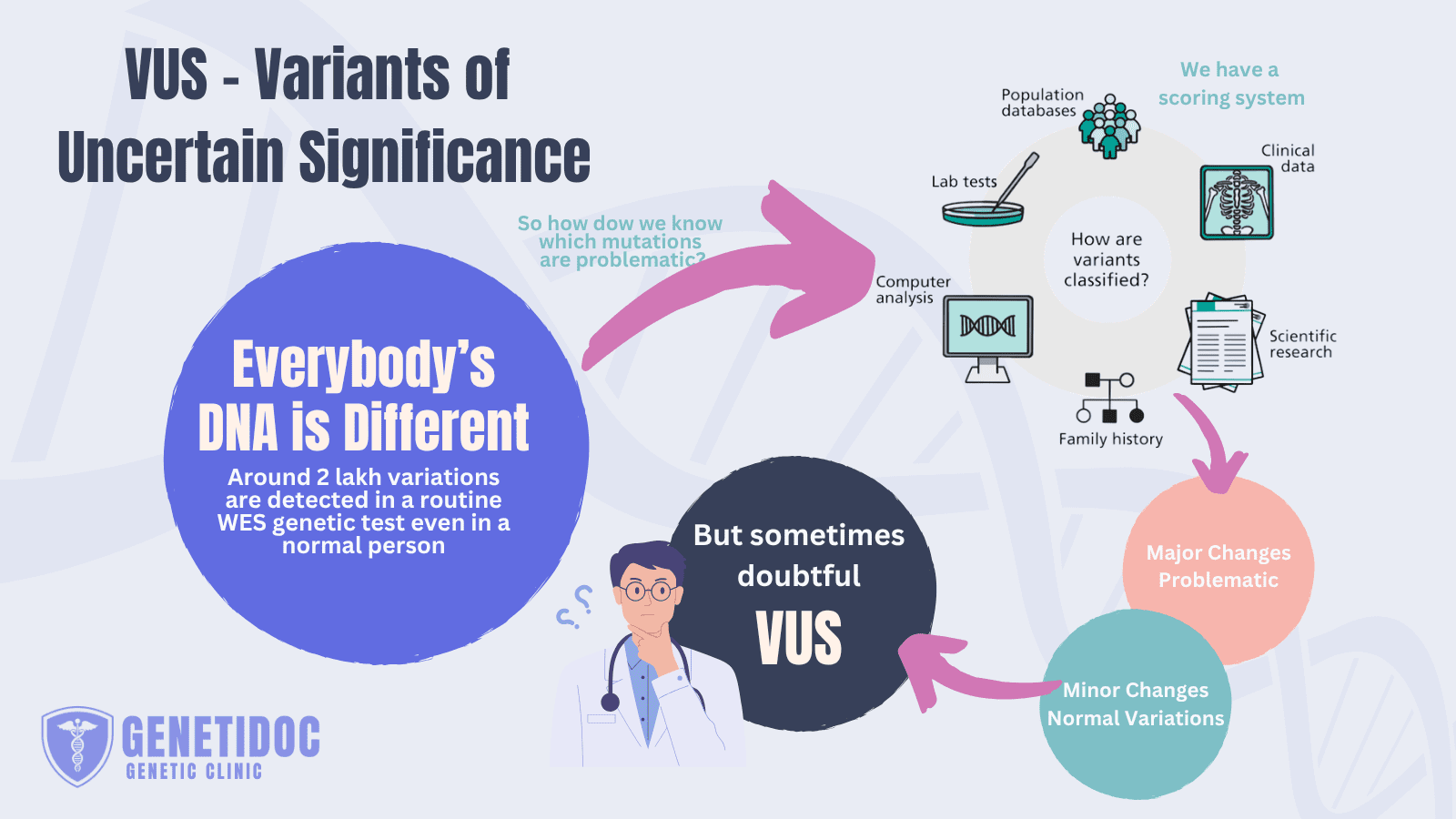
In a small percentage of cases, genetic testing can produce an ambiguous or unclear result. This is known as a VUS, which stands for Variant of Uncertain Significance.
- What is a VUS? A VUS means the lab found a change, or "variant," in your DNA, but science doesn't yet know if this specific change is harmless or if it can cause a health problem. It's like finding a unique spelling for a word in an instruction manual—it might not change the meaning, or it might be a critical error, but we don't have enough information to be sure.
- What happens next? A VUS result can cause uncertainty. To get more clarity, your genetics doctor might recommend testing other family members, like parents, siblings, or children. Seeing if the VUS is also present in healthy relatives or in those with the condition can provide clues about its significance.
How Variants Are Reported
To avoid causing unnecessary confusion and anxiety, standard medical practice for genetic testing is to be selective about what is included in the final report.
Labs usually only report genetic variants that are known to be "Pathogenic" (proven to cause disease) or "Likely Pathogenic" (very likely to cause disease). Variants that are doubtful—where it's unclear if they are just normal human variations or actual problems—are often intentionally not included in screening reports. This ensures that the information you and your doctor receive is as clear and actionable as possible.
Frequently Asked Questions (FAQ) ?
Is getting a genetic test painful?
Not at all! For most tests, all that's needed is a simple, painless sample. This is usually a small blood draw from your arm (like a regular health check-up) or a saliva (spit) sample collected by swabbing the inside of your cheek.
How long does it take to get the results?
The turnaround time depends on the complexity of the test. Simple tests might take 1-2 weeks, while more comprehensive tests like Whole Exome Sequencing can take 3-4 weeks. Your doctor will give you an estimated timeframe when you decide to test your dna.
Will my genetic information be kept private and safe?
Absolutely. At Genetidoc Genetic Clinic and DNA Testing Lab, we follow strict privacy and data protection laws. Your genetic information is treated as confidential medical data. It is stored securely and is never shared without your explicit consent, ensuring your privacy is protected.
What’s the difference between a "screening" test and a "diagnostic" test?
Think of it like this:
- A Screening Test (like NIPT during pregnancy) is a first-step check that tells you if you have a higher chance or lower chance of a condition. It doesn't give a final answer.
- A Diagnostic Test (like an amniocentesis or WES) is a follow-up test that provides a definite "yes" or "no" answer. It is used to confirm a diagnosis.
I often get this question from patients : "I read online about Whole Genome Sequencing (WGS). Is that the best test for me?
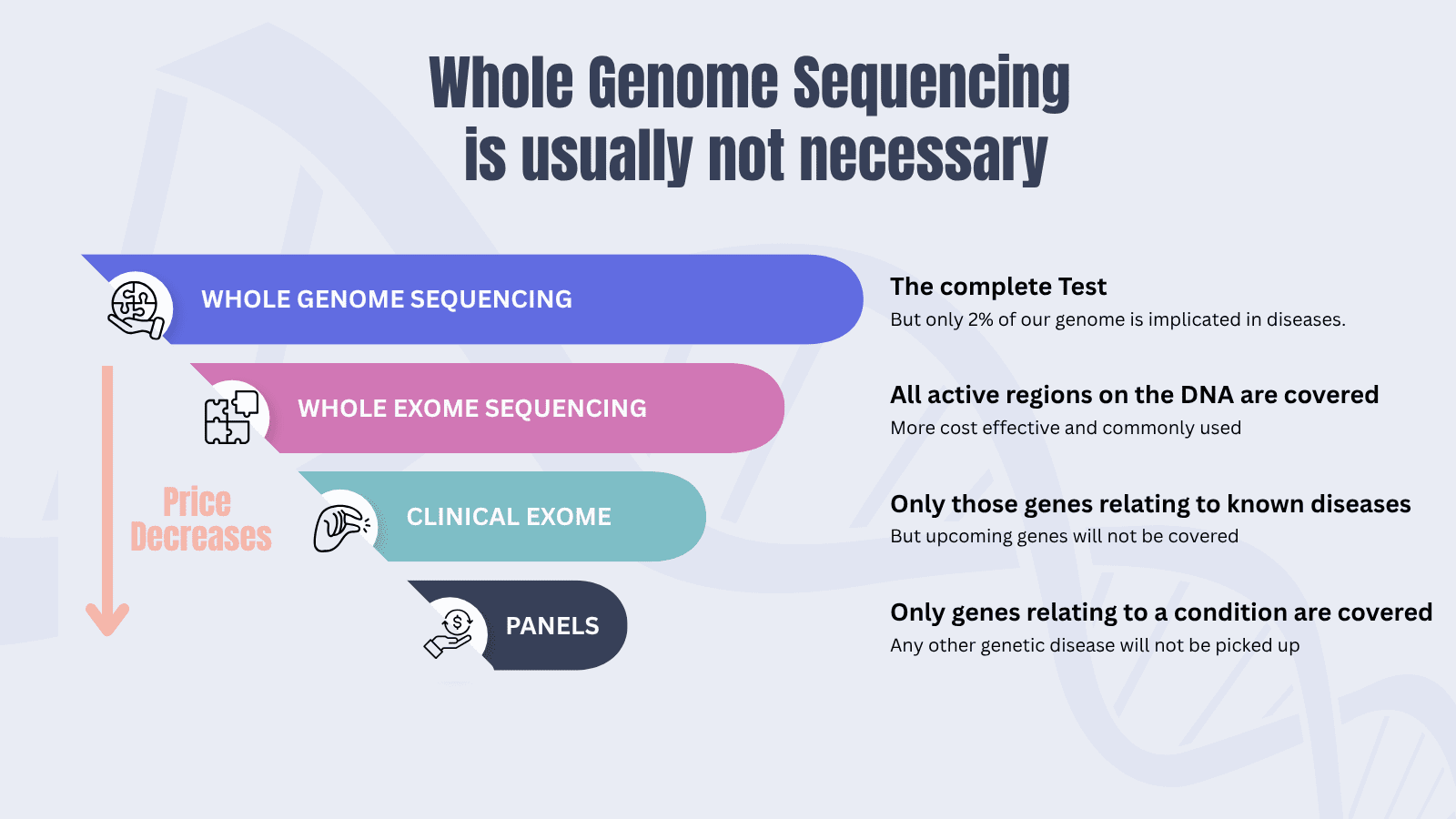
That's a very common question is hear in my clinic. Many people read about WGS online from sources like ChatGPT or international websites and ask if it's the right choice. Here’s our honest, clinical perspective as of late 2025:
- What it is: Whole Genome Sequencing (WGS) is the most complete genetic test available. While a Whole Exome Sequencing (WES) test reads all your 20,000 gene "recipes," WGS reads everything—the recipes and all the blank pages and notes in between.
- Why it's not the first choice: At Genetidoc Genetic Clinic and DNA Testing Lab, while we do offer WGS and have used it to find answers in complex cases, it's not our usual first-line test for two main reasons:
- High Cost: WGS is much more expensive, often costing around ₹75,000 or more.
- Low Added Benefit: For most conditions, the answers are found in the gene "recipes" that WES already covers. The chance of finding a critical typo on the "pages in between" is very low. So, the extra information you get for the extra cost is often minimal.
Our Recommendation: A more focused test like Whole Exome Sequencing (WES) is almost always the best and most cost-effective first step. We reserve WGS for very specific and difficult cases where other tests haven't provided an answer. Your genetics doctor is the best person to help you decide which test gives you the best chance of finding a useful answer for your health.
What Does Genetic Testing Cost in India?
The price to test your dna depends on how complex the test is and the quality of the tests being performed. Here is a simple idea of the costs in 2025:
| Test Type (High Quality) | A General Idea of the Cost (₹) | How Long It Takes |
| NIPT (for pregnancy) | ₹15,000 - ₹20,000 | 1–2 weeks |
| Prenatal Test (Amnio/CVS) | ₹40,000 – ₹60,000 | 2–3 weeks |
| Hereditary Cancer Test | ₹35,000 – ₹50,000 | 3–4 weeks |
| Tumor Test for Cancer | ₹45,000 – ₹400,000 | 3-4 weeks |
| Whole Exome Sequencing | ₹20,000 – ₹30,000 | 2–3 weeks |
| Carrier Screening Test | ₹50,000 – ₹75,000 | 3-4 weeks |
| Medicine-Response Test | ₹20,000 – ₹25,000 | 2-3 weeks |
| Newborn Screening Test | ₹20,000 – ₹25,000 | 2-3 weeks |
| Whole Genome Sequencing | ₹60,000 - ₹100,000 | 4-5 weeks |
Why do prices change?
- Type of Machine: Newer, more powerful machines cost more to run.
- How Much is Read: Looking at one gene recipe is cheaper than reading all 20,000.
- Expert Time: It takes a lot of time for a genetics doctor to study your results and write a helpful report.
- Lab Quality: Labs with special quality awards (like NABL) have higher standards and costs, but their results are more trustworthy.
Remember: A cheaper test isn't always better. A low-quality DNA test might miss something important. It's always best to choose a good lab with a genetics doctor to guide you.
Does Insurance Pay for Genetic Testing in India?
Getting insurance to cover genetic testing is getting easier, but it can still be tricky.
- Good News: 🥳 Indian courts and rule-makers have said that insurance companies should not refuse to cover genetic problems.
- The Reality: It's still easier to get coverage for a genetic test if you are already in the hospital for something, like cancer surgery. Tests done as an out-patient are often paid for by the family.
- A Note on Quality: Very often I see in my clinic that a test has been done at a lower-quality, cheap lab and we do not get relevant results. Sometimes we are able to save patients some money by procuring the raw data from that lab and doing the analysis with our premium software, databases, and experts. But sometimes, patients lose the whole amount, and we have to start again from repeating the complete test from scratch since it was done under low-quality conditions.
Tips for Insurance:
- Ask your doctor to write a strong letter explaining why the DNA testing is needed for your health.
- Call your insurance company before the test to ask if they can approve it.
- Keep all your bills and reports safe to show the insurance company.
- However the final decision on covering the test will depend on the particulars of your insurance plan.
Genetidoc Genetic Clinic and DNA Testing Lab can help by giving you the right medical papers to help with your insurance claim, if it is medically indicated.
How to Choose the Right Lab and Doctor
This is the most important choice you will make. The right expert makes all the difference when you decide to check your dna. Look for these things:
- A Quality Award: Only use labs that have a "sticker" of approval, like NABL. This means they follow very strict rules to get accurate results.
- Good Technology: The lab should use up-to-date machines.
- A Genetics Doctor: A lab report is full of confusing science words. You need a clinical geneticist—a special doctor trained in genetics—to translate it into simple advice. They connect the dots between your report and your health.
- Helpful Counseling: A good clinic will talk with you before the test to help you choose the right one, and after the test to explain everything clearly.
- Privacy: Your genetic information is very personal. The clinic must keep it safe and private.
- Avoid Needing to Retest: I often come across cases where a family has spent money on a low-quality test from a non-accredited lab, and the results are unclear or unreliable. In these situations, we unfortunately have to repeat the entire DNA test to get an accurate answer. Choosing a high-quality, doctor-guided service from the start saves not only money but also precious time and emotional stress.
What Is the Testing Process Like?
Getting a genetic test is a simple journey with a few steps.
- Talk with the Doctor (Pre-Test Counseling): First, you’ll talk to the genetics doctor. You’ll discuss your family health history and why you’re thinking about a test. The doctor will explain your options.
- Give a Sample: This is the easy part! It's usually just a small blood draw from your arm or a simple cheek swab to collect saliva. Genetidoc Genetic Clinic and DNA Testing Lab has collection partners across all major cities in India.
- The Lab Does Its Work: Your sample goes to a high-quality lab. There, scientists use special machines to read the DNA from your sample.
- The Doctor Studies the Report: Unlike other labs, where technicians do the reporting, here the doctor carefully reviews the lab findings and figures out what they mean for you.
- Talk with the Doctor Again (Post-Test Counseling): You’ll have another meeting with the doctor. They will explain your results in plain language, answer your questions, and discuss what to do next.
The whole process usually takes 2 to 4 weeks. Genetidoc Genetic Clinic and DNA Testing Lab will guide you from the very start to the very end.
In a Nutshell
Genetic testing is changing how we look at health in India. It can help families have healthy babies, fight cancer smarter, and find answers to difficult health mysteries.
But the real magic of a DNA test is not just in the test itself. It’s in getting a clear, expert explanation of what it means for you.
By mixing the best technology with caring advice from a doctor, Genetidoc Genetic Clinic and DNA Testing Lab helps families make smart, confident choices about their health. No matter what question you have, one accurate genetic test—done the right way—can make all the difference.
📞 Call us at +91-808-606-7838 or 💬 Chat on WhatsApp to talk to our team and find out how we can help you test your dna.
References
- National Accreditation Board for Testing and Calibration Laboratories (NABL) – Quality Standards for Genetic Testing
- Indian Council of Medical Research (ICMR) – National Ethical Guidelines for Biomedical and Health Research
- NCCN Clinical Practice Guidelines in Oncology – Genetic/Familial High-Risk Assessment
- Society for Indian Academy of Medical Genetics (SIAMG)
- Delhi High Court Judgement on Genetic Disorder Coverage (2018)
- Insurance Regulatory and Development Authority of India (IRDAI) – Health Policy Circulars (2019)
- Ministry of Health and Family Welfare – PCPNDT Act Guidelines
- American College of Medical Genetics (ACMG) – Standards and Recommendations
- World Health Organization – Newborn Screening