
Online and in-clinic visits for genetic consultations, counselling and testing
Department of Cancer Genetics
Expert genetic guidance for couples navigating hereditary cancers, targeted treatments and genetic risk of cancers concerns — led by Dr. Roshan Daniel, Clinical Geneticist.
Genetic testing can tell you if cancer runs in your family, your risk of getting it, catch it early, and guide treatment down to the molecule

CANCER RISK ASSESSMENT
Hereditary cancer risk
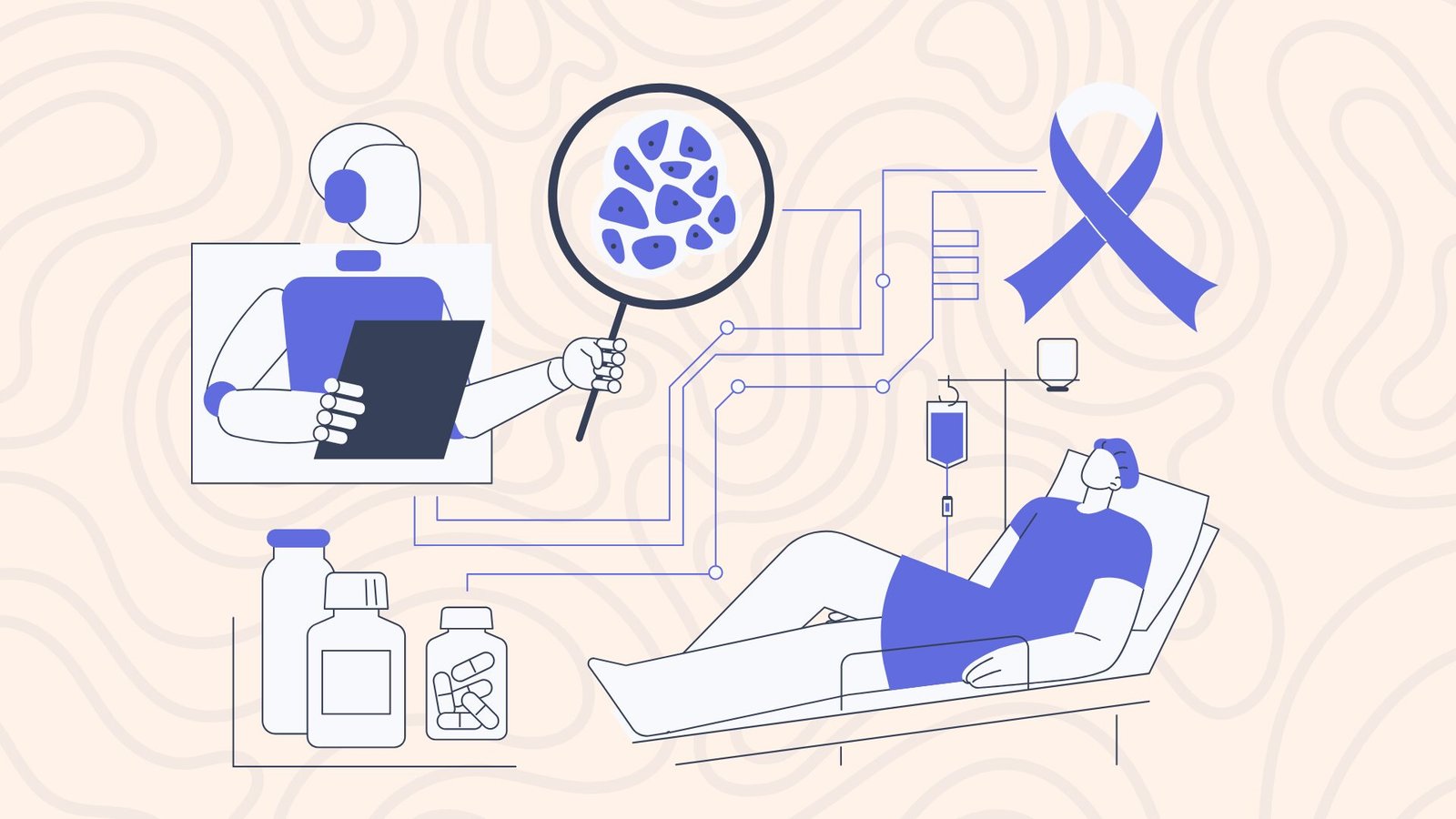
TARGETED THERAPY AND PRECISION ONCOLOGY
Cancer treatment tailored to your tumor's DNA
EARLY DETECTION OF CANCERS
Multi-Cancer Early Detection (MCED) test like Grail Galleri test

CANCER PHARMACOGENOMICS
Choose the right cancer drugs and doses based on your genetics
1.What is Cancer Genetics?
Cancer genetics refers to the study of how genetic factors affect the occurrence, treatment response, and risks of cancer in a particular individual. Cancer genetics also assist in the early diagnosis of cancers that threaten one’s health.
2. Are all cancers hereditary?
No. A majority of cancers from 85% to 90% develop spontaneously owing to aging or environmental causes. Only 5 to 10% of cancers are associated with a genetic cause.
3. What is the difference between hereditary and familial cancer?
Hereditary cancer results from a particular genetic mutation that runs within families or occurs spontaneously in an individual. On the other hand, familial cancer is when cancer occurs in families without a particular genetic cause.
4. What does the term "genetic mutation" mean in relation to cancer?
It is defined as a modification of the DNA sequence of a gene that could predispose an individual to cancer, either genetically inherited or acquired.
5. How do germ line mutations differ from somatic mutations?
Germline mutations can be found in all cells of the body and can even be inherited by offspring, whereas somatic mutations are limited to tumor cells and cannot be passed on to offspring.
6. Which cancers are hereditary?
There are many cancers that may be hereditary, such as breast cancer, ovarian cancer, colorectal cancer, endometrial cancer, pancreatic cancer, and prostate cancer, to name but a few.
7. What are some of the most prevalent hereditary cancers?
These include hereditary breast and ovarian cancer syndrome (BRCA1/ BRCA2), Lynch syndrome, Li-Fraumeni syndrome, and familial adenomatous polyposis.
8. Who needs to get genetically tested for cancer?
People who have early onset cancer, cancer that runs in their families, cancer associated to known cancer syndromes or rarer forms of cancer can opt for genetic testing.
10. Is testing indicated even if there is no family history of cancer?
On occasion. Some hereditary mutations may occur in the absence of previous family history due to smaller family size, lack of communication, or de novo mutations.
11. Do men have something to benefit from hereditary cancer testing?
Yes. Men are carriers of genes like BRCA1 and BRCA2 and they are also susceptible to prostate, breast, and pancreatic cancers.
12. Is genetic testing suggested for children?
Genetic testing for adult-onset cancer syndromes is postponed till adulthood except when the child needs screening for the cancer syndromes with earlier onsets.
13. What is genetic counseling?
It is the process by which a professional counsels an individual regarding his/her family and personal history, tests available, and interprets the implications of the results.
14. Why is genetic counseling advised prior to testing?
It makes sure that the proper testing is done, and the individual knows what to expect from the results.
15. Is genetic counseling needed post-test too?
Yes, since counseling helps explain the results and plan further course of action for the individual and relatives who are at risk too.
16. Can genetic counseling be of any use even if the person does not want testing?
Yes, since genetic counseling can give risk assessment based only on the family history and irrespective of testing.
17. Does genetic counseling include psychological assistance?
Counseling on genetics helps patients to cope with the psychological aspects related to risk information and refers them to additional psychological assistance if necessary.
18. Who performs genetic counseling at Genetidoc?
Consultations are provided by qualified clinical geneticists and genetic counselors with experience in oncogenetics.
19. What kind of sample is required for hereditary cancer genetic testing?
A sample of blood or saliva is normally enough, since this will contain the germline DNA found in all body cells.
20. How long do cancer genetic test results take to process?
The processing time generally takes anywhere from 2 to 4 weeks.
21. Multigene Panel Testing – What Is It?
It is a test that screens several genes associated with cancer at once, as opposed to testing one at a time.
22. Tumor Genomic Profiling – What Is It?
It is testing for mutations in tumor tissue to identify a potential therapy, not germline hereditary testing.
23. Is genetic testing for tumors equivalent to genetic testing for heredity?
No. Genetic testing for tumors only tests the mutations in the tumors, whereas genetic testing for heredity tests the inherited mutations in the whole body.
24. Can genetic testing be conducted during cancer therapy?
Yes. Genetic testing can be conducted at the time of diagnosis, during therapy, or after therapy.
25. What is the meaning of a positive genetic test result?
It implies that a gene mutation with an elevated risk of developing cancer has been discovered.
26. What is the meaning of a negative genetic test result?
It means no gene mutations have been found in the examined genes.
27. What is a variant of uncertain significance (VUS)?
This is a genetic change whose effect on cancer risk is not yet clearly established. It is not classified as harmful or harmless and may be reclassified as more data becomes available in the future.
28. Can genetic test results ever change?
They can, especially in cases where VUS is involved because they will later be categorized as either pathogenic or benign.
29. If the results are positive, does this mean I am going to get cancer?
Not necessarily. Being positive just means that there is an increased chance of developing cancer but not that you will have cancer.
30. A negative result does not imply the inaccuracy of the family history?
On the contrary, there are several explanations for a negative result: the causative mutation is unknown or cancer was of a sporadic nature.
31. Should I ask my family members to test for a mutation?
Absolutely. Usually, first-degree relatives are recommended to undergo cascade testing, which implies testing for the same mutation.
32. Is there any way I don’t have to tell my family about the results?
Yes, you can make a personal choice, but genetic counseling will guide the patient on how to go about this.
33. How is hereditary cancer risk passed down?
The majority of hereditary cancers show a mode of inheritance known as autosomal dominant inheritance, wherein the chances of the offspring receiving the genetic defect is 50%.
34. What occurs once a hereditary cancer genetic alteration is found?
The patient is given a risk management plan according to their specific situation.
35. Just because of a positive result does that necessarily mean that a surgical procedure is needed?
No, definitely not, because there are many ways of dealing with such a problem, including but not limited to, risk-reducing surgery.
36. Is it possible to change your life to lower your risk for a hereditary form of cancer?
Genetic risks cannot be prevented, however, a healthy lifestyle may help lower the risks.
37. What is the schedule for screening post positive results?
This will depend on the mutation and cancer, and is listed in the customized care plan.
38. Is cancer genetic testing available under insurance in India?
Coverage depends on the insurer and the individual plan. Individual patients should contact their insurer directly, and Genetidoc can help prepare the necessary documents.
39. What is the cost of hereditary cancer genetic testing?
Cost depends on the kind of test that is being done – single gene testing, panel testing, or tumor profiling. For prices and packages, contact Genetidoc at WhatsApp.