

Hearing the word “biopsy” is frightening enough. Then your oncologist mentions more tests — IHC, NGS, genetic panels — and suddenly it feels like you need a medical degree just to understand your own diagnosis.
Here’s the reassuring part: every one of these tests exists for one reason. To help your doctor pick the treatment most likely to work for your cancer, not a generic version of it.
This guide walks you through exactly what happens to your biopsy sample after it’s collected, what each test tells your doctor, when genetic testing gets added to the picture, and what your results actually mean for your treatment and your family.
What Is a Biopsy, and Why Isn’t It Just One Test?
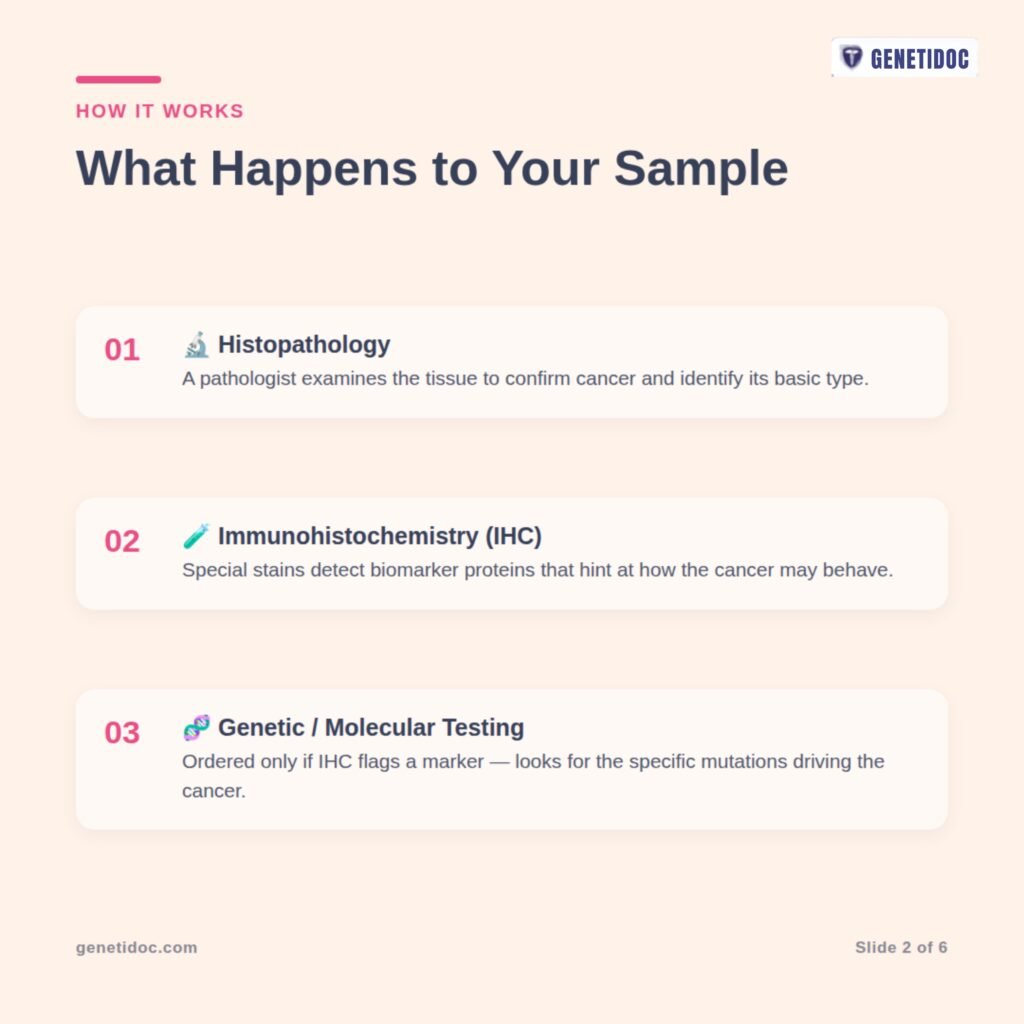
A biopsy is the removal of a small sample of tissue so it can be examined for cancer. But many patients are surprised to learn that “the biopsy” is actually the start of a multi-step process, not a single result.
Here’s the typical sequence once tissue is collected:
- Standard biopsy/histopathology: A pathologist examines the tissue under a microscope to confirm whether cancer is present and identify its basic type.
- Immunohistochemistry (IHC): If needed, special stains are used to detect specific proteins on the cancer cells — these proteins (“biomarkers”) give early clues about how the cancer might behave and respond to treatment.
- Genetic/molecular testing: If the IHC results flag a marker that could be relevant, or if other criteria are met, the sample (or a blood sample) goes on to genetic or genomic testing to look for the specific mutations driving that cancer.
| Team Genetidoc’s clinical experience: “Most patients think ‘the biopsy’ and ‘genetic testing’ are the same single test. In reality, a standard biopsy is checked first, then IHC, and only if markers are flagged does genetic testing come in. Understanding this sequence helps patients make sense of why results take time — and why more than one report may follow the original diagnosis.” |
The Two Kinds of Genetic Testing People Confuse
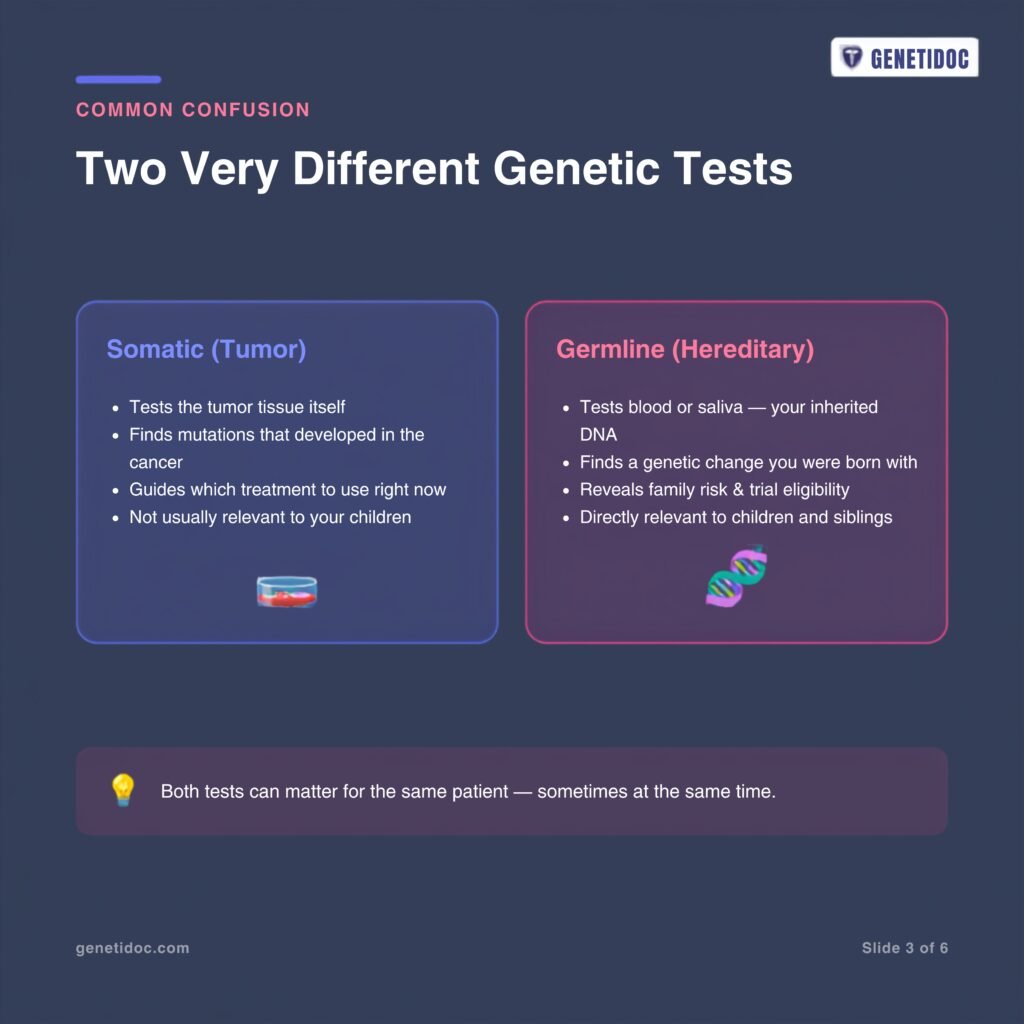
This is one of the most common — and most important — points of confusion in cancer care. There are two very different kinds of genetic testing that can come up during a cancer diagnosis:
| Somatic (Tumor) Testing | Germline (Hereditary) Testing |
| Tests the tumor tissue itself | Tests blood or saliva — your inherited DNA |
| Looks for mutations that developed in the cancer cells | Looks for a gene change you were born with |
| Guides which treatment to use right now | Tells you if the cancer runs in the family and whether relatives are at risk; can also guide targeted therapy selection and clinical trial eligibility |
| Not usually relevant to your children or siblings | Directly relevant to children, siblings, and other blood relatives |
Both tests can matter for the same patient — sometimes at the same time. And germline testing isn’t limited to family risk information: identifying a specific inherited pathogenic variant can also open the door to targeted therapies designed for that gene, and can qualify a patient for clinical trials they wouldn’t otherwise be eligible for. Understanding which type of testing you’re being offered, and why, changes how you interpret the result.
When Does Genetic Testing Get Added to a Cancer Diagnosis?
Genetic/genomic testing doesn’t get ordered the same way for every patient. Broadly, it comes into the picture in two different situations.
1. Germline (Hereditary) Testing — Triggered by Red Flags
Germline testing is typically offered once certain red flags raise suspicion that a cancer — of any type — may have an inherited cause, rather than being routinely offered to every patient. According to established clinical criteria, these general red flags include:
- Age of onset 50 years or younger
- Multiple primary cancers in the same individual
- Bilateral cancer in paired organs, or multifocal disease
- Cancer diagnosed at any age in someone of Ashkenazi Jewish ancestry
- A known pathogenic variant already identified in a family member
- A cancer subtype known to be associated with a specific hereditary syndrome
- Cancer clustering in close relatives across one or more generations
- Rare cancers or unusual presentations for that cancer type
- Cancer not responding to standard treatment
- Cancers known to be associated with hereditary cancer syndromes in general
When a patient fits these criteria, testing is generally offered right away. The same criteria are also used to identify at-risk relatives in an affected family who should be offered testing.
2. Somatic (Tumor) Testing — Built Into the Diagnostic Workflow
Somatic tumor testing follows the biopsy, then IHC, then genetic testing sequence described above. When IHC flags a biomarker, targeted germline testing for that specific gene is typically suggested. Separately, when genetic testing of the tumor tissue itself identifies a pathogenic variant in a particular gene, targeted germline testing is then carried out for that same variant in that same gene, to check whether it is also present in the patient’s inherited DNA. When the picture is broader — for example, the patient wants to rule out multiple possible cancer-driving mutations at once — a broader gene panel or comprehensive cancer panel may be used instead.
| Team Genetidoc’s clinical experience: “Even in cases where there’s currently no approved targeted treatment for a particular genetic finding, we may still recommend confirming genetic status now — through a comprehensive cancer panel — so that if an approved targeted treatment becomes available later, the patient is already positioned to benefit from it without needing to be retested. Knowing this genetic status can also help a patient qualify for relevant clinical trials in the meantime.” |
What Determines Which Test Your Doctor Orders?
There’s no single test that fits every patient. Test selection depends on several factors working together:
Single Biomarker Test (e.g., HER2 by IHC)
Used when a specific, well-established marker needs to be confirmed — for example, when NCCN criteria indicate that a particular biomarker is standard-of-care for that cancer type.
Targeted Gene Panel
Used when a patient’s clinical picture points toward a specific hereditary cancer type. For example, a patient with features suggestive of hereditary breast cancer would be offered a germline panel containing the genes known to be associated with breast cancer risk — not a blood test for the tumor, but a test of the patient’s own inherited genetic makeup.
Comprehensive Cancer Panel
Offered as a broader rule-out option — not routinely used for every patient, but reserved for situations where the patient (or their doctor) wants to comprehensively investigate possible genetic causes across a wider range of genes at once.
Which Cancers Most Often Need This Kind of Testing?
In Genetidoc’s clinical experience, the two case types most commonly seen requesting germline testing are Lynch syndrome (associated with colorectal and endometrial cancer) and Hereditary Breast and Ovarian Cancer syndrome (BRCA1/BRCA2-related). This doesn’t mean these are the only cancers where testing is relevant — the same red-flag criteria described above apply across cancer types generally.
Germline testing is also commonly extended to unaffected family members of a patient who fits the red-flag criteria — a practice known as cascade testing. If a family member meets those criteria, testing is generally offered to them right away, rather than waiting for symptoms to appear.
Tissue Biopsy vs. Liquid Biopsy: What’s the Real Difference?
Liquid biopsy — testing a blood sample for tumor DNA circulating in the bloodstream — has become a valuable, less invasive alternative to repeat tissue sampling. But it isn’t a perfect substitute.
- Tissue biopsy remains the gold standard for molecular characterization, with very high specificity and reliability.
- Liquid biopsy also has excellent specificity (a positive result is highly trustworthy), but its sensitivity is lower — published data puts it around 80%, meaning some real mutations can be missed, particularly when the tumor sheds less DNA into the bloodstream.
Because of this, when liquid biopsy and tissue biopsy disagree, a mutation found on tissue is generally treated as the more reliable result. Many cancer centers now run both tests in parallel at diagnosis rather than choosing one over the other. Liquid biopsy is especially useful when repeat tissue sampling would be difficult, risky, or needed frequently to monitor treatment response.

What Happens If There Isn’t Enough Tissue? (The “QNS” Problem)
This is one of the most underappreciated hurdles in cancer diagnostics — and something every newly diagnosed patient should know about before their biopsy, not after.
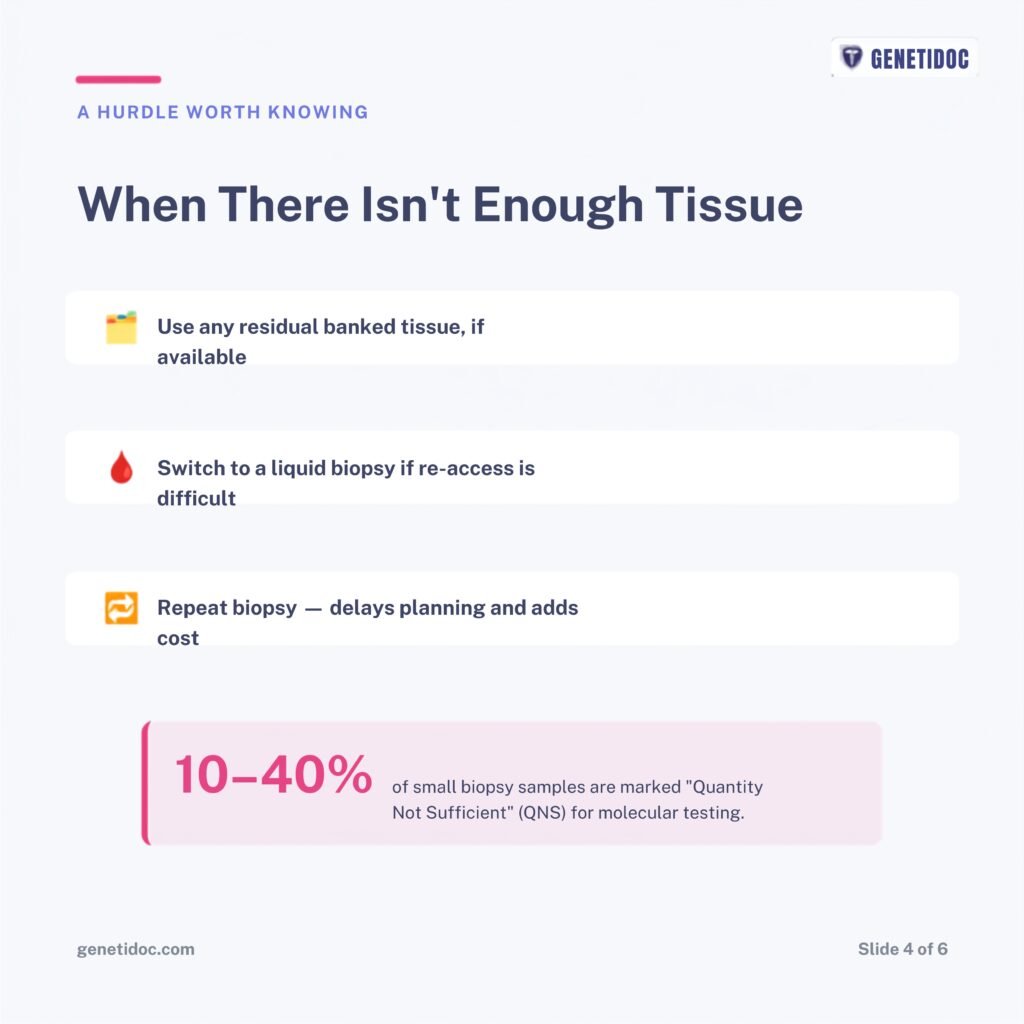
Molecular testing requires a minimum amount of viable tumor tissue. When there isn’t enough, the sample is marked “Quantity Not Sufficient” (QNS). Depending on the biopsy method and cancer type, published studies show this can affect anywhere from roughly 10% to 40% of small biopsy samples.
When QNS happens, the options typically are:
- Using any residual banked tissue from the original sample, if available
- Switching to a liquid biopsy if tissue re-access is difficult
- Undergoing a repeat biopsy — which delays treatment planning and adds cost
This is exactly why it’s worth asking, at the time of your original biopsy, whether enough tissue was preserved for broader genomic testing later — a point we return to at the end of this article.
Understanding a “Variant of Uncertain Significance” (VUS)
One of the most confusing results a patient can receive is a VUS. In plain terms:
| Team Genetidoc explains it this way: “A VUS means a genetic change has been identified, but there isn’t enough scientific evidence yet to say whether it’s actually the cause of the condition. It’s classified as uncertain, not positive or negative. We recommend periodic re-evaluation of the genetic report, since new research may provide additional clarity over time, and further functional studies may also help clarify its significance.” |
A VUS is not a diagnosis, and it should not be used to make major treatment decisions on its own. Reclassification — moving a VUS to “likely benign” or “likely pathogenic” — can take time as scientific knowledge grows, which is why ongoing follow-up with your genetics team matters even after your initial report.
One way reclassification can happen sooner is through the family itself. If a VUS is identified and other affected relatives are willing to be tested, targeted testing for that same specific variant can be carried out in those affected family members. If the variant is found to consistently segregate with the disease — meaning it turns up in affected relatives and not in unaffected ones — that pattern can support upgrading the variant’s classification to likely pathogenic or pathogenic.
NGS vs. MLPA: What’s the Difference?
Two terms patients frequently encounter on lab requisition forms are NGS and MLPA. They test for different kinds of genetic changes:
| Team Genetidoc’s explanation: “Think of your genome as being written in letters — A, T, G, C. Next-Generation Sequencing (NGS) reads through these letters directly and detects when one letter has been swapped for another. Most of these changes don’t cause any problem, but some do affect how the gene functions and can lead to disease. MLPA works differently — instead of reading individual letters, it checks whether a whole segment of a gene is missing, duplicated, or repeated. It looks at structural changes in the gene, not single-letter changes.” |
Because these two techniques detect different categories of genetic change, a comprehensive genetic workup sometimes uses both — one alone can miss what the other is designed to catch.
Why Expert Interpretation Matters More Than the Report Itself
Perhaps the single biggest gap between low-cost genetic testing and clinically meaningful genetic testing isn’t the lab technology — it’s what happens after the report is generated.
| Team Genetidoc’s clinical perspective: “Direct-to-consumer tests usually only check for known, previously identified cancer variants — they don’t perform full genome sequencing. New disease-causing variants are being identified all the time, so testing only for the known ones rules out just a small percentage of possibilities. It’s not nearly as reassuring as it sounds.” |
| Team Genetidoc’s clinical perspective: “With just a raw report, a patient may only learn whether their cancer has a genetic cause. With expert interpretation, we can tell them what can actually be done — the screening and treatment pathways defined by bodies like NCCN, whether targeted therapies are known to work for that specific syndrome, and what it means for their family. Without that interpretation, a patient might think, ‘It’s genetic, there’s nothing I can do, I just have to live with it.’ That’s simply not true for most patients — and expert interpretation is what replaces that fear with an actual plan.” |
A Real Example: When Genetics Changes the Treatment Plan
One of the clearest illustrations of this is Lynch syndrome, an inherited condition caused by changes in mismatch-repair genes (MLH1, MSH2, MSH6, PMS2, or EPCAM) that raises the risk of colorectal, endometrial, and other cancers.
A landmark clinical trial (CAPP2) found that Lynch syndrome carriers who took daily low-dose aspirin over several years had a significantly lower rate of developing colorectal cancer, with the protective effect becoming clearer over long-term follow-up. Based on this evidence, major clinical guidelines now recommend discussing aspirin as a chemopreventive option specifically for confirmed Lynch syndrome carriers — a concrete example of how a genetic diagnosis can directly change medical management, not just labeling.
(Reference: Burn J, et al. “Cancer prevention with aspirin in hereditary colorectal cancer, Lynch syndrome, 10-year follow-up and registry-based 20-year data in the CAPP2 study.” The Lancet, 2020.)
Illustrative Composite Case
The following is a generalized, anonymized composite scenario reflecting patterns seen in practice, not a specific patient record.
Consider a patient whose tumor testing identified a specific actionable genetic finding. Rather than proceeding with a generalized, standard chemotherapy regimen — one that would likely have been far less effective given that patient’s tumor profile — the treatment team moved directly to a targeted therapy matched to the finding. In a separate but related pattern, genetic and genomic testing has also allowed patients to qualify for clinical trial enrollment they wouldn’t otherwise have been eligible for — not limited to a single drug class, but spanning multiple targeted treatment areas, with germline testing specifically opening the door to trial eligibility in some cases.
When Genomic Testing Might Not Help — And When It Still Matters
Genetic testing isn’t always the right next step for every patient, and being upfront about this builds trust rather than eroding it.
| Team Genetidoc’s clinical perspective: “In late-stage or palliative cancer care, germline testing may not meaningfully change treatment for the patient in front of us. But it can still matter enormously for their at-risk relatives, who may benefit from knowing their own genetic risk long before they’d ever need to.” |
This is an important nuance: the value of a genetic test isn’t only measured by what it changes for the person being tested today — sometimes its greatest value is protective, for the family that comes after.
What Does a Genetic Diagnosis Mean for Prognosis?
Molecular testing tends to bring both more clarity and, at times, new forms of uncertainty.
Where It Brings Clarity
- Identifying a precise biological cause, rather than tracking symptoms in isolation
- Psychological relief — validating the illness and reducing self-blame
- Shifting from reactive management to defined, targeted clinical pathways, including organ-specific screening protocols and, where applicable, targeted therapies
- Access to historical outcome data from patient registries for well-studied pathogenic variants, helping families understand what to expect
Where New Uncertainty Can Arise
- VUS findings — a variant identified, but its significance not yet confirmed
- Variable expressivity — the same genetic change can produce different severity in different people
- Reduced or incomplete penetrance — some carriers of a pathogenic variant never develop the condition, making it hard to predict if or when symptoms will appear
- Ultra-rare or novel variants with little existing outcome data
Families sometimes describe living with this kind of uncertainty as a “sword hanging overhead” — knowing an abnormality exists, without a clear timeline or certainty about what it means. This is precisely where ongoing genetic counseling, rather than a one-time report, provides real value.
Incidental Family Findings: When Tumor Testing Reveals More Than Expected
Sometimes, testing ordered purely to guide treatment for the current cancer uncovers something with implications far beyond that one patient.
| Team Genetidoc’s clinical guidance: “If a pathogenic or likely pathogenic variant is found during tumor testing, targeted germline testing of that same gene and variant is generally advised — because a change identified in the tumor may also be present in the patient’s inherited DNA, with implications for blood relatives.” |
This is why a patient who came in expecting only a “cancer treatment” test may later be offered a hereditary testing conversation — not because something went wrong, but because the tumor result itself pointed toward a possible inherited component worth investigating.
Turnaround Times: What to Realistically Expect
| Test Type | Typical Turnaround |
| Standard IHC | Generally a few days to about a week in most labs, though this can extend depending on case complexity and lab volume |
| Targeted gene panel | Roughly 1–2 weeks |
| Comprehensive cancer panel | Roughly 3–4 weeks, depending on the genes/package tested |
A short delay while waiting for these results is usually clinically safe — and, as we’ll cover below, often worth it for a better-matched treatment plan.
What Does This Kind of Testing Cost in India?
Costs vary considerably depending on panel size, technology used, the laboratory, and whether the price includes expert interpretation or just a raw report. Based on general current market data across Indian diagnostic labs, patients can expect approximate ranges like these:
| Test Type | General Market Range (INR) |
| Single biomarker / IHC test | Roughly ₹2,000 – ₹15,000, depending on the marker and lab |
| Targeted gene panel | Roughly ₹15,000 – ₹40,000 |
| Comprehensive genomic profiling | Roughly ₹30,000 – ₹2,00,000, depending on the number of genes covered |
| Liquid biopsy | Roughly ₹15,000 – ₹60,000 |
These are general market ranges compiled from publicly available diagnostic lab pricing across India, meant to give patients a rough sense of scale. They are not Genetidoc’s confirmed pricing.
What Patients and Families Ask Us Most Often
Certain questions come up again and again in genetic counseling conversations. If you’re feeling confused, you’re not alone — these are some of the most common:
- “What’s the use of genetic testing if nothing can be done?”
- “What happens if my child inherits the same genetic change?”
- “What does it mean that my cancer has a genetic cause — will my treatment actually change?”
- “I already have cancer. Why do I need genomic testing at all — what will it change?”
- “Why should an unaffected family member get tested?”
Every one of these is a fair, important question — and each has a real answer, which is exactly why genetic counseling (not just a lab report) is part of a complete testing process.
The One Piece of Advice Every Newly Diagnosed Patient Should Hear
| Team Genetidoc’s advice: “It is completely natural to want to start treatment immediately after a diagnosis. But rushing can lock you into a standard regimen — like standard chemotherapy — when a far more effective, targeted therapy or immunotherapy might be available based on your tumor’s specific genetic footprint.” |
Before you even step into your oncologist’s office, keep these three things in mind:
1. Ensure Enough Tissue Was Taken
Molecular testing requires a solid sample. Ask early whether enough tissue was preserved during your biopsy for a broad genomic panel (Next-Generation Sequencing, or NGS), so you can avoid an unnecessary repeat procedure.
2. Understand the Turnaround Time
Biomarker and genomic reports can take two to four weeks to process. A delay while waiting for these results is usually clinically safe — and it typically leads to a much better-tailored treatment plan.
3. Confirm the Scope of Testing
Ask whether your tissue will undergo broad-panel testing rather than a single-gene test. Comprehensive panels catch rare driver mutations that targeted drugs can treat directly — mutations a narrower test might miss entirely.
Choosing the Right Lab: Why It Matters As Much As the Test Itself
Two labs can run the “same” genomic test and produce very different value for the patient. The differentiator isn’t the sequencing machine — it’s what happens around it:
- Whether the lab tests only known variants or performs true comprehensive sequencing
- Whether a qualified geneticist or molecular oncology team interprets the report, or the patient simply receives a raw printout
- Whether the report is correlated with the patient’s full clinical picture, not read in isolation
- Whether genetic counseling is offered alongside the result, to explain what it actually means going forward
Before agreeing to genomic/NGS testing, it’s worth asking your lab or doctor directly: Is this a targeted panel or a comprehensive cancer genome test? What technique is being used — NGS, MLPA, or both — and what does each check for? Who interprets my report, and is genetic counseling included?
Frequently Asked Questions
1. What is the difference between a biopsy and a genetic test for cancer?
A biopsy removes tissue and examines it under a microscope to confirm cancer and its basic type. Genetic/genomic testing goes further, analyzing the DNA in that tissue (or in a blood sample) to identify specific mutations that can guide treatment or reveal inherited risk.
2. How long does it take to get biopsy and genetic test results?
Standard IHC results are typically available within days to about a week. Targeted gene panels usually take 1–2 weeks, and comprehensive genomic panels can take 3–4 weeks.
3. Can a blood test replace a tissue biopsy for cancer?
Not entirely. Liquid biopsy (blood-based) is a valuable, less invasive option, but its sensitivity is somewhat lower than tissue biopsy. Many centers use both together rather than choosing one exclusively.
4. What does biomarker testing mean in cancer treatment?
Biomarker testing looks for specific proteins or genetic changes in a tumor that can predict how it will respond to a particular treatment, helping doctors choose targeted therapies over generalized chemotherapy where appropriate.
5. Is genetic testing necessary for all cancer patients?
No. It’s most useful for patients meeting specific criteria — such as early age of onset, family history, rare cancer types, or specific tumor biomarkers — rather than being a routine step for every diagnosis.
6. What happens if there isn’t enough tissue for molecular testing?
This is called a “QNS” (quantity not sufficient) result. Depending on the situation, doctors may use any banked residual tissue, switch to a liquid biopsy, or recommend a repeat biopsy.
7. How much does genomic/molecular testing cost in India?
Costs vary by panel size and lab, ranging from relatively affordable single-marker tests to significantly higher costs for comprehensive genomic profiling. Ask your provider for a specific, itemized estimate.
8. Does biopsy testing tell you if cancer has spread?
A standard biopsy primarily confirms the presence and type of cancer at the sampled site; spread is typically assessed through imaging and staging, though molecular findings can sometimes inform how aggressively a cancer may behave.
9. What is precision oncology or personalized cancer treatment?
It refers to selecting cancer treatment based on the specific molecular characteristics of a patient’s tumor — and sometimes their inherited genetics — rather than a one-size-fits-all approach based only on cancer type and stage.
10. Can biopsy results change your treatment plan?
Yes. If IHC or genetic testing identifies an actionable biomarker or mutation, your oncologist may recommend a targeted therapy or immunotherapy instead of, or alongside, standard chemotherapy.
11. What is a Variant of Uncertain Significance (VUS)?
A VUS is a genetic change identified during testing where there isn’t yet enough scientific evidence to confirm whether it causes disease. It requires periodic re-evaluation as research advances, rather than immediate action.
Key Takeaways
- A biopsy is the start of a diagnostic sequence — histopathology, then IHC, then genetic testing when indicated — not a single test.
- Germline (hereditary) testing and somatic (tumor) testing answer different questions and serve different purposes; understanding which one you’re being offered matters.
- Testing may not always change treatment for the patient in front of the doctor, but it can still meaningfully protect at-risk family members.
- A raw genetic report is not the same as an expert-interpreted one — interpretation is what turns a result into an actionable plan.
- Rushing into standard treatment before genomic results return can mean missing a more effective, targeted option.
What Should You Do Next?
If you or a loved one has recently been diagnosed with cancer and haven’t yet discussed molecular or genetic testing with your oncologist, that conversation is worth having before treatment begins — not after. Ask specifically whether your tumor tissue is adequate for broader genomic testing, and whether a comprehensive panel — rather than a single-marker test — is appropriate for your situation.
Considering genetic or genomic testing to guide your cancer treatment plan? [Book a genetic counseling consultation with Genetidoc] to understand which test is right for your specific diagnosis, and what your results will actually mean for your treatment and your family.
Have more questions about biopsy or genetic testing for cancer? Visit the hereditary cancer forum on the Genetidoc Rare Disease Forum to ask questions and read discussions from other patients and families navigating the same decisions.

References
- Burn J, Sheth H, Elliott F, et al. “Cancer prevention with aspirin in hereditary colorectal cancer, Lynch syndrome, 10-year follow-up and registry-based 20-year data in the CAPP2 study.” The Lancet, 2020.
- National Comprehensive Cancer Network (NCCN) Guidelines — Genetic/Familial High-Risk Assessment: Colorectal, Breast, Ovarian, and Pancreatic.
- GeneReviews — Lynch Syndrome overview, mismatch-repair gene function and management.
- American College of Medical Genetics and Genomics (ACMG) — Standards for classification of sequence variants (VUS classification framework).
- Published clinical and diagnostic literature on tissue adequacy for next-generation sequencing in small biopsy specimens.