
Quick answer
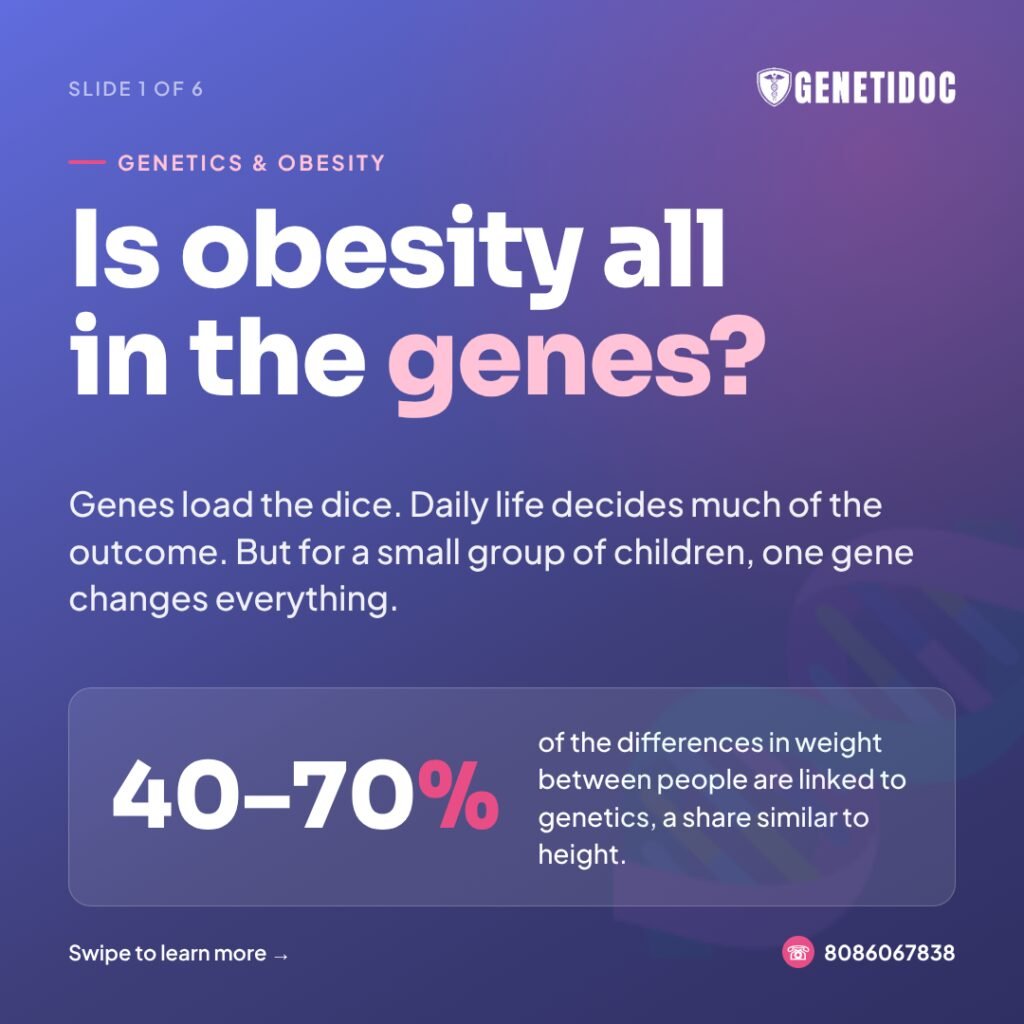
Genes play a large role in body weight. Twin and family studies suggest that roughly 40–70% of the differences in weight between people are linked to genetics. But for most people, obesity is not caused by one gene. It comes from many small genetic effects combined with diet, sleep, activity, stress, medicines and environment. A small group of people, usually children whose obesity starts before age 5 with intense, constant hunger, have a single-gene or syndromic cause. For them, genetic testing can change care in a meaningful way.
“Is my weight in my genes?”
We hear this question from parents, teenagers and adults almost every week. Sometimes it comes from frustration after years of dieting. Sometimes it comes from guilt: a mother wondering if she overfed her child. And sometimes it comes from a real clinical worry, like a toddler who is never full, no matter how much he eats.
The honest answer is: it depends on the person. In this guide, our clinical genetics team explains how genes affect weight, how to tell common obesity apart from rare genetic forms, when genetic testing is useful, when it is not, and what a diagnosis can change for you and your family.
“Most families who ask me whether weight is genetic really want to know one thing: is this our fault? For most people, genes load the dice and daily life decides much of the outcome. But for a small group of children, the cause sits clearly in a single gene, and finding it changes how we care for that child.”
— Dr. Roshan Daniel, Clinical Geneticist, Founder, Genetidoc
Is Obesity Genetic? What the Science Says
Scientists use a measure called heritability to describe how much of the variation in a trait, across a population, is linked to genes. For body weight, heritability estimates usually fall between 40% and 70%. That is similar to height.
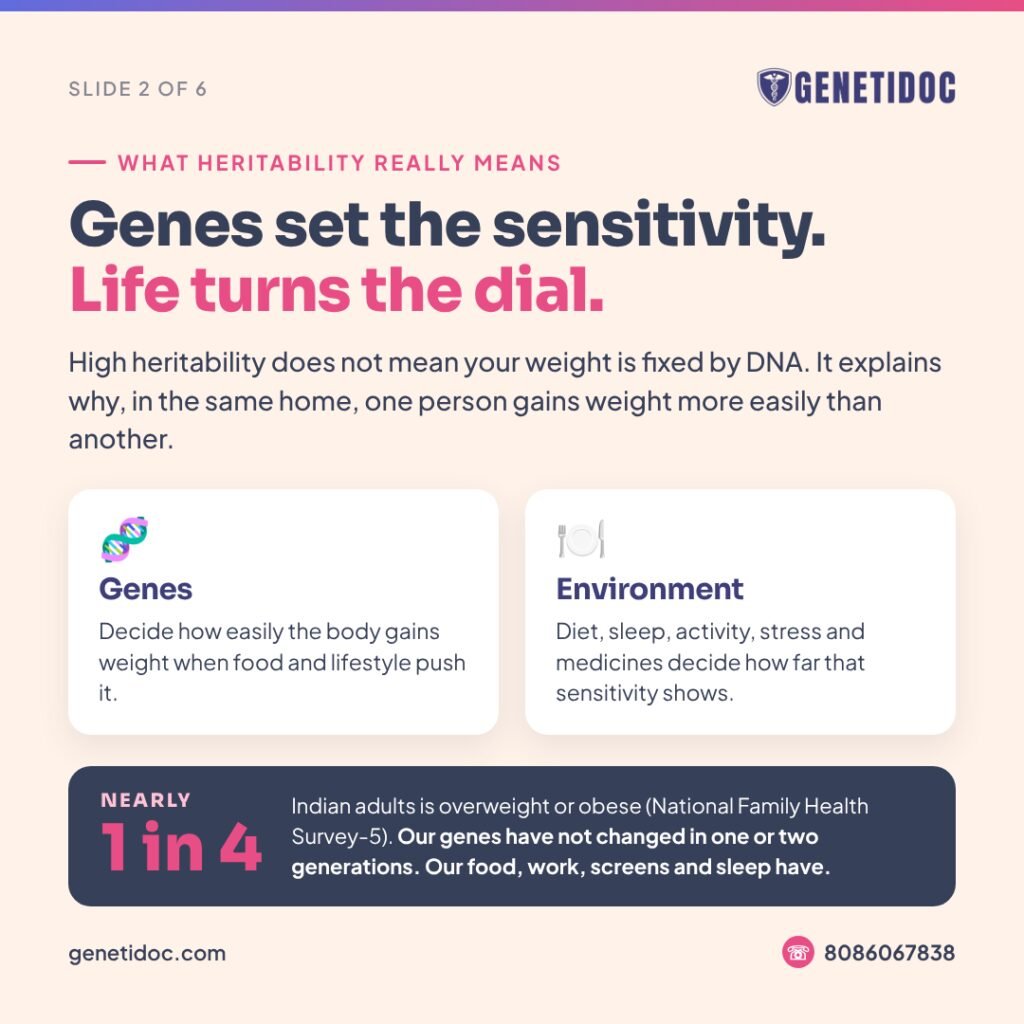
But heritability is often misunderstood. It does not mean that 70% of your weight is fixed by your DNA. It means that, in a group of people living in the same environment, genes explain a large share of why some people gain weight more easily than others.
Here is a simple way to think about it. Two children grow up in the same house, eating the same food. One stays lean. The other gains weight steadily. Genes help explain that difference. But if both children moved to a home with more processed food and less outdoor play, both would likely gain weight. Genes set the sensitivity. The environment turns the dial.
This is why obesity has risen so sharply in India over just one or two generations. Our genes have not changed in that time. Our food, work, screens and sleep have.
Three Ways Genes Influence Weight
Doctors group genetic obesity into three broad types. Understanding which type is likely is the first step in deciding whether testing is worthwhile.
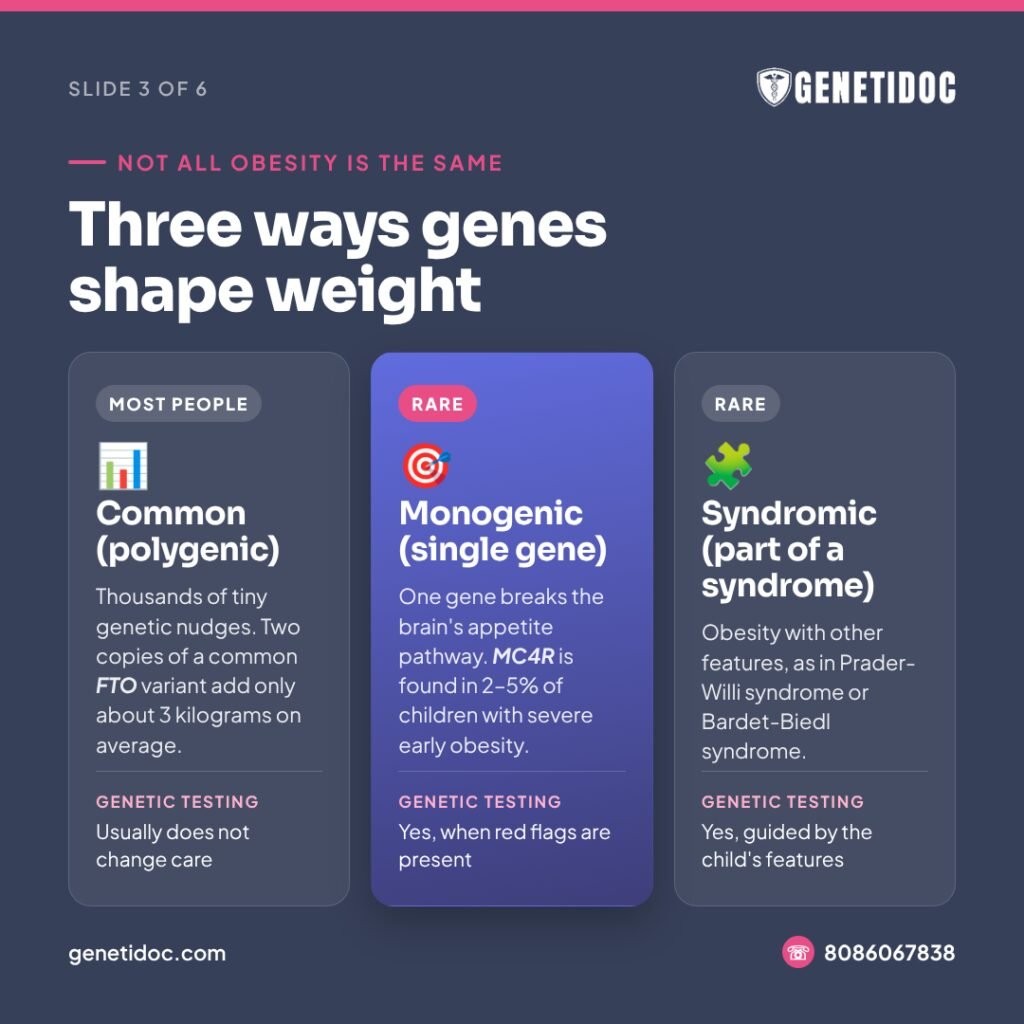
| Type | How common | Typical picture | Is genetic testing useful? |
| Common (polygenic) obesity | Most people with obesity | Gradual weight gain, often in later childhood or adulthood, alongside lifestyle factors | Usually not. Results do not change care. |
| Monogenic obesity | Rare | Severe obesity starting in infancy or early childhood, with intense, constant hunger | Yes, when red flags are present |
| Syndromic obesity | Rare | Obesity plus other features such as developmental delay, vision problems or extra fingers or toes | Yes, guided by the child’s features |
1. Common (polygenic) obesity: many small nudges
“Polygenic” means “many genes”. In common obesity, hundreds or even thousands of small genetic variations each nudge weight up or down by a tiny amount. None of them causes obesity on its own.
The best-known example is the FTO gene. People who carry one common FTO variant have a body mass index (BMI) about 0.4 points higher per copy, on average. People with two copies weigh, on average, around 3 kilograms more than people with none. That is a real but modest effect. Many people with two copies are perfectly lean.
Researchers can combine many of these small effects into a polygenic risk score. Large studies show that people with the highest scores tend to weigh more by adulthood. But these scores are mostly built from people of European ancestry. They have not been validated in Indian populations, and they are not used to guide treatment in routine clinical care.
2. Monogenic obesity: one gene, a big effect
“Monogenic” means a single gene change is enough, by itself, to cause obesity. These forms are rare, but they are often severe and start very early in life.
Most monogenic obesity involves the brain’s appetite control system, called the leptin-melanocortin pathway. Think of it as the body’s fuel gauge:
- Fat cells release a hormone called leptin, which tells the brain, “we have enough fuel stored”.
- Leptin attaches to a receiver (receptor) in the brain, made by the LEPR
- This triggers a chain of signals involving the POMC and PCSK1
- The final step switches on a receptor made by the MC4R gene, which turns hunger down and lets the body use energy normally.
If any link in this chain is broken, the brain believes the body is starving, even when it is not. The result is hyperphagia: intense, constant hunger that ordinary willpower cannot overcome.
Faulty MC4R is the most common single-gene cause. It is found in roughly 2–5% of children with severe, early-onset obesity. Changes in LEP (leptin), LEPR, POMC and PCSK1 are rarer, and most of them are inherited in a recessive way, meaning a child is affected when both parents pass on a faulty copy.
3. Syndromic obesity: obesity as part of a bigger picture
Some genetic conditions cause obesity along with other health or developmental features. Examples include:
- Prader-Willi syndrome: Babies are often floppy and feed poorly. Between about 2 and 8 years of age, hunger increases sharply and can become extreme. Short stature, small hands and feet, and learning or behavioral difficulties are common. It affects roughly 1 in 10,000 to 30,000 people.
- Bardet-Biedl syndrome: Obesity with extra fingers or toes, night blindness that worsens over time, kidney problems and learning difficulties.
- 2 deletion: A small missing piece of chromosome 16, linked to obesity that often starts later in childhood, along with speech, learning or developmental differences.
In syndromic obesity, the other features usually guide the doctor toward the right test.
Why the Indian Picture Is Different
India has its own reasons to take genetics and obesity seriously.
Indians face metabolic risk at a lower weight
According to the National Family Health Survey-5 (2019–21), nearly one in four Indian adults is overweight or obese. And Indians tend to develop diabetes, high blood pressure and heart disease at lower body weights than many other populations. For this reason, Indian expert guidelines use lower BMI cut-offs: 23 for overweight and 25 for obesity, instead of the international 25 and 30.
Indian researchers have also described the “thin-fat” Indian baby: newborns who look small but already carry relatively more body fat. This pattern is thought to reflect a mix of genetics, the mother’s nutrition and the environment in the womb. It shows how genes and environment interact even before birth.
Consanguinity and recessive forms
In many Indian communities, marriages between relatives (consanguineous marriages) are common. Related parents are more likely to carry the same rare gene change. This raises the chance of recessive conditions, including recessive forms of monogenic obesity.
Indian research reflects this:
- A 2024 case series from the Postgraduate Institute of Medical Education and Research, Chandigarh, described 7 children with early-onset monogenic obesity diagnosed by whole exome sequencing. Three had parents who were related.
- Families from Gujarat and Mumbai with severe obesity in infancy have been found to carry changes in the LEPR In the Mumbai family, the parents were related, and an older sibling with severe obesity had died in infancy.
- In neighbouring Pakistan, researchers found that about half of children with severe obesity from consanguineous families carried a change in a known obesity gene.
The authors of these studies make the same point: monogenic obesity is under-recognised in South Asia, and many children spend years on diets that cannot work before anyone checks for a genetic cause.
Red Flags: When to Suspect a Genetic Cause of Obesity
International guidelines from the Endocrine Society and the UK’s National Health Service genomic medicine service suggest considering genetic testing when obesity has certain features. Look out for:
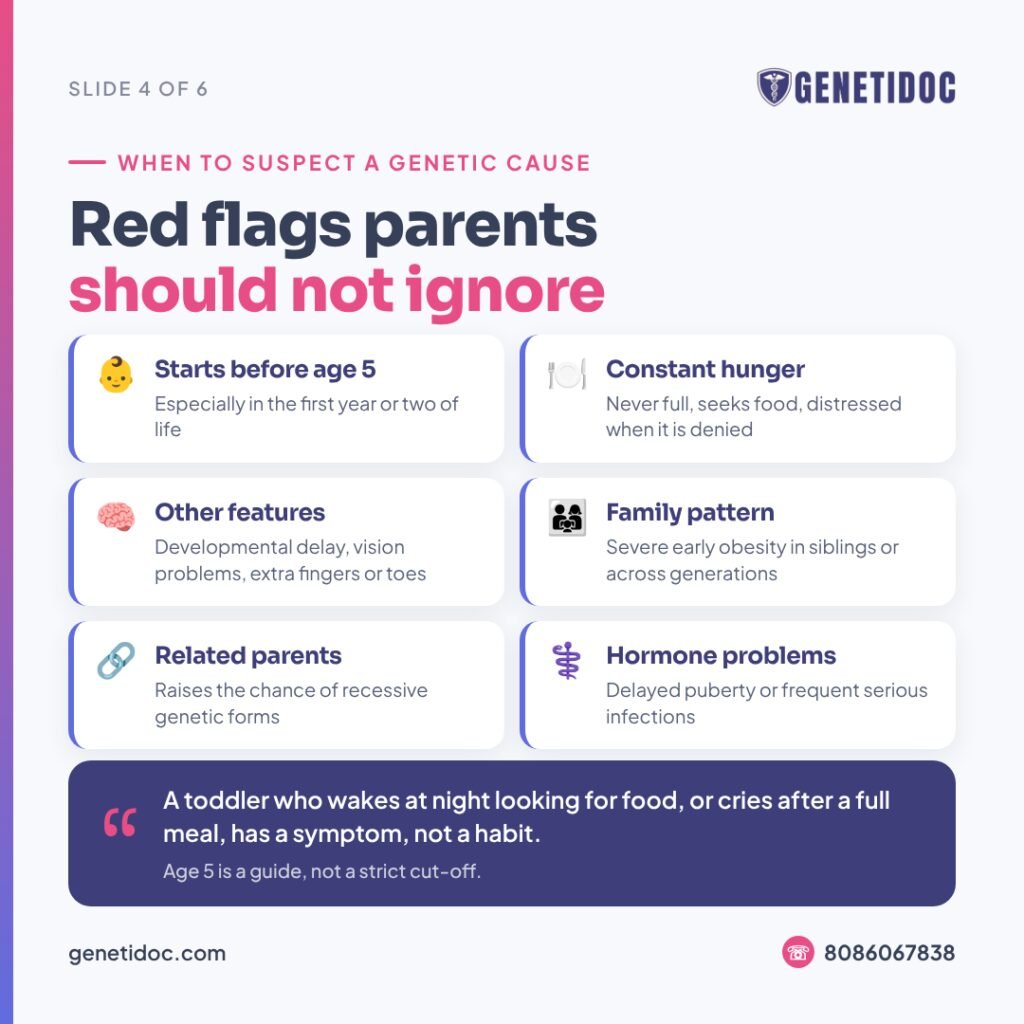
- Obesity that starts before age 5, especially in the first year or two of life.
- Severe obesity, far above the normal range on a growth chart.
- Intense, constant hunger (hyperphagia): never feeling full, food-seeking, distress when food is denied.
- Other features, such as developmental delay, learning difficulties, short stature, floppy muscles in infancy, vision problems, extra fingers or toes, or kidney problems.
- A family history of severe, early-onset obesity across generations, or in brothers and sisters.
- Parents who are blood relatives.
- Hormone problems, such as delayed puberty, frequent serious infections, or low cortisol in infancy.
One caution: a few genetic causes, such as 16p11.2 deletion, usually show up after age 5. So the age rule is a guide, not a strict cut-off. A clinical geneticist weighs the whole picture.
What hyperphagia actually looks like at home
Parents often describe it in ways that differ from a child who simply enjoys food:
- Crying or tantrums soon after a full meal, asking for more
- Waking at night to search for food
- Taking food from other children’s plates, bins or locked cupboards
- Thinking and talking about food most of the day
- Eating very large portions quickly without seeming satisfied
“When a parent tells me their two-year-old wakes up at night looking for food, or cries after finishing a full meal, I stop thinking about diet charts and start thinking about the brain’s appetite pathway. That kind of hunger is a symptom, not a habit.”
— Dr. Roshan Daniel, Clinical Geneticist, Founder, Genetidoc
Illustrative example (not a real patient)
A 2-year-old boy weighs more than most 5-year-olds. His parents are first cousins. He was a normal weight at birth but gained weight rapidly from 4 months of age. He screams for food after meals and has had several chest infections. Two rounds of diet advice have not helped. These features together, very early onset, extreme hunger, related parents and frequent infections, point toward a recessive form of monogenic obesity, such as a change in the leptin receptor gene. This is a child for whom genetic testing makes sense.
When Genetic Testing for Obesity May Not Be Useful
Genetic testing is powerful, but it is not for everyone with excess weight. It is usually not helpful when:
- Weight gain started in the late teens or adulthood
- There is a clear trigger, such as a job change, pregnancy, a new medicine, low thyroid levels or reduced activity
- There is no intense hunger, no developmental concerns and no strong family pattern
- The result would not change what your doctor recommends
In these situations, a genetic test is unlikely to find a single cause. Even if it reports common risk variants such as FTO, the advice stays the same: support from a physician and a dietitian, regular activity, good sleep, stress care and, where needed, medicines.
Illustrative example (not a real patient)
A 38-year-old software professional gained 18 kilograms over eight years after moving to a desk-based job with long night shifts. An online DNA kit told him he carries “fat genes”. He was normal weight as a child and has no developmental or hormonal concerns. A clinical geneticist would explain that this pattern fits common obesity. The DNA kit result does not change his plan, and the most useful next step is a review with his physician and a dietitian.
Which Genetic Tests Are Used for Obesity?
There is no single “obesity gene test”. The right test depends on the person’s features. As a general principle, Team Genetidoc matches the scope of the test to how closely a patient’s features fit a known condition: a focused test when one condition is clearly suspected, and a broader test when several are possible.
Blood leptin level
Not a DNA test, but a useful first clue. A very low leptin level in a child with severe obesity can point toward leptin deficiency, one of the few genetic obesities with a directly targeted treatment.
Obesity gene panel
A panel reads a selected group of genes known to cause monogenic obesity, such as MC4R, LEP, LEPR, POMC and PCSK1, together with genes for some obesity syndromes. Multi-gene panels typically take about 3–4 weeks.
Whole exome sequencing
This test reads nearly all the protein-making genes at once. It is useful when a child has obesity plus other features that could fit several conditions. Whole exome sequencing typically takes 1–2 months, including interpretation.
Chromosomal microarray
This test looks for small missing or extra pieces of chromosomes, such as the 16p11.2 deletion. It is often chosen when obesity comes with developmental delay or learning difficulties.
DNA methylation test for Prader-Willi syndrome
Prader-Willi syndrome is a special case. It is not usually caused by a “spelling mistake” in a gene. Instead, a group of genes on chromosome 15 that should be switched on, from the father’s copy, is missing or switched off. A methylation test checks the chemical on/off tags on this region and detects more than 99% of cases.
This matters because a standard exome or panel can come back normal in a child who does have Prader-Willi syndrome. Those tests are designed to read gene spellings, not on/off tags. Choosing the wrong test first can delay the diagnosis.
Why interpretation matters as much as the test
A genetic report is not a simple yes or no. Results can be:
- Pathogenic or likely pathogenic: a change known or very likely to cause the condition
- Variant of uncertain significance: a change that science cannot yet classify as harmful or harmless
- Negative: no reportable finding in the genes that were tested
A negative result does not prove that obesity has no genetic component. It means no reportable cause was found in what was tested. A variant of uncertain significance should not be treated as a diagnosis, and it is not used to test healthy relatives. These results may be reviewed again later as science advances. Team Genetidoc usually advises a follow-up review 6 months to 1 year after an uncertain or negative exome result, or sooner if new symptoms appear.
“A genetic report is only as useful as the interpretation behind it. The same gene change can explain everything in one child and mean very little in another. We read the DNA alongside the growth chart, the examination and the family history. That is where a result becomes a decision.”
— Dr. Roshan Daniel, Clinical Geneticist, Founder, Genetidoc
How a Genetic Diagnosis Changes Care
For families affected by monogenic or syndromic obesity, a diagnosis can change care in several practical ways.
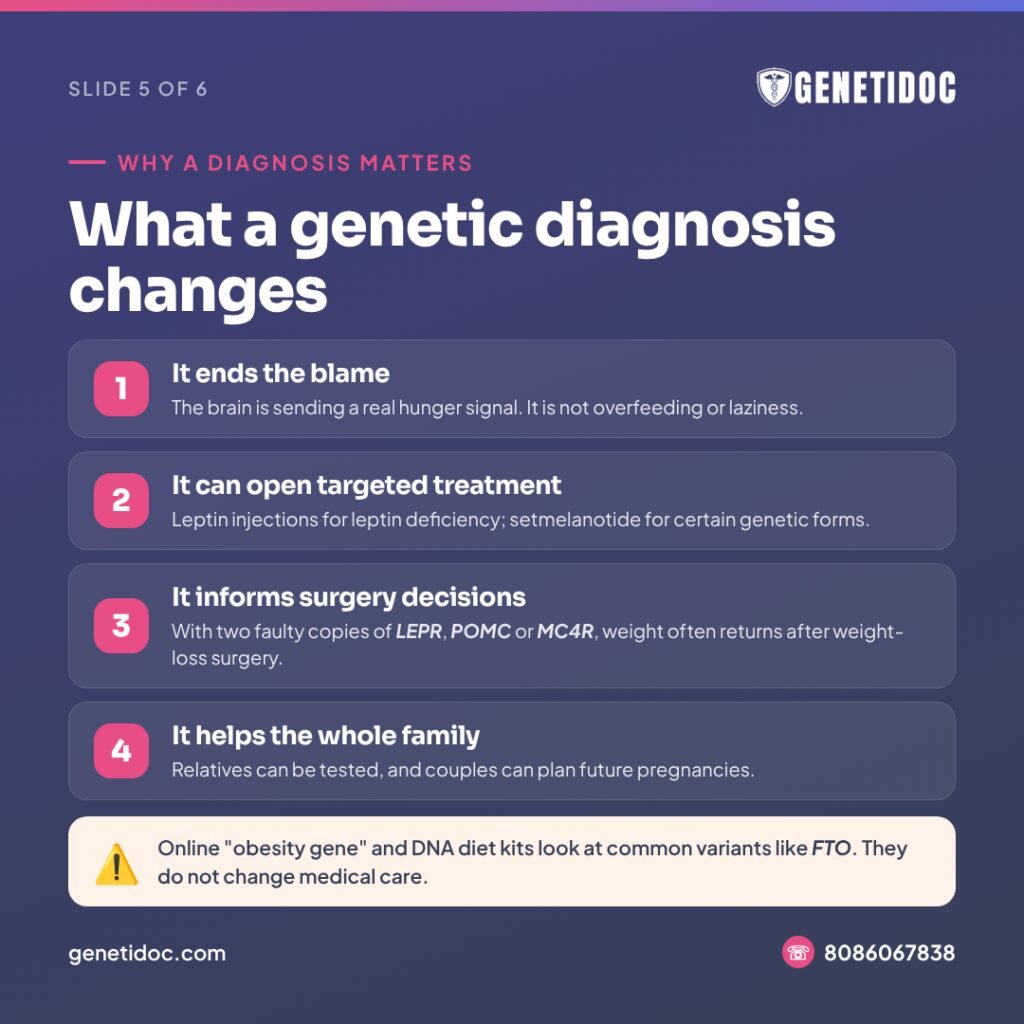
1. It ends the blame
Many parents have been told, directly or indirectly, that they are overfeeding their child. Many children have been called lazy or greedy. A diagnosis shows that the child’s brain is sending a genuine, powerful hunger signal. This often brings relief, and it changes how schools, relatives and doctors respond.
2. It can open the door to targeted treatment
- Leptin deficiency: Children who cannot make leptin can be treated with leptin injections. This has produced dramatic reductions in hunger and weight in published reports.
- Setmelanotide: This medicine directly switches on the MC4R In the United States, it is approved for obesity due to confirmed POMC, PCSK1 or LEPR deficiency, Bardet-Biedl syndrome and, since March 2026, obesity caused by damage to the hypothalamus. It is not effective in every genetic form. A large 2026 trial in a broader group of MC4R pathway conditions did not meet its main goal. As far as published Indian reports show, it is not routinely available in India.
- Glucagon-like peptide-1 (GLP-1) medicines: This group of medicines includes semaglutide. Small studies suggest they can help people with one faulty copy of MC4R. Generic semaglutide became available in India in March 2026, making this class more accessible. These medicines need a specialist prescription and monitoring.
3. It informs decisions about weight-loss surgery
Weight-loss (bariatric) surgery helps many people with severe obesity. But in people with two faulty copies of genes such as LEPR, POMC or MC4R, published reports show weight loss at first, followed by substantial regain. Experts advise that surgery in these patients should be weighed very carefully by specialized centers. Knowing the genetic cause before surgery helps the surgical team and family set realistic expectations.
4. It guides screening for related problems
- Bardet-Biedl syndrome: regular eye checks and kidney monitoring
- Prader-Willi syndrome: growth hormone treatment, structured food access at home and school, and follow-up for sleep, breathing, hormones and behavior
- Monogenic obesity in general: early checks for diabetes, cholesterol, liver fat and blood pressure
5. It helps the whole family
One published example from 2026 shows this clearly. A girl developed severe obesity by age 2, with constant hunger. At age 7, a gene panel found a change in MC4R. Testing her relatives found the same change in her mother, grandmother and great-grandmother, each with a lifelong history of early-onset obesity. The authors noted that earlier testing could have spared the family years of ineffective treatment and allowed targeted therapy.
“A diagnosis in one child often answers questions for parents, brothers and sisters, and even grandparents who have struggled with their weight all their lives. Genetics is rarely about one person. It is about the family.”
— Dr. Roshan Daniel, Clinical Geneticist, Founder, Genetidoc
What a Diagnosis Means for Family Members and Future Pregnancies
How genetic obesity is inherited
- Dominant (most MC4R cases): One faulty copy is enough. An affected parent has a 50% chance of passing it to each child. Severity varies, so not everyone with the change develops severe obesity.
- Recessive (most LEP, LEPR, POMC, PCSK1 and Bardet-Biedl cases): Both parents are healthy carriers. Each pregnancy has a 25% chance of an affected child.
- Prader-Willi syndrome: Usually happens by chance and is not inherited. The chance of it happening again is generally under 1%. A small number of families have a rare inherited cause, where the chance can be much higher, which is why testing the parents matters.
Testing relatives (cascade testing)
Once a definite cause is found in one person, relatives can have a quick, targeted test for that one specific change. Targeted testing for a known family variant typically takes about 1 week. Parents of an affected child are usually tested too, especially if they are planning another pregnancy.
Planning a future pregnancy
When the family’s gene change is known, couples can choose, if they wish, from options such as diagnostic testing during pregnancy or preimplantation genetic testing with in vitro fertilisation. A genetic counselor explains each option. The decision always rests with the couple.
Can a DNA Test Tell Me the Best Diet for My Body?
Many online kits promise a “DNA diet” or report your “obesity genes”. In Team Genetidoc’s view, these wellness reports have no clinical use. Here is why:
- They usually look at common variants like FTO, which have small effects and do not change medical advice.
- They are not designed to detect the rare, high-impact changes that cause monogenic obesity.
- Many are built on genetic data from people of European ancestry. To our team’s knowledge, no direct-to-consumer package is designed around variants specific to Indian populations.
- Your genetic data may be stored, shared or exposed in a data breach. In 2023, a credential-stuffing attack at one large direct-to-consumer company affected data linked to about 6.9 million users.
For diet advice, a qualified dietitian is the right expert. If you are worried about a genetic cause, a clinical geneticist can tell you whether testing makes sense at all.
“A report saying you carry an FTO risk variant does not change what any good doctor would advise you to do. Good food, sleep, movement and medical care work whatever that result says. Genetic testing earns its place when it changes a decision.”
— Dr. Roshan Daniel, Clinical Geneticist, Founder, Genetidoc
Common Myths About Genetics and Obesity
- Myth: “Obesity runs in our family, so nothing can be done.”
Fact: For most families, shared genes increase sensitivity, but lifestyle and medical care still make a real difference. Even in monogenic obesity, targeted treatment and structured support can help. - Myth: “If it’s genetic, diet and exercise are pointless.”
Fact: Healthy habits benefit everyone, including people with genetic obesity. A diagnosis changes how we support someone, not whether we do. - Myth: “A chubby baby is a healthy baby.”
Fact: Most chubby babies are healthy. But rapid, severe weight gain in the first year, especially with constant hunger, deserves a doctor’s review. - Myth: “A DNA kit can tell me my ideal diet.”
Fact: Current evidence does not support choosing a diet based on common genetic variants. - Myth: “A normal genetic test means it’s definitely not genetic.”
Fact: A negative result means no reportable cause was found in what was tested. The right test, and later review, still matter.
Illustrative Example: When Obesity Is Part of a Syndrome
Illustrative example (not a real patient)
A 10-year-old girl has obesity, mild learning difficulties and was born with an extra finger on one hand. Recently, her parents noticed she struggles to see at dusk. Each of these features alone is common, but together they suggest Bardet-Biedl syndrome. Genetic testing confirms the diagnosis. Her care now includes regular eye and kidney checks. Her parents learn that each future pregnancy has a 25% chance of being affected, and that her brother can be checked for the same gene changes.
Practical Steps for Parents Who Are Worried
- Plot the growth chart. Ask your pediatrician to show your child’s weight and height on a growth chart from birth. Early, steep weight gain is an important clue.
- Write down eating behaviors. Note night-time food-seeking, distress after meals or hiding food. Specific examples help doctors much more than “he eats a lot”.
- Map the family history. Note who in the family had severe obesity from childhood, and whether parents are related.
- Note other features. Developmental delays, vision problems, extra fingers or toes, short stature or frequent infections are all worth mentioning.
- Ask about a genetics referral if red flags are present, rather than repeating diet after diet.
- Avoid buying random DNA kits. Ask a clinical geneticist which test, if any, is right.
- Keep every report. If testing is done, keep the report and ask for a copy of the raw data. It can be reanalysed later as science improves.
Why Genetic Counseling Matters
Genetic testing for obesity raises real questions. Which test? What does an uncertain result mean? Should my other children be tested? What about a future pregnancy? Will my child’s life be different?
Genetic counseling helps families work through these questions before and after testing. A counselor explains what a test can and cannot find, so expectations are realistic. After results, the counselor and clinical geneticist explain what they mean for the person tested, for relatives and for future planning. The aim is to inform, not to direct. Every decision belongs to the family.
At Genetidoc, every result comes with a consultation. Patients also receive an individualized written summary, prepared by a genetic counselor and checked by a clinical geneticist, which they can share with their other doctors and relatives.
Key Takeaways
- Genes strongly influence body weight, but for most people obesity is not caused by a single gene.
- Common obesity comes from many small genetic effects combined with lifestyle and environment. Genetic testing rarely helps in this situation.
- Rare monogenic and syndromic forms usually start before age 5, with intense hunger or other features. In these cases, testing can change treatment.
- Consanguinity raises the chance of recessive forms, which matters for many Indian families.
- The right test matters: for example, Prader-Willi syndrome needs a methylation test, not a standard exome.
- A diagnosis can end blame, guide treatment and surgery decisions, and help relatives and future pregnancies.
- Direct-to-consumer “obesity gene” and DNA diet reports do not change medical care.
Worried Your Child’s Hunger or Weight Gain Is More Than Eating Habits?
If your child’s obesity started in the first years of life, if they seem hungry all the time, or if there are other features like developmental delay or vision problems, a review with a clinical geneticist can help clarify whether a genetic cause is likely and which test, if any, makes sense.
Genetidoc’s clinical geneticists consult online across India, in many regional languages, with home sample collection when testing is needed. Bring your child’s growth records, any previous reports and your family history to the consultation.
Book a genetic obesity consultation with Genetidoc.
Families can also read and ask questions on the rare genetics disease forum
Frequently Asked Questions
1. Is obesity genetic?
Partly. Genes explain an estimated 40–70% of the differences in weight between people. But for most people, obesity results from many small genetic effects combined with diet, activity, sleep and environment, not from a single gene.
2. What percentage of obesity is caused by a single gene?
Only a small minority. Among children with severe obesity starting in early childhood, single-gene causes are found in a few percent. Faulty MC4R, the most common, accounts for roughly 2–5% of these children.
3. What is the FTO gene?
FTO is the best-known gene linked to common obesity. One common variant raises BMI by about 0.4 points per copy. Its effect is modest, and many carriers are lean. It does not change medical advice.
4. What is monogenic obesity?
Monogenic obesity is a rare form of obesity caused by a change in one gene, usually in the brain’s appetite control pathway. It typically causes severe obesity and intense hunger from infancy or early childhood.
5. When should a child be tested for genetic obesity?
Testing is worth considering when severe obesity begins before age 5, with intense constant hunger, other features such as developmental delay, a family history of severe early obesity, or parents who are blood relatives.
6. Can adults have genetic testing for obesity?
Yes, if they have had severe obesity since early childhood or have features of a genetic syndrome. For weight gain that started in adulthood, genetic testing is rarely useful.
7. Can a DNA test tell me what diet to follow?
No. Current evidence does not support choosing a diet based on common genetic variants. A dietitian is the right expert for diet planning.
8. Is there treatment for genetic obesity?
Some forms have targeted options. Leptin deficiency can be treated with leptin injections, and setmelanotide is approved in the United States for certain genetic forms. GLP-1 medicines may help some people. Structured lifestyle support remains important for everyone.
9. Does weight-loss surgery work in genetic obesity?
It depends on the cause. In people with two faulty copies of genes such as LEPR, POMC or MC4R, weight often returns after surgery. Knowing the genetic cause beforehand helps the medical team plan.
10. If my child has genetic obesity, will my next child have it too?
It depends on the cause. Recessive forms carry a 25% chance in each pregnancy. Dominant MC4R changes carry a 50% chance from an affected parent. Prader-Willi syndrome usually has a recurrence chance under 1%.
11. How long does genetic testing for obesity take?
A multi-gene panel typically takes about 3–4 weeks. Whole exome sequencing takes about 1–2 months. A targeted test for a known family variant takes about 1 week.
12. Why might a normal exome miss Prader-Willi syndrome?
Prader-Willi syndrome is usually caused by genes on chromosome 15 being missing or switched off, not by a gene spelling change. A DNA methylation test is needed to detect it reliably.
References
- Styne DM, et al. Pediatric Obesity—Assessment, Treatment, and Prevention: An Endocrine Society Clinical Practice Guideline. Journal of Clinical Endocrinology and Metabolism. 2017;102(3):709–757.
- Loos RJF, Yeo GSH. The genetics of obesity: from discovery to biology. Nature Reviews Genetics. 2022;23:120–133.
- Frayling TM, et al. A common variant in the FTO gene is associated with body mass index and predisposes to childhood and adult obesity. 2007;316:889–894.
- Khera AV, et al. Polygenic prediction of weight and obesity trajectories from birth to adulthood. 2019;177(3):587–596.
- Hinney A, Vogel CIG, Hebebrand J. From monogenic to polygenic obesity: recent advances. European Child and Adolescent Psychiatry. 2010;19(3):297–310.
- Driscoll DJ, Miller JL, Cassidy SB. Prader-Willi Syndrome. In: GeneReviews. University of Washington, Seattle.
- Forsyth R, Gunay-Aygun M. Bardet-Biedl Syndrome Overview. In: GeneReviews. University of Washington, Seattle.
- National Health Service Genomics Education Programme. Presentation: Patient with possible monogenic obesity. GeNotes.
- Clinical and molecular characterisation of children with monogenic obesity: a case series. Postgraduate Institute of Medical Education and Research, Chandigarh. Pediatric Endocrinology, Diabetes and Metabolism. 2024;30(2):104–109.
- Whole exome sequencing reveals novel LEPR frameshift mutation in severely obese children from Western India. Molecular Genetics and Genomic Medicine.
- Novel LEPR mutation in a consanguineous family from Mumbai. European Society for Paediatric Endocrinology Abstracts. 2022;95:P1-65.
- Saeed S, et al. Biallelic mutations in P4HTM cause syndromic obesity. 2023.
- Monogenic obesity due to MC4R deficiency: lessons from a multigenerational case. Molecular and Cellular Pediatrics.
- Farooqi IS, et al. Effects of recombinant leptin therapy in a child with congenital leptin deficiency. New England Journal of Medicine. 1999;341:879–884.
- Iepsen EW, et al. Patients with obesity caused by melanocortin-4 receptor mutations can be treated with a glucagon-like peptide-1 receptor agonist. Cell Metabolism. 2018;28(1):23–32.
- Long-term outcomes of bariatric surgery in patients with bi-allelic mutations in the POMC, LEPR, and MC4R Surgery for Obesity and Related Diseases. 2021;17(8):1449–1456.
- Rhythm Pharmaceuticals. First quarter 2026 financial results and business update (setmelanotide approvals and EMANATE trial results). May 2026.
- Ministry of Health and Family Welfare, Government of India. National Family Health Survey-5 (2019–21), India Fact Sheet.
- Misra A, et al. Consensus statement for diagnosis of obesity, abdominal obesity and the metabolic syndrome for Asian Indians and recommendations for physical activity, medical and surgical management. Journal of the Association of Physicians of India. 2009;57:163–170.
- Yajnik CS, et al. Neonatal anthropometry: the thin-fat Indian baby. International Journal of Obesity. 2003;27:173–180.
Related Reading on Genetidoc
- Hypertrichosis: The Genetics Behind Excess Hair Growth
- Migraine and Genetics: Is It Hereditary?
- Rett Syndrome and Its Genetic Basis: What Every Parent Should Know About the MECP2 Gene
- Seizures in Infancy: When Genetic Testing Helps
- Male BRCA Carriers: An Overlooked Risk Group
This article is for educational purposes and does not replace personal medical advice. Please consult a qualified doctor or clinical geneticist about your or your child’s specific situation. Written and reviewed by Team Genetidoc, Genetidoc Genetic Clinic and DNA Testing Lab.