
Your baby smiled at two months and held her head up at four. Now, at seven months, she seems floppy. She feeds slowly, startles at small sounds and no longer reaches for her toys. The doctor has noticed that her tummy is large and that the bluish birthmarks on her back are spreading. An eye doctor has used a phrase you have never heard before: a “cherry-red spot.”
These signs can point to GM1 gangliosidosis, a rare inherited condition that affects the brain and many other organs. It is uncommon, and its early signs look like many other childhood problems, so it is often recognized late.
This guide is written by the clinical genetics team at Genetidoc. It explains what GM1 gangliosidosis is, the early signs parents and doctors should know, how the diagnosis is confirmed in India, and why an early, accurate diagnosis still matters even though there is no cure yet.
Quick answer: what is GM1 gangliosidosis?
GM1 gangliosidosis is a rare inherited condition in which the body cannot break down a fatty substance called GM1 ganglioside. The cause is a missing or weak enzyme called beta-galactosidase, which happens because of changes in both copies of the GLB1 gene. The fatty substance builds up in nerve cells and other organs and causes steadily worsening damage. The most common and severe form begins before the age of one. Diagnosis is confirmed with a beta-galactosidase enzyme test and GLB1 genetic testing.
What Is GM1 Gangliosidosis?
Every cell in the body has tiny compartments called lysosomes. Think of them as the cell’s recycling centres. Inside them, proteins called enzymes act like scissors and cut used materials into small pieces the body can reuse.
One of these materials is GM1 ganglioside, a fatty substance found especially in the brain and nerve cells. The enzyme that breaks it down is called beta-galactosidase. The instructions for making this enzyme are carried by a gene called GLB1.
In GM1 gangliosidosis, both copies of the GLB1 gene have a change that stops the enzyme from working properly. GM1 ganglioside then piles up inside cells, especially nerve cells. Over time, this build-up damages the brain, spinal cord, liver, spleen, bones and sometimes the heart.
Because the problem lies in the lysosomes, GM1 gangliosidosis belongs to a larger family of conditions called lysosomal storage disorders. The condition is progressive, which means it gets worse over time.
How rare is it?
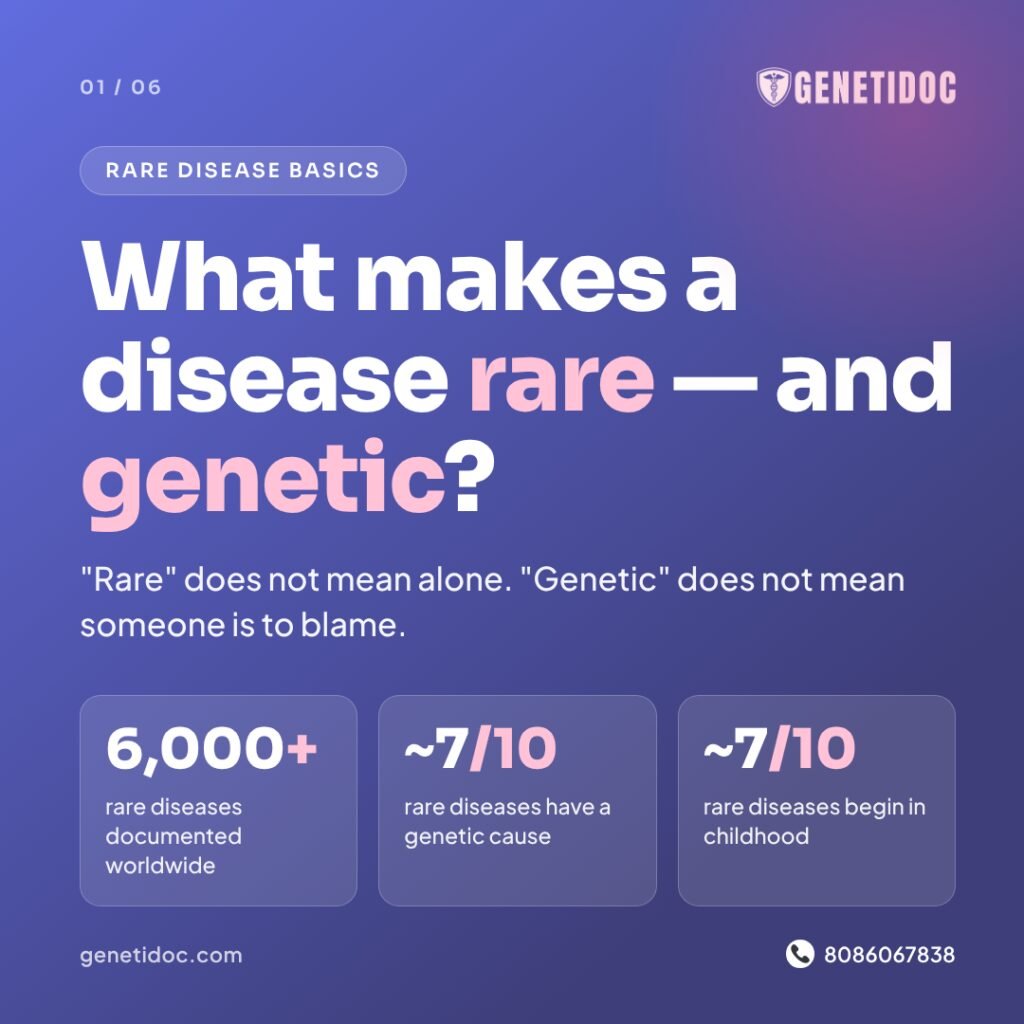
Worldwide, GM1 gangliosidosis is estimated to affect about 1 in 100,000 to 300,000 newborns. It is more common in some communities, including in Brazil, among the Roma and in Malta. There is no reliable figure for India yet. The largest Indian study, published in 2015, described 50 Indian families with GM1 gangliosidosis and found 33 different GLB1 gene changes, 20 of which had never been reported before.
“Most doctors will see GM1 gangliosidosis only a handful of times in their careers. That is exactly why it is missed. Parents often bring us a file of reports from several specialists, each of whom saw one part of the picture. Our job is to put those pieces together.”
— Dr. Roshan Daniel, Clinical Geneticist and Founder, Genetidoc
Types of GM1 Gangliosidosis
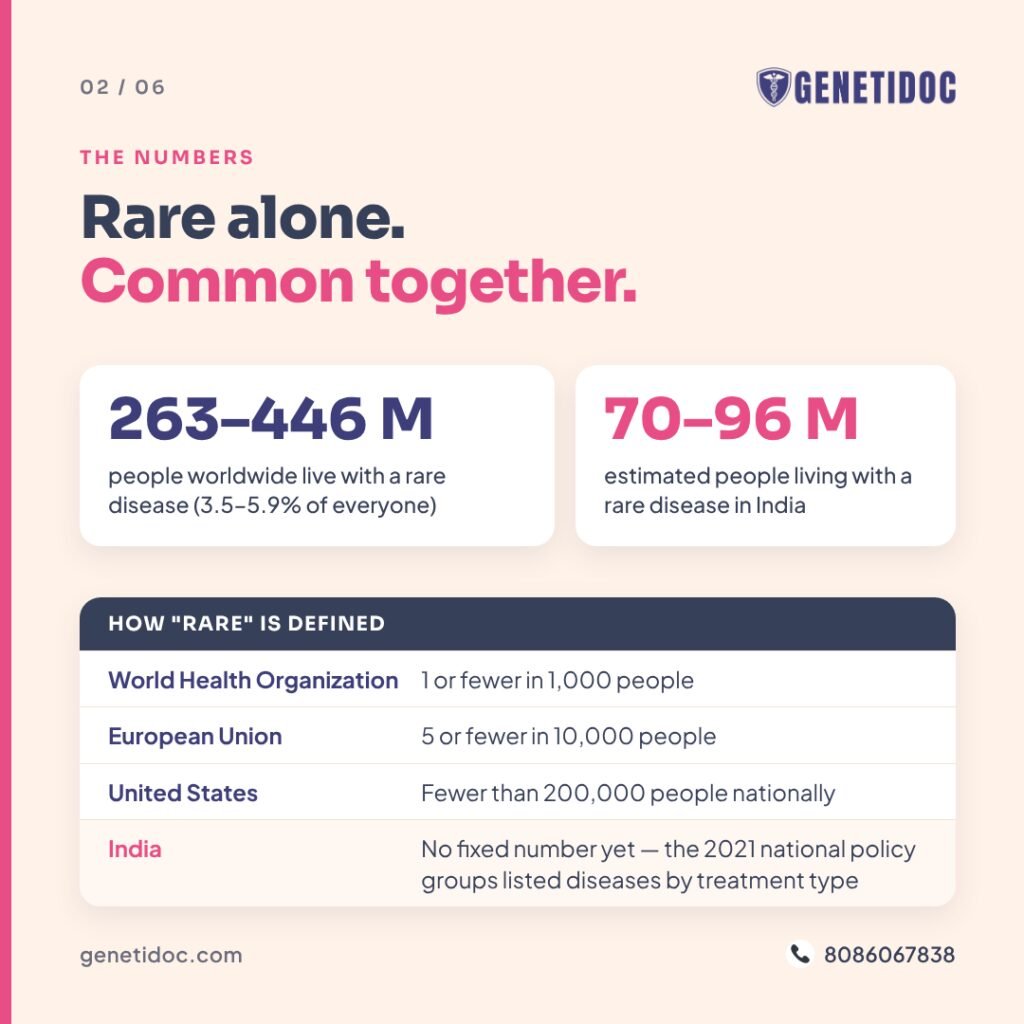
GM1 gangliosidosis is a spectrum. Doctors describe three main types based on the age when signs begin. In general, the earlier the signs start, the faster the condition progresses.
| Type | Usual age when signs begin | Typical features |
| Type I (infantile) | Before 12 months, often in the first 6 months | Floppiness, loss of skills, feeding problems, enlarged liver and spleen, coarse facial features, cherry-red spot, seizures, widespread Mongolian spots |
| Type II, late-infantile | 1 to 3 years | Child develops normally, then loses speech, walking and other skills; seizures; usually no coarse facial features |
| Type II, juvenile | 3 to 10 years | Slower decline in walking, speech and learning; clumsiness; spine and hip problems |
| Type III (adult or chronic) | Late childhood to early adulthood | Abnormal muscle tightening and twisting movements (dystonia), slurred speech, walking difficulty; thinking is often preserved for many years |
Published data suggest that type I lasts about two to three years. Children with the late-infantile form may live until later childhood. Juvenile and adult forms progress more slowly, and adults may live for many years with ongoing care. Every child is different, and a clinical geneticist can explain what the diagnosis is likely to mean for your child.
One gene, two different conditions
Changes in the same GLB1 gene can also cause a different condition called Morquio B disease (mucopolysaccharidosis type IVB). Morquio B mainly affects the bones and joints. Children have normal intelligence and the brain is not affected. This is why a genetic result always has to be read alongside the child’s actual features.
Early Signs of GM1 Gangliosidosis Parents Should Know
Most babies with the infantile form look fairly normal at birth. The signs appear gradually over the first months. Not every child has every sign.
- Floppiness (low muscle tone). The baby feels limp when picked up and has poor head control. Later the muscles may become stiff.
- Loss of skills already learned. A baby who could hold up her head, smile, reach or roll stops doing so. Doctors call this developmental regression. It is the single most important warning sign.
- Poor feeding and slow weight gain. Sucking and swallowing become weak. Milk may go into the windpipe, causing coughing and chest infections.
- A swollen tummy. This is usually caused by an enlarged liver and spleen, which doctors call hepatosplenomegaly. It is present in most children with the infantile form.
- Coarse facial features. The face may look puffy, with a broad nose, thick gums and a large tongue.
- Widespread Mongolian spots. These bluish-grey birthmarks are common and harmless in Indian babies. In GM1 gangliosidosis they can be unusually large and spread over the back, buttocks, arms or legs. They are sometimes mistaken for bruises.
- A cherry-red spot in the eye. An eye specialist sees a red spot at the back of the eye surrounded by a pale area. About half of children with the infantile form have it. It is also seen in other related conditions, such as Tay-Sachs and Sandhoff disease.
- An exaggerated startle to sound. The baby jumps strongly at ordinary noises.
- Poor vision. The baby stops following faces or toys, or the eyes make jerky movements.
- These often begin in the first year in the infantile form.
- Bone and joint changes. Stiff joints, a curved spine or abnormal bones on X-ray.
Indian research supports these clues. In a study of children with gangliosidosis from Bengaluru, 83% of children with GM1 gangliosidosis had coarse facial features, 42% had extensive Mongolian spots, and all had an enlarged liver and spleen. That last finding helped distinguish GM1 from Tay-Sachs disease, in which none of the children had an enlarged liver or spleen.
Signs that may be seen before birth
In some families, the first clue comes during pregnancy. The infantile form can cause hydrops fetalis, a serious build-up of fluid in the baby’s body seen on ultrasound, when the cause is not related to blood group problems. Poor growth of the baby in the womb is another possible sign. When unexplained hydrops occurs, lysosomal storage disorders, including GM1 gangliosidosis, are among the conditions doctors consider.
Signs in older children and adults
- Late-infantile and juvenile forms: a child who walked and talked normally starts falling, becomes clumsy, loses words, struggles at school or develops seizures.
- Adult form: slowly worsening dystonia, slurred speech, difficulty swallowing and walking problems, often beginning in the teenage years. The adult form is easy to mistake for other movement disorders or cerebral palsy.
“A child who is slow to develop is common. A child who is losing skills is different, and that should never be put down to ‘the baby is lazy’ or ‘she will catch up.’ Regression is a reason for an urgent evaluation.”
— Dr. Roshan Daniel
Why GM1 Gangliosidosis Is Often Diagnosed Late
International patient data show that families can wait months to years between the first symptoms and a confirmed diagnosis. In India, the Bengaluru study found that children with gangliosidosis were first seen at a median age of about 15 months. Several things contribute to the delay:
- Common early signs. Floppiness, slow feeding and chest infections have many ordinary causes.
- Care is split between specialists. A pediatrician treats the chest infection, a neurologist treats the seizures, an eye doctor sees the cherry-red spot. Nobody sees the full pattern.
- Familiar birthmarks. Mongolian spots are so common in Indian babies that their unusual spread goes unnoticed.
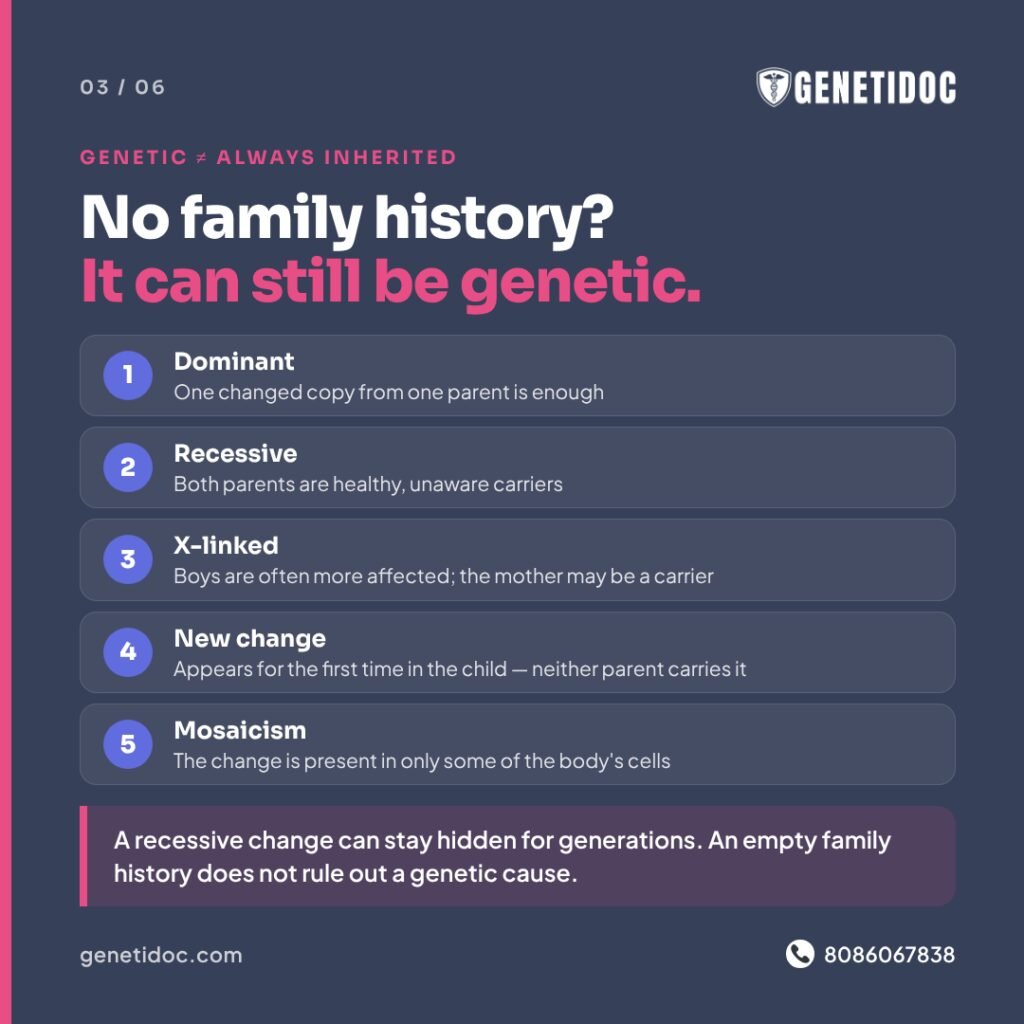
- No newborn screening. GM1 gangliosidosis is not part of routine newborn screening in India or in most other countries.
- Look-alike conditions. Several other storage disorders cause similar signs. Without the right tests in the right order, families may get a partial or wrong answer.
When Should You Ask for a Genetics Referral?
Ask your pediatrician about seeing a clinical geneticist if your child has:
- Loss of any skill already learned, such as head control, smiling, sitting, speech or walking
- Floppiness plus an enlarged liver or spleen
- A cherry-red spot found on an eye examination
- Unusually widespread Mongolian spots plus developmental delay or coarse facial features
- Seizures with slowing development in the first two years
- An X-ray showing unusual bone changes in a baby who is also not developing well
- A brother, sister or cousin who had a similar illness or died in early childhood without a clear diagnosis
- Parents who are blood relatives, along with any of the signs above
- Unexplained hydrops fetalis in a current or previous pregnancy
When GM1 testing may not be needed
A baby who is a little slow to sit but is steadily gaining new skills, with a normal liver and spleen and normal eyes, usually does not need testing for GM1 gangliosidosis. Mongolian spots on their own, even large ones, are almost always harmless. A clinical geneticist can examine your child and decide whether the overall picture fits a storage disorder. This avoids unnecessary testing as well as false reassurance.

How Is GM1 Gangliosidosis Diagnosed? Step by Step
A reliable diagnosis is built in layers. Each step answers a different question.
- Clinical evaluation by a clinical geneticist. A detailed history of pregnancy, birth and development, a family tree, and a head-to-toe examination looking for the pattern of signs described above.
- Eye examination. A dilated eye examination by an ophthalmologist checks for a cherry-red spot and cloudy corneas.
- Supporting tests. These may include an ultrasound of the abdomen to measure the liver and spleen, X-rays of the spine and bones, and an MRI (magnetic resonance imaging) scan of the brain to look at the white matter. Some laboratories also test the urine for stored sugar molecules (oligosaccharides) or look for unusual cells in a blood smear. These tests raise or lower suspicion but do not confirm the diagnosis.
- Beta-galactosidase enzyme test. This measures how well the enzyme works in white blood cells from a blood sample, or sometimes in skin cells grown in the laboratory. Very low activity strongly suggests GM1 gangliosidosis or Morquio B disease.
- GLB1 genetic testing. This finds the gene changes responsible. Finding a disease-causing change in both copies of GLB1 confirms the diagnosis. It is also essential for testing relatives and planning future pregnancies.
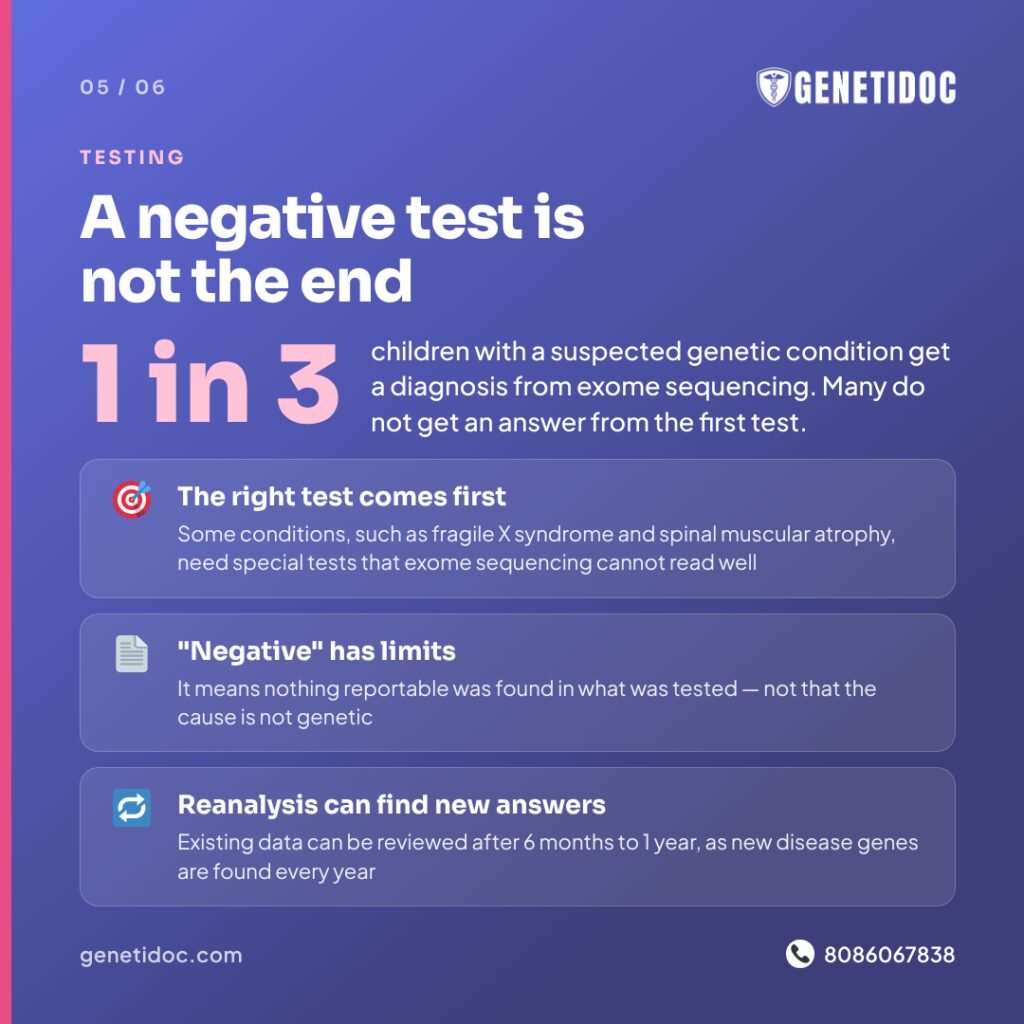
When the signs overlap with several conditions, the geneticist may order a panel of enzyme tests for several storage disorders at once, or a multi-gene panel or exome test. Exome testing reads the protein-coding parts of most of a person’s genes. The choice depends on how clearly the child’s features point to GM1 gangliosidosis.
Why both the enzyme test and the gene test matter
Each test can leave questions that the other answers:
- Low enzyme activity does not tell you which condition it is. Low beta-galactosidase is seen in both GM1 gangliosidosis and Morquio B disease. It can also be low in a different condition called galactosialidosis, where a second enzyme is also affected. A good laboratory checks related enzymes before reaching a conclusion.
- The enzyme level does not reliably predict the type. Residual activity differs between the types, but it overlaps too much to tell them apart on its own.
- A gene result can be uncertain. Genetic testing sometimes finds a variant of uncertain significance, a gene change whose effect is not yet known. Such a result does not confirm or rule out the diagnosis. The enzyme result and the child’s features help decide what it means. In one international patient dataset, a small share of GLB1 changes had uncertain or conflicting classifications.
- India has its own gene changes. The Indian study found that many families carried changes not seen elsewhere. Interpreting a new change correctly requires experience and careful checking against published evidence.
“An enzyme report or a gene report is not a diagnosis by itself. The diagnosis comes from reading both results against the child in front of you. A low enzyme with the wrong interpretation can send a family down the wrong path for months.”
— Dr. Roshan Daniel
Conditions that can look like GM1 gangliosidosis
Part of the clinical geneticist’s work is ruling out conditions with similar signs. These include:
- GM2 gangliosidoses (Tay-Sachs and Sandhoff disease). These also cause a cherry-red spot and regression. In Indian studies they are more common than GM1. An enlarged liver and spleen and coarse facial features point more towards GM1.
- Mucopolysaccharidoses, such as Hurler syndrome, which share coarse features and bone changes.
- Niemann-Pick disease type A, which also causes an enlarged liver and spleen and a cherry-red spot.
- Galactosialidosis, sialidosis and mucolipidosis, which are related storage disorders.
- Canavan disease, Krabbe disease and other leukodystrophies, which affect the brain’s white matter.
Cost and turnaround in India
Costs depend on which tests are needed and in what order. An enzyme test for a single condition is the simpler step. A gene test for GLB1 alone usually costs less than a broad panel or exome test. Results for enzyme and genetic tests usually take a few weeks. Your genetic counselor will explain the expected costs and timelines for your child’s specific tests before anything is ordered.
Choosing the cheapest single test without expert guidance can backfire. An enzyme test alone, without genetic confirmation, leaves the family unable to use the result for prenatal testing later. A broad test without careful interpretation can produce uncertain results that cause worry rather than clarity.
Why Early Diagnosis Matters When There Is No Cure
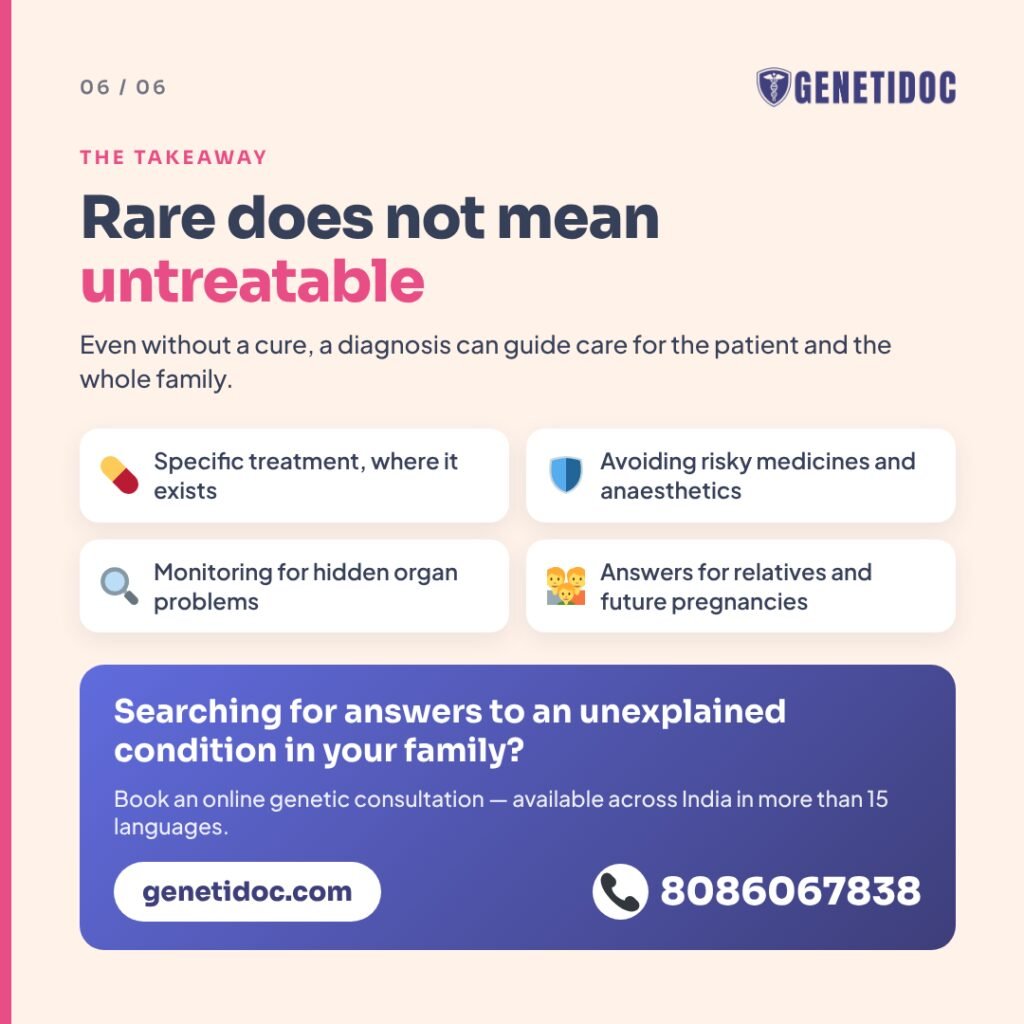
As of 2026, there is no approved cure or disease-specific treatment for GM1 gangliosidosis. Parents often ask, understandably, what difference a diagnosis can make. The answer is: a great deal.
1. It ends the search and the uncertainty
Without a diagnosis, many families go from one hospital to the next, repeating tests and trying treatments that cannot help. A clear answer stops this. It also lets parents understand what is happening and plan realistically.
2. It guides better supportive care
Supportive care can make a real difference to a child’s comfort and quality of life. Once the diagnosis is known, the care team can plan ahead:
- Feeding and swallowing: safe feeding positions, thickened feeds and, when needed, a feeding tube to reduce chest infections caused by milk entering the lungs
- Breathing: chest physiotherapy, early treatment of chest infections and attention to breathing problems
- Seizures: seizure medicines carefully dosed so the child is not made overly sleepy
- Movement and posture: physiotherapy and positioning to reduce stiffness and discomfort
- Regular checks: heart, eyes, spine and hips
- Palliative care: specialists who focus on comfort, symptom relief and support for the whole family, ideally involved early rather than only at the end
3. It makes anesthesia and surgery safer
Children with GM1 gangliosidosis can have airway, spine and heart problems that make anesthesia riskier. Some medicines can also worsen symptoms. When the diagnosis is known, the surgical and anesthesia teams can plan in advance.
4. It may open the door to research studies
Research is moving quickly. In 2026, results from an early-stage trial of gene therapy in children with type II GM1 gangliosidosis were published in the New England Journal of Medicine. The therapy was found to be safe and well tolerated, with biochemical improvement and stabilization on brain imaging in some children. Other studies are testing an oral medicine for the late-infantile and juvenile forms, and a gene therapy given before birth.
Families should understand three things about these studies:
- They are research, not treatment. Benefit is not guaranteed, and these therapies are not available outside trials.
- Entry criteria are strict and depend on age and stage. Current therapies aim to slow further damage, not reverse damage already done. Children diagnosed late may no longer meet the criteria.
- Most study sites are outside India. A clinical geneticist can help families understand whether any study is relevant to their child and how to approach it.
5. It protects brothers, sisters and future pregnancies
For many families, the most lasting value of a diagnosis is what it means for the next pregnancy. This is explained in the next section.
“Parents sometimes ask why they should go through testing when nothing can be done. My answer is that a lot can be done. We can make the child more comfortable, help the family plan, and give them real choices for their next pregnancy. None of that is possible without a confirmed diagnosis.”
— Dr. Roshan Daniel
How GM1 Gangliosidosis Is Inherited
GM1 gangliosidosis is an autosomal recessive condition. This means a child is affected only when they inherit a non-working copy of the GLB1 gene from both parents.
Each parent is usually a carrier. Carriers have one working copy and one non-working copy. They are completely healthy and almost always have no idea they carry the change, often until their first affected child is diagnosed.
When both parents are carriers, each pregnancy has:
- a 1 in 4 (25%) chance of an affected child
- a 1 in 2 (50%) chance of a child who is a healthy carrier
- a 1 in 4 (25%) chance of a child who is neither affected nor a carrier
These chances apply to every pregnancy. Having one affected child does not mean the next three will be unaffected.
The Indian context: marriages between relatives
Marriages between blood relatives, such as cousin marriages, are common in many Indian communities. Relatives are more likely to carry the same rare gene change, which raises the chance of recessive conditions. In the Bengaluru study of children with gangliosidosis, 75% were born to parents who were blood relatives.
This is never a reason for blame. Families have followed these traditions for generations, and most children of related parents are healthy. It is a reason for awareness and, where appropriate, carrier testing before pregnancy.
Options for Future Pregnancies
Once the exact GLB1 gene changes in the family are known, parents have choices in future pregnancies:
- Prenatal diagnosis. The baby can be tested during pregnancy by chorionic villus sampling (taking a tiny sample of the placenta, usually at 11 to 14 weeks) or amniocentesis (taking a small sample of the fluid around the baby, usually from 15 weeks). The sample is checked for the family’s known gene changes.
- Preimplantation genetic testing. Couples going through IVF (in vitro fertilization) can have embryos tested for the family’s gene changes before transfer, so that only unaffected embryos are transferred. Published reports describe this approach being used for families with infantile GM1 gangliosidosis.
- Other paths to parenthood. Some couples consider donor eggs or sperm, or adoption.
- Carrier testing for relatives. Adult brothers and sisters of the parents, and their partners, can choose carrier testing before planning their own families. This is especially relevant when marriages within the family are common.
Genetidoc counsels families on these options and coordinates referral to centres that perform the procedures. Every decision remains the family’s own. The role of genetic counseling is to inform, never to direct.
What if a child passed away before a diagnosis was made?
Some families come to us after losing a child to an illness that was never diagnosed. Answers may still be possible:
- If any stored sample from the child exists, such as stored DNA, a dried blood spot or a tissue sample, it may be tested.
- If no sample is available, both parents can be tested for GLB1 changes based on the child’s medical records. If each parent carries a disease-causing change, this can confirm the likely cause and allow testing in future pregnancies.
Bring every report you have, including scans, eye reports, MRI reports and hospital discharge summaries. Even old records can help.
Illustrative Examples
These scenarios are composites based on presentations described in published literature. They do not describe individual patients.
Example 1: The birthmarks that were a clue
An eight-month-old girl born to parents who are first cousins is brought in because she has stopped holding up her head. Her parents had been told the large bluish patches on her back and legs were ordinary birthmarks. The clinical geneticist finds an enlarged liver and spleen and slightly coarse facial features. An eye examination shows a cherry-red spot.
Beta-galactosidase activity in her blood is very low, and GLB1 testing confirms two disease-causing changes. Her care team plans for safe feeding and seizure care, and palliative care specialists support the family. Both parents are confirmed carriers. In their next pregnancy they choose prenatal diagnosis.
Example 2: The toddler who stopped talking
A two-and-a-half-year-old boy walked at 13 months and had about 20 words. Over six months he starts falling, loses most of his words and has his first seizure. He has no enlarged liver and his face looks normal, so a storage disorder is not suspected at first.
An MRI shows changes in the brain’s white matter, and an enzyme panel shows low beta-galactosidase. Genetic testing confirms the late-infantile form of GM1 gangliosidosis. Because he is diagnosed early, his family is able to discuss whether any international research study is relevant to him, while his local team focuses on therapy, seizure control and comfort.
Example 3: Answers after a loss
A couple lost their first son at 20 months to a progressive illness with seizures and feeding problems. No diagnosis was made, and no sample was stored. Years later, during a new pregnancy, they see a clinical geneticist.
Their son’s records describe a cherry-red spot and an enlarged liver. Both parents are tested and each is found to carry a disease-causing GLB1 change. This gives the family an explanation for their loss and allows prenatal diagnosis in the current pregnancy.
Common Myths About GM1 Gangliosidosis
- Myth: “Something I ate or did in pregnancy caused this.” GM1 gangliosidosis is caused by gene changes inherited from both parents. Nothing a parent did during pregnancy causes it.
- Myth: “Nobody in our family has had this, so it cannot be genetic.” Carrier parents are healthy. Recessive conditions often appear with no previous family history.
- Myth: “We had one affected child, so the next one will be fine.” The 1 in 4 chance applies to every pregnancy.
- Myth: “Mongolian spots mean something is wrong.” Mongolian spots are common and almost always harmless. They matter only when they are unusually widespread and appear alongside other signs.
- Myth: “There is a treatment available abroad if we can afford it.” As of 2026, gene therapy and other new treatments for GM1 gangliosidosis are available only through research studies with strict entry criteria. They cannot be bought.
- Myth: “Therapies or alternative medicines can reverse the damage.” Physiotherapy and other therapies help comfort and function. No treatment, conventional or alternative, has been shown to reverse the damage. Be cautious of anyone who promises a cure.
What to Do If You Are Worried About Your Child
- Write down what you have noticed and when. Note which skills your child had and when they started to fade, along with feeding problems, infections and seizures.
- Record videos. Short videos of your child’s movements, startle responses or episodes that might be seizures are very helpful to the doctor.
- Take photographs of skin patches. This helps show how widespread the birthmarks are.
- Collect all previous reports. Bring scans, eye reports, MRI reports, blood tests and discharge summaries.
- Draw a simple family tree. Include relatives with similar illnesses, early childhood deaths and whether the parents are related by blood.
- Ask your pediatrician directly: “My child is losing skills. Should we see a clinical geneticist?”
- Before any planned surgery, tell the surgeon and anesthetist if a storage disorder is suspected, even if it is not yet confirmed.
How Genetic Counseling Supports Families
A diagnosis of GM1 gangliosidosis is life-changing. Parents often carry grief, fear and guilt all at once, and they may hear very different things from different doctors. Genetic counseling gives families a structured, unhurried space to understand:
- What the diagnosis means and what to expect
- How supportive care can keep their child comfortable
- What research studies exist, and what they can and cannot offer
- That no one is to blame
- What the diagnosis means for brothers, sisters and relatives
- What choices exist for future pregnancies
At Genetidoc, tests are chosen and interpreted by clinical geneticists who are super-specialized in Medical Genetics. Genetic counseling is built into every result, both before testing and after the report arrives. Consultations are available online across India in more than 15 languages, with home sample collection, so families do not need to travel just to begin. When a physical examination is needed, an in-person visit can be arranged.
“We sit with families at one of the hardest moments of their lives. Our first message is always the same: you did not cause this, and you do not have to face what comes next alone.”
— Dr. Roshan Daniel
Key Takeaways
- GM1 gangliosidosis is a rare, inherited, progressive condition caused by changes in both copies of the GLB1
- The infantile form usually shows before one year with floppiness, loss of skills, an enlarged liver and spleen, coarse features, a cherry-red spot and sometimes widespread Mongolian spots.
- Loss of skills already learned is the most important red flag.
- Diagnosis is confirmed with a beta-galactosidase enzyme test and GLB1 genetic testing, interpreted together with the child’s features.
- There is no approved cure yet, but early diagnosis improves supportive care, makes procedures safer, may open access to research studies and allows families to plan future pregnancies.
- Each pregnancy of carrier parents has a 1 in 4 chance of an affected child. Prenatal diagnosis and preimplantation genetic testing are possible once the family’s gene changes are known.
Is your baby losing skills, or have you been told about a cherry-red spot?
If your child has stopped doing things they could do before, or has floppiness with an enlarged liver or spleen, a clinical geneticist can tell you whether a storage disorder such as GM1 gangliosidosis needs to be considered. They can also advise which enzyme and genetic tests will give a reliable answer. If your family has already lost a child to an undiagnosed illness, we can help you look for answers before your next pregnancy.
Frequently Asked Questions About GM1 Gangliosidosis
What are the first signs of GM1 gangliosidosis?
In the infantile form, early signs usually appear before six months. They include floppiness, poor feeding, an exaggerated startle to sound, an enlarged liver and spleen, coarse facial features and loss of skills such as head control or smiling.
What causes GM1 gangliosidosis?
It is caused by changes in both copies of the GLB1 gene. These changes reduce the activity of an enzyme called beta-galactosidase, so a fatty substance called GM1 ganglioside builds up in nerve cells and other organs.
Is GM1 gangliosidosis curable?
No. As of 2026 there is no approved cure or disease-specific treatment. Supportive care improves comfort and quality of life, and gene therapy and other treatments are being studied in clinical trials.
How is GM1 gangliosidosis diagnosed?
A clinical geneticist evaluates the child, then confirms the diagnosis with a blood test measuring beta-galactosidase enzyme activity and genetic testing of the GLB1 gene. Eye examination, imaging and X-rays support the diagnosis.
What is a cherry-red spot?
It is a red spot at the back of the eye, surrounded by a pale area, seen by an eye specialist. It appears in about half of babies with infantile GM1 gangliosidosis, and also in other storage disorders such as Tay-Sachs disease.
What is the life expectancy in GM1 gangliosidosis?
It depends on the type. Published data suggest children with the infantile form usually live about two to three years. The late-infantile form progresses more slowly, and juvenile and adult forms can allow survival into adulthood.
What is the difference between GM1 gangliosidosis and Tay-Sachs disease?
Both are storage disorders that affect the brain and can cause a cherry-red spot. They involve different enzymes and genes. An enlarged liver and spleen, coarse facial features and bone changes point more towards GM1 gangliosidosis.
Can GM1 gangliosidosis be detected before birth?
Yes, if the family’s GLB1 gene changes are known. The baby can be tested by chorionic villus sampling or amniocentesis. Couples using IVF can also consider preimplantation genetic testing of embryos.
What is the chance of GM1 gangliosidosis in our next baby?
When both parents are carriers, the chance is 1 in 4 (25%) in each pregnancy. Genetic counseling explains your family’s specific risk and options.
Does cousin marriage increase the risk of GM1 gangliosidosis?
Yes. GM1 gangliosidosis is recessive, and relatives are more likely to carry the same gene change. Couples who are related by blood can consider carrier testing before pregnancy.
Can adults have GM1 gangliosidosis?
Yes. The adult form usually begins in the teenage years or early adulthood with abnormal twisting movements (dystonia), slurred speech and walking difficulty. It progresses slowly and is often mistaken for other movement disorders.
Is gene therapy available for GM1 gangliosidosis in India?
Not as a treatment. Gene therapy for GM1 gangliosidosis is available only through clinical trials, mostly outside India, with strict age and stage criteria. A clinical geneticist can help families understand whether any study is relevant.
Join the Conversation
Have questions about rare genetic conditions or want to connect with other families? Visit the genetidoc rare genetic diseases forum
Related Reading
- What Defines a Rare Genetic Disease? A Clear Guide
- Genetic Mosaicism: What It Means When Your Report Says “Mosaic”
- Genetic Conditions: Why Timing of Onset Varies
- Consanguineous Marriage and Your Child’s Genetic Risk
- Tuberous Sclerosis Complex: A Guide to Testing and Care in India
- Progeria: Understanding Accelerated Ageing in Children
References
- Regier DS, Tifft CJ, Rothermel CE. GLB1-Related Disorders. In: Adam MP, et al., editors. GeneReviews®. University of Washington, Seattle; 2013, updated 2021. NBK164500.
- Gowda VK, Gupta P, Bharathi NK, Bhat M, Shivappa SK, Benakappa N. Clinical and Laboratory Profile of Gangliosidosis from Southern Part of India. Journal of Pediatric Genetics. 2022;11(1):34–41. doi:10.1055/s-0040-1718726
- Bidchol AM, Dalal A, Trivedi R, et al. Recurrent and novel GLB1 mutations in India. Gene. 2015;567(2):173–181. doi:10.1016/j.gene.2015.04.078
- AAV9 Gene Therapy in Type II GM1 Gangliosidosis: A Phase 1–2 Trial. New England Journal of Medicine. 2026;394(12):1184–1194. doi:10.1056/NEJMoa2510935
- Zagaynova VA, Nasykhova YA, Tonyan ZN, et al. Case report: Preimplantation genetic testing for infantile GM1 gangliosidosis. Frontiers in Genetics. 2024. doi:10.3389/fgene.2024.1344051
- gov. NCT03952637: Phase 1/2 Study of Intravenous Gene Transfer With an AAV9 Vector Expressing Human Beta-galactosidase in Type I and Type II GM1 Gangliosidosis. National Human Genome Research Institute.
- gov. NCT07082543: Oral Nizubaglustat in Late-infantile and Juvenile Forms of GM1 Gangliosidosis or GM2 Gangliosidosis. Azafaros.
- Cure GM1 Foundation. GM1 Gangliosidosis: Clinical Trials Reference Guide. Updated July 2026.
This article is for educational purposes and does not replace a medical consultation. If you are concerned about your child’s health, please consult your pediatrician or a clinical geneticist.