

Marriage between first or second cousins – is common and culturally accepted in many communities around the world and India is not an exception. Cousin marriages are often accepted among communities because it strengthens family bonds, keeps property and traditions close, and is often seen as a safer, more trusted choice for life partnership. But if you’re in a consanguineous marriage or the marriage between blood relatives and are now thinking about having kids – it is about genetics. This question or discussion is not about fear, but it is about being informed, so you can make confident, healthy choices for your future child.
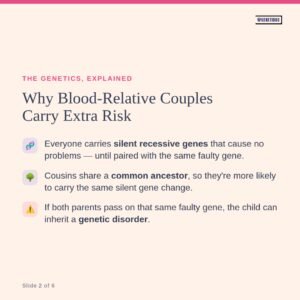
Why Family Marriages Carry a Different Genetic Risk?
Each and every person carries a number of “silent” recessive genes – genetic changes or variations that don’t cause any problems as they’re paired with a normal, healthy gene from the other parent. You’ll likely never know you carry such changes unless you get tested. The issue when two people who share a common ancestor – like cousins – both of them may carry the same silent recessive genetic changes, inherited from that shared bloodline or a common ancestor. In those circumstances, there’s a much higher chance their child could inherit two copies of the faulty gene, one each from the parent, resulting in a genetic disorder. In the case of couples who are not related to each other, this kind of “double match” is rare. In couples who are blood relatives, it’s significantly more likely – because they share a larger portion of their genetic ancestry.
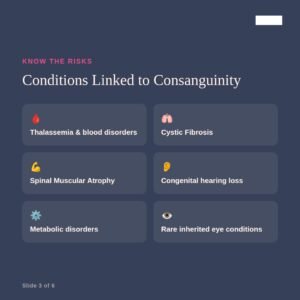
Conditions Commonly seen in Consanguineous Marriages
– Blood disorders like Thalassemia
– Cystic Fibrosis
– Spinal Muscular Atrophy (SMA)
– Congenital Hearing Loss
– Certain Metabolic Disorders
– Some forms of intellectual disability
– Rare inherited eye conditions
It’s also important to note that most children born to couples who share a common bloodline are perfectly healthy. The risk is elevated among bloodline related couples to compare with unrelated couples, but it is not a certainty. Genetics is probability rather than destiny and that probability can be understood and managed. Not sure where your family stands on genetic risk? Please consult with GenetiDoc – put a link here from the website to get personalized carrier screening and expert genetic counseling before you start planning kids.
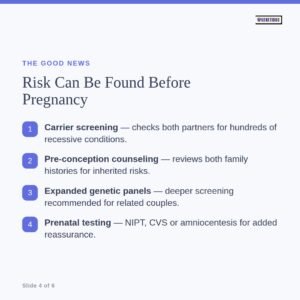
The Good News: Risk Can Be Identified Before Pregnancy
This is the part most couples should realise – you don’t have to simply wait and hope. Modern genetic testing is capable of identifying whether you and your partner both carry the same recessive gene changes, long before you conceive. Key tests couples should consider to understand whether they have genes with changes,
- Carrier Screening – This test checks both the partners for hundreds of recessive genetic conditions.
- Pre-Marital or Pre-Conception Genetic Counseling – A genetic counseling specialist reviews family history from both sides of the family to flag inherited risks.
- Expanded Genetic Panels – A much more advanced screening tests covering rarer inherited disorders, recommended especially for consanguineous couples.
- Prenatal Genetic Testing – These tests are conducted for expecting mothers. These tests also include options such as NIPT, CVS, or amniocentesis that can provide additional reassurance during pregnancy.
If both partners are found to carry the same changes, this does not mean that they can’t have healthy children – it means they now have options: informed family planning, IVF with genetic screening (PGT), closer prenatal monitoring, or simply being prepared with the right medical support after birth.
What Genetic Counseling Actually Involves
A lot of couples picture genetic counseling as scary and clinical. Actually it’s simply a conversation – with an expert who understands,
– Medical histories of both the families reviewed
– Explains your personal risk in plain language not some statistics
– Recommends specific tests based on your family background, not generic ones
– Walks you through your results and what they mean for you
– Helps you plan next steps, whether that’s simple reassurance or deeper testing
– Covers every options available in simple plain language to reach an informed decision
Think of it as a roadmap for a healthy pregnancy journey – built specifically around your family, not a one-size-fits-all checklist.
When Should You Get Tested?
The best time to test is even before your conception – ideally right after marriage or when you start planning for children. This approach gives you the most flexibility in decision-making. That said, if you’re already pregnant, it’s not too late; prenatal genetic testing can still provide valuable information.

Frequently Asked Questions
Does marrying a relative definitely mean my child will have a genetic disorder?
No. It only increases the chance compared to unrelated couples, because you’re more likely to share the same recessive gene changes. Most of the children born to related couples are relatively healthy. Genetic testing simply explains your actual risk instead of leaving it to chance.
How much higher is the risk in a first-cousin marriage?
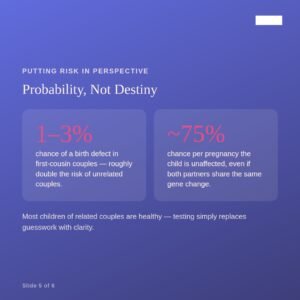
On average, first-cousin couples have roughly 1-3% chance of having a child with a birth defect or recessive genetic disorder, which is double the risk compared to unrelated couples – but the exact risk depends on your specific family history and which genes you carry, which is why personalized testing matters more than general statistics.
What is carrier screening, and do both partners need to take it?
Carrier screening is a blood or saliva test that checks whether you carry recessive gene changes for various inherited conditions. Both partners should be tested – the risk only becomes significant or concerning if both of the couple carry genetic changes which can cause same genetic disorder.
Can we still have healthy children if we’re both carriers of the same condition?
In most of the cases children are healthy. If both partners carry the same changes, there’s typically still around a 75% chance per pregnancy that the child will not be affected for a recessive genetic disorder. Couples in this situation also have options like PGT (preimplantation genetic testing) with IVF, closer prenatal monitoring, or early postnatal care planning.
When is the best time to get genetic testing done?
Ideal time for testing is even before conception – right after marriage or as soon as you start planning a baby. This early planning gives you the most options. In case you’re already pregnant, prenatal genetic testing is still available and useful.
Is genetic counseling only for couples with a known family history of illness?
No. Genetic counseling is recommended for all consanguineous couples or any couple planning to conceive, even without a known family history, because many carriers show no symptoms at all and don’t know their genetic status.
Is genetic testing complicated?
No. Most carrier screening tests only require a simple blood draw or saliva sample. Results usually take a few weeks, and a counselor will walk you through what they mean in plain language and what the results implement.
Will a genetic counselor tell us not to have children?
No. A genetic counselor’s role is to inform, not to decide for you. They present your risks and options clearly so you can make your own informed choice about family planning.
Take the Next Step Toward a Healthy Family
If you’re married within the family and thinking about having children, don’t leave it to simply chance. A short conversation with each other today can save a lot of uncertainty tomorrow. Consult with GenetiDoc Register Now, India’s most trusted genetic online consultation and testing platform to speak with a genetic counseling specialist, understand your personal risk profile, and get the right carrier and pre-conception genetic tests done – all guided by experts who understand consanguineous family history. Book your genetic counseling consultation with GenetiDoc today Register Now and take the first informed step toward planning a healthy family.