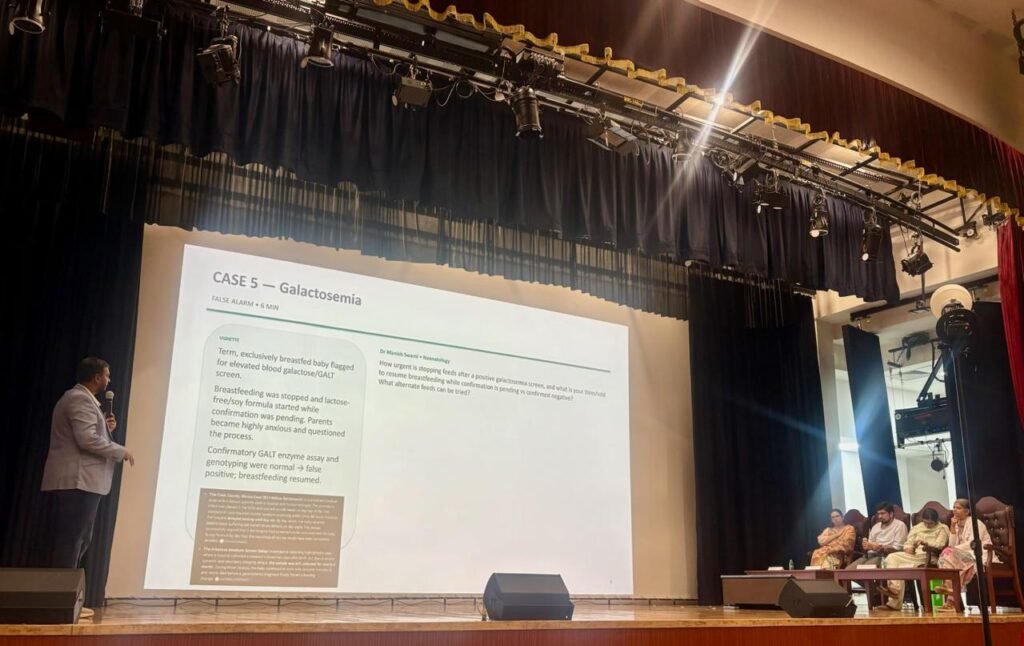
Newborn screening saves lives when it works as intended — but the cases that teaches clinicians the most are often the ones that don’t fit the textbook. A borderline result that turns out to be a carrier. A missed follow-up that becomes a late diagnosis. A confirmed case that responds beautifully to early treatment. These are the cases that shape how a screening programme actually functions on the ground, and they were the focus of a panel discussion led by Dr. Roshan Daniel, Founder of Genetidoc and Head of Medical Genetics at KIMSHealth Trivandrum, at the Newborn Screening Awareness Programme CME 2026, held at the All India Institute of Medical Sciences, Bathinda, on 5th September 2026.
Dr. Roshan served as a resource person at the CME in two capacities — leading a panel discussion on interesting newborn screening cases, and separately presenting on how Genetidoc is shaping genetic diagnosis in India and internationally.
Leading the case discussion
The panel centred on real-world newborn screening scenarios — the kind that don’t always make it into clinical guidelines but shape how paediatricians, neonatologists, and geneticists respond when a screening result doesn’t behave the way it’s expected to. Newborn screening programmes are built on population-level thresholds and standardised protocols. But every abnormal result lands on an individual infant and family, and the path from a screen-positive flag to a confirmed diagnosis — or a reassuring carrier result — is rarely a straight line. Panel discussions built around real cases give clinicians something guidelines alone cannot: a working sense of how ambiguous results actually get resolved in practice, what pitfalls to watch for in follow-up, and how genetic counseling fits into each step. This format also reflects something Genetidoc emphasises across its clinical work — that genetic testing results are rarely a simple yes-or-no. A biochemical screen can be positive without the child having the disease. A confirmed pathogenic variant can still leave open questions about severity or prognosis. Working through real cases, in a room with other clinicians who see these results regularly, builds the kind of judgment that protocols alone can’t teach.
Presenting on Genetidoc’s role in genetic diagnosis
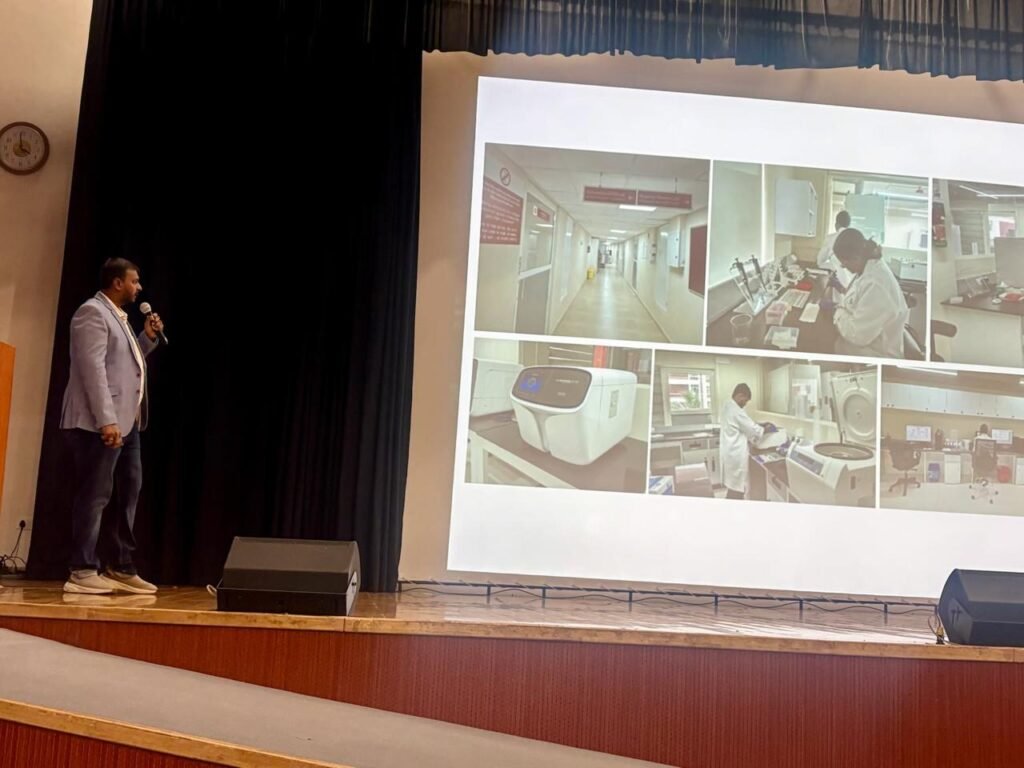
In a separate session, Dr. Roshan presented on how Genetidoc has been changing the landscape of genetic diagnosis, both within India and beyond its borders. Genetic diagnosis in India has historically faced a set of well-known constraints — limited access to specialist genetic counseling, uneven availability of advanced testing outside major metros, and a shortage of India-specific data on variant prevalence and disease presentation. Genetidoc’s work, across clinical genetics, genetic counseling, and testing, has been built around closing these gaps directly — bringing structured genetic diagnosis pathways to patients who would otherwise have limited access to them, and generating clinical data grounded in Indian patient populations rather than relying solely on evidence from other healthcare systems.
A consistent thread
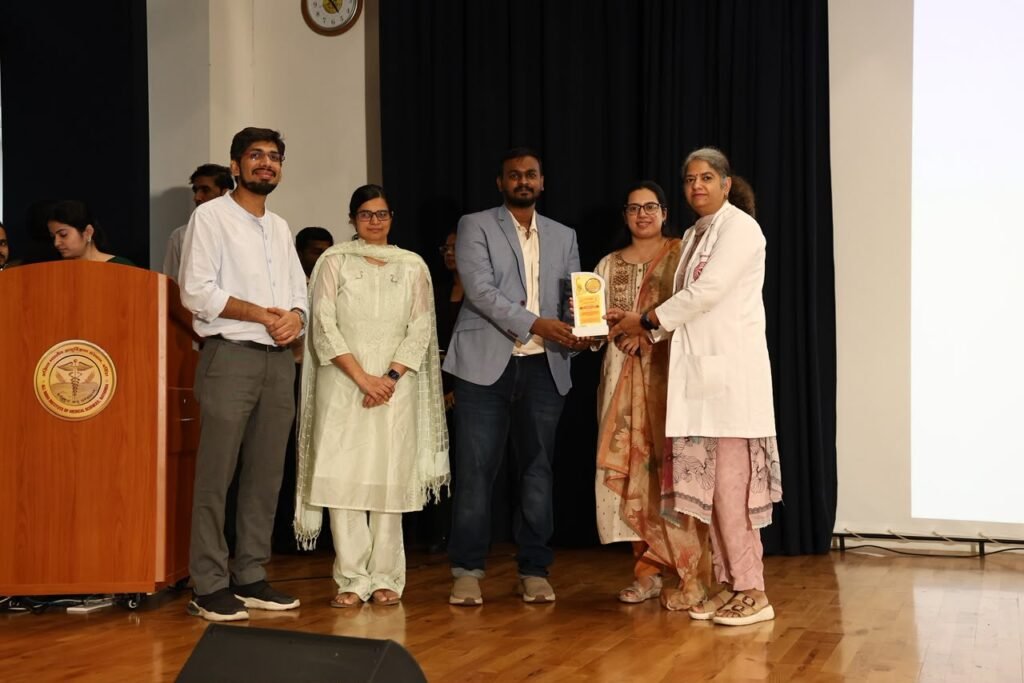
Dr. Roshan’s contributions came alongside a poster presentation from Genetidoc’s Department of Genetic Rare Diseases — “Screen, Confirm, or Miss,” a cost analysis of biotinidase deficiency newborn screening pathways presented by Dr. Neeta Nelson, which received First Position at the same CME. Together, these contributions reflect a consistent thread in Genetidoc’s academic engagement: bringing applied, India-specific clinical genetics data, case experience, and institutional perspective into forums where practising paediatricians and neonatologists can use it directly.
For a discipline like medical genetics, where much of the published evidence is generated in other healthcare systems, this kind of on-the-ground engagement — grounded in what Indian centres are actually seeing and building — is where a lot of the real progress happens.