
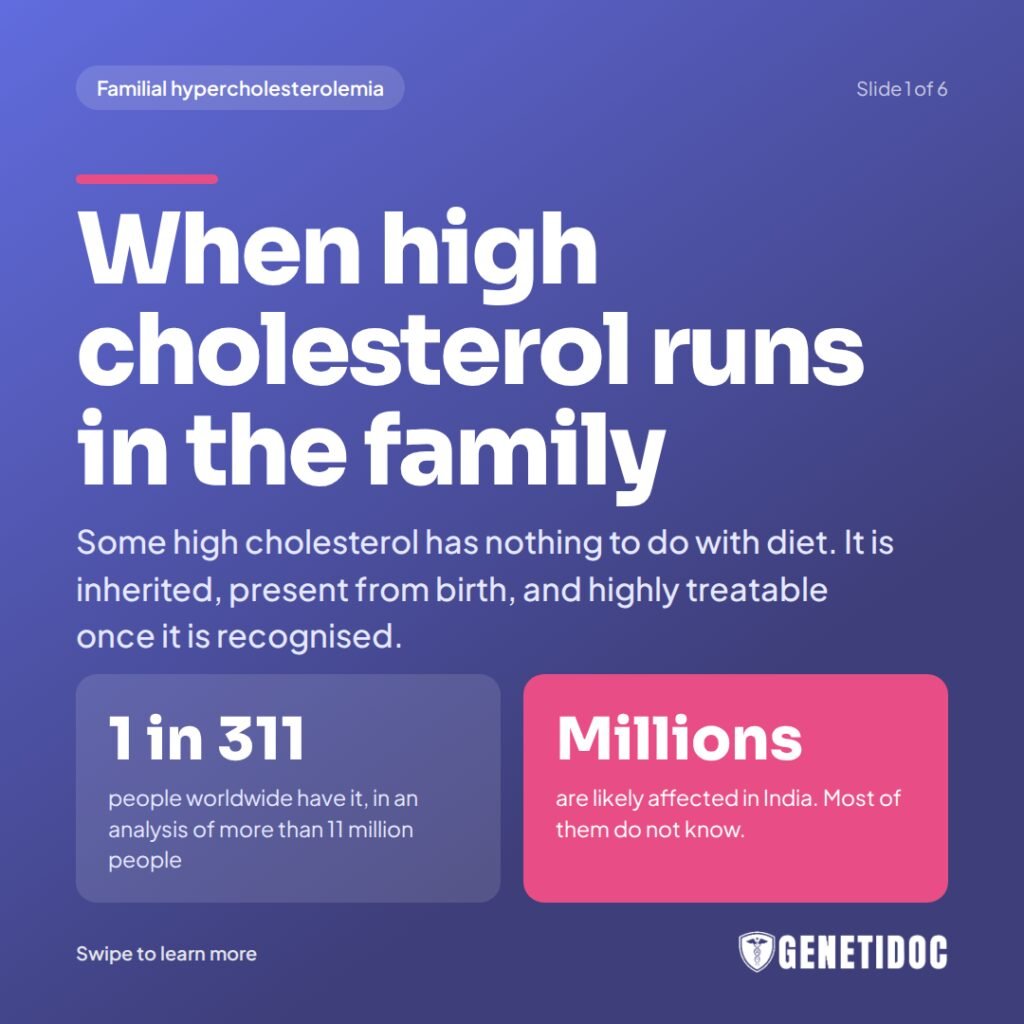
Many people in India first hear the word “cholesterol” from a routine health check. The report shows a high number, and the usual advice follows: eat less oil, walk more, recheck in three months.
For most people, that advice works reasonably well. But for some, the cholesterol stays stubbornly high, even in people who are slim, active and careful about food. Sometimes there is also a story in the family: a father who had a heart attack at 42, or an uncle who died suddenly in his thirties.
When very high cholesterol and early heart disease appear together in a family, the cause may be a genetic condition called familial hypercholesterolemia. This guide explains what it is, how it is different from ordinary high cholesterol, who should consider genetic testing, and what a diagnosis changes for you and your family.
Quick answer: What is familial hypercholesterolemia?
Familial hypercholesterolemia is an inherited condition in which a change in a single gene stops the body from clearing low-density lipoprotein (LDL) cholesterol, the “bad” cholesterol, from the blood. People with familial hypercholesterolemia have very high LDL cholesterol from birth, which raises their risk of heart attack at a young age. It is passed down in families, is common, and is highly treatable once it is recognised.
What Is Familial Hypercholesterolemia?
Cholesterol is a fatty substance your body needs to build cells and make hormones. It travels in the blood inside small particles. The most important one for heart health is low-density lipoprotein, usually shortened to LDL. When LDL levels stay high for many years, cholesterol slowly builds up inside the walls of the arteries. This build-up narrows the arteries and can lead to a heart attack or stroke.
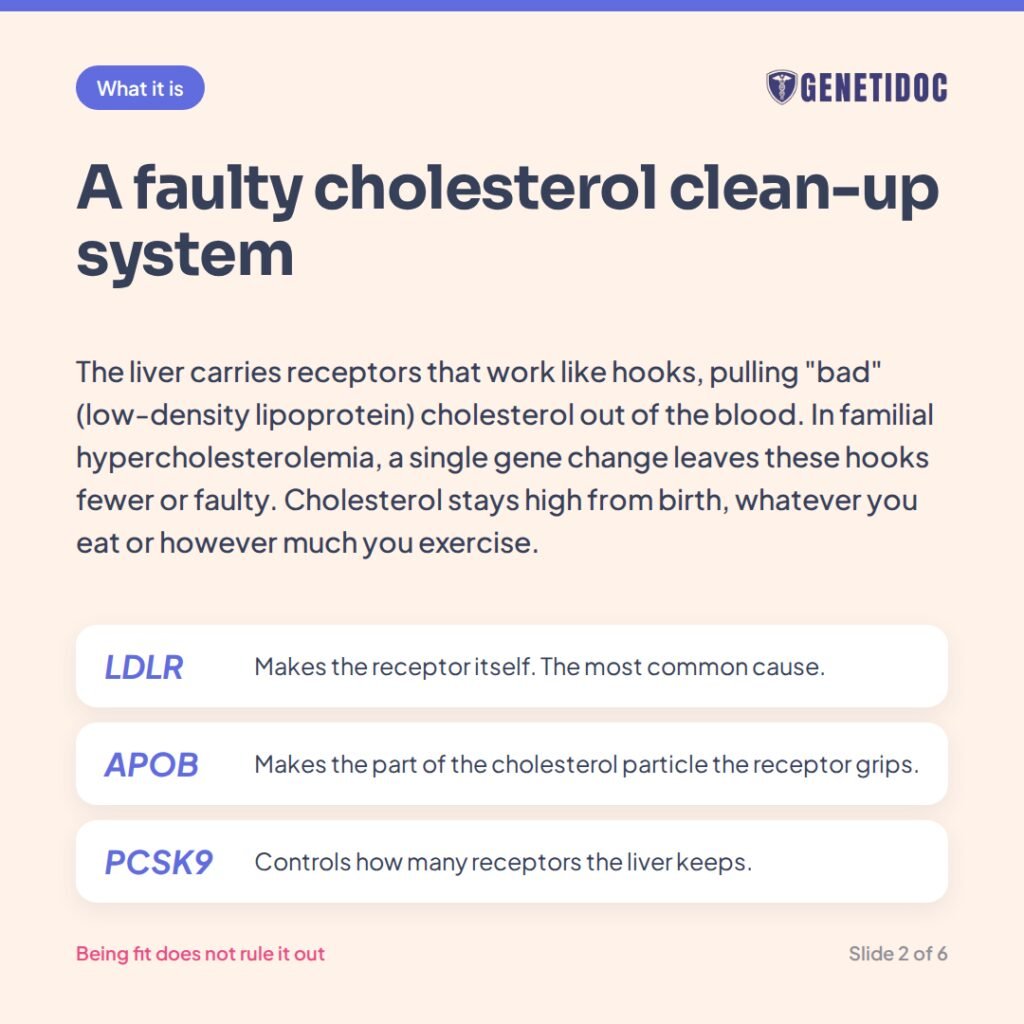
Normally, the liver acts like a cleaning system. Its cells carry “receptors” on their surface, which work like hooks that catch LDL particles from the blood and pull them in to be broken down.
In familial hypercholesterolemia, a genetic change weakens this cleaning system. The hooks are fewer, faulty, or cannot grip LDL properly. As a result, LDL cholesterol stays in the blood at high levels from birth, whatever a person eats or however much they exercise.
The genes involved
Most cases are caused by a change in one of these genes:
- LDLR – the gene that makes the LDL receptor itself. This is the most common cause.
- APOB – the gene for the protein on the LDL particle that the receptor “grips”. A faulty version makes LDL harder to catch.
- PCSK9 – a gene that controls how many receptors the liver keeps. Certain changes make the liver destroy its receptors too quickly.
- LDLRAP1 – a rarer cause, inherited in a different (recessive) pattern, where both parents must pass on a changed copy.
How common is it?
Worldwide, about 1 in every 300 people has familial hypercholesterolemia. A large analysis of studies covering more than 11 million people put the figure at roughly 1 in 311. In a country of India’s size, this means several million people are likely to be affected. Most of them do not know.
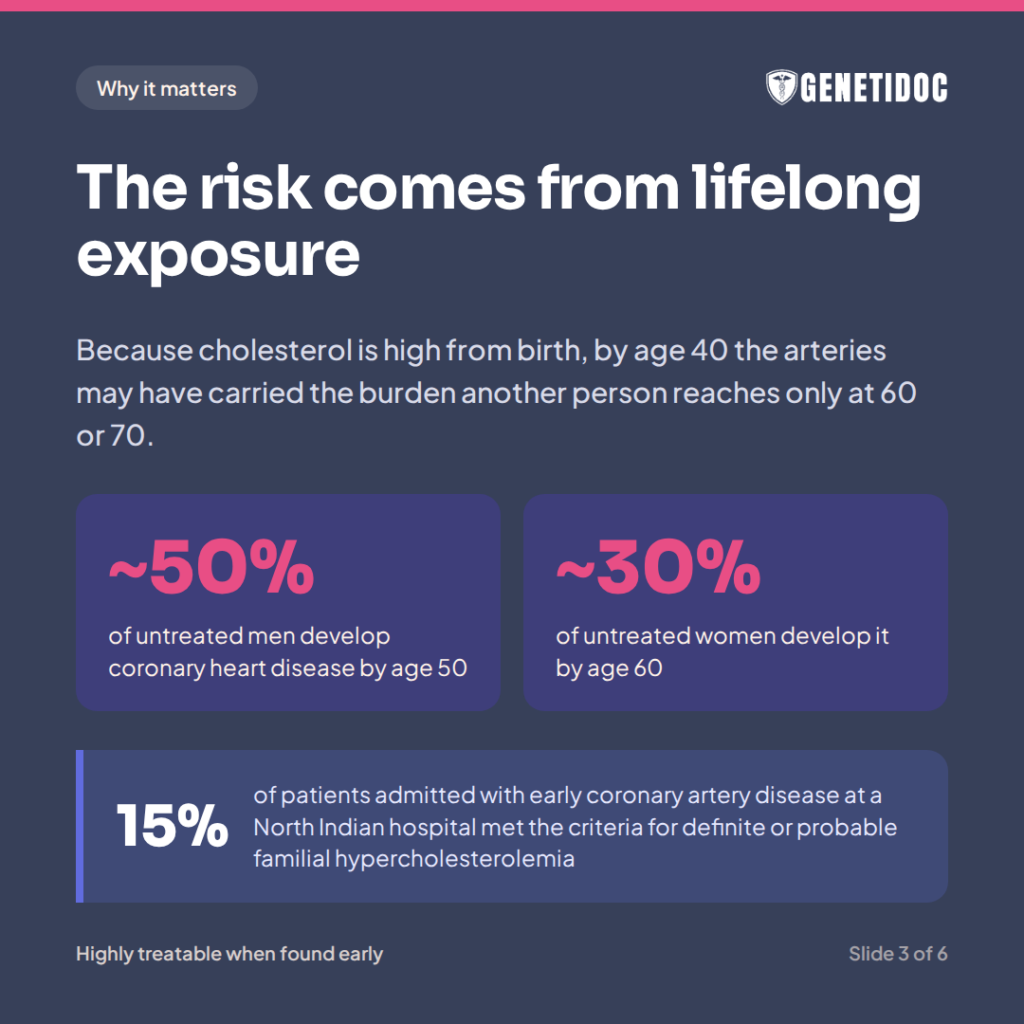
Indian data is still growing, but it points in the same direction. A study from a tertiary care hospital in North India found that about 15% of patients admitted with premature coronary artery disease (heart disease starting before 55 in men and 60 in women) met the criteria for definite or probable familial hypercholesterolemia. Researchers in Telangana have also begun mapping the gene changes seen in South Indian families, including new, previously unreported LDLR variants.
Familial Hypercholesterolemia vs Ordinary High Cholesterol
High cholesterol is extremely common in India. Because so many people have it, it is often treated as a minor issue. This is exactly why familial hypercholesterolemia gets missed.
“High cholesterol is something a large part of the general population has, so people tend not to take it seriously. Familial hypercholesterolemia is different. It carries a much higher risk, and it needs to be treated that way.”
— Team Genetidoc
| Feature | Common high cholesterol | Familial hypercholesterolemia |
| Main cause | Diet, weight, lifestyle, many small genetic effects | A single gene change that is present from birth |
| When it starts | Usually in middle age | From birth and throughout childhood |
| Typical LDL level | Mildly to moderately raised | Often above 190 mg/dL in adults and above 160 mg/dL in children |
| Response to diet alone | Often improves meaningfully | Helps, but usually not enough on its own |
| Family pattern | No clear pattern | Each child of an affected parent has a 50% chance of inheriting it |
| Heart risk | Raised, usually later in life | Much higher, often at a young age if untreated |
The key difference is time. A person with familial hypercholesterolemia has been exposed to high LDL cholesterol since birth. By the age of 40, their arteries may have carried the same cholesterol burden that another person reaches only at 60 or 70. Without treatment, men with familial hypercholesterolemia have roughly a 50% chance of coronary heart disease by age 50, and women have roughly a 30% chance by age 60.
Research also shows that, at the same LDL level, people who carry a familial hypercholesterolemia gene change have a higher heart risk than people who do not. One large study found that among people with LDL cholesterol of 190 mg/dL or more, those with a familial hypercholesterolemia variant had about three times the coronary artery disease risk of those without one. Lifelong exposure matters, not just today’s number.
Two Types: Heterozygous and Homozygous Familial Hypercholesterolemia
First, what is a “changed copy” of a gene?
A gene is a set of instructions, written in DNA, that tells the body how to make a particular protein. You can think of it as a recipe. The LDLR gene, for example, is the recipe for the LDL receptor, the “hook” that pulls LDL cholesterol out of the blood.
We carry two copies of most genes: one inherited from our mother and one from our father. Both copies are normally used to make the protein.
Sometimes one copy has a change in its DNA spelling, a bit like a typing error in a recipe. Many such changes are harmless. But some alter the recipe enough that the protein is not made at all, is made in a faulty shape, or does not work properly. Doctors call this a disease-causing (pathogenic) variant. In this article, we call it a “changed copy”.
A changed copy is not caused by anything you or your parents did. It is present from conception and is simply passed down through the family. A parent who carries one changed copy has a 50% chance of passing it to each child, and a 50% chance of passing on the working copy instead.
This gives two forms of the condition.
Heterozygous familial hypercholesterolemia (one changed copy)
This is the common form. The person has one working copy and one changed copy of the gene, inherited from one parent. The working copy still does its job, but on its own it cannot make enough working receptors, so the liver clears LDL cholesterol much more slowly than normal. LDL cholesterol is typically two to three times higher than normal. Many people feel completely well and have no visible signs. The condition is often found only on a blood test.
Homozygous familial hypercholesterolemia (two changed copies)
This is rare, affecting roughly 1 in 300,000 people worldwide. The child inherits a changed copy from both parents, so there is no working copy to fall back on and very few, or no, working receptors are made. LDL cholesterol is extremely high, often above 500 mg/dL, and heart disease can begin in childhood or the teenage years.
Homozygous familial hypercholesterolemia is more likely when parents are related by blood, for example in cousin marriages, because both parents are more likely to carry the same gene change. Team Genetidoc has seen this form in practice, mostly in families with consanguineous marriage. It needs specialist care from early childhood, and management follows established international criteria. It may include several cholesterol-lowering medicines together, newer targeted therapies, and a blood-filtering treatment called lipoprotein apheresis.
Signs and Symptoms of Familial Hypercholesterolemia
The most important thing to know is this: most people with heterozygous familial hypercholesterolemia have no symptoms at all. They feel healthy until the first sign of trouble, which may be chest pain or a heart attack.
Some people develop visible signs caused by cholesterol deposits. These are more common, and appear earlier, in homozygous familial hypercholesterolemia:
- Tendon xanthomas – firm, painless lumps on the tendons, especially the Achilles tendon at the back of the ankle or the tendons over the knuckles.
- Xanthelasma – soft, yellowish patches on or around the eyelids.
- Corneal arcus – a white or grey ring around the coloured part of the eye. This is common in older people, but when it appears before age 45 it can point to familial hypercholesterolemia.
- Chest pain or breathlessness on exertion – signs that the heart’s arteries may already be narrowed.
“Xanthomas and corneal arcus before 45 are seen especially in people with homozygous familial hypercholesterolemia. In the heterozygous form, these physical signs may not be there at all. Many patients are picked up on a blood test alone, from their LDL levels.”
— Team Genetidoc
Because the physical signs are often absent, waiting for symptoms is not a safe strategy. The blood test and the family history are what matter most.
Warning Signs: When Should You Suspect Familial Hypercholesterolemia?
Consider familial hypercholesterolemia if any of the following apply to you:
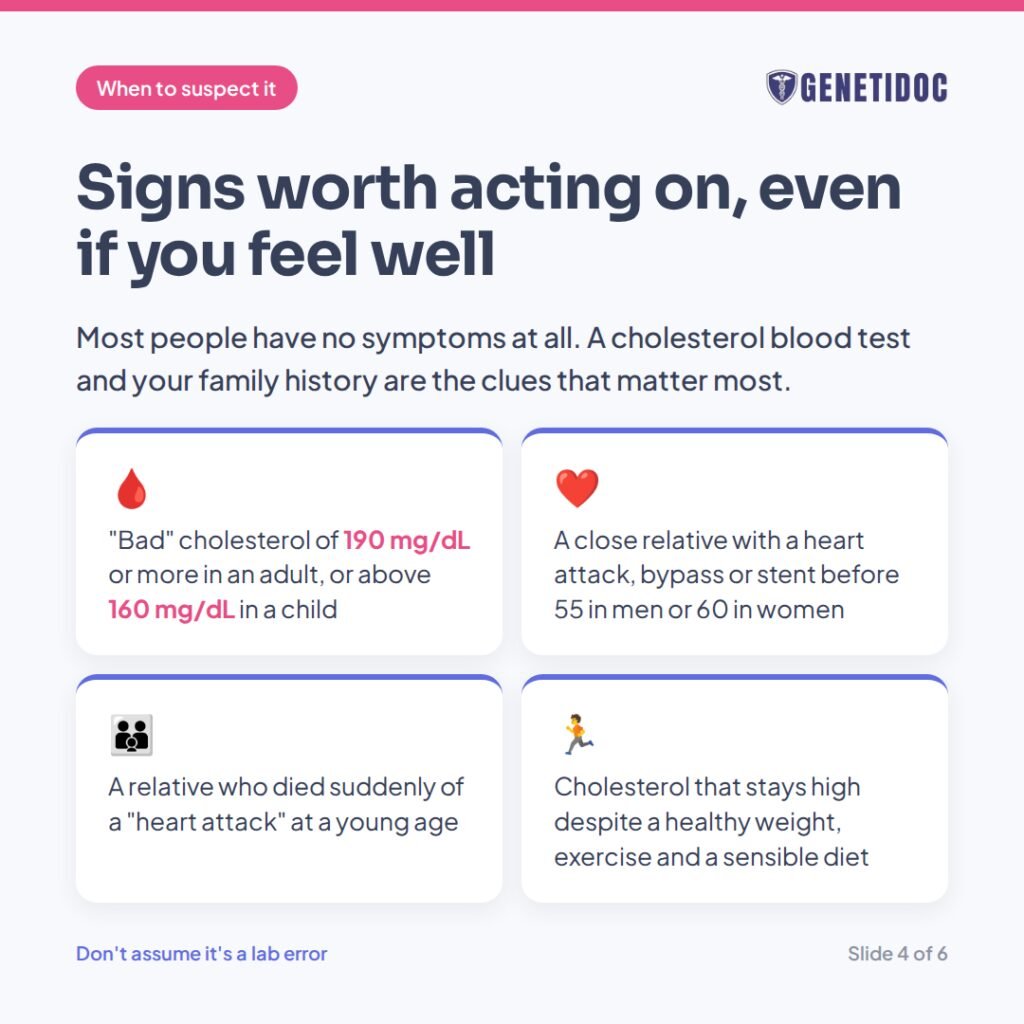
- Your LDL cholesterol is 190 mg/dL or higher as an adult, without another obvious cause.
- Your child’s LDL cholesterol is above 160 mg/dL.
- A close relative had a heart attack, cardiac arrest, bypass surgery or stenting at a young age: before 55 in men or before 60 in women.
- A relative died suddenly at a young age, and the death was described as a “heart attack”.
- Several family members have very high cholesterol, sometimes needing high doses of medicine.
- You or a relative have tendon xanthomas, or corneal arcus before 45.
- Your cholesterol stays high despite a healthy weight, regular exercise and a sensible diet.
“Most of the time, patients come to us after a very high LDL cholesterol on a routine test. Sometimes it is because a family member had a cardiac arrest or died early of a heart attack, and they are worried about their own heart.”
— Team Genetidoc
Two common situations
The fit young professional. A man in his early thirties has a company health check. He runs regularly, does not smoke, and eats carefully. His LDL comes back well above 190 mg/dL. He assumes it is a lab error. When he asks his family, he learns that his father has been on cholesterol medicine for years and that his grandfather died “of a heart attack” in his forties. This is a classic pattern for familial hypercholesterolemia.
The family after a sudden loss. A family loses a relative to a sudden cardiac death at a young age. Grieving, the relatives want to know whether they are at risk too. Some of these families turn out to have familial hypercholesterolemia. Others have a different inherited heart condition, such as a heart rhythm disorder or a heart muscle disease. This is why an expert evaluation of the whole family history matters.
How Is Familial Hypercholesterolemia Diagnosed?
Diagnosis uses three pieces of information together.
1. Lipid profile (cholesterol blood test)
A standard lipid profile measures total cholesterol, LDL cholesterol, HDL (high-density lipoprotein, the “good” cholesterol) and triglycerides. A very high LDL is the first clue.
Before calling it familial hypercholesterolemia, doctors also check for other conditions that can raise cholesterol. These include an underactive thyroid (hypothyroidism), certain kidney diseases, liver conditions that block bile flow, and some medicines. Treating these can bring cholesterol down, so they must be ruled out first.
2. Clinical scoring
Doctors often use a points-based checklist called the Dutch Lipid Clinic Network criteria. It is one of three formal scoring systems in use, alongside the Simon Broome criteria and the MEDPED criteria. The Dutch Lipid Clinic Network checklist gives points in five areas, and the highest-scoring item in each area is counted.
Family history
- A first-degree relative (parent, brother, sister or child) with heart or blood-vessel disease at a young age (men before 55, women before 60), or with a very high LDL cholesterol: 1 point
- A first-degree relative with tendon xanthomas or corneal arcus, or a child in the family under 18 with a very high LDL cholesterol: 2 points
Your own medical history
- Narrowing of the blood vessels to the brain or legs at a young age: 1 point
- Heart artery disease at a young age (men before 55, women before 60): 2 points
Physical examination
- Corneal arcus before age 45: 4 points
- Tendon xanthomas: 6 points
LDL cholesterol level (untreated)
- 155 to 189 mg/dL: 1 point
- 190 to 249 mg/dL: 3 points
- 250 to 329 mg/dL: 5 points
- 330 mg/dL or higher: 8 points
Genetic test
- A disease-causing change found in LDLR, APOB or PCSK9: 8 points
The total score is then read as follows:
- More than 8 points: definite familial hypercholesterolemia
- 6 to 8 points: probable familial hypercholesterolemia
- 3 to 5 points: possible familial hypercholesterolemia
- Fewer than 3 points: familial hypercholesterolemia unlikely
Notice how much weight the checklist gives to things beyond the cholesterol number: the family’s heart history, physical signs, and a genetic result. The score is a guide for your doctor, not a self-diagnosis tool. It works best when a clinical geneticist or cardiologist reviews it together with your full history.
3. Genetic testing
Genetic testing looks directly for a disease-causing change in the familial hypercholesterolemia genes. When a change is found, it confirms the diagnosis and gives the family a precise target for testing relatives.
“If a patient comes with a lipid profile showing LDL levels above 190 mg/dL in an adult, or above 160 mg/dL in a child, we offer genetic testing.”
— Team Genetidoc
Genetic Testing for Familial Hypercholesterolemia
Which test is chosen?
The right test depends on why you are being evaluated.
- When familial hypercholesterolemia is specifically suspected, for example very high LDL with a typical family history, a dedicated familial hypercholesterolemia panel is used. It looks at the known familial hypercholesterolemia genes, including LDLR, APOB, PCSK9 and LDLRAP1.
- When the concern is broader cardiac risk, for example a family history of early sudden death where the cause is unclear, a wider monogenic cardiac panel may be more useful. Genetidoc’s GD Monogenic Cardiac Risk Panel – Advanced covers genes for inherited heart rhythm disorders, heart muscle diseases and familial very high cholesterol together.
- When a relative’s gene change is already known, only that specific change is tested. This is faster and more focused.
The Genetidoc team can also build panels around a patient’s specific clinical question. Turnaround time depends on the test chosen, and your genetic counselor will explain the expected timeline before testing.
What if the genetic test is negative?
This surprises many patients. Even when someone clearly meets the clinical criteria for familial hypercholesterolemia, a genetic test does not always find a single-gene cause. International studies show a substantial proportion of people with a clinical familial hypercholesterolemia diagnosis have no detectable familial hypercholesterolemia variant. The detection rate is higher in people with the most severe cholesterol levels and the strongest family histories.
A negative result does not mean your cholesterol is harmless. There are several possible explanations:
- Polygenic high cholesterol – instead of one strong gene change, many small, common genetic variations add together to raise LDL. Research has shown that many people with a familial hypercholesterolemia-like picture but no single-gene cause fall into this group.
- A gene change the test cannot yet detect – for example in genes not yet linked to familial hypercholesterolemia, or types of changes that current methods find harder to pick up.
- Non-genetic causes that have not yet been identified.
A negative genetic result should always be read as “no reportable finding in what was tested”. It does not mean your heart risk is low. Your LDL cholesterol still needs treatment based on its level and your overall risk.
Where does polygenic risk fit in?
Some people want a fuller picture of their inherited heart risk, especially when the single-gene result is negative but the family history is strong. Genetidoc’s GD Monogenic + Polygenic Cardiac Risk Panel – Comprehensive adds a polygenic risk assessment to the single-gene analysis.
Polygenic risk scores are still developing. Most were built using data from people of European ancestry, so they may perform differently in Indian populations. They add context, but they do not replace a lipid profile, a family history or a doctor’s assessment. This is why the results need careful interpretation.
What Does a Diagnosis Change?
This is the question that matters most to families. A confirmed diagnosis changes several things.
“A confirmed genetic diagnosis lets us give specific management rather than a general one, and that gives the patient a better prognosis.”
— Team Genetidoc
No two management plans are the same
There is no single plan that fits everyone with familial hypercholesterolemia. The right plan depends on your own clinical history (your cholesterol levels, age, any existing heart or blood-vessel disease, and other risk factors such as diabetes, blood pressure or smoking) and on your family history (who was affected, how, and at what age). A consultation with a clinical geneticist brings these together into a plan specific to your care, which is then carried forward with your cardiologist or physician.
1. Treatment starts earlier and aims lower
Under international guidelines, adults with LDL cholesterol of 190 mg/dL or above are generally advised to start cholesterol-lowering medicine without waiting for a separate risk calculation. People with familial hypercholesterolemia often need lower LDL targets than the general population, particularly if they already have heart disease or other risk factors. Your cardiologist or physician sets the exact target for you.
2. The treatment plan is stronger
Most people with familial hypercholesterolemia need more than one approach:
- Statins – the first-line medicine, which increases the number of LDL receptors in the liver.
- Ezetimibe – reduces the cholesterol absorbed from food in the gut.
- PCSK9-targeting therapies – injectable medicines that help the liver keep more LDL receptors, used when LDL remains high despite tablets.
- Other newer agents – depending on the situation and availability.
3. Diet and lifestyle still matter, but differently
A heart-healthy diet low in saturated and trans fats, regular exercise, not smoking, and control of blood pressure and blood sugar all reduce overall risk. People with familial hypercholesterolemia may be advised to follow a more specific eating plan than general “healthy eating” advice. On its own, however, lifestyle change usually cannot bring LDL down to a safe level in familial hypercholesterolemia, because the underlying problem is how the liver clears cholesterol.
4. It helps you stay on treatment
Cholesterol medicines are lifelong. Many people stop them after a few months because they feel well. Knowing the cause is genetic, present from birth and shared by relatives often helps people understand why stopping is risky.
5. It protects the rest of the family
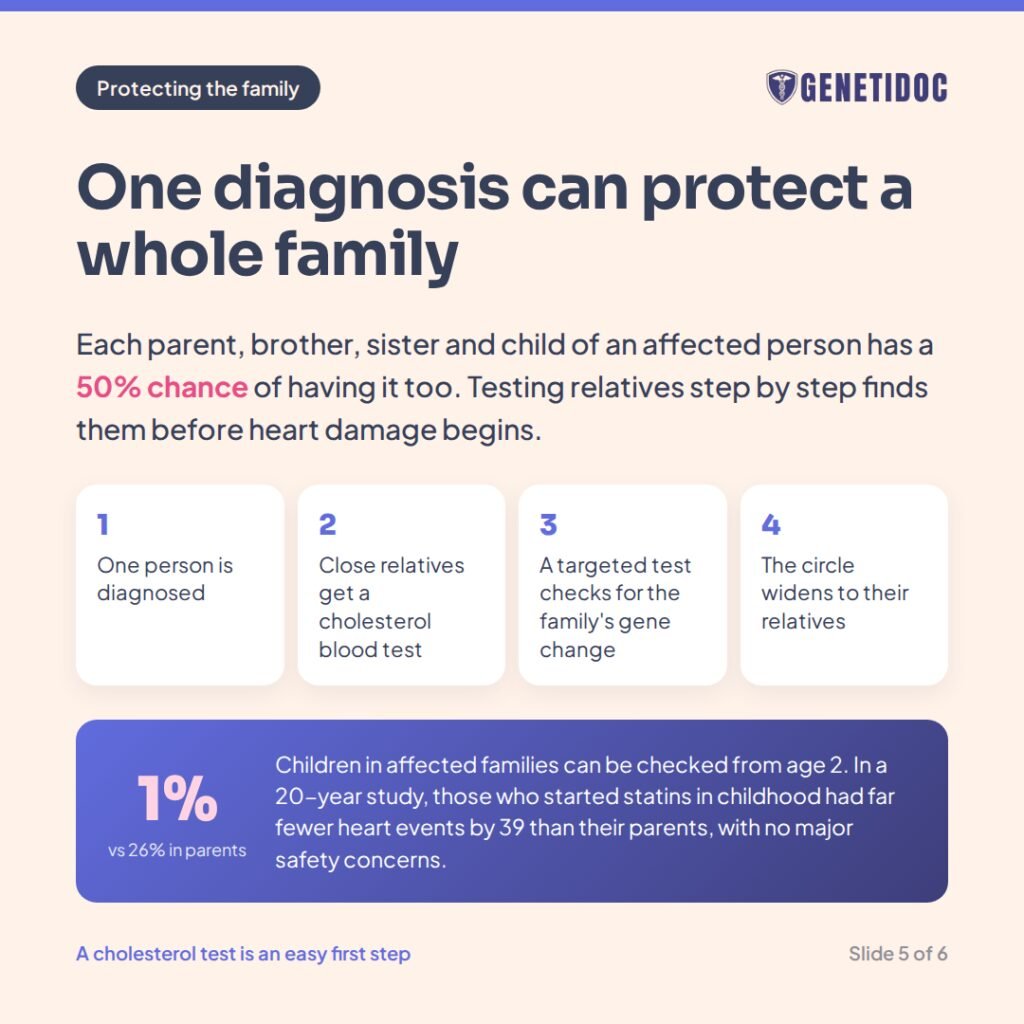
This may be the most powerful benefit. Each first-degree relative (parent, brother, sister, child) of a person with heterozygous familial hypercholesterolemia has a 50% chance of having it too. A diagnosis in one person opens the door to finding and protecting others, often before any heart damage has occurred.
Testing the Family: How Cascade Screening Works
“Cascade screening” means testing relatives step by step, starting with the closest ones, once familial hypercholesterolemia has been found in one family member. It is one of the most effective ways to find people with familial hypercholesterolemia before they develop heart disease.
GeneReviews, a widely used expert reference on genetic conditions, notes that early diagnosis and treatment of first-degree and second-degree relatives at risk can reduce illness and death from familial hypercholesterolemia. It describes two ways to check an at-risk relative: testing for the family’s known gene change, or measuring LDL cholesterol. Where the family’s gene change has been identified, GeneReviews names genetic testing as the preferred method.
- The first person is diagnosed – clinically, genetically, or both.
- First-degree relatives are contacted – parents, siblings and children – followed by second-degree relatives such as grandparents, aunts, uncles, nieces and nephews.
- Every at-risk relative is advised to get a lipid profile. This simple blood test is an easy, affordable starting point.
- Genetic testing for the family’s gene change is offered, and is the most precise option when that change is known. Only that one change needs to be tested.
- The circle widens – when a relative is found to have familial hypercholesterolemia, their own close relatives are then screened.
“Some relatives may be hesitant about genetic testing, but many are willing to get a lipid profile done. It is much more accessible and affordable, and for them it is just a blood test. So we advise all at-risk family members to do a lipid profile, and many of them do follow through.”
— Team Genetidoc
A lipid profile is an excellent first step. Genetic testing adds certainty in borderline cases, where a relative’s cholesterol falls in a grey zone that overlaps with the general population. Genetic testing can separate people who truly carry the family’s gene change from those who simply have mildly raised cholesterol for other reasons. International research also shows that genetic cascade testing identifies more affected relatives than cholesterol-based screening alone.
For relatives who test negative for the family’s known gene change, the chance of having familial hypercholesterolemia is very low. They can generally follow standard cholesterol screening advice for the general population.
Familial Hypercholesterolemia in Children
Familial hypercholesterolemia is present from birth, so children in affected families benefit most from early detection. Artery damage begins silently in childhood. Treatment started early can keep a child’s lifetime cholesterol exposure close to that of an unaffected person.
When should children be screened?
GeneReviews gives the following guidance for children:
- By age 2: in a child with a family history of familial hypercholesterolemia, a non-fasting lipid level (a cholesterol blood test that does not need an overnight fast) should be measured. If the result is borderline, LDL cholesterol is measured specifically.
- Close monitoring from age 2, and at a minimum, cholesterol levels reassessed between ages 9 and 11.
- Genetic testing for the family’s gene change is the preferred way to check an at-risk child when that change is already known.
GeneReviews advises that an untreated LDL cholesterol above 160 mg/dL in a child should raise concern for familial hypercholesterolemia.
Treatment decisions for a child, including whether and when to start medicine, are made individually. Whether a child needs a statin, and at what age, depends on the child’s clinical history, cholesterol levels and family history, and is decided together with the child’s specialist, alongside a heart-healthy diet. Children with homozygous familial hypercholesterolemia need specialist treatment much earlier.
Are statins safe for children?
This is the most common worry parents have. The evidence is reassuring. A 20-year follow-up study published in the New England Journal of Medicine followed children with familial hypercholesterolemia who started statins in childhood. By age 39, about 1% had had a cardiovascular event, compared with about 26% of their affected parents, who had started treatment much later. The study found no major safety concerns in growth, puberty or development.
Any medicine decision for a child is made carefully with a paediatric specialist or cardiologist. Genetic counseling gives parents the space to ask questions and make an informed choice that feels right for their family.
Common Misconceptions About Familial Hypercholesterolemia
“I’m fit, so my cholesterol can’t be a real problem.”
Fitness is good for your heart, but it does not rule out familial hypercholesterolemia. The condition comes from how your liver handles cholesterol, not from your weight or activity level.
“One of the most common things we hear is, ‘I am fit, so I won’t have a cholesterol problem.’ Being fit is valuable, but it does not rule out familial hypercholesterolemia.”
— Team Genetidoc
“Diet will fix it.”
Diet does help in managing familial hypercholesterolemia, and there are specific dietary approaches that people with familial hypercholesterolemia are advised to follow. But because the problem is genetic, diet alone rarely brings LDL down enough. Most people with familial hypercholesterolemia need medicine in addition to diet.
“High cholesterol is common. Everyone has it.”
Mildly raised cholesterol is common. Familial hypercholesterolemia is a distinct, inherited condition with a much higher lifetime risk. Treating it like ordinary high cholesterol can mean treatment starts too late or is not strong enough.
“My relative’s heart attack was just stress.”
Stress, smoking and lifestyle all play a role in heart disease. But a heart attack or sudden death at a young age, especially when more than one relative is affected, should always raise the question of an inherited cause.
Asking that question is not a reason to panic. For many families, a simple lipid profile or a targeted test brings clarity and peace of mind. It is better to be safe and rule out an inherited cause than to live with uncertainty, or worry without knowing the facts. And if familial hypercholesterolemia is found, it is highly treatable when caught early.
“My test was negative, so I’m fine.”
A negative genetic test with a very high LDL still needs treatment. The cholesterol level itself carries risk, whatever its cause.
When Genetic Testing May Not Be Needed
Genetic testing is not the right first step for everyone with high cholesterol.
- If your LDL is only mildly raised and there is no family history of early heart disease, a lipid profile, lifestyle review and your physician’s risk assessment are usually enough.
- If your high cholesterol has a clear secondary cause, such as an untreated thyroid problem, that cause should be treated and cholesterol rechecked first.
- If a relative’s specific gene change is known, you do not need a large panel. A targeted test for that single change is enough.
A clinical geneticist can help you decide whether testing will add useful information in your situation.
Why Expert Interpretation Matters
A genetic report is only as useful as the interpretation behind it. In familial hypercholesterolemia, this matters for several reasons:
- Choosing the right test. A family history of sudden early death may point to familial hypercholesterolemia, or to an inherited heart rhythm or heart muscle condition. Starting with the right panel avoids missed diagnoses.
- Ruling out look-alike causes. Thyroid, kidney and liver conditions can all raise cholesterol and should be considered alongside the genetic result.
- Understanding the variant. Not every gene change causes disease. Some results come back as a “variant of uncertain significance”, which needs careful explanation and should not be used to test healthy relatives.
- Reading a negative result correctly. A negative result does not mean low risk, as explained above.
- Planning family testing. Deciding who to test, in what order and with which test is where genetic counseling adds real value.
At Genetidoc, testing is carried out through accredited partner laboratories. Every result is reviewed by a clinical geneticist and explained through genetic counseling. After diagnosis, patients are referred back to their cardiologist or physician with clear guidance for ongoing care.
What To Do If Your LDL Is Above 190 mg/dL
- Don’t ignore it or assume it’s a lab error. Repeat the test if your doctor advises, but take a very high result seriously.
- Talk to your family. Ask about cholesterol levels, heart attacks, bypass surgery, stents and sudden deaths, including the age at which they happened.
- See your physician or cardiologist to rule out secondary causes and discuss treatment.
- Consult a clinical geneticist if your LDL is very high or your family history suggests early heart disease. They will review your clinical and family history and help build a management plan specific to your care.
- Encourage your close relatives to get a lipid profile, including children where appropriate.
- If treatment is started, stay on it. Don’t stop medicines on your own because you feel well.
Frequently Asked Questions
1. Is familial hypercholesterolemia the same as high cholesterol?
No. Familial hypercholesterolemia is an inherited condition caused by a single gene change, present from birth. It causes much higher LDL cholesterol and a higher risk of early heart disease than common high cholesterol.
2. What LDL level suggests familial hypercholesterolemia?
An LDL cholesterol above 190 mg/dL in adults, or above 160 mg/dL in children, should prompt evaluation for familial hypercholesterolemia, especially with a family history of high cholesterol or early heart disease.
3. Can familial hypercholesterolemia be cured?
It cannot be cured, because the gene change is lifelong. But it is highly treatable. With early diagnosis and consistent treatment, people with familial hypercholesterolemia can reduce their heart risk substantially.
4. Can I have familial hypercholesterolemia if I am thin and active?
Yes. Familial hypercholesterolemia is caused by how your liver clears cholesterol, not by weight or fitness. Many people with familial hypercholesterolemia are slim and active.
5. Will diet alone control familial hypercholesterolemia?
Diet helps and is an important part of management, but in most people with familial hypercholesterolemia it is not enough on its own. Medicines are usually needed as well.
6. If I have familial hypercholesterolemia, will my children have it?
Each child of a parent with heterozygous familial hypercholesterolemia has a 50% chance of inheriting it. Children in affected families should be screened, usually from around age 2.
7. What is the genetic test for familial hypercholesterolemia?
It is a blood or saliva test that looks for disease-causing changes in genes such as LDLR, APOB, PCSK9 and LDLRAP1. It can be done as a dedicated familial hypercholesterolemia panel or as part of a broader cardiac gene panel.
8. Is genetic testing necessary if my cholesterol is already known to be high?
Not always, but it helps. A genetic diagnosis confirms the cause, supports more specific treatment, and makes accurate testing of relatives possible.
9. What does a negative genetic test mean?
It means no reportable familial hypercholesterolemia gene change was found in the genes tested. Your high cholesterol may be polygenic or have another cause, and it still needs treatment.
10. Are statins safe for children with familial hypercholesterolemia?
Long-term studies show that statins started in childhood are generally safe and greatly reduce heart events in adulthood. Whether and when a child starts a statin depends on the child’s clinical and family history, and is decided with a specialist.
11. What is homozygous familial hypercholesterolemia?
It is a rare, severe form in which a child inherits a changed gene from both parents. It is more common in consanguineous marriages and needs specialist treatment from early childhood.
12. Can I just do a lipid profile for my family members instead of a genetic test?
Yes. A lipid profile is an affordable, accessible first step and is recommended for all at-risk relatives. Genetic testing adds certainty, especially when cholesterol results are borderline.
Key Takeaways
- Familial hypercholesterolemia is a common inherited condition that causes very high LDL cholesterol from birth.
- Most people with familial hypercholesterolemia have no symptoms. A lipid profile and a family history are the key clues.
- LDL above 190 mg/dL in adults or above 160 mg/dL in children warrants evaluation.
- Fitness and diet help, but they do not rule out or fully control familial hypercholesterolemia.
- A genetic diagnosis allows specific, earlier and stronger management, and protects relatives through cascade screening.
- Management should be planned around your own clinical and family history. A clinical geneticist can help build a plan specific to your care.
- A negative genetic test does not mean low risk.
- Expert interpretation and genetic counseling turn a test result into a clear plan for the whole family.
Worried About a High LDL Result or Early Heart Disease in Your Family?
If your lipid profile shows a very high LDL cholesterol, or a relative had a heart attack or sudden death at a young age, a consultation with a clinical geneticist can clarify whether familial hypercholesterolemia is the cause. It can also help you decide which test fits your situation and plan screening for your children and relatives.
Genetidoc offers genetic counseling in person in Thiruvananthapuram and online across India, with home sample collection and counseling in multiple Indian languages.
Book a familial hypercholesterolemia consultation: call 8086067838
Join the conversation: Have questions about familial hypercholesterolemia, or want to connect with other families? Visit the Genetidoc Rare Disease Forum – Hypercholesterolemia.
Related Reading
- Genetic Data Reanalysis: Why Your Genetic Testing Result Can Change Over Time
- Li-Fraumeni Syndrome: When Many Different Cancers Run in One Family
- Genetic Testing for Infertility in India: A Complete Guide for Couples
- Genetic Testing for Recurrent Abortions in India: A Complete Guide for Couples
- Genetic Testing for Recurrent Abortions in India: A Complete Guide for Couples
References
- Beheshti SO, Madsen CM, Varbo A, Nordestgaard BG. Worldwide prevalence of familial hypercholesterolemia: meta-analyses of 11 million subjects. J Am Coll Cardiol. 2020;75(20):2553–2566.
- Sawhney JPS, et al. Prevalence of familial hypercholesterolemia in premature coronary artery disease patients admitted to a tertiary care hospital in North India. Indian Heart J. 2019;71(2):118–122.
- Yellaboina S, et al. The genetic landscape of familial hypercholesterolemia in Telangana, Southern India: novel mutations and clinical implications. Cureus. 2025.
- Nordestgaard BG, et al. Familial hypercholesterolaemia is underdiagnosed and undertreated in the general population: guidance for clinicians to prevent coronary heart disease. Consensus Statement of the European Atherosclerosis Society. Eur Heart J. 2013;34(45):3478–3490.
- Cuchel M, et al. 2023 Update on European Atherosclerosis Society Consensus Statement on Homozygous Familial Hypercholesterolaemia. Eur Heart J. 2023;44(25):2277–2291.
- Sturm AC, Knowles JW, Gidding SS, et al. Clinical genetic testing for familial hypercholesterolemia: JACC Scientific Expert Panel. J Am Coll Cardiol. 2018;72(6):662–680.
- Khera AV, et al. Diagnostic yield and clinical utility of sequencing familial hypercholesterolemia genes in patients with severe hypercholesterolemia. J Am Coll Cardiol. 2016;67(22):2578–2589.
- Talmud PJ, et al. Use of low-density lipoprotein cholesterol gene score to distinguish patients with polygenic and monogenic familial hypercholesterolaemia. Lancet. 2013;381(9874):1293–1301.
- Wiegman A, et al. Familial hypercholesterolaemia in children and adolescents: gaining decades of life by optimizing detection and treatment. Eur Heart J. 2015;36(36):2425–2437.
- Luirink IK, et al. 20-year follow-up of statins in children with familial hypercholesterolemia. N Engl J Med. 2019;381(16):1547–1556.
- Grundy SM, et al. 2018 AHA/ACC Guideline on the Management of Blood Cholesterol. Circulation. 2019;139(25):e1082–e1143.
- Mach F, et al. 2019 ESC/EAS Guidelines for the management of dyslipidaemias: lipid modification to reduce cardiovascular risk. Eur Heart J. 2020;41(1):111–188.
- Ison HE, Clarke SL, Knowles JW. Familial Hypercholesterolemia. In: Adam MP, et al., eds. GeneReviews. Seattle (WA): University of Washington, Seattle; 2014 (updated 30 January 2025). Available at: https://www.ncbi.nlm.nih.gov/books/NBK174884/
This article is for educational purposes and does not replace personal medical advice. Please consult a qualified doctor or clinical geneticist about your individual situation.