
When a young, apparently healthy person dies suddenly, the family is left with grief and a question nobody seems able to answer: why? In many Indian families, the explanation given is simply “heart attack.” The file is closed, and life moves on.
But for some of these families, the real cause was an inherited heart condition — one that may still be present, silently, in brothers, sisters, children, or parents. Finding it can protect the people who are still here.
This guide explains the three inherited conditions most often behind sudden cardiac death in young people — Long QT syndrome, Brugada syndrome, and hypertrophic cardiomyopathy — and what families can practically do after a sudden death or an abnormal heart test. It draws on published guidelines and on the everyday clinical experience of Team Genetidoc.
This article focuses specifically on sudden death and heart rhythm genetics. For a broader overview of all inherited heart conditions, see our guide to inherited heart disease [internal link placeholder].
Quick answer: Sudden cardiac death in young people is often caused by an inherited heart condition, rather than a blocked artery. The most common inherited causes are heart rhythm conditions (such as Long QT syndrome and Brugada syndrome) and heart muscle conditions (such as hypertrophic cardiomyopathy). These are usually passed down with a 50 percent chance to each child. After an unexplained sudden death, genetic testing of the person who died — if a sample is available — and heart checks for close relatives can identify who is at risk, and effective prevention is available for most.
What Is Sudden Cardiac Death?
Sudden cardiac death is an unexpected death caused by a heart problem, usually within an hour of the first symptoms — or, when nobody saw it happen, in a person who was well within the previous 24 hours.
It helps to separate two terms that are often used as if they mean the same thing:
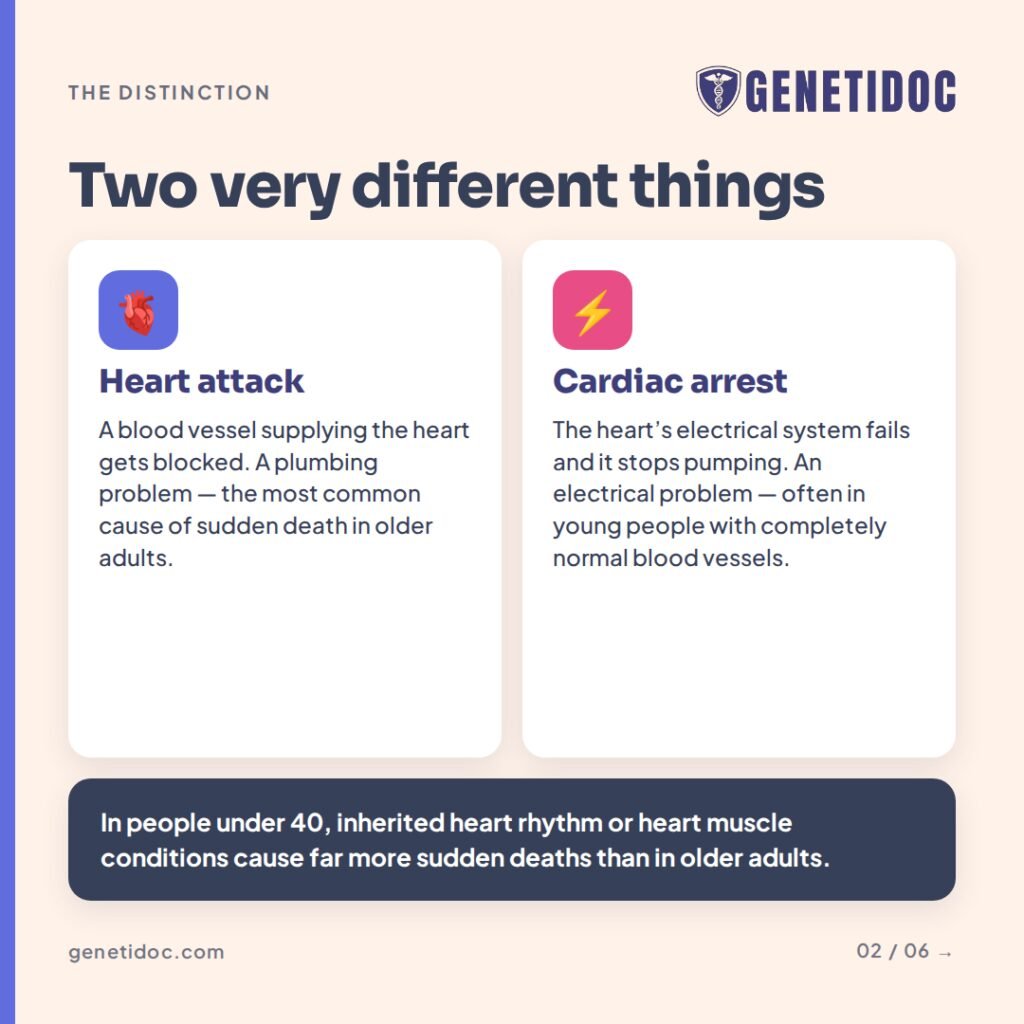
- Heart attack: A blood vessel supplying the heart gets blocked, and part of the heart muscle is starved of oxygen. This is a plumbing It is the most common cause of sudden death in older adults.
- Cardiac arrest: The heart’s electrical system suddenly fails, the heart goes into a chaotic rhythm, and it stops pumping blood. This is an electrical A heart attack can trigger it, but in young people it often happens in a heart with completely normal blood vessels.
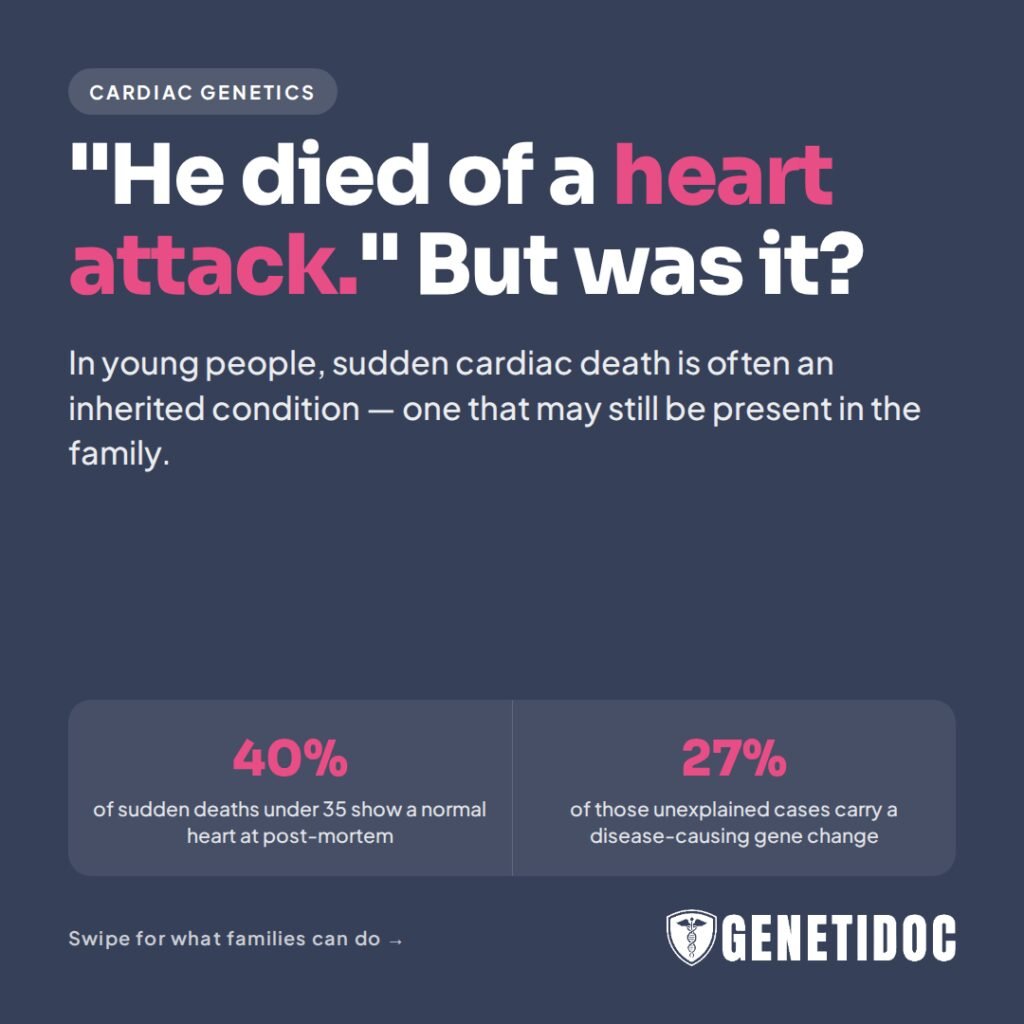
In people under about 40, inherited conditions of the heart’s electrical system or heart muscle make up a much larger share of sudden deaths than in older adults. A large prospective study from Australia and New Zealand looked at sudden cardiac deaths in people aged 1 to 35. In about 40 percent, the post-mortem examination found no explanation at all — the heart looked normal. When genetic testing was done in these unexplained cases, a clinically relevant genetic change was found in about 27 percent.
“He Died of a Heart Attack”: Why the Label Matters
In India, a sudden death at a young age is commonly described by families — and sometimes by death certificates — as a “heart attack.” Very often, no one checked whether an actual blockage was found.
“The most common reason families come to us for cardiac genetics is a history of relatives who died of what the family calls a ‘heart attack,'” says Team Genetidoc. “When we look closer, these usually turn out to be sudden, unexplained deaths — not confirmed heart attacks. The second most common reason is an abnormal ECG or echocardiogram found in the patient themselves.”
Why does this matter? Because “heart attack” suggests a lifestyle disease of older age, and relatives feel no reason to get checked. “Unexplained sudden death at 32” is a very different story — and it is a genuine red flag for an inherited heart condition.
If someone in your family died suddenly at a young age, it is worth gently asking:
- How old were they, and what were they doing when it happened — exercising, swimming, sleeping, or startled by a sudden noise?
- Had they ever fainted, had “fits” or seizures, or complained of palpitations?
- Was a post-mortem done, and did it show a blocked artery, a thickened heart, or nothing at all?
- Were there other sudden deaths, unexplained drownings, or unexplained accidents in the family?
- Did anyone ever have an ECG that a doctor called “abnormal”?
These details can point a clinical geneticist towards the right condition — and the right test.
The Main Inherited Causes of Sudden Cardiac Death
Inherited heart conditions linked to sudden death fall into two broad groups:
- Channelopathies (heart rhythm conditions): The heart looks structurally normal, but tiny “gates” in the heart cells, called ion channels, do not work properly. These gates control the electrical signals that keep the heart beating in rhythm. Long QT syndrome and Brugada syndrome are the best-known examples.
- Cardiomyopathies (heart muscle conditions): The heart muscle itself is abnormal — too thick, too stretched, or replaced by scar or fat. Hypertrophic cardiomyopathy is the most common.
Long QT Syndrome
After every heartbeat, the heart’s electrical system needs a moment to “recharge.” On an electrocardiogram (ECG) — the simple test with stickers on the chest — this recharging time is measured as the QT interval. In Long QT syndrome, recharging takes too long. This makes the heart vulnerable to a dangerous, twisting rhythm that can cause fainting, seizure-like episodes, or cardiac arrest.
- How common: About 1 in 2,000 people.
- Main genes: KCNQ1 (type 1), KCNH2 (type 2), and SCN5A (type 3) account for most genetically confirmed cases.
- Typical triggers: Long QT syndrome has several types, named after the gene involved. Each type tends to be set off by a different situation, which is why doctors ask carefully about what a person was doing when symptoms happened:
- Type 1 (KCNQ1): Physical exertion, especially swimming or diving into cold water. When the heart rate rises quickly, the heart cannot shorten its recharging time the way it normally would.
- Type 2 (KCNH2): A sudden fright or loud noise — such as an alarm clock, a phone ringing, or a doorbell — especially when the person is resting or just waking up. Strong emotional stress can do the same. Women with type 2 are also at higher risk in the months after childbirth.
- Type 3 (SCN5A): Rest and sleep, when the heart rate is at its slowest. Events often happen at night.
- Often misdiagnosed as: epilepsy, simple fainting, or, after a death in water, “drowning” in a good swimmer.
Brugada Syndrome
Brugada syndrome causes a characteristic pattern on the ECG in the leads placed over the right side of the chest, and a risk of dangerous rhythms — typically during rest or sleep, rather than exercise.
- Who it affects: Men are affected far more often than women, and symptoms usually begin in the 30s or 40s. It is more commonly recognized in South and Southeast Asian populations.
- Hidden pattern: The ECG pattern can come and go. It may appear only during a fever, or when a cardiologist gives a specific medicine during a supervised test to unmask it.
- Triggers: Fever, certain medicines, heavy alcohol intake, etc.
- Genetics: The only gene firmly proven to cause Brugada syndrome is SCN5A, found in roughly one in five patients. In most people with Brugada syndrome, no single gene change is found — so a negative genetic test does not rule it out.
Hypertrophic Cardiomyopathy (HCM)
In hypertrophic cardiomyopathy (HCM), the heart muscle becomes abnormally thick, without a reason such as high blood pressure. The thickened muscle can block blood flow out of the heart, stiffen the heart, and — in some people — trigger dangerous rhythms.
- How common: About 1 in 500 people, making it the most common inherited heart condition.
- Symptoms: Many people have none. Others notice breathlessness, chest pain, palpitations, or fainting during exertion.
- Triggers: Intense physical exertion — especially sudden, all-out bursts such as sprinting or heavy lifting — is the classic trigger, and dangerous rhythms can happen during or just after exercise. Dehydration can make things worse by reducing the amount of blood the heart has to pump, which narrows the path out of the thickened heart further. The same can happen with some medicines that lower blood pressure or remove fluid. Events can also occur at rest, so the absence of a trigger does not mean the absence of risk.
- Main genes: MYH7 and MYBPC3 are the most common. A genetic cause is found in roughly a third to half of patients.
- How it is found: An echocardiogram (an ultrasound scan of the heart) or cardiac MRI shows the thickened muscle. The ECG is often abnormal too.
Other conditions worth knowing
- Catecholaminergic polymorphic ventricular tachycardia (CPVT): In CPVT, the heart’s handling of calcium is faulty. When adrenaline surges — during exercise, sport, or a strong emotion such as fear or excitement — the heart can slip into a fast, dangerous rhythm. Symptoms usually begin in childhood or the teenage years, often as fainting during play or sport. Because the heart looks normal and the resting ECG is usually normal too, CPVT is easy to miss. An exercise stress test, where the ECG is recorded while the heart rate rises, is the key test that reveals it. The most common gene involved is RYR2.
- Arrhythmogenic cardiomyopathy: Heart muscle is gradually replaced by scar and fat, often starting in the right side of the heart. Palpitations and fainting during exercise are common warning signs.
At a glance
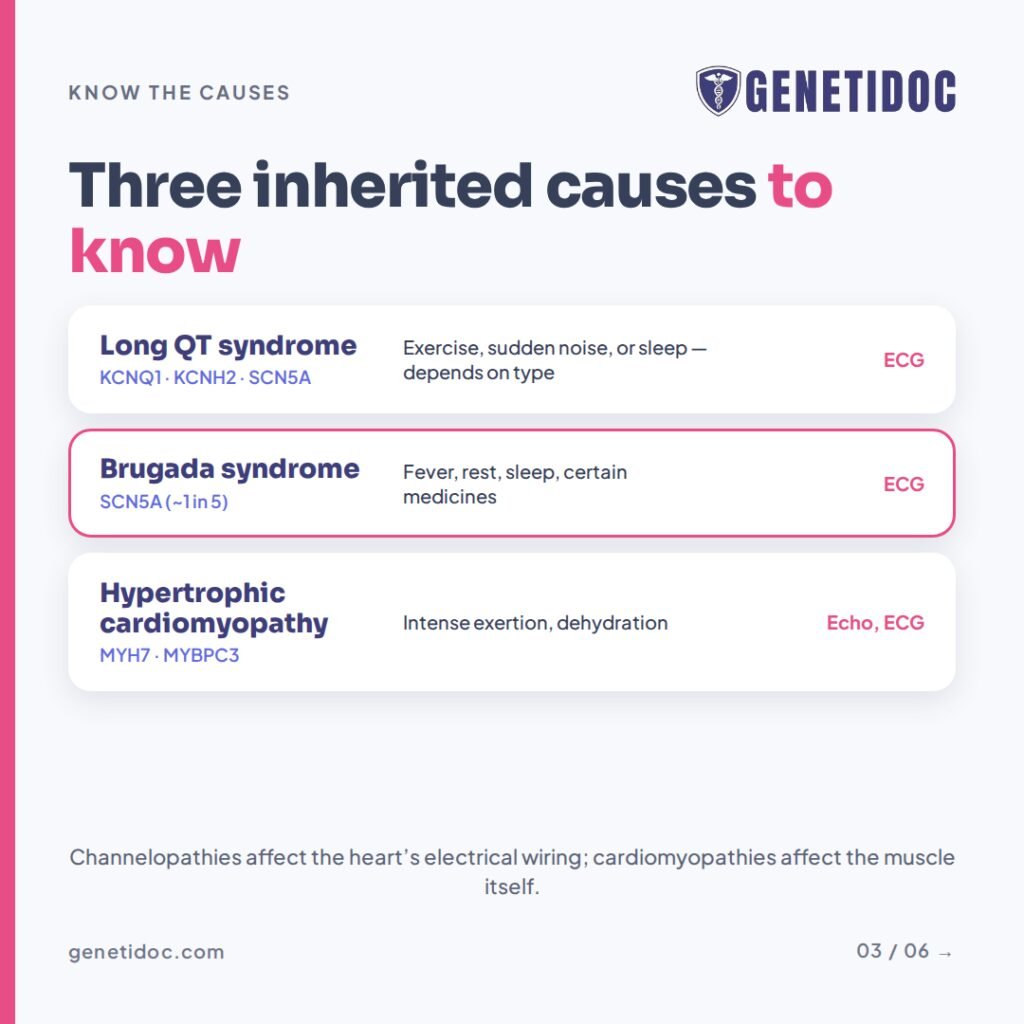
| Condition | Main genes | Typical trigger | Key first test |
| Long QT syndrome | KCNQ1, KCNH2, SCN5A | Exercise, swimming, sudden noise, sleep (varies by type) | ECG |
| Brugada syndrome | SCN5A | Fever, rest, sleep, certain medicines | ECG (sometimes with a medicine challenge) |
| Hypertrophic cardiomyopathy | MYH7, MYBPC3 | Intense exertion, dehydration | Echocardiogram, ECG |
| CPVT | RYR2 | Exercise, strong emotion | Exercise stress test |
Warning Signs That Need a Cardiac Genetic Evaluation
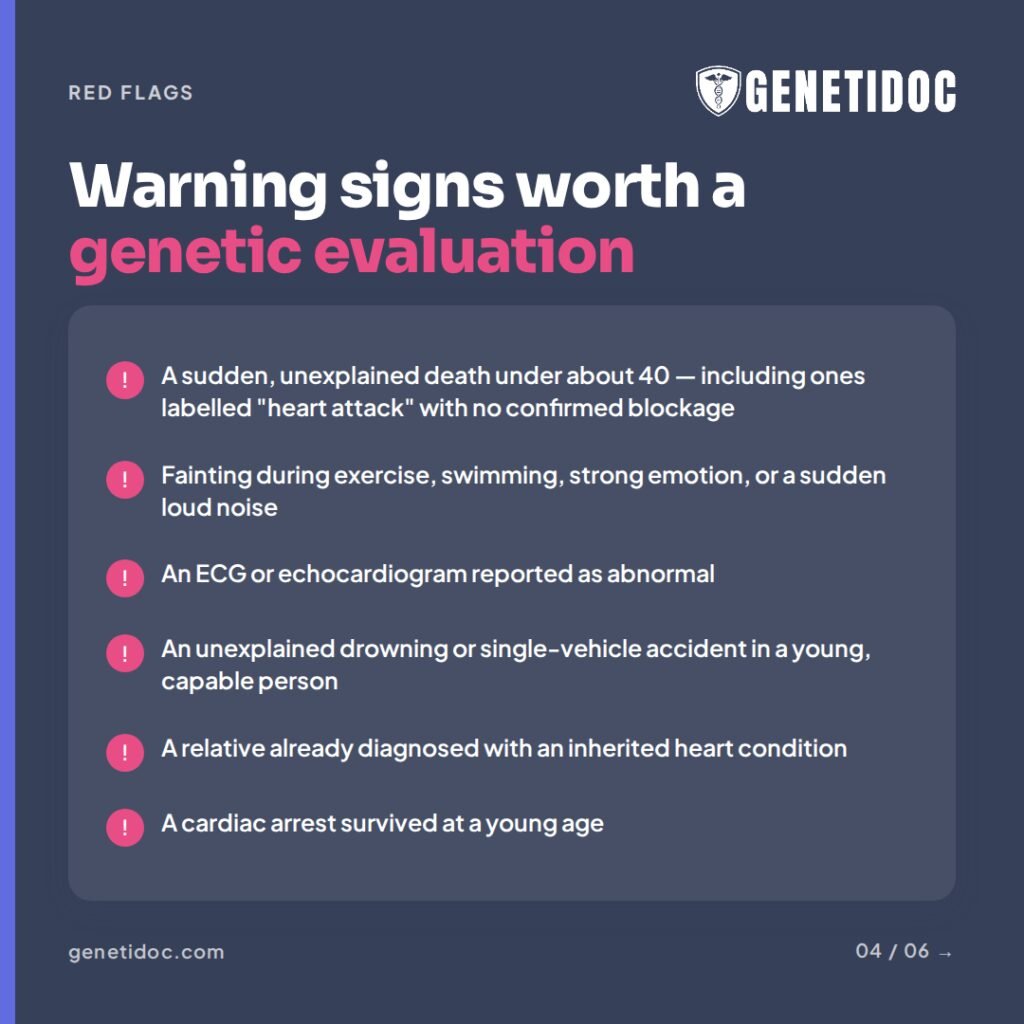
Consider a cardiac genetic evaluation if you, or someone in your family, has any of the following:
- A sudden, unexplained death under about 40 — including deaths labelled “heart attack” without a confirmed blockage.
- Fainting during exercise, swimming, or strong emotion, or fainting set off by a sudden loud noise.
- “Seizures” that do not respond to epilepsy treatment, or that happen with exertion or fright.
- An unexplained drowning or single-vehicle accident in an otherwise capable young person.
- An ECG reported as abnormal — a long QT interval, a Brugada-type pattern, or unexplained changes.
- An echocardiogram showing thickened or weakened heart muscle without an obvious reason.
- A cardiac arrest survived at a young age.
- A relative already diagnosed with Long QT syndrome, Brugada syndrome, HCM, or another inherited heart condition.
Illustrative example (a composite scenario for explanation — not a specific patient)
A 29-year-old man collapses and dies at home early one morning, shortly after his alarm rings. The family is told it was a heart attack. Two years earlier, he had “fainted” twice and been started on epilepsy medicine. His younger sister, now anxious, asks her doctor whether she should be checked. Her ECG shows a borderline long QT interval. Because a blood sample from her brother’s hospital visit had been stored, it is tested first and shows a disease-causing change in KCNH2 — Long QT syndrome type 2, the type classically triggered by sudden noise. His sister is then tested for that single change, confirmed to carry it, and started on preventive management. Their mother and his young son are offered testing too.
After a Sudden Death: What Families Can Do
Most families do not think about genetics in the days after a death — and that is completely understandable. Usually, the worry arrives later, when someone asks, “Could this happen to us?”
“Families usually come to us some time after the death of a family member — not immediately, but once concern about the sudden death sets in,” says Team Genetidoc.
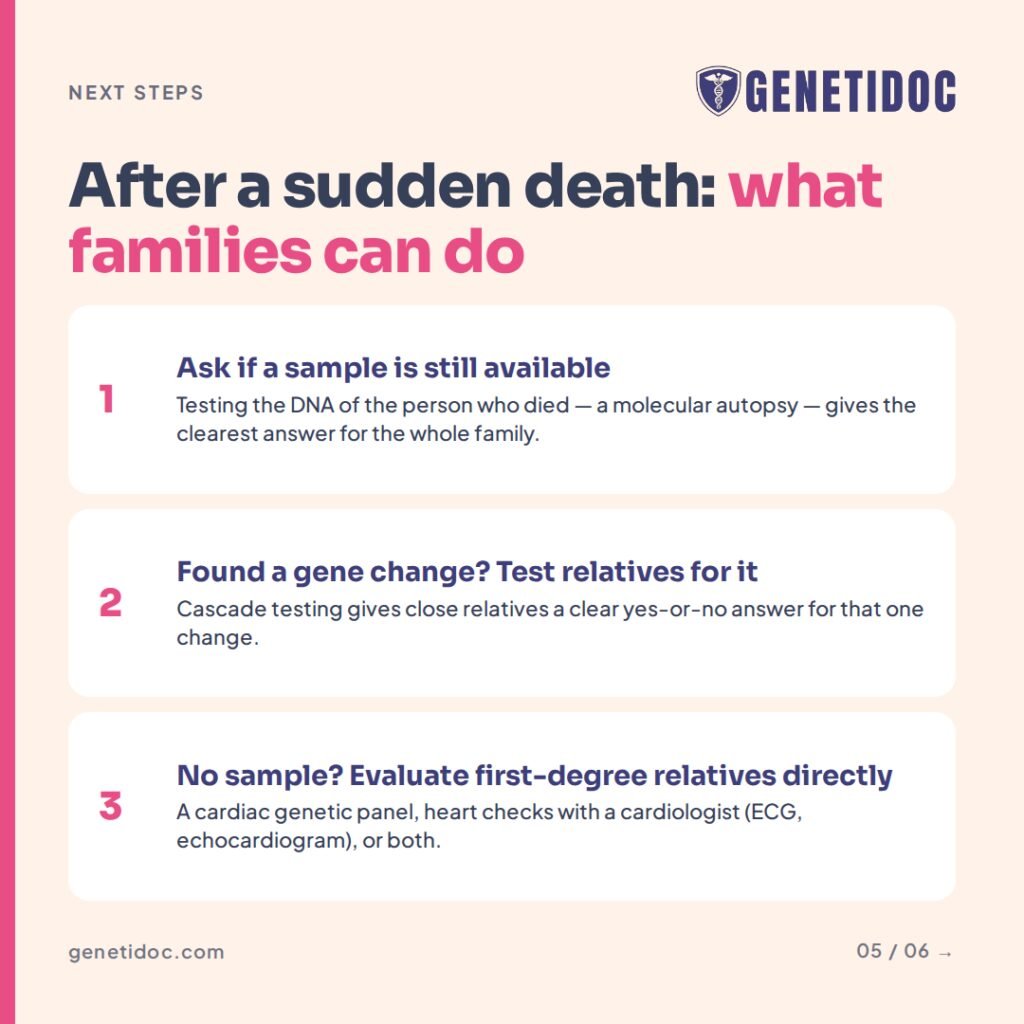
Step 1: Ask whether a sample from the person who died is still available
Testing the DNA of the person who died is called a molecular autopsy (or post-mortem genetic testing). It is the single most useful test after an unexplained sudden death, because it looks directly at the person who was affected.
In India, post-mortem examinations are largely medico-legal, and DNA testing is rarely part of them. Families are seldom told that a sample can be preserved. If the death is recent, ask quickly whether the hospital or the doctor who performed the post-mortem still holds a blood sample or tissue that can be used for DNA testing. Samples are usually kept only for a limited time.
“If a blood sample from the person who died is available, we usually do the genetic testing on that sample first,” explains Team Genetidoc. “It gives the clearest answer for the whole family.”
Step 2: If a disease-causing change is found, test relatives for that one change
Once the family’s specific genetic change is known, relatives can be tested for that exact change. This is called cascade testing, or targeted testing. It gives a clear yes-or-no answer and is simpler and quicker than a full panel.
Step 3: If no sample is available, first-degree relatives are evaluated directly
When no sample was saved, the search starts with the living. First-degree relatives — parents, brothers, sisters, and children — have two routes, which can also be combined:
- A cardiac genetic panel, which looks at many genes linked to inherited heart conditions at once (Genetidoc’s panel options are described below).
- Heart checks with a cardiologist — usually an ECG and an echocardiogram, and sometimes a 24-hour heart monitor (Holter), an exercise stress test, or a supervised medicine challenge for Brugada syndrome. These are done by the family’s cardiologist; Genetidoc suggests them for relatives who prefer not to have genetic testing.
“When the sample isn’t available, we have a package for cardiac-associated conditions that we offer to the first-degree relatives who come for counseling,” says Team Genetidoc. “If a relative does not want genetic testing, we suggest they get a regular ECG and echo done with a cardiologist.”
International guidelines recommend heart checks for first-degree relatives after an unexplained sudden death, regardless of the genetic result. The reason is simple: when the family’s genetic change is unknown, a negative panel in a healthy relative cannot rule out an inherited condition. The cause may lie in a gene the panel does not cover, or may not be genetic in a way current tests can read. An ECG and echocardiogram look at how the heart is actually working.
Which Genetic Test Is Usually Ordered?
The right test depends on how clearly the clinical picture points to one condition.
- Features point to one specific syndrome (for example, a clearly long QT interval): a targeted panel for that condition.
- Features point to a broader category (for example, “some kind of rhythm problem” or “some kind of heart muscle problem”): a broad cardiac panel.
- Findings suggest several possibilities at once, or other body systems are involved: exome sequencing, which reads the protein-coding parts of nearly all genes.
“If the findings lean towards a specific syndrome, we offer a panel for it,” explains Team Genetidoc. “We also have a broad cardiac panel for when it’s a broader category. And if the findings suggest not just one condition but multiple possibilities, we offer exome sequencing.”
Genetidoc’s cardiac panel options
Genetidoc offers three levels of cardiac genetic panel. Your clinical geneticist will recommend the one that fits your personal and family history.
- GD Monogenic Cardiac Risk Panel – Basic: A focused panel covering a smaller set of well-established genes linked to inherited heart disease. Useful when the clinical picture clearly points to a specific, well-understood condition.
- GD Monogenic Cardiac Risk Panel – Advanced: A comprehensive panel covering the known genes associated with inherited cardiac conditions, including: This is often the most useful choice after an unexplained sudden death, when the exact cause is not yet known.
- irregular heartbeat conditions (arrhythmias), such as Long QT syndrome and Brugada syndrome
- heart muscle conditions that affect how well the heart pumps (cardiomyopathies), such as HCM
- inherited very high cholesterol levels, which raise the risk of early heart attack
- conditions that weaken the heart and blood vessels
- GD Monogenic + Polygenic Cardiac Risk Panel – Comprehensive: Everything in the Advanced panel, plus a polygenic risk assessment.
“Monogenic” means a single gene change strong enough, on its own, to cause a condition — this is what causes Long QT syndrome, Brugada syndrome, and HCM. “Polygenic” means the combined effect of many small, common genetic variations, each with a tiny influence. Together with lifestyle factors such as diet and fitness, they shape a person’s overall risk of common heart disease.
It is important to understand what each part does. The monogenic part can diagnose an inherited condition such as Long QT syndrome. The polygenic part cannot diagnose or rule out these conditions — it adds a broader picture of common heart disease risk, which can help guide lifestyle and prevention.
How long does it take, and what does it cost?
- Cardiac panels: usually three to four weeks, depending on the panel.
- Exome sequencing: usually one to two months.
- Targeted testing for relatives (for one known family change): generally quicker and less expensive than a full panel.
- Cost: varies with the test’s scope and the laboratory. Your genetic counselor will explain the options before any sample is taken. Samples can usually be collected at home.
Understanding the Result
Positive (pathogenic or likely pathogenic)
A disease-causing change was found. It confirms, or strongly supports, the diagnosis. A positive report is valuable in three practical ways:
- Targeted surveillance: Knowing the exact gene tells the care team which checks matter most, and how often. A person with a Long QT gene change needs regular ECG review and medicine checks; a person with an HCM gene change needs periodic echocardiograms and rhythm monitoring, even before any muscle thickening appears.
- Guiding management: The gene and its type help the cardiologist choose medicines, precautions, and decide who may need a protective device.
- Clarity for relatives: It gives family members a precise target for testing, so those who carry the change can start surveillance and those who don’t can be reassured.
Variant of uncertain significance
A variant of uncertain significance is a genetic change that science cannot yet classify as harmful or harmless. It is neither a positive nor a negative result — it is a “we don’t know yet.”
Why do they happen?
Everyone carries many small spelling differences in their DNA. Most are harmless. Laboratories classify each one using published research, population databases, and computer predictions. When there is not enough evidence either way, the variant is reported as uncertain. This is especially common in heart rhythm genes such as SCN5A and KCNH2, which are large and naturally vary a lot between people.
What an uncertain result should — and should not — change:
- It should not be used on its own to diagnose a condition, start treatment, or decide on a device.
- It should not be used to test healthy relatives as if it were a confirmed family variant — a relative’s positive or negative result for an uncertain variant tells us very little.
- Care continues to be guided by the heart findings — the ECG, echocardiogram, and family history.
Can an uncertain result become clearer? Yes. As more families worldwide are tested and studied, variants are regularly reclassified. Most uncertain variants are eventually reclassified as harmless, while a smaller number are upgraded to disease-causing. It is worth keeping your report and checking back with your genetic counseling team periodically, or when new symptoms or family events occur.
“If a patient already has the condition and we find a variant of uncertain significance, we check whether other affected family members also carry it,” explains Team Genetidoc. “If the variant is found in them too, it can be upgraded to likely pathogenic or pathogenic — and then targeted testing and screening can be offered to the rest of the family.”
Negative
No disease-causing change was found in the genes tested. In a person who clearly has Long QT syndrome, Brugada syndrome, or HCM on heart tests, a negative genetic result does not remove the diagnosis — treatment continues based on the heart findings. It simply means relatives will need to rely on heart checks rather than a genetic test.
A note on a common South Asian variant
A 25-letter deletion in the MYBPC3 gene is carried by about 4 percent of people of South Asian ancestry. An early study linked it to heart muscle disease. Later, larger studies found that its effect on its own is small and that most carriers never develop HCM. If a report flags this variant, it needs careful interpretation in the context of the heart findings and family history — not alarm. For more on uncertain results, see our guide to variants of uncertain significance [internal link placeholder]. It is a good example of why a genetic report should always be read by someone trained to interpret it.
How a Diagnosis Changes Care
Once a diagnosis is made, patients are referred back to their cardiologist, who plans further tests and treatment. Genetics helps shape that plan in several ways.
“Right after a diagnosis is made, we usually refer the patient back to a cardiologist for their workup, depending on the criteria for their condition,” says Team Genetidoc. “Genetics and cardiology work together — the genetic result helps guide the management.”
Safety advice follows the recommendations summarized in GeneReviews and the international cardiology guidelines it draws on.
Long QT syndrome
- Beta-blocker medicines are the main treatment and greatly reduce risk. Knowing the genetic type helps the cardiologist choose the approach — for example, type 3 may be treated with an additional medicine that targets the sodium channel.
- Avoid medicines that prolong the QT interval — including some antibiotics, anti-vomiting medicines, antidepressants, and antihistamines. Always tell every doctor and pharmacist about your diagnosis. The website crediblemeds.org keeps an updated list.
- Replace lost salts during vomiting or diarrhea, since low potassium lengthens the QT interval further.
- Type-specific precautions: supervised swimming for type 1; removing sudden alarm or phone noises from the bedroom for type 2.
- For higher-risk patients: an implantable cardioverter-defibrillator (ICD) — a small device that detects dangerous rhythms and restores a normal heartbeat — or a procedure called left cardiac sympathetic denervation.
Brugada syndrome
- Treat fever promptly with paracetamol, since fever can unmask dangerous rhythms. An ECG during a high fever may be advised.
- Avoid specific medicines and anesthetic agents listed at brugadadrugs.org, and inform any surgeon or anesthetist beforehand.
- Avoid heavy alcohol intake.
- An ICD is recommended for people who have survived a cardiac arrest or had fainting caused by an abnormal rhythm. Many people with Brugada syndrome who have never had symptoms do well with precautions alone.
Hypertrophic cardiomyopathy
- Medicines to relax the heart and improve blood flow, including newer targeted medicines such as mavacamten for suitable patients.
- Procedures to reduce the thickened muscle, when symptoms persist.
- Sudden death risk assessment using established risk calculators, to decide whether an ICD is needed.
- Exercise: current guidelines no longer ban all sport. Most people with HCM can stay active, with the level of activity agreed individually with their cardiologist.
Illustrative example
A young woman has never had a single symptom. Her uncle was diagnosed with Long QT syndrome, and a disease-causing change was found in his DNA. She is tested for that one change and found to carry it — even though she had never fainted. She begins preventive management, learns which medicines to avoid, and her own children can now be tested. Genetic testing made it possible to protect her before the condition ever showed itself.
What It Means for Your Family
Most of these conditions are inherited in an autosomal dominant way. This means a single changed copy of the gene, from either parent, is enough — and each child of a carrier has a 50 percent chance of inheriting it.
- Targeted testing for immediate family members: Once a disease-causing change is known, parents, brothers, sisters, and children can be tested for it.
- Adults: Testing is generally offered from 18 years of age.
- Children in Long QT syndrome or CPVT families: Tested early, because these conditions can cause events in childhood and effective prevention is available.
- Children in HCM families: Usually tested from late childhood, together with regular cardiology checks.
- Relatives who test positive: Referred to a cardiologist for assessment and preventive care, even if they feel completely well.
“If a gene change is found, we offer targeted testing for that variant to the immediate family members,” says Team Genetidoc. “When a relative tests negative on that targeted analysis, their risk is very low. We give them general advice about diet and lifestyle, and they can follow the regular screening recommended for the general population.”
For a step-by-step guide to how family testing works, see our article on cascade testing [internal link placeholder].
Common Misconceptions
- “My ECG was normal, so I’m safe.” A single normal ECG does not rule out every inherited heart condition. Long QT and Brugada patterns can be intermittent; CPVT shows up only during exercise; early HCM may appear only on an echocardiogram. The right set of tests depends on the suspected condition.
- “Gym deaths are caused by steroids, vaccines, or overworking.” Anabolic steroid misuse and extreme exertion can strain the heart, but assuming that is the whole story stops families from checking for an inherited cause. A large study by the Indian Council of Medical Research found that COVID-19 vaccination did not increase the risk of unexplained sudden death in adults aged 18 to 45. A family history of sudden death, on the other hand, was linked to a higher risk.
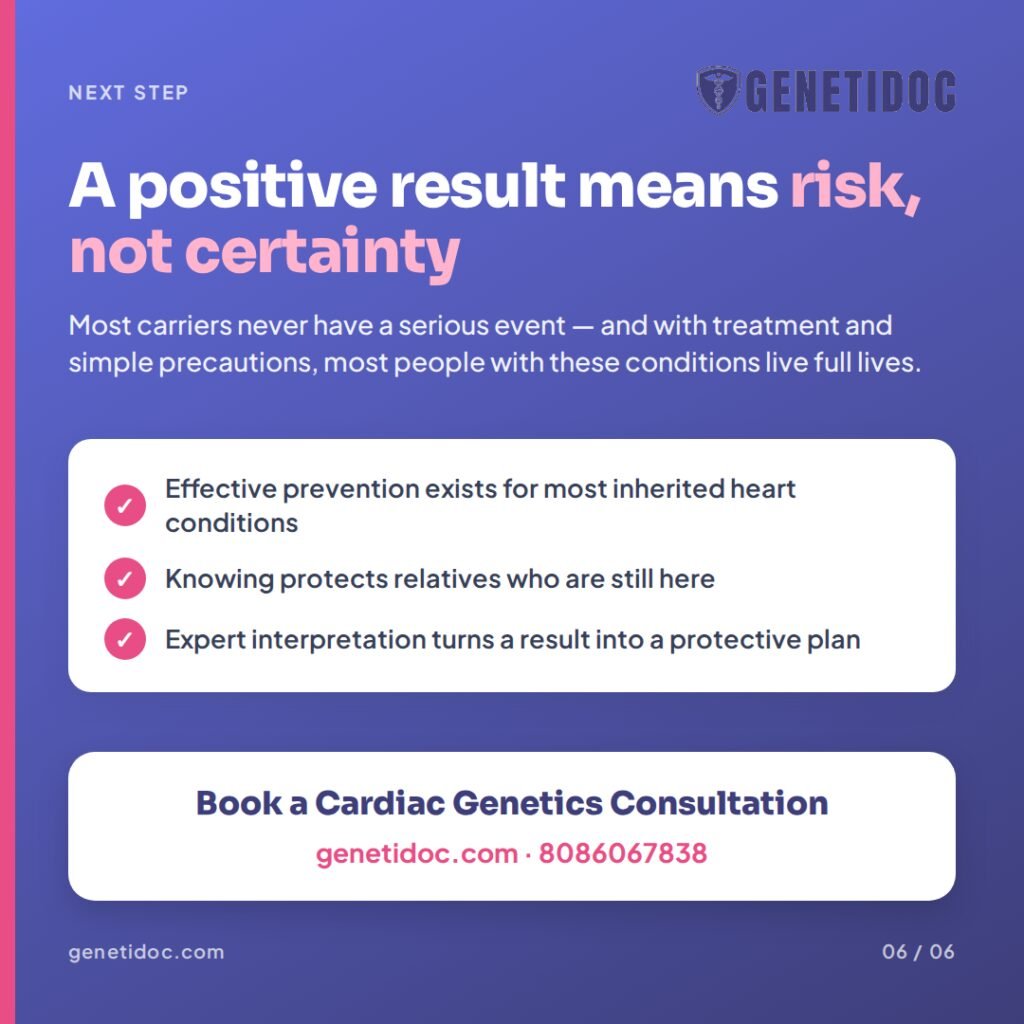
- “A positive genetic result means I will definitely die suddenly.” This is one of the most common fears families bring to us. A positive result means an increased risk, not a certainty. Many carriers never have a serious event, and with treatment and simple precautions, most people with these conditions live full lives.
- “It was a heart attack, so it isn’t genetic.” Many deaths called “heart attacks” in young people were never confirmed as such. The label deserves a second look.
- “The genetic test was negative, so the heart problem isn’t real.” Genetic testing does not find a cause in everyone. The heart findings still guide treatment.
The Emotional Side: Fear and Guilt
Losing someone suddenly is traumatic. Learning that the cause may be inherited adds a new layer of worry.
“Many families are very worried — they keep asking, ‘What will we do now?'” says Team Genetidoc. “They are afraid of another death in the family, and parents often feel guilty, as though they caused the condition.”
Two things are worth holding on to:
- No one chooses the genes they pass on. A parent who carries a gene change did nothing wrong, and could not have known.
- Knowing is protective. The same information that brings worry also makes prevention possible — medicines, precautions, and, where needed, a device that can restart the heart. Families who know are in a far stronger position than families who don’t.
Genetic counseling gives families time to ask these questions, understand their results, and decide on next steps at their own pace. Consultations can be done online, so relatives in different cities can join the same session.
When Is Genetic Testing Not the Right First Step?
- A confirmed heart attack from a blocked artery in an older relative usually points to coronary artery disease, not an inherited rhythm condition. (Very early heart attacks in several relatives may suggest a different inherited condition — familial hypercholesterolemia — which is assessed differently.)
- A healthy relative with no family red flags does not usually need cardiac genetic testing.
- A single borderline ECG without symptoms or family history usually needs a cardiology review and repeat testing first, before any genetic test.
- Testing an unaffected relative when an affected relative’s sample is available — testing the affected person first usually gives a much clearer answer.
Why Expert Interpretation Matters
Cardiac genetics is an area where a report can easily be misread. Heart rhythm genes contain many harmless natural variations, and an uncertain variant treated as a diagnosis can lead to unnecessary anxiety, unnecessary devices, or false reassurance for relatives. Getting it right depends on:
- The right test — matched to the clinical picture, from a targeted panel to exome sequencing.
- The right laboratory — accredited, with careful, evidence-based variant classification.
- Clinical correlation — reading the result together with the ECG, echocardiogram, and family history.
- Genetic counseling — so the patient understands the result and relatives have a clear path to testing.
- Close teamwork with the cardiologist — who manages treatment based on the combined picture.
If you have questions about Long QT syndrome or other inherited heart rhythm conditions in your family, you can post them on the Long QT Syndrome forum on the Genetidoc Rare Disease Forum.
Frequently Asked Questions
Don’t see your question below? Ask it on the Frequently Asked Questions forum on the Genetidoc Rare Disease Forum.
Can sudden cardiac death be hereditary?
Yes. In young people, sudden cardiac death is often caused by inherited conditions such as Long QT syndrome, Brugada syndrome, and hypertrophic cardiomyopathy. Each child of a carrier usually has a 50 percent chance of inheriting the condition.
What is the difference between a heart attack and cardiac arrest?
A heart attack is a blocked blood vessel starving part of the heart of oxygen. Cardiac arrest is a sudden electrical failure that stops the heart pumping. Inherited conditions in young people usually cause cardiac arrest, often with normal blood vessels.
Should my family be tested after a young relative died suddenly?
If the death was sudden and unexplained, especially under about 40, first-degree relatives should be evaluated. If a sample from the person who died is available, testing it first gives the clearest answer.
What is a molecular autopsy?
A molecular autopsy is genetic testing on DNA from a person who died suddenly, usually from a stored blood or tissue sample. It can identify an inherited heart condition that a standard post-mortem cannot see.
Can a normal ECG rule out Long QT syndrome?
Not always. Some people who carry a Long QT gene change have a normal or borderline ECG at rest. Family testing and, sometimes, repeated or exercise ECGs are needed.
Is Brugada syndrome genetic?
Yes, it runs in families, but a gene change (usually in SCN5A) is found in only about one in five patients. A negative genetic test does not rule it out; the diagnosis is based on the ECG.
Can people with hypertrophic cardiomyopathy exercise?
Most can stay active. Current guidelines recommend an individual decision with the cardiologist rather than a blanket ban on sport.
How long does cardiac genetic testing take?
Cardiac panels usually take three to four weeks. Exome sequencing usually takes one to two months. Targeted testing of relatives for a known family change is generally quicker.
At what age should children be tested?
In Long QT syndrome and CPVT families, children are tested early because these conditions can cause events in childhood. In HCM families, testing usually starts in late childhood with cardiology checks. For most other situations, testing is offered from 18.
If my genetic test is positive, will I die suddenly?
No. A positive result means a higher risk, not a certainty. Many carriers never have a serious event, and treatment and simple precautions greatly reduce risk.
Which medicines should people with Long QT syndrome avoid?
Medicines that prolong the QT interval, including some antibiotics, anti-vomiting medicines, antidepressants, and antihistamines. Check with your doctor and see crediblemeds.org before starting any new medicine.
Do COVID-19 vaccines cause sudden death in young people?
A large Indian Council of Medical Research study found COVID-19 vaccination did not increase the risk of unexplained sudden death in adults aged 18 to 45. A family history of sudden death was linked to higher risk.
Key Takeaways
- Sudden cardiac death in young people is often caused by inherited heart rhythm or heart muscle conditions — not a blocked artery
- A young relative’s death labelled “heart attack” deserves a closer look
- If a sample from the person who died is available, test it first; if not, first-degree relatives can have a cardiac genetic panel, heart checks with a cardiologist, or both
- A single normal ECG does not rule out every inherited heart condition
- A positive result means higher risk, not certainty — and effective prevention exists
- Expert interpretation and close work with a cardiologist turn a genetic result into a protective plan for the whole family
Has someone in your family died suddenly at a young age, or has your ECG or echocardiogram shown something unexpected? Speak with a clinical geneticist to find out whether an inherited heart condition could be the cause — and how to protect the rest of your family.
Book a Cardiac Genetics Consultation
References
- Bagnall RD, et al. A prospective study of sudden cardiac death among children and young adults. New England Journal of Medicine. 2016;374:2441–2452. org
- Zeppenfeld K, et al. 2022 ESC Guidelines for the management of patients with ventricular arrhythmias and the prevention of sudden cardiac death. European Heart Journal. 2022;43:3997–4126.
- Arbelo E, et al. 2023 ESC Guidelines for the management of cardiomyopathies. European Heart Journal. 2023;44:3503–3626.
- Ommen SR, et al. 2024 AHA/ACC/AMSSM/HRS/PACES/SCMR Guideline for the Management of Hypertrophic Cardiomyopathy. Circulation. 2024;149:e1239–e1311.
- Alders M, Bikker H, Christiaans I. Long QT Syndrome. GeneReviews. University of Washington, Seattle. nlm.nih.gov/books/NBK1129
- Brugada R, Campuzano O, Sarquella-Brugada G, Brugada P, Brugada J, Hong K. Brugada Syndrome. GeneReviews. University of Washington, Seattle. nlm.nih.gov/books/NBK1517
- Cirino AL, Ho C. Hypertrophic Cardiomyopathy Overview. GeneReviews. University of Washington, Seattle. nlm.nih.gov/books/NBK1768
- Hosseini SM, et al. Reappraisal of reported genes for sudden arrhythmic death: evidence-based evaluation of gene validity for Brugada syndrome. Circulation. 2018;138:1195–1205.
- Dhandapany PS, et al. A common MYBPC3 (cardiac myosin binding protein C) variant associated with cardiomyopathies in South Asia. Nature Genetics. 2009;41:187–191. com
- Harper AR, et al. Reevaluation of the South Asian MYBPC3Δ25bp intronic deletion in hypertrophic cardiomyopathy. Circulation: Genomic and Precision Medicine. 2020;13:e002783. ncbi.nlm.nih.gov
- Indian Council of Medical Research. Factors associated with unexplained sudden deaths among adults aged 18–45 years in India — a multicentric matched case–control study. Indian Journal of Medical Research. 2023. ncbi.nlm.nih.gov
- Molecular autopsy in unexplained sudden death: a systematic review and meta-analysis of ACMG-corrected diagnostic yield, genomic architecture, and family translation. International Journal of Legal Medicine. 2026. springer.com
Related Reading on Genetidoc
- Why Accuracy and Interpretation Differ in Home DNA Kits vs. Clinical Genetic Testing
- Understanding the Genetic Causes of Male Infertility
- Lynch Syndrome: When Colorectal Cancer Runs in the Family
- BRCA and Beyond: What a “Positive” Hereditary Cancer Result Actually Means for Your Family
- Down Syndrome Screening in Pregnancy: How to Choose Between the First-Trimester Combined Test, Quad Screen, and Non-Invasive Prenatal Testing (NIPT)
- Long QT Syndrome Forum
- Cascade Testing Forum