Quick answer: What is tuberous sclerosis complex?
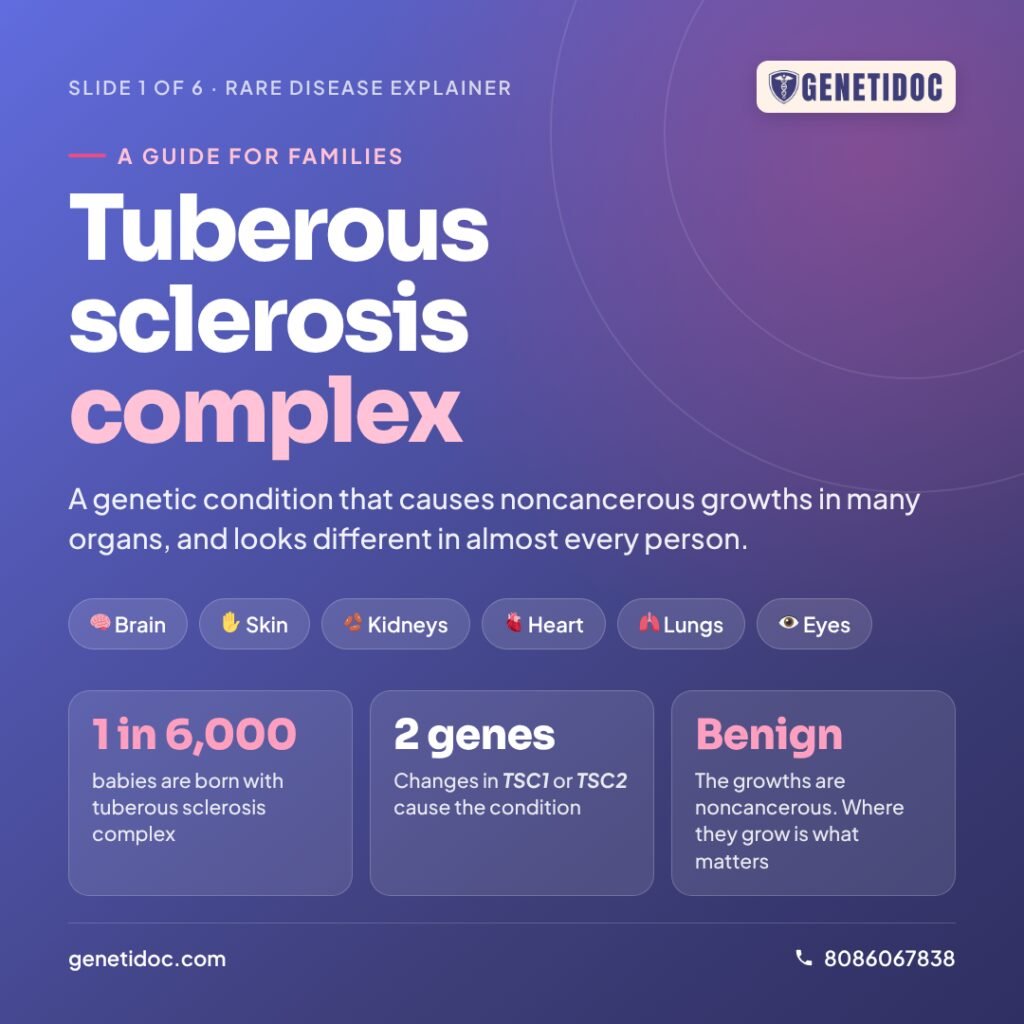
Tuberous sclerosis complex (TSC) is a genetic condition that causes noncancerous growths in many organs, especially the brain, skin, kidneys, heart, lungs, and eyes. It is caused by a change in the TSC1 or TSC2 gene and affects about 1 in 6,000 babies. Symptoms range from a few skin spots to severe epilepsy. There is no cure yet, but early diagnosis, regular monitoring, and targeted medicines can greatly improve a person’s health and quality of life.
Tuberous Sclerosis Complex (TSC): A Complete Guide to Symptoms, Genetic Testing and Care in India
Perhaps a doctor mentioned “tuberous sclerosis” after your baby had a seizure. Perhaps a pregnancy scan showed a small growth in your baby’s heart. Or perhaps you are an adult who was just told that a kidney growth or a pattern of skin spots points to this condition.
Whatever brought you here, you probably have many questions. Is it serious? Is it inherited? Will my child live a normal life? Should the rest of the family be tested?
This guide answers those questions in plain language. It is written by the clinical genetics team at Genetidoc, who counsel families with tuberous sclerosis complex across India.
What Is Tuberous Sclerosis Complex?
Tuberous sclerosis complex (TSC) is an inherited condition that causes benign (noncancerous) growths called hamartomas to form in different parts of the body. A hamartoma is a lump made of normal tissue that has grown in a disorganized way.
The name comes from the potato-like (“tuber”) growths seen in the brain, which feel firm (“sclerosis”). The word “complex” reflects how many organs it can affect.
What causes tuberous sclerosis complex?
TSC is caused by a change (variant) in one of two genes: TSC1 or TSC2. These genes make two proteins, hamartin and tuberin. Together, they act like a brake on cell growth.
Normally, this brake controls a cell growth pathway called mTOR (mechanistic target of rapamycin). When one of these genes does not work properly, the brake becomes weak. Cells grow and divide more than they should, and hamartomas form.
This explanation matters for treatment. Modern medicines called mTOR inhibitors work by restoring that brake.
“When parents hear the word ‘tumor’, they often panic. I always explain early that the growths in tuberous sclerosis complex are noncancerous. What matters is where they grow and whether they press on something important. That is exactly what regular monitoring is designed to catch.”
Dr. Roshan Daniel, Clinical Geneticist, Genetidoc
How common is TSC?
TSC affects roughly 1 in 6,000 live births worldwide. It affects boys and girls equally and occurs in every population, including India.
In India, TSC is often recognized late. Indian studies have shown that the “classic triad” taught in medical textbooks occurs in only about one-third of patients. That triad is facial skin growths, seizures and intellectual disability. Many people have only some features. As a result, the condition can be missed for years.
Signs and Symptoms of Tuberous Sclerosis Complex by Age
One of the most confusing things about TSC is how different it looks from person to person, even within the same family. Symptoms also change with age.
Before birth
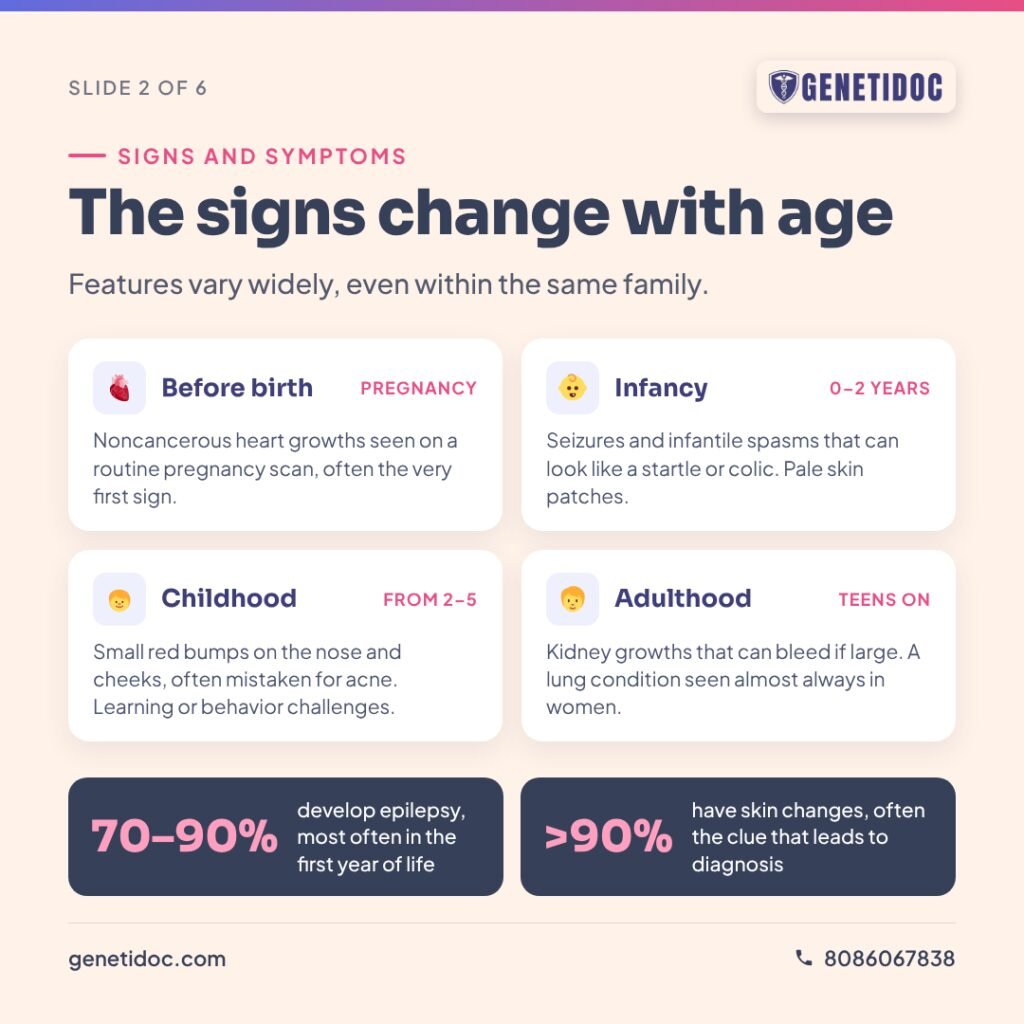
- Cardiac rhabdomyomas: noncancerous heart growths, often seen on a routine pregnancy ultrasound or fetal echocardiogram. They are frequently the first sign of TSC.
- Brain findings: sometimes visible on fetal magnetic resonance imaging (MRI).
Infancy (birth to 2 years)
- Seizures, often beginning in the first year of life
- Infantile spasms: brief, repeated jerks or stiffening, often in clusters after waking. They can look like a startle or colic, so parents may not realize they are seizures.
- Pale skin patches (hypomelanotic macules, sometimes called “ash-leaf spots”), which may be easier to see under an ultraviolet lamp
- Delayed developmental milestones
Childhood
- Facial angiofibromas: small red or skin-colored bumps on the nose and cheeks, usually appearing between ages 2 and 5. They are commonly mistaken for acne.
- Shagreen patch: a thickened, orange-peel-like skin patch, usually on the lower back
- Learning difficulties, autism spectrum disorder, attention problems or behavioral challenges
- Continued seizures
Adolescence and adulthood
- Ungual fibromas: small growths around or under the fingernails and toenails
- Kidney angiomyolipomas: benign kidney growths that can bleed if they become large
- Lymphangioleiomyomatosis (LAM): a lung condition, almost always in women, which can cause breathlessness or a collapsed lung
- Dental enamel pits and gum growths
Some adults are diagnosed for the first time only after their child is diagnosed. On closer examination, they turn out to have mild features they never noticed.
How TSC Affects Each Part of the Body
Brain
Three types of brain findings are common:
- Cortical tubers: areas where brain tissue developed abnormally, which can trigger seizures
- Subependymal nodules: small growths along the walls of the brain’s fluid spaces
- Subependymal giant cell astrocytomas (SEGAs): slow-growing benign tumors that develop in a minority of people, usually in childhood. If they grow, they can block fluid flow in the brain. This is one key reason for regular brain scans.
Epilepsy affects about 70 to 90% of people with TSC. About two-thirds of those develop it in the first year of life.
Skin
Skin changes affect more than 90% of people with TSC. They are often the clue that leads to diagnosis, and Indian dermatology studies have repeatedly found them to be the most consistent feature.
Kidneys
Angiomyolipomas and kidney cysts are common and increase with age. Large angiomyolipomas can bleed.
A small group of people have a larger deletion that removes both the TSC2 gene and the neighboring PKD1 gene. These people have TSC and severe polycystic kidney disease from early childhood. This is one reason genetic testing has to look for large deletions, not just small spelling changes in the gene.
Heart
Cardiac rhabdomyomas are most common before birth and in infancy. Reassuringly, most shrink or disappear on their own during early childhood. A few cause heart rhythm problems or block blood flow and need treatment.
Lungs
Lymphangioleiomyomatosis (LAM) mainly affects women with TSC after puberty. Lung cysts slowly replace normal lung tissue. Many women have mild disease, but some develop breathlessness.
Eyes and teeth
Retinal hamartomas (growths at the back of the eye) rarely affect vision but help confirm the diagnosis. Dental enamel pits and gum growths are common, so regular dental check-ups are advised.
TSC-associated neuropsychiatric disorders (TAND)
TSC-associated neuropsychiatric disorders (TAND) is the umbrella term for the behavioral, learning, emotional and psychiatric challenges linked to TSC. These include:
- Autism spectrum disorder
- Attention deficit hyperactivity disorder
- Anxiety and low mood
- Specific learning difficulties
- Sleep problems
Families often say these affect daily life more than any other part of TSC. Yet they are the most likely to go unrecognized. International guidelines recommend screening for TAND at least once a year using a structured checklist.
How Is Tuberous Sclerosis Complex Diagnosed?
There are two ways to diagnose TSC: by clinical features, or by a genetic test. Either one is enough.
Clinical diagnosis: the 2021 international criteria
Doctors use criteria updated in 2021 by the International Tuberous Sclerosis Complex Consensus Group.
Major features:
- Three or more pale skin patches (at least 5 mm wide)
- Three or more facial angiofibromas, or a fibrous plaque on the forehead or scalp
- Two or more ungual fibromas
- Shagreen patch
- Multiple retinal hamartomas
- Multiple cortical tubers and/or radial migration lines in the brain
- Two or more subependymal nodules
- Subependymal giant cell astrocytoma
- Cardiac rhabdomyoma
- Lymphangioleiomyomatosis
- More than two angiomyolipomas
Minor features:
- “Confetti” skin lesions (many tiny pale spots)
- More than three dental enamel pits
- More than two intraoral fibromas
- Retinal achromatic patch
- Multiple kidney cysts
- Nonrenal hamartomas
- Sclerotic bone lesions
Definite TSC means two major features, or one major feature plus two or more minor features. Possible TSC means one major feature, or two or more minor features.
One exception applies. The combination of lymphangioleiomyomatosis and angiomyolipomas without any other feature does not count as definite TSC. These two features can occur together in women who do not have TSC.
Genetic diagnosis
Finding a disease-causing (pathogenic) variant in TSC1 or TSC2 confirms TSC on its own, even if the person has few or no symptoms yet.
Tests usually done after a suspected diagnosis
- Brain magnetic resonance imaging (MRI)
- Electroencephalogram (EEG), a recording of the brain’s electrical activity
- Echocardiogram (heart ultrasound) and electrocardiogram
- Kidney imaging, preferably MRI, plus blood pressure and kidney function tests
- A careful skin examination with an ultraviolet lamp
- Eye and dental examination
- Low-dose chest computed tomography (CT) scan for adult women
- Developmental and neuropsychiatric assessment
Genetic Testing for Tuberous Sclerosis Complex
If the diagnosis is already clear, why test the genes?
This is one of the most common questions families ask. A child who clearly meets the clinical criteria does not need a gene test to confirm the diagnosis. But genetic testing still adds value:
- Testing the parents: Once the child’s variant is known, both parents can be checked for that exact variant. This tells the family whether the change was inherited or new.
- Planning future pregnancies: A known variant makes accurate prenatal diagnosis and preimplantation genetic testing possible.
- Testing siblings and relatives: Mildly affected relatives can be identified and monitored.
- Detecting the TSC2/PKD1 deletion: This changes how closely the kidneys need to be watched.
- Early certainty: In a baby with a heart rhabdomyoma but no other signs yet, a positive result allows seizure monitoring to begin before seizures start.
“A genetic report is the beginning of the conversation, not the end. The real value lies in what we do with the result: who else in the family needs checking, what the risk is for the next pregnancy, and which monitoring plan fits this particular child.”
Dr. Roshan Daniel, Clinical Geneticist, Genetidoc
Which genetic test is used for TSC?
Because only two genes cause TSC, Team Genetidoc usually starts with a targeted approach rather than a broad test. This means testing TSC1 and TSC2 with two methods together:
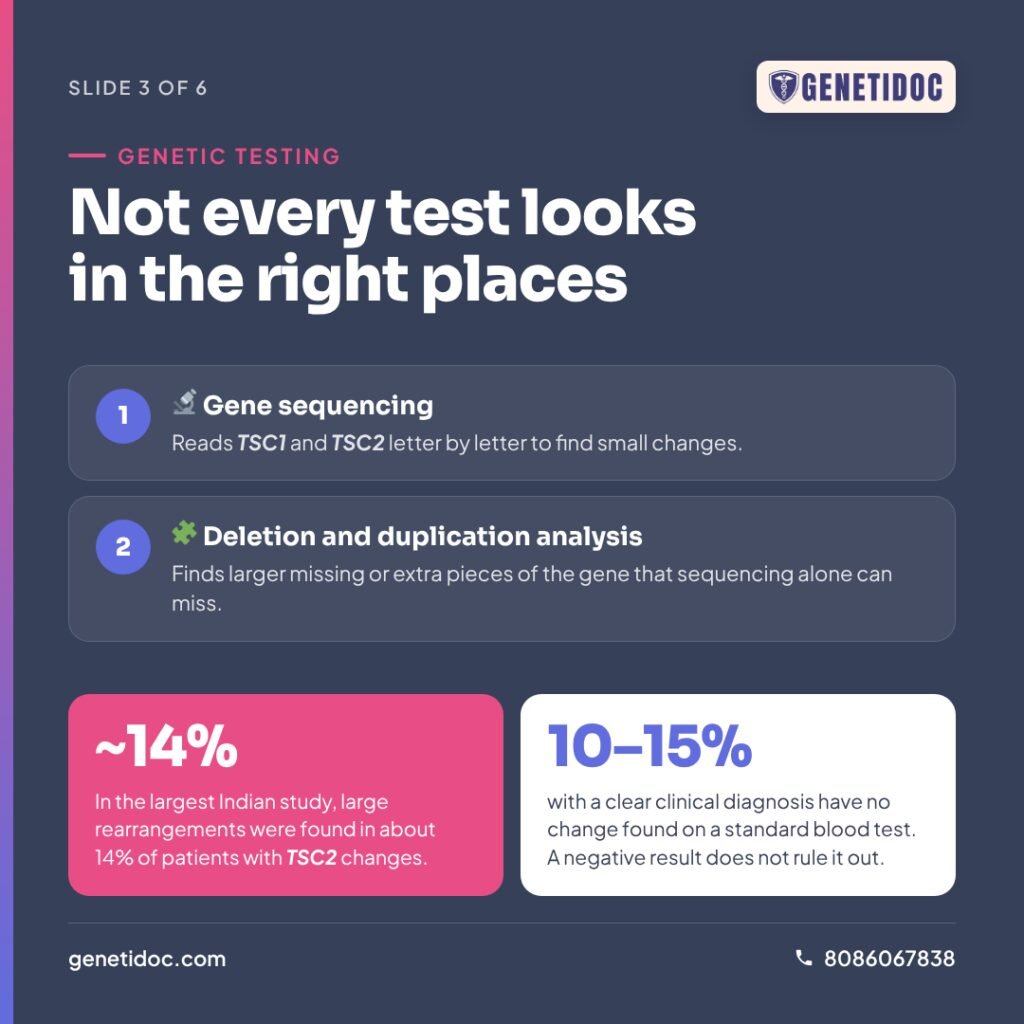
- Sequencing (next-generation sequencing), which reads the gene letter by letter to find small changes
- Deletion/duplication analysis, which looks for larger missing or extra pieces of the gene that sequencing alone can miss
The second step is especially important in India. In the largest Indian study of TSC, from the All India Institute of Medical Sciences, New Delhi, large rearrangements were found in about 14% of patients with TSC2 changes. A test that only sequences the gene would miss those families.
A broader epilepsy panel or exome sequencing may be chosen instead when the picture is unclear. One example is a child with seizures and developmental delay whose features could fit several different genetic conditions.
What can the result show?
- A pathogenic or likely pathogenic variant. This confirms TSC. It allows testing of parents and relatives and accurate pregnancy planning.
- A variant of uncertain significance (VUS). The laboratory found a change, but there is not yet enough evidence to say whether it causes TSC. A VUS should not be used to test unaffected relatives or to make pregnancy decisions. Team Genetidoc may test the variant in other affected relatives to see whether it travels with the condition. Families are advised to return for reanalysis after 6 months to a year, because classification can change as evidence grows.
- No mutation identified. In about 10 to 15% of people with clinically definite TSC, standard blood testing finds no variant. This does not mean the person does not have TSC.
Why can a genetic test be negative when TSC is clearly present?
The most common reason is mosaicism. This means the gene change happened after conception, so it is present in only some of the body’s cells. If very few blood cells carry it, a standard blood test may not detect it.
Another reason is that the change may lie in a part of the gene that standard tests do not read well, such as deep within the non-coding regions (introns).
Research shows that when these “no mutation identified” patients are retested with deeper sequencing, a cause is found in most of them. Testing DNA from a skin growth such as an angiofibroma, rather than only from blood, can increase the chance of finding the variant.
“A negative genetic test does not cancel a clinical diagnosis of tuberous sclerosis complex. In some people, the gene change is present in only a portion of the body’s cells, and a standard blood test can miss it. The monitoring plan should follow the clinical picture, not just the report.”
Dr. Roshan Daniel, Clinical Geneticist, Genetidoc
How long does TSC genetic testing take, and what does it cost in India?
A TSC1/TSC2 test with deletion/duplication analysis usually takes about 3 to 4 weeks. Testing a parent or relative for an already-known family variant is faster, often about a week.
Costs in India vary with the laboratory and the method. A targeted two-gene test generally costs less than exome or genome sequencing. Your genetic counselor can explain the options that fit your situation and budget.
Genetidoc arranges home sample collection, so families usually do not need to travel to a laboratory.
Why the right test, the right laboratory and expert interpretation matter
Not all TSC genetic tests are equal. A low-cost test that skips deletion/duplication analysis can give a falsely reassuring “negative” result. A report full of technical terms, with no one to explain it, can cause confusion or unnecessary fear.
Before you test, it helps to ask three questions:
- Does the test cover both genes completely, including large deletions?
- Is the laboratory accredited?
- Will a clinical geneticist explain what the result means for my family?
At Genetidoc, testing is done through accredited partner laboratories. Every result is discussed in a genetic counseling session. Families also receive a written summary prepared by the genetic counselor and checked by the clinical geneticist.
When genetic testing may not change much
Testing is not always urgent. An adult with a long-established clinical diagnosis, who has no plans for further children and no untested relatives, may gain little practical benefit. Their monitoring plan will be the same either way.
A genetic counselor can help you decide whether testing is worthwhile for you.
Is Tuberous Sclerosis Complex Hereditary?
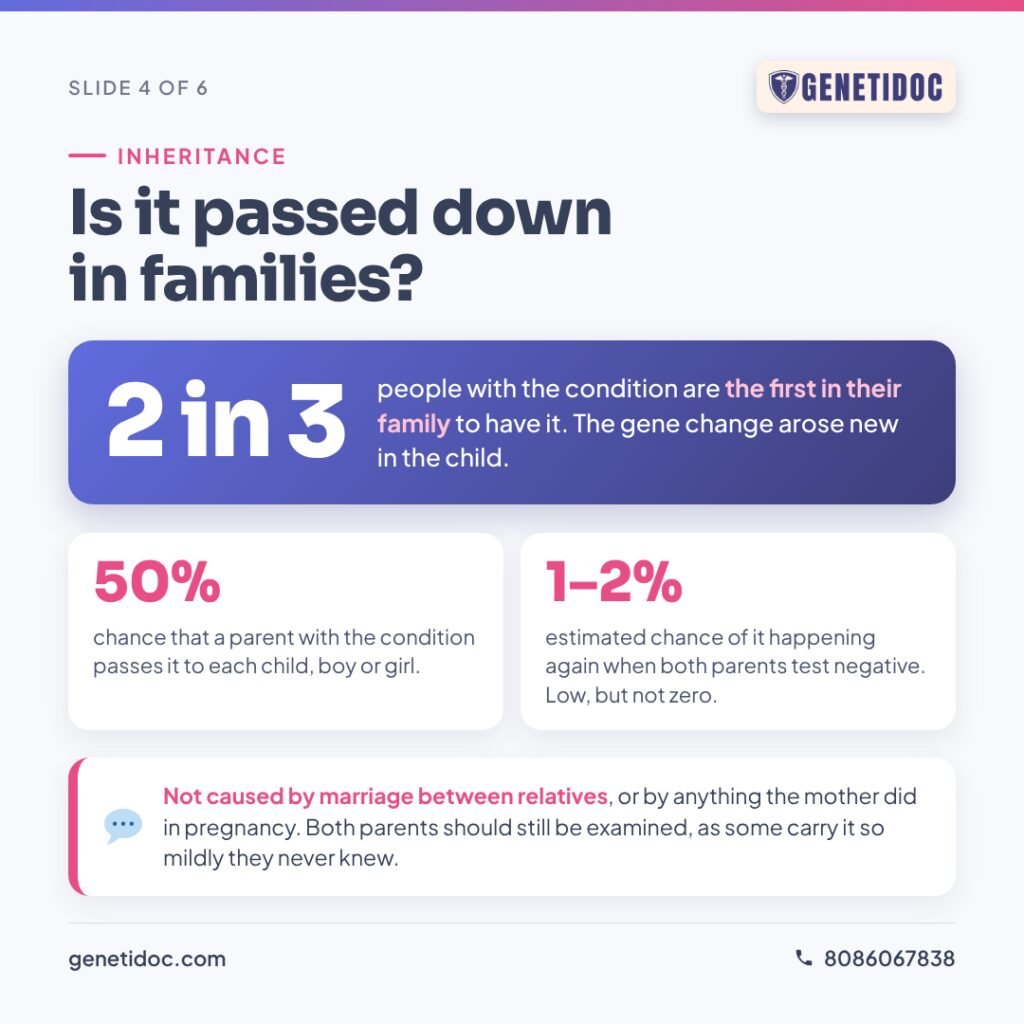
Yes, TSC can be inherited, but most people with TSC are the first in their family to have it.
How TSC is passed on
TSC follows an autosomal dominant pattern. This means only one changed copy of the gene is needed to cause the condition. A person with TSC has a 50% chance of passing it to each child, whether the child is a boy or a girl.
A parent with mild TSC can have a child with more severe TSC, and the reverse is also true. The severity cannot be predicted from the gene result alone.
New (de novo) changes
In about two-thirds of people with TSC, neither parent has the condition. The gene change happened for the first time in the child, which is called a de novo variant.
What is the chance of it happening again?
- If a parent has TSC: 50% for each pregnancy.
- If both parents test negative for the child’s variant: the risk is low, but not zero. Rarely, a parent carries the variant only in some of their egg or sperm cells, a situation called germline mosaicism. Published estimates of this recurrence risk are around 1 to 2%. For this reason, prenatal testing is still offered in later pregnancies.
Why both parents should be examined
Some parents carry the condition so mildly that they never knew. A careful skin examination with an ultraviolet lamp, plus testing for the child’s variant, gives the most accurate answer.
A common myth in Indian families
Tuberous sclerosis complex is not caused by marriage between relatives (consanguinity). It is a dominant condition, so a single gene change from one parent, or a new change, is enough. Neither is it caused by anything the mother did or did not do during pregnancy.
“No parent caused this. In most families, the gene change happened for the first time in the child. I tell every family that guilt has no place in the treatment plan. What helps the child is a clear plan and parents who feel supported.”
Dr. Roshan Daniel, Clinical Geneticist, Genetidoc
Tuberous Sclerosis Complex and Pregnancy
A heart growth (rhabdomyoma) was seen on my baby’s scan. What now?
Cardiac rhabdomyomas are the most common heart tumors found before birth. An estimated three out of four are linked to TSC, and the likelihood is higher when there are several of them.
The usual steps are:
- Fetal echocardiography to check the heart’s rhythm and blood flow
- Fetal brain MRI to look for tubers or nodules
- Genetic counseling to understand the possibilities and limitations
- Prenatal diagnostic testing by amniocentesis, which tests the baby’s DNA for TSC1 and TSC2 changes
- Testing the parents if a variant is found
Genetidoc does not currently perform amniocentesis. Our geneticists counsel couples and coordinate testing with their obstetrician and fetal medicine team.
An important limitation is that a positive prenatal test confirms TSC but cannot predict how severely the baby will be affected. Two babies with the same variant may have very different lives. Counseling should help couples understand both the possible challenges and the real improvements that modern care offers. The decision about the pregnancy always belongs to the couple.
“A heart growth on a fetal scan is a reason for careful evaluation, not for panic or hasty decisions. Couples deserve time, accurate information and proper counseling before they make any choice.”
Dr. Roshan Daniel, Clinical Geneticist, Genetidoc
If the baby is born with TSC, knowing the diagnosis before birth means seizure monitoring can begin from the first weeks of life.
Planning a pregnancy when TSC is already in the family
When the family’s variant is known, couples have several options:
- Prenatal diagnosis by chorionic villus sampling or amniocentesis
- Preimplantation genetic testing for monogenic conditions (PGT-M) alongside in vitro fertilization (IVF), so that only embryos without the variant are transferred
- Natural conception without testing, if the couple prefers
There is no “right” choice. A genetic counselor explains each option so that the couple can choose what fits their values.
How Diagnosis Changes Treatment and Outcomes
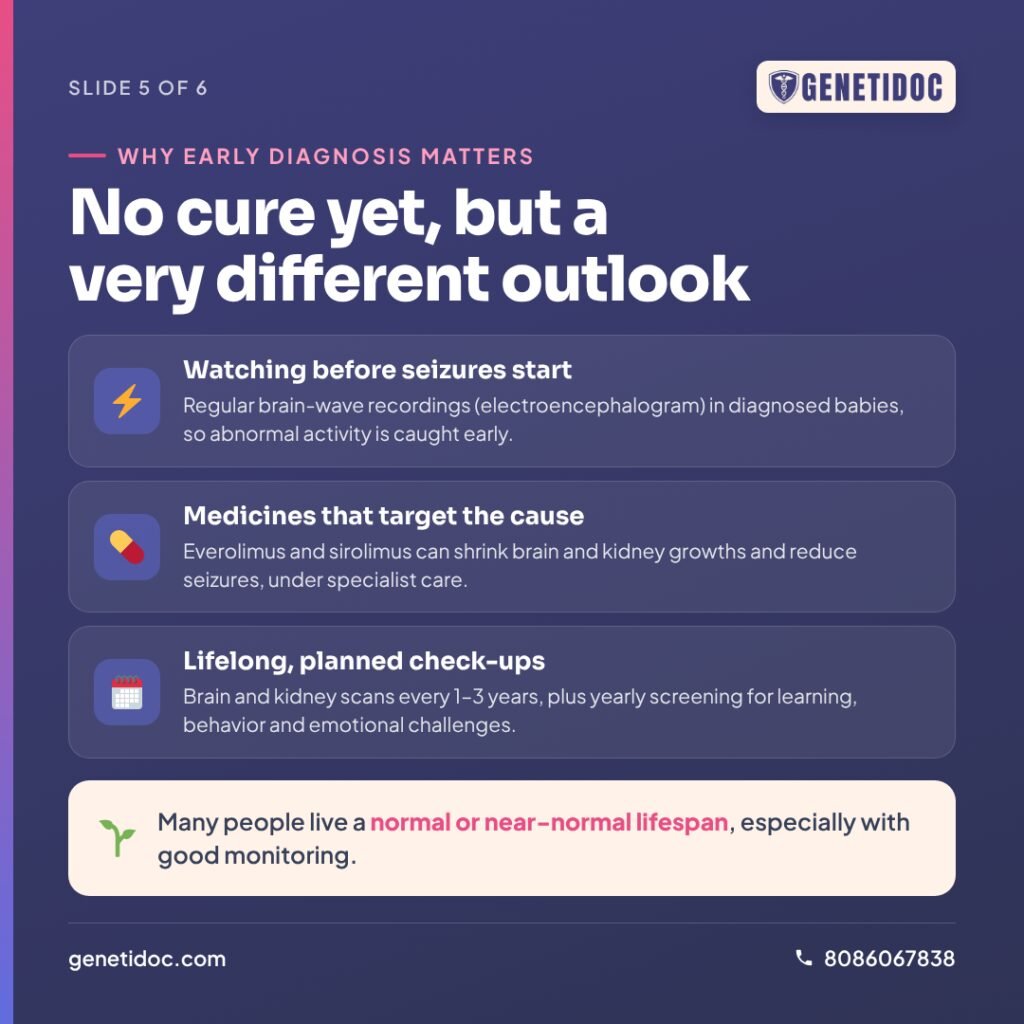
There is no cure for TSC yet. However, the outlook has changed significantly in the last 15 years. An early, confirmed diagnosis lets doctors watch for problems before they become serious.
1. Watching for seizures before they start
International guidelines now recommend regular EEG recordings in babies diagnosed with TSC, even before any seizure. The aim is to catch abnormal brain activity early.
In the European EPISTOP trial, starting the seizure medicine vigabatrin as soon as the EEG became abnormal reduced the risk of seizures, drug-resistant epilepsy and infantile spasms by age 2. However, it did not clearly reduce autism or developmental delay. A later American trial, PREVeNT, did not show better thinking and learning scores at age 2 with early treatment, although infantile spasms started later and were less frequent.
The honest summary is that early detection and prompt treatment of seizures clearly matter. Whether pre-emptive treatment improves long-term development is still being studied. Your child’s neurologist will advise on the right approach.
Parents can help by learning to recognize infantile spasms. Filming any suspicious episode on a phone helps doctors greatly.
2. mTOR inhibitors: treating the root pathway
Medicines such as everolimus and sirolimus restore the overactive mTOR pathway. Large clinical trials have shown that everolimus can:
- Shrink subependymal giant cell astrocytomas in the brain
- Shrink kidney angiomyolipomas and reduce the risk of bleeding
- Reduce seizure frequency when standard medicines are not enough
Sirolimus is also used for lymphangioleiomyomatosis. A topical (skin) form can reduce facial angiofibromas.
These medicines need blood-level monitoring and supervision by a specialist. In India, cost and access can be real barriers, so families should discuss practical options with their treating team.
3. Kidney care
Growing angiomyolipomas are now usually treated with medicine first. If one bleeds, doctors can block its blood supply through a procedure called embolization. Removing a kidney is avoided whenever possible, because people with TSC need to protect their kidney function lifelong.
4. Lifelong surveillance
The 2021 international guidelines recommend regular checks, adjusted to age and findings:
- Brain MRI every 1 to 3 years until about age 25
- Kidney MRI every 1 to 3 years, with yearly blood pressure and kidney function tests
- Frequent EEG monitoring in infancy
- Screening for TSC-associated neuropsychiatric disorders at least once a year
- Yearly skin examination and dental check-ups every 6 months
- Chest CT for women from age 18
- Eye examinations and heart checks as advised
What is the life expectancy with TSC?
Many people with TSC live a normal or near-normal lifespan, especially with good surveillance. The main serious risks are severe epilepsy, kidney complications and, in women, advanced lung disease. Most of these can be detected early and managed.
The outlook depends far more on which organs are affected, and how closely the person is monitored, than on the diagnosis itself.
Common Misconceptions About Tuberous Sclerosis Complex
- “It is a skin disease.” The skin is often where it is first noticed, but TSC affects many organs and needs whole-body care.
- “It is cancer.” The growths are benign. Malignant change is rare.
- “Every child with TSC will be severely disabled.” Many people with TSC study, work, marry and have families.
- “Those bumps on the face are acne.” Facial angiofibromas do not respond to acne treatment. Persistent facial bumps in a child with seizures or pale patches deserve a closer look.
- “The genetic test was negative, so it is not TSC.” Mosaicism and hard-to-detect changes can make a test negative even when TSC is present.
- “It came from the mother’s side.” Either parent can pass it on, and most cases are new changes.
“The biggest misunderstanding is that tuberous sclerosis complex looks the same in everyone. Two members of the same family can carry the exact same gene change. One may have only a few pale skin patches, while the other has seizures from infancy.”
Dr. Roshan Daniel, Clinical Geneticist, Genetidoc
Illustrative Scenarios: How Genetics Changes the Picture
The following are composite scenarios created for education. They do not describe specific patients.
Scenario 1: The “acne” that was not acne
A 9-year-old boy has had small red bumps on his nose and cheeks for years, treated repeatedly as acne. He also had a few seizures as a toddler, which were controlled with medicine.
A dermatologist recognizes facial angiofibromas and notices several pale patches on his back under an ultraviolet lamp. That is two major features, enough for a definite clinical diagnosis.
Genetic testing finds a TSC2 variant. When his mother is examined, she has a few faint pale patches she had never noticed, and she carries the same variant. Her kidney scan shows small angiomyolipomas, and she now has regular monitoring that she would otherwise never have had.
Scenario 2: A heart finding in pregnancy
At a 22-week scan, a couple learns their baby has three small growths in the heart. After counseling, they choose amniocentesis, which confirms a new (de novo) TSC1 variant. Neither parent carries it.
They continue the pregnancy. Their daughter starts EEG monitoring from her first weeks. When abnormal brain activity appears at five months, her neurologist starts treatment promptly.
For their next pregnancy, the couple is counseled that the recurrence risk is low but not zero. They opt for prenatal testing for reassurance.
Scenario 3: A negative result that was not the end
A young woman with facial angiofibromas, ungual fibromas and kidney angiomyolipomas has a clear clinical diagnosis. However, her blood genetic test is negative, and she wants to know her risk of passing TSC to future children.
Her clinical geneticist explains that low-level mosaicism is a likely reason. DNA from a skin angiofibroma sample is then tested and reveals a TSC2 variant that was present in only a small fraction of her blood cells.
She now has a known variant. When she plans a pregnancy, she will have access to accurate prenatal testing or preimplantation genetic testing.
Practical Advice for Families in India
- Find a coordinating doctor. TSC needs several specialists: a neurologist, nephrologist, dermatologist, cardiologist, ophthalmologist, dentist and, for adult women, a pulmonologist. A clinical geneticist or pediatric neurologist often helps coordinate care.
- Keep a TSC file. Store scan reports, EEG reports, genetic reports and medicine lists in one folder or on your phone.
- Do not skip scans because your child seems well. Brain and kidney growths can grow silently.
- Ask about school support early. Learning and behavioral challenges are easier to manage when identified early.
- Keep your genetic report and raw data. Return for review if new symptoms appear or if your result was uncertain.
- Talk to your relatives. Siblings, parents and children of an affected person may benefit from examination or testing.
- Look after yourself. Caring for a child with TSC is demanding. Connecting with other families can help a great deal.
Families can ask questions and connect with others in the Genetidoc Rare Disease Forum.
Key Takeaways
- Tuberous sclerosis complex is a genetic condition caused by changes in the TSC1 or TSC2 It causes benign growths in many organs.
- Symptoms vary enormously, even within one family.
- About two-thirds of cases are new changes. An affected person has a 50% chance of passing it on to each child.
- Genetic testing should include both sequencing and deletion/duplication analysis. A negative result does not rule out TSC.
- A heart rhabdomyoma on a pregnancy scan deserves expert evaluation and genetic counseling.
- Early diagnosis enables seizure monitoring, targeted mTOR inhibitor therapy and lifelong surveillance.
- Expert interpretation and genetic counseling turn a test result into a practical plan for the whole family.
Has your child been diagnosed with, or suspected of having, tuberous sclerosis complex?
Whether it is a new diagnosis, a heart finding on a pregnancy scan, a negative genetic test that does not fit, or a question about future pregnancies, Genetidoc’s clinical geneticists can help. We can help you choose the right TSC1/TSC2 test, explain your results and plan testing for parents and relatives.
Consultations are available online across India, in your preferred language, with home sample collection.
Book a tuberous sclerosis genetic consultation
Frequently Asked Questions About Tuberous Sclerosis Complex
Is tuberous sclerosis complex hereditary?
It can be. TSC is autosomal dominant, so an affected person has a 50% chance of passing it to each child. However, about two-thirds of people with TSC have a new gene change that neither parent carries.
What are the first signs of tuberous sclerosis in a baby?
Common early signs are seizures or infantile spasms, pale skin patches, and heart rhabdomyomas found on a scan before or after birth. Developmental delay may also be noticed.
Can tuberous sclerosis be detected before birth?
Yes. Heart rhabdomyomas or brain changes may be seen on ultrasound or fetal MRI. The diagnosis can be confirmed by testing the baby’s DNA through amniocentesis or chorionic villus sampling.
Which genetic test is used to diagnose TSC?
The usual test is sequencing of the TSC1 and TSC2 genes together with deletion/duplication analysis. Exome sequencing or an epilepsy panel may be used when the diagnosis is unclear.
If my genetic test is negative, can I still have TSC?
Yes. About 10 to 15% of people with clinically definite TSC have no variant found on standard blood testing, often because of mosaicism. The clinical diagnosis still stands.
How long does TSC genetic testing take in India?
Testing both genes usually takes about 3 to 4 weeks. Testing a relative for a known family variant is faster, often around a week.
Is tuberous sclerosis a type of cancer?
No. TSC causes benign (noncancerous) growths. Problems arise from where they grow, for example in the brain or kidneys, rather than from cancer.
Can tuberous sclerosis be cured?
There is no cure yet. Seizure medicines, mTOR inhibitors such as everolimus, procedures and regular surveillance can control most complications.
What is the life expectancy of a person with TSC?
Many people with TSC live a normal or near-normal lifespan. Severe epilepsy, kidney complications and lung disease are the main risks, and regular monitoring helps detect them early.
Can adults be diagnosed with TSC for the first time?
Yes. Some adults are diagnosed after a kidney growth, a lung problem or their child’s diagnosis. On examination, they are found to have mild features they never noticed.
Does marriage between relatives cause tuberous sclerosis?
No. TSC is caused by a single changed gene copy, either inherited from one parent or newly arising. Consanguinity does not increase the risk.
Can a person with TSC have healthy children?
Yes. Each child has a 50% chance of inheriting TSC. Prenatal diagnosis or preimplantation genetic testing with IVF can help couples plan pregnancies.
Should siblings of a child with TSC be tested?
If a parent carries the variant, siblings have a 50% chance and should be examined and offered testing. If neither parent carries it, the sibling risk is low, but a clinical examination is still sensible.
References
- Northrup H, Aronow ME, Bebin EM, et al. Updated International Tuberous Sclerosis Complex Diagnostic Criteria and Surveillance and Management Recommendations. Pediatric Neurology. 2021;123:50–66. doi:10.1016/j.pediatrneurol.2021.07.011
- Northrup H, Koenig MK, Pearson DA, Au KS. Tuberous Sclerosis Complex. In: Adam MP, et al., editors. GeneReviews. Seattle (WA): University of Washington. Available at: https://www.ncbi.nlm.nih.gov/books/NBK1220/
- Kotulska K, Kwiatkowski DJ, Curatolo P, et al. Prevention of Epilepsy in Infants with Tuberous Sclerosis Complex in the EPISTOP Trial. Annals of Neurology. 2021;89(2):304–314. doi:10.1002/ana.25956
- Bebin EM, Peters JM, Porter BE, et al. Early Treatment with Vigabatrin Does Not Decrease Focal Seizures or Improve Cognition in Tuberous Sclerosis Complex: The PREVeNT Trial. Annals of Neurology. 2024. PMID: 37638552
- Tyburczy ME, Dies KA, Glass J, et al. Mosaic and Intronic Mutations in TSC1/TSC2 Explain the Majority of TSC Patients with No Mutation Identified by Conventional Testing. PLoS Genetics. 2015;11(11):e1005637. doi:10.1371/journal.pgen.1005637
- Mutation Spectrum of Tuberous Sclerosis Complex Patients in Indian Population. Journal of Pediatric Genetics. 2021;10(4):274–283. doi:10.1055/s-0040-1716495
- Ghosh S, Bandyopadhyay D, Chatterjee G, et al. Mucocutaneous Changes in Tuberous Sclerosis Complex: A Clinical Profile of 27 Indian Patients. Indian Journal of Dermatology. 2009;54(3):255–257. doi:10.4103/0019-5154.55636
- Franz DN, Belousova E, Sparagana S, et al. Efficacy and safety of everolimus for subependymal giant cell astrocytomas associated with tuberous sclerosis complex (EXIST-1). The Lancet. 2013;381(9861):125–132.
- Bissler JJ, Kingswood JC, Radzikowska E, et al. Everolimus for angiomyolipoma associated with tuberous sclerosis complex or sporadic lymphangioleiomyomatosis (EXIST-2). The Lancet. 2013;381(9869):817–824.
- French JA, Lawson JA, Yapici Z, et al. Adjunctive everolimus therapy for treatment-resistant focal-onset seizures associated with tuberous sclerosis (EXIST-3). The Lancet. 2016;388(10056):2153–2163.
- Qi Y, Ding H, Huang Y, et al. A Multidisciplinary Approach in Prenatal Diagnosis of TSC With Cardiac Rhabdomyoma as the Initial Symptom. Frontiers in Pediatrics. 2021;9:628238. doi:10.3389/fped.2021.628238
Related Reading from Genetidoc
- Progeria: Understanding Accelerated Ageing in Children
- Hereditary Ataxia: Types, Symptoms and Genetic Testing
- Genetics and Obesity: Is It All in the Genes?
- Hypertrichosis: The Genetics Behind Excess Hair Growth
- Migraine and Genetics: Is It Hereditary?
- Seizures in Infancy: When Genetic Testing Helps
- Mucopolysaccharidosis: Signs Parents Should Not Ignore
Internal Link Anchor Text Recommendations
- “early signs of a genetic condition in children” → Red flags in children article (place in “Signs and Symptoms by Age”)
- “findings on a pregnancy ultrasound” → Soft markers article (place in “TSC and Pregnancy”)
- “exome sequencing” → Whole exome sequencing article (place in “Which genetic test is used for TSC?”)
- “return for reanalysis” → Reanalysis article (place in VUS explanation)
- “genetic counseling session” → Genetic counseling explainer (place in “Why the right test, the right laboratory and expert interpretation matter”)
- Optional forum links (confirmed): genetidoc.com/rarediseaseforum/forums/forum/genetic-testing/amniocentesis/ and …/genetic-testing/preimplantation-genetic-testing/