
Perhaps it started small. A stumble on the stairs. Handwriting that got messier. Someone at a family function asking, half joking, whether you had been drinking.
Then came the scan. The report said “cerebellar atrophy.” And someone in the family remembered that a grandfather “walked strangely” in his last years.
If this sounds familiar, you are probably wondering one thing: is this genetic? This guide answers that question. It explains what hereditary ataxia is, the main types seen in India, how testing works, why some DNA tests miss it, which forms can be treated, and what a diagnosis means for your children and relatives.
Quick answer: What is hereditary ataxia?
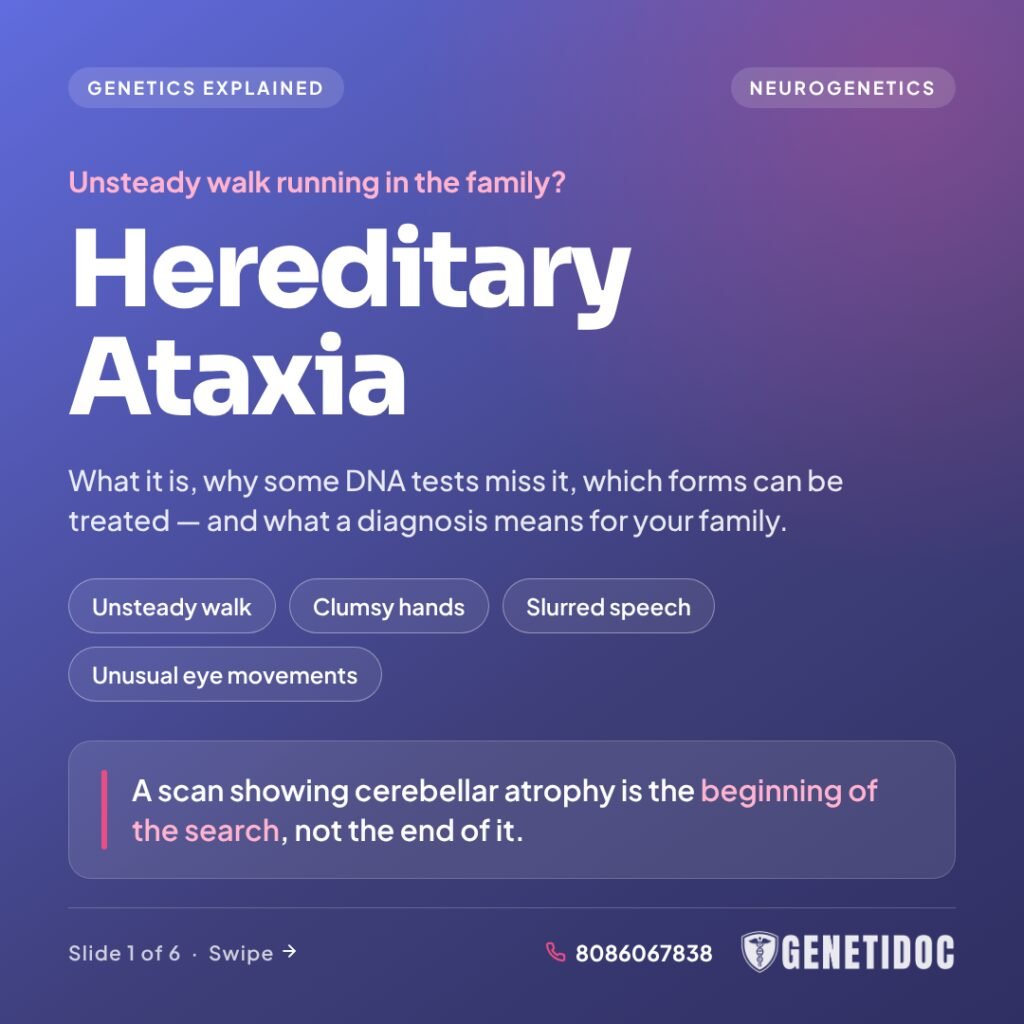
Hereditary ataxia is a group of inherited conditions that slowly damage the parts of the nervous system that control balance and coordination, mainly the cerebellum. People usually develop an unsteady walk, clumsy hands, slurred speech and unusual eye movements. It is caused by changes in genes passed down in families. Dozens of different genes can be responsible, so finding the exact cause needs the right genetic test and expert interpretation.
What does “ataxia” actually mean?
“Ataxia” simply means poor coordination. It is a sign, not a disease name. It tells us that the brain’s coordination centre is not working smoothly.
That coordination centre is the cerebellum. It sits at the back of the brain, below the main brain. Think of it as the brain’s balance and timing manager. It makes your steps steady, your hand reach the cup without overshooting, and your words come out clearly.
When the cerebellum, or the nerve pathways linked to it, is damaged, movements become shaky and poorly timed. That is ataxia.
Ataxia can have many causes. Alcohol, stroke, vitamin deficiencies, infections and some medicines can all cause it. When the cause is a change in a gene that runs in families, doctors call it hereditary ataxia or genetic ataxia.
“Ataxia tells us where the problem is, not why it is happening. An MRI showing cerebellar atrophy is the beginning of the search, not the end of it. Families deserve to know the actual cause, because that answer shapes treatment, family planning and peace of mind.”
— Dr. Roshan Daniel, Clinical Geneticist, Genetidoc
Is ataxia hereditary? Signs that point to a genetic cause
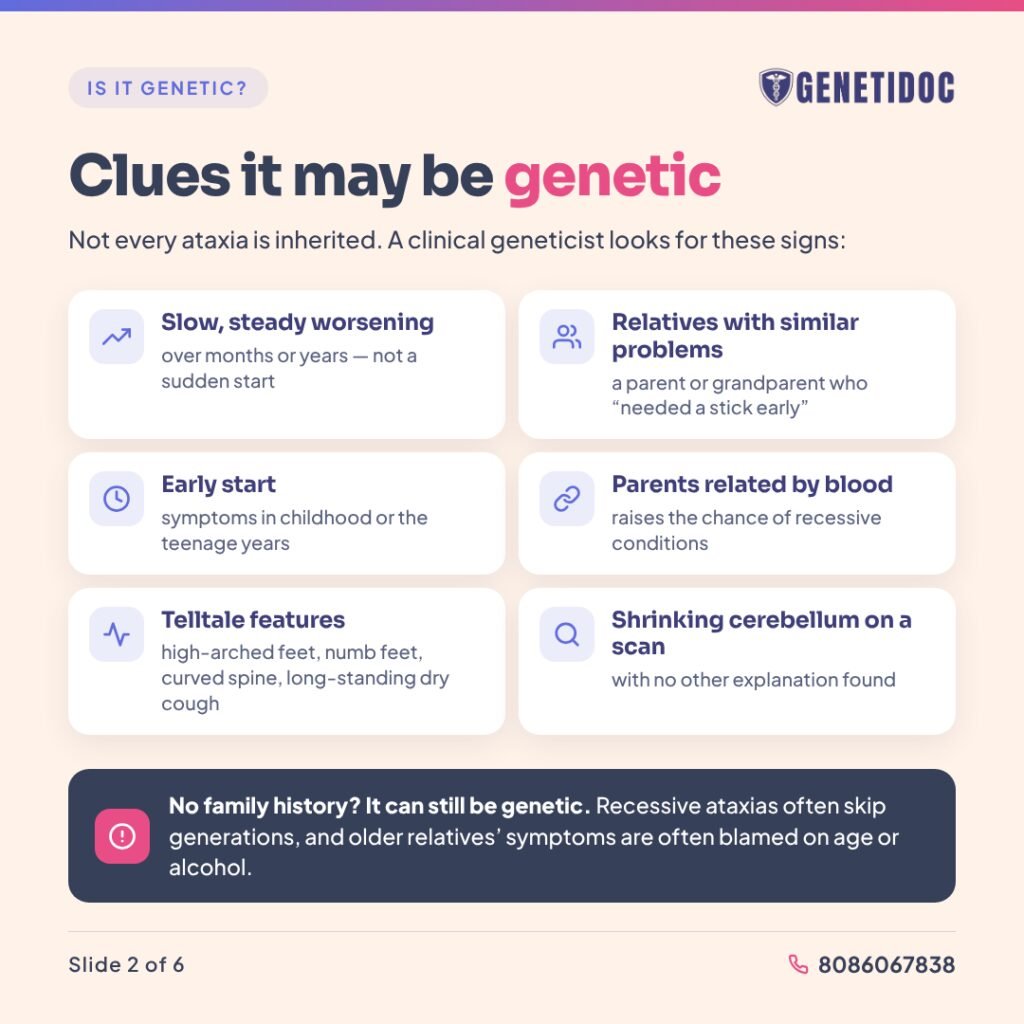
Not every ataxia is genetic. But some clues make a genetic cause more likely. A clinical geneticist looks for these:
- Slow, steady worsening over months or years, rather than a sudden start.
- Family members with similar problems, such as a parent, grandparent, uncle or cousin who walked unsteadily or “needed a stick early.”
- Symptoms starting in childhood or the teenage years.
- Parents who are related by blood (a consanguineous marriage), which raises the chance of recessive genetic conditions.
- Other telltale features, such as high-arched feet, a curved spine, numbness in the feet, hearing or vision loss, unusual eye movements, tremor, or a long-standing dry cough.
- Scan findings showing shrinking (atrophy) of the cerebellum without another explanation.
What if nobody else in the family has it?
A blank family history does not rule out a genetic cause. This surprises many families. There are several reasons:
- A parent may have died young, before symptoms appeared.
- Recessive ataxias usually skip generations. Both parents can be healthy carriers.
- Symptoms in older relatives may have been blamed on “old age,” “weakness” or alcohol.
- Some families simply do not know their medical history well.
At the same time, a genetic cause is not always found. In adults whose ataxia starts later in life with no family history, up to 4 in 10 do not get a genetic diagnosis even after a full evaluation, according to GeneReviews. That is why testing must be planned carefully, and why results need honest explanation.
Common symptoms of hereditary ataxia
Symptoms depend on the type. But most people notice some of these:
- Unsteady, wide-based walking, often described as “walking like on a moving bus”
- Frequent tripping and falls, especially in the dark or on uneven ground
- Clumsy hands, with trouble buttoning shirts, writing or using a phone
- Slurred or slow speech (doctors call this dysarthria)
- Difficulty swallowing, or coughing while eating
- Jerky or slow eye movements, or double vision
- Tremor, stiffness or muscle cramps in some types
- Numbness or tingling in the feet in some types
Thinking and memory usually stay intact in many common forms, though some types do affect them. Ataxia does not mean a person is “less intelligent.” This matters, because people with ataxia are often treated as if they are.
Types of hereditary ataxia
Doctors group hereditary ataxias by how they are passed down in families. This is called the pattern of inheritance. It tells us who else in the family might be at risk.
1. Autosomal dominant ataxias (spinocerebellar ataxias)
“Autosomal dominant” means one altered copy of the gene is enough to cause the condition. An affected parent has a 50% chance of passing it to each child, son or daughter.
Most dominant ataxias are called spinocerebellar ataxias (SCAs). Scientists have numbered more than 40 types, such as SCA1, SCA2 and SCA3. Symptoms usually begin in adulthood, often between 30 and 50 years, though they can start earlier or later.
2. Autosomal recessive ataxias
“Autosomal recessive” means a person needs two altered copies, one from each parent. The parents are usually healthy carriers. When both parents are carriers, each pregnancy has a 25% chance of an affected child.
These ataxias usually start in childhood or young adulthood. They are more common when parents are related by blood. The best-known examples are Friedreich ataxia, ataxia-telangiectasia and ataxia with oculomotor apraxia. A newer, adult-onset example is CANVAS, explained below.
3. X-linked ataxias
These are caused by genes on the X chromosome. They usually affect men more severely. The most common is fragile X-associated tremor/ataxia syndrome (FXTAS). It usually affects men over 50 who carry a “premutation” in the FMR1 gene. This finding matters for the wider family, because daughters of these men can have children with fragile X syndrome, a cause of intellectual disability.
4. Mitochondrial ataxias
Mitochondria are the tiny energy factories inside our cells. They have their own small set of DNA, passed down only from the mother. Changes in this DNA, or in genes that support mitochondria, can cause ataxia along with other problems such as seizures, hearing loss or diabetes.
Common hereditary ataxias at a glance
| Condition | Gene | Inheritance | Usual onset | Helpful clues |
| SCA2 | ATXN2 | Dominant | Young to middle adulthood | Very slow side-to-side eye movements, reduced reflexes |
| SCA12 | PPP2R2B | Dominant | Later adulthood | Hand and head tremor before or with ataxia |
| SCA1 | ATXN1 | Dominant | Adulthood | Speech and swallowing problems, brisk reflexes |
| SCA3 (Machado-Joseph disease) | ATXN3 | Dominant | Adulthood | Bulging-eye look, stiffness, double vision |
| SCA7 | ATXN7 | Dominant | Variable, can be childhood | Progressive vision loss |
| Friedreich ataxia | FXN | Recessive | Usually before 25 | Lost reflexes, high-arched feet, curved spine, heart and diabetes involvement |
| Ataxia-telangiectasia | ATM | Recessive | Early childhood | Small red blood vessels on the eyes, frequent infections |
| CANVAS | RFC1 | Recessive | Usually after 50 | Numb feet, poor balance in the dark, chronic dry cough |
| SCA27B | FGF14 | Dominant | Usually after 50 | Slow ataxia, sometimes in episodes, jerky downward eye movements |
| FXTAS | FMR1 | X-linked | Usually after 50 | Tremor, ataxia, family history of fragile X syndrome |
Hereditary ataxia in India: what the research shows
The types of ataxia seen in India differ from those seen in Europe or Japan. This matters because a test designed around another population’s common types can miss the causes most likely in an Indian patient.
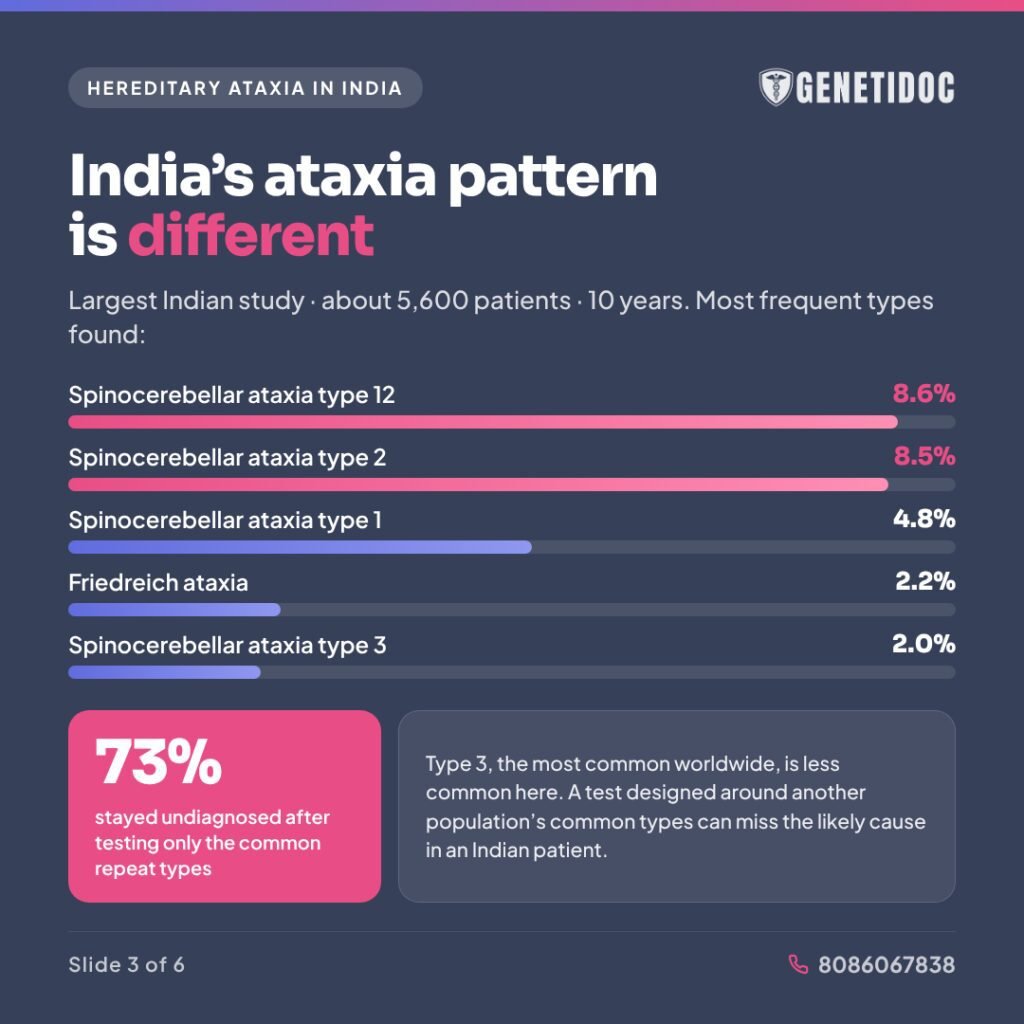
The largest Indian study so far reviewed about 5,600 patients referred from across the country over 10 years. The most frequent types found were:
- SCA12 in 8.6% of patients
- SCA2 in 8.5%
- SCA1 in 4.8%
- Friedreich ataxia in 2.2%
- SCA3 in 2%
A few points stand out for Indian families:
- SCA2 is one of the most common dominant ataxias in India. Studies from north, east and west India have found it most often. Researchers have found evidence of a shared ancestral origin in many Indian SCA2 families.
- SCA12 is far more common in India than almost anywhere else. It has been linked to particular communities in north India.
- SCA3, the most common SCA worldwide, is less common in India overall, though some regional groups, such as Bengali families in some studies, show higher rates.
- About 73% of patients in that large study remained without a diagnosis after testing for the common repeat types. This does not mean their ataxia was not genetic. It means the cause lay outside the limited set of genes tested. Newer causes, such as CANVAS and SCA27B, were not routinely tested at the time.
Some regions of India, especially in the south, have higher rates of marriage between relatives. In these families, recessive ataxias deserve extra attention.
“The ataxia types we see in Indian families are not always the ones described in Western textbooks. SCA2 and SCA12, for example, are far more relevant here. A test that is not designed with the Indian pattern in mind can easily miss the answer.”
— Dr. Roshan Daniel, Clinical Geneticist, Genetidoc
Why many hereditary ataxias are “repeat” disorders
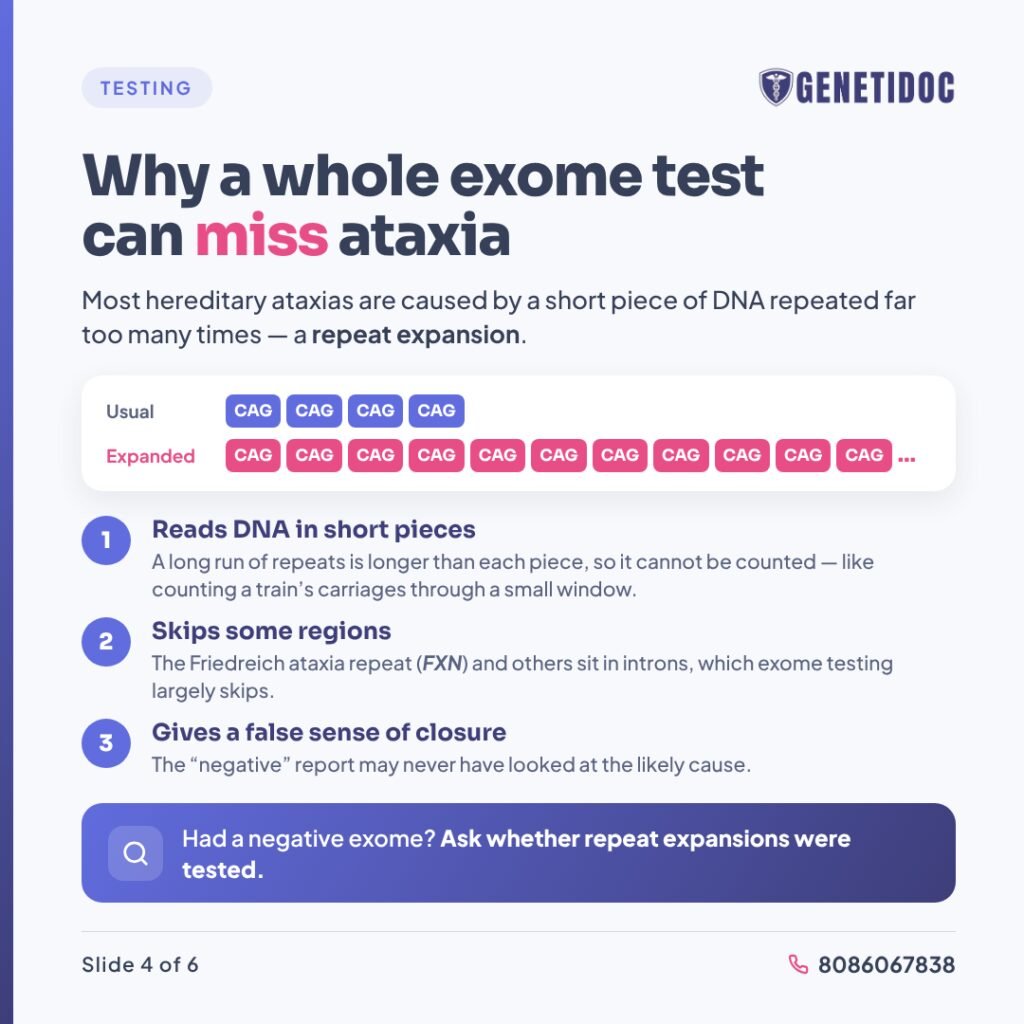
To understand testing, you need to understand one idea. Most common hereditary ataxias are not caused by a simple spelling mistake in a gene. They are caused by a repeat expansion.
Imagine a gene contains a short word, such as “CAG,” repeated a number of times: CAG-CAG-CAG. In most people, it repeats a normal number of times. In ataxia, the word repeats far too many times. The gene then makes a faulty protein, or stops working properly, and nerve cells are slowly damaged.
Examples:
- SCA1, SCA2, SCA3, SCA7 and SCA12 involve too many “CAG” repeats.
- Friedreich ataxia involves too many “GAA” repeats inside the FXN
- CANVAS involves a longer repeated sequence, usually “AAGGG,” inside the RFC1
- SCA27B involves too many “GAA” repeats inside the FGF14
Anticipation: why the next generation may be affected earlier
Repeats can be unstable. When passed from parent to child, they sometimes grow longer. A longer repeat usually means symptoms start earlier and can be more severe. This is called anticipation.
Families sometimes notice this themselves: “My father’s walking became bad at 55, but my brother had problems at 35.” Anticipation is well described in SCA1, SCA2, SCA3 and especially SCA7, where it is often stronger when the father passes the gene on.
What is an “intermediate” result?
Sometimes a repeat is longer than normal but shorter than the size that causes disease. This is called an intermediate or borderline result. It can mean a person may never develop symptoms, or only mild ones. But the repeat may grow when passed to children. These results are among the hardest to understand without a genetic specialist.
Why a whole exome test can miss hereditary ataxia
This is one of the most important points in this article, and one that families rarely hear.
Whole exome sequencing is a powerful test. It reads the working parts of about 20,000 genes. Many families assume that if the exome is “negative,” a genetic cause has been ruled out.
For ataxia, that is often not true. Here is why:
- Exome reads DNA in very short pieces. A long run of repeats is much longer than each piece. The machine cannot count how many repeats there are, much like trying to count the carriages of a long train by looking through a small window.
- Some repeats sit outside the parts the exome reads. The Friedreich ataxia, CANVAS and SCA27B repeats lie in non-coding regions of their genes, called introns, which exome testing largely skips.
- The result is a “negative” report that never looked at the likely cause.
The correct tests for repeat disorders are special methods designed to measure repeat length. In selected cases, such as CANVAS, international researchers recommend long-read sequencing, a newer method that reads much longer stretches of DNA and can size and read the repeat accurately.
Illustrative scenario (not a real patient)
A 52-year-old man has had worsening balance for six years. His feet feel numb, he sways badly when he washes his face with his eyes closed, and he has had a dry cough for over a decade. A whole exome test was reported as negative, and the family was told “it is not genetic.” When repeat testing of the RFC1 gene is done, it shows two expanded copies, confirming CANVAS. The family now has a clear answer, his brothers and sisters can be counseled about their own risk, and he can be offered targeted care, such as balance therapy and fall prevention.
“A bigger test is not always a better test. In ataxia, the most common causes are repeat expansions, and many exome tests simply cannot see them. Choosing the right test first matters far more than choosing the largest one.”
— Dr. Roshan Daniel, Clinical Geneticist, Genetidoc
How hereditary ataxia is diagnosed: step by step
A good diagnosis follows a logical order. Skipping steps wastes money and can lead to wrong conclusions.
- Detailed history and examination. The doctor asks when symptoms began, how fast they changed, and about other symptoms. A careful examination of eye movements, reflexes, sensation and walking gives strong clues to the type.
- A three-generation family history. Who walked unsteadily? Who died young, and why? Are the parents related? These answers shape which tests come first.
- Ruling out non-genetic causes. This step is essential, because some causes are fully treatable. Doctors check for:
- Alcohol use
- Low vitamin B12 or vitamin E
- Thyroid problems
- Gluten-related (celiac) disease
- Side effects of medicines, such as some seizure medicines
- Stroke, multiple sclerosis, tumours or infections
- The body’s immune system attacking the cerebellum, sometimes linked to a hidden cancer
- Brain magnetic resonance imaging (MRI). This shows whether the cerebellum is shrinking and rules out other causes.
- Nerve and other tests where needed. Nerve conduction studies, heart checks, eye examinations or blood markers can help narrow the type.
- Genetic counseling before the test. This explains what the test can and cannot find, and what the results may mean for relatives.
- Choosing the right genetic test. This usually means testing for the common repeat expansions first, matched to the patient’s features and background. If these are negative, a multi-gene ataxia panel or exome may follow. Genome sequencing or long-read testing may come later in selected cases.
- Expert interpretation and post-test counseling. The result is explained in the context of the patient’s symptoms and family, with a clear plan for next steps.
How long does testing take?
Timelines depend on the test. Repeat-expansion tests and targeted panels usually take a few weeks. Larger tests, such as exome sequencing with full interpretation, can take longer. Your genetic counselor will give you an expected timeline before the sample is collected.
How much does an ataxia genetic test cost in India?
Costs vary widely depending on how many genes and repeats are tested, the method used and the laboratory. As a general rule, a single-gene or single-repeat test costs the least. Exome and genome sequencing cost more.
The cheapest test is not always the most economical. A test that cannot detect repeats may need to be followed by a second test, costing more time and money overall. Choosing the right test first, with expert guidance, often saves both.
When genetic testing is useful, and when it may not be
Testing is usually useful when:
- Ataxia is slowly worsening and non-genetic causes have been ruled out
- There is a family history of similar symptoms
- Symptoms began in childhood or young adulthood
- Parents are related by blood
- A family member already has a confirmed genetic diagnosis
- A couple wants to plan a pregnancy and a relative has ataxia
Testing may not be the first step when:
- Ataxia came on suddenly, which suggests stroke, infection or a toxic cause
- There is a clear acquired cause, such as heavy alcohol use, that has not yet been addressed
- Basic blood tests and an MRI have not yet been done
- A healthy person wants testing out of curiosity, without a family history or symptoms
For healthy relatives of an affected person, the situation is different. This is covered under predictive testing below.
Can hereditary ataxia be treated?
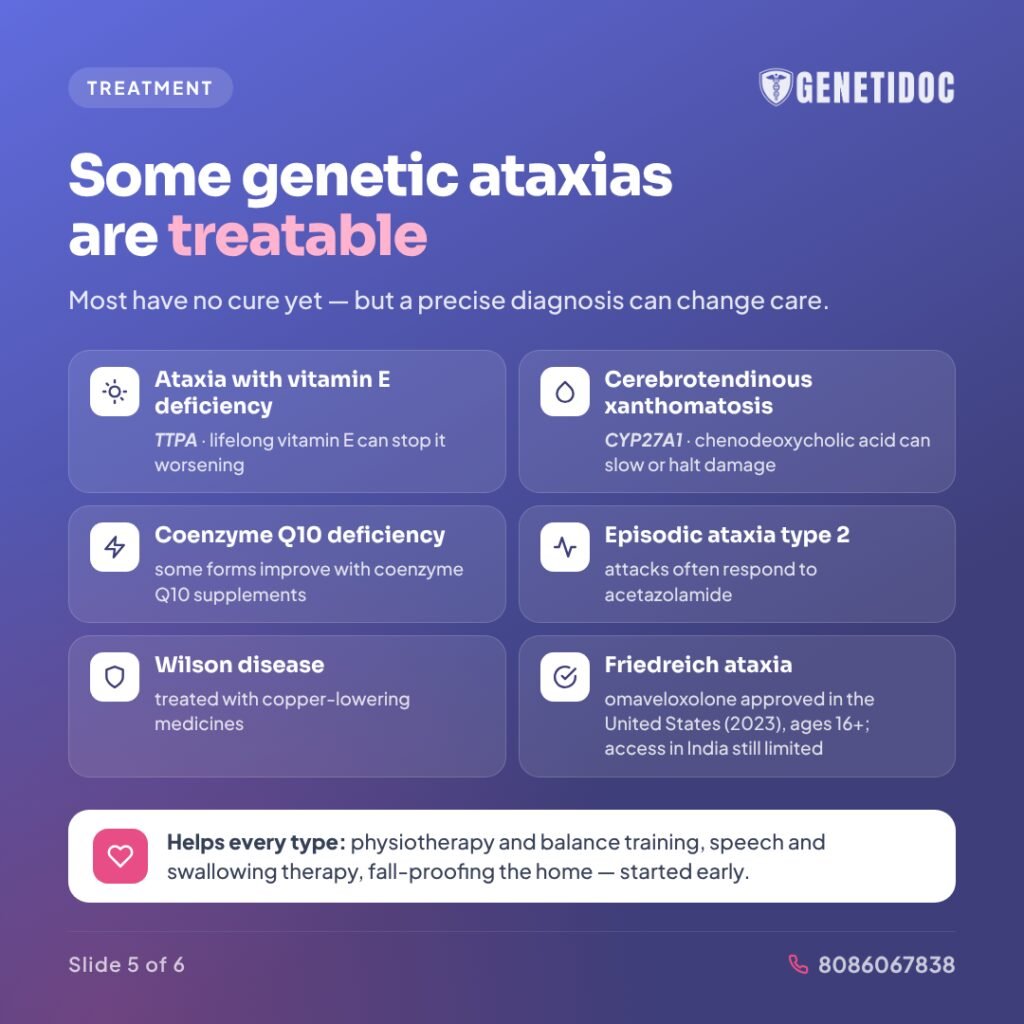
Most hereditary ataxias do not yet have a cure. But “no cure” does not mean “nothing can be done.” And a small but important group of genetic ataxias can be treated, sometimes very effectively, if they are found early.
Treatable genetic ataxias you should know about
- Ataxia with vitamin E deficiency (TTPA gene). It can look very similar to Friedreich ataxia. Lifelong vitamin E supplements can stop it from getting worse.
- Cerebrotendinous xanthomatosis (CYP27A1 gene). Clues include early cataracts, long-standing diarrhoea in childhood and lumps on tendons. A medicine called chenodeoxycholic acid can slow or halt damage.
- Coenzyme Q10 deficiency. Some forms improve with coenzyme Q10 supplements.
- Biotinidase deficiency. It can be detected through newborn screening and treated with the vitamin biotin.
- Wilson disease, a copper build-up disorder, which is treated with copper-lowering medicines.
- Refsum disease, which is managed with a special diet.
- Episodic ataxia type 2, which causes attacks of imbalance and often responds to a medicine called acetazolamide.
- Glucose transporter type 1 deficiency, which may improve on a ketogenic diet.
- Niemann-Pick disease type C, for which a medicine called miglustat may slow progression.
Some people with SCA27B have been reported to improve with a medicine called 4-aminopyridine. Research is ongoing, so this should only be discussed with a neurologist.
This list is the strongest reason not to settle for “cerebellar atrophy” as a final answer. A precise diagnosis can change treatment.
“Finding a treatable ataxia is one of the most meaningful moments in genetics. Sometimes a vitamin or a specific medicine can change the course of a person’s life. That possibility alone is reason enough to look for a precise diagnosis.”
— Dr. Roshan Daniel, Clinical Geneticist, Genetidoc
New treatment for Friedreich ataxia
In February 2023, the United States Food and Drug Administration approved omaveloxolone, the first medicine for Friedreich ataxia, for people aged 16 and older. Approvals have since followed in other countries, including Europe and the United Arab Emirates.
In India, access is still limited. A 2024 review by Indian researchers noted that including Friedreich ataxia under India’s National Policy for Rare Diseases, 2021, was under consideration. A study of the medicine in children and teenagers lists the All India Institute of Medical Sciences, New Delhi, among its sites. If you or your child has Friedreich ataxia, ask your neurologist and genetic specialist about current options and clinical trials.
Importantly, these treatments need a confirmed genetic diagnosis. Without it, a patient cannot be considered for them.
Care that helps every type of ataxia
- Physiotherapy and balance training. Regular, targeted exercise can improve balance and help people stay independent longer.
- Speech and swallowing therapy. This helps keep speech clear and lowers the risk of choking or chest infections.
- Occupational therapy. This includes practical aids, such as grab bars, adapted utensils and walking aids, used early rather than late.
- Fall prevention at home. Good lighting, no loose rugs and handrails on stairs all help.
- Condition-specific screening. People with Friedreich ataxia need regular heart checks and diabetes screening, because heart muscle disease is a major concern. People with ataxia-telangiectasia should avoid unnecessary X-rays and CT scans, and need immune and cancer monitoring.
- Emotional support. Counseling, support groups and honest conversations help both patients and carers.
What a diagnosis means for your family
A genetic diagnosis is never about one person alone. It gives information to the whole family.
Will my children inherit hereditary ataxia?
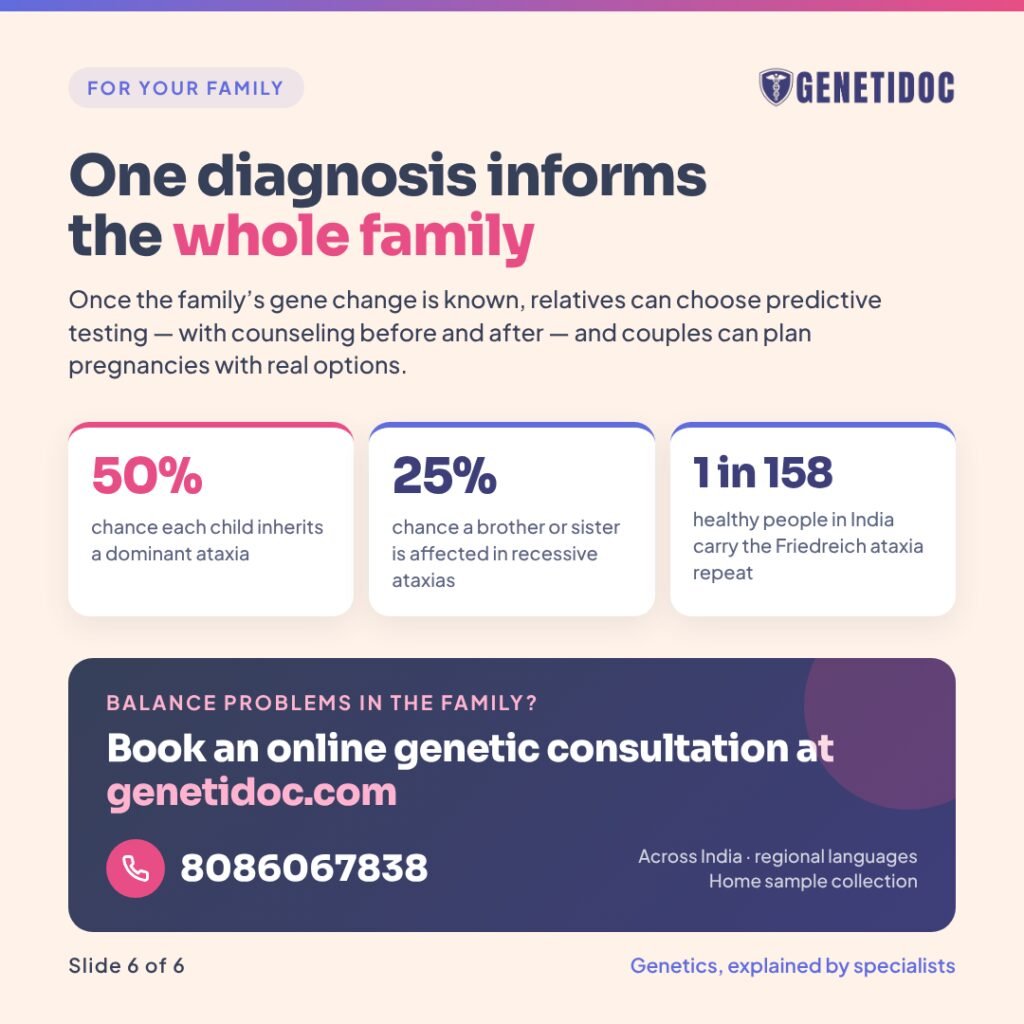
- Dominant ataxias (most SCAs): each child has a 50% chance of inheriting the gene change.
- Recessive ataxias (such as Friedreich ataxia): children of an affected person are usually only carriers, unless the partner is also a carrier. Brothers and sisters of an affected person have a 25% chance of being affected and a 50% chance of being carriers.
- X-linked ataxias: the risk depends on whether the gene comes from the mother or the father.
For Friedreich ataxia, Indian research estimates that about 1 in 158 healthy people carry the expanded repeat. Carrier testing for a partner can therefore be very reassuring, or can show that extra planning is needed.
Predictive testing for healthy relatives
When a family’s ataxia gene change is known, healthy adult relatives can choose to find out whether they carry it. This is called predictive testing.
For a condition with no cure, this is a deeply personal decision. Some people want to know so they can plan their careers, finances, marriage or children. Others prefer not to know. Both choices are valid.
International guidelines, built on decades of experience with Huntington disease, recommend that predictive testing should:
- Include pre-test counseling, often spread over more than one session, so the person has time to think
- Explore how the person might feel about either result
- Encourage bringing a trusted support person
- Give results in person, with follow-up support
- Generally not be done on healthy children for adult-onset conditions, so they can make their own choice as adults
Your genetic counselor’s role is to inform you, not to decide for you. The final decision always belongs to you.
“Predictive testing should never be rushed. Some people want to know, some do not, and some change their minds over time. Our role is to make sure every person has the information, and the time, to make the choice that is right for them.”
— Dr. Roshan Daniel, Clinical Geneticist, Genetidoc
Planning a pregnancy
Once the family’s gene change is known, couples have several options:
- Preimplantation genetic testing with IVF. Embryos are tested before transfer, so only those without the family’s gene change are used.
- Prenatal diagnosis during pregnancy. A sample from the pregnancy is tested for the known gene change. Your genetic counselor can guide you to centres that provide this.
- Carrier testing of a partner in recessive conditions, before or during pregnancy planning.
- Natural conception without testing, with full understanding of the risks. This is also a valid choice.
All of these options depend on knowing the exact gene change. This is another reason a precise diagnosis matters.
Illustrative scenario (not a real patient)
A 28-year-old woman’s mother has SCA2. She is healthy, newly married and anxious about starting a family. After counseling sessions, she decides not to have predictive testing yet. Instead, she and her husband learn about preimplantation genetic testing so the option is there when they are ready. Months later, she chooses to be tested. Throughout, the decisions stay hers, made with full information and at her own pace.
Common myths about hereditary ataxia
- Myth: “He walks like that because he drinks.”
Fact: People with ataxia are often wrongly judged as drunk. This stigma causes real harm at work, on the road and in society. - Myth: “It’s just vertigo or weakness from age.”
Fact: Slowly worsening imbalance deserves a proper evaluation, especially with a family history. - Myth: “My exome was negative, so it’s not genetic.”
Fact: Exome testing can miss repeat expansions, the most common cause of hereditary ataxia. - Myth: “Nothing can be done, so there’s no point testing.”
Fact: Some genetic ataxias are treatable. A diagnosis also helps with therapy, clinical trials and family planning. - Myth: “If I don’t have symptoms by now, I’m safe.”
Fact: Many dominant ataxias start in middle age or later. Only testing, or time, can answer this. - Myth: “It’s the parents’ fault.”
Fact: Nobody chooses the genes they pass on. Guilt is common, but it is never deserved.
Why the right laboratory and expert interpretation matter
In ataxia, a genetic report is only as good as the test chosen and the person interpreting it. Common problems with low-quality or poorly planned testing include:
- The wrong test. An exome is ordered when a repeat-expansion test was needed.
- Incomplete testing. Only a few SCA types are tested, while common Indian types or newer causes such as CANVAS and SCA27B are left out.
- Imprecise repeat sizing. A few repeats can make the difference between normal, intermediate and disease-causing.
- Unclear reports. A report says “negative” without saying what was actually tested.
- No clinical correlation. A result that does not match the patient’s symptoms is accepted without question.
- No counseling. Families receive a report but no explanation of what it means for them and their relatives.
At Genetidoc, testing is planned and interpreted by clinical geneticists, through accredited partner laboratories, with genetic counseling built into every result. After consultation, patients receive an individualized written summary of what was discussed, which also helps when sharing information with relatives.
A negative result is always explained as “no reportable finding in what was tested,” not as proof that the condition is not genetic. When results are uncertain, we plan the next step, which may include further testing or a later reanalysis of the data as science advances.
“A genetic report is only a starting point. Its real value comes when an expert connects the result to the patient’s symptoms, explains what it means for the family, and turns it into a clear plan of care.”
— Dr. Roshan Daniel, Clinical Geneticist, Genetidoc
What to do next: practical steps for patients and families
- See a neurologist first if you notice slowly worsening balance, speech or coordination, so non-genetic and treatable causes can be checked.
- Write down your family history across three generations. Note anyone who walked unsteadily, had slurred speech, used a walking stick early or died young.
- Bring all reports, including MRI scans, blood tests and any earlier genetic test results with their raw data, to your genetic consultation.
- Do not accept a negative exome as the final word for ataxia. Ask whether repeat expansions were tested.
- Start physiotherapy early, even before a genetic diagnosis is confirmed.
- Involve relatives through counseling, not just by forwarding a report.
- Stay in touch with your genetic team. New genes and treatments are being discovered, and a result may be updated in future.
Frequently asked questions about hereditary ataxia
1. Is ataxia always hereditary?
No. Ataxia can be caused by alcohol, stroke, vitamin deficiencies, infections, medicines or immune conditions. It is called hereditary ataxia only when the cause is a gene change that can run in families.
2. What is the most common hereditary ataxia in India?
In the largest Indian study, SCA12 and SCA2 were the most common types found, followed by SCA1, Friedreich ataxia and SCA3. Patterns vary by region and community.
3. Can hereditary ataxia be cured?
Most types cannot yet be cured, but some genetic ataxias are treatable, such as ataxia with vitamin E deficiency. Physiotherapy, speech therapy and condition-specific care improve quality of life for all types, and a new medicine is approved abroad for Friedreich ataxia.
4. What is the life expectancy with hereditary ataxia?
It varies greatly by type. Many people with slowly progressing SCAs live for decades after symptoms start. Some types, such as Friedreich ataxia, can shorten life, mainly because of heart involvement. Your specialist can explain what to expect for your specific type.
5. Will my child inherit my ataxia?
For dominant ataxias, each child has a 50% chance. For recessive ataxias, children are usually carriers unless the other parent is also a carrier. A genetic counselor can calculate your family’s specific risk.
6. Which genetic test is best for ataxia?
There is no single best test for everyone. Most patients first need repeat-expansion testing for the common types. Panels, exome, genome or long-read sequencing may follow, depending on symptoms and earlier results.
7. Why was my whole exome test negative even though my doctor suspects genetic ataxia?
Exome testing reads DNA in short pieces and often cannot measure long repeat expansions, which cause most hereditary ataxias. Dedicated repeat testing is usually needed.
8. What is spinocerebellar ataxia?
Spinocerebellar ataxias (SCAs) are a group of dominantly inherited ataxias that mainly affect the cerebellum. More than 40 types are known, numbered SCA1, SCA2 and so on.
9. Can I get tested if I have no symptoms but my parent has ataxia?
Yes. Healthy adults can choose predictive testing once the family’s gene change is known. It should always include genetic counseling before and after the test.
10. Can hereditary ataxia skip a generation?
Recessive ataxias often appear to skip generations, because carriers are healthy. Dominant ataxias can also seem to skip one if a parent died before symptoms began, or had very mild symptoms.
11. Is genetic testing for ataxia available in India?
Yes. Repeat-expansion tests, ataxia gene panels, exome and genome sequencing are available in India. Choosing the right test and getting expert interpretation are as important as the test itself.
12. Can we plan a healthy pregnancy if ataxia runs in our family?
Yes. Once the family’s gene change is known, options include preimplantation genetic testing with IVF, prenatal diagnosis and partner carrier testing. A genetic counselor will help you weigh these choices.
Key takeaways
- Hereditary ataxia is a group of inherited conditions affecting balance and coordination, caused by dozens of different genes.
- In India, SCA12, SCA2, SCA1, Friedreich ataxia and SCA3 are among the most common identified types.
- Most common ataxias are repeat disorders, which whole exome testing can miss.
- Some genetic ataxias are treatable. A precise diagnosis can change care.
- A diagnosis informs the whole family, from predictive testing to pregnancy planning.
- The right test, the right laboratory and expert counseling matter as much as the report itself.
Balance problems in the family, or a “negative” test that didn’t add up?
Our clinical geneticists can review your symptoms, scans and earlier reports, check whether the right repeat tests were done, and plan testing matched to your family’s history. Consultations are available online across India in many regional languages, with home sample collection.
Book an ataxia genetic consultation with Genetidoc | Call 8086067838
Have a question about ataxia or genetic testing? Join the discussion on the Genetidoc Rare Disease Forum, including our predictive genetic testing and whole exome sequencing discussions.
Related reading
- Situs Inversus Explained: Clinical Significance and the Role of Genetic Testing
- Genetic Causes of Recurrent IVF Failure: What Couples in India Should Know Before Another Cycle
- Genetics and Obesity: Is It All in the Genes?
- Hypertrichosis: The Genetics Behind Excess Hair Growth
- Migraine and Genetics: Is It Hereditary?
- Mucopolysaccharidosis: Signs Parents Should Not Ignore
References
- Perlman S. Hereditary Ataxia Overview. In: Adam MP, et al., editors. GeneReviews®. University of Washington, Seattle; 1998, updated 2023. https://www.ncbi.nlm.nih.gov/books/NBK1138/
- Jayadev S, Bird TD. Hereditary ataxias: overview. Genetics in Medicine. 2013;15(9):673–683.
- Sharma P, Sonakar AK, Tyagi N, et al. Genetics of ataxias in Indian population: a collative insight from a common genetic screening tool. Advanced Genetics. 2022. https://pmc.ncbi.nlm.nih.gov/articles/PMC9744545/
- Saleem Q, Choudhry S, Mukerji M, et al. Molecular analysis of autosomal dominant hereditary ataxias in the Indian population: high frequency of SCA2 and evidence for a common founder mutation. Human Genetics. 2000;106(2):179–187.
- Sinha KK, Worth PF, Jha DK, et al. Autosomal dominant cerebellar ataxia: SCA2 is the most frequent mutation in eastern India. Journal of Neurology, Neurosurgery and Psychiatry. 2004;75(3):448–452.
- Ruano L, Melo C, Silva MC, Coutinho P. The global epidemiology of hereditary ataxia and spastic paraplegia: a systematic review of prevalence studies. Neuroepidemiology. 2014;42(3):174–183.
- Cortese A, Simone R, Sullivan R, et al. Biallelic expansion of an intronic repeat in RFC1 is a common cause of late-onset ataxia. Nature Genetics. 2019;51(4):649–658.
- Dominik N, Magri S, Currò R, et al. Normal and pathogenic variation of RFC1 repeat expansions: implications for clinical diagnosis. Brain. 2023;146(12):5060–5069.
- Pellerin D, Danzi MC, Wilke C, et al. Deep intronic FGF14 GAA repeat expansion in late-onset cerebellar ataxia. New England Journal of Medicine. 2023;388(2):128–141.
- de Silva R, Greenfield J, Cook A, et al. Guidelines on the diagnosis and management of the progressive ataxias. Orphanet Journal of Rare Diseases. 2019;14:51.
- Umrao A, Pahuja M, Chatterjee NS. Safety and efficacy of omaveloxolone versus placebo for the treatment of Friedreich’s ataxia in patients aged more than 16 years: a systematic review. Orphanet Journal of Rare Diseases. 2024. https://pmc.ncbi.nlm.nih.gov/articles/PMC11684145/
- Lynch DR, Chin MP, Delatycki MB, et al. Safety and efficacy of omaveloxolone in Friedreich ataxia (MOXIe study). Annals of Neurology. 2021;89(2):212–225.
- MacLeod R, Tibben A, Frontali M, et al. Recommendations for the predictive genetic test in Huntington’s disease. Clinical Genetics. 2013;83(3):221–231.
- Richards S, Aziz N, Bale S, et al. Standards and guidelines for the interpretation of sequence variants (ACMG/AMP). Genetics in Medicine. 2015;17(5):405–424.
This article is for education and does not replace personal medical advice. Please consult a qualified clinical geneticist or neurologist about your own situation.