
If you are married to a cousin or another relative, you have probably heard strong opinions about it. Some people say your children will surely be born with problems. Others say there is nothing to worry about because “everyone in our family has done this.”
Neither is true.
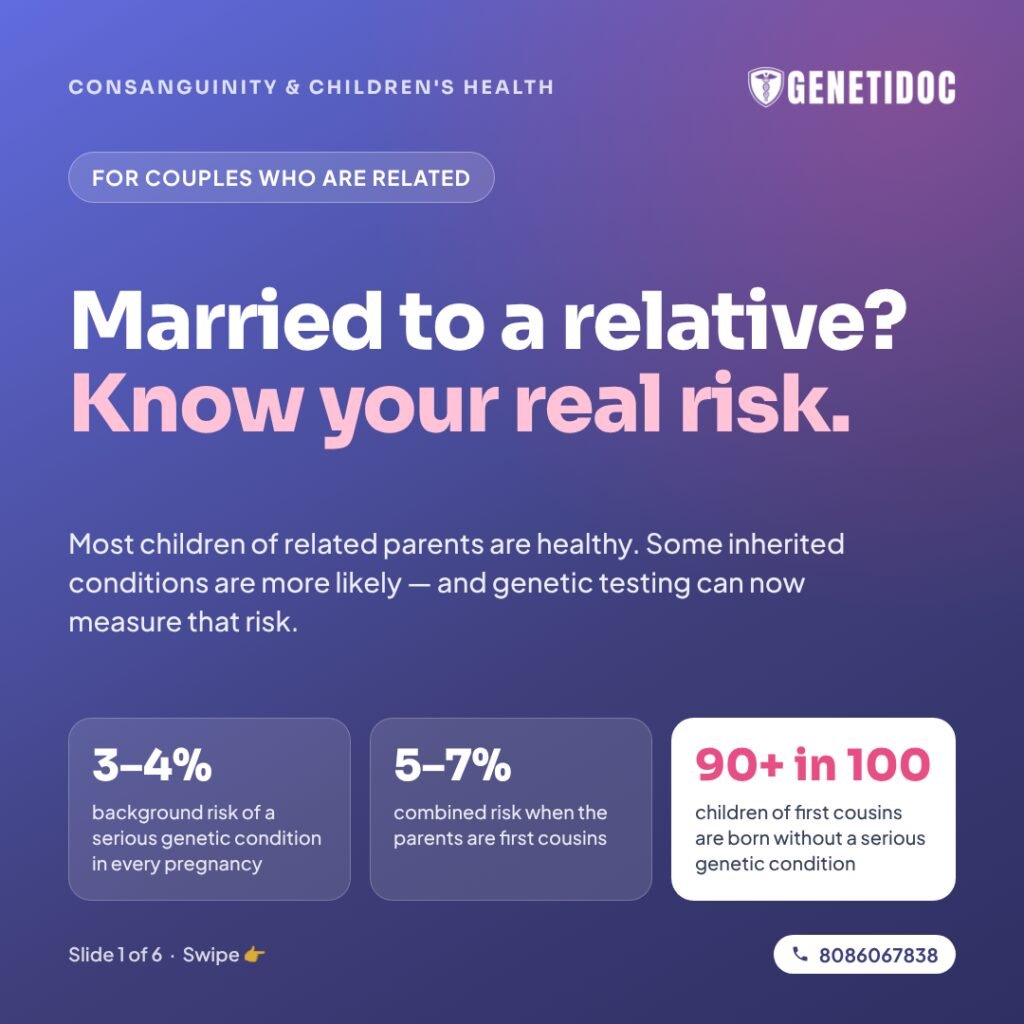
The real picture is more balanced, and much more useful. Most children born to related parents are healthy. But the risk of certain inherited conditions is higher, and it is higher in ways that genetic testing can now measure, explain and often reduce.
This guide explains what that risk actually is, which conditions are more common, which warning signs in a child deserve attention, and what testing can do for your family before and after a pregnancy.
Quick Answer: How Much Risk Does Cousin Marriage Add?
Every pregnancy carries a background risk of about 3 to 4% for a serious birth defect or genetic condition, even when parents are unrelated. For first cousins, published estimates add about 1.7 to 2.8% to that background risk. That means roughly 5 to 7 in every 100 pregnancies, instead of 3 to 4. Put the other way, more than 90 in 100 children of first cousins are born without a serious genetic condition. The risk is higher for closer relationships (such as uncle and niece) and for families where marriages between relatives have happened over many generations.
What Is a Consanguineous Marriage?
A consanguineous marriage is a marriage between two people who share a common ancestor, usually second cousins or closer. “Consanguineous” simply means “of the same blood.”
In India, the most common forms are:
- First-cousin marriage, especially between the children of a brother and sister (cross-cousins)
- Uncle–niece marriage, a tradition in some South Indian communities
- Second-cousin marriage and other more distant relationships
- Repeated intermarriage within a small community or extended family, sometimes over many generations
How Common Is It in India?
Consanguineous marriage is a long-standing social practice in many parts of India, often valued because it keeps families close, supports the bride in a familiar home and keeps property within the family.
National survey data suggest that about 1 in 10 marriages in India is consanguineous. The rate is much higher in South India, where it has been estimated at around 23% overall. In large national ageing-study data, Andhra Pradesh had the highest rate among the southern states (about 28%), while Kerala had the lowest (about 5%). Rates also vary widely between individual communities within each state, so a state average does not tell you much about your own family.
These marriages are a cultural choice. The goal of genetic counseling is not to judge that choice. It is to make sure related couples have the same accurate information and testing options that can protect their children.
“We never tell a couple that their marriage was a mistake. Our job is to replace fear and guesswork with real information, so that the couple can plan their family with confidence.”
— Dr. Roshan Daniel, Clinical Geneticist, Genetidoc
Why Does Marrying a Relative Increase Genetic Risk?
The answer lies in a type of inheritance called autosomal recessive inheritance. It sounds complicated, but the idea is simple.
Everyone Carries a Few Silent Gene Changes
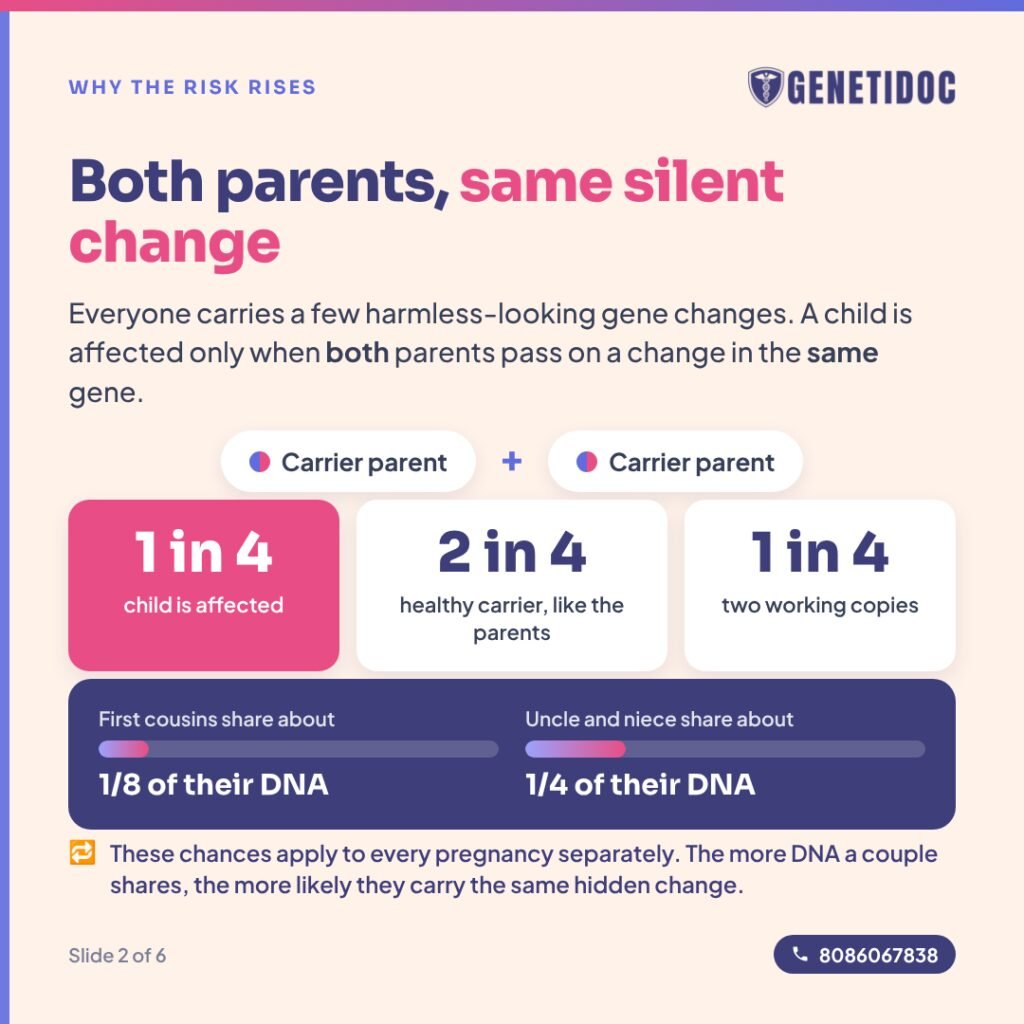
We each have two copies of almost every gene, one from each parent. Most healthy people carry a few genes where one copy has a harmful change. Because the other copy works normally, the person stays completely healthy. This person is called a carrier.
Carriers usually have no idea. There are no symptoms, and there is usually no family history.
The Problem Arises When Both Parents Carry the Same Change
A child develops a recessive condition only if they inherit a faulty copy of the same gene from both parents. When two carriers of the same condition have a child:
- There is a 25% (1 in 4) chance the child inherits both faulty copies and is affected.
- There is a 50% (2 in 4) chance the child is a healthy carrier, like the parents.
- There is a 25% (1 in 4) chance the child inherits two working copies.
These chances apply to every pregnancy separately. Having one healthy child does not mean the next child is safe, and having one affected child does not mean the next child will be affected.
Why Relatives Are More Likely to Share the Same Change
Unrelated people carry different, random sets of silent gene changes, so the chance that both carry a change in the same gene is low. Relatives inherited part of their DNA from the same grandparents or great-grandparents. If that ancestor was a carrier, the same faulty copy may have passed down to both partners.
First cousins share, on average, about one-eighth (12.5%) of their DNA. An uncle and niece share about one-quarter (25%). The closer the relationship, the higher the chance of both partners carrying the same hidden change.
What consanguinity does NOT increase
Marriage between relatives does not increase the risk of chromosome conditions such as Down syndrome. These usually arise from a random error when the egg or sperm forms, and are linked mainly to the mother’s age, not to whether the parents are related. Related couples should still have the same routine pregnancy screening that every couple is offered.
How the Risk Changes With the Type of Relationship
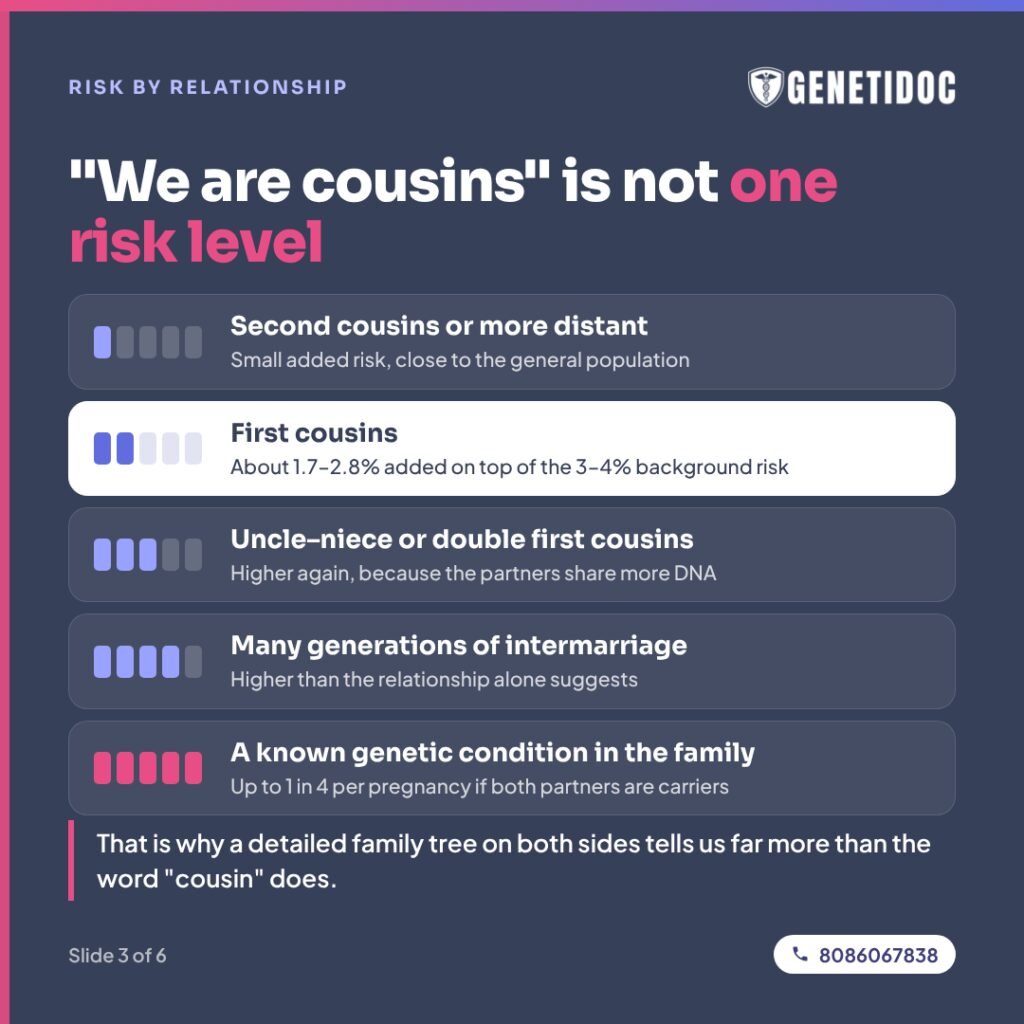
The extra risk is not the same for every related couple. In general:
- Second cousins or more distant relatives: the added risk is small and close to that of the general population.
- First cousins: about 1.7 to 2.8% added risk of a serious birth defect or genetic condition, on top of the background 3 to 4%.
- Uncle–niece or double first cousins (where both sets of parents are siblings): higher again, because the partners share more DNA.
- Families with many generations of intermarriage: higher than the simple relationship suggests, because the partners may be related through several lines at once.
- A known genetic condition already in the family: the risk for that specific condition can be much higher, up to 1 in 4 per pregnancy if both partners turn out to be carriers.
This is why a genetic counselor will ask you to draw out your family tree in detail. “We are cousins” can mean very different levels of risk in different families.
“Two couples can both say ‘we are cousins’ and have very different risks. The family tree tells us far more than the word ‘cousin’ does, which is why we spend real time on it in every consultation.”
— Dr. Roshan Daniel, Clinical Geneticist, Genetidoc
Which Conditions Are More Common in Children of Related Parents?
Thousands of recessive conditions exist. Each one is rare on its own, but together they make up the extra risk. Conditions seen more often in children of consanguineous parents include:
- Blood disorders such as beta thalassemia major and, in certain communities, sickle cell disease
- Inborn errors of metabolism, where the body cannot break down certain foods or chemicals, leading to poor feeding, vomiting, drowsiness, seizures or developmental delay
- Hearing loss from birth, often caused by changes in genes such as GJB2
- Inherited eye conditions such as retinitis pigmentosa and other retinal dystrophies, congenital cataract and albinism
- Neuromuscular conditions such as spinal muscular atrophy, caused by changes in the SMN1 gene
- Intellectual disability and small head size (primary microcephaly) from recessive brain-development genes
- Skeletal dysplasias, which affect bone growth and height
- Primary immunodeficiency, where the immune system does not work properly, leading to repeated serious infections
- Severe inherited high cholesterol (homozygous familial hypercholesterolemia), which Team Genetidoc sees mostly in families with consanguinity
- Inherited skin conditions such as some forms of congenital ichthyosis (very dry, scaly skin from birth)
Studies in India have also found consanguinity to be common among children with inherited eye disease, and linked with higher rates of pregnancy loss and early childhood death in some communities.
Warning Signs in a Child That Deserve a Genetic Evaluation
If you are related to your partner, it helps to know which signs in a baby or child should prompt an early visit to a pediatrician and, when needed, a clinical geneticist. Early recognition can make a real difference for treatable conditions.
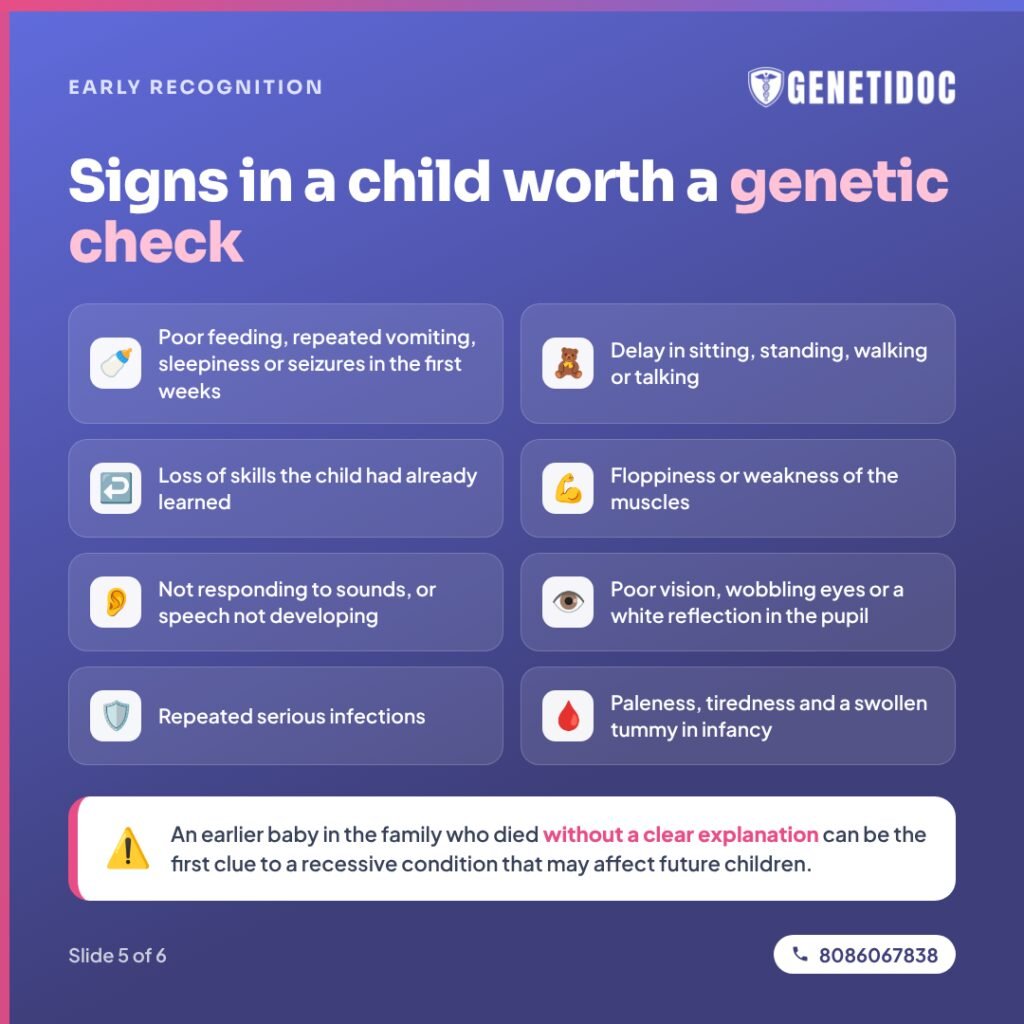
- Poor feeding, repeated vomiting, unusual sleepiness or seizures in the first weeks of life
- Delay in sitting, standing, walking or talking, compared with other children of the same age
- Loss of skills the child had already learned
- Floppiness or weakness of the muscles
- Not responding to sounds, or speech not developing
- Poor vision, wobbling eye movements, a white reflection in the pupil, or very pale skin and hair
- Repeated serious infections
- Paleness, tiredness and a swollen tummy in infancy, which can point to thalassemia
- Very short stature or unusually shaped bones
- A previous baby or young child in the family who died without a clear explanation
The last point is especially important. In many families, an infant death is quietly attributed to “fever,” “fits” or “weakness” and never investigated. When the parents are related, an unexplained early death can be the first clue to a recessive condition that could affect future children too.
Illustrative scenario (composite, not a real patient)
A couple who are first cousins lose their first baby at three weeks of age after poor feeding and seizures. The cause is recorded as “sepsis.” Two years later, their second baby shows similar symptoms. This time, the doctors suspect a metabolic disorder and send genetic testing. The baby is found to have a recessive condition, and both parents are confirmed carriers. With that answer, the couple learn their 1-in-4 risk for each future pregnancy and the options available to them. Their wider family also learns that siblings planning cousin marriages can be tested for the same change.
How Genetic Testing Helps Before Pregnancy
The best time to understand your risk is before pregnancy. This gives you the widest choice of options, and the time to make decisions calmly.
Step-by-Step: What Related Couples Should Do Before Planning a Pregnancy
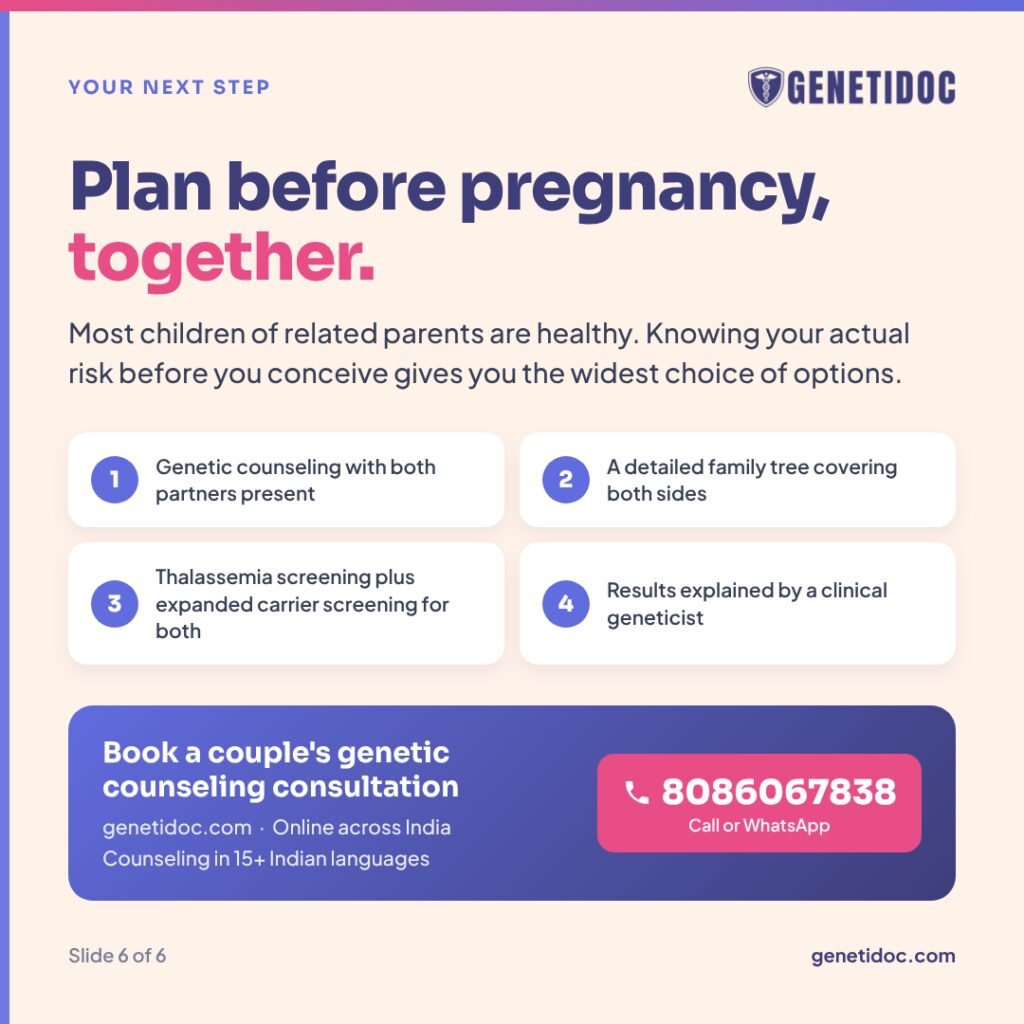
- Book genetic counseling together. Both partners should attend, so both hear the same information and can ask questions. Online sessions make this easy even when partners are in different cities.
- Draw a detailed family tree. Include both sides, how you are related, any marriages between relatives in earlier generations, and any children who died young, had delayed development, were deaf or blind, or needed blood transfusions.
- Get basic thalassemia screening. A complete blood count and a hemoglobin test called high performance liquid chromatography (HPLC) check for thalassemia and some other hemoglobin disorders. This is simple, widely available and recommended in India.
- Discuss expanded carrier screening. This test checks both partners for carrier status in hundreds of recessive conditions at once.
- Review results with a genetic expert. The value lies in understanding what the results mean for your family, not just in receiving a report.
- Plan the pregnancy based on your actual risk. If you are not a carrier couple for the same condition, your pregnancy is managed like any other. If you are, you can choose from several options, discussed below.
Why Thalassemia Screening Alone Is Not Enough
Many related couples in India have a thalassemia test and assume they are “cleared.” A normal thalassemia result is genuinely reassuring for thalassemia, but it tells you nothing about the hundreds of other recessive conditions that matter for related couples, such as metabolic disorders, hearing loss or spinal muscular atrophy.
For this reason, the American College of Medical Genetics and Genomics recommends that consanguineous couples (second cousins or closer) be considered for the broadest level of carrier screening. Research from Europe and the Middle East shows that large carrier panels and exome-based couple screening identify far more at-risk related couples than small targeted tests.
Why the Right Combination of Tests Matters
No single test sees everything. Exome-based tests are excellent at finding small spelling changes within genes, but they can miss some important conditions that are caused by missing pieces of DNA or by genes with near-identical copies elsewhere in the genome. Spinal muscular atrophy and alpha thalassemia are two common examples.
A well-designed plan for a related couple therefore combines tests: a broad carrier or exome-based screen, plus specific tests for conditions that the broad test cannot reliably detect, chosen according to your community and family history. This is a key reason to have testing planned by a clinical geneticist rather than picking a package off a website.
“A normal thalassemia report is good news, but it is only one page of the story. For related couples, we look at the whole family and choose a combination of tests that covers the conditions most likely to matter for them.”
— Dr. Roshan Daniel, Clinical Geneticist, Genetidoc
What Carrier Screening Cannot Tell You
- A negative result lowers your risk, but it does not remove it. It means no reportable change was found in what was tested.
- Some conditions are caused by changes that current tests cannot detect.
- Screening does not cover chromosome conditions or birth defects that are not genetic. Routine pregnancy scans and screening are still needed.
- Sometimes a variant of uncertain significance is found. This is a gene change whose effect is not yet known. It is not a diagnosis, and it should not be used on its own to make pregnancy decisions.
If You Are Already a Carrier Couple: Your Options
Learning that you and your partner carry the same condition can be upsetting. It helps to remember that this knowledge gives you choices that most families never had. Options include:
- Natural pregnancy with prenatal diagnosis: testing the baby during pregnancy through chorionic villus sampling (a small sample from the developing placenta, usually at 11 to 14 weeks) or amniocentesis (a small sample of the fluid around the baby, usually from 15 weeks). These are arranged through your obstetrician or a fetal medicine centre.
- In vitro fertilization with preimplantation genetic testing: embryos are tested for the familial condition before transfer, so only unaffected embryos are used.
- Using donor eggs or sperm from an unrelated donor who is not a carrier for the same condition.
- Adoption.
- Proceeding with a pregnancy without testing, with plans in place for early diagnosis and treatment after birth.
There is no single “right” choice. A genetic counselor’s role is to explain each option clearly, including its accuracy, timing, cost and emotional weight. The final decision always belongs to the couple.
Note that prenatal testing in India is done only to detect genetic conditions. Under the Pre-Conception and Pre-Natal Diagnostic Techniques Act, 1994, the sex of the baby is never disclosed.
If Your Child Already Has Symptoms: How Diagnosis Works
Many families come to genetics only after a child shows signs of a condition. In these families, finding the exact genetic cause is the key that unlocks everything else.
How Consanguinity Can Actually Help the Diagnosis
In a child of related parents, some stretches of DNA are identical on both copies, because both copies came from the same ancestor. Geneticists call these runs of homozygosity. A recessive disease-causing change is likely to sit inside one of these identical stretches. This helps the laboratory and the clinical geneticist narrow down which genes to focus on, and often makes a diagnosis more achievable.
Which Test Is Chosen?
The choice depends on how closely the child’s features match a known condition:
- Clear features of one condition with a single known gene (for example, spinal muscular atrophy and the SMN1 gene): a targeted single-gene test.
- Features that fit a group of conditions (for example, hearing loss or retinal dystrophy): a multi-gene panel. Panels usually take about 3 to 4 weeks.
- Complex or unclear features, such as developmental delay with seizures: whole exome sequencing, which reads the protein-coding parts of nearly all genes. This can take one to two months, including careful interpretation.
- Exome negative but a genetic cause still strongly suspected: reanalysis of the data after 6 to 12 months, or escalation to whole genome sequencing.
What a Diagnosis Changes
- Treatment: some metabolic disorders respond to special diets or medicines, spinal muscular atrophy now has approved treatments, and children with hearing loss can benefit from early hearing aids or cochlear implants. Children with primary immunodeficiency may be considered for bone marrow transplantation.
- Avoiding harm: a diagnosis can stop unnecessary repeated tests, hospital stays and treatments that will not help.
- Prognosis: parents get a clearer picture of what to expect and can plan schooling, therapy and support.
- Future pregnancies: once the exact change is known, parents can be tested for it, and accurate prenatal diagnosis or preimplantation genetic testing becomes possible.
- The wider family: brothers, sisters and cousins, particularly those planning their own consanguineous marriages, can be tested for the specific change.
Illustrative scenario (composite, not a real patient)
A 14-month-old girl, born to parents who are second cousins, cannot sit without support and has become weaker over several months. Her pediatrician suspects a muscle or nerve condition. A targeted test confirms spinal muscular atrophy. Because the diagnosis is made early, she can be referred for treatment quickly. Her parents are confirmed carriers, and her mother’s sister, who is engaged to a cousin, chooses to have carrier testing before marriage.
A Hidden Second Risk Many Families Do Not Know About
When a related couple has one child with a recessive condition, it is natural to focus only on that condition. But research shows that related couples are more likely to share carrier status for a second, completely different recessive condition. In one study of couples whose child had already been diagnosed, about 1 in 10 related couples carried a second shared condition, compared with about 1 in 100 unrelated couples.
This matters most for couples planning preimplantation genetic testing or prenatal diagnosis, which normally test only for the known condition. Discussing broader carrier screening for both parents with a clinical geneticist can uncover this hidden risk.
“A diagnosis is not the end of the conversation. It is where proper planning begins, for the child, for the next pregnancy and for brothers, sisters and cousins who may be making the same marriage decisions.”
— Dr. Roshan Daniel, Clinical Geneticist, Genetidoc
Common Myths About Cousin Marriage and Children’s Health
Myth 1: “Our first child is healthy, so we are safe.”
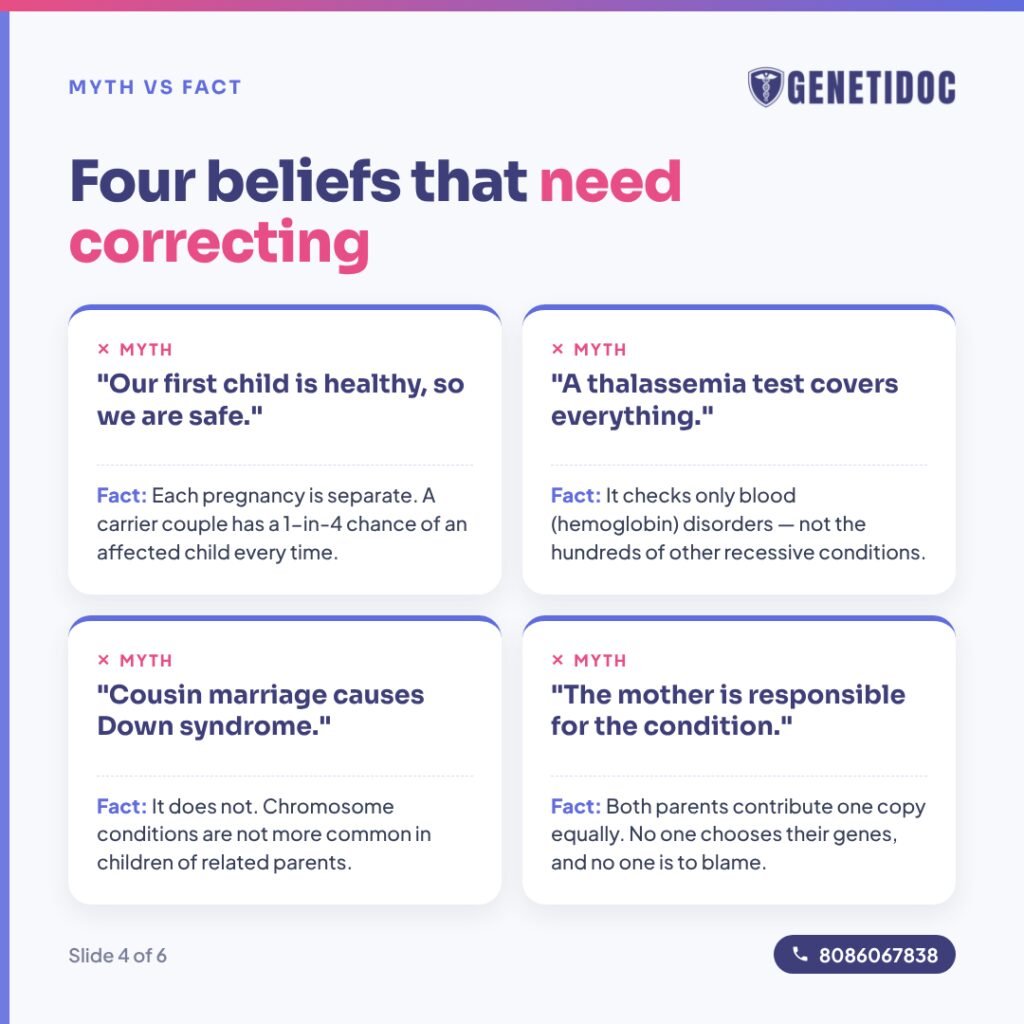
Each pregnancy is a separate roll of the dice. A carrier couple has a 1-in-4 chance of an affected child every single time, regardless of how earlier children turned out.
Myth 2: “No one in our family has had a genetic problem.”
Recessive conditions can stay hidden for generations, passed silently from carrier to carrier. A clean family history lowers the probability somewhat, but does not rule out risk. Also, earlier infant deaths or “slow” children were often never investigated.
Myth 3: “Children of cousins will definitely have defects.”
This is false. Most children of related parents are healthy. The risk is higher than average, not certain.
Myth 4: “The mother is responsible for the child’s condition.”
In recessive conditions, both parents contribute one faulty copy equally. No one chooses which genes they carry, and no one is to blame. Genetic counseling helps families understand this, which can ease guilt and family tension.
Myth 5: “A thalassemia test covers everything.”
A thalassemia test checks only for hemoglobin disorders. Related couples need a broader discussion about carrier screening.
Myth 6: “Cousin marriage causes Down syndrome.”
It does not. Chromosome conditions like Down syndrome are not more common in children of related parents.
When Is Genetic Testing Useful, and When Is It Less Useful?
Testing is especially useful when:
- You are first cousins or more closely related and planning a pregnancy
- Your families have married within each other over several generations
- There is a known genetic condition, an unexplained infant death, or a child with developmental delay, deafness, blindness or repeated transfusions in the family
- You have had recurrent pregnancy losses or a scan showing a problem in the baby
- Your child shows any of the warning signs listed above
- A sibling or relative is planning a consanguineous marriage and a familial gene change is already known
Testing is less useful, or needs a different approach, when:
- You are distantly related, with no family history. Routine screening offered to all couples in your community may be enough. A counselor can help you decide.
- Only one partner is tested in a closely related couple. For recessive conditions, the answer depends on both.
- Testing is ordered without counseling. A list of gene names without explanation can cause unnecessary fear or false reassurance.
- A variant of uncertain significance is treated as a diagnosis. Decisions about relatives or pregnancies should rest on a definite result.
Why the Laboratory and the Interpretation Matter as Much as the Test
Genetic tests are not all the same. Two reports from two laboratories can look similar but differ greatly in how many genes were checked, how well each gene was covered, and how carefully each change was classified.
For related couples, a few things deserve particular attention:
- Accreditation: testing should be done in an accredited laboratory with established quality controls.
- Test coverage: you should know which conditions were included, and which important ones (such as spinal muscular atrophy or alpha thalassemia) need separate testing.
- Interpretation in context: a gene change means different things depending on your family history and community background. This is where clinical correlation by a clinical geneticist adds real value.
- Follow-up: knowledge about gene changes keeps improving. Keep your reports and raw data, and return for review when new symptoms or family events occur.
Direct-to-consumer DNA kits are not designed for this purpose. They usually check a limited set of changes, mostly validated in non-Indian populations, and are not a substitute for clinical carrier screening.
How Genetic Counseling Supports Families
Good genetic counseling is not a lecture. It is a conversation that respects your culture, your faith and your family’s situation. At Genetidoc, counseling sessions typically cover:
- Your detailed family tree on both sides
- Your personalized risk, explained in plain numbers
- Which tests make sense for you, and what each can and cannot show
- Your options at every stage, without pressure
- How to share information with relatives who may also be at risk
- The emotional side: guilt, worry, pressure from elders and decisions about future pregnancies
Team Genetidoc’s clinical geneticists counsel in more than 15 Indian languages, and most consultations happen online. Samples can usually be collected from home. After the consultation, families receive a written summary of what was discussed, which many find helpful when explaining the results to parents and in-laws.
Frequently Asked Questions
Is it safe to marry your first cousin in India?
Most children of first cousins are healthy, but the risk of a serious genetic condition is about 1.7 to 2.8% higher than for unrelated couples. Genetic counseling and carrier screening before pregnancy can identify most couples at high risk.
What percentage of children of cousins have birth defects?
For first cousins, the combined risk of a serious birth defect or genetic condition is roughly 5 to 7%, compared with 3 to 4% for unrelated couples.
Can cousin marriage cause intellectual disability?
Yes, it can increase the risk, because many recessive genetic conditions affect brain development. Most children of cousins have normal development, but delays should be evaluated early.
Can cousin marriage cause deafness or blindness in children?
Inherited hearing loss and inherited eye conditions such as retinitis pigmentosa are more common in children of related parents, because many of them follow recessive inheritance.
Our first child is healthy. Do we still need testing?
Yes, it is worth discussing. A healthy first child does not rule out carrier status. If both parents carry the same condition, each pregnancy has a 1-in-4 risk.
Which test should cousin couples take before pregnancy?
Basic thalassemia screening plus expanded carrier screening for both partners, with additional specific tests chosen by a clinical geneticist based on your community and family history.
Is a thalassemia test enough for related couples?
No. It checks only hemoglobin disorders. Related couples are at increased risk of many other recessive conditions that need broader screening.
Does cousin marriage cause Down syndrome?
No. Chromosome conditions such as Down syndrome are not more common in children of consanguineous couples.
Is second-cousin marriage risky?
The added risk for second cousins is small and close to the general population, unless the families have intermarried over several generations or have a known genetic condition.
Is uncle–niece marriage riskier than first-cousin marriage?
Yes. Uncle and niece share about twice as much DNA as first cousins, so the chance of both carrying the same recessive change is higher.
If we are both carriers, can we still have a healthy baby?
Yes. Each pregnancy has a 3-in-4 chance of an unaffected baby. Options such as prenatal diagnosis or preimplantation genetic testing with in vitro fertilization can confirm the baby’s status.
Should brothers and sisters of an affected child be tested?
Once the exact gene change in the family is known, relatives, especially those planning a consanguineous marriage, can have a quick, targeted test for that specific change.
Key Takeaways
- Most children of related parents are healthy, but the risk of recessive genetic conditions is higher.
- For first cousins, the added risk is about 1.7 to 2.8%. It is higher for closer relationships and repeated intermarriage.
- Chromosome conditions such as Down syndrome are not increased.
- A healthy first child, a clean family history or a normal thalassemia test does not rule out risk.
- Testing before pregnancy gives you the most options. Both partners should be tested and counseled together.
- If your child shows warning signs, early genetic diagnosis can change treatment, prognosis and family planning.
- The right test, a quality laboratory and expert interpretation matter as much as the test itself.
What Should You Do Next?
If you are married to a relative and planning a pregnancy, the most useful step is a joint genetic counseling session before you conceive. Bring whatever you know about both sides of the family, including any children who died young or had health problems.
If your child is already showing signs such as delayed development, hearing or vision problems or repeated infections, talk to your pediatrician and ask whether a genetic evaluation is needed.
Related to Your Partner? Know Your Real Risk Before Your Next Pregnancy
Genetidoc’s clinical geneticists help consanguineous couples understand their family tree, choose the right combination of carrier tests and plan pregnancies with clarity, in your own language and from your own home. If your child already has symptoms, we can guide the right diagnostic test and what it means for your whole family.
Book a couple’s genetic counseling consultation
Have questions about consanguinity and genetics? Join the conversation on the Genetidoc Rare Disease Forum
Related Reading on Genetidoc
- Tuberous Sclerosis Complex: A Guide to Testing and Care in India
- Progeria: Understanding Accelerated Ageing in Children
- Hereditary Ataxia: Types, Symptoms and Genetic Testing
- Genetics and Obesity: Is It All in the Genes?
- Hypertrichosis: The Genetics Behind Excess Hair Growth
- Migraine and Genetics: Is It Hereditary?
- Mucopolysaccharidosis: Signs Parents Should Not Ignore
References
- Bennett RL, Motulsky AG, Bittles A, et al. Genetic counseling and screening of consanguineous couples and their offspring: recommendations of the National Society of Genetic Counselors. Journal of Genetic Counseling. 2002;11(2):97–119.
- Gregg AR, Aarabi M, Klugman S, et al. Screening for autosomal recessive and X-linked conditions during pregnancy and preconception: a practice resource of the American College of Medical Genetics and Genomics. Genetics in Medicine. 2021;23(10):1793–1806.
- Mor-Shaked H, Rips J, Gershon Naamat S, et al. Parental exome analysis identifies shared carrier status for a second recessive disorder in couples with an affected child. European Journal of Human Genetics. 2021;29:455–462.
- Kundu S, Jana A. Consanguineous marriage and associated diseases among their children and grandchildren in India: evidence from large-scale data. Journal of Biosocial Science. 2024.
- Bittles AH, Black ML. Consanguinity, human evolution, and complex diseases. Proceedings of the National Academy of Sciences. 2010;107(Suppl 1):1779–1786.
- Hamamy H. Consanguineous marriages: preconception consultation in primary health care settings. Journal of Community Genetics. 2012;3(3):185–192.
- van der Hout S, Woudstra AJ, Dondorp W, et al. Consanguineous couples’ experiences and views regarding expanded carrier screening: barriers and facilitators in the decision-making process. European Journal of Human Genetics. 2023;31:1317–1322.
- Osman N, Rhee L, Boe N, Hedriana H, Singh K. Effectiveness of expanded prenatal screening among consanguineous couples of Afghan descent. AJOG Global Reports. 2025. doi:10.1016/j.xagr.2025.100503.
This article is for general education and does not replace personal medical advice. Please consult a qualified clinical geneticist or your doctor for advice about your own situation.