Quick answer: What is Cowden syndrome?
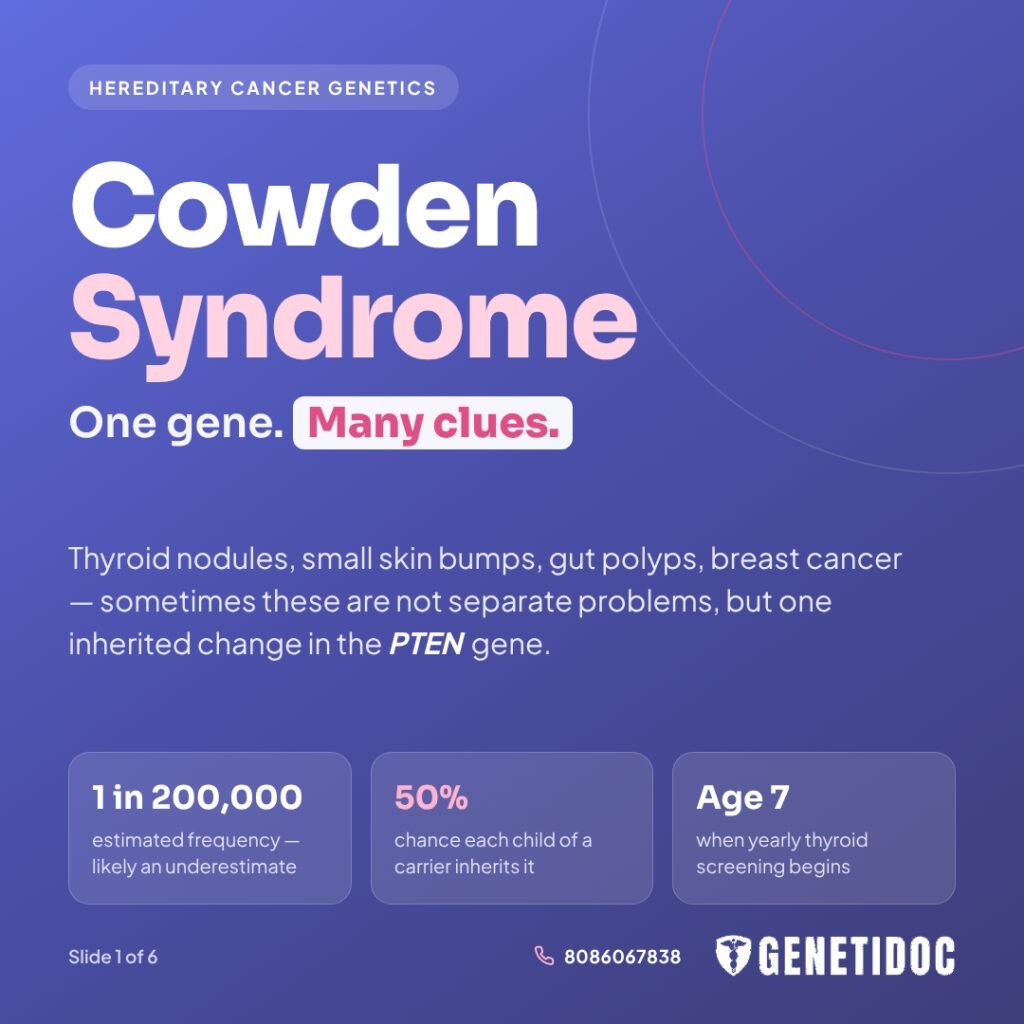
Cowden syndrome is an inherited condition caused by a harmful change (variant) in the PTEN gene. It causes non-cancerous growths called hamartomas in the skin, mouth, gut, thyroid and breast, and it raises the lifetime risk of certain cancers, mainly breast, thyroid, endometrial (womb lining), kidney and colorectal cancer. With a correct diagnosis and a planned screening schedule, most of these cancers can be found early or prevented.
Maybe a genetic test report just landed in your inbox with the words “PTEN pathogenic variant.” Maybe your child’s doctor mentioned Cowden syndrome while evaluating autism and a large head size. Or maybe a dermatologist noticed small bumps on your face and hands and suggested genetic testing.
Whichever way you arrived here, you probably have the same questions most families ask us. What is this condition? How serious is it? Will I get cancer? Should my children be tested?
This guide answers those questions in plain language. It also explains what the published research really says about cancer risk, because many websites still quote older figures that are likely higher than the true risk for most people.
What Is the PTEN Gene and What Does It Normally Do?
Every cell in your body has “brakes” that stop it from growing and dividing when it should not. The PTEN gene, found on chromosome 10, makes one of the most important of these brakes. Genes like this are called tumor suppressor genes, because their job is to keep cell growth under control.
We each inherit two copies of PTEN, one from each parent. A person with Cowden syndrome is born with one copy that does not work properly. The remaining working copy usually does enough for many years. But if that second copy is damaged in a particular tissue during life, the brakes fail in that tissue, and growths or cancers can develop there.
This explains two things families often find confusing:
- Why the condition is present from birth, yet problems often appear only in the 20s, 30s or later.
- Why two people in the same family with the same variant can have very different health stories.
Cowden Syndrome and PTEN Hamartoma Tumor Syndrome: Are They the Same?
You may see the term PTEN hamartoma tumor syndrome (PHTS) on your report. PHTS is the umbrella name for every condition caused by a harmful PTEN variant. Cowden syndrome is the best-known condition under that umbrella. Others include Bannayan-Riley-Ruvalcaba syndrome, which is usually recognized in childhood, and PTEN-related Proteus-like syndrome.
Doctors now increasingly think of these as one condition with a wide range of presentations, rather than separate diseases. For practical purposes, the key message is simple: anyone with a harmful PTEN variant follows the same cancer screening approach, whatever name their condition was first given.
A small number of people meet the clinical description of Cowden syndrome but have no PTEN variant on testing. We cover what that means later in this article.
How common is Cowden syndrome?
Cowden syndrome is estimated to affect roughly 1 in 200,000 people. Most genetics experts believe this is an underestimate. Many of its signs, such as thyroid nodules, fibroids, fatty lumps or a slightly large head, are common in the general population, so the overall pattern is easily missed. In India, the published literature is mostly limited to individual case reports from dermatology, dental and medicine departments, which suggests many families remain undiagnosed.
Signs and Symptoms of Cowden Syndrome
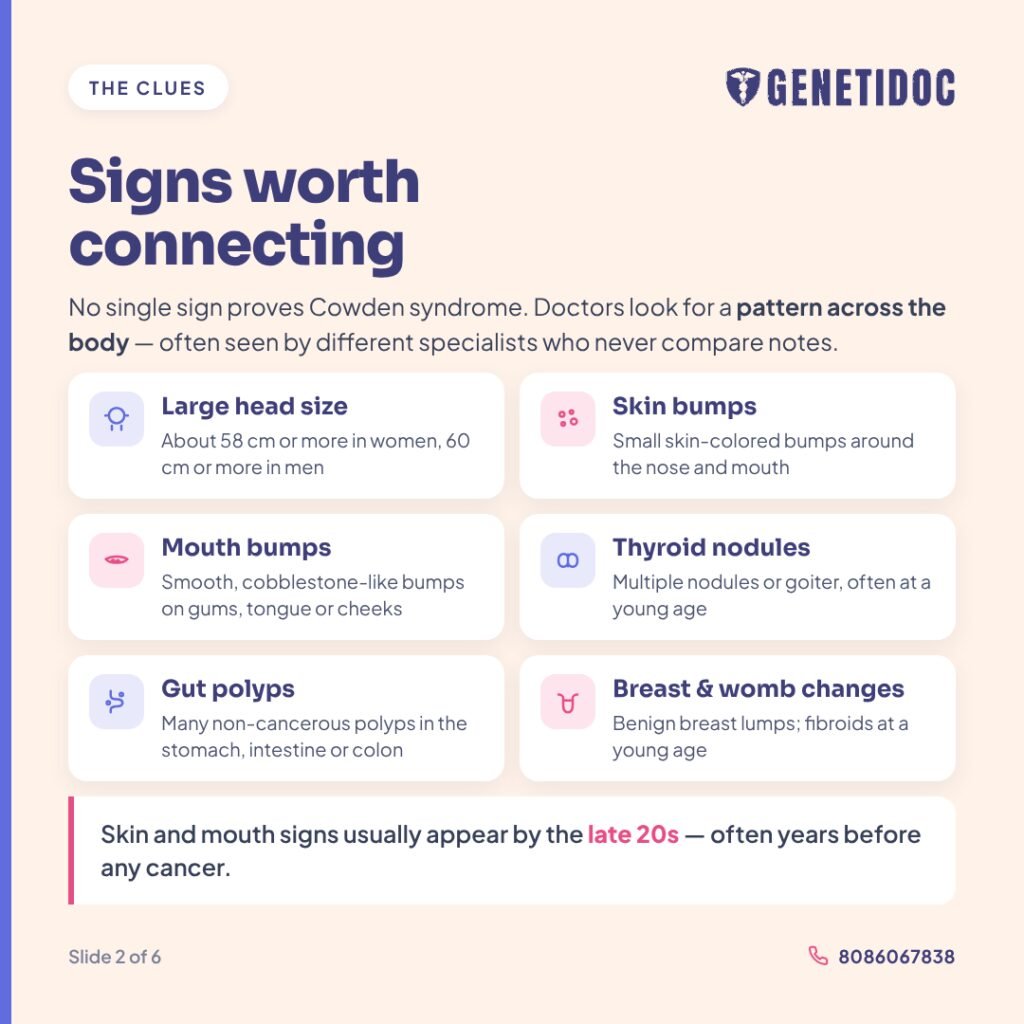
No single sign proves Cowden syndrome. Doctors look for a combination of features across different parts of the body. Here are the most important ones.
1. A larger-than-average head size (macrocephaly)
This is one of the most common and useful clues. Most people with a harmful PTEN variant have a head circumference well above average. As a rough guide used in clinical criteria, this means about 58 cm or more in adult women and 60 cm or more in adult men. A tape measure around the head takes ten seconds, yet it is rarely checked in adult clinics.
2. Skin and mouth changes
These usually appear by the late 20s and can come years before any cancer. They include:
- Trichilemmomas: small, skin-colored bumps, often on the face around the nose and mouth. They are harmless hair-follicle growths, but a biopsy showing one is a strong clue.
- Oral papillomas: small, smooth, cobblestone-like bumps on the gums, tongue or inner cheeks. Dentists are sometimes the first to notice these.
- Acral keratoses: small, rough, wart-like spots on the backs of the hands or feet, or on the palms and soles.
- Lipomas: soft fatty lumps under the skin.
- Freckling on the penis in boys and men, which is a recognized feature, especially in childhood presentations.
3. Thyroid problems
Benign thyroid problems such as multiple nodules or goiter are very common in Cowden syndrome, often starting at a young age. Thyroid cancer, when it occurs, is usually the follicular type. It is never the medullary type, which is linked to a different gene.
4. Breast changes
Benign breast lumps, fibrocystic changes and fibroadenomas are frequent. Breast cancer is the most important cancer risk for women with Cowden syndrome.
5. Gut polyps
Many people have multiple polyps in the stomach, small intestine or colon. Most are hamartomatous polyps, meaning non-cancerous overgrowths of normal tissue. Some people also have tiny white patches in the food pipe (esophagus) called glycogenic acanthosis, seen during an endoscopy.
6. Womb (uterine) problems
Uterine fibroids, sometimes at a young age, are common. There is also an increased risk of endometrial cancer, the cancer of the womb lining.
7. Brain and development
Some children with a PTEN variant have autism spectrum disorder, developmental delay or learning difficulties, usually together with a large head. Rarely, adults develop a slow-growing, non-cancerous growth in the back of the brain called Lhermitte-Duclos disease. In adults, this finding alone strongly suggests a PTEN variant.
8. Blood vessel anomalies
Some people have unusual collections of blood vessels (vascular malformations or hemangiomas) in the skin, muscles or internal organs.
Illustrative example
A composite scenario based on typical published presentations. It does not describe a specific Genetidoc patient.
A 41-year-old woman is diagnosed with breast cancer. Over the previous fifteen years she had a thyroid surgery for a multinodular goiter, two fatty lumps removed from her back, and polyps found during an endoscopy for indigestion. Each problem was treated separately by a different specialist. Nobody connected them.
Her oncologist orders a hereditary cancer panel, which finds a harmful PTEN variant. Looking back, her large head size and small bumps around her nose had been there since her twenties. The diagnosis now shapes her surgical choices, starts a screening plan for her womb, kidneys and colon, and lets her sister and daughter get tested.
How Is Cowden Syndrome Diagnosed?
Diagnosis rests on two pillars: a clinical assessment by a clinical geneticist and a genetic test.
The clinical assessment
International clinical criteria, published in 2013 and used in the National Comprehensive Cancer Network (NCCN) guidelines, divide features into “major” and “minor.” Major features include breast cancer, endometrial cancer, follicular thyroid cancer, multiple gut hamartomas, adult Lhermitte-Duclos disease, macrocephaly and multiple characteristic skin or mouth lesions. Minor features include autism, intellectual disability, kidney cancer, colon cancer, multiple lipomas, benign thyroid lesions and vascular anomalies. A clinical diagnosis is made when a person has a specific combination of these.
In practice, the clinical geneticist also takes a detailed three-generation family history, examines the skin and mouth, measures head size, and reviews old reports, scans and biopsy results. These details often reveal a pattern that individual specialists missed.
The genetic test
A blood or saliva sample is used to read the PTEN gene. The test looks for small spelling changes in the gene and also for larger missing or extra pieces (deletions or duplications), which a good laboratory checks routinely.
Who Should Consider PTEN Genetic Testing?
Testing is worth discussing with a clinical geneticist if you or your child have any of the following:
- A large head size along with breast, thyroid or endometrial cancer.
- Breast, follicular thyroid or endometrial cancer along with multiple skin or mouth lesions, multiple gut polyps or benign thyroid disease.
- A biopsy-confirmed trichilemmoma, or Lhermitte-Duclos disease diagnosed in adulthood.
- Multiple hamartomatous polyps in the gut, especially with other features above.
- A child with autism spectrum disorder or developmental delay and a large head size.
- A close relative with a known harmful PTEN
- A family pattern of breast, thyroid, endometrial or kidney cancer, especially at younger ages.
The autism and large head connection
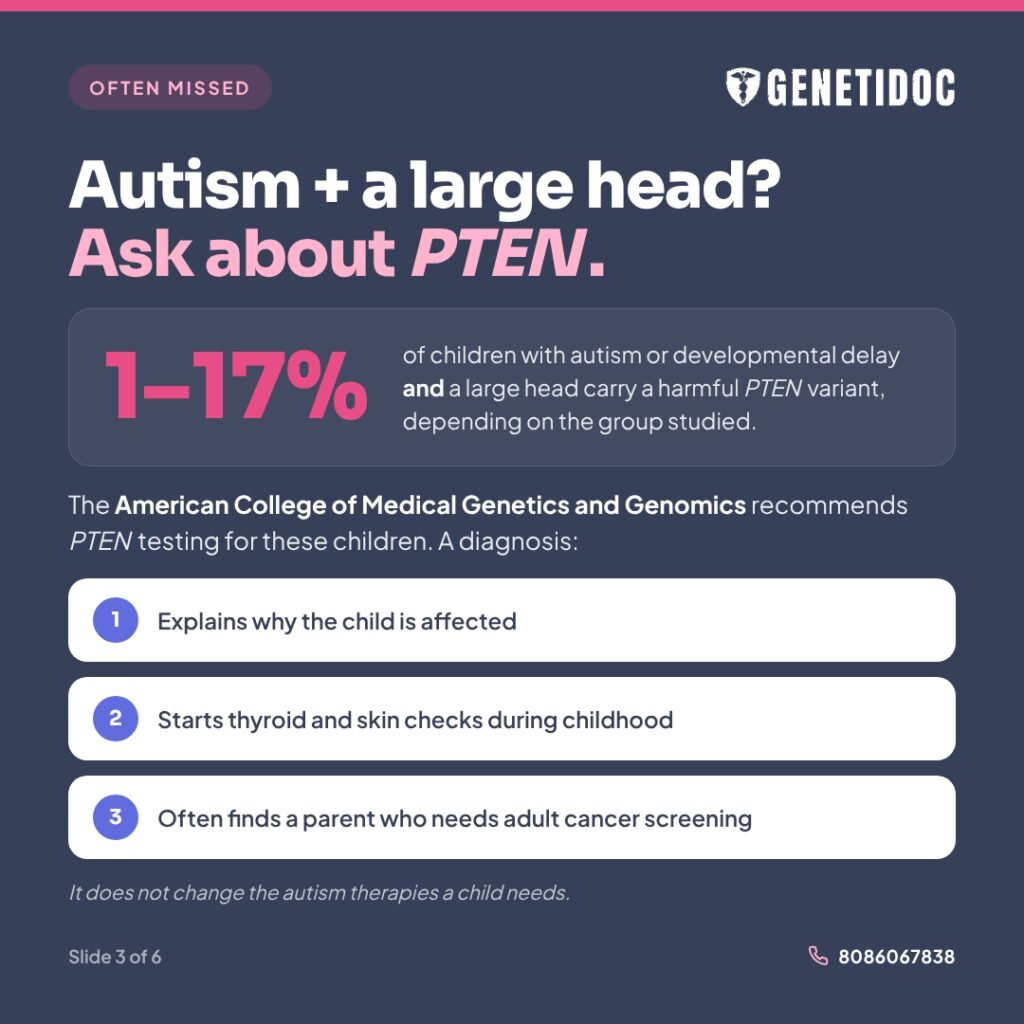
This deserves special attention because it is where many diagnoses are missed. Studies have found harmful PTEN variants in a meaningful share of children who have both autism (or developmental delay) and macrocephaly. Published estimates vary widely, from about 1% to 17% depending on the group studied. The American College of Medical Genetics and Genomics (ACMG) recommends PTEN testing for children with autism spectrum disorder and macrocephaly.
Finding a PTEN variant in such a child does not change the autism therapies they need. But it changes a great deal else. It explains why the child is affected, starts thyroid and skin checks during childhood, and very often leads to testing a parent, who may then need adult cancer screening they did not know about.
Illustrative example
A composite scenario based on typical published presentations. It does not describe a specific Genetidoc patient.
A four-year-old boy is referred for genetic evaluation because of speech delay, autism features and a head size well above the normal range on growth charts. Genetic testing finds a harmful PTEN variant.
His father, aged 38, also has a large head and had a thyroid nodule removed years ago. Targeted testing confirms he carries the same variant. The father starts adult screening. The boy’s thyroid ultrasound schedule begins, and his paternal aunt asks for testing too. One child’s evaluation has changed the health plan of three generations.
Choosing the Right Test: Single Gene, Panel or Exome?
There is more than one way to look for a PTEN variant. The right choice depends on why the person is being tested.
- Single-gene PTEN testing makes sense when the features clearly point to Cowden syndrome and little else.
- A broad hereditary cancer panel is usually better for someone with breast, endometrial or colorectal cancer. Several inherited cancer conditions overlap in the cancers they cause, so a panel checks PTEN alongside genes such as BRCA1, BRCA2, TP53 and the Lynch syndrome genes in one go.
- A broader neurodevelopmental panel or exome sequencing may be chosen for a child with autism or developmental delay when the features are less specific, because many different genes can cause a similar picture.
- Targeted single-variant testing is used for relatives once a harmful variant is known in the family.
“When someone comes to us with breast, endometrial or colorectal cancer, we usually order a broad hereditary cancer panel rather than testing one syndrome at a time. The family story often overlaps more than one condition, and the panel answers the question properly the first time.”
— Team Genetidoc
How long do results take?
- Targeted testing of one known family variant: about 1 week.
- Single-gene testing: about 3 weeks.
- A hereditary cancer panel: about 3 to 4 weeks.
- Exome sequencing: longer than a panel, because far more of the genetic code is analyzed and interpreted.
What does testing cost in India?
Cost depends mainly on the type of test. Targeted testing for a known family variant is the least expensive option. Single-gene tests and panels cost more, and exome sequencing more again. Your clinical geneticist will recommend the most focused test that answers your question, so you do not pay for more testing than you need. Because the same test can cost very different amounts at different laboratories, ask what is included. A report without proper interpretation and counseling is not a bargain.
Understanding Your PTEN Test Result
A positive result (pathogenic or likely pathogenic)
This means a harmful PTEN variant was found. It confirms the diagnosis of PTEN hamartoma tumor syndrome, explains past health problems, and becomes the basis for a lifelong screening plan and family testing.
A negative result
This means no harmful PTEN variant was found in what the laboratory tested. It does not always rule out the condition. Some people who clearly meet the clinical criteria have no detectable PTEN variant. Their signs may come from a change the test cannot see, from a variant present only in some cells of the body (mosaicism), or from other genes researchers are still studying. When the clinical picture is strong, doctors may still recommend screening based on the features and family history.
“A negative report means no reportable change was found in what was tested. It does not mean the person can never develop the condition. We always explain a negative result alongside the person’s own features and family history.”
— Team Genetidoc
A variant of uncertain significance (VUS)
A VUS is a change in the gene that science cannot yet classify as harmful or harmless. PTEN is one of the few genes with its own expert classification rules, developed by the ClinGen PTEN Expert Panel, which helps laboratories interpret its variants more consistently. Even so, a VUS should never be treated as a diagnosis.
“A variant of uncertain significance is not a diagnosis, so we do not use it to test healthy relatives. What we can do is check whether the variant is present in other affected family members. If it tracks with the illness, that supports reclassifying it. Meanwhile, care is guided by the person’s own history, not the uncertain variant.”
— Team Genetidoc
A VUS result is a good reason to ask for follow-up and reanalysis in 6 months to a year, as knowledge about individual variants keeps growing.
A PTEN change on a tumor report is not the same thing
This is one of the most common sources of confusion. PTEN changes are very common inside certain cancers, especially endometrial cancer, as part of how the tumor itself develops. These are called somatic changes. They are found only in the tumor and are not inherited.
Cowden syndrome is about a germline change, one present from birth in every cell of the body, which is checked with a blood or saliva test. A PTEN change on a tumor profiling report does not mean you have Cowden syndrome. It may, however, be a reason to discuss germline testing with a clinical geneticist if your personal or family history raises suspicion.
What Is the Real Cancer Risk With Cowden Syndrome?
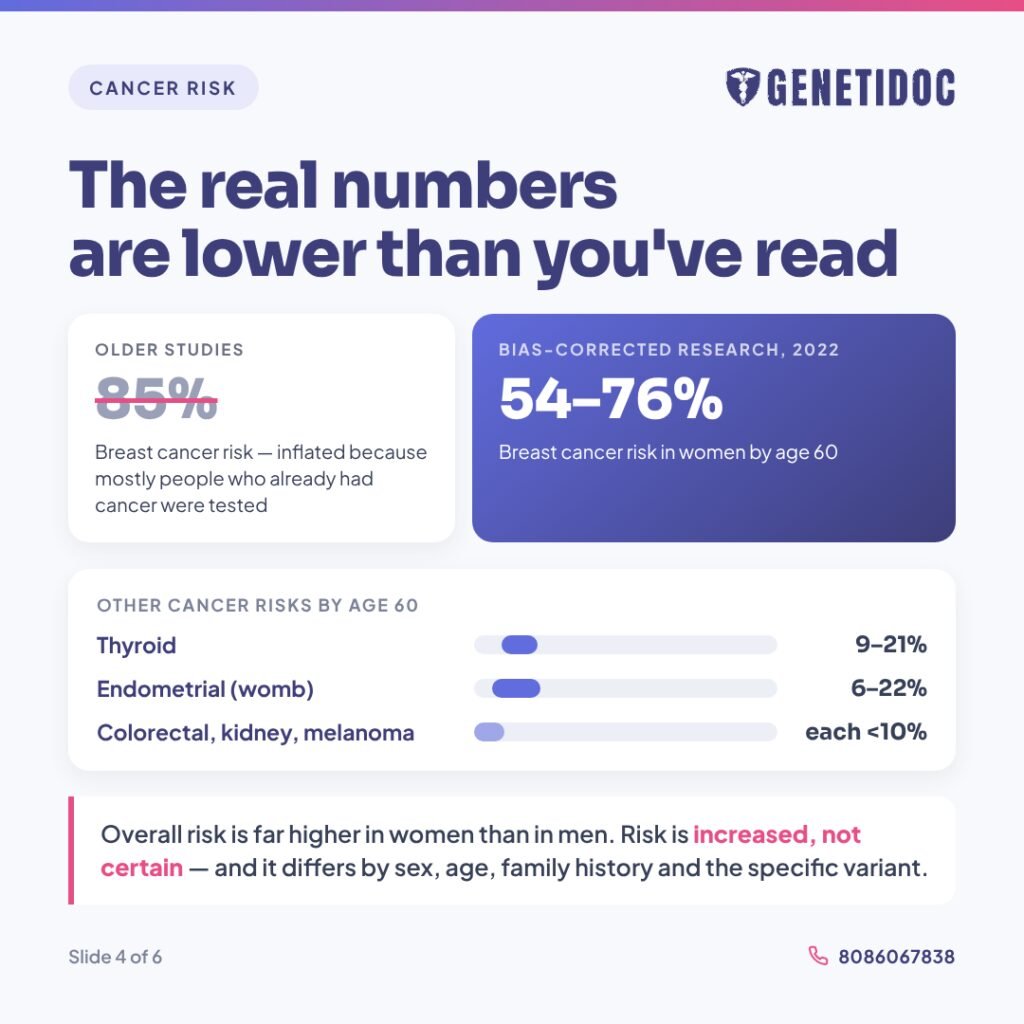
If you search online, you will often see a breast cancer risk of 85% quoted for Cowden syndrome. That figure comes from earlier studies. It is not wrong for the families those studies included, but it is likely too high for many people diagnosed today.
Here is why. Early studies mainly included people who were tested because they already had cancer or striking features. That naturally pushes the numbers up, a problem researchers call ascertainment bias. More recent research that corrected for this has produced lower, more realistic estimates.
A large 2022 European study corrected for this bias and found, by age 60:
- Overall cancer risk was much higher in women (about 68% to 86%) than in men (about 16% to 21%).
- Breast cancer in women: about 54% to 76%.
- Endometrial cancer: about 6% to 22%.
- Thyroid cancer: about 9% to 21%.
- Colorectal cancer, kidney cancer and melanoma: each under 10%.
The same study found that risk can differ by the type and location of the variant in the gene. That is one more reason why no single number fits everyone.
“We never give a patient one cancer number and send them home. Risk depends on whether you are a man or a woman, your age, your family history and the specific variant you carry. We explain it person by person, and we explain what can be done about it.”
— Team Genetidoc
Can men have Cowden syndrome?
Yes. Men inherit and pass on PTEN variants just as often as women. Their overall cancer risk is lower, but they still need thyroid, colon, kidney and skin screening. Men are also frequently the “hidden” carriers in a family. They are often identified only when a daughter develops breast cancer or a child is evaluated for autism.
Does Cowden syndrome affect life expectancy?
Cowden syndrome itself is not a fatal disease. The main threat to long-term health is cancer. With regular screening, many cancers in Cowden syndrome can be found early, when treatment works best, and some can be prevented through planned surgery. Many people with the condition live full lives by staying on top of their screening plan.
Cowden Syndrome Screening Schedule
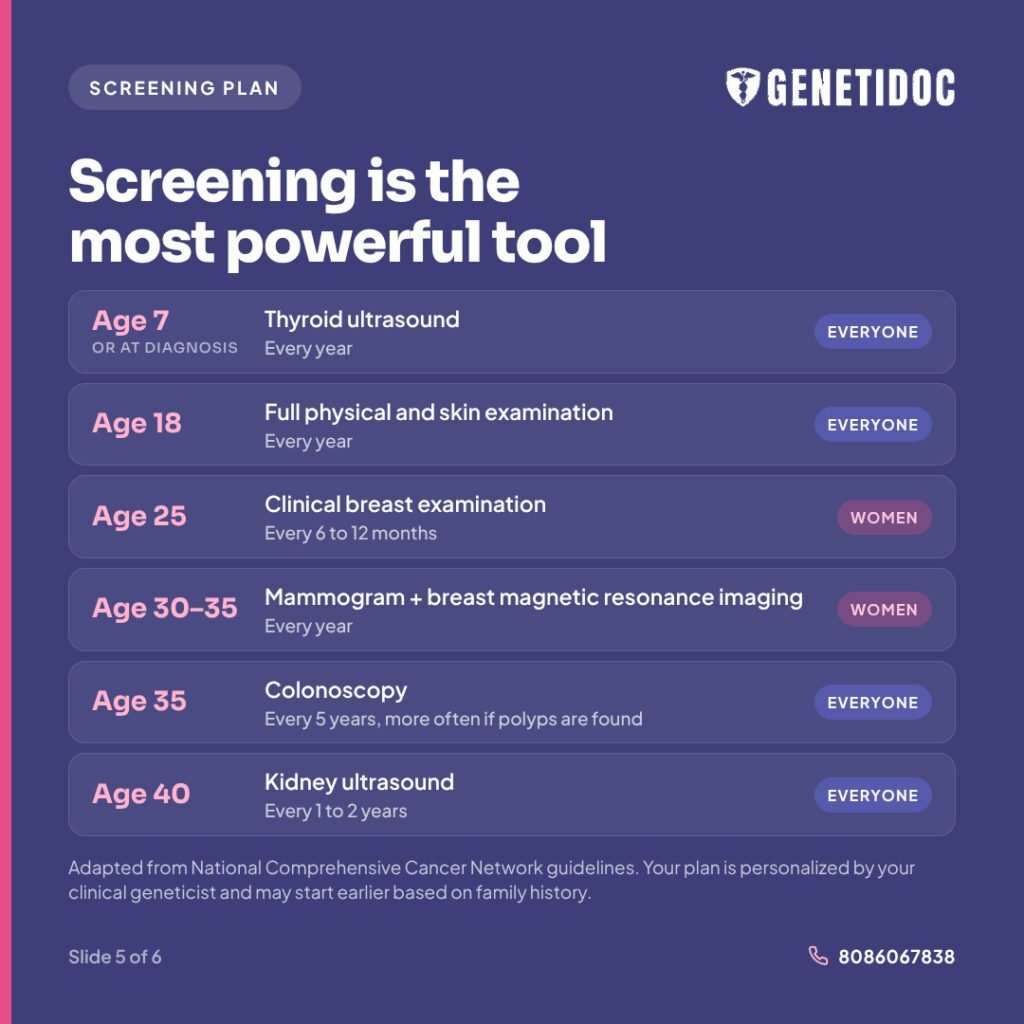
Screening (also called surveillance) is the heart of managing Cowden syndrome. The schedule below is adapted from the NCCN guidelines, which our team uses as its reference standard for hereditary cancer syndromes. Other expert groups, including the European Reference Network for genetic tumor risk syndromes (ERN GENTURIS), recommend slightly different ages and intervals. Your own plan should be personalized by your clinical geneticist.
| What to check | Who | Typical starting age and frequency |
| Thyroid ultrasound | Everyone | Yearly, from age 7 or from diagnosis |
| Full physical examination, including skin | Everyone | Yearly from age 18, or 5 years before the youngest related cancer in the family |
| Breast awareness | Women | From age 18 |
| Clinical breast examination | Women | Every 6 to 12 months from age 25 |
| Mammogram and breast magnetic resonance imaging (MRI) with contrast | Women | Yearly from age 30 to 35, or earlier based on the youngest breast cancer in the family |
| Womb (endometrial) checks | Women | Report abnormal bleeding promptly; endometrial sampling may be considered every 1 to 2 years from age 35 |
| Colonoscopy | Everyone | Every 5 years from age 35, more often if polyps are found |
| Kidney ultrasound | Everyone | Every 1 to 2 years from age 40 |
| Developmental assessment | Children | At diagnosis; brain MRI only if symptoms suggest it |
This table is educational and adapted from published guidelines. It is not a substitute for a personalized plan from your clinical geneticist.
Making screening work in India
A screening plan only helps if it is followed for years. In India, practical barriers are real. Breast MRI with contrast is easier to access in larger cities, and families often see a different specialist for each organ without anyone coordinating the whole picture.
That is why we give every patient an individualized written summary after consultation. It is prepared by the genetic counselor and cross-checked by the clinical geneticist. It lists what was discussed, the screening plan and the guideline basis for each test. Patients can carry it to their surgeon, endocrinologist, gynecologist or gastroenterologist, so everyone works from the same plan.
How a Diagnosis Changes Treatment Decisions
Risk-reducing surgery
Women with a harmful PTEN variant may be offered a discussion about:
- Risk-reducing mastectomy: removing both breasts to greatly lower breast cancer risk. Because good breast screening tools exist, careful yearly surveillance is an acceptable alternative. This is a deeply personal choice, and there is no single right answer.
- Hysterectomy: removing the womb, usually discussed once a woman has completed her family.
Genetic counseling helps a woman weigh these options against her age, family history, plans for children and personal values. The decision always remains hers.
When cancer has already been diagnosed
For someone who already has breast or thyroid cancer, knowing about Cowden syndrome can affect surgical planning. For example, it can affect the extent of breast surgery or decisions about the other breast. It also means the treating team stays alert to the possibility of a second, unrelated cancer in another organ, which is more likely in Cowden syndrome than in the general population.
Benign growths
Skin lesions are usually managed only if they cause symptoms or cosmetic concern. Thyroid nodules and gut polyps are monitored and treated by the relevant specialist, using the screening schedule as a guide.
Is there a medicine that treats Cowden syndrome?
Not yet. Because a faulty PTEN gene overactivates a cell-growth pathway called mTOR, researchers have studied drugs that block this pathway, such as sirolimus and everolimus. Results so far are early. These drugs are not a standard treatment for Cowden syndrome, and care today relies on screening and timely surgery.
What Cowden Syndrome Means for Your Family
How is Cowden syndrome inherited?
Cowden syndrome follows autosomal dominant inheritance. In simple terms:
- One copy of the variant is enough to cause the condition.
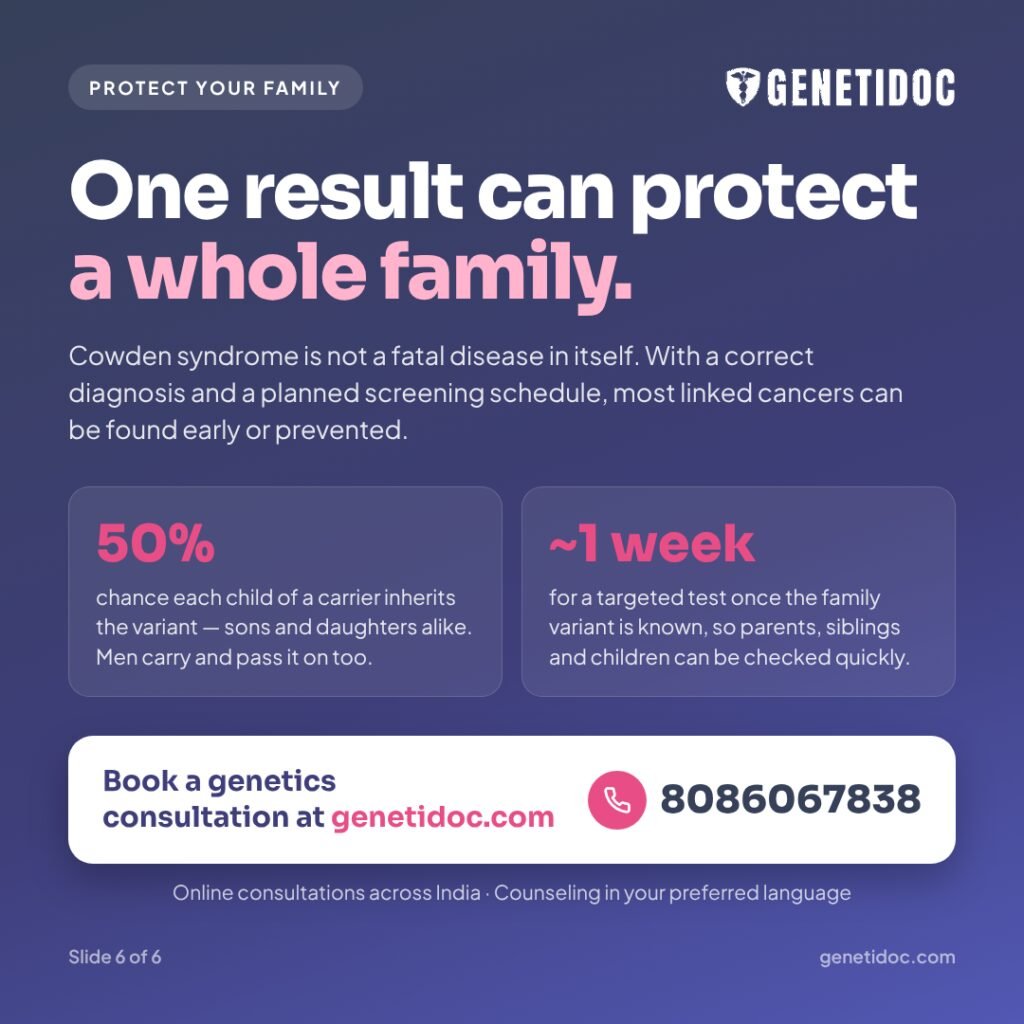
- Each child of an affected parent has a 50% chance of inheriting it, whether the child is a son or a daughter.
- It does not “skip” generations. It may seem to, because some carriers have mild signs that go unnoticed.
In some people, the variant arises for the first time in them and was not inherited from either parent. This is called a de novo variant. Research suggests this happens in a significant minority of families, with estimates ranging from roughly 1 in 10 to nearly half of cases. A person with a de novo variant can still pass it on to their own children.
“No parent chooses which genes they pass on. When a child is diagnosed and a parent turns out to carry the same variant, guilt is a very natural reaction. We make it very clear in every session that there is no blame here, only information that can now be used to protect everyone.”
— Team Genetidoc
Testing relatives (cascade testing)
Once a harmful variant is found, parents, brothers, sisters and children can be tested for that exact variant. This targeted test is quicker and less expensive than the original test, and results come in about a week.
- Relatives who test positive start the screening plan, often years before any problem would have shown up.
- Relatives who test negative for the family variant generally do not need Cowden-specific screening and can follow general population advice, unless other family history applies.
Should children be tested?
For most adult-onset hereditary cancer conditions, testing is usually offered after age 18. Cowden syndrome is different in an important way. Thyroid screening is recommended from childhood, and developmental issues may need early support. So testing a child from a known family is one of the situations where earlier testing is discussed with parents. Timing is decided together during pre-test counseling.
Telling relatives
“Indian families usually share results with each other quite readily. The harder part is getting relatives to actually come for counseling and testing. People are busy, some worry about stigma, and many underestimate how much the result matters for their own health.”
— Team Genetidoc
If you would rather not personally tell a relative, a private genetic counseling session can be offered to that relative. Whether the family finding is shared with them remains your decision.
Planning a pregnancy
Couples where one partner carries a PTEN variant can discuss reproductive options with a genetic counselor before pregnancy. These options include preimplantation genetic testing during in vitro fertilization (IVF). There is no right or wrong choice, and many carriers choose to have children naturally. The aim of counseling is to make sure every option is understood.
Common Myths About Cowden Syndrome
- “A PTEN variant means I will definitely get cancer.” Not true. The risk is increased, not certain, and screening makes a real difference.
- “The skin bumps are cancer.” Trichilemmomas, oral papillomas and keratoses are benign. They are useful clues, not cancers.
- “Only women need to worry.” Men carry and pass on the variant equally and also need screening.
- “My test was negative, so it’s not genetic.” A negative test means no reportable change was found in what was tested. A strong clinical picture may still need follow-up.
- “A consumer DNA kit would have shown this.” Most direct-to-consumer kits check a limited set of common markers and are not designed to fully analyze genes like PTEN. A clear result from such a kit does not rule out Cowden syndrome.
- “The PTEN change on my tumor report means my children are at risk.” Not necessarily. Tumor changes are often not inherited. A blood or saliva germline test answers that question.
Why the Right Laboratory and Expert Interpretation Matter
A genetic report is only as useful as the way it is read. With PTEN, a few points make a real difference:
- Complete testing: the laboratory should check for both small changes and larger deletions or duplications in the gene.
- Accurate classification: deciding whether a variant is harmful, uncertain or harmless requires expert curation. An incorrect label can cause either needless surgery or missed screening.
- Clinical correlation: the result must be matched to the person’s features and family history. A result that does not fit the clinical picture should be questioned, not simply accepted.
- A plan, not just a report: the real value lies in turning the result into a screening schedule, family testing and informed decisions.
At Genetidoc, testing is performed through accredited partner laboratories, and every result is interpreted by a clinical geneticist and explained through genetic counseling. Most of our consultations happen online, so families anywhere in India can speak with a specialist in their preferred language. Samples can be collected at home, and in-person visits are suggested mainly when a physical examination will help.
Practical Advice If You Have Just Been Diagnosed
- Keep your report safe, along with a copy of the raw data if your laboratory provides it.
- Book a genetic counseling session to understand your personal risk, not just population numbers.
- Get a written screening plan and share it with every specialist you see.
- Put screening dates in your calendar. Consistency matters more than any single test.
- Tell your first-degree relatives (parents, siblings, children) and encourage them to seek counseling.
- Report new symptoms promptly, such as a breast lump, abnormal vaginal bleeding, blood in stools, a neck swelling or blood in urine.
- Stay in touch with your genetics team, as guidelines and variant classifications are updated over time.
Key Takeaways
- Cowden syndrome is caused by a harmful variant in the PTEN gene and is part of PTEN hamartoma tumor syndrome.
- Clues include a large head size, characteristic skin and mouth bumps, thyroid disease, gut polyps, and breast, thyroid or endometrial cancer.
- A child with autism or developmental delay and a large head should be evaluated for a PTEN
- Cancer risks are real but often lower than older figures suggest. Your risk should be explained individually.
- Regular screening, starting with yearly thyroid ultrasound from childhood, is the most powerful tool for protecting health.
- Each child of a carrier has a 50% chance of inheriting the variant, and targeted family testing is quick and simple.
Worried About Cowden Syndrome or a PTEN Result?
Whether you have a PTEN variant on a report, a family pattern of breast and thyroid cancer, or a child with autism and a large head size, a clinical geneticist can tell you what it really means for you and your family.
Speak with Genetidoc’s clinical genetics team to review your reports, confirm whether PTEN testing is right for you, and build a personalized screening and family-testing plan. Online consultations are available across India.
Book a genetic consultation with us
Have a question about Cowden syndrome or living with a PTEN variant? Ask it in the Genetidoc Rare Disease Forum.
Frequently Asked Questions About Cowden Syndrome
1. What causes Cowden syndrome?
Cowden syndrome is caused by a harmful change (variant) in the PTEN gene. This gene normally acts as a brake on cell growth. When one copy does not work, growths and certain cancers become more likely.
2. Is Cowden syndrome hereditary?
Yes. It is inherited in an autosomal dominant pattern, so each child of an affected person has a 50% chance of inheriting it. In some people, the variant appears for the first time (de novo) and was not inherited from a parent.
3. What are the first signs of Cowden syndrome?
Common early signs include a large head size, small skin-colored bumps on the face, smooth bumps in the mouth, rough spots on the hands or feet, thyroid nodules and multiple gut polyps. Skin signs usually appear by the late 20s.
4. Which cancers are linked to the PTEN gene?
The main cancers are breast, thyroid (usually follicular), endometrial, kidney and colorectal cancer. Melanoma risk may also be slightly increased.
5. What is the breast cancer risk with Cowden syndrome?
Older studies quoted up to 85%. More recent research that corrected for study bias suggests about 54% to 76% by age 60. Individual risk varies, so it should be discussed with a clinical geneticist.
6. Can men get Cowden syndrome?
Yes. Men inherit and pass on PTEN variants as often as women. Their overall cancer risk is lower, but they still need thyroid, colon, kidney and skin screening.
7. Is there a link between PTEN and autism?
Yes. Harmful PTEN variants are found in some children who have autism or developmental delay together with a large head. Experts recommend PTEN testing for these children.
8. How is Cowden syndrome tested in India?
A blood or saliva sample is tested for PTEN variants, either alone or as part of a hereditary cancer or neurodevelopmental panel. Results take about 3 weeks for a single-gene test and 3 to 4 weeks for a panel. Results should be interpreted by a clinical geneticist.
9. Can Cowden syndrome be cured?
There is no cure that corrects the gene yet. Regular screening and timely surgery can greatly reduce the impact of the cancers linked to it. Drugs targeting the mTOR pathway are still being studied.
10. At what age should screening start in Cowden syndrome?
Yearly thyroid ultrasound is recommended from age 7 or from diagnosis. Breast screening for women generally starts at 30 to 35. Colonoscopy starts at 35 and kidney imaging at 40. Your plan may start earlier depending on family history.
11. If my genetic test is negative, can I still have Cowden syndrome?
Possibly. Some people who meet the clinical criteria have no detectable PTEN variant. A clinical geneticist may still recommend screening based on your features and family history.
12. Does a PTEN mutation in my tumor mean I have Cowden syndrome?
Not necessarily. PTEN changes are common inside some tumors, especially endometrial cancer, and are often not inherited. A blood or saliva germline test is needed to check for Cowden syndrome.
Related Reading From Genetidoc
- Autism Spectrum Disorder and Genetic Testing: A Guide for Indian Families
- Marfan Syndrome: Symptoms, Diagnosis and Genetic Testing Explained
- Understanding Familial Hypercholesterolemia (Familial Hypercholesterolaemia): When High Cholesterol Runs in the Family
- Li-Fraumeni Syndrome: When Many Different Cancers Run in One Family
References
- Yehia L, Eng C. PTEN Hamartoma Tumor Syndrome. In: Adam MP, et al., editors. GeneReviews® [Internet]. Seattle (WA): University of Washington, Seattle; 1993–present.
- Pilarski R, Burt R, Kohlman W, Pho L, Shannon KM, Swisher E. Cowden syndrome and the PTEN hamartoma tumor syndrome: systematic review and revised diagnostic criteria. J Natl Cancer Inst. 2013;105(21):1607–1616.
- Hendricks LAJ, et al. Cancer risks by sex and variant type in PTEN hamartoma tumor syndrome. J Natl Cancer Inst. 2022.
- Hendricks LAJ, et al. A review on age-related cancer risks in PTEN hamartoma tumor syndrome. Clin Genet. 2021;99(2):219–225.
- Bubien V, et al. High cumulative risks of cancer in patients with PTEN hamartoma tumour syndrome. J Med Genet. 2013;50(4):255–263.
- Tischkowitz M, et al. Cancer surveillance guideline for individuals with PTEN hamartoma tumour syndrome. Eur J Hum Genet. 2020;28(10):1387–1393.
- National Comprehensive Cancer Network. NCCN Clinical Practice Guidelines in Oncology: Genetic/Familial High-Risk Assessment: Breast, Ovarian, Pancreatic, and Prostate. Current version. nccn.org.
- Mester JL, et al. Gene-specific criteria for PTEN variant curation: recommendations from the ClinGen PTEN Expert Panel. Hum Mutat. 2018;39(11):1581–1592.
- Mester J, Eng C. Estimate of de novo mutation frequency in probands with PTEN hamartoma tumor syndrome. Genet Med. 2012;14(9):819–822.
- Schaefer GB, Mendelsohn NJ; Professional Practice and Guidelines Committee. Clinical genetics evaluation in identifying the etiology of autism spectrum disorders: 2013 guideline revisions. Genet Med. 2013;15(5):399–407.
- McBride KL, et al. Confirmation study of PTEN mutations among individuals with autism or developmental delays/mental retardation and macrocephaly. Autism Res. 2010;3(3):137–141.
- Kaymakcalan H, et al. Prevalence and clinical/molecular characteristics of PTEN mutations in Turkish children with autism spectrum disorders and macrocephaly. Mol Genet Genomic Med. 2021;9(8):e1739.
- Takayama T, et al. Clinical guidelines for diagnosis and management of Cowden syndrome/PTEN hamartoma tumor syndrome in children and adults: secondary publication. J Anus Rectum Colon. 2023;7(4):284–300.
- Molvi M, Sharma YK, Dash K. Cowden syndrome: case report, update and proposed diagnostic and surveillance routines. Indian J Dermatol. 2015;60(3):255–259.
- Shashidhara KC, et al. Cowden syndrome: familial presentation and genetic insights. Indian J Community Fam Med. 2024;10(2):139–142.
This article is for educational purposes and does not replace personal medical advice. Please consult a clinical geneticist or your treating doctor for decisions about testing, screening or treatment.