
|
|
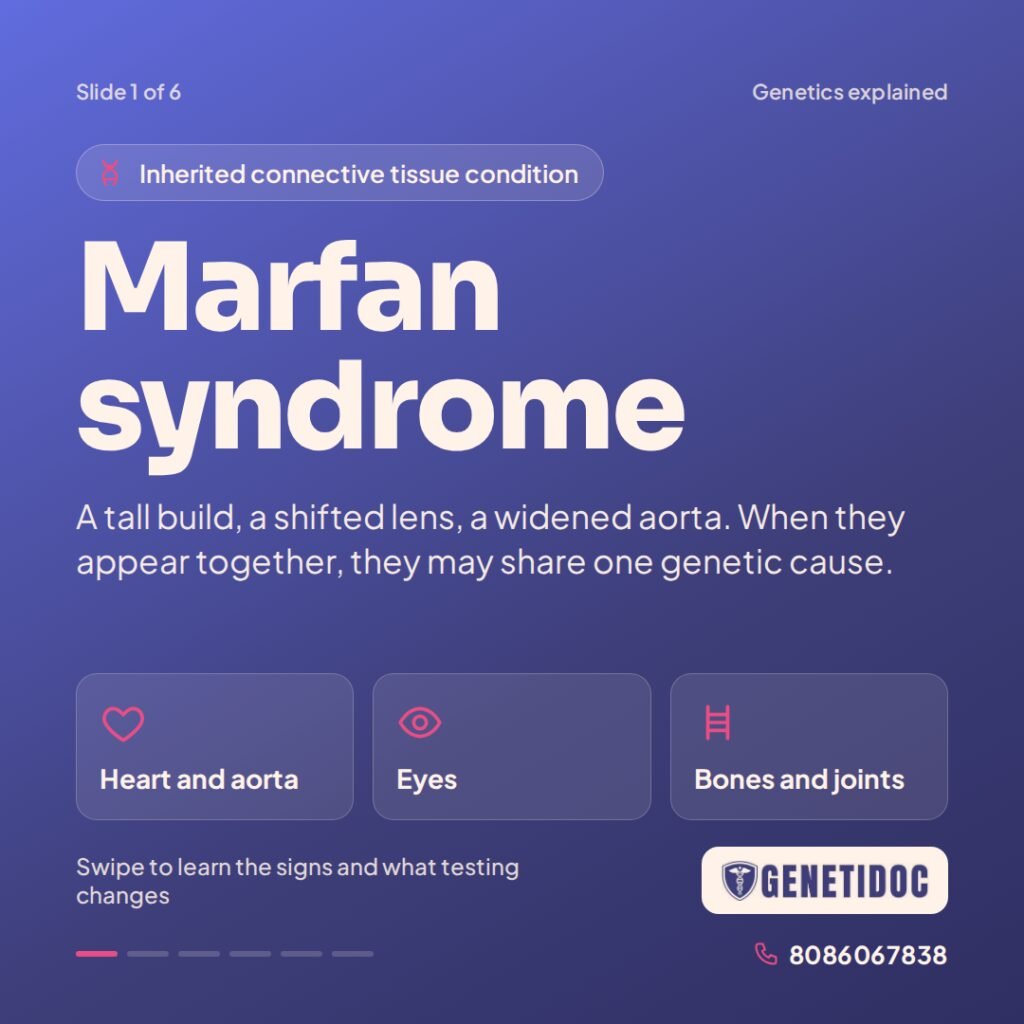
Some families first hear the words “Marfan syndrome” from an eye doctor, after a child’s lens is found to be out of place. Others hear it from a cardiologist, after a routine heart scan shows a widened aorta. And some hear it only after a sudden loss in the family.
Marfan syndrome is an inherited condition that affects the body’s connective tissue, the “glue” that holds organs, blood vessels, bones and joints together. Its most serious effect is on the aorta, the main blood vessel leaving the heart. The good news is that with timely diagnosis, regular monitoring and the right treatment, most people with Marfan syndrome can live long, full lives.
This guide explains what Marfan syndrome is, the signs to look for, how doctors confirm it, where genetic testing fits in, and what a diagnosis means for you and your family.
| Quick answer: What is Marfan syndrome?
Marfan syndrome is an inherited connective tissue condition caused by a change in the FBN1 gene. It mainly affects the heart and aorta, the eyes and the skeleton. The most important risk is gradual widening of the aorta, which can lead to a tear (aortic dissection) if it is not monitored and treated. Each child of an affected parent has a 50% chance of inheriting it. |
What Is Marfan Syndrome?
Our tissues are held together by a network of tiny fibres. One of the key building blocks of these fibres is a protein called fibrillin-1. It gives tissues both strength and the ability to stretch and spring back.
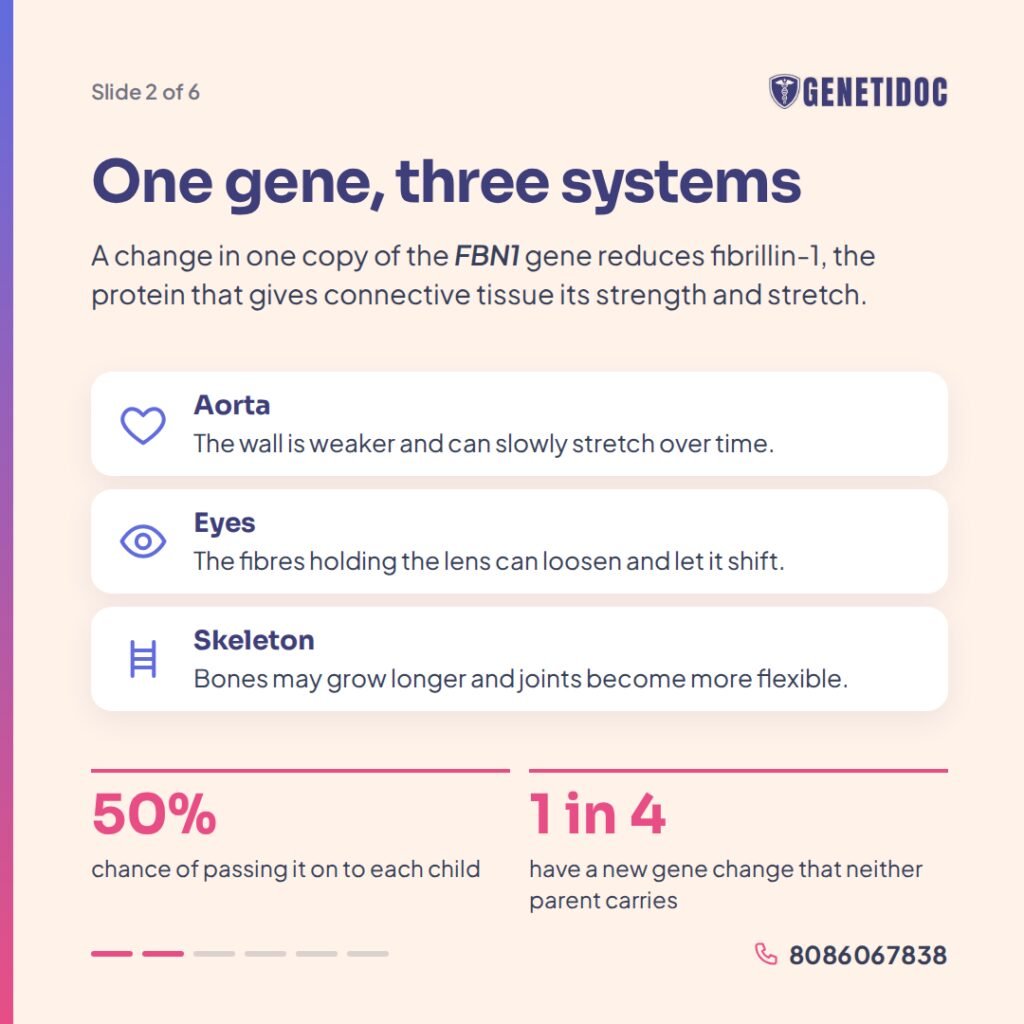
The instructions for making fibrillin-1 are carried in a gene called FBN1. In Marfan syndrome, a change in one copy of this gene means the body makes too little fibrillin-1, or makes a faulty version. As a result:
- The wall of the aorta is weaker and can slowly stretch over time.
- The fibres that hold the lens of the eye in place can loosen.
- Bones can grow longer than usual, and joints can be more flexible.
Marfan syndrome is estimated to affect roughly 1 in 5,000 to 1 in 10,000 people worldwide. It affects men and women, and people of every ethnic background, equally.
How is Marfan syndrome inherited?
Marfan syndrome follows an autosomal dominant pattern. In simple terms, one changed copy of the FBN1 gene is enough to cause the condition.
- About 3 in 4 people with Marfan syndrome inherit the gene change from a parent.
- About 1 in 4 people have a new gene change that started with them, called a de novo Neither parent carries it.
- A person with Marfan syndrome has a 50% chance of passing it on to each child.
This is why a child can have Marfan syndrome even when “no one else in the family has it”.
Signs and Symptoms of Marfan Syndrome
Marfan syndrome looks different from person to person, even within the same family. One relative may have obvious features, while another has very few. The signs fall into three main groups.
1. Heart and blood vessels
- Aortic root dilation – widening of the aorta where it leaves the heart. This is the most important feature, and it usually causes no symptoms at all.
- Aortic dissection – a tear in the inner layer of the aortic wall. It is a medical emergency and usually causes sudden, severe chest or back pain.
- Mitral valve prolapse – a floppy heart valve that may cause a murmur or, less often, leak.
2. Eyes
- Ectopia lentis – a lens that has shifted out of its normal position. This is one of the most characteristic signs of Marfan syndrome.
- Severe short-sightedness (myopia), often from childhood.
- A higher risk of retinal detachment, glaucoma and early cataract.
3. Bones, joints and other features
- Tall, slender build, with long arms, legs and fingers (arachnodactyly).
- A chest that sinks in (pectus excavatum) or sticks out (pectus carinatum).
- Curvature of the spine (scoliosis).
- Flat feet and very flexible joints.
- Stretch marks without weight change, and a collapsed lung (pneumothorax) in some people.
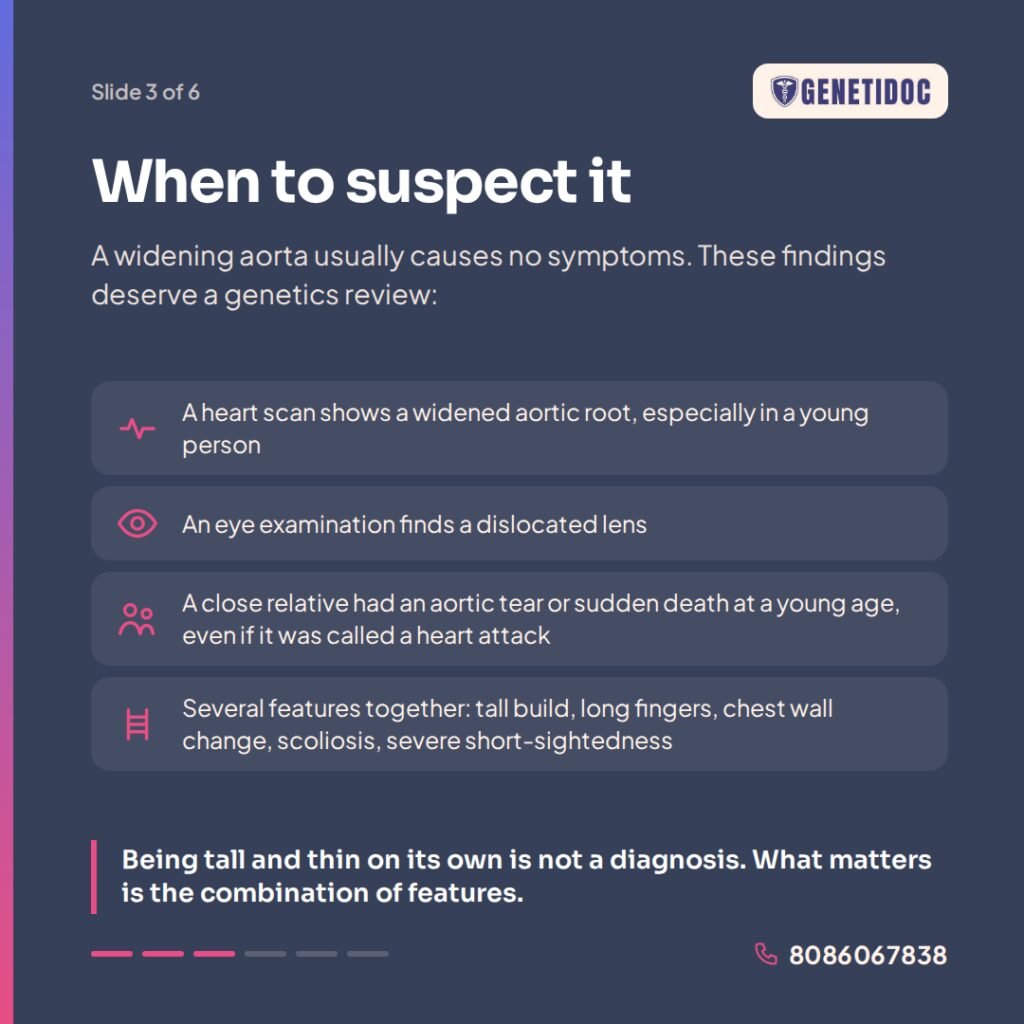
Being tall and thin on its own is not a diagnosis. Many tall, slender people are perfectly healthy. What matters is the combination of features, especially the aorta and the eyes, together with the family history.
At what age is Marfan syndrome found?
There is no single age. Some children are identified early because of their eyes, skeleton or heart. Others are diagnosed as adults because their features are subtle.
| “Marfan syndrome can be recognised at different ages. Some children are identified because of skeletal, eye or heart findings, while others are diagnosed later, particularly when the features are subtle. Importantly, we should not wait for an acute aortic event before considering the diagnosis.”
— Team Genetidoc |
Warning Signs: When Should You Suspect Marfan Syndrome?
Families are usually referred by the specialist who first noticed a feature: a cardiologist, an eye specialist, an orthopaedic surgeon or a paediatrician. Consider an evaluation for Marfan syndrome if:
- A heart scan shows a widened aortic root, especially in a young person.
- An eye examination shows a dislocated lens.
- A close relative had an aortic dissection or aneurysm, or died suddenly at a young age.
- A relative has already been diagnosed with Marfan syndrome or a related condition.
- A child or young adult has several features together: tall build, long fingers, chest wall deformity, scoliosis and severe short-sightedness.
- A young person has had a collapsed lung without an obvious cause, along with other features above.
Two illustrative situations
The following examples are illustrative scenarios, not real patients.
The teenager at the eye clinic. Consider a 13-year-old with thick glasses whose eye specialist notices that both lenses are slightly displaced. She is the tallest in her class, with long fingers and a mild curve in her spine. A heart scan shows early widening of the aortic root. This combination points strongly towards Marfan syndrome, and genetic testing helps confirm it and check her family.
The family after a sudden loss. Now consider a family in which a 38-year-old man died suddenly. The death was described as a “heart attack”, but the post-mortem report mentions a tear in the aorta. His younger brother, who feels completely well, is found to have a widened aorta on screening. For this family, identifying the cause allows the brother to be monitored and treated, and his children to be checked early.
How Is Marfan Syndrome Diagnosed?
| “Marfan syndrome is fundamentally a clinical diagnosis. Genetic testing complements the clinical assessment rather than replacing it.”
— Team Genetidoc |
Doctors use an internationally accepted checklist called the revised Ghent criteria. It gives the most weight to four things:
- Aortic root dilation – widening of the aorta, measured on an echocardiogram (an ultrasound scan of the heart).
- Ectopia lentis – a dislocated lens, found on an eye examination.
- A systemic score – points given for other body features.
- Family history – whether a close relative has been diagnosed.
Why the aorta is measured as a “Z-score”
A normal aorta is bigger in a tall adult than in a small child. So a raw measurement in millimetres can be misleading. Doctors convert it into a Z-score, which compares the measurement with what is expected for a person of the same age and body size. A Z-score of 2 or more is generally considered widened.
Diagnosis when there is no family history
In a person with no known family history of Marfan syndrome, the diagnosis can be made with any one of these combinations:
- Aortic root dilation plus ectopia lentis
- Aortic root dilation plus a disease-causing FBN1 variant
- Aortic root dilation plus a systemic score of 7 or more
- Ectopia lentis plus a disease-causing FBN1 variant already known to be linked with aortic disease
For combinations 1 and 3, look-alike conditions must first be ruled out.
Diagnosis when there is a family history
When a parent, brother, sister or child already has a confirmed diagnosis, Marfan syndrome can be diagnosed in a relative who has any one of the following:
- Ectopia lentis
- A systemic score of 7 or more
- Aortic root dilation (a Z-score of 2 or more in adults aged 20 and over, or 3 or more in those under 20)
What is the systemic score?
The systemic score adds up points for features outside the aorta and eyes, to a maximum of 20. Examples include:
- The “wrist sign” and “thumb sign” – simple bedside tests of finger length
- Chest wall deformity
- Flat feet or an inward-turning heel
- A past collapsed lung
- Widening of the sac around the lower spinal cord (dural ectasia), seen on a scan
- Long arms compared with height
- Scoliosis
- Typical facial features, stretch marks, high short-sightedness and mitral valve prolapseThis score is a tool for your doctor, not a self-test. Several features need a trained examination or scans to assess properly.
Conditions That Can Look Like Marfan Syndrome
Several other conditions share features with Marfan syndrome but are managed differently. Telling them apart is one of the most important parts of the evaluation.
| Condition | Main genes | Features that help tell it apart |
| Marfan syndrome | FBN1 | Aortic root widening, lens dislocation (usually upward), tall build |
| Loeys-Dietz syndrome | TGFBR1, TGFBR2, SMAD3, TGFB2, TGFB3 | Twisting arteries, aneurysms in many blood vessels, widely spaced eyes, split uvula; aortic tears can happen at smaller sizes |
| Vascular Ehlers-Danlos syndrome | COL3A1 | Thin, see-through skin, easy bruising, risk of artery, bowel or uterine rupture |
| Homocystinuria (cystathionine beta-synthase deficiency) | CBS | Lens dislocation (usually downward), developmental delay, blood clots; inherited from both parents |
| Other heritable thoracic aortic disease | Several genes | Aortic widening or dissection running in a family, often without the outward features of Marfan syndrome |
Why homocystinuria deserves special attention in India
Homocystinuria, most often caused by cystathionine beta-synthase deficiency, is a metabolic condition that can closely resemble Marfan syndrome. Unlike Marfan syndrome, it is inherited in a recessive pattern: a child is affected only when both parents pass on a changed copy of the gene. This is more likely when parents are related by blood, as in consanguineous marriages, which are common in several Indian communities.
| “Homocystinuria, particularly cystathionine beta-synthase deficiency, is an important differential diagnosis in a patient with ectopia lentis and a marfanoid build. It becomes especially important when there are additional features such as developmental delay, intellectual disability, blood clots and other features suggestive of a metabolic disorder. Homocystinuria can cause ectopia lentis, severe myopia, a tall slender build, long fingers, chest deformity and scoliosis.”
— Team Genetidoc |
Getting this distinction right matters because the treatment is completely different. Homocystinuria is checked with a blood test that measures total homocysteine. It is managed with vitamin B6 (pyridoxine) in people who respond to it, a special diet low in the amino acid methionine, and a supplement called betaine. Because it raises the risk of blood clots, it also changes how surgery and anaesthesia are planned.
Genetic Testing for Marfan Syndrome
Genetic testing looks for a disease-causing change in FBN1 and, where needed, in the genes behind look-alike conditions. It is usually done on a blood sample, which can be collected at home.
Which test is chosen?
| “The choice depends on the clinical picture. If the patient has classic Marfan features, FBN1 testing is a reasonable first approach. If the features are atypical, if there is significant aortic disease without classic Marfan features, or if Loeys-Dietz syndrome, vascular Ehlers-Danlos syndrome or another heritable thoracic aortic disease is possible, a multi-gene panel may be more appropriate.”
— Team Genetidoc |
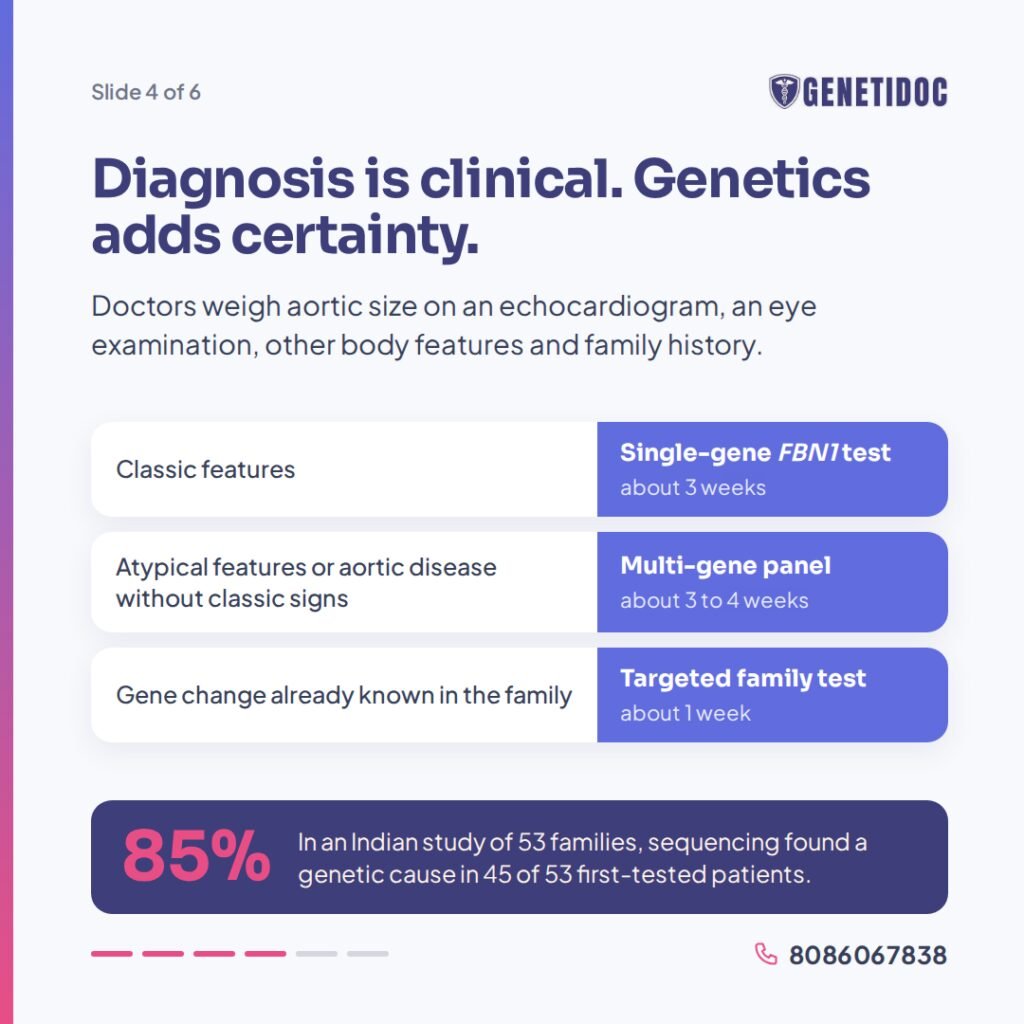
- Single-gene FBN1 test – for people with a classic Marfan picture. Results usually take about 3 weeks.
- Multi-gene panel – for atypical features or aortic disease without classic signs. It covers FBN1 along with the genes for Loeys-Dietz syndrome, vascular Ehlers-Danlos syndrome and other inherited aortic conditions. Results usually take about 3 to 4 weeks.
- Targeted family-variant test – when the gene change in the family is already known, relatives are tested only for that change. Results usually take about 1 week.
Indian data supports this approach. In a study of 83 Indian patients from 53 families with Marfan syndrome and related conditions, next-generation sequencing found a genetic cause in 45 of the 53 index patients (85%). Most had FBN1 changes, but a meaningful number had changes in TGFBR1 or TGFBR2 (Loeys-Dietz syndrome) or SKI (Shprintzen-Goldberg syndrome). About half of the gene changes found had never been reported before, which shows why careful interpretation matters.
What if the result is a “variant of uncertain significance”?
Sometimes the test finds a gene change, but there is not yet enough evidence to say whether it causes disease. This is called a variant of uncertain significance. It is neither a positive nor a negative result.
- Care is guided by the heart scans and the clinical examination, not by the uncertain variant itself.
- If other relatives are affected, testing them for the same variant can show whether it travels with the condition in the family. This can help reclassify it.
- The variant should not be used to test healthy relatives or to make pregnancy decisions until it is clarified.
- The result should be reviewed again over time, as scientific knowledge grows.
What does a negative result mean?
A negative result means no reportable change was found in the genes tested. It does not cancel a clinical diagnosis. If your aorta is widened, it still needs regular monitoring and treatment, whatever the genetic result.
What Does a Confirmed Diagnosis Change?
| “A confirmed diagnosis helps us provide more appropriate and regular monitoring. We can monitor the aorta more closely, start appropriate treatment when it is needed, and identify whether the patient needs earlier intervention. Importantly, it allows us to screen family members and identify others who may be at risk.”
— Team Genetidoc |
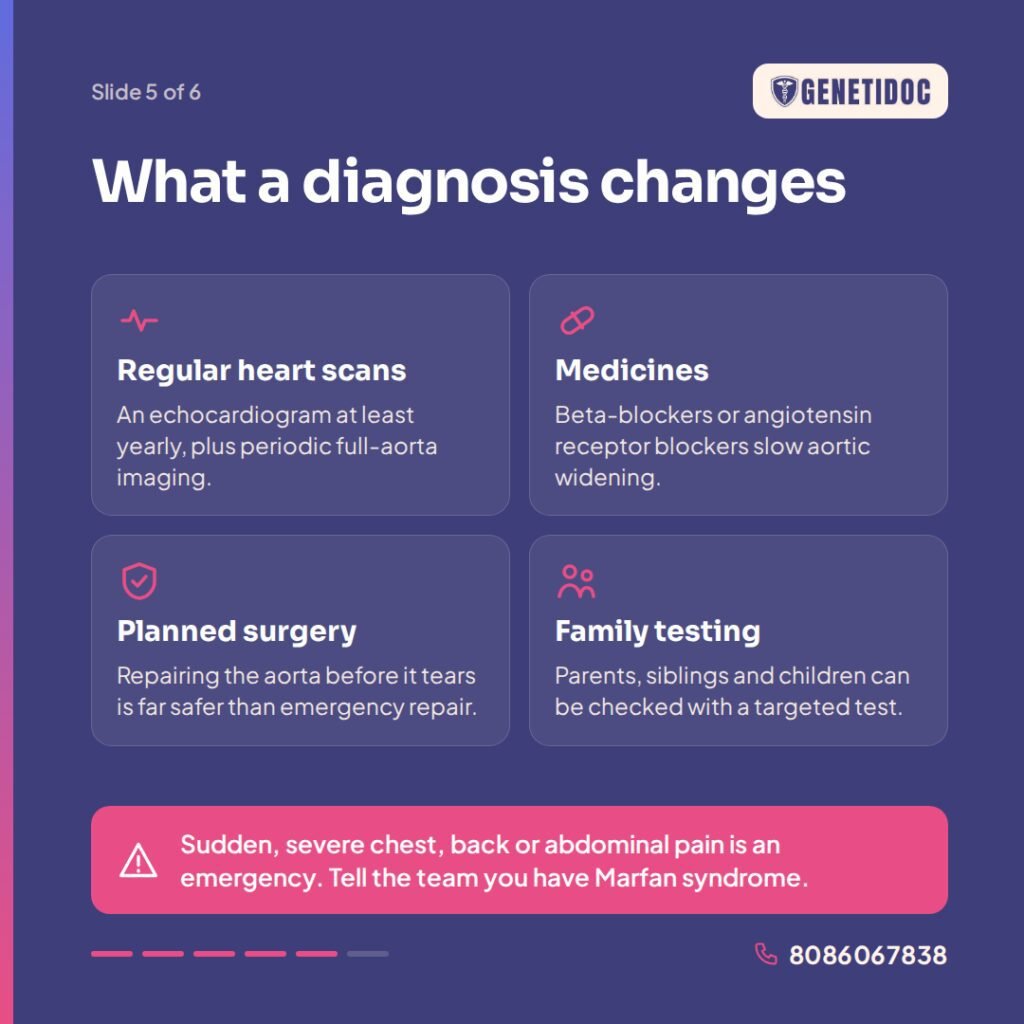
1. Regular, team-based follow-up
Marfan syndrome affects several parts of the body, so it is best cared for by a team.
| “Marfan syndrome needs multidisciplinary follow-up. The patient is usually followed by a cardiologist, ophthalmologist and orthopaedic team, along with genetics. Cardiovascular monitoring is especially important because of the risk of aortic enlargement. Echocardiography is done regularly, usually at least once a year, depending on the aortic findings and the patient’s risk. Eye and skeletal problems are also monitored regularly.”
— Team Genetidoc |
International guidelines generally recommend a repeat echocardiogram about 6 months after diagnosis to see how fast the aorta is changing, then at least yearly if it is stable. Because an echocardiogram cannot see the whole aorta, a CT or MRI scan of the full aorta is also done from time to time.
2. Medicines to protect the aorta
Two groups of medicines are commonly used to slow the widening of the aorta:
- Beta-blockers, which lower heart rate and reduce the force on the aortic wall.
- Angiotensin receptor blockers, such as losartan, which act on pathways involved in the weakening of the aortic wall.
A large analysis of randomised trials found that angiotensin receptor blockers slow aortic root growth in Marfan syndrome, including when added to a beta-blocker. Your cardiologist will decide which medicine suits you. These medicines work only if they are taken consistently, even when you feel well.
3. Surgery at the right time
The aim of monitoring is to repair the aorta before it tears. Planned aortic surgery is far safer than emergency surgery after a dissection. For adults with Marfan syndrome, the 2022 American College of Cardiology and American Heart Association aortic disease guideline generally recommends planned aortic root surgery when the diameter reaches about 5.0 cm. Surgery may be considered earlier, around 4.5 cm, when there are added risks such as rapid growth or a family history of aortic dissection.
This is where the exact genetic diagnosis makes a real difference. People with Loeys-Dietz syndrome, for example, can have aortic tears at smaller sizes and may need surgery earlier. Knowing which condition is present helps the cardiac team choose the right timing.
4. Protecting the eyes and skeleton
Regular eye checks help catch lens problems, retinal detachment, glaucoma and cataract early. Children need close follow-up of their glasses prescription, because good vision during childhood is important for normal visual development. Scoliosis and chest wall problems are monitored by the orthopaedic team.
Living With Marfan Syndrome: Exercise and Daily Life
Staying active is good for people with Marfan syndrome. The key is choosing the right kind of activity.
| “We advise patients to avoid activities that put excessive stress on the aorta, such as heavy weightlifting and very intense competitive sports. Moderate, low-impact activities are generally preferred, depending on their cardiovascular condition. We also advise regular follow-up and encourage patients to discuss any planned intense physical activities with their cardiologist.”
— Team Genetidoc |
Practical guidance
- Usually suitable: brisk walking, easy cycling and recreational swimming, depending on your cardiologist’s advice.
- Usually avoided: heavy weightlifting and exercises that involve straining or holding your breath, which sharply raise pressure inside the aorta.
- Contact sports are generally avoided, because a blow to the chest or head can harm the aorta or the lens of the eye.
- Know the emergency signs. Sudden, severe chest, back or abdominal pain needs emergency care immediately. Tell the emergency team that you have Marfan syndrome.
Marfan Syndrome and Pregnancy
Many women with Marfan syndrome have healthy pregnancies. But pregnancy places extra strain on the aorta, especially in the last three months and in the weeks after delivery. Careful planning makes a big difference.
- Plan before you conceive. Have an aortic scan and meet your cardiologist and genetics team before trying for a pregnancy.
- Know your aortic size. European Society of Cardiology guidance advises against pregnancy when the aortic root is above about 45 mm, until it has been surgically repaired. Between about 40 and 45 mm, the decision is made individually.
- Review your medicines. Beta-blockers are usually continued during pregnancy. Losartan and other angiotensin receptor blockers must be stopped, because they can harm the developing baby.
- Expect closer monitoring. Regular echocardiograms are needed during pregnancy and for several months after delivery.
- Plan the delivery together. The cardiologist and obstetrician decide on the safest mode of delivery, depending on the size of the aorta.
Testing options for the baby
Once the gene change in the family is known, couples can choose to have it tested in a pregnancy, through chorionic villus sampling or amniocentesis. Some couples use preimplantation genetic testing during IVF to select embryos without the family’s gene change. These are personal choices. Genetic counseling helps couples understand each option, and the final decision always rests with them.
Testing the Family: Cascade Testing
Because Marfan syndrome can be present with very few outward signs, a diagnosis in one person is an opportunity to protect others.
| “Once a disease-causing or likely disease-causing FBN1 variant is identified in a family, we recommend cascade testing for first-degree relatives such as parents, siblings and children. We first identify who may be at risk and then offer targeted testing for the family variant. Those who test positive can have appropriate cardiac, eye and other clinical surveillance.”
— Team Genetidoc |
How it works
- The first person is diagnosed, and their FBN1 change is identified.
- At-risk relatives are identified: parents, brothers, sisters and children first.
- Targeted testing is offered for that one family gene change.
- Relatives who test positive begin regular heart, eye and other check-ups.
- Relatives who test negative for the family’s gene change have a very low chance of having Marfan syndrome and can follow the same health care as the general population. Relatives who prefer not to have genetic testing should still have an echocardiogram and an eye examination, so that any problem is not missed.
What about children?
Unlike many adult-onset conditions, where testing is usually offered only after 18, Marfan syndrome can show changes in childhood. For this reason, children in a family with a known FBN1 change can be offered targeted testing early in childhood. A child who tests positive can start heart scans and eye checks early. A child who tests negative can be spared years of unnecessary hospital visits.
When neither parent carries the change
If a child has a de novo change, the chance of it happening again in the same parents’ next child is low, but not zero. Rarely, a parent carries the change in some of their egg or sperm cells without it showing in their blood. This is called germline mosaicism. For this reason, parents are tested, and testing can be offered in a later pregnancy if the couple wishes.
Common Misconceptions About Marfan Syndrome
“My child is just tall.”
Most tall children do not have Marfan syndrome. But when height comes with other features, such as a dislocated lens, severe short-sightedness, chest deformity or a widened aorta, it deserves a proper evaluation.
“No one else in the family has it, so it can’t be genetic.”
About 1 in 4 people with Marfan syndrome have a new gene change that neither parent carries. A clear family history is not needed for the diagnosis.
“I feel fine, so my heart must be fine.”
Aortic widening usually causes no symptoms until it becomes dangerous. Regular scans are the only way to know what is happening.
“My last scan was normal, so I don’t need more.”
The aorta can change over time. Follow-up scans remain important even after a normal result.
“It was just a heart attack.”
In some Indian families, a young relative’s sudden death is labelled a “heart attack” without further investigation. Some of these deaths are actually caused by an aortic dissection or another inherited heart condition. A sudden death at a young age should always prompt the family to ask whether there is an inherited cause.
The Emotional Side of a Diagnosis
A diagnosis of Marfan syndrome can bring fear, especially about sudden aortic problems. Parents often feel guilty about passing it on. Young people may worry about their appearance, about being told to avoid certain sports, or about marriage and starting a family.
These feelings are natural. It helps to remember:
- No one causes a gene change. It is not the result of anything a parent did or did not do.
- With monitoring and timely treatment, the outlook for people with Marfan syndrome has improved dramatically. Many now have a life expectancy close to that of the general population.
- Genetic counseling gives families time and space to ask questions, understand risks clearly and plan ahead.
When Genetic Testing May Not Be Needed
- A tall, healthy person with a normal heart scan, normal eye examination and no family history usually does not need genetic testing.
- When a relative’s gene change is already known, a large panel is not needed. A targeted test for that one change is enough.
- Genetic testing does not replace heart scans. A person with a widened aorta needs monitoring whatever the genetic result.
A clinical geneticist can help you decide whether testing will add useful information in your situation.
Why Expert Interpretation Matters
- Choosing the right test. Classic features may need only FBN1 testing, while an atypical picture needs a broader panel. The wrong choice can miss Loeys-Dietz syndrome or vascular Ehlers-Danlos syndrome.
- Not missing metabolic look-alikes. Homocystinuria needs a blood test and has very different treatment.
- Reading the result correctly. New and uncertain gene changes are common, especially in populations that are under-represented in genetic databases, including Indian populations.
- Linking genetics with clinical care. The genetic result feeds directly into surgical timing, pregnancy planning and family testing.
At Genetidoc, testing is carried out through accredited partner laboratories. Every result is reviewed by a clinical geneticist and explained through genetic counseling. After diagnosis, patients are guided back to their cardiologist, eye specialist and orthopaedic team with a clear plan for ongoing care.
What To Do If You Suspect Marfan Syndrome
- Get an echocardiogram if you or your child has suggestive features or a family history.
- Have an eye examination with a slit lamp, which can detect a dislocated lens.
- Gather your family history, including any aortic problems, heart surgery or sudden deaths, and the ages at which they happened.
- Consult a clinical geneticist to review the findings, rule out look-alike conditions and choose the right genetic test.
- Stay on follow-up and treatment, even when you feel well.
- Help your relatives get checked, especially parents, brothers, sisters and children.
Frequently Asked Questions
1. What causes Marfan syndrome?
Marfan syndrome is caused by a change in the FBN1 gene, which makes fibrillin-1, a protein that gives strength and stretch to connective tissue.
2. Is Marfan syndrome hereditary?
Yes. About 3 in 4 people inherit it from a parent. About 1 in 4 have a new gene change. Each child of an affected person has a 50% chance of inheriting it.
3. What are the first signs of Marfan syndrome?
Common early signs include a tall, slender build, long fingers, severe short-sightedness, a dislocated lens, chest wall deformity, scoliosis and a widened aorta on a heart scan.
4. Can you have Marfan syndrome without being tall?
Yes. Features vary widely, and some people with Marfan syndrome are of average height. The aorta, eyes and family history matter more than height.
5. How is Marfan syndrome diagnosed?
It is diagnosed using the revised Ghent criteria, which combine an echocardiogram, an eye examination, a systemic score and the family history. Genetic testing for FBN1 supports the diagnosis.
6. Is there a blood test for Marfan syndrome?
Yes. A genetic test on a blood sample can look for changes in FBN1 and related genes. It is used together with the clinical assessment, not instead of it.
7. What is the life expectancy with Marfan syndrome?
With regular monitoring, medicines and timely aortic surgery, many people with Marfan syndrome now have a life expectancy close to that of the general population.
8. Can Marfan syndrome be cured?
It cannot be cured, because the gene change is lifelong. But its complications can be prevented or treated very effectively with monitoring, medicines and planned surgery.
9. Can a woman with Marfan syndrome have a safe pregnancy?
Many can, with careful planning. An aortic scan before pregnancy, medicine review and close monitoring during and after pregnancy are essential.
10. Can people with Marfan syndrome exercise or go to the gym?
Moderate, low-impact exercise is generally encouraged. Heavy weightlifting, straining exercises, intense competitive sports and contact sports are usually avoided.
11. Should my children be tested for Marfan syndrome?
If the family’s FBN1 change is known, children can be offered targeted testing early in childhood, because Marfan syndrome can show changes during childhood.
12. What conditions can be mistaken for Marfan syndrome?
Loeys-Dietz syndrome, vascular Ehlers-Danlos syndrome, homocystinuria and other inherited aortic conditions can look similar. They are managed differently, so correct diagnosis is important.
Key Takeaways
- Marfan syndrome is an inherited connective tissue condition caused by changes in the FBN1
- Its most serious risk is gradual widening of the aorta, which usually causes no symptoms.
- Diagnosis is clinical, using the revised Ghent criteria, with genetic testing adding certainty.
- Look-alike conditions, including Loeys-Dietz syndrome, vascular Ehlers-Danlos syndrome and homocystinuria, must be ruled out.
- Regular heart scans, medicines and well-timed surgery protect against aortic dissection.
- Pregnancy needs careful planning with the cardiology and genetics teams.
- Cascade testing helps identify at-risk relatives, including children, early.
| Has a Heart Scan or Eye Examination Raised the Question of Marfan Syndrome?
If you or your child has a widened aorta, a dislocated lens, or a family history of aortic problems or sudden death at a young age, a consultation with a clinical geneticist can help clarify whether Marfan syndrome or a related condition is the cause. It can also help you choose the right genetic test and plan check-ups for your relatives. Genetidoc offers genetic counseling in person in Thiruvananthapuram and online across India, with home sample collection and counseling in multiple Indian languages. |
| Join the conversation: Have questions about Marfan syndrome, or want to connect with other families? Visit the rare disease forum. |
Related Reading
- Understanding Familial Hypercholesterolemia (Familial Hypercholesterolaemia): When High Cholesterol Runs in the Family
- Li-Fraumeni Syndrome: When Many Different Cancers Run in One Family
- Genetic Data Reanalysis: Why Your Genetic Testing Result Can Change Over Time
- Genetic Testing for Infertility in India: A Complete Guide for Couples
- Genetic Testing for Recurrent Abortions in India: A Complete Guide for Couples
References
- Loeys BL, Dietz HC, Braverman AC, et al. The revised Ghent nosology for the Marfan syndrome. J Med Genet. 2010;47(7):476–485.
- Dietz H. FBN1-Related Marfan Syndrome. In: Adam MP, et al., eds. GeneReviews. Seattle (WA): University of Washington, Seattle. Available at: https://www.ncbi.nlm.nih.gov/books/NBK1335/
- Isselbacher EM, Preventza O, Hamilton Black J 3rd, et al. 2022 ACC/AHA Guideline for the Diagnosis and Management of Aortic Disease. Circulation. 2022;146(24):e334–e482.
- European Society of Cardiology. 2025 ESC Guidelines for the management of cardiovascular disease and pregnancy. Eur Heart J. 2025. doi:10.1093/eurheartj/ehaf193
- Nayak SS, et al. Clinically relevant variants in a large cohort of Indian patients with Marfan syndrome and related disorders identified by next-generation sequencing. Sci Rep. 2021;11:764.
- Pitcher A, et al. Angiotensin receptor blockers and β blockers in Marfan syndrome: an individual patient data meta-analysis of randomised trials. Lancet. 2022;400(10355):822–831.
- Morris AAM, et al. Guidelines for the diagnosis and management of cystathionine beta-synthase deficiency. J Inherit Metab Dis. 2017;40(1):49–74.
- Parental mosaicism in Marfan and Ehlers–Danlos syndromes and related disorders. Eur J Hum Genet. 2021. Available at: https://www.nature.com/articles/s41431-020-00797-3
- Pelliccia A, et al. 2020 ESC Guidelines on sports cardiology and exercise in patients with cardiovascular disease. Eur Heart J. 2021;42(1):17–96.
This article is for educational purposes and does not replace personal medical advice. Please consult a qualified doctor or clinical geneticist about your individual situation.