
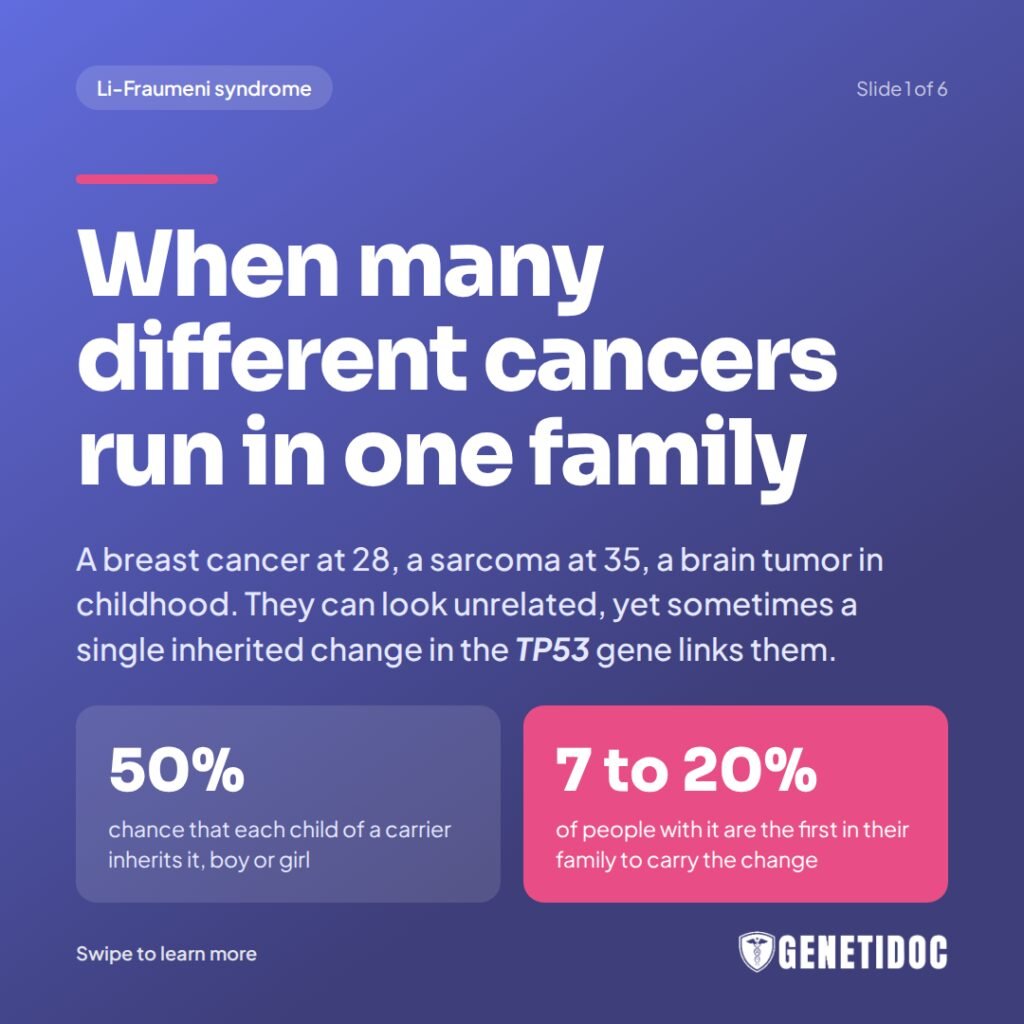
Most families that have been touched by cancer have seen one type of cancer, usually in older relatives. Some families look very different. A young woman develops breast cancer in her twenties. An uncle had a sarcoma in his thirties. A cousin was treated for a brain tumor as a child. Each cancer was treated by a different doctor, in a different hospital, and nobody connected them.
Sometimes these cancers are linked by a single inherited change in a gene called TP53. The condition it causes is called Li-Fraumeni syndrome. It is rare, but it matters enormously for the families who have it, because once it is recognized, cancers can be looked for early, treatment can be planned more safely, and relatives can find out whether they are at risk.
This guide explains Li-Fraumeni syndrome in plain language, drawing on the latest international guidelines and on the everyday clinical experience of Team Genetidoc.
Quick answer: Li-Fraumeni syndrome is an inherited condition caused by a disease-causing change (variant) in the TP53 gene. It raises the risk of several different cancers, often at young ages, including breast cancer, sarcomas, brain tumors, and adrenocortical carcinoma. Each child of a carrier has a 50 percent chance of inheriting it. It is confirmed with a genetic test, and once it is known, a structured screening program can find cancers early, when they are more treatable.
What Is Li-Fraumeni Syndrome?
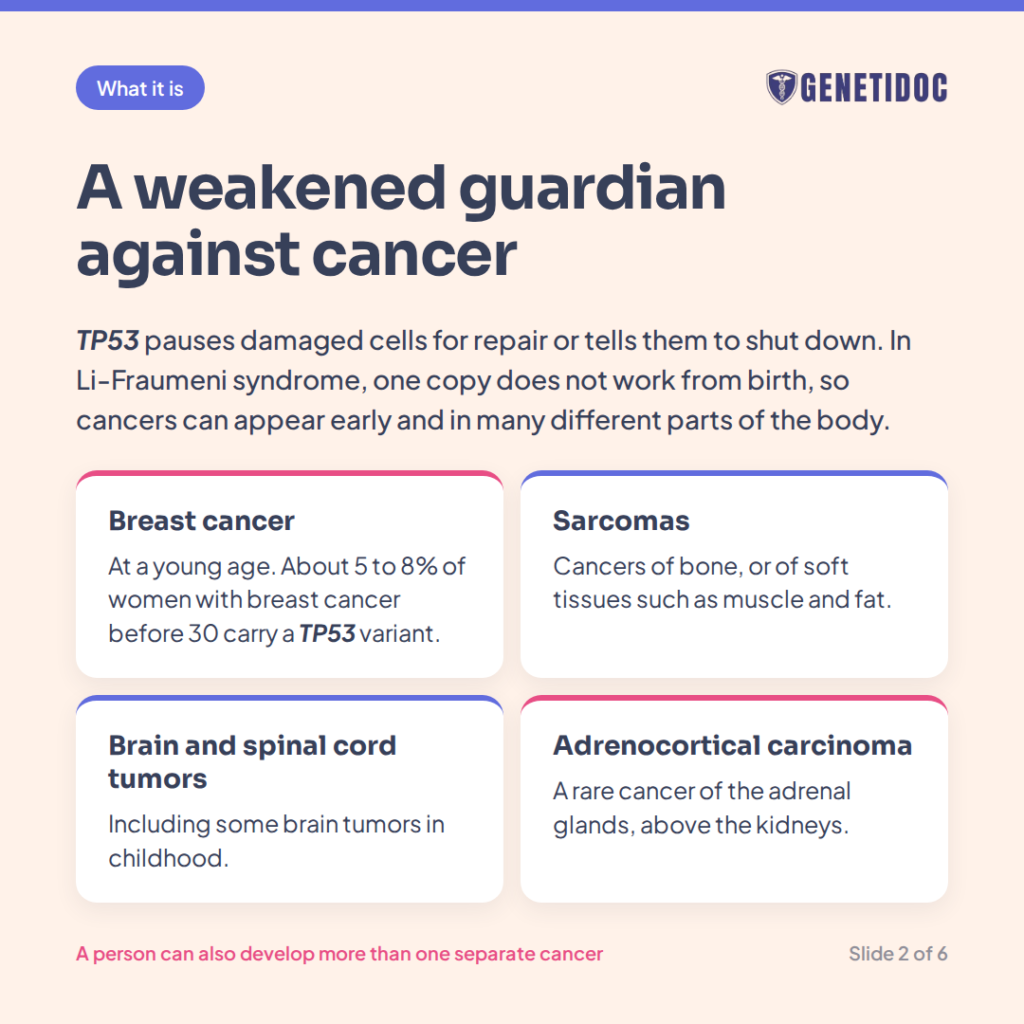
Every cell in your body carries a set of protective genes whose job is to stop damaged cells from turning into cancer. One of the most important is TP53. It is often called the “guardian of the genome.” When a cell’s DNA is damaged, the protein made by TP53 either pauses the cell until the damage is repaired or tells the cell to shut itself down.
Everyone inherits two copies of TP53, one from each parent. In Li-Fraumeni syndrome, one copy does not work properly from birth. The second copy still protects the body, but if that copy is also damaged in a particular cell, the cell loses its guardian. Cancer can then develop, often much earlier in life than usual, and in many different parts of the body.
A few key facts:
- The gene involved: TP53. A person who carries a pathogenic (disease-causing) or likely pathogenic variant in this gene is said to have Li-Fraumeni syndrome. European guidelines also use the broader term “heritable TP53-related cancer syndrome.”
- How common it is: Estimates range from roughly 1 in 3,500 to 1 in 20,000 people. The true number is uncertain, and it is almost certainly underdiagnosed in India.
- How it is inherited: Autosomal dominant. A single changed copy from either parent is enough. Each child of a carrier has a 50 percent chance of inheriting it, whether the child is a boy or a girl.
- It can start with you: In an estimated 7 to 20 percent of people with Li-Fraumeni syndrome, the variant is de novo, which means it arose for the first time in that person and was not inherited from either parent.
- It does not cause symptoms by itself: There is no rash, birthmark, or physical sign. The clues are in the personal and family history of cancer.
Which Cancers Are Linked to Li-Fraumeni Syndrome?
Doctors describe four “core” cancers of Li-Fraumeni syndrome:
- Breast cancer at a young age: the most common cancer in women with Li-Fraumeni syndrome. About 5 to 8 percent of women diagnosed with breast cancer before age 30 carry a TP53 These cancers are often HER2-positive, a type of breast cancer driven by a growth-signal protein called HER2.
- Sarcomas: cancers of bone (such as osteosarcoma) or of soft tissues such as muscle and fat.
- Brain and spinal cord tumors: including some childhood brain tumors.
- Adrenocortical carcinoma: a rare cancer of the adrenal glands, the small glands above the kidneys. At any age, this cancer alone is a strong reason to consider TP53 testing, even with no family history.
People with Li-Fraumeni syndrome also have a higher risk of other cancers, including leukemia, colorectal and stomach cancers, lung cancer, melanoma (a skin cancer), and others. Another important feature is that a person can develop more than one separate cancer during their lifetime. These are called multiple primary cancers. They are new cancers, not a spread of the first one.
Why Li-Fraumeni Families Look Different From Other Cancer Families
In other well-known inherited cancer conditions, cancers tend to cluster in particular organs. BRCA1 and BRCA2 families mostly see breast, ovarian, prostate, and pancreatic cancers. Lynch syndrome families mostly see bowel and uterine cancers. Li-Fraumeni syndrome is different, because TP53 protects almost every tissue in the body.
“There is not always a single cancer that identifies Li-Fraumeni syndrome,” explains Team Genetidoc. “Rather, we look at the overall pattern: several early-onset cancers, especially sarcomas, young-onset breast cancers, brain and spinal cord tumors, and adrenocortical carcinoma. The cancers may be different from one another and may occur across several generations. That is what makes a Li-Fraumeni family look different from a typical BRCA1/BRCA2 or Lynch syndrome family.”
Here is the kind of family pattern that should prompt a closer look. A woman is diagnosed with breast cancer at 28. Her father’s brother had a soft-tissue sarcoma at 35. Her cousin was treated for a brain tumor at the age of 8. Seen one at a time, these look like three unrelated misfortunes. Seen together, on a family tree, they form a pattern a clinical geneticist would want to investigate.
Warning Signs: When Should Li-Fraumeni Syndrome Be Considered?
“Li-Fraumeni syndrome most commonly comes to our attention when a patient presents with a very early-onset cancer, particularly breast cancer, sarcoma, brain tumor, or adrenocortical carcinoma, or when several different types of cancer are seen in the same family,” says Team Genetidoc. “In many cases, testing starts as part of a hereditary cancer panel ordered for a young patient with breast cancer or another tumor that raises suspicion. Cancers at unusually young ages, or more than one primary cancer in the same person, are particularly important clues.”
Doctors use internationally recognized checklists to decide when to suspect Li-Fraumeni syndrome. The most widely used are the modified Chompret criteria, summarized in GeneReviews, a trusted reference for genetic conditions. In plain language, TP53 testing should be considered if any one of the following applies. “Li-Fraumeni cancers” here means the classic ones: breast cancer before menopause, soft-tissue sarcoma, osteosarcoma (bone cancer), brain or spinal cord tumors, and adrenocortical carcinoma.
The modified Chompret criteria
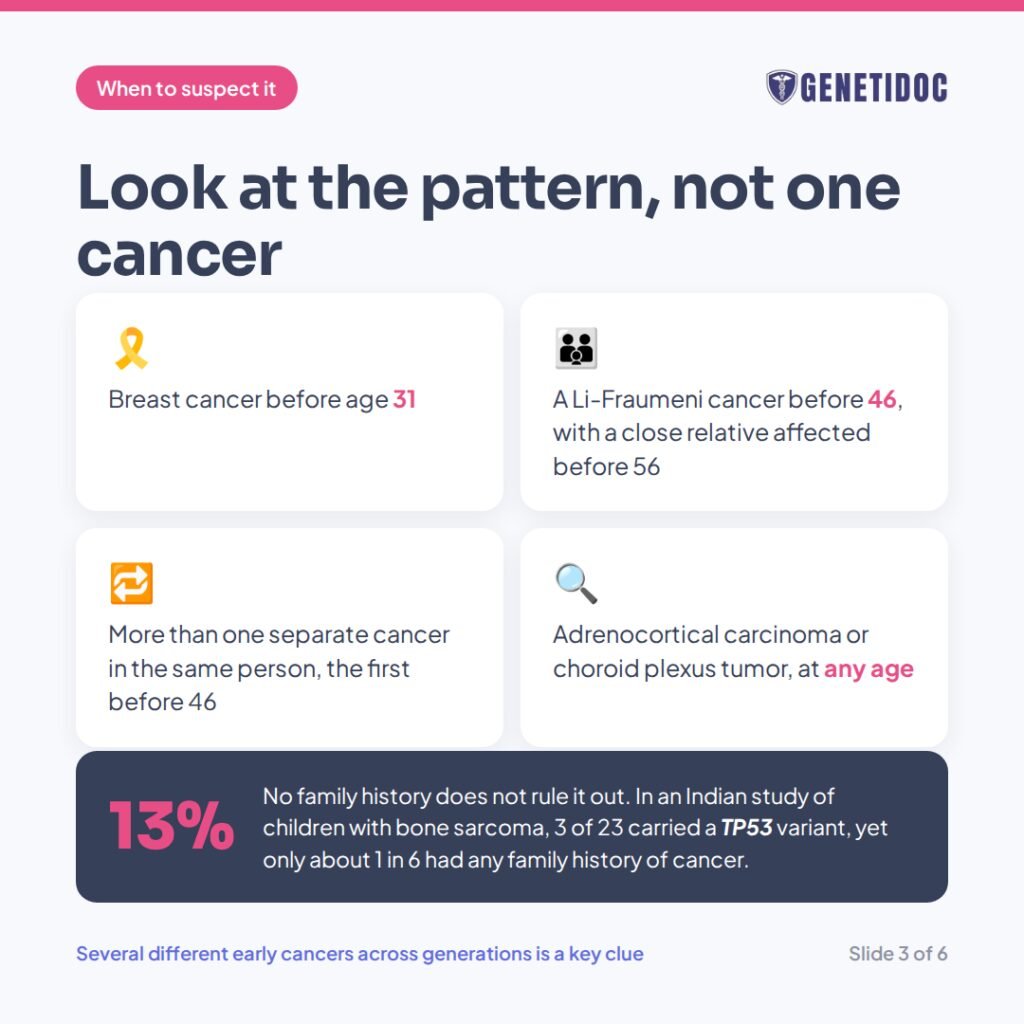
- A Li-Fraumeni cancer before age 46, plus a relative with one: The person has a Li-Fraumeni cancer diagnosed before age 46, and at least one first- or second-degree relative had a Li-Fraumeni cancer before age 56, or had more than one cancer. First-degree relatives are parents, siblings, and children. Second-degree relatives are grandparents, grandchildren, uncles, aunts, nephews, nieces, and half-siblings. If the person has breast cancer, a relative’s breast cancer does not count towards this criterion.
- Multiple cancers in one person: The person has had more than one separate cancer, at least two of which are Li-Fraumeni cancers, and the first appeared before age 46. More than one breast cancer does not count here on its own.
- Certain rare cancers, at any age, regardless of family history: adrenocortical carcinoma, choroid plexus tumor (a rare brain tumor), or a specific subtype of rhabdomyosarcoma (a muscle sarcoma) called embryonal anaplastic rhabdomyosarcoma.
- Breast cancer before age 31.
The classic Li-Fraumeni criteria
The original definition, based on the families first described by Drs. Frederick Li and Joseph Fraumeni, is much stricter. A clinical diagnosis can be made when all three of the following are true:
- The person had a sarcoma diagnosed before age 45.
- A first-degree relative had any cancer before age 45.
- Another first- or second-degree relative had any cancer before age 45, or a sarcoma at any age.
Today, most diagnoses are confirmed with genetic testing rather than by these criteria alone. The checklists are useful, but they are not perfect. In one large study, fewer than 4 in 10 people found to carry a TP53 variant met the modified Chompret criteria. This is one reason many families are now identified through broad hereditary cancer panels, and why a clinical geneticist looks at the whole picture rather than ticking boxes. If your family history does not fit neatly into any of these lists but still worries you, it is worth having it reviewed.
What if there is no family history of cancer?
“Li-Fraumeni syndrome can occur in people who have no obvious family history of cancer,” notes Team Genetidoc. “This may be because of a de novo TP53 variant, a small family, incomplete knowledge of relatives’ medical histories, early deaths in previous generations, or other factors that make the family history look negative. The absence of a family history should not by itself rule out Li-Fraumeni syndrome when a person’s own cancer history strongly suggests it.”
New Indian data supports this. In a 2026 study of 23 children with osteosarcoma treated at a major Indian cancer centre, only about 1 in 6 had any family history of cancer. Yet 13 percent of the children, 3 of the 23, carried a disease-causing TP53 variant.
Li-Fraumeni Syndrome in India: What We Know
Published information on Li-Fraumeni syndrome in Indian families is limited. The first Indian case series, from the All India Institute of Medical Sciences, New Delhi, published in 2023, described nine families with Li-Fraumeni syndrome. Its findings are a useful mirror of what many Indian families experience:
- Multiple cancers per family: Each family had a median of three cancers, with sarcoma and breast cancer the most common.
- Missed opportunities: Five of the nine index patients already met the criteria for Li-Fraumeni syndrome when their first cancer was treated, but they were tested only after a median delay of 8 months. Two families met the criteria even before the index patient developed cancer, but nobody tested them.
- Barriers after diagnosis: Some relatives declined testing. One family had difficulty paying for surveillance because insurance did not cover screening tests. Another stopped screening after a year because of social stigma.
These findings reflect a pattern Team Genetidoc sees in clinical practice. The barrier in Indian families is rarely unwillingness to share a result, because most families talk openly about health. The more common gap is relatives not following through to counseling and testing, because of stigma, lack of time, or not realizing how relevant the result is to them.
“Diagnosis is often delayed when the cancers in a family are treated as unrelated events,” says Team Genetidoc. “A young woman with breast cancer, a relative with a sarcoma, and another relative with a brain tumor may each be managed independently. Recognizing the combination of early-onset and diverse cancers is what prompts referral. That is why awareness among oncologists, surgeons, pediatricians, and other clinicians matters so much.”
Genetic Testing for Li-Fraumeni Syndrome
Li-Fraumeni syndrome is diagnosed with a germline genetic test, usually on a blood sample. “Germline” means the test looks at the DNA you were born with, which is present in every cell and can be passed to your children. This is different from tests done on a tumor, which look at changes inside the cancer only.
A broad panel or TP53 alone?
“The choice depends on the clinical situation,” explains Team Genetidoc. “A multigene hereditary cancer panel is useful when a patient’s cancer history could be explained by several different hereditary syndromes. Targeted TP53 testing may be appropriate when the presentation is highly characteristic of Li-Fraumeni syndrome, or when a TP53 variant has already been found in the family. Ideally, the decision is made after reviewing the personal and family history and providing genetic counseling.”
For example, a woman with breast cancer at 30 could have Li-Fraumeni syndrome, but she could also carry a BRCA1, BRCA2, PALB2, or other variant. A panel checks all of these in one test. On the other hand, if her mother has already tested positive for a specific TP53 variant, she needs only a targeted test for that one variant.
How long does it take, and what does it cost?
At Genetidoc, a full hereditary cancer panel usually takes about three weeks, and at most four. Targeted testing of a relative for a variant already known in the family usually takes about one week. Additional confirmation testing on another tissue, described in the next section, takes extra time.
Costs in India vary with the size of the panel and the laboratory. A targeted test for a known family variant is generally much less expensive than a full panel. More important than the price is what you get for it: an accredited laboratory, careful variant classification, and genetic counseling that turns the result into a clear plan.
The Hidden Trap: When a “Positive” Blood Result Is Not Li-Fraumeni Syndrome
This is one of the least understood issues in TP53 testing, and one of the most important.
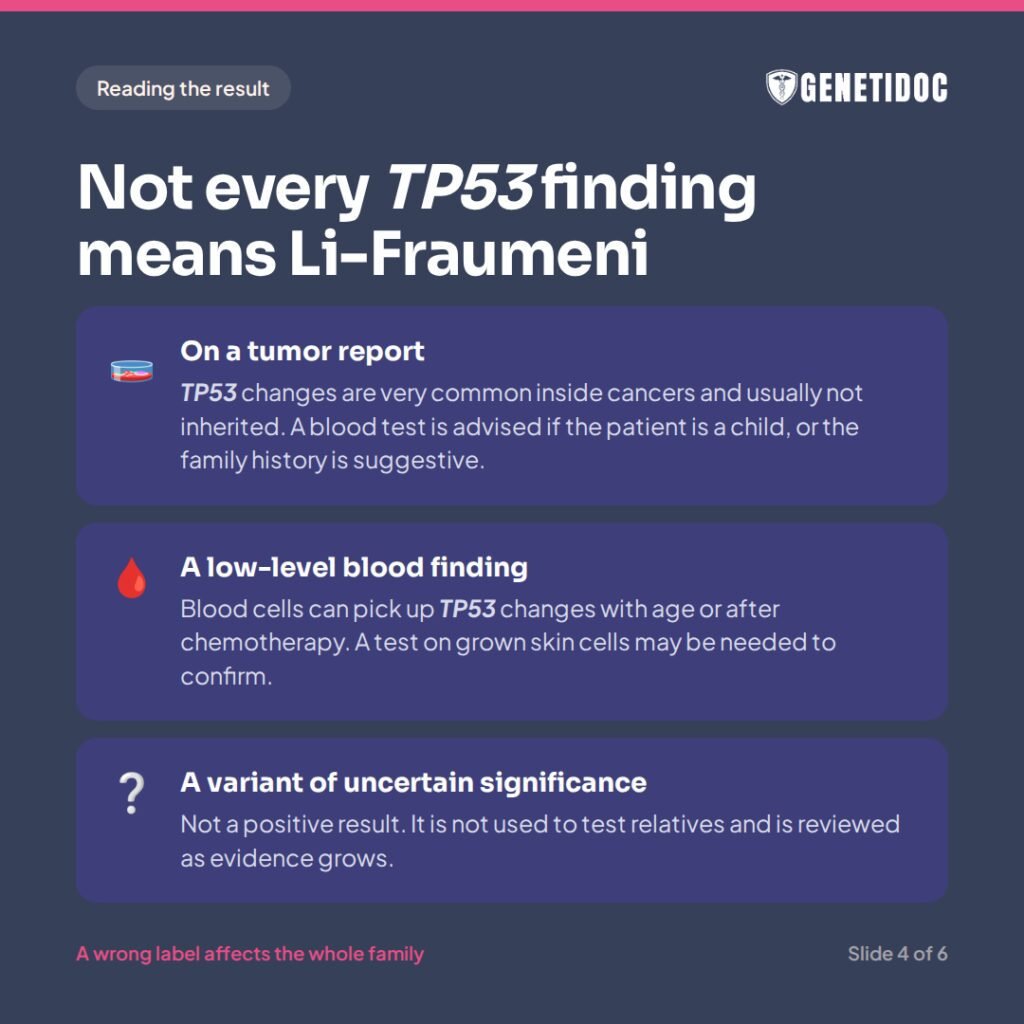
Blood cells keep dividing throughout life, and as we age, some of them pick up DNA changes of their own. A group of blood cells carrying a TP53 change can slowly expand. This is called clonal hematopoiesis. It is especially common in older adults and in people who have had chemotherapy or radiation. When a blood sample is tested, the laboratory may detect this TP53 change and report it, even though the person was not born with it and cannot pass it to their children.
The clue is usually in the numbers. In a true inherited variant, about half of the DNA copies in the sample carry the change. When only a small fraction carry it, this is called a low variant allele fraction, and the result needs careful investigation.
“A low variant allele fraction does not necessarily mean that a person has constitutional Li-Fraumeni syndrome,” explains Team Genetidoc. “The finding may result from clonal hematopoiesis, somatic mosaicism, a blood cancer, or occasionally DNA shed into the blood by a tumor. A suspicious low-level finding may need additional testing on a non-blood tissue, such as cultured skin fibroblasts, together with clinical correlation and, where useful, testing of relatives. This distinction matters, because wrongly labelling a clonal finding as Li-Fraumeni syndrome can have significant consequences for the patient and the whole family.”
“Cultured skin fibroblasts” means a tiny skin sample is taken and its cells are grown in the laboratory. Skin cells are not affected by changes in blood cells, so if the TP53 variant is absent in the skin, it probably arose in the blood only.
Consider the practical stakes. If a 65-year-old man tested during cancer treatment is wrongly told he has Li-Fraumeni syndrome, his children may be told they have a 50 percent chance of carrying it, may undergo testing, and may face years of unnecessary anxiety. If a true diagnosis is dismissed as “just a blood finding,” a family may lose the chance to begin life-saving surveillance. Getting this right requires a laboratory that reports variant allele fractions, and a clinical team that knows what to do with them.
Tumor Results vs. Inherited Results
TP53 is the most frequently changed gene in human cancers overall. Many cancers pick up a TP53 change as they grow, in people who have no inherited condition at all. So when a tumor profiling report mentions TP53, it does not by itself mean the patient has Li-Fraumeni syndrome.
There are two situations, however, where a tumor finding should prompt germline testing: when a TP53 disease-causing variant is found in the tumor of a child with any cancer, and when it is found in the tumor of an adult whose family history suggests Li-Fraumeni syndrome. In these cases, the tumor result is an important clue that deserves a blood test to check whether the variant was inherited.
This also matters when a relative with cancer has died. Families often ask whether that person’s samples can be tested.
“When the affected family member has died, stored material may sometimes allow genetic investigation,” says Team Genetidoc. “Stored blood or previously extracted DNA can potentially be used if a suitable sample is available. Tumor tissue may also provide useful information, but a TP53 change found only in tumor tissue does not automatically establish an inherited variant, because many TP53 changes occur only in the tumor. Results from stored tumor material need careful interpretation and, whenever possible, confirmation through appropriate constitutional testing.”
If a relative is currently being treated for cancer, it is worth asking the hospital whether a blood sample can be stored. This one step can make a family’s genetic evaluation much clearer in the future.
What If the Result Is a Variant of Uncertain Significance?
Sometimes a test finds a TP53 change whose effect is not yet known. This is called a variant of uncertain significance (VUS). It is not a positive result and not a negative result. It means science does not yet have enough evidence to classify the change.
“A variant of uncertain significance should not be treated as equivalent to a pathogenic or likely pathogenic variant,” explains Team Genetidoc. “In these families, management is guided by the patient’s personal and family cancer history rather than by the VUS itself, while the laboratory and the clinical genetics team watch for new evidence that may allow the variant to be reclassified. Families should be counseled that classifications can change as scientific knowledge and population databases improve.”
In practice, this means a TP53 VUS is not used to test healthy relatives, and it does not by itself trigger the full Li-Fraumeni screening program. Patients are advised to keep their report, keep their contact details up to date with the clinic, and return for review, typically every 6 months to 1 year, or sooner if something new happens in the family.
What Does a Positive Result Mean for Cancer Risk?
A confirmed Li-Fraumeni diagnosis means a substantially higher lifetime risk of cancer than the general population, often starting in childhood or young adulthood. People who have already had one cancer also have a raised risk of developing another.
But the risk is not the same for everyone. It depends on the specific variant, since some variants behave more severely than others. It also depends on the family’s history and on whether the person was found through a classic Li-Fraumeni family or through broad panel testing, where milder presentations are more common.
“One of the most common misconceptions is that a positive TP53 result means cancer is inevitable,” says Team Genetidoc. “A pathogenic variant indicates a substantially increased susceptibility, but it does not mean that every carrier will necessarily develop cancer.”
The most important point is that risk is not the whole story. What changes outcomes is what happens next: a structured surveillance program, safer treatment choices, and informed relatives.
Surveillance: How People With Li-Fraumeni Syndrome Are Monitored
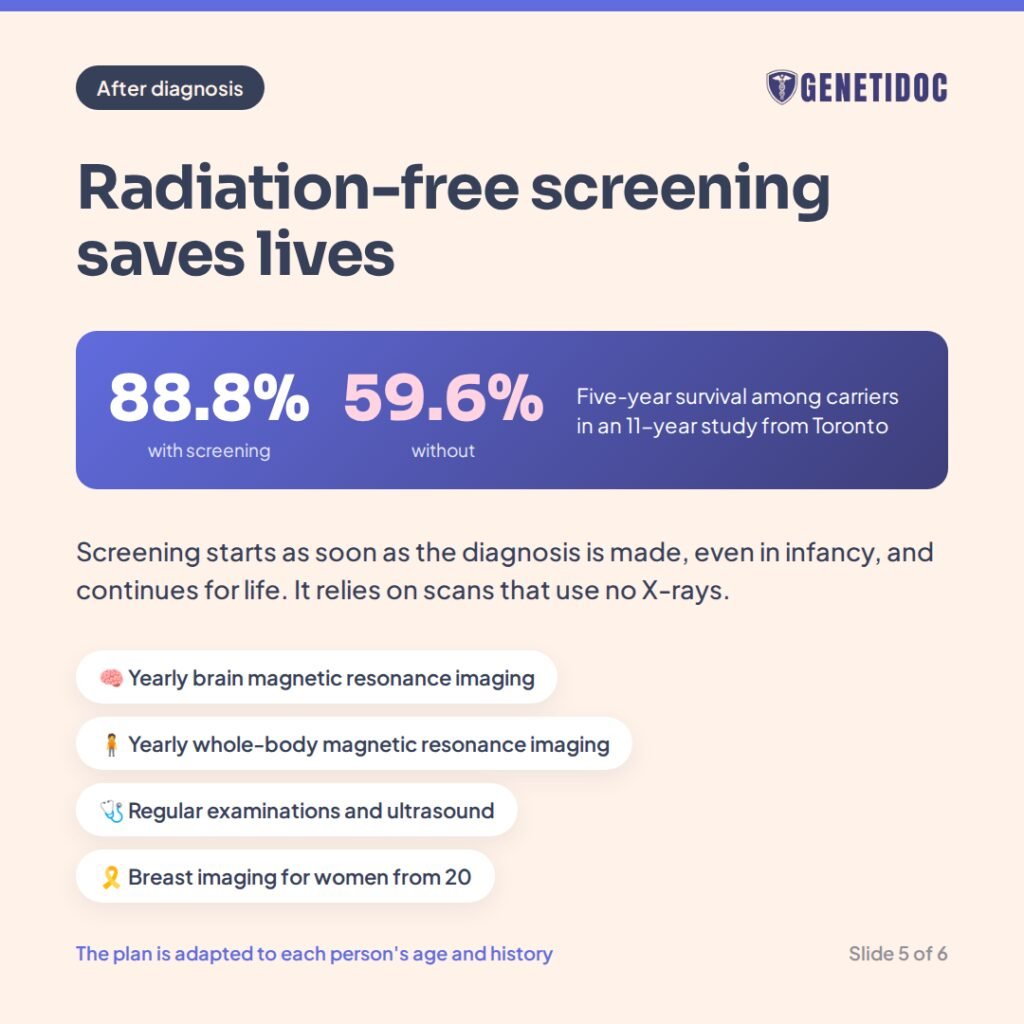
Surveillance means regular, planned check-ups and scans designed to find cancer before symptoms appear. For Li-Fraumeni syndrome, the evidence that this works is strong. In a landmark 11-year study from Toronto, 5-year overall survival was 88.8 percent among carriers who followed surveillance, compared with 59.6 percent among those who did not. That surveillance schedule became known as the “Toronto protocol.”
In May 2025, an international expert group convened by the American Association for Cancer Research (AACR) published updated recommendations. The main message stayed the same: surveillance should begin as soon as the diagnosis is made, even in infancy, and continue throughout life. The update puts more emphasis on organ-specific screening by age, on minimizing radiation, and on tailoring cancer treatment to reduce the risk of later cancers.
“Surveillance is based on internationally developed protocols, including recommendations from the American Association for Cancer Research, European expert groups, and National Comprehensive Cancer Network (NCCN) guidance,” explains Team Genetidoc. “The central principle is intensive surveillance to detect cancers at an early and more treatable stage, while minimizing unnecessary exposure to ionizing radiation. Whole-body MRI, brain MRI, breast MRI, and other age- and sex-specific investigations are important components. In practice, the exact protocol is adapted to the patient’s age, previous cancers, family history, available facilities, and local resources.”
Magnetic resonance imaging (MRI) uses magnets and radio waves instead of X-rays, so it carries no radiation dose. This makes it the preferred scan for repeated screening in Li-Fraumeni syndrome.
Screening for children (birth to 18 years)
Under the 2025 recommendations, screening for children typically includes:
- Physical examination every 3 to 4 months, with prompt review of any new symptoms.
- Abdominal and pelvic ultrasound every 3 to 4 months to look for adrenocortical carcinoma, with blood tests if the ultrasound is not clear enough.
- Annual brain MRI to look for brain tumors.
- Annual whole-body MRI to look for sarcomas and other tumors.
- Complete blood count every 3 to 4 months to look for leukemia.
- Annual skin examination by a dermatologist.
Screening for adults
For adults, screening typically includes:
- Physical examination every 6 months.
- Breast screening for women: breast awareness from 18, clinical breast examination twice a year from 20, and annual breast MRI from 20. Mammography may be added from age 30, and risk-reducing mastectomy can be discussed.
- Annual whole-body MRI and annual brain MRI.
- Abdominal and pelvic ultrasound every 6 months.
- Upper endoscopy and colonoscopy every 2 to 5 years from age 25, or earlier after abdominal radiation or in families with early bowel or stomach cancer.
- Annual skin examination and regular blood counts.
- For men: annual prostate-specific antigen blood test from age 35.
Screening may start earlier than these ages if a relative developed a particular cancer unusually young. Your clinical geneticist and oncologist will adapt the plan to you. At Genetidoc, patients receive an individualized written summary after consultation, prepared by the genetic counselor and checked by the clinical geneticist, which sets out the recommended screening so it can be shared with the doctors who will carry it out.
Whole-body MRI in India: what to know
- Availability: Whole-body MRI is available at many imaging centres and hospitals in larger Indian cities. It is less accessible in smaller towns, so families may need to plan an annual trip.
- A “full-body MRI health check” is not the same thing: Some centres sell whole-body MRI as a general health package. A Li-Fraumeni protocol is different. It is combined with brain MRI, breast MRI, ultrasound, blood tests, and endoscopy on a planned schedule, and it should be read with your history in mind.
- Scans find harmless things too: In a 2025 study, about 1 in 4 whole-body MRI scans showed a benign incidental finding, and some led to extra tests. Knowing this in advance helps reduce anxiety when a scan needs a follow-up.
- Whole-body MRI is not enough alone: It works best as one part of a full program, which is why organ-specific checks remain essential.
- Cost planning: Most health insurance in India does not cover preventive screening, so it helps to discuss the schedule and priorities openly with your care team.
The emotional side of lifelong screening
Surveillance is protective, but it is also demanding. Waiting for scan results can be stressful, and some people feel anxious in the days before each appointment. International guidelines now recognize this explicitly and recommend that psychological support be offered alongside surveillance. It is normal to find this hard, and it is worth telling your care team if it is affecting your daily life.
How a Li-Fraumeni Diagnosis Changes Cancer Treatment
If a person is diagnosed with Li-Fraumeni syndrome while they are being treated for cancer, the diagnosis can shape decisions about that treatment.
“People with germline TP53 variants have an increased risk of developing additional primary cancers and may have particular concerns about ionizing radiation,” explains Team Genetidoc. “When clinically appropriate, doctors may reconsider approaches that reduce unnecessary radiation. For example, in a patient with TP53-associated breast cancer, the diagnosis may influence the discussion between breast-conserving surgery with radiotherapy and mastectomy. The final decision, however, depends on the cancer stage, the treatment options available, and a multidisciplinary assessment.”
Some practical ways the diagnosis may influence care:
- Surgery choices: Mastectomy may be preferred over lumpectomy plus radiation in some women with breast cancer, to avoid radiating the breast.
- Radiotherapy: It is used with caution, but it is not ruled out. When radiation is the best way to cure a cancer, the benefit can outweigh the long-term risk.
- Scans: MRI and ultrasound are preferred over computed tomography (CT) and other X-ray-based scans whenever they give the information needed. This matters most for children and young adults, who would otherwise build up radiation exposure over many years of repeated imaging.
- After treatment: Areas that received radiation may need extra monitoring. For example, earlier colonoscopy may be advised after abdominal radiation.
- Everyday protection: Avoiding tobacco completely, protecting the skin from strong sun, and not delaying review of new symptoms all help.
This is why early referral matters. When a young patient’s hereditary panel is ordered at diagnosis rather than after treatment, the result can inform decisions that are difficult to reverse later.
Testing Children in Li-Fraumeni Families
For most inherited cancer conditions, Genetidoc offers testing to children only after they turn 18, because the cancers usually appear in adulthood. Li-Fraumeni syndrome is an important exception.
“Li-Fraumeni syndrome is unusual among hereditary cancer syndromes because cancer risk can become clinically relevant during childhood,” explains Team Genetidoc. “So children from families with a known pathogenic TP53 variant may be offered predictive testing during childhood, rather than waiting until adulthood. Early identification allows surveillance to begin when it is clinically indicated. Genetic counseling before testing is especially important, because parents need to understand both the benefits and the possible psychological implications of knowing their child’s genetic status.”
Because international guidelines recommend that surveillance start in infancy, testing can be discussed from early childhood. If a child tests negative for the family variant, they can be spared years of scans and worry. If they test positive, screening can begin at the right time, rather than after a cancer appears.
What Li-Fraumeni Syndrome Means for Your Family
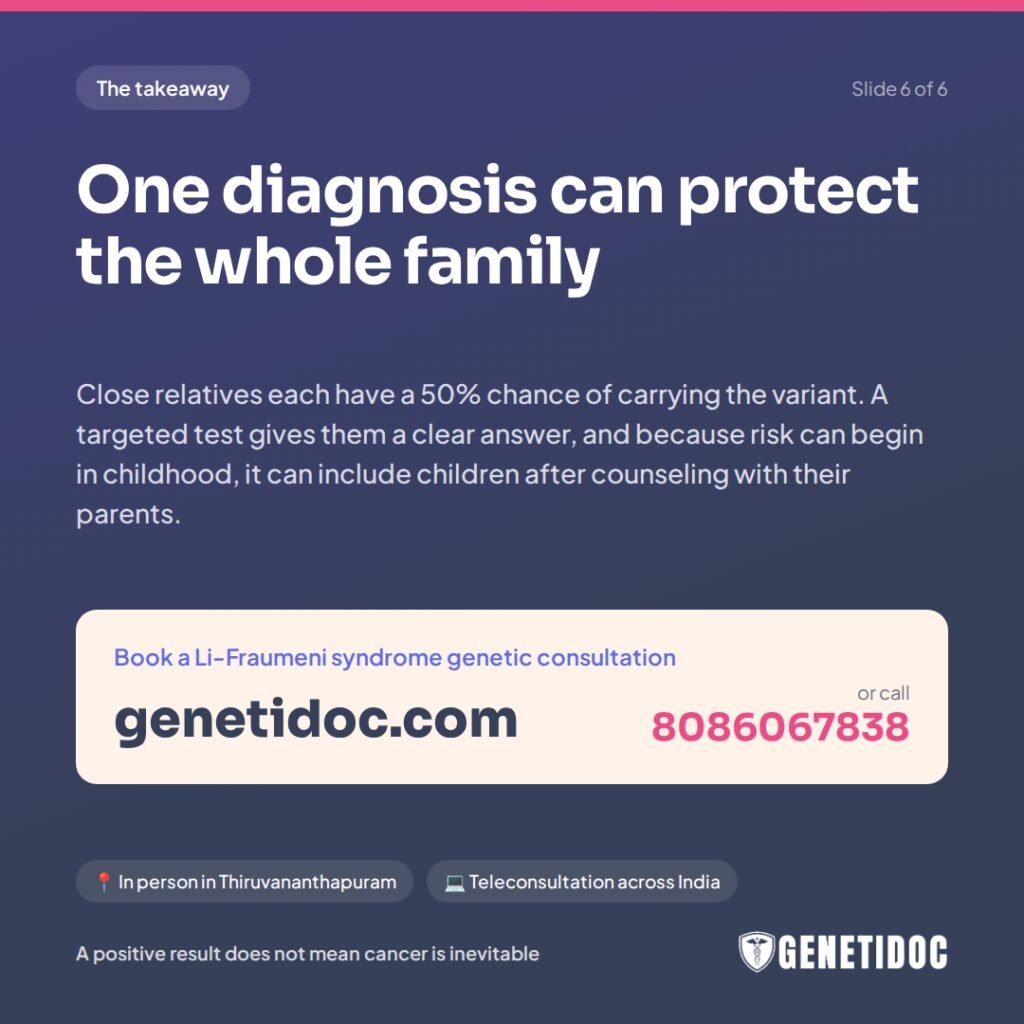
Once a TP53 variant is confirmed in one person, their close relatives can take a simple, targeted test for that same variant. This is called cascade testing.
For most inherited cancer conditions, cascade testing is offered only to relatives aged 18 and above, because the cancers usually appear in adulthood. Li-Fraumeni syndrome is different. Because cancer risk can begin in childhood, cascade testing can also be offered to children and teenagers under 18 in the family, after genetic counseling with their parents. This allows children who carry the variant to start surveillance at the right age, and spares those who do not from unnecessary scans.
- Parents, brothers, sisters, and children each have a 50 percent chance of carrying the variant, unless it arose de novo.
- Relatives who test positive can start surveillance without waiting for a cancer to appear.
- Relatives who test negative for the known family variant have a greatly reduced inherited risk from that variant, but not zero risk of cancer overall. They follow general population screening, and any new personal or family history should still be reviewed.
Parents often carry a heavy emotional burden when they learn that they have passed a variant on to a child.
“Families can experience considerable emotional stress after a Li-Fraumeni diagnosis, because surveillance is lifelong and there may be anxiety about developing cancer or seeing another family member affected,” says Team Genetidoc. “Parents may feel guilt when they discover they have passed a TP53 variant to their child. We emphasize that inheritance is a biological process, and a parent should not be blamed for passing on a genetic variant. Counseling focuses on accurate information, a practical surveillance plan, and making sure patients and families have psychological and social support when they need it.”
If you would rather not tell a particular relative yourself, Genetidoc can offer that relative a private genetic counseling session without disclosing your result unless you agree. Your wishes about your own information are respected.
Planning a family
“Reproductive counseling is an important part of caring for families with germline TP53 variants,” explains Team Genetidoc. “Couples may ask about preimplantation genetic testing for monogenic conditions, prenatal diagnosis, donor eggs or sperm, or natural conception with or without prenatal testing. These options are discussed in a non-directive way, explaining the medical, technical, financial, ethical, and emotional considerations, so that each couple can make the decision that is right for their own circumstances.”
Preimplantation genetic testing is done during in vitro fertilization (IVF). Embryos are tested for the family variant before one is transferred to the womb. It is one option among several, and there is no single right answer. The decision belongs to the couple.
Common Misconceptions About Li-Fraumeni Syndrome
- “A positive result means I will definitely get cancer.” The risk is substantially increased, but it is not a certainty. Surveillance exists precisely to change the outcome.
- “My relative tested negative, so they have no risk at all.” A negative result for the known family variant greatly reduces their inherited risk from that variant. It does not remove the everyday population risk of cancer, or other hereditary risks.
- “All these scans will give me cancer.” This is exactly why Li-Fraumeni surveillance relies on MRI and ultrasound, which use no ionizing radiation.
- “A TP53 VUS means I have Li-Fraumeni syndrome.” A variant of uncertain significance is not the same as a pathogenic variant, and it should not automatically lead to Li-Fraumeni management.
- “No one in my family had cancer, so it cannot be genetic.” De novo variants, small families, and unknown histories can all hide the pattern.
- “My tumor report says TP53, so it must be inherited.” TP53 changes are very common inside tumors. Only a germline test, and sometimes a confirmation test, can answer whether it was inherited. A germline test is recommended when the tumor belongs to a child, or to an adult with a suggestive family history.
When Is Testing Not the Right First Step?
Genetic testing is most useful when it is the right test, for the right person, at the right time. Testing may not be the best first step when:
- An affected relative is alive and available. Testing the person who had cancer first usually gives the clearest answer. A negative result in an unaffected relative, tested before the family variant is known, cannot rule out Li-Fraumeni syndrome.
- The only finding is a TP53 change in a tumor report. This needs interpretation first, not automatic testing of the whole family. For a child with cancer, or an adult with a suggestive family history, the right next step is germline testing of the patient.
- The finding is a VUS. Relatives are not tested for an uncertain variant.
- The plan is to use a consumer DNA kit. Consumer kits check only a small set of known variants and cannot reliably detect or exclude Li-Fraumeni syndrome. They also cannot tell a true inherited variant from a blood-only finding.
Why Expert Interpretation Matters
Few genetic results carry as much weight as a TP53 result. It affects cancer treatment, lifelong screening, decisions about children and pregnancy, and the health of relatives who may not yet know they are at risk. Generating a report is only the first step. Getting it right depends on:
- The right test: a diagnostic panel or targeted test chosen for the family’s history, not a limited kit.
- The right laboratory: accredited, with careful variant classification and reporting of variant allele fraction.
- The right interpretation: telling a true inherited variant apart from clonal hematopoiesis, mosaicism, or a tumor-only change.
- Genetic counseling: so that the patient understands the result, the surveillance plan is practical, and the family has a clear path to testing and support.
If you have questions about Li-Fraumeni syndrome in your family, you can post them on the Li-Fraumeni Syndrome forum on the Genetidoc Rare Disease Forum, where responses are reviewed by genetic counselors and consultants.
Frequently Asked Questions
What is Li-Fraumeni syndrome?
Li-Fraumeni syndrome is an inherited condition caused by a disease-causing variant in the TP53 gene. It raises the risk of several cancers, often at young ages, including breast cancer, sarcomas, brain tumors, and adrenocortical carcinoma.
What are the symptoms of Li-Fraumeni syndrome?
Li-Fraumeni syndrome itself causes no symptoms. The warning signs are in the history: breast cancer before 31, a Li-Fraumeni cancer before 46 with an affected relative, more than one cancer in one person, rare cancers such as adrenocortical carcinoma or choroid plexus tumor, or several different cancers across generations of a family.
What are the criteria for Li-Fraumeni syndrome?
Doctors mainly use the modified Chompret criteria. Testing is considered for a Li-Fraumeni cancer before 46 with a relative affected before 56, multiple Li-Fraumeni cancers with the first before 46, adrenocortical carcinoma, choroid plexus tumor or embryonal anaplastic rhabdomyosarcoma at any age, or breast cancer before 31. The stricter classic criteria require a sarcoma before 45 plus two close relatives with early cancers.
How is Li-Fraumeni syndrome inherited?
It is autosomal dominant. Each child of a carrier has a 50 percent chance of inheriting the variant. In some people, the variant arises for the first time (de novo) and was not inherited from either parent.
Can Li-Fraumeni syndrome skip a generation?
The variant itself does not skip generations. It can appear to, if a carrier never develops cancer, dies young of other causes, or if the family history is unknown.
Can you have Li-Fraumeni syndrome with no family history of cancer?
Yes. A de novo variant, a small family, early deaths, or unknown medical histories can all hide the pattern. A strongly suggestive personal cancer history is reason enough to consider testing.
Is Li-Fraumeni syndrome curable?
The inherited variant cannot be removed, but the condition can be managed. Regular surveillance finds cancers earlier, and studies show it clearly improves survival. Cancers found early are often treatable.
What is the life expectancy with Li-Fraumeni syndrome?
There is no single answer, because risk varies by variant and by family. What is clear is that surveillance makes a real difference: in the Toronto study, 5-year survival was 88.8 percent with surveillance, compared with 59.6 percent without it.
What test is used to diagnose Li-Fraumeni syndrome?
A germline genetic test on blood, either a multigene hereditary cancer panel or targeted TP53 testing. A low-level result may need confirmation on another tissue, such as cultured skin cells.
How long does Li-Fraumeni syndrome testing take in India?
At Genetidoc, a hereditary cancer panel usually takes about three weeks, and at most four. Targeted testing of relatives for a known family variant usually takes about one week.
Should children be tested for Li-Fraumeni syndrome?
In families with a known TP53 variant, yes, testing may be offered in childhood, after genetic counseling for the parents. Cancer risk can begin in childhood, and guidelines recommend surveillance from infancy for children who carry the variant.
Is whole-body MRI safe for repeated screening?
Yes. MRI uses magnets and radio waves, not X-rays, so it carries no radiation dose. This is why it is the main imaging tool for lifelong surveillance in Li-Fraumeni syndrome.
Does a TP53 mutation on my tumor report mean I have Li-Fraumeni syndrome?
Not necessarily. TP53 changes are very common inside tumors and are usually not inherited. But if the tumor is in a child, or in an adult with a family history suggestive of Li-Fraumeni syndrome, germline testing is recommended to check whether the variant was inherited.
Don’t see your question here? Ask it on the Frequently Asked Questions forum on the Genetidoc Rare Disease Forum.
Key Takeaways
- Li-Fraumeni syndrome is an inherited TP53 condition that raises the risk of several different cancers, often at young ages.
- The clue is the overall pattern: early-onset breast cancer, sarcomas, brain tumors, adrenocortical carcinoma, and multiple cancers in one person or one family.
- No family history does not rule it out.
- A low-level TP53 finding in blood, or a TP53 change in a tumor, is not automatically Li-Fraumeni syndrome. Expert interpretation is essential.
- Radiation-sparing surveillance, starting from infancy where needed, clearly improves survival.
- A diagnosis can shape cancer treatment, especially decisions about radiation.
- Each close relative has a 50 percent chance of carrying the variant, and a targeted test gives them a clear answer. Because Li-Fraumeni syndrome can affect children, this cascade testing can include family members under 18.
Has your family seen breast cancer at a young age, a sarcoma, a childhood brain tumor, or several different cancers across generations? Or has a report mentioned a TP53 variant that you do not fully understand? Speak with a clinical geneticist to find out whether Li-Fraumeni syndrome is the explanation, and what a safe screening plan would look like for you and your children.
Book a Li-Fraumeni Syndrome Genetic Consultation
References
- Achatz MI, Villani A, Bertuch AA, et al. Update on Cancer Screening Recommendations for Individuals with Li–Fraumeni Syndrome. Clinical Cancer Research. 2025;31(10):1831–1840. org/10.1158/1078-0432.CCR-24-3301
- Frebourg T, Bajalica Lagercrantz S, Oliveira C, et al. Guidelines for the Li–Fraumeni and heritable TP53-related cancer syndromes. European Journal of Human Genetics. 2020;28:1379–1386.
- Schneider K, Zelley K, Nichols KE, Garber J. Li-Fraumeni Syndrome. GeneReviews. University of Washington, Seattle. nlm.nih.gov/books/NBK1311
- National Comprehensive Cancer Network Guidelines — Genetic/Familial High-Risk Assessment: Breast, Ovarian, Pancreatic, and Prostate. org/guidelines
- Villani A, Shore A, Wasserman JD, et al. Biochemical and imaging surveillance in germline TP53 mutation carriers with Li-Fraumeni syndrome: 11 year follow-up of a prospective observational study. The Lancet Oncology. 2016;17(9):1295–1305.
- Tansir G, Rastogi S, Dubasi SK, et al. Lessons learnt from the clinico-genomic profiling of families with Li Fraumeni syndrome at a tertiary care centre in North India. ecancermedicalscience. 2023;17:1550. org/10.3332/ecancer.2023.1550
- Parambil BC, Sarin R, Bhattacharya S, Chinnaswamy G. Should all paediatric osteosarcoma patients be tested for germline TP53 variants? Insights from a single centre sarcoma unit from India. ecancermedicalscience. 2026;20:2214. org/10.3332/ecancer.2026.2214
- Tinat J, Bougeard G, Baert-Desurmont S, et al. 2009 version of the Chompret criteria for Li Fraumeni syndrome. Journal of Clinical Oncology. 2009;27(26):e108–e109.
- Bougeard G, Renaux-Petel M, Flaman JM, et al. Revisiting Li-Fraumeni syndrome from TP53 mutation carriers. Journal of Clinical Oncology. 2015;33(21):2345–2352.
- Coffee B, Cox HC, Bernhisel R, et al. A substantial proportion of apparently heterozygous TP53 pathogenic variants detected with a next-generation sequencing hereditary pan-cancer panel are acquired somatically. Human Mutation. 2020;41(1):203–211.
- Evaluation of whole-body MRI for cancer early detection in Li-Fraumeni syndrome. 2025. ncbi.nlm.nih.gov/40588398
- Assessing germline TP53 mutations in cancer patients: insights into Li-Fraumeni syndrome and genetic testing guidelines. 2025. nlm.nih.gov/pmc/articles/PMC11834258
- Genome-first approach of the prevalence and cancer phenotypes of pathogenic or likely pathogenic germline TP53 Human Genetics and Genomics Advances. 2023. sciencedirect.com
- Li-Fraumeni Syndrome Association — Treatment and Preventative Screening (summary of the 2025 AACR recommendations). org
Related Reading on Genetidoc
- Genetic Data Reanalysis: Why Your Genetic Testing Result Can Change Over Time
- Genetic Testing for Infertility in India: A Complete Guide for Couples
- Genetic Testing for Recurrent Abortions in India: A Complete Guide for Couples
- Li-Fraumeni Syndrome Forum
- Hereditary Cancer Syndrome Forum
- Cascade Testing Forum
- Predictive Genetic Testing Forum
- Preimplantation Genetic Testing Forum