
Your three-month-old baby feels unusually floppy when you lift her. Feeds take a long time, and she gets breathless halfway through. At a routine check, the pediatrician hears something unusual in her heart, and a scan shows the heart is enlarged.
Or perhaps you are 35. For a few years, climbing stairs has felt harder. Getting up from the floor needs a push from your hands. You wake up with headaches and feel sleepy all day. Your blood tests show a raised muscle enzyme, and one doctor has mentioned “myositis.”
These two stories look completely different. Yet both can be caused by the same rare inherited condition: Pompe disease.
This guide is written by the clinical genetics team at Genetidoc. It explains what Pompe disease is, the signs in babies and adults, how it is diagnosed in India, what treatment can and cannot do, and what a diagnosis means for the rest of your family.
| Quick answer: what is Pompe disease?
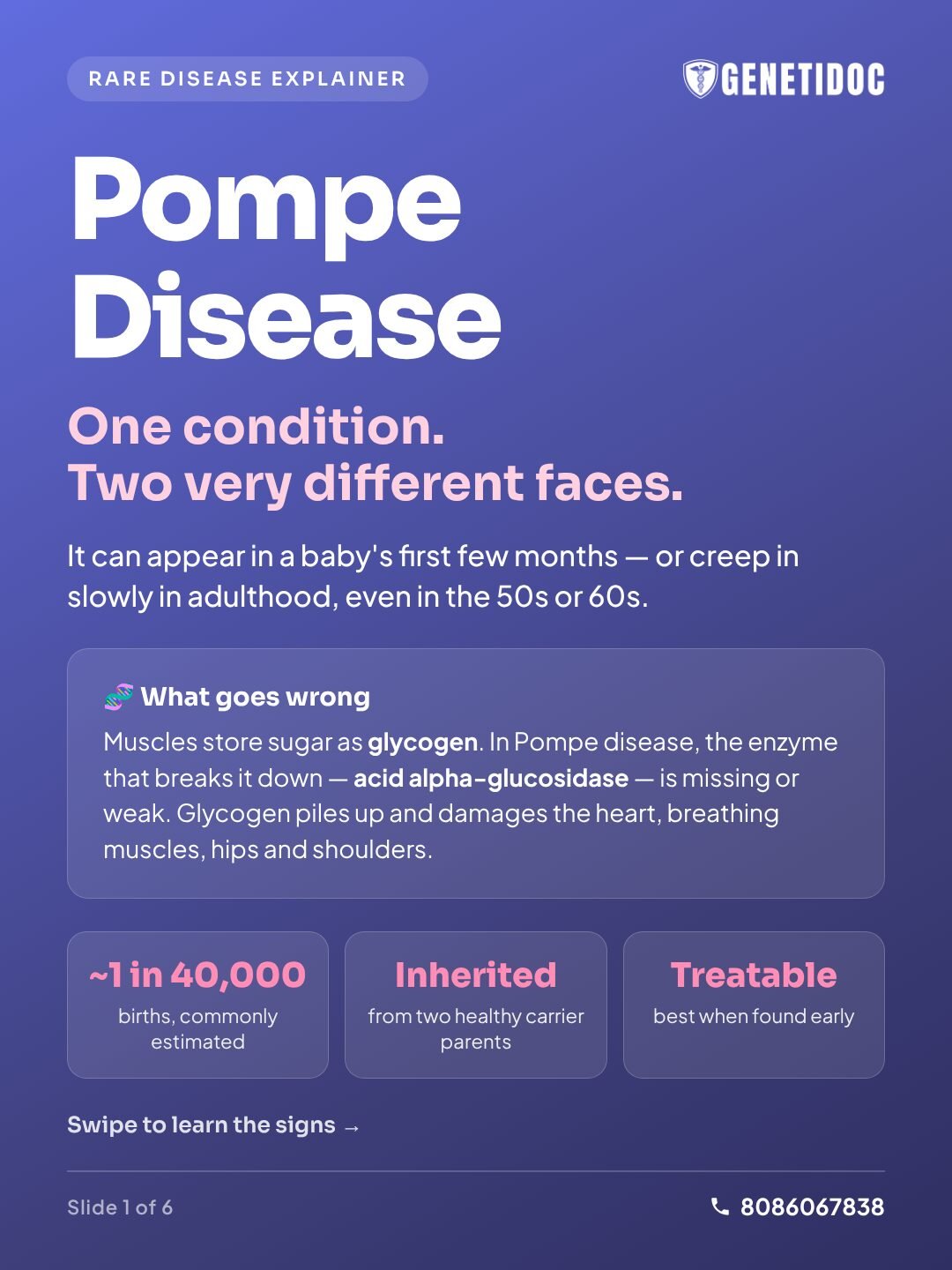
Pompe disease is a rare inherited condition in which the body cannot break down glycogen, a stored form of sugar, inside cells. This happens because an enzyme called acid alpha-glucosidase (GAA) is missing or works poorly. Glycogen builds up and damages muscles, especially the heart, the breathing muscles and the muscles of the hips and shoulders. It can start in early infancy or at any age up to late adulthood. Early diagnosis matters, because treatment works best before muscle damage becomes permanent. |
What Is Pompe Disease?
Our muscles store sugar in the form of glycogen. Think of glycogen as a fuel reserve. The body builds it up and breaks it down all the time.
Part of this breakdown happens inside tiny compartments in every cell called lysosomes. Lysosomes work like the cell’s recycling centers. Each one relies on specific enzymes, which are proteins that act like scissors, to cut large molecules into small, reusable pieces.
In Pompe disease, the enzyme that breaks down glycogen inside lysosomes, called acid alpha-glucosidase (GAA), is missing or too weak. Glycogen keeps piling up inside the lysosomes until they swell and damage the muscle cells around them.
The cause is a change in the GAA gene, which carries the instructions for making this enzyme. Because the problem lies in the lysosomes, Pompe disease belongs to a larger family of conditions called lysosomal storage disorders. You may also see it called glycogen storage disease type II or acid maltase deficiency. These names all mean the same condition.
How common is Pompe disease?
Pompe disease is rare. It is commonly estimated to affect about 1 in 40,000 births, although figures vary between populations. There is no national count for India. Experts believe many cases, especially in adults, are never diagnosed because the signs are mistaken for other muscle conditions.
| “Pompe disease is one condition with two very different faces. In a baby, it is a race against time for the heart and breathing. In an adult, it can creep in so slowly that people spend years being told it is something else.” — Dr. Roshan Daniel, Clinical Geneticist and Founder, Genetidoc |
Types of Pompe Disease
How severe Pompe disease is, and when it starts, depends largely on how much working enzyme the body still makes. Doctors group it into two main types.
| Feature | Infantile-onset Pompe disease | Late-onset Pompe disease |
| When it starts | Usually in the first few months of life | Any time from after the first year to late adulthood |
| Enzyme activity | Absent or nearly absent | Low, but some activity remains |
| Heart | Enlarged, thickened heart muscle is typical | Usually not affected significantly |
| Main problems | Severe floppiness, feeding and breathing difficulty, heart failure | Weakness of hip, thigh, shoulder and trunk muscles; breathing muscle weakness |
| Speed of progression | Rapid without treatment | Slow, over years |
Some infants have a form sometimes called “non-classic” infantile-onset disease. Their symptoms start in the first year, but the heart is less severely affected. In practice, Pompe disease is a spectrum rather than two separate boxes.
Symptoms of Pompe Disease in Babies
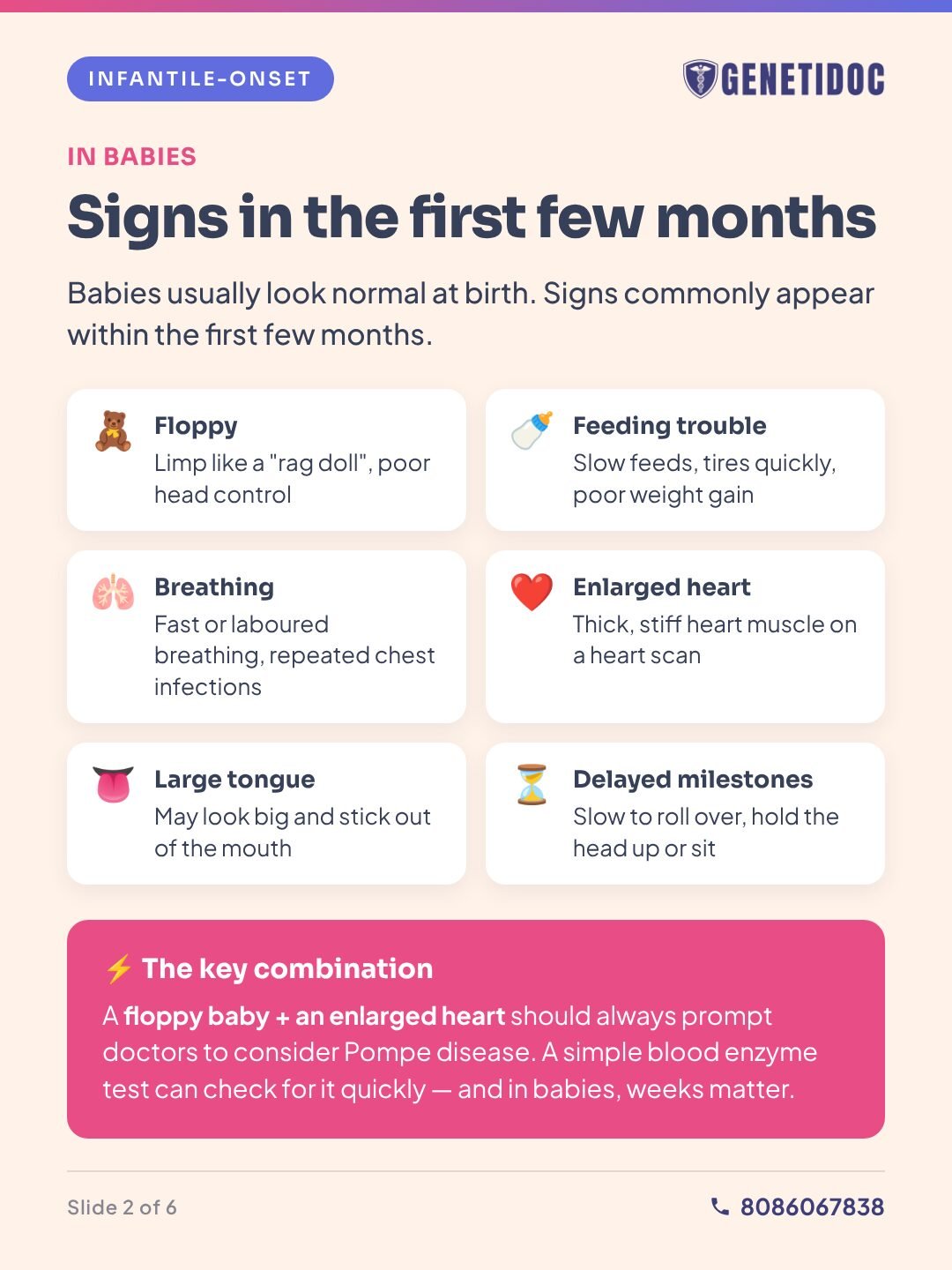
Babies with infantile-onset Pompe disease usually look normal at birth. Signs commonly appear within the first few months:
- Floppiness (low muscle tone). The baby feels limp when held, like a “rag doll,” and has poor head control.
- Feeding difficulty. Feeds are slow, the baby tires quickly, and may choke or fail to gain weight.
- Breathing problems. Fast or labored breathing and repeated chest infections.
- An enlarged heart. The heart muscle becomes thick and stiff. This is called hypertrophic cardiomyopathy. It may be found on a chest X-ray or a heart scan (echocardiogram).
- A large tongue. The tongue may look big and stick out of the mouth.
- An enlarged liver. This may make the tummy look full.
- Delayed motor milestones. The baby is slow to roll over, hold the head up or sit.
Without treatment, classic infantile-onset Pompe disease usually leads to heart and breathing failure within the first year of life. This is why recognizing it quickly is so important.
| The key combination in a baby
A floppy baby plus an enlarged heart should always prompt doctors to consider Pompe disease. A simple blood enzyme test can check for it quickly. |
Symptoms of Late-Onset Pompe Disease in Children and Adults
Late-onset Pompe disease develops slowly. Many people live with mild symptoms for years before anyone connects them. Common signs include:
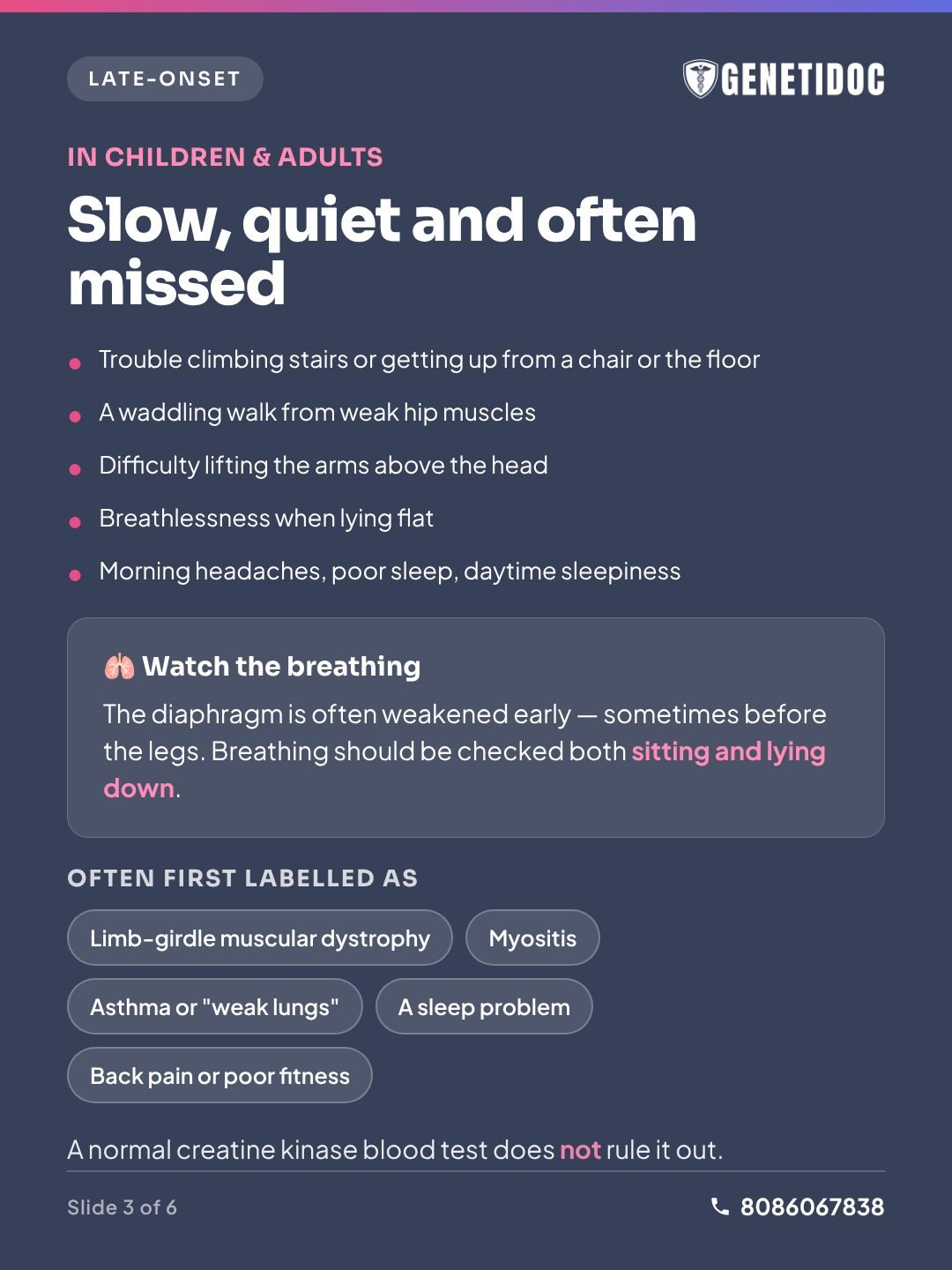
- Difficulty climbing stairs or getting up from a chair or the floor
- A waddling walk, caused by weakness of the hip muscles
- Difficulty lifting the arms above the head
- Back pain, a curved spine (scoliosis) or weakness of the trunk muscles
- Breathlessness, especially when lying flat
- Morning headaches, poor sleep and daytime sleepiness, caused by shallow breathing at night
- Frequent chest infections
- Difficulty chewing or swallowing, or drooping eyelids, in some people
- Muscle cramps, pain and tiredness after activity
Why breathing problems matter so much
The diaphragm is the main breathing muscle, sitting just below the lungs. In late-onset Pompe disease, it is often weakened early, sometimes before the legs are obviously weak. When a person lies down, a weak diaphragm struggles even more. This is why morning headaches, disturbed sleep and breathlessness when lying flat are important clues.
Breathing failure is the most serious complication of late-onset Pompe disease. Checking breathing, both sitting and lying down, is a key part of care.
| “When an adult with leg weakness also tells me they wake up with headaches or cannot sleep lying flat, I take that seriously. In Pompe disease, the breathing muscles can be in more trouble than the legs suggest.” — Dr. Roshan Daniel |
Why Pompe Disease Is Often Missed
In babies, floppiness and feeding problems have many possible causes. An enlarged heart may first be treated as a heart problem alone, without asking why the heart muscle is thick.
In older children and adults, the picture overlaps with many other muscle conditions. Late-onset Pompe disease is often first labelled as:
- Limb-girdle muscular dystrophy
- Polymyositis or other inflammatory muscle disease
- “Weak lungs,” asthma or a sleep problem
- Simple back pain or lack of fitness
Some adults are even treated with steroids for suspected myositis, without improvement. A high level of the muscle enzyme creatine kinase (CK) in a routine blood test is a common early clue. However, CK can be normal or only mildly raised in some adults with Pompe disease, so a normal result does not rule it out.
Indian experience shows the cost of delay. In one South Indian case series, enzyme replacement started at 8 and 15 months of age did not work in infantile-onset disease. Infants need to be diagnosed and treated much earlier than that.
When Should You Seek a Genetic Evaluation?
Ask your doctor about a referral to a clinical geneticist if any of these apply:
- A floppy baby with an enlarged or thickened heart
- A baby with low muscle tone, feeding difficulty and breathing trouble without a clear cause
- A child or adult with slowly worsening weakness of the hips, thighs or shoulders
- Unexplained raised CK on a blood test, even without obvious weakness
- Breathlessness when lying flat, morning headaches or unexplained breathing failure
- A diagnosis of “muscular dystrophy” or “myositis” that has never been confirmed by genetic testing
- A brother, sister or relative already diagnosed with Pompe disease
- Parents who are blood relatives, with a child who has any of the signs above
When Pompe testing may not be needed
Testing is not useful for everyone with a common symptom. These on their own are usually not reasons for Pompe testing:
- A slightly raised CK after heavy exercise or an injection, which returns to normal on repeat testing
- Muscle aches after a workout with normal strength
- A baby with mild, temporary floppiness who is otherwise developing and feeding well
A clinical geneticist can look at the whole picture and decide whether testing makes sense. This avoids both unnecessary tests and false reassurance.
How Is Pompe Disease Inherited?
Pompe disease is autosomal recessive. This means a person is affected only when they inherit a non-working copy of the GAA gene from both parents.
Each parent is a carrier. Carriers have one working and one non-working copy of the gene. They are healthy and usually have no idea they carry the change.
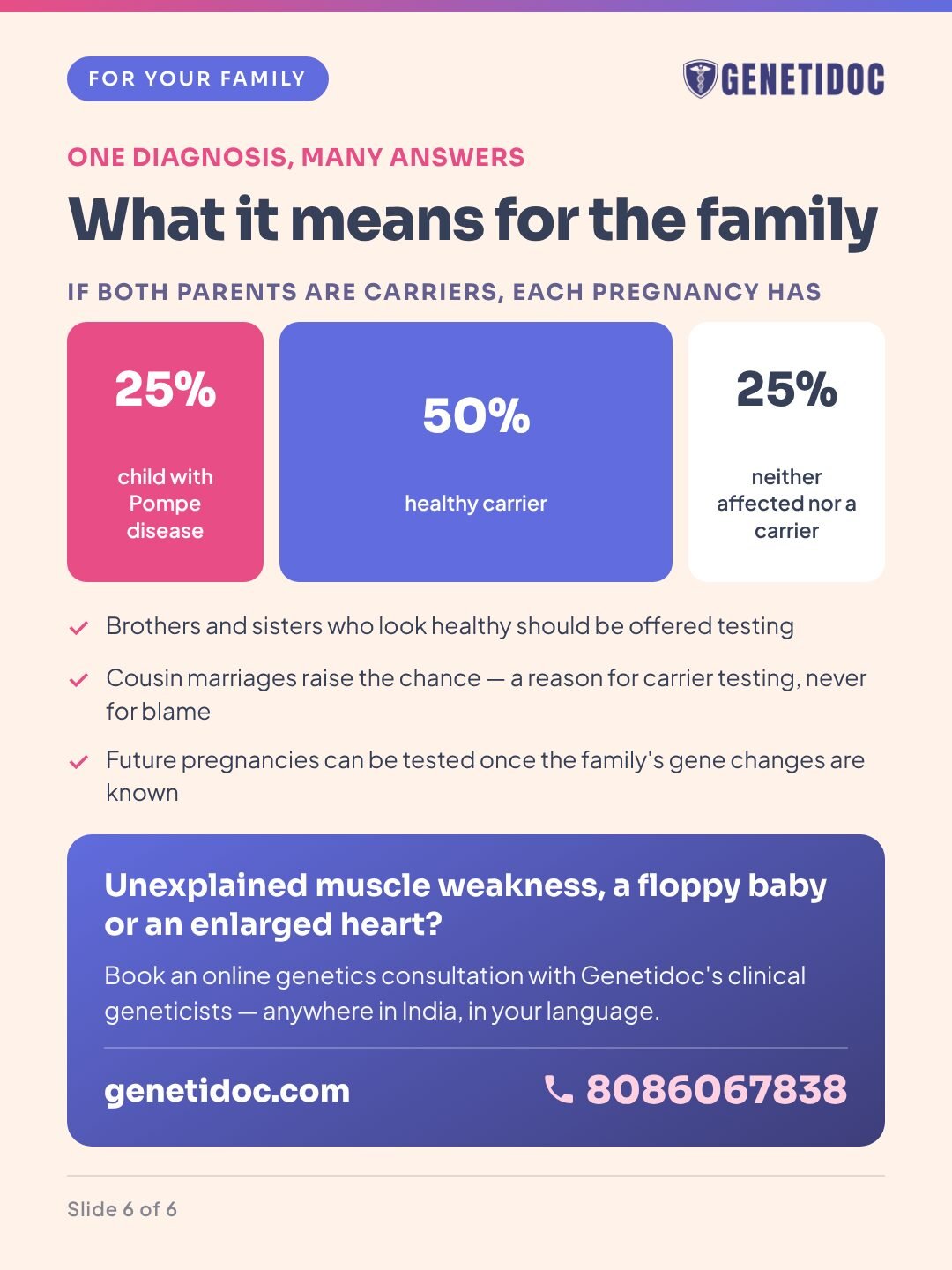
When both parents are carriers, each pregnancy has:
- a 1 in 4 (25%) chance of a child with Pompe disease
- a 1 in 2 (50%) chance of a child who is a healthy carrier
- a 1 in 4 (25%) chance of a child who is neither affected nor a carrier
These chances apply to every pregnancy. Having one healthy child does not lower the risk for the next one.
Indian context: Marriages between blood relatives, such as cousin marriages, are common in many Indian communities. Relatives are more likely to carry the same rare gene change, which raises the chance of recessive conditions such as Pompe disease. This is a reason for awareness and carrier testing, never for blame.
| “Parents often ask what they did wrong. The honest answer is nothing. Both parents silently carried a gene change, often passed down for generations. What the family can do now is use this knowledge to protect the child, test siblings and plan future pregnancies with clarity.” — Dr. Roshan Daniel |
How Is Pompe Disease Diagnosed? Step by Step
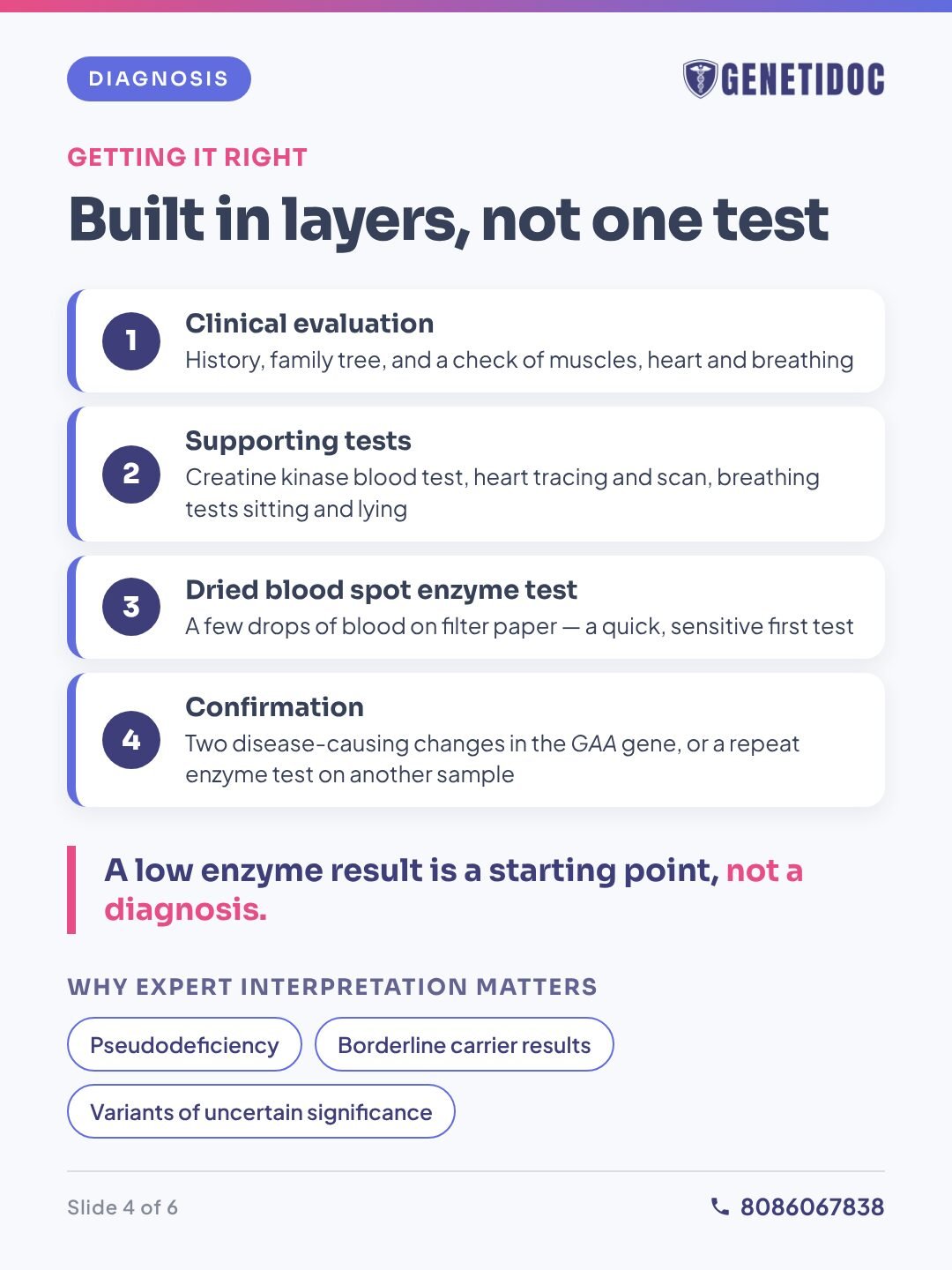
A reliable diagnosis is built in layers. Each step answers a different question.
- Clinical evaluation. A clinical geneticist takes a detailed history, draws a family tree and examines the muscles, heart and breathing. The key question is whether the pattern fits Pompe disease or another condition.
- Supporting tests. These include a CK blood test, a chest X-ray, an ECG (electrocardiogram, a heart tracing) and an echocardiogram (heart scan) in babies. In older patients, breathing tests are done both sitting and lying down. A urine test for a glycogen breakdown product called glucose tetrasaccharide can support the diagnosis and help monitor treatment.
- Dried blood spot enzyme test. A few drops of blood on filter paper are used to measure GAA enzyme activity. This is a quick, sensitive first test. A low result is a strong clue, but it must be confirmed.
- Confirmation. The diagnosis is confirmed by finding two disease-causing changes in the GAA gene through genetic testing, and/or by repeating the enzyme test on a different sample, such as white blood cells or skin cells.
In the past, a muscle biopsy was often done. Today it is usually not needed. In late-onset Pompe disease, a biopsy can even appear normal if the sampled muscle is only mildly affected.
When Pompe disease is found on a broader genetic test
Sometimes a person with unexplained muscle weakness has a neuromuscular gene panel or exome sequencing, which tests many genes at once. Pompe disease is one of the conditions these tests can uncover. If it is found, the result should still be confirmed with an enzyme test. This is one reason it matters that an expert chooses the test and reads the report.
Why interpretation matters as much as the test
Pompe disease results are not always straightforward. Careful interpretation matters in situations like these:
- Some healthy people carry harmless gene variants that make the enzyme look low in the laboratory, even though it works well enough in the body. These are particularly common in some East Asian populations. Without genetic confirmation, this could lead to a wrong diagnosis.
- Healthy carriers can sometimes show borderline enzyme results.
- Variants of uncertain significance. Genetic testing may find a change in the GAA gene whose effect is not yet known. This must be weighed against the enzyme result and the person’s symptoms. It is not a diagnosis by itself.
- Look-alike conditions. Other muscle and metabolic conditions can cause a similar picture and need to be considered.
CRIM status: an extra test for babies
Some babies with infantile-onset disease make no GAA protein at all. Doctors call this being CRIM-negative. CRIM stands for cross-reactive immunological material. It simply means whether the body produces any version of the enzyme protein.
This matters because CRIM-negative babies may treat the enzyme given as treatment as a foreign substance and make antibodies that block it. Knowing CRIM status early allows doctors to add medicines that calm the immune response, called immune tolerance induction, from the start of treatment. CRIM status can be predicted from the genetic result and confirmed with a laboratory test.
| “A low enzyme number on a report is a starting point, not a diagnosis. Confirming it genetically, ruling out pseudodeficiency and, in babies, knowing the CRIM status, is what turns a test result into a treatment plan that actually works.” — Dr. Roshan Daniel |
Cost and turnaround in India
Costs depend on which tests are needed:
- The dried blood spot enzyme test is a relatively simple first step.
- Genetic testing of the GAA gene costs more. A broader neuromuscular panel or exome costs more again.
Results usually take a few weeks. Your genetic counselor will explain expected costs and timelines before any test is ordered. Cheaper is not always better. A single low-cost test without confirmation and expert interpretation can delay the right diagnosis, and in Pompe disease, delay costs muscle.
Treatment for Pompe Disease
There is no cure for Pompe disease yet. However, it is one of the genetic conditions with a specific, approved treatment, and the outlook has changed greatly over the last two decades.
Enzyme replacement therapy
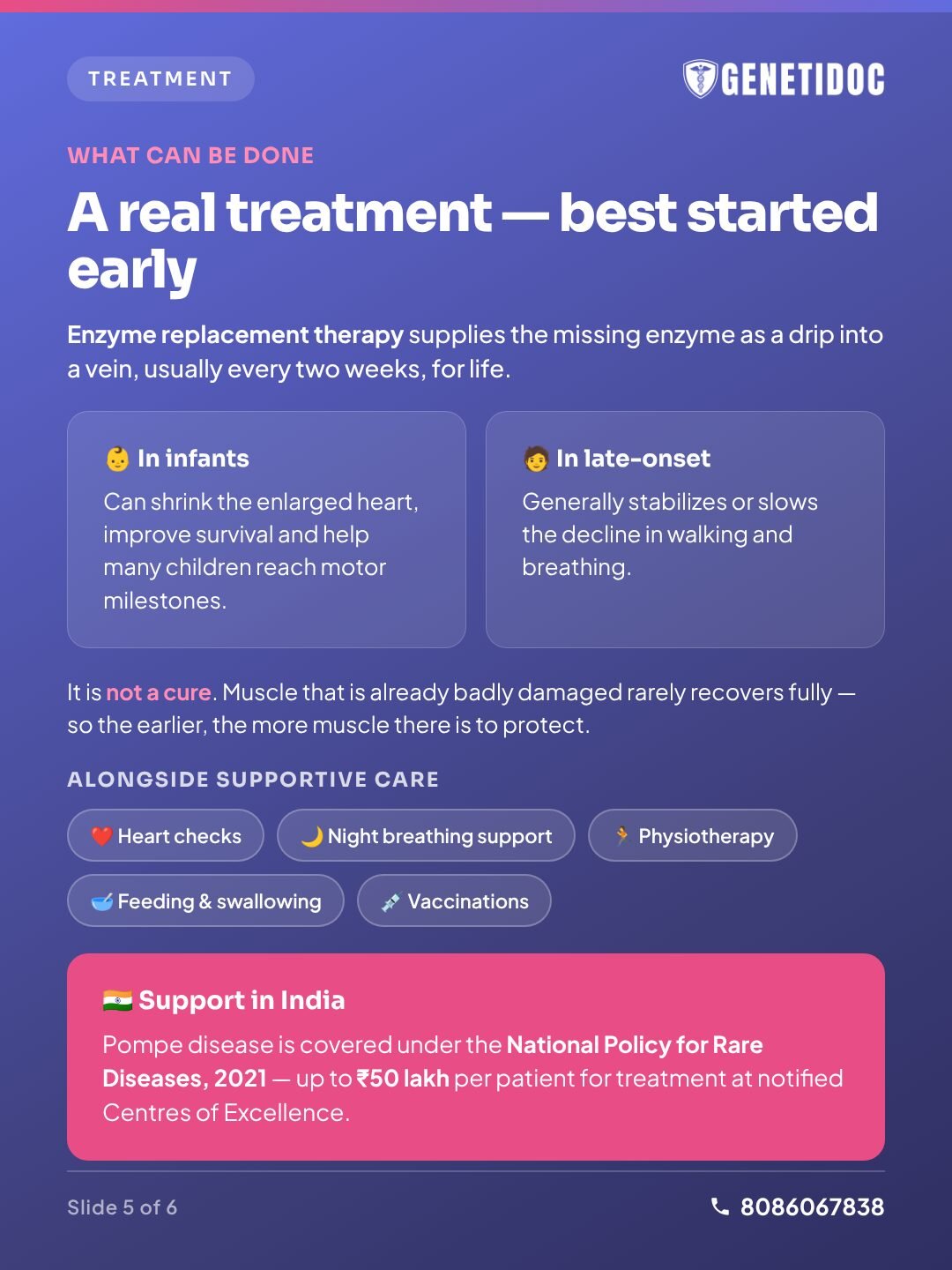
Enzyme replacement therapy (ERT) supplies a manufactured version of the missing GAA enzyme. It is given as a drip into a vein, usually every two weeks, for life. The enzyme travels to the muscles and helps clear the stored glycogen.
- Alglucosidase alfa was the first enzyme replacement therapy approved for Pompe disease. In infants, it has been shown to improve survival and heart function, especially when started early.
- Newer enzyme therapies have since been developed. These include avalglucosidase alfa, and cipaglucosidase alfa given together with an oral medicine called miglustat. They are designed to deliver more enzyme into muscle cells and have improved outcomes and safety in studies. Approval and availability differ between countries and patient groups, and your treating team will advise what is available in India.
What enzyme replacement can and cannot do
- In infants: When started early, treatment can shrink the enlarged heart, improve survival and help many children reach motor milestones. Some children still develop muscle weakness over time and need ongoing support.
- In late-onset disease: Treatment generally stabilizes or slows the decline in walking and breathing. Some people see modest improvement. Muscle that is already badly damaged rarely recovers fully.
- Timing: In every form, the earlier treatment starts, the more healthy muscle there is to protect.
Recent studies from the United States support this. Babies identified through newborn screening and treated early had better health outcomes than those treated later.
Supportive care: the other half of treatment
Enzyme replacement works best alongside a team of specialists:
- Cardiology: regular heart checks, especially in infants. Anesthesia needs careful planning in babies with heart involvement.
- Breathing care: regular lung function tests, sleep studies and, when needed, breathing support at night using a mask (non-invasive ventilation).
- Physiotherapy: guided, moderate exercise to maintain strength and mobility without overexertion.
- Nutrition and swallowing support: help with feeding, weight and safe swallowing.
- Orthopedics: monitoring the spine for scoliosis.
- Vaccinations: keeping up with vaccines, including those against flu and pneumonia, to reduce chest infections.
Research and future treatments
Gene therapy and other new approaches for Pompe disease are being studied in clinical trials worldwide. These are not yet standard treatment. Your geneticist can tell you whether any research study may be relevant.
Treatment Access in India: The National Policy for Rare Diseases
Enzyme replacement therapy is very expensive. The dose depends on body weight, so the yearly cost can run into many lakhs of rupees, and treatment is lifelong.
Pompe disease is among the conditions covered under India’s National Policy for Rare Diseases, 2021. Under this policy:
- Financial assistance of up to ₹50 lakh per patient is provided for treatment at notified Centres of Excellence.
- The network of Centres of Excellence has grown from 8 to 15 government hospitals, including two in northeast India.
- Patients register at a nearby Centre of Excellence to apply for support.
Because treatment is lifelong, patient groups have raised concerns about what happens once the initial funding is used up. Families may also hear about charitable access programs run by drug manufacturers or clinical trials. Your geneticist can guide you on documentation, the confirmed genetic report needed, and referral to the right centre.
| “Ten years ago, many Indian families were told nothing could be done. Today there is a treatment and a national policy that supports access to it. The step that still decides outcomes is the first one: recognizing Pompe disease early and confirming it properly.” — Dr. Roshan Daniel |
What a Pompe Diagnosis Means for Your Family
A Pompe diagnosis affects more than one person. Genetic counseling helps families understand and act on these implications:
- Brothers and sisters: Each full sibling has a 25% chance of also being affected. Late-onset disease can be silent for years, so siblings who look healthy should be offered testing for the family’s gene changes. Finding it early allows monitoring and timely treatment.
- Future pregnancies: Once both of the family’s gene changes are known, parents can choose testing in a future pregnancy. This can be done through chorionic villus sampling (a small sample of the placenta) or amniocentesis (a small sample of the fluid around the baby). Couples going through IVF can consider preimplantation genetic testing, which tests embryos before transfer. Genetidoc counsels families on these options and coordinates referral to centres that perform these procedures.
- Extended family: Brothers and sisters of the parents, and their partners, may wish to consider carrier testing before planning a family. This is especially relevant when marriages between relatives are common in the family.
Every decision belongs to the family. The role of genetic counseling is to inform, never to direct.
Illustrative Examples
These scenarios are composites based on presentations commonly described in published literature. They do not describe individual patients.
| Example 1: The floppy baby with a big heart
A two-month-old girl is admitted with a chest infection. She is floppy, feeds poorly and her chest X-ray shows an enlarged heart. An echocardiogram shows thickened heart muscle. The pediatric team sends a dried blood spot enzyme test, which shows very low GAA activity. Genetic testing confirms infantile-onset Pompe disease, and the result also predicts her CRIM status. Treatment planning begins within weeks rather than months. Her parents, who are first cousins, are counseled about the 25% chance in each future pregnancy and the option of prenatal diagnosis. |
| Example 2: “Myositis” that did not respond
A 34-year-old man has had slowly worsening difficulty climbing stairs for four years. His CK is moderately raised. He was diagnosed with polymyositis and given steroids, with no improvement. Recently he has been waking with headaches and feels sleepy during the day. A clinical geneticist notices weakness of the hip muscles and a drop in breathing capacity when he lies down. Enzyme and genetic testing confirm late-onset Pompe disease. His steroids are stopped, he starts breathing support at night, and he is referred for enzyme replacement assessment. |
| Example 3: The sister who felt “just tired”
After the man in Example 2 is diagnosed, his family is offered genetic counseling. His 29-year-old sister has no obvious weakness but tires easily and has a mildly raised CK. Testing for the family’s two gene changes shows she also has late-onset Pompe disease. She begins regular monitoring of her breathing and muscle strength, so treatment can start at the right time instead of after years of silent decline. |
Common Myths About Pompe Disease
- Myth: “It’s just low muscle tone. The baby will catch up.” A floppy baby with feeding or breathing difficulty, or an enlarged heart, needs urgent evaluation. In infantile-onset Pompe disease, weeks matter.
- Myth: “Only babies get Pompe disease.” Late-onset Pompe disease can begin in childhood, adolescence or adulthood, even in the 50s or 60s.
- Myth: “My CK is normal, so it can’t be a muscle disease.” CK can be normal or only slightly raised in some adults with Pompe disease.
- Myth: “Enzyme replacement is a cure.” It is an effective lifelong treatment, not a cure. It works best when started before major muscle damage.
- Myth: “Our first child is healthy, so the next one will be too.” When both parents are carriers, the 25% chance applies to every pregnancy.
- Myth: “Nothing can be done in India.” Diagnosis, treatment and government support under the National Policy for Rare Diseases are all available in India.
What to Do If You Suspect Pompe Disease
- For a baby, act quickly. If your baby is floppy and has feeding or breathing difficulty, or has been told the heart is enlarged, ask the doctor directly whether Pompe disease has been considered.
- Write down the symptoms and when they started. Include weakness, falls, breathing problems, sleep changes and morning headaches.
- Collect all previous reports. Bring CK results, heart scans, ECGs, chest X-rays, breathing tests, muscle biopsy reports and any genetic reports.
- Draw a simple family tree. Note relatives with muscle weakness, breathing problems, early deaths in infancy, and whether the parents are related by blood.
- Do not rely on one test alone. A low enzyme result needs confirmation. A “normal” CK does not rule out late-onset disease.
- Keep your reports safe. A confirmed genetic report is needed for family testing, pregnancy planning and treatment support applications.
How Genetic Counseling Helps Families Facing Pompe Disease
A Pompe diagnosis can feel overwhelming, whether it is for a newborn or for an adult who has searched for answers for years. Genetic counseling provides a structured space to understand:
- What the diagnosis means and how it is likely to progress
- Which tests are needed to confirm it and plan treatment
- How to access treatment and support under the national policy
- What the condition means for brothers, sisters and relatives
- What choices exist for future pregnancies
At Genetidoc, every test is chosen and interpreted by clinical geneticists who are super-specialized in Medical Genetics. Counseling is part of every result, both before testing and after the report arrives. Consultations are available online across India in more than 15 languages, with home sample collection.
Key Takeaways
- Pompe disease is a rare, inherited condition in which glycogen builds up in muscle cells because the GAA enzyme is missing or weak.
- In babies, the classic sign is a floppy baby with an enlarged heart. Without treatment, it progresses rapidly.
- In children and adults, it causes slowly worsening weakness of the hips and shoulders and weakness of the breathing muscles. It is often mistaken for muscular dystrophy or myositis.
- Diagnosis starts with a dried blood spot enzyme test and is confirmed by genetic testing or a second enzyme test.
- Enzyme replacement therapy is effective, especially when started early, but it is not a cure.
- Pompe disease is covered under India’s National Policy for Rare Diseases, 2021.
- Siblings should be offered testing, and couples can plan future pregnancies with genetic counseling.
| Worried about unexplained muscle weakness, a floppy baby or an enlarged heart?
If your baby has low muscle tone with an enlarged heart, or you or a family member have slowly worsening weakness or breathing difficulty that has never been explained, a clinical geneticist can tell you whether Pompe disease should be tested for, and which tests will give a reliable answer.
|
Frequently Asked Questions About Pompe Disease
What is Pompe disease?
Pompe disease is a rare inherited condition in which a missing or weak enzyme, acid alpha-glucosidase (GAA), causes glycogen to build up in cells. This damages muscles, especially the heart, breathing muscles and the muscles of the hips and shoulders.
What are the first signs of Pompe disease in a baby?
Common early signs are floppiness, poor head control, slow or difficult feeding, breathing problems, a large tongue and an enlarged heart, usually appearing in the first few months of life.
Can Pompe disease start in adulthood?
Yes. Late-onset Pompe disease can begin at any age from childhood to late adulthood. It usually causes slowly worsening weakness of the hip and shoulder muscles and weakness of the breathing muscles.
Is Pompe disease curable?
There is no cure yet. Enzyme replacement therapy can improve survival in infants and stabilize or slow the disease in older patients, especially when started early.
How is Pompe disease diagnosed?
Diagnosis usually starts with a dried blood spot test to measure GAA enzyme activity. It is confirmed by genetic testing of the GAA gene or by repeating the enzyme test on another sample, along with heart, muscle and breathing assessments.
What is the life expectancy with Pompe disease?
Without treatment, classic infantile-onset Pompe disease is usually fatal in the first year of life. With early enzyme replacement therapy, many children live much longer. In late-onset disease, life expectancy depends mainly on breathing muscle strength and timely care.
Is Pompe disease inherited?
Yes. Pompe disease is autosomal recessive. A child is affected when both parents are healthy carriers and each passes on a non-working copy of the GAA gene.
What is the chance of Pompe disease in our next baby?
When both parents are carriers, the chance is 1 in 4 (25%) in each pregnancy. Genetic counseling can explain your family’s options.
Can Pompe disease be detected during pregnancy?
Yes, if the family’s gene changes are already known. Testing can be done through chorionic villus sampling or amniocentesis. Couples using IVF can consider preimplantation genetic testing of embryos.
Is Pompe disease the same as muscular dystrophy?
No. Pompe disease is a metabolic condition caused by glycogen build-up. However, late-onset Pompe disease can look very similar to limb-girdle muscular dystrophy, which is why confirmation with enzyme and genetic testing is important.
Is Pompe disease treatment covered by the government in India?
Pompe disease is covered under the National Policy for Rare Diseases, 2021, which provides financial assistance of up to ₹50 lakh per patient for treatment at notified Centres of Excellence.
Does cousin marriage increase the risk of Pompe disease?
Yes. Pompe disease is recessive, and relatives are more likely to carry the same gene change. Couples who are related by blood can consider carrier testing before pregnancy.
Which doctor should I see if I suspect Pompe disease?
Start with your pediatrician, neurologist or physician and ask for a referral to a clinical geneticist. A clinical geneticist can choose the right tests, interpret the results, and coordinate care and family testing.
Join the Conversation
Have questions about rare genetic conditions or want to connect with other families? Visit the genetidoc rare genetic diseases forum
Book a free genetic consultation today from best genetic clinic in India.
Related Reading
- Understanding Pitt-Hopkins Syndrome
- Noonan Syndrome: Symptoms, Causes and Genetic Testing Explained
- Developmental Delay: When to Consider a Genetic Evaluation
- What Defines a Rare Genetic Disease? A Clear Guide
- Skipping Generations: What Families Should Know
- Unusual Inheritance Patterns: Mitochondrial DNA Explained
References
- Leslie N, Bailey L. Pompe Disease. In: GeneReviews®. University of Washington, Seattle.
- Kishnani PS, Steiner RD, Bali D, et al. Pompe disease diagnosis and management guideline. Genetics in Medicine. 2006;8(5):267–288.
- Kishnani PS, Corzo D, Nicolino M, et al. Recombinant human acid alpha-glucosidase: major clinical benefits in infantile-onset Pompe disease. Neurology. 2007;68(2):99–109.
- van der Ploeg AT, Clemens PR, Corzo D, et al. A randomized study of alglucosidase alfa in late-onset Pompe’s disease. New England Journal of Medicine. 2010;362(15):1396–1406.
- Diaz-Manera J, Kishnani PS, Kushlaf H, et al. Safety and efficacy of avalglucosidase alfa versus alglucosidase alfa in patients with late-onset Pompe disease (COMET). Lancet Neurology. 2021;20(12):1012–1026.
- Schoser B, Roberts M, Byrne BJ, et al. Safety and efficacy of cipaglucosidase alfa plus miglustat versus alglucosidase alfa plus placebo in late-onset Pompe disease (PROPEL). Lancet Neurology. 2021;20(12):1027–1037.
- Desai AK, Rodriguez-Rassi E, Parikh S, et al. Early initiation of enzyme replacement therapy as facilitated by newborn screening improves health outcomes among patients with infantile-onset Pompe disease. Genetics in Medicine Open. 2026;4:103478.
- Li. Comprehensive review of recent advances in Pompe disease: pathogenesis, management, and future directions. Frontiers in Neurology. 2026. doi:10.3389/fneur.2026.1756935
- Lingappa L, Rama Devi R, Dherai A, Rehder C, Kishnani P. Pompe disease: experience from South India. BMC Musculoskeletal Disorders. 2013;14(Suppl 2):P23.
- Pal S, Bijarnia-Mahay S, Nampoothiri S, et al. Impact of enzyme replacement therapy on patients with late onset Pompe disease: real world data from a developing country. 2026.
- Ministry of Health and Family Welfare, Government of India. Details of National Policy for Rare Diseases (press release, August 2024). mohfw.gov.in
This article is for educational purposes and does not replace a medical consultation. If you are concerned about your or your child’s health, please consult your doctor or a clinical geneticist.