
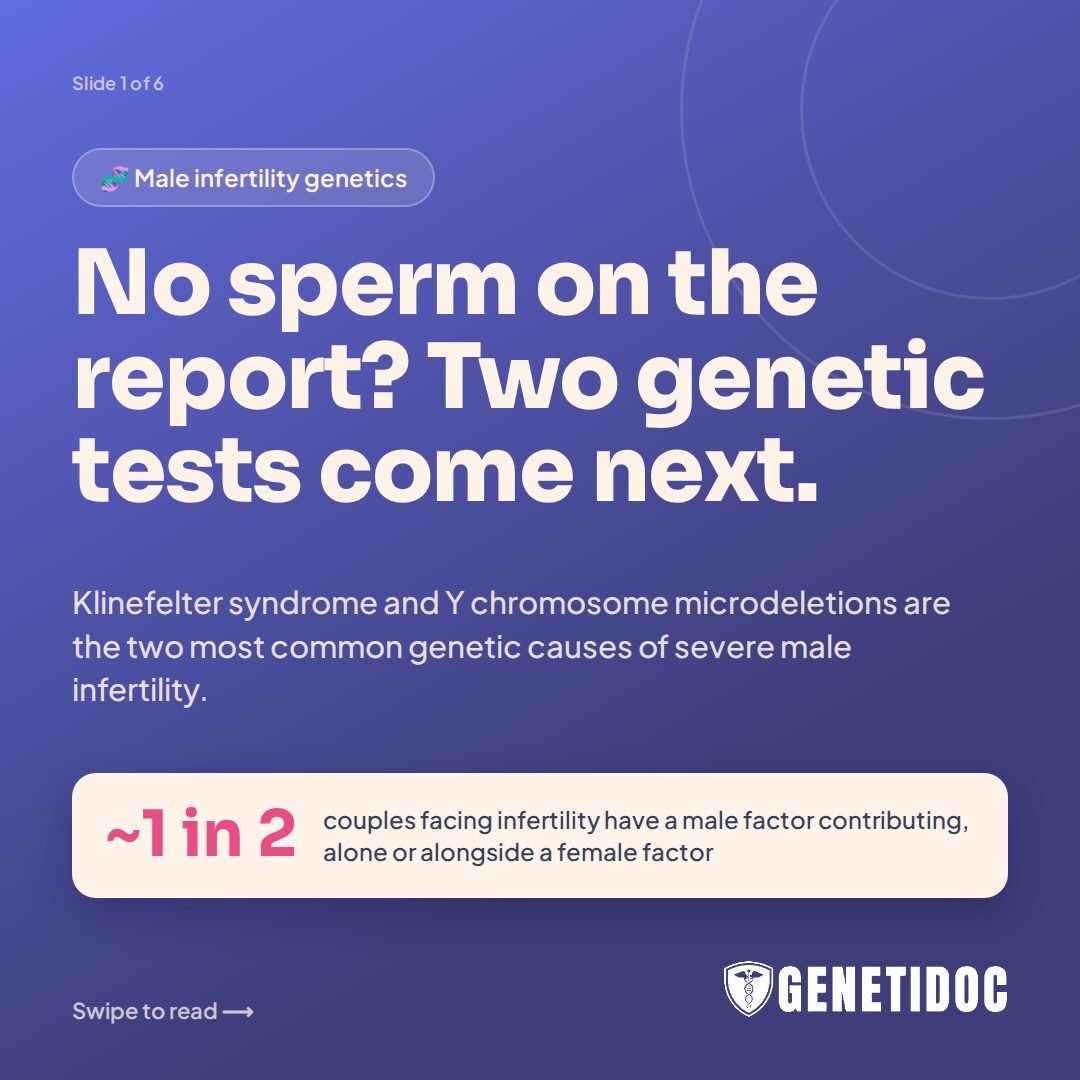
For many couples, the first year of trying for a baby passes with hope, then with worry. When tests finally begin, the focus in India often falls on the woman first. Sometimes it is months, or even years, before anyone looks closely at the man’s semen analysis. Then a report arrives with a word most people have never heard: azoospermia, meaning no sperm at all in the semen, or severe oligozoospermia, meaning a very low sperm count.
At that point, the doctor may ask for two tests that sound unfamiliar: a karyotype and a Y chromosome microdeletion test. These tests look for the two most common genetic causes of severe male infertility: Klinefelter syndrome and Y chromosome microdeletions.
This guide explains both conditions in plain language: what they are, how they are tested, what a result actually changes, and what options remain for becoming a father. It draws on international guidelines, published research, and the clinical experience of Team Genetidoc.
Quick answer:
- Klinefelter syndrome is a chromosome condition in which a man has an extra X chromosome (47,XXY instead of 46,XY). It is the most common genetic cause of azoospermia.
- A Y chromosome microdeletion is a small missing piece of the Y chromosome in a region needed to make sperm, called the azoospermia factor (AZF) region. It is the second most common genetic cause.
- Both are found with blood tests. The result often tells a couple, before any surgery, how likely it is that sperm can be found. It also tells them whether a son conceived through fertility treatment could inherit the same problem.
Male Infertility Is More Common Than Most Families Think
Infertility is usually defined as not conceiving after one year of regular, unprotected intercourse. International guidelines estimate that a male factor contributes in about half of all couples facing infertility, either alone or together with a female factor. Yet in many Indian families, the woman is assumed to be the cause and is tested first, while the man’s evaluation is delayed.
“Most couples reach us when they have been trying to conceive for about a year without success, as part of their infertility workup,” says Team Genetidoc. “They come with one concern: having a child. Our job is to find out whether there is a genetic reason behind the difficulty, and what that reason means for their options.”
Most causes of a low sperm count are not genetic. Varicocele (swollen veins in the scrotum), past infections, hormone problems, medicines, heat exposure, and lifestyle factors all play a part. But when the count is very low, or there are no sperm at all, a genetic cause becomes much more likely, and finding it early can save a couple years of trial and error.
How Chromosomes Control Sperm Production
Chromosomes are the packages that carry our DNA. Most people have 46 chromosomes arranged in 23 pairs. The last pair decides biological sex: women usually have two X chromosomes (46,XX), and men usually have one X and one Y (46,XY).
The Y chromosome is small, but it carries several genes that are essential for making sperm. Many of them sit on its long arm, in a stretch called the azoospermia factor (AZF) region. This region is divided into three parts, called AZFa, AZFb and AZFc.
Sperm production can be disrupted in two main ways:
- An extra chromosome, as in Klinefelter syndrome, which damages the sperm-producing tissue of the testes over time.
- A missing piece of the Y chromosome, as in a Y chromosome microdeletion, which removes genes the testes need to make sperm.
What Is Klinefelter Syndrome?
Klinefelter syndrome is a condition in which a male is born with at least one extra X chromosome. The most common form is 47,XXY: 47 chromosomes instead of 46.
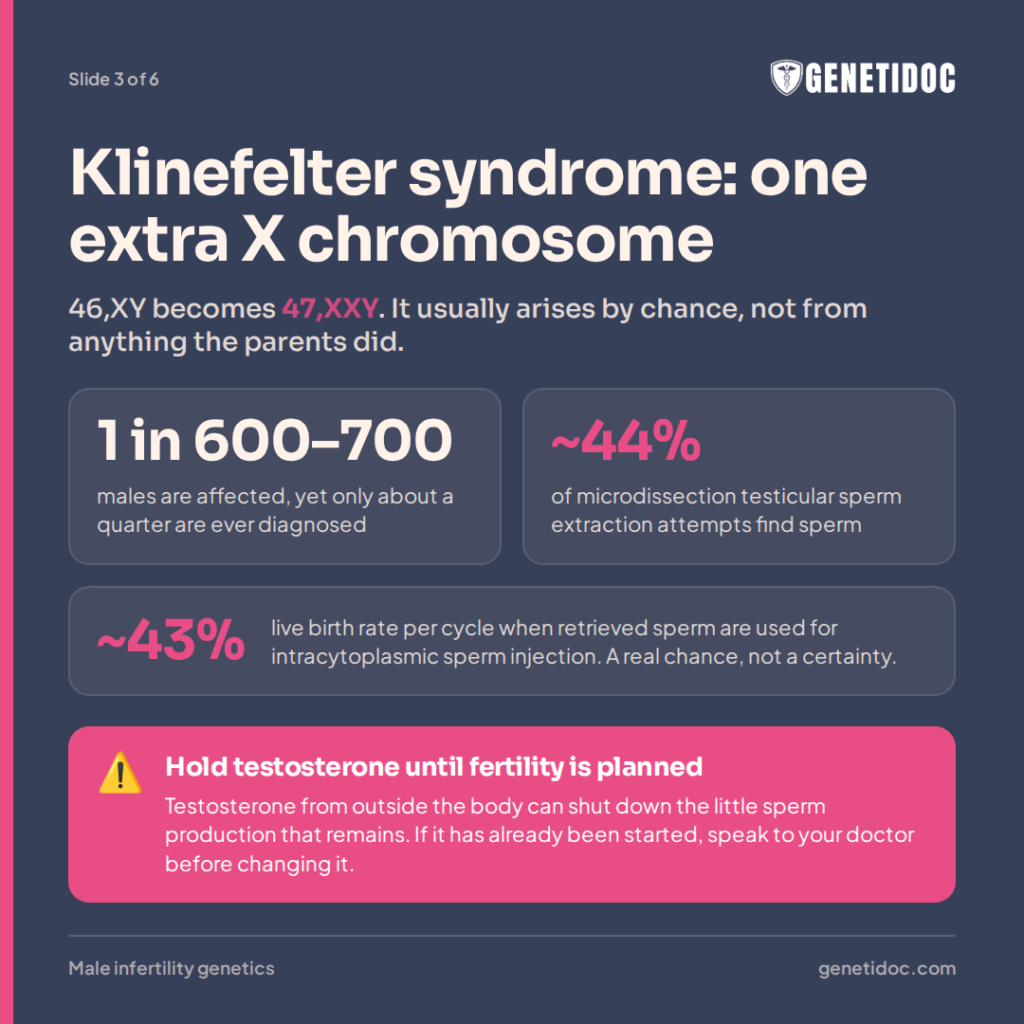
It is one of the most common chromosome conditions in men, affecting roughly 1 in every 600 to 700 males. Yet a large Danish registry study found that only about a quarter of affected men are ever diagnosed, and fewer than 1 in 10 before puberty. Many men learn they have it only when they are tested for infertility.
Is Klinefelter syndrome inherited?
Usually not. The extra X chromosome typically arises by chance, when an egg or sperm forms with an extra chromosome during its development. It is not caused by anything the parents did. Parents who ask whether a future child could be affected are usually given the standard, low recurrence risk that applies to chance chromosome errors.
Signs of Klinefelter syndrome at different ages
The features vary widely, and many men have only mild signs. Published guidelines describe the following clues:
- In infancy: undescended testes (testes that have not moved down into the scrotum), a small penis, or low muscle tone (hypotonia).
- In childhood: delayed speech and language, learning difficulties, and sometimes attention or behavior concerns.
- In the teenage years: tall stature with long legs, breast tissue growth (gynecomastia), less body and facial hair, and puberty that starts but does not fully progress.
- In adulthood: small, firm testes, low testosterone, low energy, reduced sex drive, and infertility, usually with no sperm in the semen.
“Small testes and undescended testes are among the features that get missed,” says Team Genetidoc. “Speech delay in childhood is often put down as just part of growing up, especially because it usually improves later. So most of the time, Klinefelter syndrome is picked up only at the infertility stage.”
Variants of Klinefelter syndrome
Not every man with Klinefelter syndrome has the same chromosome pattern, and the pattern matters for fertility:
- Mosaic Klinefelter syndrome (46,XY/47,XXY): some cells carry the extra X and others do not. Features are often milder, and some men still have a small number of sperm in their semen.
- Higher-grade forms such as 48,XXYY or 48,XXXY: rarer, usually with more developmental and health effects.
- 46,XX male (sometimes called de la Chapelle syndrome): a related but different condition in which a man has two X chromosomes, one carrying the male-determining gene SRY. Because the AZF regions of the Y chromosome are absent, sperm usually cannot be found, even with surgery.
Can a Man With Klinefelter Syndrome Become a Father?
This is the question almost every patient asks, and the answer is more hopeful than many expect.
Most men with non-mosaic Klinefelter syndrome have no sperm in their ejaculate. But the testes often contain small, scattered pockets of tissue that still make sperm. A surgical procedure called microdissection testicular sperm extraction (micro-TESE) uses an operating microscope to search the testes for these pockets. Any sperm found can be used to fertilize an egg through intracytoplasmic sperm injection (ICSI), where a single sperm is injected directly into an egg in the laboratory.
A large review of 37 studies and more than 1,200 men with Klinefelter syndrome found:
- Sperm were retrieved in about 44 percent of retrieval attempts.
- When sperm were found and used for ICSI, the pregnancy rate and live birth rate were each about 43 percent per cycle.
- The chance of finding sperm could not be predicted reliably from age, testis size or hormone levels.
In other words, roughly half of men with Klinefelter syndrome who undergo micro-TESE have sperm found. That is a real chance, but not a certainty, and couples should hear both halves of that message before surgery.
An important warning about testosterone
Men with Klinefelter syndrome often have low testosterone, and many are advised, or decide on their own, to start testosterone injections, gels or gym supplements. Testosterone taken from outside the body shuts down the brain’s signals to the testes and can stop what little sperm production remains.
The American Urological Association and American Society for Reproductive Medicine guideline states clearly that men interested in current or future fertility should not be prescribed testosterone therapy. If a man with Klinefelter syndrome wants children now or later, the fertility plan should be discussed with a reproductive specialist before any testosterone is started. If testosterone has already been started, he should speak with his doctor before making any change, rather than stopping it on his own.
What about teenagers with Klinefelter syndrome?
When Klinefelter syndrome is diagnosed in childhood, parents sometimes ask whether sperm should be retrieved and frozen during the teenage years, before it is “too late.” Experts are divided. The review above found that retrieval rates in men under 20 were no different from those in older men, and other studies have found that waiting does not clearly reduce the chance of success. This is a decision to make with a reproductive specialist and a genetic counselor, weighing the young person’s own wishes, not one to rush into.
Will the baby have Klinefelter syndrome?
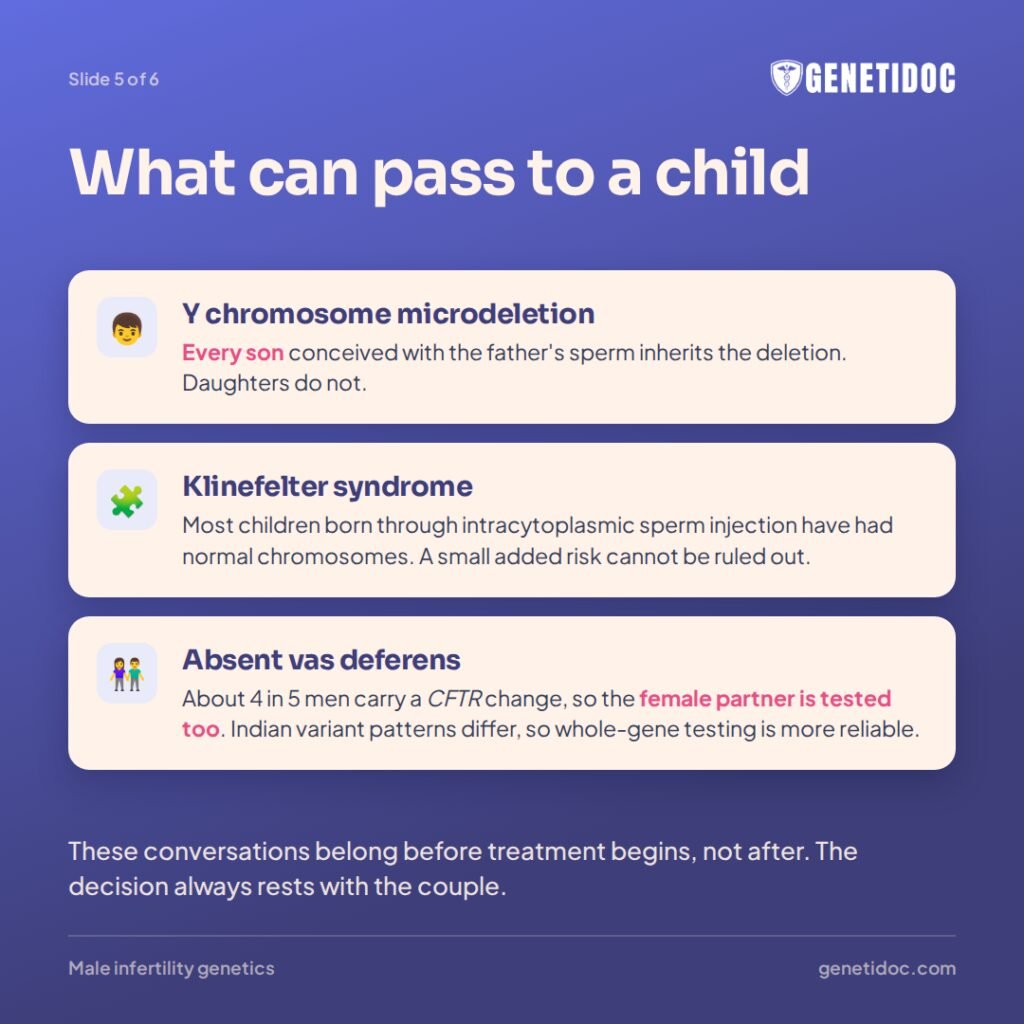
Most children born to fathers with Klinefelter syndrome through ICSI have had normal chromosomes. However, a small increase in the chance of a chromosome difference cannot be ruled out, so couples are usually offered counseling about preimplantation genetic testing of embryos or prenatal testing during pregnancy. Whether to use either is the couple’s own decision.
Klinefelter Syndrome Is More Than a Fertility Diagnosis
Finding Klinefelter syndrome during an infertility workup is also a chance to protect a man’s long-term health. International guidelines, including those of the European Academy of Andrology, recommend attention to:
- Bone health: low testosterone raises the risk of thinning bones (osteopenia and osteoporosis). A bone density scan may be advised.
- Metabolic and heart health: higher rates of abdominal weight gain, type 2 diabetes, high cholesterol and blood clots. Regular checks of weight, blood sugar and cholesterol help.
- Breast health: the risk of breast cancer is higher than in other men, though the actual chance remains low. Any new breast lump should be checked promptly.
- Mental health and learning: anxiety, low mood and attention difficulties are more common. Support is available and effective.
- Testosterone levels: once fertility plans are settled, testosterone replacement can improve energy, bone strength, muscle and mood.
Follow-up is usually coordinated by an endocrinologist (a hormone specialist) according to published guideline criteria, with the genetic team available for family and reproductive questions.
What Is a Y Chromosome Microdeletion?
A Y chromosome microdeletion is a small missing piece of the Y chromosome, too small to be seen under a microscope on a routine karyotype. When the missing piece falls in the AZF region, the genes needed to make sperm are lost.
Y chromosome microdeletions are the second most common known genetic cause of severe male infertility, after Klinefelter syndrome. Figures vary between populations and depend on how men were selected for testing. They are found in a meaningful minority of men with azoospermia and a smaller share of men with severe oligozoospermia. Studies from several parts of India, including West Bengal, have documented these deletions in Indian men with infertility.
A man with a Y chromosome microdeletion usually feels completely healthy. Apart from a low or absent sperm count, there are typically no other signs, which is why the condition is found only through testing.
Why the exact region matters
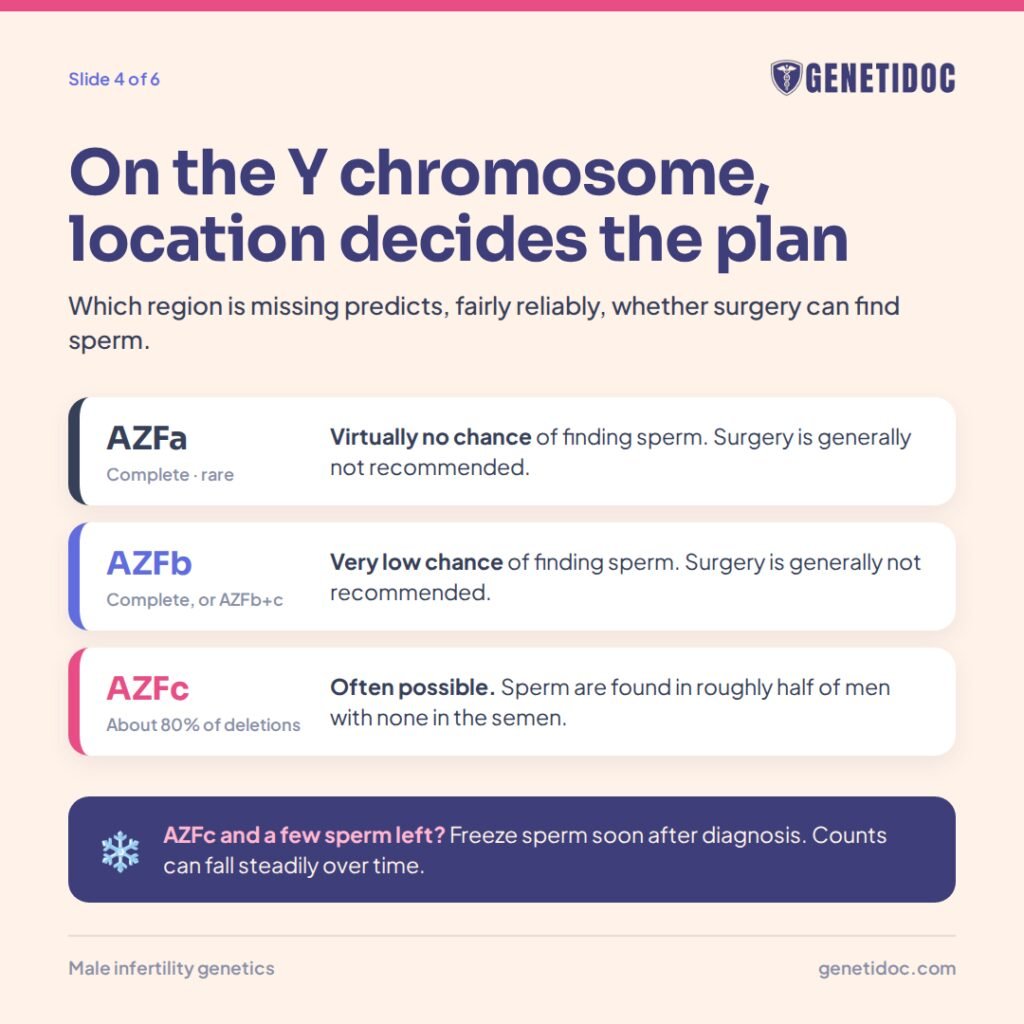
This is the most useful thing a Y chromosome microdeletion result can tell a couple. The region that is missing predicts, fairly reliably, whether sperm can be found through surgery.
| Deleted region | How common | Chance of finding sperm with surgery |
| Complete AZFa | Rare | Virtually none; surgery is generally not recommended |
| Complete AZFb, or AZFb plus AZFc | Uncommon | Very low; surgery is generally not recommended |
| AZFc | Most common (about 80 percent of deletions) | Often possible: sperm are found in roughly half of men with no sperm in the semen, and some men still have sperm in the ejaculate |
Based on the European Academy of Andrology and European Molecular Genetics Quality Network best practice guidelines and published reviews. Individual outcomes vary, and results should always be discussed with a specialist.
This is why testing before surgery matters. A man with a complete AZFa or AZFb deletion can be spared an operation that is very unlikely to find sperm, and the couple can move sooner to options that can work for them. A man with an AZFc deletion, on the other hand, has a genuine reason to try.
AZFc deletions and freezing sperm early
Some men with AZFc deletions still have a few sperm in their semen. Published studies show that sperm counts in these men can fall steadily over time. For this reason, guidelines recommend offering sperm freezing (cryopreservation) soon after the diagnosis, while sperm are still available, rather than waiting.
Partial deletions (gr/gr)
Some laboratories also report smaller, partial AZFc deletions, such as the “gr/gr” deletion. Their effect is less predictable: they are found in men with a wide range of sperm counts, including normal counts, and their importance differs between populations. A partial deletion is a risk factor, not a diagnosis on its own, and it needs careful interpretation.
Will my son inherit it?
Yes, if the child is a boy. A father always passes his Y chromosome to his sons, so every son conceived using sperm from a man with a Y chromosome microdeletion will inherit the same deletion, and may face similar fertility problems as an adult. Daughters receive the father’s X chromosome, not the Y, so they do not inherit the deletion.
Couples deserve to understand this clearly before starting ICSI. It is one of the most important parts of genetic counseling for this condition. Some couples accept it, knowing that fertility treatment options may be even better by the time their son is an adult. Others choose to discuss preimplantation genetic testing or donor sperm. There is no single right answer, and the decision belongs to the couple.
When Should a Man Have Genetic Testing for Infertility?
Genetic testing is usually recommended when:
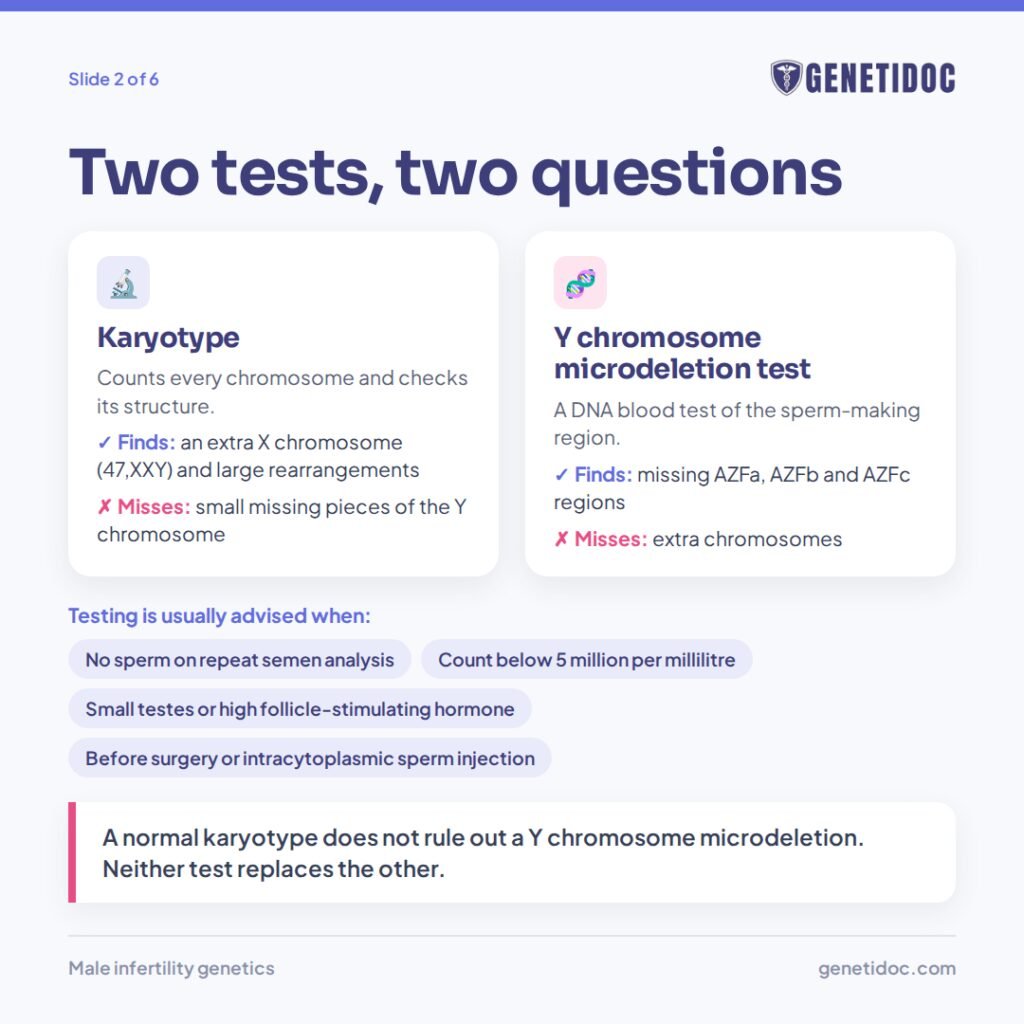
- The semen analysis shows no sperm (azoospermia), confirmed on repeat testing.
- The sperm count is very low (severe oligozoospermia), commonly defined as fewer than 5 million sperm per milliliter.
- The testes are small, or blood tests show a high follicle-stimulating hormone (FSH), a brain hormone that rises when the testes are not responding.
- A scan or examination shows the vas deferens is absent. The vas deferens is the tube that carries sperm out of the testis.
- Before planning surgical sperm retrieval or ICSI, so the couple knows their realistic chances and what may pass to a child.
The American Urological Association and American Society for Reproductive Medicine guideline recommends karyotype testing for men with azoospermia or a sperm count below 5 million per milliliter, and Y chromosome microdeletion testing for men with azoospermia or a count of 1 million per milliliter or less, particularly when hormone levels or testis size suggest a sperm production problem. European guidelines use similar thresholds.
The Genetic Workup: What Happens, Step by Step
There is no single fixed test list for every man. The tests needed depend on how he presents: the semen analysis result, hormone levels, examination and scan findings, and his personal and family history. A man with no sperm and small testes needs a different workup from a man with no sperm and a missing vas deferens. A clinical geneticist matches the tests to that picture, so nothing important is missed and no unnecessary tests are done. A typical sequence looks like this:
- Consultation and history: how long the couple has been trying, previous test results, childhood history (undescended testes, speech delay, puberty), medicines including any testosterone, and family history.
- Karyotype: a blood test in which the laboratory grows cells and photographs all the chromosomes, counting them and checking their structure. It detects Klinefelter syndrome, its variants, and larger chromosome rearrangements.
- Y chromosome microdeletion test: a DNA test on a blood sample that checks specific markers across the AZF regions. At Genetidoc this is done using a dedicated panel, including multiplex ligation-dependent probe amplification (MLPA), a technique that measures many small stretches of DNA at once to find which pieces are missing.
- CFTR testing, when needed: if the vas deferens is absent on both sides, the cause is often a change in the CFTR gene, the gene linked to cystic fibrosis. Because the female partner may also be tested in this situation, this becomes a couple-level decision. Questions about CFTR can be raised on the forum’s Cystic Fibrosis discussion board.
- Post-test genetic counseling: the results are explained together with the semen analysis, hormone levels and scan findings, and the couple’s options are laid out clearly.
How long does it take, and what does it cost?
- Karyotype: results usually take about three to four weeks, because the cells must first be grown in the laboratory.
- Y chromosome microdeletion test: about the same, roughly three to four weeks.
- Cost: varies with the tests needed and the laboratory. Your genetic counselor can explain which tests fit your situation before any sample is taken, so you do not pay for tests you do not need.
What each test can and cannot find
| Test | What it finds | What it cannot find |
| Karyotype | Extra or missing chromosomes (such as 47,XXY) and large structural changes (such as translocations) | Small deletions, including Y chromosome microdeletions, and changes within single genes |
| Y chromosome microdeletion test | Missing AZFa, AZFb and AZFc regions, and the extent of the deletion | Extra chromosomes and changes in genes elsewhere in the genome |
| CFTR testing | Gene changes linked to an absent vas deferens | Causes of low sperm production inside the testis |
This is why the two main tests are paired: they look at different kinds of genetic change, and neither can replace the other. Even after both, a clear cause is not found for many men with low sperm production. A normal result means “no cause found in what was tested,” not “there is definitely no genetic cause.” Research into other single genes involved in sperm production is moving quickly, and in selected cases a broader male infertility gene panel may be discussed.
What Your Result Changes: Three Illustrative Scenarios
The composite examples below are based on published guidance. They show how the same starting point, a semen report showing no sperm, can lead to very different paths.
Scenario 1: Karyotype shows 47,XXY
A 31-year-old man has had two semen analyses showing no sperm. His testes are small and firm, and his follicle-stimulating hormone is high. The karyotype confirms Klinefelter syndrome. He is counseled to avoid starting testosterone until his fertility plan is settled, and is referred to a reproductive specialist to discuss micro-TESE, with an honest chance of sperm retrieval of about one in two. His long-term health check-ups are also arranged.
Scenario 2: Complete AZFb deletion
A 34-year-old man with no sperm has a normal karyotype, but the Y chromosome microdeletion test shows a complete AZFb deletion. Because the chance of finding sperm is very low, surgery is generally not recommended. The couple is counseled about donor sperm and adoption, and given time to consider these options without pressure.
Scenario 3: AZFc deletion with a few sperm
A 29-year-old man has a very low sperm count and an AZFc deletion. He is advised to freeze sperm now, because his count may fall further. The couple plans ICSI. Before they begin, they are told clearly that any son will inherit the deletion, and they decide together how to proceed.
Another Genetic Cause: CFTR and an Absent Vas Deferens
Klinefelter syndrome and Y chromosome microdeletions affect how much sperm the testes make. A third genetic cause works in a completely different way: the testes make sperm normally, but the sperm cannot get out.
This happens in congenital bilateral absence of the vas deferens (CBAVD), a condition in which a man is born without the vas deferens on both sides. The vas deferens is the tube that carries sperm from the testis towards the urethra. Without it, the semen contains no sperm, even though sperm production inside the testes is usually normal. Doctors call this obstructive azoospermia, meaning no sperm because of a blockage or missing passage rather than a production problem.
How CFTR is involved
Most men with CBAVD carry changes in the CFTR gene, the same gene that causes cystic fibrosis. A large review of published studies found that about 4 in 5 men with CBAVD carry at least one CFTR change. Many have a combination of a severe change on one copy of the gene and a milder change on the other, such as a variant called the 5T allele. This combination is enough to affect the developing vas deferens, but usually not enough to cause the lung and digestive problems of classic cystic fibrosis. Many men with CBAVD are otherwise completely healthy and learn about the condition only during infertility testing.
Clues that point to CBAVD include:
- No sperm in the semen, with a low semen volume
- Normal-sized testes and normal hormone levels
- The vas deferens cannot be felt during examination, or is not seen on a scan
When the vas deferens is missing on only one side, the cause is less often CFTR. In that situation, a kidney scan is usually advised, because a missing vas deferens on one side can occur together with a missing kidney on the same side.
What it means for fatherhood
Because sperm production is usually normal, the outlook for becoming a biological father is generally good. Sperm can usually be collected directly from the epididymis (the coiled tube behind the testis where sperm mature) or from the testis itself through a minor procedure, and then used for ICSI.
Why the female partner is tested too
This is the most important reason CFTR testing is done. Cystic fibrosis follows an autosomal recessive pattern: a child is affected only if they inherit a disease-causing change from both parents. If the man carries a CFTR change and his partner also carries one, each pregnancy has a chance of a child with cystic fibrosis. For this reason, the American Urological Association and American Society for Reproductive Medicine guideline recommends testing the female partner when a man has an absent vas deferens or a CFTR change.
- If the partner does not carry a CFTR change, the chance of a child with cystic fibrosis is low.
- If both partners carry a change, the couple can discuss preimplantation genetic testing of embryos created during ICSI, or prenatal testing, with a genetic counselor.
The Indian context
Studies of Indian men with CBAVD show that the pattern of CFTR changes in India differs from that in European populations. The change most common in Europe is found less often, and other variants play a larger role. A limited test built around the common European variants may therefore miss changes in Indian patients. A test that reads through the whole CFTR gene, interpreted by a genetics team, gives a more reliable answer for both partners.
Couples with questions about CFTR, carrier results or cystic fibrosis can connect with others and ask genetic counselors on the Genetidoc Rare Disease Forum’s Cystic Fibrosis discussion board.
Paths to Parenthood After a Genetic Diagnosis
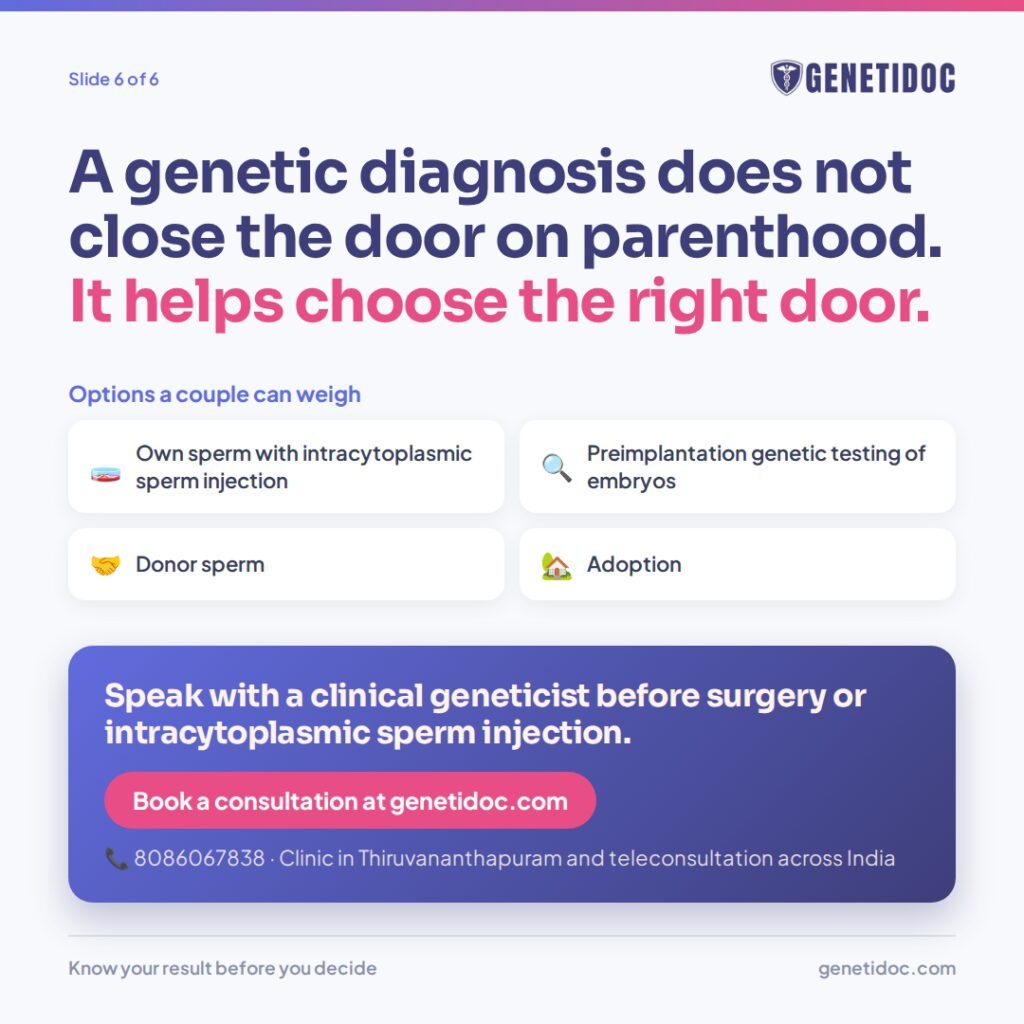
A genetic diagnosis does not close the door on parenthood. It helps choose the right door. Options include:
- ICSI using the man’s own sperm, from the ejaculate or retrieved surgically, where sperm can be found.
- Preimplantation genetic testing of embryos created through ICSI, discussed where there is a chromosome or inheritance concern.
- Donor sperm, used through intrauterine insemination or in vitro fertilization.
“We present donor sperm and adoption as options alongside assisted reproduction, not as a last resort,” says Team Genetidoc. “And these conversations are not only for men with these diagnoses. We have the same discussion with couples who are trying to conceive and have had multiple failed attempts, or where a balanced translocation has been found. Every couple deserves to see the full picture.”
The Emotional Side of a Male Infertility Diagnosis
Research on men facing infertility consistently shows high levels of stress, anxiety and low mood, often hidden behind silence. Many men describe the diagnosis as a blow to their sense of masculinity, even though fertility and manhood are not the same thing. In India, family expectations, questions from in-laws, and the long-standing habit of blaming the woman can add to the pressure. Some couples keep the diagnosis secret from their wider families.
A few things help:
- Understanding that it is no one’s fault. Klinefelter syndrome and most Y chromosome microdeletions happen by chance. Nothing the man or his parents did caused them.
- Attending counseling as a couple. Both partners hear the same information at the same time, which reduces misunderstanding and blame.
- Deciding together what to share, and with whom. Who in the family is told is a private decision for the couple.
- Seeking emotional support from a counselor or mental health professional if stress or low mood persists.
Common Mistakes That Delay the Right Answer
- Testing only the woman for months or years. A semen analysis is simple and should be done early in every infertility evaluation.
- Repeating semen tests and taking supplements without looking for a cause. Supplements cannot fix a missing piece of the Y chromosome or an extra X chromosome.
- Starting testosterone to “boost” fertility. It does the opposite, and can suppress sperm production.
- Undergoing surgical sperm retrieval without a Y chromosome microdeletion result. A complete AZFa or AZFb deletion makes success very unlikely.
- Assuming a normal karyotype rules out a genetic cause. The karyotype cannot see Y chromosome microdeletions.
- Starting ICSI without understanding what a son may inherit. This conversation belongs before treatment, not after.
When Is Genetic Testing Not the Right First Step?
- Men with a normal or mildly reduced sperm count are unlikely to have Klinefelter syndrome or a Y chromosome microdeletion. Other evaluations usually come first.
- Men with no sperm after a vasectomy or a known blockage have a clear, non-genetic explanation.
- Men with a single abnormal semen report should usually have it repeated, since counts vary from sample to sample.
A clinical geneticist or genetic counselor can help decide who should be tested, and in what order.
Why Expert Interpretation Matters
A karyotype or Y chromosome microdeletion report is only a few lines long, but those lines can decide whether a man undergoes surgery, which fertility route a couple chooses, and what their future son may inherit. Getting it right depends on:
- The right tests, in the right order, matched to the semen analysis, hormone results and examination.
- The right laboratory, accredited and following international quality standards. International quality schemes for Y chromosome microdeletion testing have shown that errors fall sharply when laboratories follow best practice guidelines and take part in regular external checks.
- Clinical correlation, reading the genetic result alongside the full clinical picture rather than in isolation.
- Genetic counseling, so the couple understands their realistic chances, the inheritance risks, and every option open to them, and makes their own decision.
If you would like to hear from others going through this, or ask a question, visit the Genetidoc Rare Disease Forum’s Male Infertility forum and Klinefelter Syndrome forum, where responses are reviewed by genetic counselors and consultants.
Frequently Asked Questions
Don’t see your question below? Ask it on the Frequently Asked Questions forum on the Genetidoc Rare Disease Forum.
What is a Y chromosome microdeletion?
It is a small missing piece of the Y chromosome in the azoospermia factor (AZF) region, which holds genes needed to make sperm. It causes a very low sperm count or no sperm, and is found with a DNA blood test.
Can a man with an AZFc deletion father a child?
Often, yes. Some men with AZFc deletions have a few sperm in the semen, and surgery finds sperm in roughly half of those who have none. Sperm can then be used for ICSI.
Is surgery worthwhile with an AZFa or AZFb deletion?
Generally not. With a complete AZFa or AZFb deletion, the chance of finding sperm is very low or virtually none, so guidelines usually advise against surgical sperm retrieval.
Will my son inherit my Y chromosome microdeletion?
Yes. Every son conceived with sperm from a man with a Y chromosome microdeletion inherits the deletion and may have fertility problems as an adult. Daughters do not inherit it.
What is Klinefelter syndrome?
Klinefelter syndrome is a chromosome condition in which a male has an extra X chromosome (47,XXY). It commonly causes small testes, low testosterone and no sperm in the semen, and is often diagnosed only during infertility testing.
Can a man with Klinefelter syndrome have a baby?
Many can. Microdissection testicular sperm extraction finds sperm in about 44 percent of attempts, and when sperm are used for ICSI, pregnancy and live birth rates are around 43 percent per cycle.
Should a man with Klinefelter syndrome take testosterone?
Not before his fertility plan is settled. Testosterone from outside the body can suppress sperm production. Men who want children now or later should discuss fertility with a specialist before starting it.
Why was I asked for a karyotype for a low sperm count?
A karyotype checks the number and structure of your chromosomes. It detects Klinefelter syndrome and other chromosome changes that can cause a very low sperm count or no sperm.
If my karyotype is normal, do I still need a Y chromosome microdeletion test?
Yes, if your count is very low or zero. A karyotype cannot see Y chromosome microdeletions, which are too small for it to detect. The two tests look for different problems.
How long do these genetic tests take?
A karyotype and a Y chromosome microdeletion test each usually take about three to four weeks. They can be done one after the other or sent together.
Is Klinefelter syndrome inherited from the parents?
Usually not. The extra X chromosome typically arises by chance when an egg or sperm forms. The chance of it happening again in the same family is generally low.
What is congenital bilateral absence of the vas deferens?
It is a condition in which a man is born without the vas deferens, the tubes that carry sperm, on both sides. Sperm are usually made normally but cannot reach the semen. Most affected men carry changes in the CFTR gene.
Why does my wife need a CFTR test if I have an absent vas deferens?
Because cystic fibrosis is inherited only when a child receives a CFTR change from both parents. If both partners carry a change, the couple can discuss testing options for a pregnancy with a genetic counselor.
Can supplements or lifestyle changes fix a genetic cause of infertility?
No. A healthy lifestyle supports overall health, but it cannot replace a missing piece of the Y chromosome or remove an extra X chromosome. Testing identifies the cause so the right options can be chosen.
Key Takeaways
- Klinefelter syndrome and Y chromosome microdeletions are the two most common genetic causes of severe male infertility.
- Men with no sperm or a very low count should have both a karyotype and a Y chromosome microdeletion test; neither replaces the other.
- The AZF region affected predicts whether surgery is likely to find sperm, and testing should come before surgery.
- About half of men with Klinefelter syndrome have sperm found through micro-TESE. Testosterone should not be started before fertility is discussed.
- A Y chromosome microdeletion passes to every son; couples should understand this before ICSI.
- When the vas deferens is absent, CFTR testing is advised for the man and his partner; sperm can usually still be retrieved.
- Klinefelter syndrome also needs lifelong attention to bone, metabolic, breast and mental health.
- Genetic counseling helps couples see every option, including donor sperm and adoption, and make their own decision.
Has a semen analysis shown no sperm or a very low count, or has your doctor asked for a karyotype or Y chromosome microdeletion test? Speak with a clinical geneticist before surgery or ICSI, and understand what your result means for your chances and your future child.
Book a Male Infertility Genetic Consultation
References
- Brannigan RE, et al. Diagnosis and Treatment of Infertility in Men: AUA/ASRM Guideline (2020; amended 2024). American Urological Association. auanet.org
- European Association of Urology Guidelines on Male Sexual and Reproductive Health: 2025 Update on Male Infertility. European Urology. europeanurology.com
- Krausz C, et al. EAA/EMQN best practice guidelines for molecular diagnosis of Y-chromosomal microdeletions: State of the art 2023. Andrology. 2024. pubmed.ncbi.nlm.nih.gov/37674303
- Zitzmann M, et al. European Academy of Andrology guidelines on Klinefelter Syndrome. Andrology. 2021;9(1):145–167. onlinelibrary.wiley.com
- Corona G, et al. Sperm recovery and ICSI outcomes in Klinefelter syndrome: a systematic review and meta-analysis. Human Reproduction Update. 2017;23(3):265–275. academic.oup.com
- Bojesen A, Juul S, Gravholt CH. Prenatal and postnatal prevalence of Klinefelter syndrome: a national registry study. Journal of Clinical Endocrinology & Metabolism. 2003;88(2):622–626. pubmed.ncbi.nlm.nih.gov/12574191
- Witherspoon et al. Y-microdeletions: a review of the genetic basis for this common cause of male infertility. Translational Andrology and Urology. tau.amegroups.org
- Hopps CV, et al. Detection of sperm in men with Y chromosome microdeletions of the AZFa, AZFb and AZFc regions. Human Reproduction. 2003;18(8):1660–1665. academic.oup.com
- Dutta S, et al. Prevalence of Y chromosome microdeletion in azoospermia factor subregions among infertile men from West Bengal, India. Molecular Genetics & Genomic Medicine. 2021;9(10):e1769. pmc.ncbi.nlm.nih.gov
- Yu J, Chen Z, Ni Y, Li Z. CFTR mutations in men with congenital bilateral absence of the vas deferens (CBAVD): a systemic review and meta-analysis. Human Reproduction. 2012;27(1):25–35. academic.oup.com
- Sharma N, et al. Heterogenous spectrum of CFTR gene mutations in Indian patients with congenital absence of vas deferens. Human Reproduction. 2009;24(5):1229–1236. academic.oup.com
- The Psychological Impact of Male Infertility: A Narrative Review. 2025. pmc.ncbi.nlm.nih.gov
- The Evidence for Fertility Preservation in Pediatric Klinefelter Syndrome. Frontiers in Reproductive Health. 2021. frontiersin.org
Related Reading on Genetidoc
- Lynch Syndrome: When Colorectal Cancer Runs in the Family
- BRCA and Beyond: What a “Positive” Hereditary Cancer Result Actually Means for Your Family
- Down Syndrome Screening in Pregnancy: How to Choose Between the First-Trimester Combined Test, Quad Screen, and Non-Invasive Prenatal Testing (NIPT)
- Family History of a Genetic Condition? Here’s What to Ask Before You Conceive
- Lynch Syndrome: When Colorectal Cancer Runs in the Family
- NGS Panel Testing Explained: How Gene Sequencing Finds Inherited Diseases