
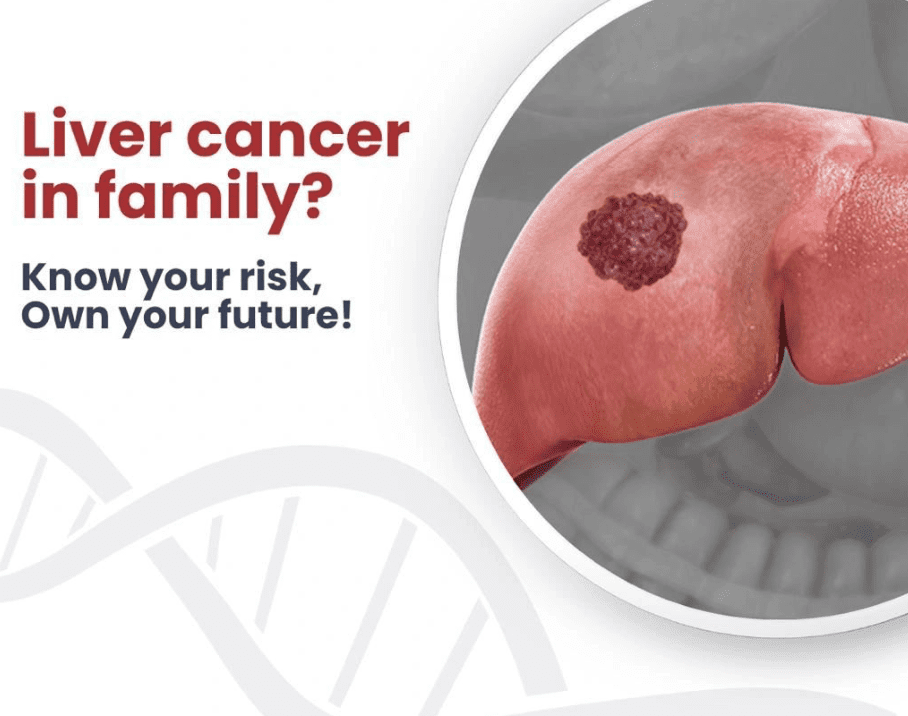
👩⚕️ “Doctor, My Father Had Liver Cancer at 45, and Now My Uncle Too. Could It Run in the Family?”
Most people associate liver cancer with viral hepatitis, alcohol, or fatty liver disease — but a small percentage (about 5–10%) can be hereditary.
That means a genetic mutation or inherited metabolic condition can make certain families more prone to developing liver cancer or related tumors.
Understanding hereditary risk helps in early diagnosis, prevention, and even complete avoidance of advanced disease.
1️⃣ How Common Is Hereditary Liver Cancer?
Most liver cancers are sporadic, caused by chronic infections (like hepatitis B or C), alcohol use, or cirrhosis.
However, 5–10% are hereditary — occurring in people who inherit specific gene mutations or metabolic disorders.
These families often show:
-
Multiple relatives affected across generations
-
Earlier onset of cancer (before 50)
-
Liver cancer with other organ tumors, like colon, adrenal, or pancreas
Even when there’s no known “cancer gene,” certain metabolic disorders can silently damage the liver for years and increase cancer risk.
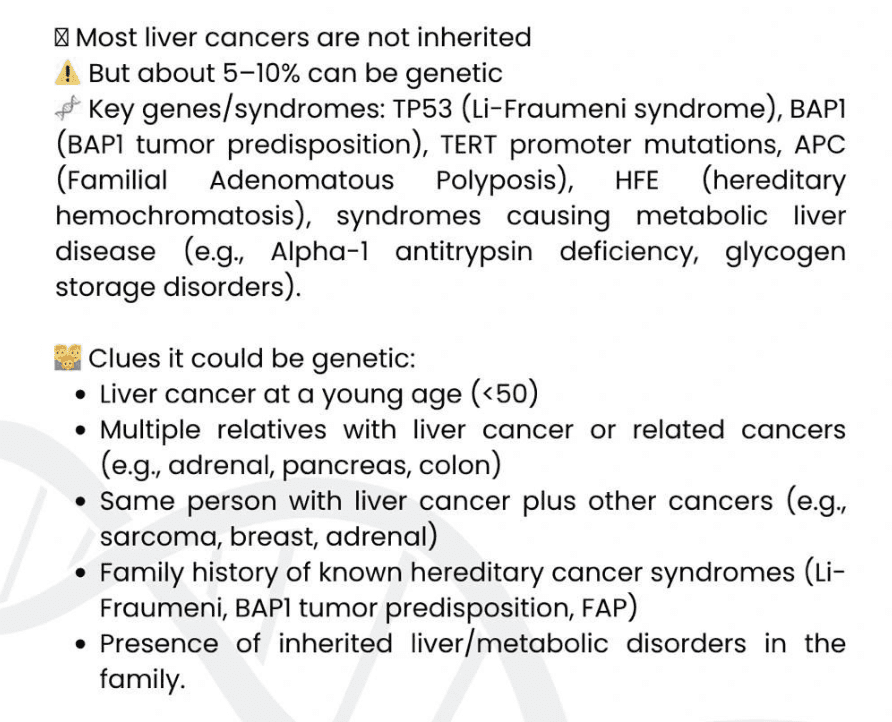
2️⃣ What Are the Common Genetic Causes of Hereditary Liver Cancer?
Several inherited syndromes and genes can increase risk. The major ones include:
-
TP53 – part of Li-Fraumeni syndrome, which causes early-onset cancers (liver, adrenal, breast, sarcoma, brain)
-
BAP1 – linked to BAP1 tumor predisposition syndrome, causing liver, mesothelioma, and kidney tumors
-
APC – the gene behind Familial Adenomatous Polyposis (FAP), which can lead to liver tumors (hepatoblastoma, hepatocellular carcinoma)
-
HFE – causes hereditary hemochromatosis, where excess iron builds up and damages the liver
-
SERPINA1 – responsible for Alpha-1 antitrypsin deficiency, a metabolic disorder leading to cirrhosis and cancer
-
ATP7B – gene for Wilson’s disease, where copper accumulation leads to chronic liver damage
-
TERT promoter mutations – predispose to hepatocellular carcinoma (HCC) in certain families
Each of these changes either increases DNA damage or creates a toxic metabolic environment in the liver.
3️⃣ Clues That Liver Cancer May Be Hereditary
You should suspect a genetic component if any of the following are true:
-
Liver cancer diagnosed before age 50
-
Multiple family members with liver, colon, adrenal, or pancreatic cancer
-
The same person develops liver cancer along with sarcoma, breast, or adrenal tumors
-
Family members known to have hereditary syndromes (Li-Fraumeni, FAP, BAP1, Lynch)
-
Presence of metabolic diseases like hemochromatosis, Wilson’s, or Alpha-1 antitrypsin deficiency
-
Unexplained liver disease or cirrhosis without alcohol or infection
If any apply, it’s worth consulting a clinical geneticist.
4️⃣ What Are Hereditary Metabolic Liver Diseases?
Some inherited disorders damage the liver slowly, even before symptoms appear.
These include:
-
Hereditary Hemochromatosis: Excess iron storage due to HFE gene mutations. Iron gradually deposits in the liver, heart, and pancreas.
-
Wilson’s Disease: Copper buildup due to ATP7B mutations, causing liver damage, neurological issues, and sometimes psychiatric symptoms.
-
Alpha-1 Antitrypsin Deficiency: Affects both liver and lungs, leading to early-onset cirrhosis or emphysema.
-
Glycogen Storage Disorders: Affect sugar metabolism and can predispose to benign or malignant liver growths.
Managing these early can prevent both cirrhosis and cancer.
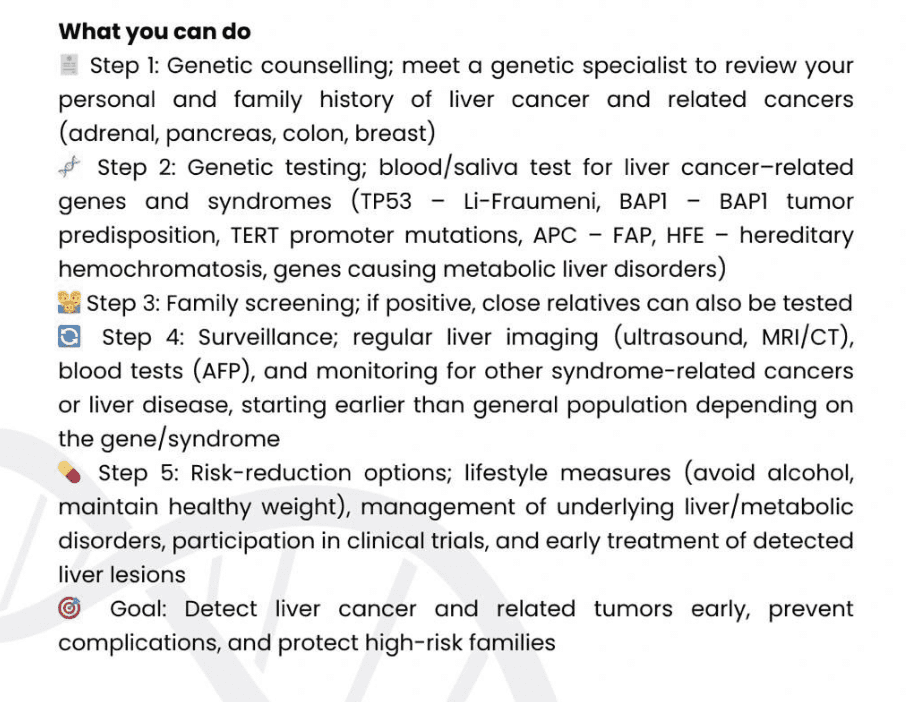
5️⃣ What Is Genetic Counseling and Testing?
A genetic counselor or clinical geneticist reviews:
-
Your personal and family history of liver or related cancers
-
Patterns that suggest inheritance (young age, multiple relatives)
-
Appropriate tests, which may include blood or saliva samples
Testing panels often include TP53, BAP1, APC, HFE, ATP7B, SERPINA1, and other relevant genes.
Results are interpreted as:
-
Positive – mutation confirmed
-
Negative – no mutation found
-
VUS – uncertain variant, to be re-evaluated later
Counseling also covers lifestyle changes and screening plans for your family.
6️⃣ What If My Test Is Positive?
Testing positive means you carry a gene that increases risk — it’s not a diagnosis, but an early warning system.
This knowledge allows you to take preventive action:
-
Regular liver imaging (ultrasound, MRI, or CT) every 6–12 months
-
Blood tests such as AFP (alpha-fetoprotein) for early tumor detection
-
Avoiding alcohol and smoking
-
Managing iron or copper overload through medication or diet
-
Vaccination against hepatitis B
-
Family testing for first-degree relatives
🎯 Goal: Detect liver cancer early or prevent it altogether.
7️⃣ What If My Test Is Negative?
A negative result can be reassuring, but not absolute.
Some families carry mutations in genes not yet discovered or not included in standard panels.
If your family history is strong, doctors may still suggest:
-
Yearly ultrasound or MRI
-
Blood tests for liver function and tumor markers
-
Avoidance of high-risk behaviors (alcohol, smoking, fatty diet)
-
Monitoring for metabolic disorders
8️⃣ How Can Family Screening Help?
If a hereditary cause is confirmed, each first-degree relative (parents, siblings, children) has a 50% chance of inheriting it.
Testing allows:
-
Early lifestyle or medical intervention
-
Treatment of underlying disorders (like iron or copper overload)
-
Targeted screening for associated cancers
-
Emotional reassurance for unaffected members
Prevention at the family level saves more lives than any treatment alone.
9️⃣ Can Hereditary Liver Cancer Be Prevented?
While we can’t change our genes, early monitoring and lifestyle control can almost eliminate the risk of dying from it.
At Genetidoc Genetic Clinic and DNA Testing Lab, the recommended approach includes:
-
Genetic Counseling: Reviewing history and planning testing
-
Genetic Testing: Identifying mutations linked to risk
-
Family Screening: Testing close relatives if positive
-
Surveillance: Routine imaging and AFP monitoring starting 10 years earlier than the youngest affected case
-
Risk Reduction: Avoiding alcohol, controlling metabolic disorders, maintaining healthy weight, and preventing hepatitis
🩺 Goal: Detect liver tumors early, prevent cirrhosis, and protect high-risk families.
🌷 Real-World Example
A 42-year-old man was diagnosed with hepatocellular carcinoma despite never drinking or having hepatitis.
His brother had pancreatic cancer at 46, and his mother had colon cancer at 55.
Genetic testing revealed a TP53 mutation consistent with Li-Fraumeni syndrome.
This led to:
-
Testing of family members — two also carried the mutation
-
Early screening and lifestyle changes for them
-
Detection of small precancerous liver nodules in one sibling — successfully treated early\
Knowledge turned a tragedy into multi-generational prevention.
💬 Frequently Asked Questions
Can liver cancer really run in families?
Yes, though uncommon. Inherited mutations or metabolic liver disorders can significantly raise risk.
Are genetic tests expensive or invasive?
No. Most are done with a small blood or saliva sample, and prices have dropped significantly.
If I have fatty liver, should I test for genetics?
Not always — but if there’s family history of early liver disease, yes.
Can metabolic disorders be treated?
Yes. Hemochromatosis and Wilson’s disease respond well to early therapy, preventing cancer.
Does alcohol worsen hereditary liver risk?
Absolutely. Even small amounts can accelerate liver injury in genetically predisposed individuals.
🌼 The Emotional Side of Genetic Awareness
Families often discover hereditary liver risk after losing a loved one, and wish they’d known earlier.
Genetic testing offers not fear, but clarity and control — helping entire families make proactive choices.
🌸 Awareness Saves Lives
Hereditary liver cancer is rare — but when recognized early, it’s one of the most preventable cancers.
With modern genetic testing and simple lifestyle adjustments, families can live long, healthy lives without the fear of recurrence.
If liver cancer, cirrhosis, or metabolic disease runs in your family, talk to a specialist today.
Prevention starts with awareness.
💚 Take Action — Know Your Risk, Protect Your Family
A single genetic consultation could change your family’s story.
Identify risks early, take preventive measures, and protect the next generation.