
Some babies are born with thick hair on their back, arms or forehead. Some children grow extra hair in a single patch. And some adults notice new hair appearing where it never grew before.
Families often find the word hypertrichosis online, usually next to frightening headlines about “werewolf syndrome.” Then the questions start. Is it genetic? Will it get worse? Will my next child have it? Is something else wrong?
This guide answers those questions. You will learn what hypertrichosis is, how it differs from hormone-related hair growth, when excess hair is a clue to a wider genetic condition, which genetic tests help, and what you can actually do about it.
| Quick answer: What is hypertrichosis?
Hypertrichosis is hair growth that is more than expected for a person’s age, sex and ethnic background, on any part of the body. It is not caused by male hormones. It can be present from birth (congenital) or appear later (acquired), and it can cover the whole body (generalized) or one area (localized). Some congenital forms are genetic. Most acquired forms are caused by medicines or other health conditions. |
What Is Hypertrichosis? A Simple Explanation
Your body has three main types of hair. Understanding them makes hypertrichosis much easier to follow.
- Lanugo hair — very fine, soft, unpigmented hair that covers a baby in the womb. It is usually shed before birth or in the first weeks after.
- Vellus hair — short, fine, light “peach fuzz” that covers most of the body.
- Terminal hair — thick, long, darker hair, like the hair on your scalp and eyebrows.
In hypertrichosis, one of these hair types grows more, longer or thicker than it should, or appears in places where it normally does not. For example, a baby may keep lanugo hair for months, or have terminal hair covering the back.
Hair growth that is simply on the heavier side of normal for a family is not hypertrichosis. Many Indian families have naturally thicker body hair, and that is a healthy, normal variation.
Is “Werewolf Syndrome” a Medical Term?
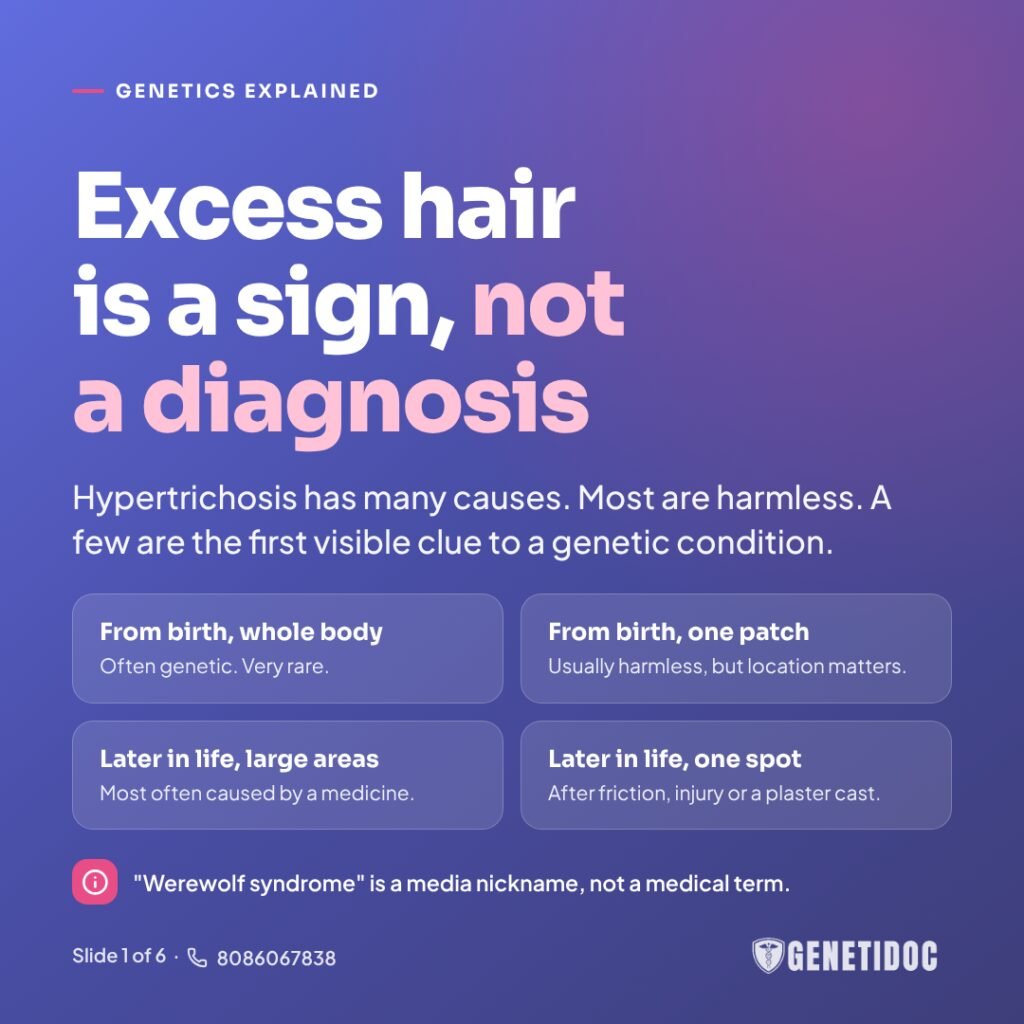
No. “Werewolf syndrome” is a media nickname. It adds stigma and gives the false impression that hypertrichosis is one single disease. In reality, hypertrichosis is a sign with many different causes. Some are harmless, some are temporary, and a small number point to an underlying genetic condition.
Indian children with rare congenital forms have appeared in news stories, including a young man from Madhya Pradesh recognized by Guinness World Records in 2025 for facial hair growth. These stories raise awareness, but they also lead to myths, such as claims that only 50 people in the world have hypertrichosis. That figure, if it applies at all, refers only to the rarest whole-body congenital forms. Localized and medicine-related hypertrichosis are far more common.
| “Excess hair is rarely dangerous by itself. What we really look for is what else the hair might be telling us about the child. In most families, the hair is the only finding. In a few, it is the first visible clue to a condition that needs follow-up.”
— Dr. Roshan Daniel, Clinical Geneticist and Founder, Genetidoc |
Hypertrichosis vs Hirsutism: What Is the Difference?
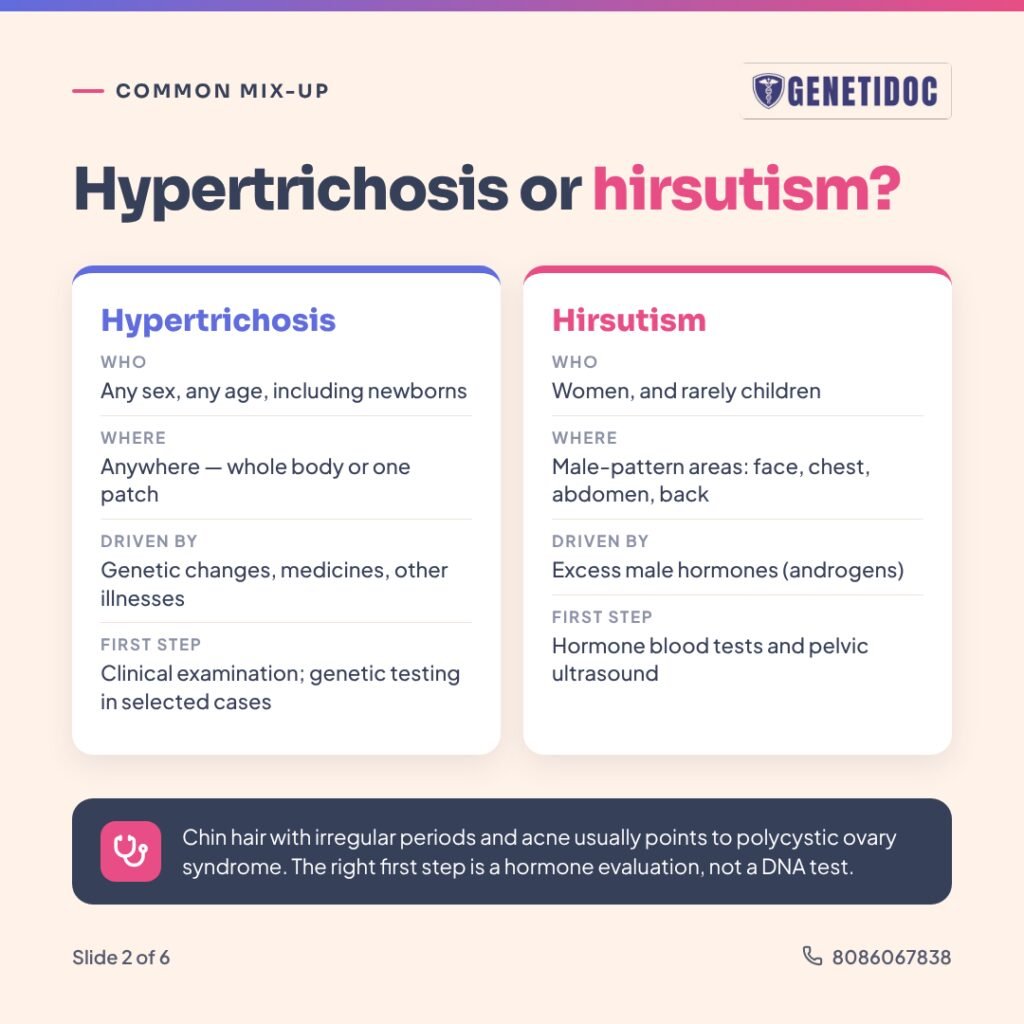
This is the most common mix-up we see. The two conditions look similar but have different causes and need different tests.
Hirsutism is thick, dark hair in a “male pattern” in women — on the upper lip, chin, chest, lower abdomen or back. It is caused by male hormones called androgens, or by the body’s extra sensitivity to them. The most common cause in India is polycystic ovary syndrome (PCOS).
Hypertrichosis can affect anyone — boys, girls, men or women, at any age. It does not follow a male pattern, and it is not driven by androgens.
| Feature | Hypertrichosis | Hirsutism |
| Who it affects | Any sex, any age, including newborns | Women and, rarely, children |
| Where hair grows | Anywhere — whole body or one patch | Male-pattern areas: face, chest, abdomen, back |
| Main cause | Genetic changes, medicines, other illnesses | Excess male hormones (androgens) |
| Other signs | Sometimes facial, heart, gum or developmental features | Irregular periods, acne, weight changes |
| First test usually needed | Clinical examination; genetic testing in selected cases | Hormone blood tests, pelvic ultrasound |
| Which specialist | Paediatrician, dermatologist, clinical geneticist | Gynaecologist, endocrinologist, dermatologist |
| Illustrative scenario: when it is not hypertrichosis
A 17-year-old girl notices dark hair on her chin and around her navel. Her periods are irregular and she has acne. Her mother has read about genetic hair conditions and asks for DNA testing. This pattern points to hirsutism, most likely linked to polycystic ovary syndrome. The right first step is a hormone evaluation with a gynaecologist or endocrinologist, not a genetic test. (Composite example for education.) |
Types of Hypertrichosis
Doctors classify hypertrichosis using two simple questions: When did it start? and How much of the body does it cover? This gives four main groups.
- Congenital generalized — present at birth, covering most of the body. Often genetic. Very rare.
- Congenital localized — present at birth, limited to one area. Usually harmless, but location matters.
- Acquired generalized — appears after birth, over large areas. Most often caused by medicines.
- Acquired localized — appears after birth in one spot, often after friction, injury or a plaster cast.
1. Congenital Generalized Hypertrichosis
This is the group most people mean when they search for “genetic hypertrichosis.” Hair covers most of the body from birth, and it continues to grow throughout life.
Congenital hypertrichosis lanuginosa
The baby keeps the fine, soft lanugo hair instead of shedding it. Hair may grow long over the whole body except the palms, soles and a few other areas.
Congenital generalized hypertrichosis terminalis
Thick, dark terminal hair covers the face and body. Some people also have gum overgrowth (gingival hyperplasia), where the gums thicken and may cover the teeth. Research has linked many of these families to tiny missing or extra pieces of DNA on chromosome 17 (in a region called 17q24). These are called copy-number changes.
X-linked congenital generalized hypertrichosis
In a few families, the cause is a piece of DNA inserted near hair-regulating genes on the X chromosome. Affected males usually have more hair than affected females, because females have a second X chromosome that balances the effect.
You may also read the term “Ambras syndrome.” It was used for a historical family and later applied to several different forms. Many experts now advise against it because it is confusing. A precise genetic diagnosis is more useful than the label.
2. Congenital Localized Hypertrichosis
These forms are much more common and usually harmless.
- Nevoid hypertrichosis — a single patch of thick hair on otherwise normal skin.
- Hairy elbows (hypertrichosis cubiti) — long hair on the elbows. Often isolated, but sometimes part of a genetic syndrome when other features are present.
- Hair on a birthmark — hair growing from a congenital mole. A dermatologist should follow these moles.
- Lumbosacral hair tuft (“faun tail”) — a patch of hair over the lower spine. This one needs special attention (see red flags below).
3. Acquired Generalized Hypertrichosis
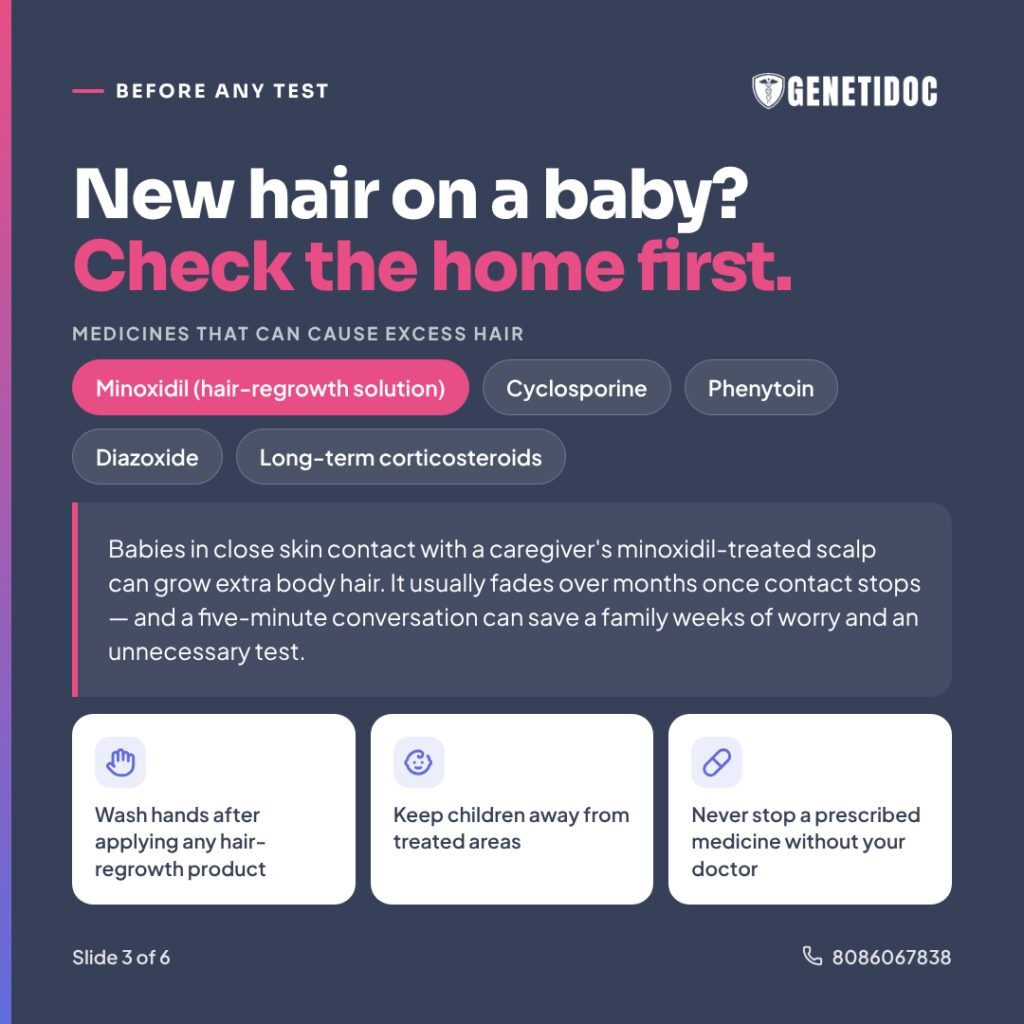
When hair appears over a large area after birth, the most common cause is a medicine. Well-known examples include:
- Minoxidil — used for hair loss (as a scalp solution or tablets) and for blood pressure
- Cyclosporine — used after organ transplants and for some skin and kidney conditions
- Phenytoin — an anti-seizure medicine
- Diazoxide — used for low blood sugar in some infants
- Corticosteroids taken for long periods
Other causes include an underactive thyroid in children, severe malnutrition, some types of porphyria (a group of blood pigment disorders), and some long-term illnesses. In adults, a sudden new growth of fine, soft hair all over the face and body is uncommon but should always be checked by a doctor, because rarely it is linked to an internal illness.
The good news: medicine-related hypertrichosis usually fades after the medicine is stopped or changed, though it can take several months. Never stop a prescribed medicine on your own — speak with the prescribing doctor first.
| Illustrative scenario: the hidden hair-regrowth solution
A 4-month-old baby starts growing thick hair on his legs and back. His parents worry about a rare genetic condition. During history-taking, the doctor learns that the father has been applying a 5% minoxidil scalp solution for hair loss and often holds the baby close against his head. Once the father stops the solution or carefully avoids contact, the baby’s hair gradually fades over the following months. This pattern matches cases reported to European drug safety authorities, which now warn caregivers to keep children away from areas where minoxidil has been applied. (Composite example based on published reports.) |
| “Before we order any genetic test for a baby with new hair growth, we ask one simple question: is anyone at home using a hair-regrowth solution? Hair loss treatments are now very common in Indian households. A five-minute conversation can save a family weeks of worry and an unnecessary test.”
— Dr. Roshan Daniel, Clinical Geneticist and Founder, Genetidoc |
4. Acquired Localized Hypertrichosis
Hair can thicken in one area after repeated rubbing or friction, under a plaster cast, over a healing wound, or near an area of long-standing skin inflammation. This is not genetic and usually settles with time.
Is Hypertrichosis Genetic?
| Short answer: Sometimes. Hypertrichosis present from birth — especially when it covers the whole body, runs in the family, or comes with other health or developmental features — often has a genetic cause. Hypertrichosis that starts later in life is usually not genetic and is more often linked to medicines or another medical condition. |
Genetic hypertrichosis falls into two broad groups.
Isolated (Non-Syndromic) Genetic Hypertrichosis
Here, excess hair is the main or only feature. The person is otherwise healthy. Most of these forms are caused not by a single “spelling mistake” in a gene, but by structural changes in the chromosomes:
- Small deletions or duplications on chromosome 17 (17q24)
- Inserted DNA segments on the X chromosome
- Rearrangements on chromosome 8 that disturb how nearby hair genes are switched on
In some of these, the hair genes themselves are normal. The problem is that the genes are moved or their “on-off switches” are disrupted. Scientists call this a position effect. This detail matters a lot when choosing a genetic test, as you will see below.
Syndromic Hypertrichosis: When Hair Is a Clue
In syndromic hypertrichosis, the excess hair is one part of a wider genetic condition that may affect the heart, bones, brain development, growth or metabolism. These conditions are individually rare, but together they explain a meaningful share of children referred for congenital hypertrichosis.
Examples include:
- Cantú syndrome — thick scalp hair extending onto the forehead, increased body hair, large size at birth, coarse facial features and an enlarged heart. Caused by changes in the ABCC9 or KCNJ8 genes, which control potassium channels in heart and blood vessel muscle.
- Cornelia de Lange syndrome — joined or arched eyebrows (synophrys), long eyelashes, small size, differences in the hands or arms, and developmental delay. Most often caused by changes in the NIPBL gene, with several other genes also involved.
- Coffin-Siris syndrome — small or absent fifth finger and toenails, developmental delay and coarse facial features with extra body hair. Linked to several genes, including ARID1B.
- Wiedemann-Steiner syndrome — hairy elbows and back, short stature and learning difficulties. Caused by changes in the KMT2A
- Mucopolysaccharidoses — inherited metabolic storage disorders where the body cannot break down certain sugar molecules. Coarse features, excess hair, joint stiffness and organ enlargement develop over time. Some types now have specific treatments, which makes early diagnosis especially valuable.
- Gum overgrowth with hypertrichosis — conditions where thickened gums and excess hair occur together, sometimes with other features.
- Prenatal medicine exposure — some anti-seizure medicines taken in pregnancy, and alcohol, can cause excess hair along with other features in the baby. This is not genetic, but a clinical geneticist is often the specialist who recognizes the pattern.
| “When a baby has excess hair together with a heart finding, an unusually large birth weight, or delayed milestones, we stop thinking of it as a cosmetic concern. It becomes a diagnostic clue, and following that clue properly can change how the child’s heart, growth and development are monitored for years.”
— Dr. Roshan Daniel, Clinical Geneticist and Founder, Genetidoc |
| Illustrative scenario: hair that led to a heart diagnosis
A baby girl is born heavier than expected, with thick hair reaching low onto her forehead and covering her back. At her 6-week check, the paediatrician hears a heart murmur. An echocardiogram (heart ultrasound) shows an enlarged heart and an open blood vessel near the heart that normally closes after birth. A clinical geneticist recognizes the combination and orders a targeted gene panel, which finds a change in the ABCC9 gene, confirming Cantú syndrome. Neither parent carries the change, so it occurred for the first time in her. She now has a yearly heart check-up and ECG, and her family understands why her hair and heart findings belong together. (Composite example based on published descriptions of Cantú syndrome.) |
Red Flags: When Excess Hair Needs a Medical Evaluation
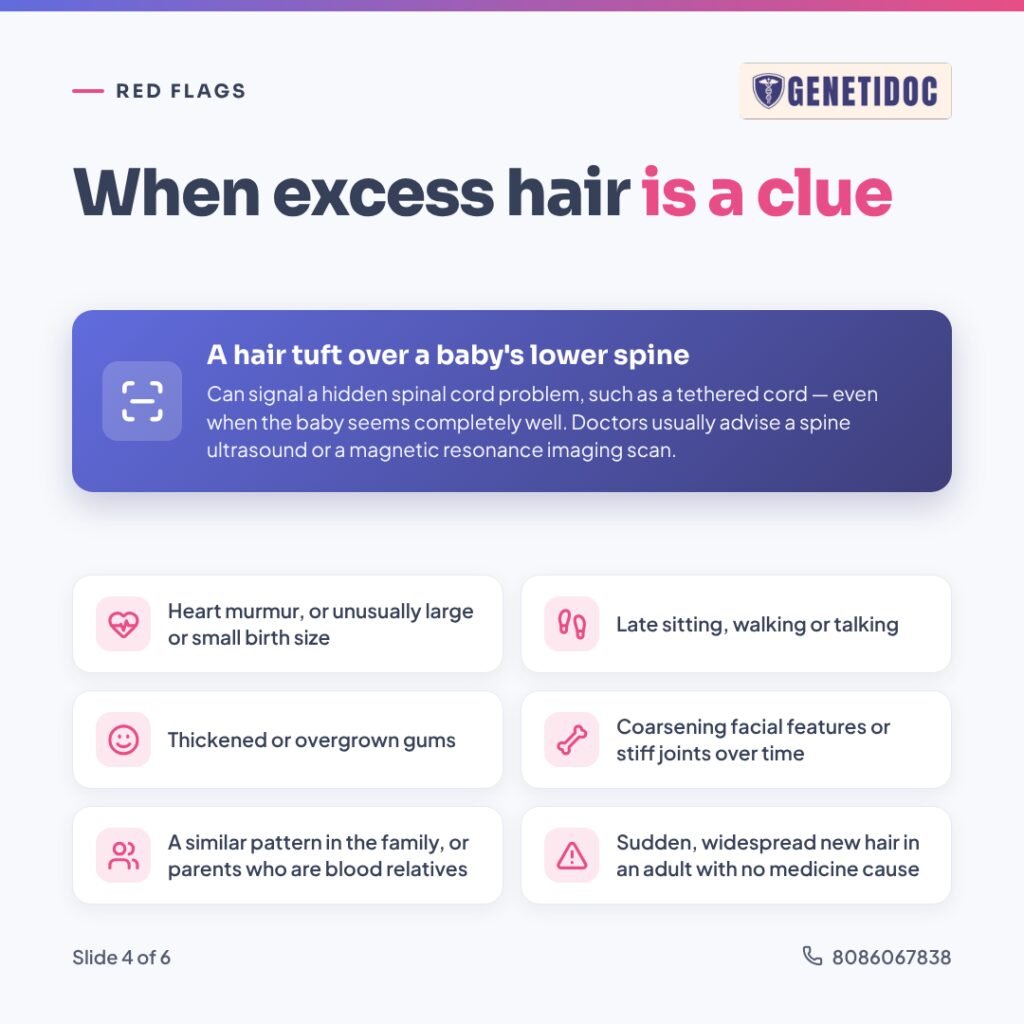
Most excess hair is not dangerous. But see a doctor — and consider a clinical genetics consultation — if any of these apply:
- A hair tuft, dimple, lump or birthmark over the lower spine in a baby. This can signal a hidden spinal cord problem called occult spinal dysraphism, including a tethered cord. Doctors usually recommend a spine ultrasound in young babies or an MRI, even if the child seems completely well.
- Excess hair present from birth together with other features — unusual facial features, heart murmur, large or small birth size, or differences in the hands, feet or nails.
- Delayed milestones — late sitting, walking or talking, or learning difficulties.
- Thickened or overgrown gums, or problems with teeth.
- Coarsening of facial features over time, stiff joints, or a growing abdomen in a young child.
- Skin blistering or sensitivity to sunlight with excess hair.
- Another family member with a similar pattern, or parents who are blood relatives (consanguineous marriage).
- Sudden new, widespread hair growth in an adult without an obvious medicine cause.
| Illustrative scenario: the hair tuft on the lower back
A 3-month-old has a triangular patch of dark hair just above his buttocks. He is feeding, kicking and growing normally. His grandmother says it is “a sign of good luck.” His paediatrician still arranges a spinal MRI, which shows the spinal cord is attached lower than it should be (a tethered cord). A neurosurgeon plans early treatment before it can affect his walking or bladder control. Here, the hair was the only visible clue. (Composite example for education.) |
How a Clinical Geneticist Evaluates Hypertrichosis
A genetic evaluation is much more than a blood test. The most important tools are a careful history and a skilled examination.
Step 1: Detailed History
- When the hair first appeared, and whether it is changing
- Pregnancy history, including any medicines or alcohol
- Every medicine the child or adult takes — and products used by caregivers at home
- Growth, development and school performance
- Heart, gum, teeth, vision, hearing and joint problems
- A three-generation family tree (pedigree), including whether parents are related
Step 2: Physical Examination
The geneticist looks at the hair type, its distribution, and subtle features of the face, hands, nails, gums, skin and spine. This “dysmorphology” assessment often narrows down the possibilities more than any single test. Family photographs, and sometimes examining the parents, also help.
Step 3: Ruling Out Non-Genetic Causes
Depending on the picture, this may include thyroid tests, hormone tests, a review of medicines, or urine and blood tests for metabolic disorders.
Step 4: Choosing the Right Genetic Test
Only after this does the team decide whether genetic testing is useful, and which test fits the suspected cause.
Genetic Testing for Hypertrichosis: Which Test and Why?
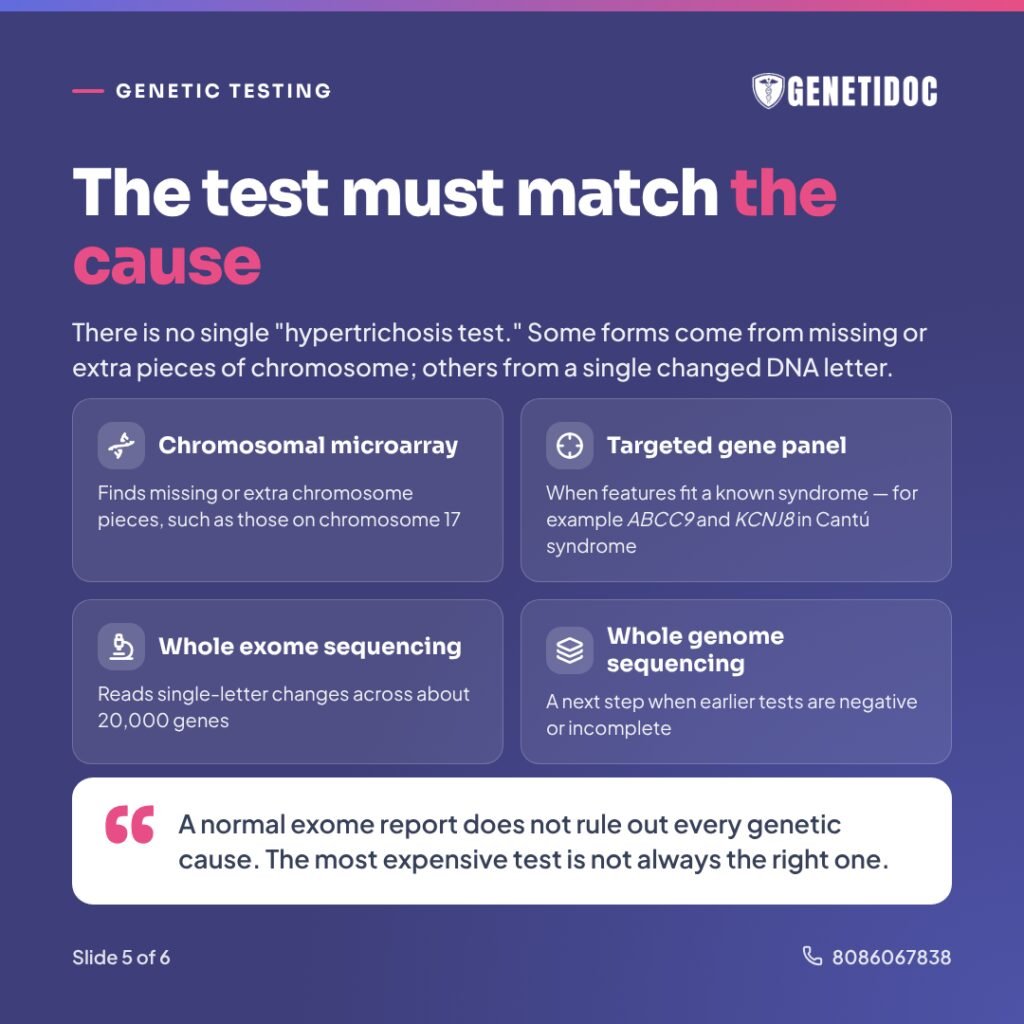
There is no single “hypertrichosis test.” The right test depends on what the doctor suspects is happening at the DNA level.
Chromosomal Microarray
What it finds: missing or extra pieces of chromosomes (copy-number changes) that are too small to see under a microscope.
When it helps: congenital generalized terminal hypertrichosis, especially with gum overgrowth or a family pattern, and children with hypertrichosis plus developmental delay or several physical differences.
Targeted Gene Panel
What it finds: changes in a selected group of genes linked to a specific condition.
When it helps: when the features strongly suggest a known syndrome — for example, testing ABCC9 and KCNJ8 for Cantú syndrome, or a Cornelia de Lange syndrome gene panel. Multi-gene panels typically take around 3 to 4 weeks.
Whole Exome Sequencing
What it finds: changes in the protein-coding parts of about 20,000 genes.
When it helps: when a syndrome is likely but the features do not point to one specific condition, especially with developmental delay or multiple organ involvement. Results typically take around 1 to 2 months.
Whole Genome Sequencing
What it finds: almost the entire DNA sequence, including many structural changes and regions that other tests miss.
When it helps: as a next step when a genetic cause is strongly suspected but earlier tests were negative or incomplete.
Why Test Choice Matters So Much in Hypertrichosis
Here is an important point that most online articles miss. Several genetic forms of congenital hypertrichosis are caused by structural changes — missing pieces, extra pieces, or DNA inserted in the wrong place. Exome sequencing is designed mainly to read the individual DNA “letters” inside genes. It is not reliable at detecting these larger structural changes, and it does not read the switch regions between genes where position effects happen.
So a child with isolated, whole-body congenital hypertrichosis could have a normal exome report and still have a genetic cause. Choosing a microarray, or later a genome test, can make the difference.
The reverse is also true. For Cantú syndrome, the known disease-causing changes are single-letter changes that overactivate the gene. A test looking only for deletions or duplications would miss them.
| “The test has to match the suspected mechanism. Some forms of congenital hypertrichosis come from missing or extra pieces of chromosome. A test built to read single DNA letters can miss them completely. Ordering the most expensive test is not the same as ordering the right one.”
— Dr. Roshan Daniel, Clinical Geneticist and Founder, Genetidoc |
| Illustrative scenario: the normal report that wasn’t the end
A father and his young son both have thick, dark hair over their face and body since birth, and both have overgrown gums. The family had an exome test done elsewhere, which was reported as “no pathogenic variant found.” After genetic counseling, a chromosomal microarray finds a small duplication on chromosome 17 in both of them — a known cause of this form of hypertrichosis. The family finally has an explanation, and they learn there is a 50% chance of passing it on in each future pregnancy. (Composite example based on published family studies.) |
When Genetic Testing May Not Be Useful
Genetic testing is not needed for every person with extra hair. It is usually not the right first step when:
- The hair is heavier than average but within your family’s normal pattern, with no other features
- The cause is clearly a medicine, and the hair fades after it is changed
- The pattern is hormonal (hirsutism), such as with polycystic ovary syndrome
- It is a single harmless patch, such as nevoid hypertrichosis or hair on the ear rims, with no other findings
- It follows friction, a cast or a skin injury
A clinical geneticist will tell you honestly when testing is unlikely to change anything, and when a test is worth doing.
Understanding Your Genetic Test Report
A genetic report usually falls into one of three categories.
- Positive (pathogenic or likely pathogenic) — a change was found that explains the condition.
- Variant of uncertain significance (VUS) — a change was found, but science does not yet know whether it causes disease. A VUS is not a diagnosis and should not be used on its own to make family or pregnancy decisions.
- Negative — no reportable cause was found in what was tested.
| “A negative report does not mean the hair isn’t genetic. It means we didn’t find a reportable cause in what was tested. That’s why we explain every report in person, and why we ask families to come back if new symptoms appear. Genetic knowledge keeps growing, and a report that is unclear today may be answered later.”
— Dr. Roshan Daniel, Clinical Geneticist and Founder, Genetidoc |
After an inconclusive or negative result, Team Genetidoc generally advises a review at 6 months to 1 year, or sooner if new features develop. The existing data can often be reanalyzed against new scientific knowledge without repeating the whole test. Keep a copy of your report and raw data safely.
What Changes After a Diagnosis?
A genetic diagnosis rarely makes the hair disappear. But it often changes care in ways that matter far more.
Impact on Treatment and Monitoring
- Cantú syndrome: regular heart monitoring, usually with a yearly echocardiogram and ECG, plus follow-up for bones, spine and other features. Researchers are studying medicines that block the overactive potassium channel, but this is not yet standard treatment.
- Cornelia de Lange syndrome: a structured follow-up plan covering feeding and reflux, growth, hearing, vision, heart and development, based on international consensus guidance.
- Mucopolysaccharidoses: early access to specific treatments for some types, which work best when started early.
- Developmental syndromes: earlier therapy and school support, because the family knows what to expect.
- Medicine-related hypertrichosis: the prescribing doctor can consider alternatives where safe.
Impact on Prognosis
For isolated genetic hypertrichosis, the outlook for general health is usually excellent. The main challenges are cosmetic and emotional. For syndromic forms, the outlook depends on the specific condition, and a diagnosis lets doctors give a realistic picture instead of guesses. Knowing the name of the condition also ends the “diagnostic odyssey” — years of tests and specialist visits without answers.
Impact on Family Members
The inheritance pattern decides the chance of recurrence:
- Autosomal dominant (for example, Cantú syndrome, chromosome 17 forms): an affected parent has a 50% chance of passing it on in each pregnancy.
- New (de novo) change: neither parent carries it. The chance of it happening again is low, though not zero.
- X-linked: the chance depends on which parent carries the change and the sex of the child.
- Autosomal recessive (for example, many metabolic storage disorders): both parents are healthy carriers, with a 25% chance in each pregnancy. This is more common when parents are blood relatives, which is still frequent in parts of India.
Once a definite diagnosis is confirmed, couples planning another pregnancy can discuss options such as preimplantation genetic testing with IVF or prenatal diagnosis. A VUS is not enough to base these decisions on.
Living With Hypertrichosis: The Emotional Side
In India, visible differences can bring stares, teasing at school, and pressure around marriage — especially for girls. Some families also hear that the condition is a curse, punishment or the result of something the mother did during pregnancy.
None of this is true. Genetic changes are not caused by diet, prayer, a past mistake or anything a parent did.
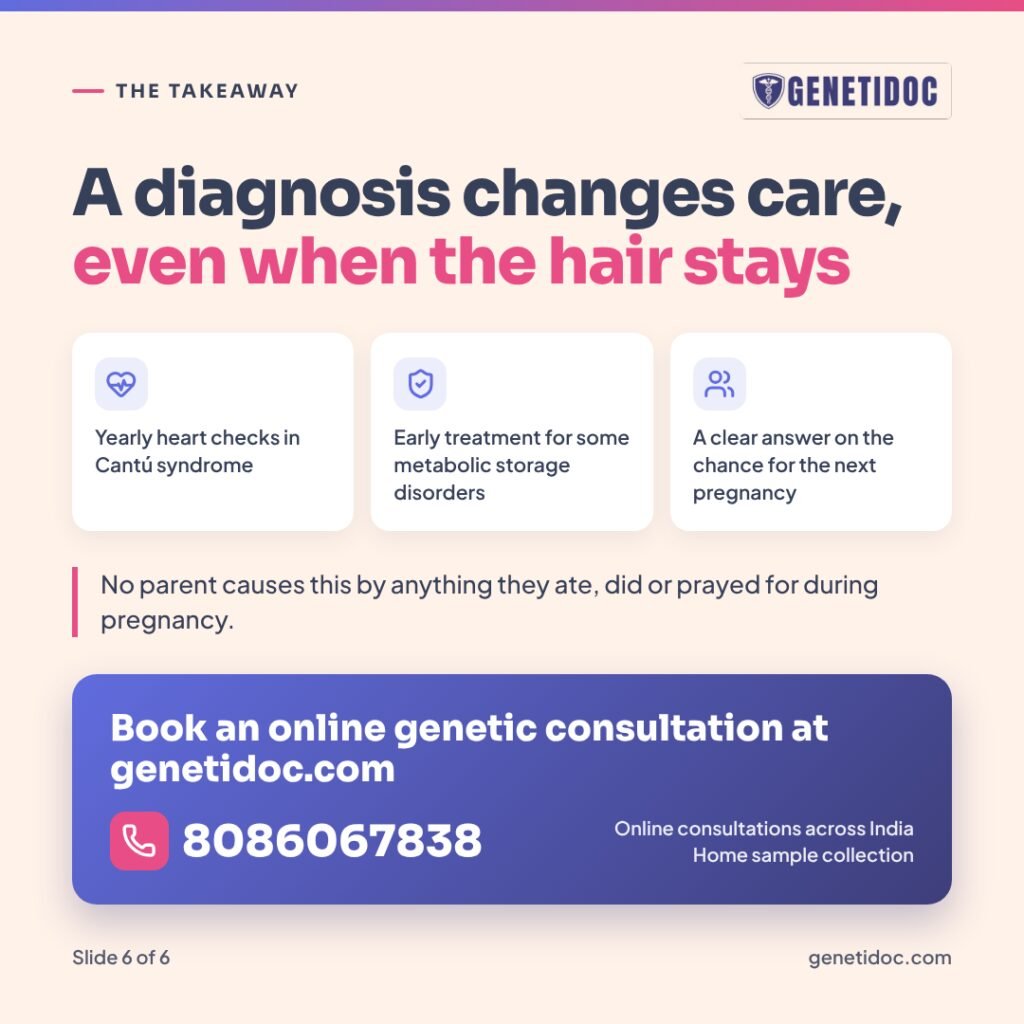
| “No parent caused this by something they ate, did or prayed for during pregnancy. In many syndromic forms, the genetic change happens for the very first time in the child. Removing that guilt is one of the most important parts of our counseling — sometimes more important than the test result itself.”
— Dr. Roshan Daniel, Clinical Geneticist and Founder, Genetidoc |
Practical steps that help families:
- Speak with teachers early so they can prevent teasing
- Give the child simple, confident words to explain their hair if asked
- Seek counseling or psychological support if the child becomes withdrawn
- Connect with other families through patient support communities, such as the Genetidoc Rare Disease Forum
Treatment and Hair Management Options
There is currently no medicine that cures genetic hypertrichosis. Management focuses on safe hair removal and treating any associated condition. Be cautious of any product, remedy or clinic promising a permanent cure.
- Trimming and shaving — quick and painless. Shaving does not make hair grow back thicker or darker; that is a myth.
- Hair removal creams — useful for larger areas; always do a patch test first, as they can irritate sensitive skin.
- Waxing and threading — longer-lasting, but can be painful and may irritate the skin.
- Laser hair removal — reduces hair over several sessions. It works best on dark hair and must be done by a qualified dermatologist, especially on Indian skin tones, to avoid pigmentation or burns.
- Electrolysis — can give permanent removal for small areas, but is slow.
For children, the best age and method depends on the child’s comfort and wishes. A dermatologist can advise. There is no medical need to remove hair, so the decision should be about the child’s wellbeing, not other people’s opinions.
Why Expert Interpretation and the Right Laboratory Matter
In hypertrichosis, getting a DNA report is the easy part. The hard part is asking the right question before the test, and understanding the answer after it.
- The right test: as explained above, a wrongly chosen test can return “normal” while the true cause is missed.
- The right laboratory: accredited laboratories follow strict quality standards and confirm important findings before reporting them.
- Clinical correlation: a DNA change only matters if it fits the person’s actual features. Without that match, families can be falsely reassured or falsely alarmed.
- Genetic counseling: before testing, so families know what the test can and cannot find; after testing, so the result becomes a clear plan.
At Genetidoc, every test is chosen by a clinical geneticist and every result is explained in a counseling session, with a written summary the family can share with their other doctors and relatives. Most consultations are online, with home sample collection, and an in-person examination is arranged when it adds value.
Frequently Asked Questions About Hypertrichosis
1. Is hypertrichosis genetic?
Hypertrichosis present from birth is often genetic, especially when it covers the whole body, runs in families, or occurs with other features. Hypertrichosis that appears later in life is usually caused by medicines or another medical condition, not genes.
2. What is the difference between hypertrichosis and hirsutism?
Hirsutism is male-pattern hair growth in women caused by male hormones, often due to polycystic ovary syndrome. Hypertrichosis can affect anyone, anywhere on the body, and is not caused by hormones.
3. Is it normal for a newborn baby to be hairy?
Yes, many newborns have fine lanugo hair on the back, shoulders and face, especially premature babies. It usually falls off within the first few weeks to months. Thick, dark hair that persists or increases should be checked by a paediatrician.
4. Should I worry about a hair tuft on my baby’s lower back?
Yes, it should be checked. A hair patch over the lower spine can signal a hidden spinal cord problem. Doctors usually recommend a spine ultrasound or MRI, even if the baby seems well.
5. Can minoxidil cause hair growth in babies?
Yes. Babies who have close skin contact with a caregiver’s minoxidil-treated scalp can develop excess body hair. It usually fades within months once contact stops. Wash hands after applying and avoid letting children touch treated areas.
6. What genetic test is done for hypertrichosis?
It depends on the suspected cause. Options include chromosomal microarray, a targeted gene panel, whole exome sequencing or whole genome sequencing. A clinical geneticist chooses the test after examining the patient.
7. Can hypertrichosis be cured permanently?
There is no cure for genetic hypertrichosis. Hair can be managed with shaving, creams, waxing, laser hair removal or electrolysis. Medicine-related hypertrichosis usually fades after the medicine is stopped or changed under medical advice.
8. Will my next child also have hypertrichosis?
It depends on the cause and inheritance pattern. The chance may be 50% if a parent is affected, 25% for some recessive conditions, or low if the change occurred for the first time in the child. Genetic counseling gives your family’s specific risk.
9. Does shaving make hypertrichosis worse?
No. Shaving cuts the hair at the surface and does not change how thick, dark or fast it grows. The regrowing hair may feel coarse because of its blunt tip.
10. Can Ayurvedic or homeopathic treatment cure hypertrichosis?
No treatment, traditional or modern, can change the genetic cause. Be cautious of products promising permanent results. A dermatologist can advise on safe, effective hair management.
11. Is hypertrichosis linked to other health problems?
Usually not. But in some children, it is part of a genetic syndrome affecting the heart, growth, development or metabolism. A clinical genetics evaluation helps identify these cases early.
12. How rare is congenital hypertrichosis?
Whole-body congenital hypertrichosis is extremely rare, with exact numbers unknown. Localized forms and medicine-related hypertrichosis are much more common. Claims that only 50 people worldwide have hypertrichosis are misleading.
Key Takeaways
- Hypertrichosis means excess hair beyond what is expected for age, sex and ethnicity. It is not caused by male hormones.
- Congenital forms are sometimes genetic; acquired forms are usually linked to medicines or other conditions.
- Excess hair with heart, growth, facial, gum or developmental features can be the first clue to a genetic syndrome.
- A hair tuft over a baby’s lower spine always needs medical evaluation.
- Always ask whether anyone at home uses a hair-regrowth product.
- The right genetic test depends on the suspected mechanism — a normal exome does not rule out every genetic cause.
- A diagnosis guides monitoring, treatment and family planning, even when the hair itself cannot be cured.
What Should You Do Next?
- Note when the hair started, where it grows, and whether it is changing. Take dated photographs.
- List all medicines and hair or skin products used by the patient and by caregivers.
- Look for any other features — heart murmur, growth or developmental concerns, gum changes, spine findings.
- Speak with your paediatrician or dermatologist first for a medical check.
- If the hair has been present from birth, runs in the family, or comes with any other features, ask for a clinical genetics consultation before choosing any genetic test.
| Was your child born with excess body hair — or has a test come back “normal” without answers?
A Genetidoc clinical geneticist can review your child’s features, history and any previous reports, tell you whether genetic testing is likely to help, and choose the test that matches the suspected cause — chromosomal microarray, targeted panel or exome. Every result is explained in a genetic counseling session, in your preferred language. Online consultations across India, with home sample collection.
|
Book a hypertrichosis genetic evaluation
Have questions about a rare hair or skin condition in your family? Join the conversation with other families and specialists on the Genetidoc Rare Disease Forum.
Related Reading
- Frontotemporal Dementia and Its Genetic Links: What Indian Families Need to Know
- Migraine and Genetics: Is It Hereditary?
- Rett Syndrome and Its Genetic Basis: What Every Parent Should Know About the MECP2 Gene
- Mucopolysaccharidosis: Signs Parents Should Not Ignore
- Genetic Causes of Intellectual Disability: A Complete Guide for Indian Families
- Seizures in Infancy: When Genetic Testing Helps
References
- Wendelin DS, Pope DN, Mallory SB. Hypertrichosis. Journal of the American Academy of Dermatology. 2003;48(2):161–179.
- Trüeb RM. Causes and management of hypertrichosis. American Journal of Clinical Dermatology. 2002;3(9):617–627.
- Grange DK, Nichols CG, Singh GK. Cantú Syndrome. In: GeneReviews®. University of Washington, Seattle. NBK246980.
- van Bon BWM, Gilissen C, Grange DK, et al. Cantú syndrome is caused by mutations in ABCC9. American Journal of Human Genetics. 2012;90(6):1094–1101.
- McClenaghan C, Huang Y, Yan Z, et al. Glibenclamide reverses cardiovascular abnormalities of Cantú syndrome driven by KATP channel overactivity. Journal of Clinical Investigation. 2020;130(3).
- Sun M, Li N, Dong W, et al. Copy-number mutations on chromosome 17q24.2–q24.3 in congenital generalized hypertrichosis terminalis with or without gingival hyperplasia. American Journal of Human Genetics. 2009;84(6):807–813.
- Zhu H, Shang D, Sun M, et al. X-linked congenital hypertrichosis syndrome is associated with interchromosomal insertions mediated by a human-specific palindrome near SOX3. American Journal of Human Genetics. 2011;88(6):819–826.
- DeStefano GM, Fantauzzo KA, Petukhova L, et al. Position effect on FGF13 associated with X-linked congenital generalized hypertrichosis. Proceedings of the National Academy of Sciences USA. 2013;110(19):7790–7795.
- Deardorff MA, Noon SE, Krantz ID. Cornelia de Lange Syndrome. In: GeneReviews®. University of Washington, Seattle. NBK1104 (updated 2020).
- Kline AD, Moss JF, Selicorni A, et al. Diagnosis and management of Cornelia de Lange syndrome: first international consensus statement. Nature Reviews Genetics. 2018;19(10):649–666.
- European Medicines Agency, PRAC/CMDh. Minoxidil (topical formulation): scientific conclusions and grounds for variation — hypertrichosis in infants following inadvertent topical exposure (PSUSA/00002067/202310). 2024.
- Sung HJ, Lee HS. Dorsal midline cutaneous stigmata associated with occult spinal dysraphism in pediatric patients. Korean Journal of Pediatrics. 2019;62(2):68–74.
- Miller DT, Adam MP, Aradhya S, et al. Consensus statement: chromosomal microarray is a first-tier clinical diagnostic test for individuals with developmental disabilities or congenital anomalies. American Journal of Human Genetics. 2010;86(5):749–764.
- Manickam K, McClain MR, Demmer LA, et al. Exome and genome sequencing for pediatric patients with congenital anomalies or intellectual disability: an evidence-based clinical guideline of the American College of Medical Genetics and Genomics (ACMG). Genetics in Medicine. 2021;23(11):2029–2037.
- Richards S, Aziz N, Bale S, et al. Standards and guidelines for the interpretation of sequence variants: a joint consensus recommendation of the ACMG and the Association for Molecular Pathology. Genetics in Medicine. 2015;17(5):405–424.
This article is for education only and does not replace a medical consultation. Case examples are illustrative composites and do not describe identifiable patients. Reviewed by Team Genetidoc, Genetidoc Genetic Clinic and DNA Testing Lab.