
Two people walk out of the same cardiac surgery ward on the same day. Both had a mechanical heart valve replacement. Both are prescribed warfarin, the blood-thinning medicine that stops dangerous clots from forming on the new valve.
Three weeks later, one of them is comfortably settled on 5 milligrams a day. The other is still having blood tests twice a week, has had one frightening episode of gum bleeding, and is now on a dose less than half as large.
Neither patient did anything wrong. Neither doctor made a mistake.
The difference was largely written into their DNA before either of them was born.
| Quick Answer: What Is Warfarin Genetic Testing?
Warfarin genetic testing looks at a small number of genes — mainly CYP2C9 and VKORC1, sometimes CYP4F2 — that control how your body breaks down warfarin and how strongly warfarin acts on its target. Together with your age, weight, diet and other medicines, these genes explain roughly half of why warfarin doses vary so widely between people. The test predicts a sensible starting dose range. It does not give an exact dose, and it does not replace regular blood testing. |
Why Warfarin Is Such a Difficult Medicine to Get Right
Warfarin has been in use for more than seventy years and remains one of the most important medicines in cardiology. For people with mechanical heart valves, it is still the only proven option — the newer blood thinners have not been shown to work safely in this group.
But warfarin has a problem that most medicines do not. The gap between too little and too much is very narrow.
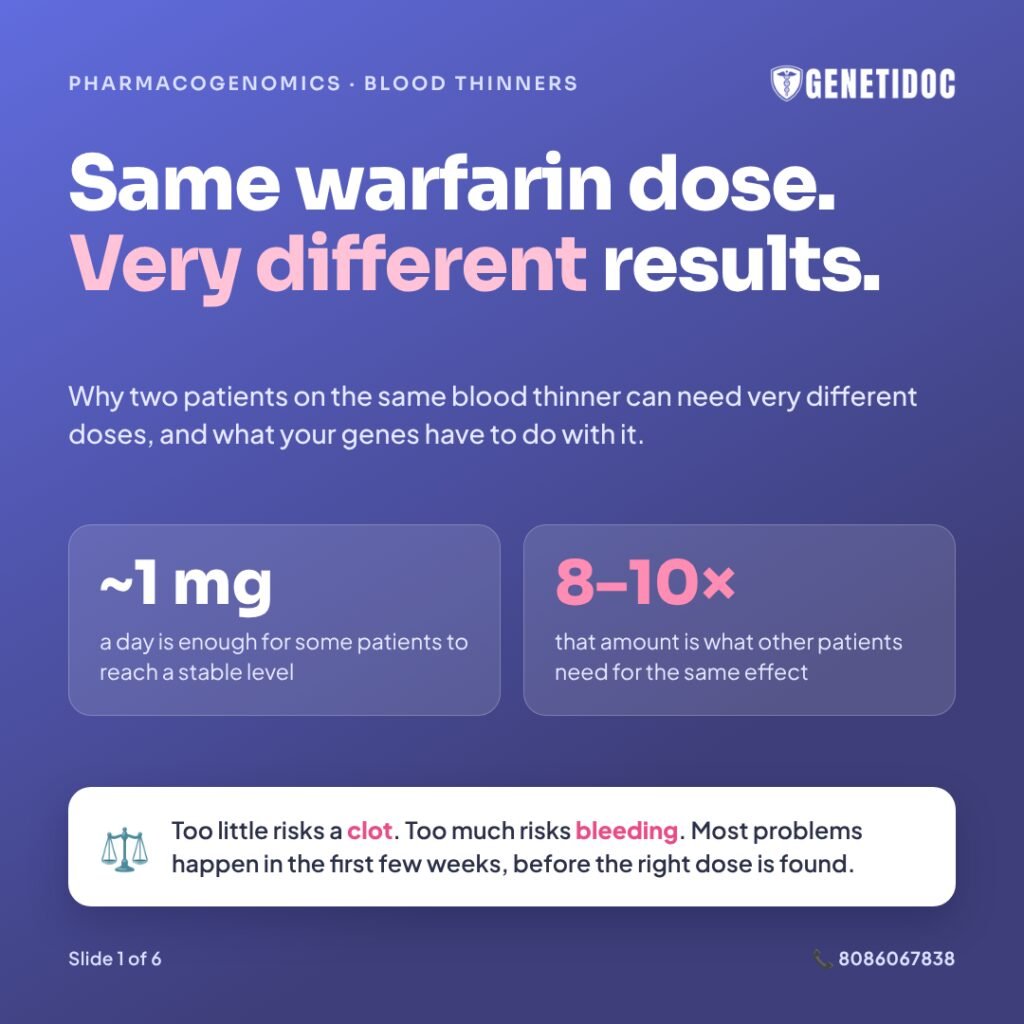
Too little, and a clot can form on the valve or travel to the brain. Too much, and bleeding becomes the danger. There is no comfortable middle ground to aim at — there is a narrow band, and the whole task of treatment is staying inside it.
That band is measured with a blood test called the International Normalised Ratio, usually shortened to INR. It tells your doctor how long your blood is taking to clot compared with normal. For most patients the target is between 2 and 3. For many patients with mechanical valves it is set a little higher.
Here is what makes warfarin genuinely hard: the dose needed to reach that target is not the same from person to person. Some people stabilise on around 1 milligram a day. Others need eight or ten times that. And until the dose is found, there is no way to be certain where any individual patient sits.
Most bleeding and clotting complications happen in the first few weeks of treatment — exactly the period when the correct dose is still unknown.
| “Patients often assume that if the dose is wrong, someone has miscalculated. That is not what is happening. The starting dose is an educated estimate for an average person, and very few patients are average. What genetics does is narrow that estimate before the patient has to live through the trial-and-error.”
— Dr. Roshan Daniel, Founder, Genetidoc |
The Genes That Shape Your Warfarin Dose
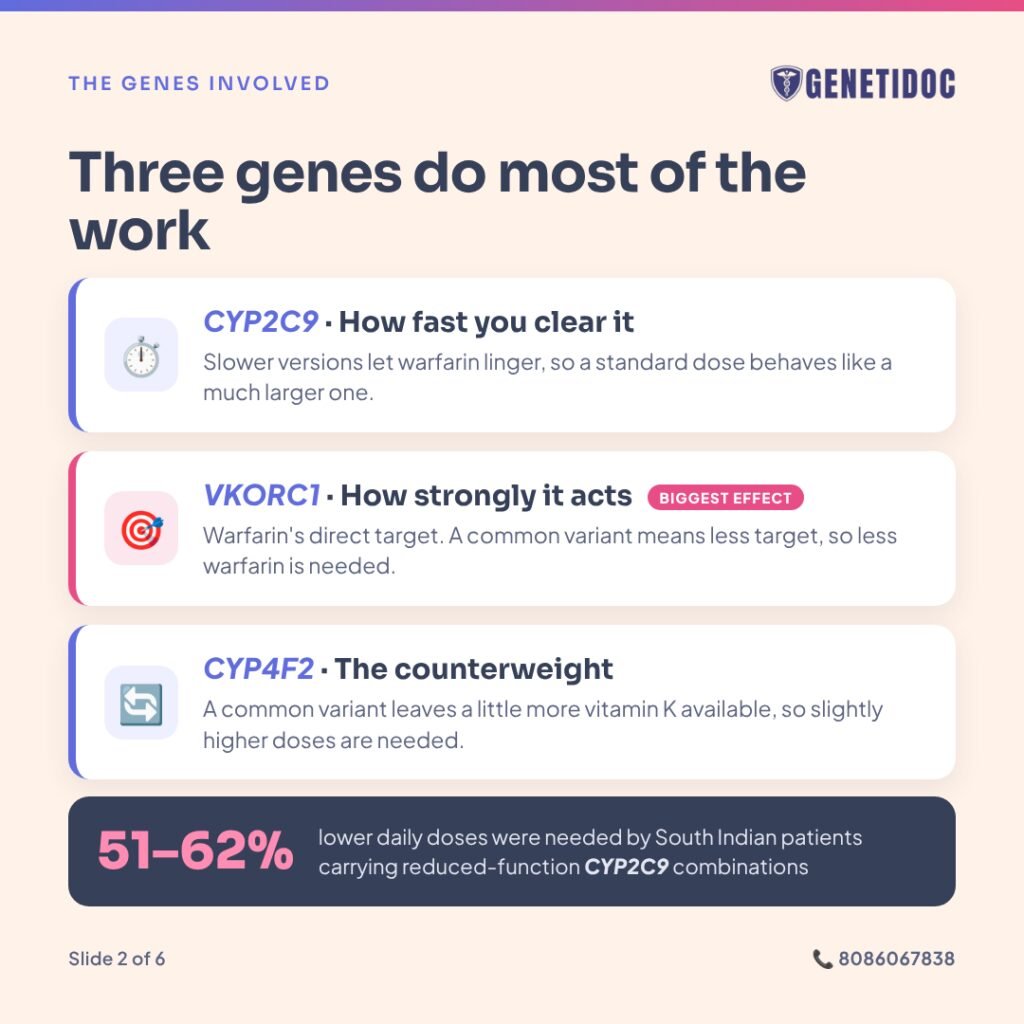
Three genes do most of the work. Each one affects a different part of how warfarin behaves in your body.
CYP2C9: How Quickly You Clear the Drug
Your liver contains a family of enzymes — biological machines that break down chemicals — called cytochrome P450 enzymes. One of them, built from the CYP2C9 gene, is responsible for breaking down the more powerful half of the warfarin molecule.
Some versions of CYP2C9 build an enzyme that works normally. Others build a slower one. If your enzyme is slow, warfarin lingers in your body longer than expected. A standard dose then behaves like a much larger dose, pushing your INR too high and raising the bleeding risk.
The two best-known reduced-function versions are called CYP2C9*2 and CYP2C9*3. Studies suggest these impair the breakdown of the active form of warfarin by roughly 30 per cent or more, depending on the version.
In a South Indian study of patients on stable warfarin, people carrying these variant combinations needed daily doses roughly 51 to 62 per cent lower than people with two normal copies of the gene. That is not a small adjustment. That is the difference between a safe dose and a dangerous one.
VKORC1: How Strongly the Drug Acts
Warfarin works by blocking an enzyme called vitamin K epoxide reductase. That enzyme recycles vitamin K, which your body needs to manufacture clotting factors. Block it, and clotting slows down.
The gene that builds this enzyme is VKORC1, and it is warfarin’s direct target.
A common variation sitting just upstream of this gene — written as -1639G>A — changes how much of the enzyme your body produces. People who carry one or two copies of the “A” version make less of it. Less target means less warfarin is needed to block it. These patients need progressively lower doses.
Variations in VKORC1 alone are thought to explain somewhere between a quarter and a half of the variation in dose between individuals. It is the single most influential gene in this story.
CYP4F2: The Counterweight
CYP4F2 builds an enzyme that removes vitamin K from circulation — in effect, working in the opposite direction to VKORC1. A common variant called CYP4F2*3 reduces this clearing activity, leaving slightly more vitamin K available. Patients carrying it tend to need somewhat higher warfarin doses.
Its effect is smaller than the other two genes, but adding it to dosing calculations has been shown to improve their accuracy.
How Much Do Genes Actually Explain? An Honest Number
This is where good patient information separates itself from marketing.
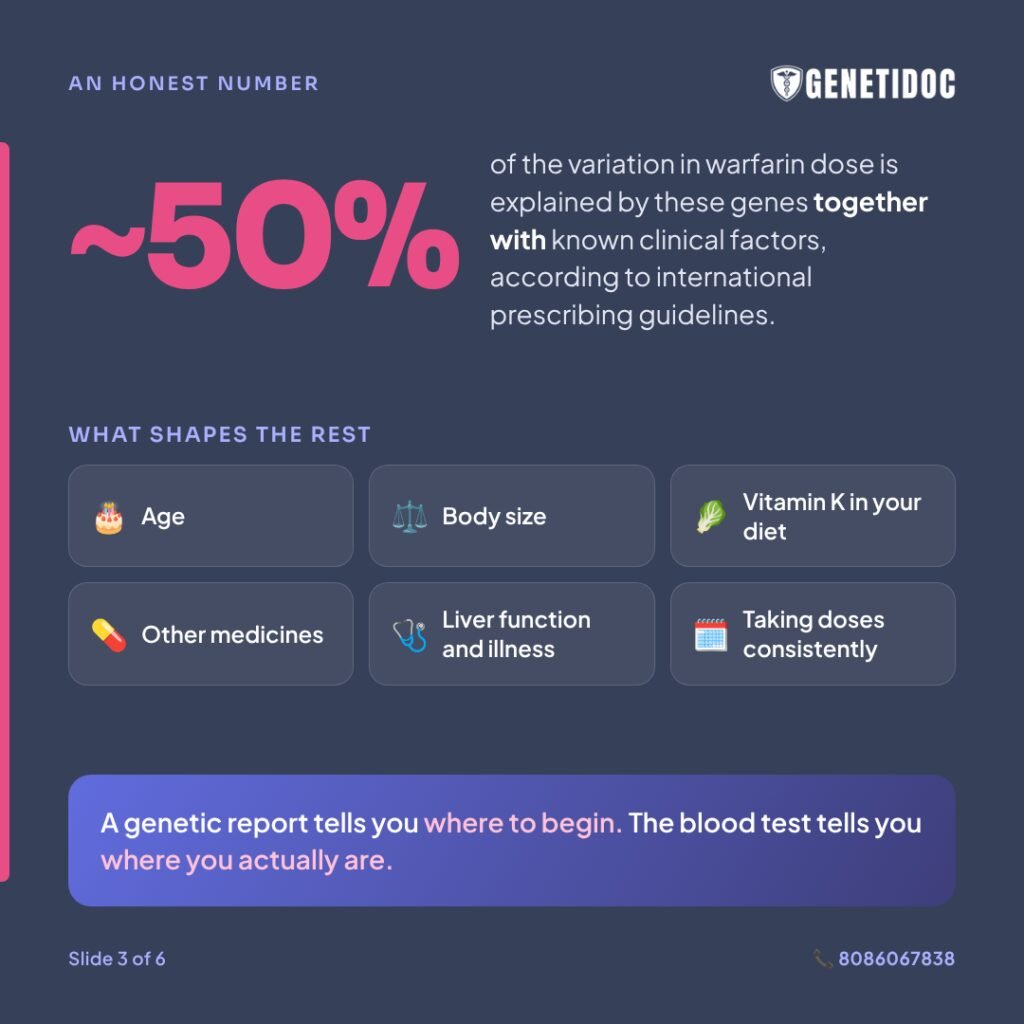
According to the Clinical Pharmacogenetics Implementation Consortium — an international body that writes guidelines on how genetic results should be used in prescribing — variations in CYP2C9, VKORC1, CYP4F2 and a nearby cluster of genes, combined with known non-genetic factors, account for about 50 per cent of the variability in warfarin dose.
Read that carefully. Fifty per cent, and that figure already includes the non-genetic factors.
So what makes up the rest?
- Older patients generally need lower doses.
- Body size. Weight and body surface area both matter.
- Vitamin K in your diet. Green leafy vegetables, in particular. This is why patients are told to keep their diet steady rather than to avoid these foods entirely.
- Other medicines. Amiodarone, many antibiotics, some painkillers and a long list of others interact with warfarin.
- Liver function and other illnesses.
- Whether the medicine is taken consistently.
- Factors still not fully understood.
Genetic testing is a powerful tool. It is not a complete answer, and any laboratory that implies otherwise is overselling it.
| “A genetic report tells you where to begin. The blood test tells you where you actually are. Any patient who is told that genetic testing means they can stop their INR monitoring has been badly advised, and I would want to review that advice myself.”
— Dr. Roshan Daniel, Founder, Genetidoc |
Why This Matters Differently in India
Most of what the world knows about warfarin genetics was learned in European and North American populations. Applying those findings directly to Indian patients is a mistake, and the data explain why.
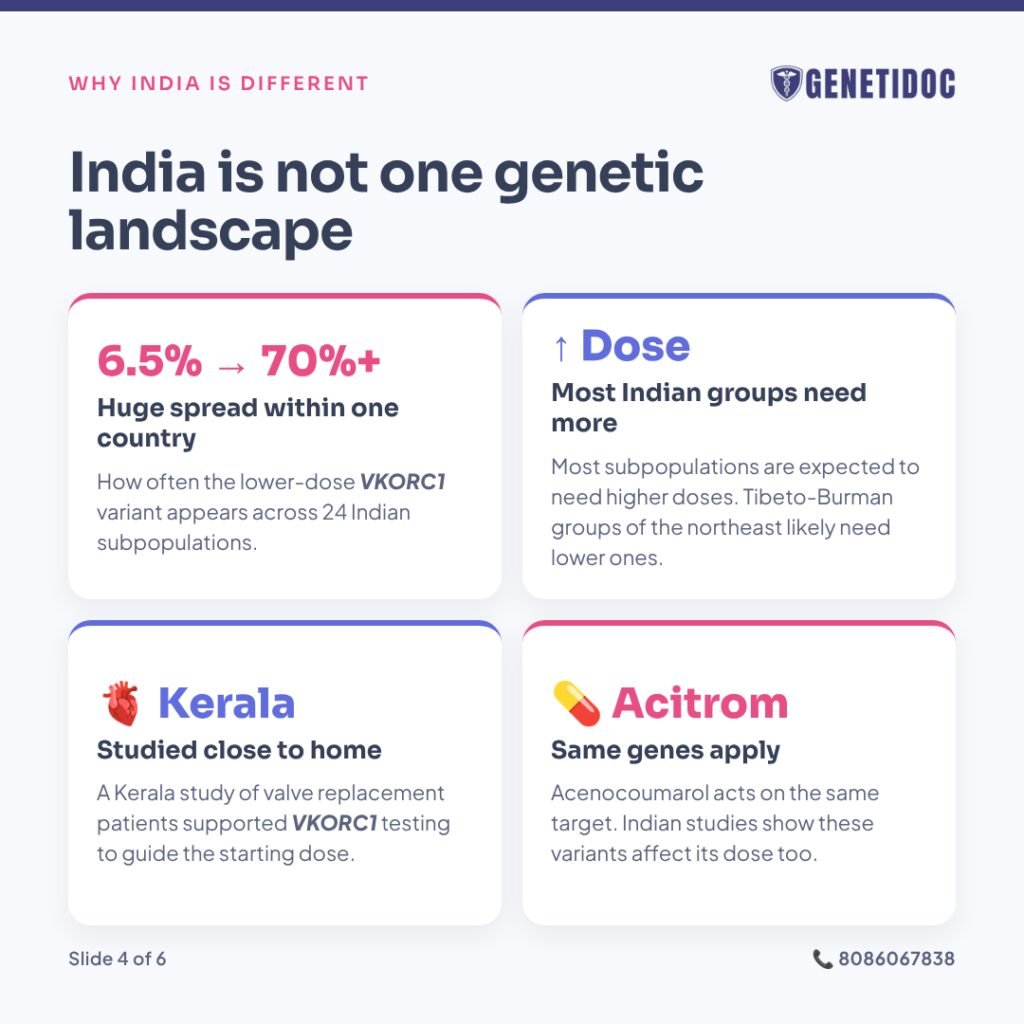
A large study examined genetic data from 2,680 individuals across 24 ethnically diverse Indian subpopulations. What it found should change how we think about “the Indian patient.”
The frequency of the VKORC1 -1639A variant — the one associated with needing lower doses — ranged from as low as 6.5 per cent in one group to more than 70 per cent in Tibeto-Burman populations of the northeast.
That is not variation. That is two different genetic landscapes inside one country.
The study’s conclusion was that the majority of Indian subpopulations would be expected to require higher doses for stable anticoagulation, while Tibeto-Burman groups need particularly careful assessment because they are likely to need lower ones.
Other Indian findings reinforce the point:
- The CYP4F2*3 variant was found at higher frequency in north Indians (0.30 to 0.44) than in African-American, Caucasian or Hispanic populations.
- The frequency of CYP2C9*3 in north Indians was higher than in most other Asian populations.
- In a comparison of Malaysian patients, those of Indian origin required a significantly higher average daily warfarin dose (4.9 milligrams) than Chinese (3.5 milligrams) or Malay (3.3 milligrams) patients.
Evidence From Kerala and South India
Closer to home, a study published in the Indian Heart Journal examined patients in Kerala who were on warfarin after mechanical mitral valve replacement for rheumatic heart disease. Its conclusion supported using VKORC1 -1639G>A genotyping to guide the initial warfarin dose in South Indian valve replacement patients.
A separate South Indian study of 257 patients on stable warfarin found a mean maintenance dose of 4.7 milligrams per day, and built a dosing calculation combining genetic and clinical factors that accounted for about 60 per cent of the variation in dose.
This body of regional evidence matters. It means the discussion is not theoretical for Indian patients — it has been studied in populations that look like the people reading this article.
What About Acitrom? Does Any of This Apply?
Many Indian patients are not on warfarin at all. They are on acenocoumarol, sold widely under the brand name Acitrom.
Acenocoumarol belongs to the same family of medicines as warfarin. Both are vitamin K antagonists, and both act on the same target enzyme built by the VKORC1 gene. So the underlying biology is shared.
Indian research supports this. A study of patients after heart valve surgery found that carrying the VKORC1 variant reduced the average weekly dose for both warfarin and acenocoumarol patients. North Indian studies have similarly found that CYP2C9*3 and certain VKORC1 variants lowered acenocoumarol dose requirements.
There is one honest limitation that patients deserve to hear. The detailed international dosing recommendations from the Clinical Pharmacogenetics Implementation Consortium were written specifically for warfarin. The underlying genetics clearly apply to acenocoumarol, but the precise dose calculations are less firmly established for it.
The Rheumatic Heart Disease Context
There is a reason this question comes up so often in India and so rarely in Europe.
In a recent study of 100 adults with mechanical heart valve replacements at a major Indian institute, rheumatic heart disease was the underlying cause in 95 per cent of cases.
Rheumatic heart disease follows untreated streptococcal throat infection in childhood. It damages heart valves in people who are often young — in their twenties and thirties. These patients go on to need lifelong anticoagulation, through decades of life, through pregnancies, through surgeries, through every illness in between.
For someone facing forty years of this, getting the foundation right is not a minor convenience.
When Genetic Testing Genuinely Helps — and When It Does Not
This is the most practical section of this article, and the one most content on this topic avoids.
Timing Is Everything
Here is a finding that should shape every decision about this test.
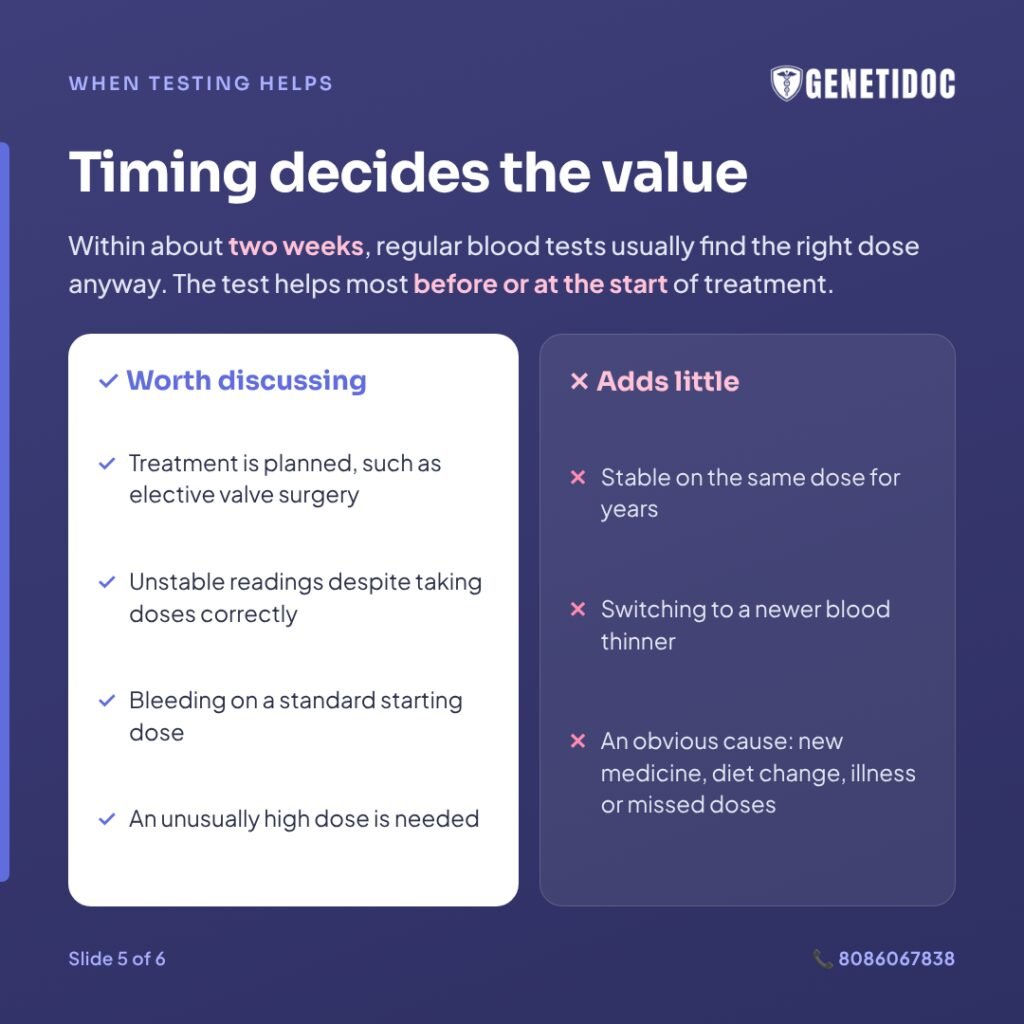
The contribution of genetic information to predicting a patient’s stable dose is largely lost within about two weeks of starting treatment. Not because the genes stop mattering — they matter for life. But because by then, the doctor has found the right dose the old-fashioned way: by measuring INR, adjusting, and measuring again.
Genetics predicts the destination. Two weeks of blood tests simply arrive there.
So the value of testing is concentrated almost entirely at the beginning — the window where patients are most likely to be harmed.
Situations Where Testing May Be Worth Discussing
- Before starting a vitamin K antagonist, when there is time to plan. Elective valve surgery, planned anticoagulation for atrial fibrillation, or a scheduled procedure where warfarin will be needed afterwards.
- Unstable INR despite good adherence. When a patient is taking the medicine correctly, keeping diet steady, and the readings still swing.
- A bleeding episode on a conventional starting dose. This can be an early signal of reduced CYP2C9 function, increased VKORC1 sensitivity, or both.
- Unusually high dose requirements. Patients needing far more than expected may carry rare VKORC1 variants that cause genuine warfarin resistance.
- Restarting anticoagulation after a long gap. Where the earlier dose record is unavailable or unreliable.
Situations Where Testing Adds Little
- You have been stable on the same dose for years, with INR consistently in range. Your body has already answered the question the test would ask. A genetic result will not change your management.
- You are being switched to a direct oral anticoagulant. These newer medicines do not work through VKORC1, so these genes do not govern their dosing. (Note that direct oral anticoagulants are not suitable for mechanical heart valves.)
- The result cannot arrive before treatment must start. In an emergency admission where anticoagulation begins immediately, a result arriving later has limited use for that initiation — though it may still inform long-term management.
- Your instability has an obvious non-genetic explanation. A new medicine, a change in diet, an illness, or missed doses. Fix the obvious cause first.
What the Research Actually Shows: An Honest Account
Patients deserve to know that this is a genuinely debated area, not a settled one. Three major trials addressed the question and did not all agree.
| Trial | Patients | Result |
| EU-PACT (2013) | 455 | Genetic guidance improved time spent in the safe INR range compared with fixed dosing. |
| COAG (2013) | 1,015 | No improvement over a well-built clinical calculation that did not use genetics. |
| GIFT (2017) | 1,597 | Genetic guidance over the first 11 days reduced the combined risk of major bleeding, dangerously high INR, and clots. |
Why the disagreement? Two design differences explain most of it.
First, what they compared against. EU-PACT compared genetic guidance to a fixed starting dose, which is closer to ordinary practice in many clinics. COAG compared it to a carefully built clinical calculation — a high bar that most real-world prescribing does not meet.
Second, how long guidance was applied. COAG and EU-PACT used their calculations for about five days. GIFT extended this to eleven days and included CYP4F2. GIFT was also the largest of the three, and the only one powered to look at actual clinical events rather than blood test numbers.
There is a further limitation worth stating plainly: all three trials were conducted in overwhelmingly Caucasian populations — over 90 per cent in each. Given what we now know about how differently these variants are distributed across Indian subpopulations, conclusions drawn from them cannot be transplanted to Indian patients without thought.
Major international guidelines do not currently mandate routine genetic testing before starting warfarin. That is the accurate position, and this article will not pretend otherwise.
| “The trials disagreed, and we should say so. What they tell us is not that the genetics is wrong — the biology is beyond dispute. What they tell us is that the benefit depends on how the information is used, when it is used, and in which patient. That judgement is exactly what a clinician is for.”
— Dr. Roshan Daniel, Founder, Genetidoc |
Warfarin Resistance: When the Dose Seems Impossibly High
A small number of patients need doses far above what anyone expects — sometimes several times the usual amount — and still struggle to reach their target INR.
These patients are frequently suspected of not taking their medicine. That suspicion is sometimes unfair.
Rare changes within the VKORC1 gene itself can cause genuine warfarin resistance. The target enzyme is altered in a way that makes it harder for warfarin to block, so more of the drug is required to achieve the same effect.
This is uncommon. But for the patient living with it, identifying it changes two things that matter: it ends the cycle of being doubted, and it tells the clinical team that a high dose is appropriate rather than alarming.
What This Test Cannot Tell You
Clear limitations, stated plainly:
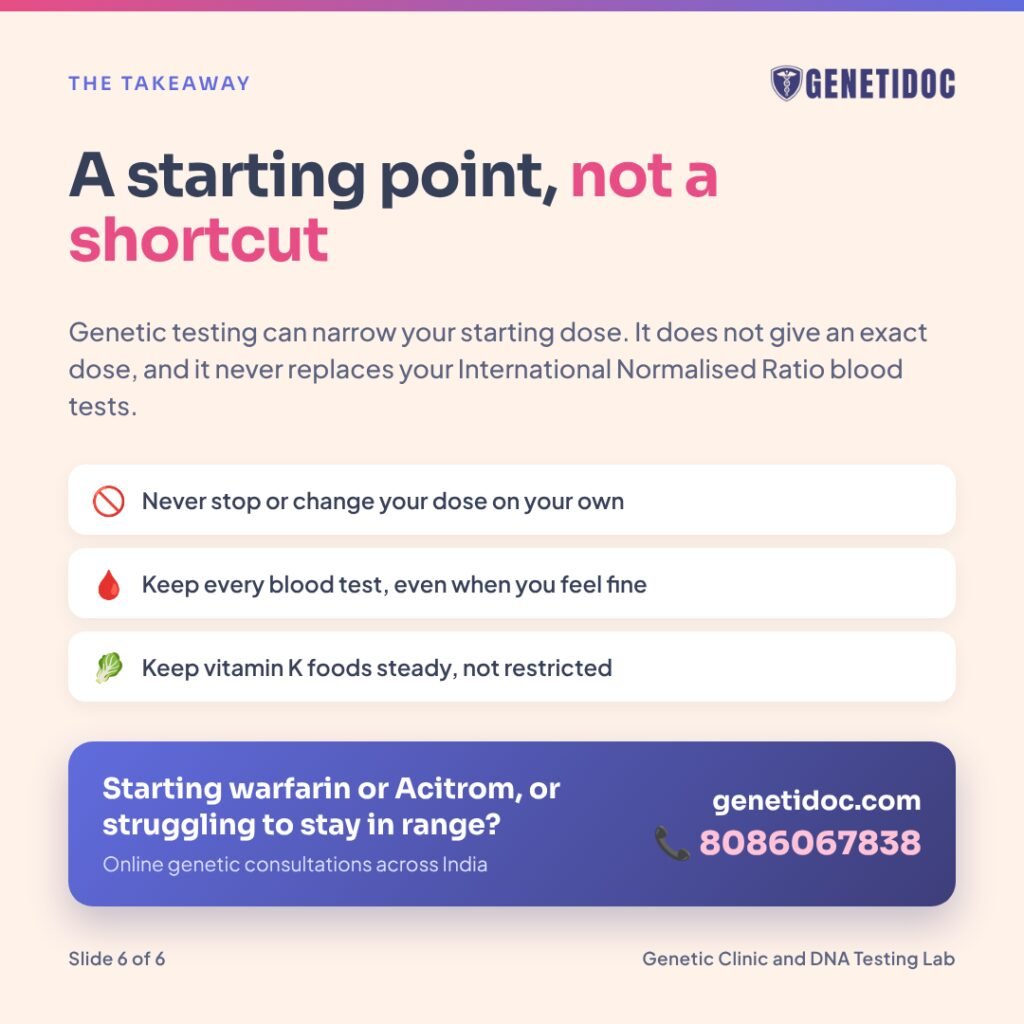
- It does not give you an exact dose. It produces a predicted starting range. Your actual dose is still found through blood testing.
- It does not end INR monitoring. Not at the start, not ever. The other half of dose variability does not show up on a genetic report.
- It does not mean diet stops mattering. Vitamin K intake still affects your INR. Keep it steady.
- It does not predict whether you will bleed. Carrying a variant does not guarantee a bleeding event, and not carrying one does not protect you from having one.
- It does not cover drug interactions. Every new medicine, including over-the-counter ones, still needs to be checked against your warfarin.
- It does not apply to the newer blood thinners. These genes govern vitamin K antagonists specifically.
Illustrative Scenarios
The following are general clinical pictures that reflect the patterns described in the published research. They are not specific patients.
Scenario One: The Young Valve Patient
A woman in her early thirties has mitral valve replacement following childhood rheumatic heart disease. She will need anticoagulation for the rest of her life, and she hopes to have children.
Her situation illustrates why the question of timing matters so much. She is at the very beginning of a treatment that will run for decades and will intersect with pregnancy, surgery and illness repeatedly. Information gathered at the start remains relevant throughout. Information gathered in year fifteen, when her dose is already well established, adds considerably less.
Scenario Two: The Unstable INR
A man in his fifties on warfarin for atrial fibrillation attends the anticoagulation clinic every ten days. His readings swing between too low and too high. He insists he takes his tablets, and his family confirms it.
The right sequence here is not to reach immediately for a genetic test. It is to work through the obvious explanations first — a recently added medicine, a change in eating habits, an intercurrent illness, an interacting supplement. Genetic testing becomes a reasonable consideration when those are excluded and the instability remains unexplained.
Scenario Three: The Bleeding Episode
An elderly patient starts warfarin at a conventional dose and, within two weeks, develops bruising and bleeding gums. The INR is well above target.
This is the pattern most consistent with reduced CYP2C9 function, increased VKORC1 sensitivity, or both — and it is the pattern that genotype-guided starting doses are specifically designed to prevent. It also illustrates why the benefit of this test is front-loaded: by the time the complication has occurred, the opportunity to avoid it has passed.
Why the Report Is Not the Point
It is now possible to obtain a genetic report that lists your CYP2C9 and VKORC1 status without anyone qualified reviewing it.
A report is not care. The genuinely difficult work begins after the result arrives, and it includes questions a printout cannot answer:
- Does this result change anything at this stage of this patient’s treatment, or has titration already overtaken it?
- Which dosing framework applies, given this patient’s specific regional ancestry and the wide variation documented across Indian subpopulations?
- Does this patient take acenocoumarol rather than warfarin, and how does that change the interpretation?
- How do this patient’s age, weight, kidney and liver function and current medicines modify the genetic prediction?
- How is this communicated to the treating cardiologist in a form that is actually usable?
- What does the patient need to understand so they do not reduce their monitoring?
A result delivered without this context can do real harm. A patient who believes the report has “solved” their dosing may attend fewer blood tests. On a medicine with warfarin’s narrow margin, that is a dangerous belief to acquire.
Choosing a laboratory matters for the same reason. The variants reported, the method used, and whether the panel reflects the variation found in Indian populations all affect whether the result means anything for the patient in front of you.
| “For a patient on a mechanical valve, anticoagulation is not a treatment that ends. It is a relationship they will manage for the rest of their life. My advice is simple: understand why your dose is what it is, keep your monitoring appointments even when you feel perfectly well, and tell every doctor you ever see that you are on this medicine.”
— Dr. Roshan Daniel, Founder, Genetidoc |
What Patients Should Do Next
- Do not stop or change your dose on your own. Nothing in this article is a reason to alter your medicine without your doctor.
- Keep going for your INR tests. Including when you feel completely fine. Especially then.
- Keep your diet steady rather than restrictive. Consistency with vitamin K-rich foods matters more than avoidance.
- Tell every doctor, dentist and pharmacist that you take this medicine. Including for a short antibiotic course, which can shift your INR substantially.
- If your INR is persistently unstable, ask why. Work through the common causes with your treating doctor before considering genetic testing.
- If anticoagulation is planned rather than already started, raise the question early. That is the window where this testing has the most to offer.
Frequently Asked Questions
Can a genetic test tell me my exact warfarin dose?
No. It predicts a likely starting dose range. Genes and known clinical factors together explain about half of the variation in dose. Your final dose is still established through INR testing.
If I have the test, can I stop my INR blood tests?
No, and this is the most important misunderstanding to avoid. INR monitoring continues for as long as you take warfarin. Diet, other medicines, illness and ageing all shift your requirement over time, and none of that appears on a genetic report.
Why does my dose differ so much from another patient on the same medicine?
Mainly because of differences in two genes — CYP2C9, which controls how fast you clear the drug, and VKORC1, which determines how strongly it acts. Age, weight, diet and other medicines account for much of the rest.
Does this apply to Acitrom, or only to warfarin?
The same genes are involved, because acenocoumarol works on the same target. Indian studies show these variants affect acenocoumarol dosing too. However, the detailed international dosing recommendations were developed for warfarin specifically, so interpretation for acenocoumarol requires more clinical judgement.
My INR keeps fluctuating. Is it genetic?
It might be, but common causes are far more likely. A newly added medicine, a change in eating habits, an illness, or inconsistent timing of doses should all be examined first. Genetic testing is reasonable to consider when those have been excluded.
I need a very high dose. Does that mean the medicine is not working?
Not necessarily. Some people genuinely need higher doses because of their genetic makeup, and most Indian subpopulations are predicted to need higher doses than European averages. Rare VKORC1 variants can also cause true warfarin resistance. A high dose that achieves a stable, in-range INR is a working dose.
Is it too late to test if I have been on warfarin for years?
If you are stable and consistently in range, testing is unlikely to change anything, because your dose has already been established. If your control remains poor despite thorough review, there may still be a case to discuss.
Do my children need this test?
Not routinely. These are common variations, not a disease. They only become relevant if a family member is themselves prescribed a vitamin K antagonist. The exception worth mentioning to relatives is rare inherited warfarin resistance, which may be worth noting in a family’s medical history.
Will testing let me eat green vegetables freely again?
No. Vitamin K in food still affects your INR regardless of your genetic results. The advice remains consistency rather than avoidance — a steady amount, rather than large swings.
Do international guidelines recommend this test for everyone?
No, and it is important to be accurate about this. Major guidelines do not mandate routine genetic testing before starting warfarin. The evidence from clinical trials has been mixed. The case for testing is strongest in specific situations rather than as a blanket recommendation.
Can I just order a direct-to-consumer kit?
A result without interpretation is of limited use and can be actively misleading on a medicine this unforgiving. Many consumer panels are built around variants validated in European populations, which, given the wide variation documented across Indian subpopulations, may not reflect what matters for an Indian patient. If this testing is being considered, it should be arranged and interpreted clinically.
What does the test involve?
It is a DNA test performed on a routine sample. Because your DNA does not change, the result holds for life. Specific turnaround time and cost should be confirmed with the clinical team, as these vary with the testing approach chosen.
| Starting Warfarin or Acitrom — or Struggling to Stay in Range?
If anticoagulation is being planned for you, if your INR has been unstable despite taking your medicine correctly, or if you have needed an unusually high or low dose, a clinical geneticist can help work out whether genetic factors are part of the explanation — and, just as importantly, whether testing would actually change anything at your stage of treatment. Genetidoc’s clinical geneticists consult online across India, so you do not need to travel. Where testing is appropriate, sample collection can be arranged at home, and your result is explained to you and communicated to your treating cardiologist in a form they can act on.
|
Book a online consultation about anticoagulation and genetic dose variability.
References
- Johnson JA, Caudle KE, Gong L, et al. Clinical Pharmacogenetics Implementation Consortium (CPIC) Guideline for Pharmacogenetics-Guided Warfarin Dosing: 2017 Update. Clinical Pharmacology & Therapeutics. 2017;102(3):397–404.
- Giri AK, Khan NM, Grover S, et al. Genetic epidemiology of pharmacogenetic variations in CYP2C9, CYP4F2 and VKORC1 genes associated with warfarin dosage in the Indian population. Pharmacogenomics. 2014;15(10):1337–1354.
- Harikrishnan S, Koshy L, Subramanian R, et al. Value of VKORC1 (−1639G>A) rs9923231 genotyping in predicting warfarin dose: A replication study in South Indian population. Indian Heart Journal. 2018;70(Suppl 3):S110–S115.
- Kumar DK, Shewade DG, Loriot MA, et al. Effect of CYP2C9, VKORC1, CYP4F2 and GGCX genetic variants on warfarin maintenance dose and explicating a new pharmacogenetic algorithm in South Indian population. European Journal of Clinical Pharmacology. 2014;70(1):47–56.
- Gage BF, Bass AR, Lin H, et al. Effect of Genotype-Guided Warfarin Dosing on Clinical Events and Anticoagulation Control Among Patients Undergoing Hip or Knee Arthroplasty: The GIFT Randomized Clinical Trial. JAMA. 2017;318(12):1115–1124.
- Pirmohamed M, Burnside G, Eriksson N, et al. A Randomized Trial of Genotype-Guided Dosing of Warfarin. New England Journal of Medicine. 2013;369(24):2294–2303.
- Kimmel SE, French B, Kasner SE, et al. A Pharmacogenetic versus a Clinical Algorithm for Warfarin Dosing. New England Journal of Medicine. 2013;369(24):2283–2293.
- Shahabi P, Scheinfeldt LB, Lynch DE, et al. Genetic Determinants of Variability in Warfarin Response after the Dose-Titration Phase. Pharmacogenetics and Genomics. 2016;26(11):510–516.
- Genetic polymorphisms and dosing of vitamin K antagonist in Indian patients after heart valve surgery. Indian Journal of Thoracic and Cardiovascular Surgery. 2019.
- Allelic Frequency of Single-Nucleotide Polymorphisms in CYP2C9, VKORC1, and CYP4F2 Genetic Variants in Patients With Mechanical Heart Valves on Acenocoumarol Drug Therapy. Cureus. 2026.
- Gan GG, Phipps ME, Lee MMT, et al. Contribution of VKORC1 and CYP2C9 polymorphisms in the interethnic variability of warfarin dose in Malaysian populations. Annals of Hematology. 2011;90(6):635–64
Read Further
Hereditary Ataxia: Types, Symptoms and Genetic Testing
Situs Inversus Explained: Clinical Significance and the Role of Genetic Testing
Genetics and Obesity: Is It All in the Genes?
Genetics and Obesity: Is It All in the Genes?