Many families first hear the words “Noonan syndrome” from a paediatric cardiologist, after a heart murmur leads to a scan. Others hear it from a paediatrician who is watching a child fall behind on the growth chart. More and more couples now hear it during pregnancy, after an early scan shows extra fluid at the back of the baby’s neck.
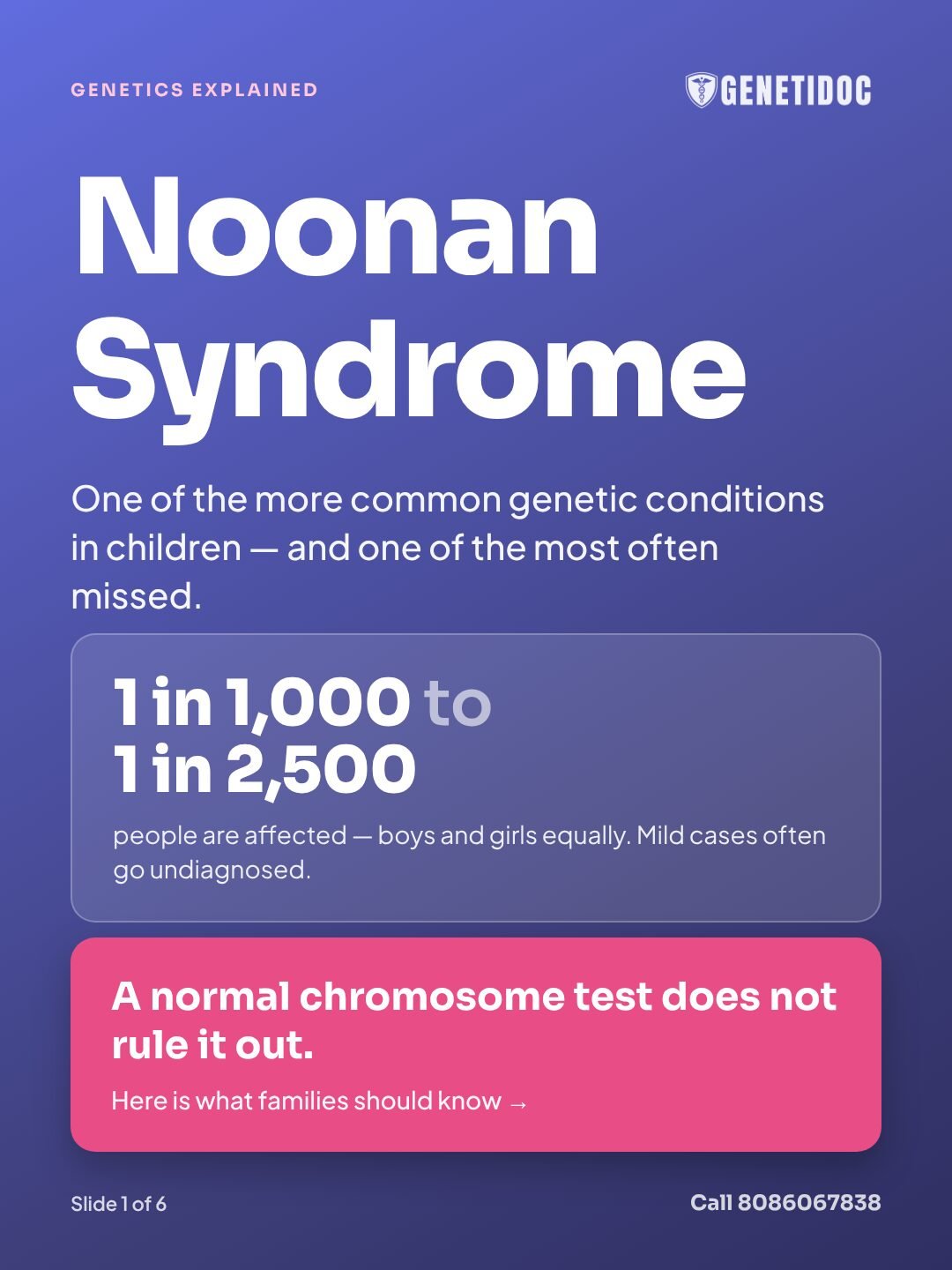
Noonan syndrome is one of the more common genetic conditions seen in children, yet it is often missed or diagnosed late. Its signs can be mild, they vary from person to person, and they overlap with several other conditions. A routine chromosome test is usually normal, which can give families false reassurance.
This guide explains what Noonan syndrome is, the signs to look for, how it is diagnosed, which genetic tests help, and what a diagnosis means for your child’s health and for the rest of your family.
| Quick answer: What is Noonan syndrome?
Noonan syndrome is an inherited condition that affects growth, the heart, facial features and, in some children, learning. It is caused by a change in one of several genes that control cell growth, most often PTPN11. It affects about 1 in 1,000 to 1 in 2,500 people. Chromosome tests are usually normal, so the diagnosis is confirmed with a gene panel. Each child of an affected parent usually has a 50% chance of inheriting it. |
What Is Noonan Syndrome?
Inside every cell, a chain of proteins passes messages that tell the cell when to grow, divide and mature. Doctors call this chain the RAS-MAPK pathway. Think of it as a switch that should turn on only when needed and then turn off again.
In most people with Noonan syndrome, a gene change keeps this switch turned on a little longer than it should be. This affects how many tissues develop before birth and during childhood, including the heart, the face, the lymphatic system (the network that drains fluid from tissues) and bone growth.
Noonan syndrome belongs to a family of related conditions called RASopathies, all caused by changes in the same pathway. Other members of this family include Noonan syndrome with multiple lentigines (previously called LEOPARD syndrome), cardio-facio-cutaneous syndrome, Costello syndrome and neurofibromatosis type 1.
How common is it?
Noonan syndrome affects an estimated 1 in 1,000 to 1 in 2,500 people. It occurs in boys and girls equally, and in every population. Because mild cases are often never diagnosed, the true number may be higher.
What Causes Noonan Syndrome?
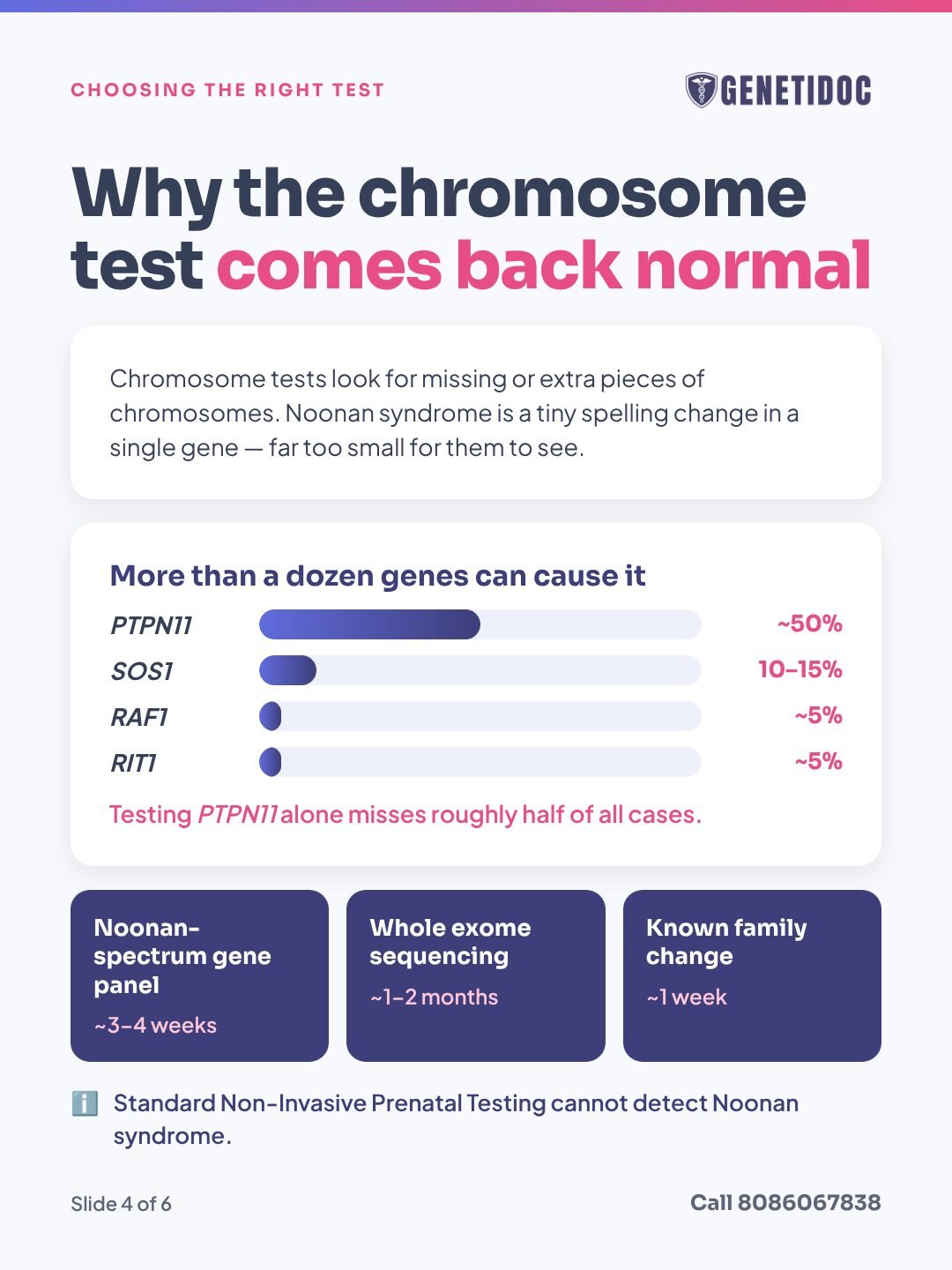
Noonan syndrome can be caused by changes in more than a dozen genes. This is one reason it needs a carefully chosen test.
| Gene | Approximate share of cases | Features often linked to this gene |
| PTPN11 | About half | Classic features; narrowing of the pulmonary valve is common; small increased risk of a childhood blood disorder |
| SOS1 | 10–15% | Often taller and with fewer learning difficulties; skin and hair changes can be more noticeable |
| RAF1 | About 5% | Highest risk of thickened heart muscle (hypertrophic cardiomyopathy) |
| RIT1 | About 5% | Heart problems are common, including thickened heart muscle |
| KRAS, NRAS, BRAF, MAP2K1, SOS2, RRAS2, MRAS, RASA2 | Small numbers each | Variable; some overlap with related RASopathies |
| LZTR1 | Small number | Can be inherited in a dominant or a recessive pattern (see inheritance below) |
These gene links are general patterns, not fixed rules. Two people with changes in the same gene can be affected very differently.
What do Indian studies show?
Indian research is consistent with international findings. A study from Sir Ganga Ram Hospital, New Delhi, found a PTPN11 change in 11 of 17 children (about 65%) with clinical features of Noonan syndrome. Most of these changes clustered in two parts of the gene, called exon 3 and exon 13. A larger study from Bengaluru evaluated 363 people with suspected Noonan syndrome from four South Indian hospitals and identified PTPN11 changes in 107 of them. A more recent North Indian study from the Postgraduate Institute of Medical Education and Research, Chandigarh, highlighted how wide the range of RASopathy genes is in Indian patients, and the value of next-generation sequencing in reaching an accurate diagnosis.
The practical lesson is simple: testing only PTPN11 will miss a large share of families. A broader panel is usually the better first step.
Signs and Symptoms of Noonan Syndrome
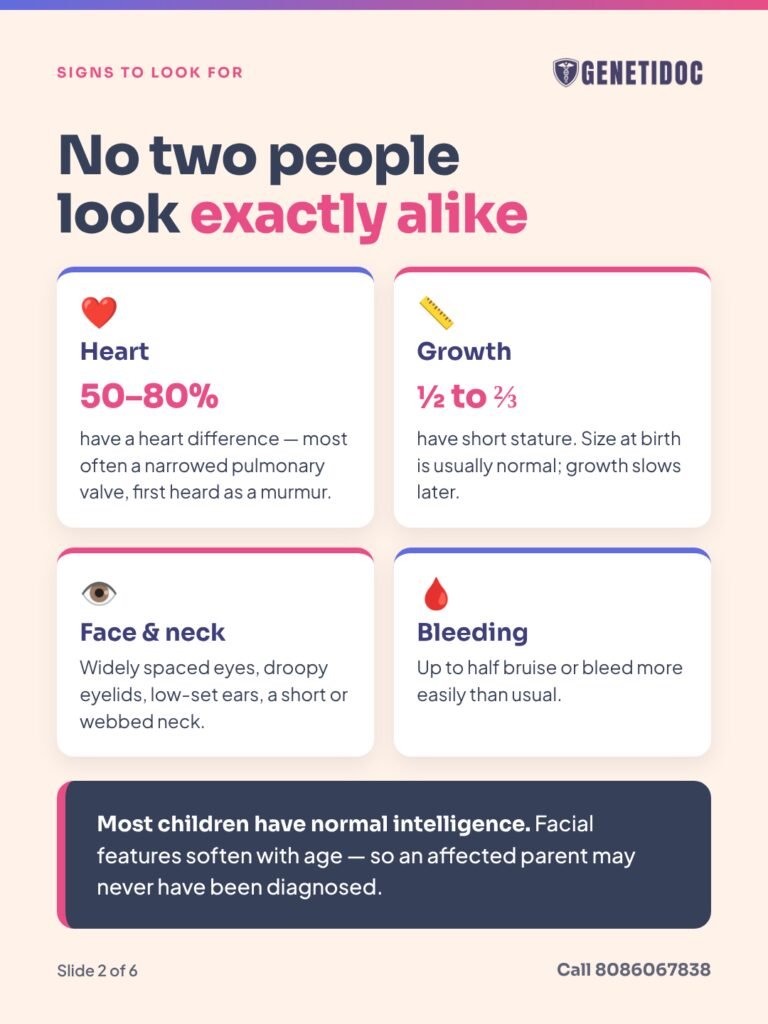
No two people with Noonan syndrome look exactly alike. A child may have several obvious features, while a parent with the same gene change may have only subtle signs that no one ever noticed.
1. Facial features
- Widely spaced eyes that may slant downward
- Droopy upper eyelids (ptosis)
- Low-set ears that are rotated slightly backward
- A short or broad neck, sometimes with extra skin folds (webbing)
- A low hairline at the back of the neck
These features are often clearest in infancy and early childhood, and they become softer with age. In adults, they can be very subtle.
2. Heart
Between 50% and 80% of people with Noonan syndrome have a heart difference.
- Pulmonary valve stenosis: narrowing of the valve that lets blood flow from the heart to the lungs. This is the most common heart finding. It often shows up first as a heart murmur.
- Hypertrophic cardiomyopathy: thickening of the heart muscle, seen in roughly 1 in 10 to 3 in 10 people. About half of those affected are diagnosed by six months of age.
- Holes in the heart, such as atrial or ventricular septal defects, and other valve or vessel differences.
3. Growth
Most babies are a normal length and weight at birth. Growth then slows, and about half to two-thirds of children have short stature. Puberty is often late, and the growth spurt may come later than in other children. Feeding difficulties and poor weight gain in the first year are common.
4. Learning and development
Most children with Noonan syndrome have normal intelligence. Some have delayed motor milestones, speech or language difficulties, or learning difficulties. Mild intellectual disability affects a minority, estimated at about 6% to 23% of people with Noonan syndrome. Early therapy and school support make a real difference.
5. Other features
- Bleeding tendency: up to half of people bruise or bleed more easily, because of differences in clotting factors or platelets. Severe bleeding is uncommon.
- Chest shape: the upper chest may stick out while the lower chest sinks in.
- Undescended testes in many boys.
- Eye problems: squint (strabismus), the need for glasses and lazy eye (amblyopia) are common.
- Hearing loss in some children.
- Lymphatic problems: swelling of the hands or feet, or fluid collections around the lungs or abdomen.
- Spine curvature (scoliosis), kidney differences and skin or hair changes.
When Should Noonan Syndrome Be Suspected?
Consider an evaluation by a clinical geneticist if:
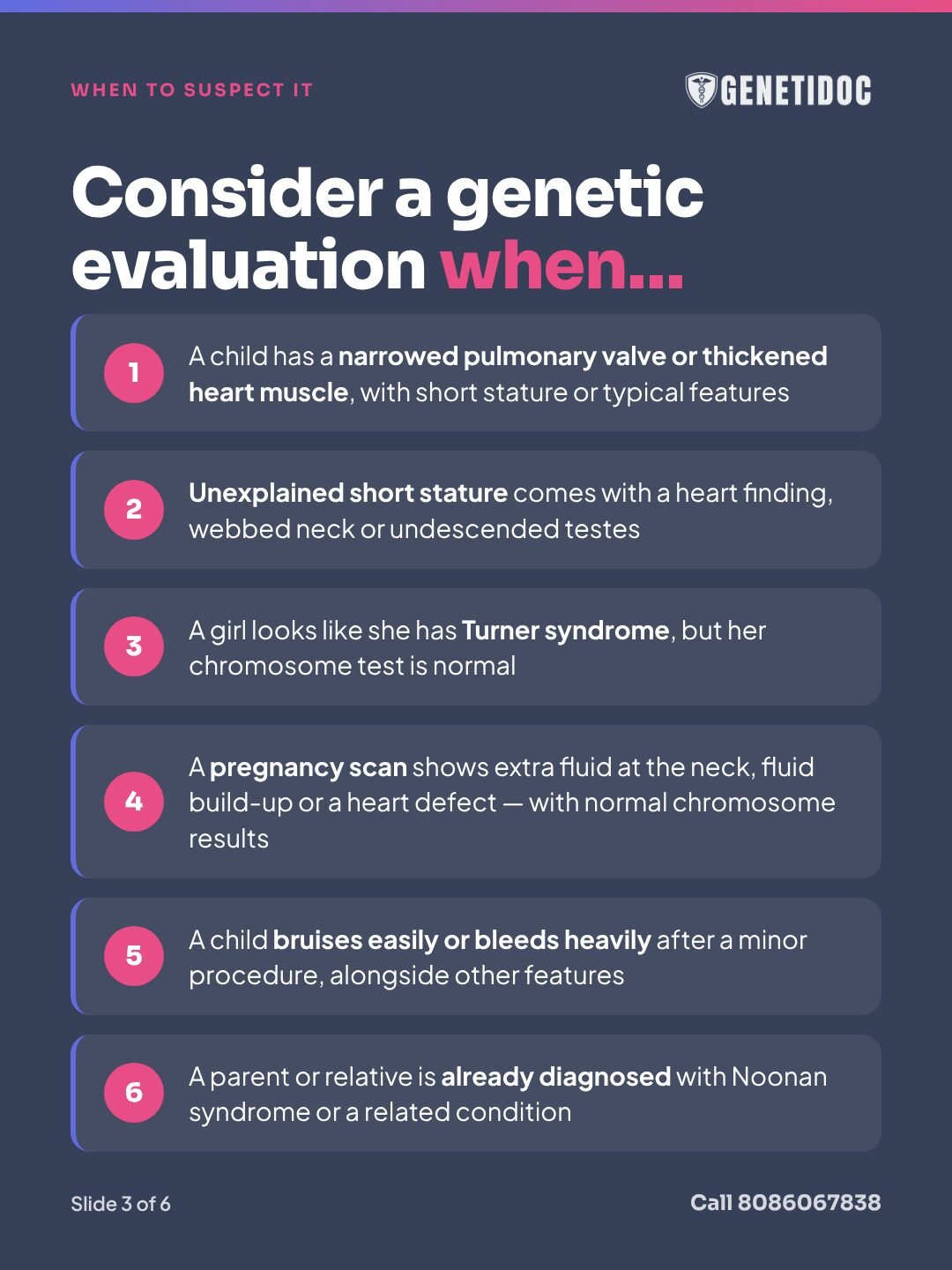
- A child has pulmonary valve stenosis or hypertrophic cardiomyopathy, especially with short stature or typical facial features.
- A child is short for their age with no clear explanation, and also has a heart finding, a broad or webbed neck, or undescended testes.
- A girl has features that suggest Turner syndrome, but her chromosome test is normal.
- A pregnancy scan shows increased nuchal translucency, a cystic hygroma, extra amniotic fluid, fluid build-up or a heart defect, and the chromosome tests are normal.
- A child bruises easily or bleeds heavily after a minor procedure, along with other features above.
- A parent or other relative has already been diagnosed with Noonan syndrome or another RASopathy.
Two illustrative situations
The following examples are illustrative scenarios, not real patients.
The toddler with a murmur. Consider a two-year-old boy whose doctor hears a heart murmur. A scan shows a narrowed pulmonary valve. He is below the third centile for height, has droopy eyelids and one undescended testis. His chromosome test was normal, and the family was told nothing more was needed. A RASopathy gene panel finds a PTPN11 change. The diagnosis explains all his features together, and it also prompts a clotting work-up before his planned heart procedure.
The father who was “just short”. Now consider the same family. The boy’s father is short, had a heart murmur as a child and has slightly widely spaced eyes, but was never investigated. Targeted testing shows he carries the same PTPN11 change. This changes the couple’s chance in each future pregnancy from low to 50%, and it gives them time to understand their options.
Conditions That Can Look Like Noonan Syndrome
Several conditions share features with Noonan syndrome. Telling them apart matters, because their health risks and follow-up differ.
| Condition | How it differs |
| Turner syndrome | Affects only girls and is caused by a missing or altered X chromosome, so it shows up on a chromosome test. Noonan syndrome affects both sexes and the chromosomes are normal. |
| Noonan syndrome with multiple lentigines | Many dark, freckle-like spots appear through childhood, with heart rhythm changes and hypertrophic cardiomyopathy. Usually caused by specific PTPN11 changes. |
| Cardio-facio-cutaneous syndrome | More marked skin and hair changes and, usually, more significant developmental delay. |
| Costello syndrome | Loose, soft skin, deep creases on the palms and soles, and a higher risk of certain childhood tumours. Caused by HRAS changes. |
| Neurofibromatosis type 1 | Multiple café-au-lait (light brown) skin patches and benign nerve lumps. Some people have overlapping Noonan-like features. |
Because these conditions overlap so much, a single multi-gene panel that covers all the RASopathy genes is often the clearest way to reach the correct diagnosis.
How Is Noonan Syndrome Diagnosed?
There are no single, universally agreed diagnostic criteria for Noonan syndrome. Doctors combine three things:
- A clinical examination by a clinical geneticist, looking at facial features, growth, chest shape and other signs.
- Tests of the affected body systems, especially an echocardiogram (an ultrasound scan of the heart).
- Genetic testing to find the gene change that confirms the diagnosis.
A scoring system published by van der Burgt in 2007 is used in some countries to guide the clinical diagnosis. Today, a confirmed gene change gives the most certainty, but a negative test does not always rule the condition out.
Why a normal chromosome test does not rule it out
A karyotype or chromosomal microarray looks for missing, extra or rearranged pieces of chromosomes. Noonan syndrome is caused by a tiny change in the spelling of a single gene. That change is far too small for these tests to see. This is why many families are wrongly reassured after a normal chromosome result.
Genetic Testing for Noonan Syndrome
Genetic testing is usually done on a blood sample, which can be collected at home.
| “The test we choose depends on how well a person’s history and features fit a known condition. When many genes can cause the same picture, a focused panel or exome sequencing is more useful than testing one gene at a time.”
— Team Genetidoc |
Which test is used?
- RASopathy or Noonan spectrum gene panel: the usual first test when the features point towards Noonan syndrome or a related condition. It examines all the main genes in one go. Results usually take about 3 to 4 weeks.
- Whole exome sequencing: reads almost all the genes that make proteins. It is used when the features are atypical, when other syndromes are possible, or when a panel is negative. Results usually take about 1 to 2 months.
- Targeted family-variant test: when the gene change in the family is already known, relatives are tested only for that change. Results usually take about 1 week.
Single-gene testing of PTPN11 alone is rarely the best choice today, because it misses roughly half of all cases.
What does a negative result mean?
| “A negative report means there was no reportable finding in what was tested. It does not always mean the condition is ruled out, and it is never a guarantee about the future.”
— Team Genetidoc |
Some people with clear features of Noonan syndrome have no gene change found with current tests. This can happen because the gene involved has not yet been discovered, or because the change is in a region the test does not cover well. Your child’s heart, growth and development should still be followed closely, whatever the genetic result.
What if the result is uncertain or negative but the features are strong?
| “When a report is negative or uncertain but the features still strongly suggest a syndrome, we advise reanalysis of the data in six months to a year, or sooner if new symptoms appear. If it is still unclear, testing the child together with both parents, or whole genome sequencing, may be the next step.”
— Team Genetidoc |
Sometimes the test finds a variant of uncertain significance: a gene change for which there is not yet enough evidence to say whether it causes disease. Testing the parents can help. In Noonan syndrome, a change that is new in the child and absent in both parents is more likely to be the cause. An uncertain variant should not be used for pregnancy decisions or to test healthy relatives until it is clarified.
Noonan Syndrome Before Birth
Noonan syndrome is increasingly suspected during pregnancy. Scan findings that may point towards it include:
- Increased nuchal translucency (a thicker layer of fluid at the back of the baby’s neck on the first-trimester scan)
- A cystic hygroma (a larger, fluid-filled swelling at the neck)
- Extra amniotic fluid (polyhydramnios)
- Fluid around the lungs or in the abdomen, or generalised swelling (hydrops)
- Heart defects or thickened heart muscle
- Kidney differences
The usual testing pathway
- Diagnostic sampling: chorionic villus sampling (a small sample from the placenta) or amniocentesis (a sample of the fluid around the baby).
- Chromosome testing first: a karyotype or chromosomal microarray to check for Down syndrome and other chromosome conditions, which are more common causes of these scan findings.
- RASopathy gene panel or exome sequencing if the chromosome results are normal.
How likely the panel is to find a cause depends on the scan findings. A 2025 systematic review found a cause in about 3% of babies with increased nuchal translucency alone, rising to about 15% when there were additional scan findings. Another study of babies with normal microarray results found a cause in about 14% overall, and in more than 20% of those with fluid collections, hydrops or heart defects.
It is equally important to remember the reassuring side: most babies with an isolated increased nuchal translucency and normal genetic tests are born healthy.
Can Non-Invasive Prenatal Testing detect Noonan syndrome?
Standard Non-Invasive Prenatal Testing (NIPT) cannot detect Noonan syndrome. It screens for changes in the number of whole chromosomes, such as Down syndrome, while Noonan syndrome is caused by a tiny change in one gene. Single-gene cell-free DNA screens are being developed and offered in some countries, but they are screening tests, and any result still needs confirmation through diagnostic testing.
What Does a Confirmed Diagnosis Change?
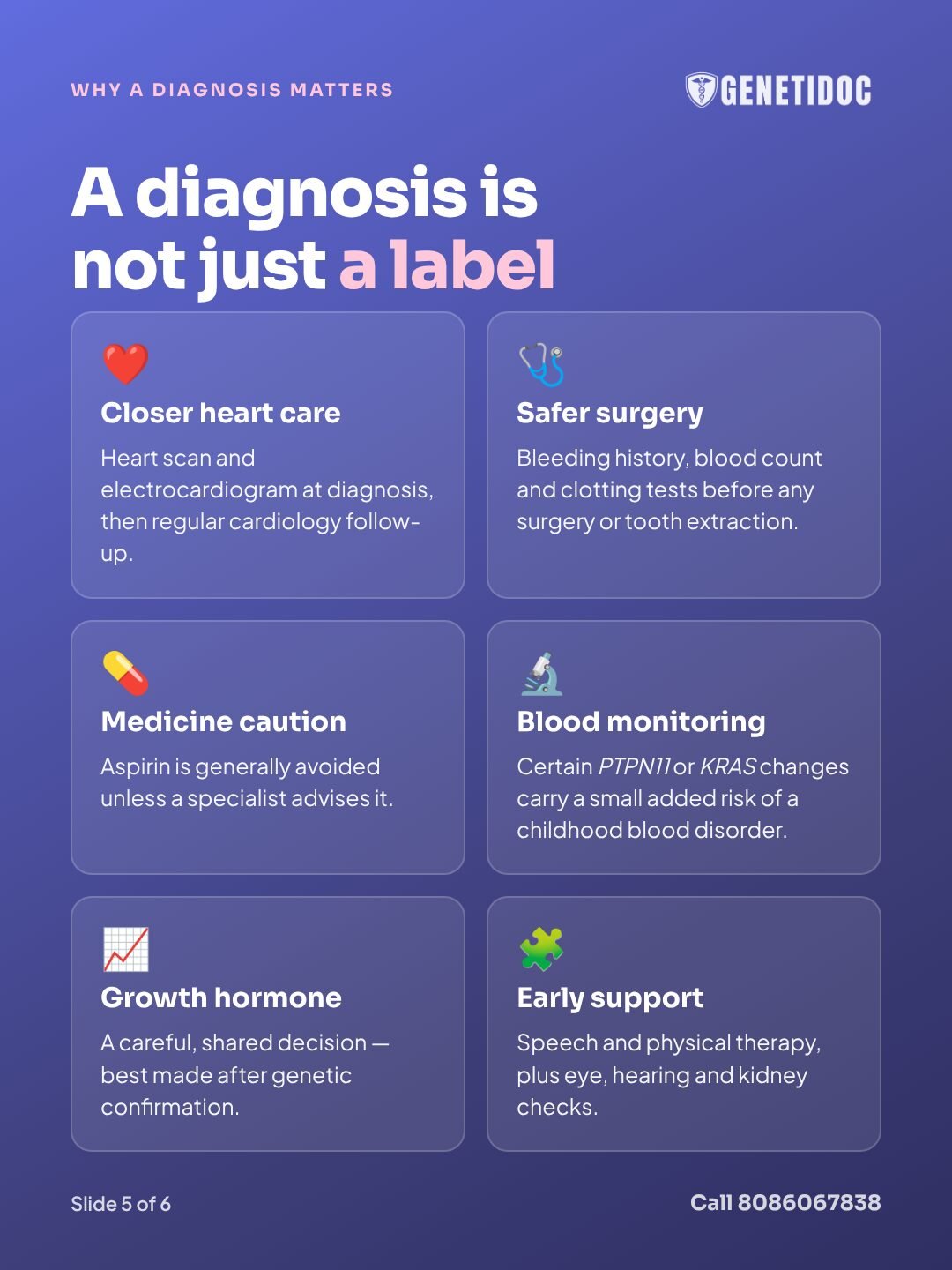
A genetic diagnosis is not just a label. It shapes how your child is monitored and treated.
1. Closer heart care
Every person with Noonan syndrome needs a heart scan and an electrocardiogram (a recording of the heart’s electrical activity) at diagnosis, with regular follow-up by a cardiologist. Knowing the gene helps. Changes in RAF1 and RIT1 carry a higher risk of hypertrophic cardiomyopathy, so the cardiac team may follow these children more closely, especially in infancy. Narrowed pulmonary valves are often treated with a balloon procedure or surgery, as in other children.
2. Safer surgery and procedures
Because many people with Noonan syndrome have a hidden bleeding tendency, international guidance recommends a bleeding history and blood tests, including a complete blood count and clotting studies, before any surgery or dental extraction. Aspirin and similar medicines that affect platelets are generally avoided unless a specialist advises them.
3. Watching for rare blood problems
Babies with certain PTPN11 or KRAS changes have a small increased risk of a blood disorder called juvenile myelomonocytic leukaemia. In infancy, a milder, temporary form of overactive blood cell production is more common and often settles on its own. Your doctors may recommend a physical examination and blood counts in early childhood. The overall lifetime cancer risk in Noonan syndrome is modestly higher than in the general population, but most people never develop cancer.
4. Informed decisions about growth hormone
Growth hormone treatment is approved for short stature in Noonan syndrome in several countries. It increases growth speed, and studies show a modest gain in adult height. Because Noonan syndrome is linked with thickened heart muscle and a small increase in some cancers, the decision is made carefully by a paediatric endocrinologist, together with the cardiologist and geneticist. Recent reviews recommend confirming the diagnosis genetically before starting treatment, as the specific gene change can influence the decision. Growth hormone treatment is a long-term commitment, and families should discuss its benefits, monitoring needs and cost before starting.
5. Support for development and learning
Early speech, physical and occupational therapy help children reach their potential. Schools can be asked for learning support where needed. Many children with Noonan syndrome do well in mainstream schools.
6. Regular checks of other body systems
- Eye examinations for squint, glasses and lazy eye
- Hearing tests
- Growth monitoring on Noonan-specific growth charts
- Kidney ultrasound at diagnosis
- Surgery for undescended testes, usually in the first year or two
- Spine checks for scoliosis
Who is usually on the care team?
Care is best shared by a team: a paediatrician, paediatric cardiologist, clinical geneticist, paediatric endocrinologist, haematologist when there is a bleeding concern, developmental therapists, and eye and hearing specialists. After diagnosis, the clinical geneticist helps coordinate this plan with your child’s existing doctors.
Is Noonan Syndrome Inherited?
In most families, Noonan syndrome follows an autosomal dominant pattern. One changed copy of the gene is enough to cause the condition.
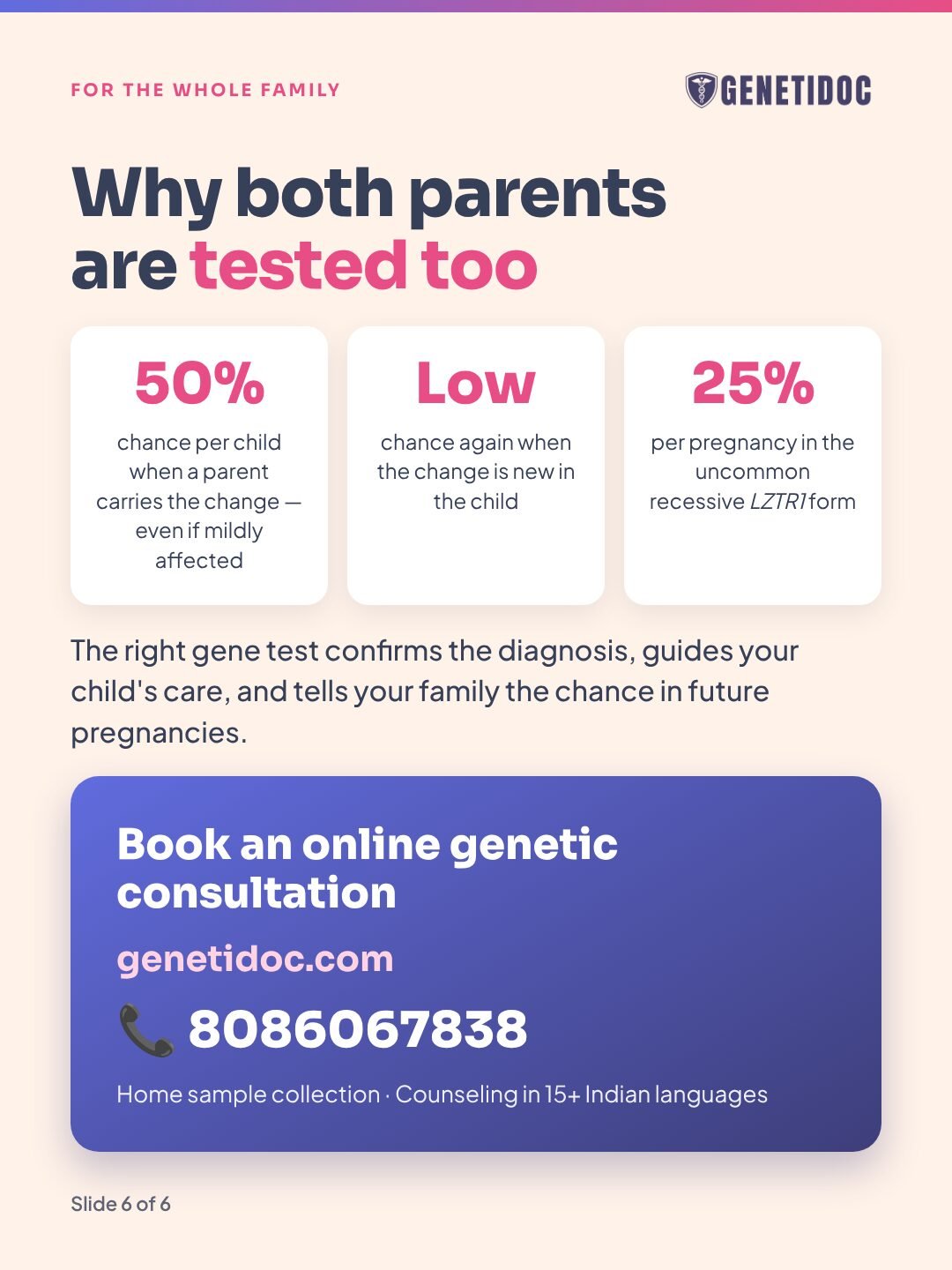
- When a parent has Noonan syndrome, each child has a 50% chance of inheriting the gene change. The parent may be so mildly affected that they never knew.
- When the change is new in the child (a de novo change), neither parent carries it. The chance of it happening again in the parents’ next child is low, but not zero. Rarely, a parent carries the change in some of their egg or sperm cells without it showing in their blood. This is called germline mosaicism.
- The recessive form: in some families with LZTR1 changes, a child is affected only when both parents pass on a changed copy. Each parent is a healthy carrier, and each pregnancy has a 25% chance of being affected. This form is more likely when parents are related by blood.
Why both parents are tested
Testing the parents for the child’s gene change answers the most important question for the family: is the chance of it happening again 50%, 25% or low? It can also identify a parent who needs their own heart check, or a bleeding assessment before surgery.
Options for future pregnancies
Once the family’s gene change is known, couples can choose:
- Prenatal diagnosis through chorionic villus sampling or amniocentesis, testing for the known family change.
- Preimplantation genetic testing during IVF, to select embryos without the family’s gene change.
- A detailed scan schedule, including a fetal heart scan, without invasive testing.
| “Our role in genetic counseling is to explain every option clearly and honestly. The final decision always belongs to the couple.”
— Team Genetidoc |
Living With Noonan Syndrome: The Long-Term Outlook
The outlook for most people with Noonan syndrome is good. Many adults finish their education, work, marry and have children. The biggest influence on long-term health is the heart, particularly severe hypertrophic cardiomyopathy starting in infancy, which needs specialist care.
- Adult height is often near the lower end of the normal range.
- Fertility is usually normal in women. In men, undescended testes can reduce fertility, which is one reason early surgery matters.
- Pregnancy in a woman with Noonan syndrome benefits from a heart review and a bleeding assessment before delivery.
- Adults need continued heart follow-up, because some valve and heart muscle problems can appear or change later in life.
Common Misconceptions About Noonan Syndrome
“The chromosome test was normal, so my child doesn’t have a genetic condition.”
Noonan syndrome does not show up on a karyotype or chromosomal microarray. It needs a gene-level test, such as a RASopathy panel or exome sequencing.
“My child will have intellectual disability.”
Most children with Noonan syndrome have normal intelligence. Some need extra help with speech, movement or learning, and early support makes a real difference.
“It happened because we are related.”
The common, dominant form of Noonan syndrome is not caused by parents being related. Only the uncommon recessive form is more likely in consanguineous marriages. A genetic test clarifies which applies to your family.
“Nobody else in the family has it, so it can’t be inherited.”
Many affected parents have such mild features that they were never diagnosed. Testing the parents is the only reliable way to know.
“Noonan syndrome only affects girls.”
Because it was once called “male Turner syndrome” or confused with Turner syndrome, some people assume it is linked to sex. It affects boys and girls equally.
The Emotional Side of a Diagnosis
Parents often feel worried about their child’s heart, their growth and their future. Some feel guilty when they learn the gene change came from them. Others feel relief that, after months of tests, there is finally an explanation.
- No parent causes a gene change. It is not the result of anything done or not done during pregnancy.
- A diagnosis allows problems to be found early and managed well, often before they cause harm.
- Genetic counseling gives families time to ask questions, understand risks for each family member, and plan ahead with confidence.
When Genetic Testing May Not Be Needed
- A child who is simply short, with short parents, normal growth speed, a normal heart and no other features, usually does not need testing for Noonan syndrome.
- When the family’s gene change is already known, relatives need only a targeted test, not a full panel.
- Genetic testing does not replace heart scans, growth checks or developmental assessments. These are needed whatever the result.
Why Expert Interpretation Matters
- Choosing the right test. A chromosome test, or PTPN11 testing alone, can miss the diagnosis. A well-chosen panel or exome covers the full range of genes.
- Separating look-alike conditions. Costello syndrome, cardio-facio-cutaneous syndrome and Noonan syndrome with multiple lentigines carry different risks and need different follow-up.
- Reading uncertain results correctly. Indian populations are under-represented in genetic databases, so new and uncertain variants are common and need careful review, often with parental testing.
- Turning results into care. The gene result guides heart surveillance, surgical safety, growth hormone decisions and family planning.
At Genetidoc, testing is carried out through accredited partner laboratories. Every result is reviewed by a clinical geneticist and explained through genetic counseling, with a written summary families can share with their doctors and relatives.
What To Do If You Suspect Noonan Syndrome
- Get a heart scan if your child has a murmur, short stature or typical features.
- Keep growth records from birth onward, including height and weight measurements.
- Gather your family history, including short stature, heart problems, easy bruising or learning difficulties in relatives.
- Consult a clinical geneticist to review the features and choose the right genetic test.
- Tell your doctors before any surgery so that a bleeding assessment can be done.
- Ask about testing for both parents once a gene change is found, especially if you are planning another pregnancy.
Frequently Asked Questions
1. What causes Noonan syndrome?
Noonan syndrome is caused by a change in one of several genes that control cell growth through the RAS-MAPK pathway. PTPN11 is the most common, accounting for about half of cases.
2. What are the main symptoms of Noonan syndrome?
The main features are distinctive facial features, short stature, heart differences such as pulmonary valve stenosis, a broad or webbed neck, chest shape differences, undescended testes in boys and a bleeding tendency.
3. Is Noonan syndrome inherited from the mother or the father?
It can come from either parent. If a parent carries the gene change, each child has a 50% chance of inheriting it. In many children, the change is new and neither parent carries it.
4. Can a karyotype detect Noonan syndrome?
No. Karyotype and chromosomal microarray tests are usually normal in Noonan syndrome. A gene panel or exome sequencing is needed to confirm it.
5. Can Noonan syndrome be detected before birth?
Yes. When a scan shows suggestive findings and chromosome tests are normal, a RASopathy gene panel or exome sequencing can be done on a chorionic villus or amniocentesis sample. Standard NIPT cannot detect it.
6. Do children with Noonan syndrome have normal intelligence?
Most do. Some have learning or speech difficulties, and a minority have mild intellectual disability. Early therapy and school support help.
7. What is the life expectancy with Noonan syndrome?
Most people with Noonan syndrome live into adulthood and lead independent lives. Long-term health depends mainly on the heart, so regular cardiac follow-up is important.
8. Does growth hormone work in Noonan syndrome?
Growth hormone increases growth speed and can modestly improve adult height. The decision is individual, because of the heart and cancer considerations, and is best made after genetic confirmation.
9. Is Noonan syndrome the same as Turner syndrome?
No. Turner syndrome affects only girls and is caused by a missing or altered X chromosome. Noonan syndrome affects both sexes and is caused by a single-gene change.
10. Can people with Noonan syndrome have children?
Yes. Most women have normal fertility. Men may have reduced fertility if their testes were undescended. Each child has a 50% chance of inheriting the condition in the dominant form.
11. Why should people with Noonan syndrome avoid aspirin?
Many people with Noonan syndrome have a bleeding tendency. Aspirin affects platelets and can make bleeding worse, so it is generally avoided unless a specialist advises it.
12. How long does genetic testing for Noonan syndrome take?
A RASopathy gene panel usually takes about 3 to 4 weeks, and whole exome sequencing about 1 to 2 months. Targeted testing for a known family change takes about 1 week.
Key Takeaways
- Noonan syndrome is a common genetic condition affecting growth, the heart, facial features and sometimes learning.
- It is caused by changes in several RAS-MAPK pathway genes, most often PTPN11.
- A normal chromosome test does not rule it out. A gene panel or exome sequencing is needed.
- It can be suspected before birth from scan findings, but standard NIPT cannot detect it.
- A confirmed diagnosis guides heart care, surgical safety, growth hormone decisions and blood monitoring.
- Testing both parents clarifies the chance of recurrence and finds mildly affected relatives.
- Most people with Noonan syndrome have normal intelligence and live full adult lives.
Has a Heart Murmur, Short Stature or a Pregnancy Scan Raised the Question of Noonan Syndrome?If your child has a narrowed pulmonary valve, thickened heart muscle or unexplained short stature, or if your pregnancy scan shows increased nuchal translucency with normal chromosome results, a consultation with a clinical geneticist can help you find out whether Noonan syndrome or a related condition is the cause. It can also help you choose the right gene test and understand what the result means for future pregnancies and for other family members. Genetidoc offers online genetic consultations across India, with home sample collection and counseling in more than 15 Indian languages.
|
Book a Noonan syndrome genetic consultation
| Join the conversation: Have questions about Noonan syndrome or another RASopathy, or want to connect with other families? Visit the genetidoc rare genetic diseases forum |
Related Reading
- Developmental Delay: When to Consider a Genetic Evaluation
- What Defines a Rare Genetic Disease? A Clear Guide
- Skipping Generations: What Families Should Know
- Unusual Inheritance Patterns: Mitochondrial DNA Explained
- Congenital Insensitivity to Pain: When a Child Cannot Feel Pain
References
- Roberts AE. Noonan Syndrome. In: Adam MP, et al., eds. GeneReviews. Seattle (WA): University of Washington, Seattle; 2001, updated 2022. Available at: https://www.ncbi.nlm.nih.gov/books/NBK1124/
- Roberts AE, Allanson JE, Tartaglia M, Gelb BD. Noonan syndrome. Lancet. 2013;381(9863):333–342.
- Romano AA, Allanson JE, Dahlgren J, et al. Noonan syndrome: clinical features, diagnosis, and management guidelines. Pediatrics. 2010;126(4):746–759.
- van der Burgt I. Noonan syndrome. Orphanet J Rare Dis. 2007;2:4.
- Tartaglia M, Mehler EL, Goldberg R, et al. Mutations in PTPN11, encoding the protein tyrosine phosphatase SHP-2, cause Noonan syndrome. Nat Genet. 2001;29(4):465–468.
- Narayanan DL, Pandey H, Moirangthem A, et al. Hotspots in PTPN11 gene among Indian children with Noonan syndrome. Indian Pediatr. 2017;54(8):638.
- Athota JP, Bhat M, Nampoothiri S, et al. Molecular and clinical studies in 107 Noonan syndrome affected individuals with PTPN11 BMC Med Genet. 2020;21:50.
- Kaur A, Kaur I, Panigrahi I, et al. RASopathies in a North Indian cohort (Postgraduate Institute of Medical Education and Research, Chandigarh). Front Genet. 2025. doi:10.3389/fgene.2025.1677143
- Scott A, Di Giosaffatte N, Pinna V, et al. When to test fetuses for RASopathies? Proposition from a systematic analysis of 352 multicenter cases and a postnatal cohort. Genet Med. 2021;23(6).
- Yield of RASopathy gene panel in karyotype-normal or microarray-normal fetuses with increased nuchal translucency: a systematic review. O&G Open. 2025;2(3):e083.
- Croonen EA, Nillesen WM, Stuurman KE, et al. Prenatal diagnostic testing of the Noonan syndrome genes in fetuses with abnormal ultrasound findings. Eur J Hum Genet. 2013;21(9).
- Demir K, Yüksek Acınıklı K. Noonan syndrome, cancer risk, and growth hormone treatment. J Clin Res Pediatr Endocrinol. 2025;17(4):370–378.
- MedlinePlus Genetics. Noonan syndrome. U.S. National Library of Medicine. Available at: https://medlineplus.gov/genetics/condition/noonan-syndrome/
This article is for educational purposes and does not replace personal medical advice. Please consult a qualified doctor or clinical geneticist about your individual situation.