
Quick answer
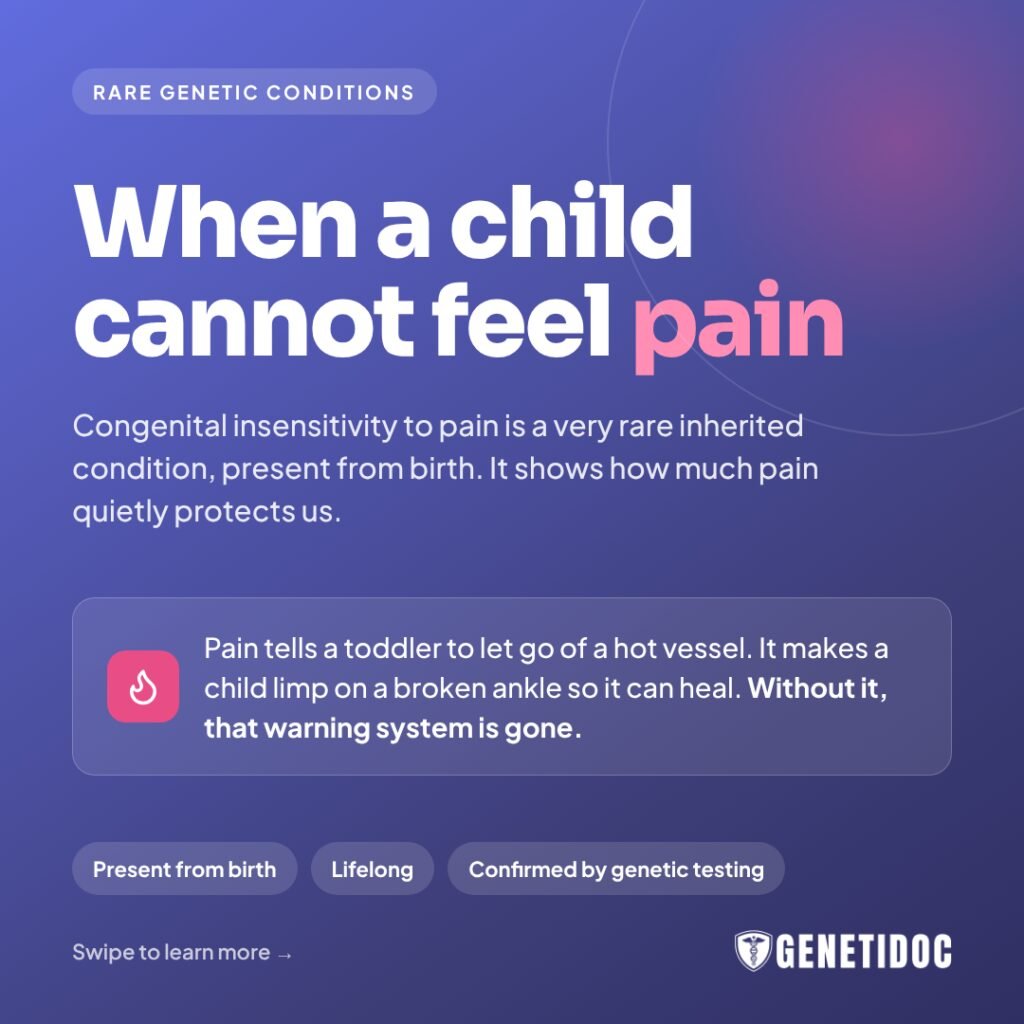
Congenital insensitivity to pain is a group of very rare inherited conditions in which a person cannot feel physical pain from birth. It is caused by changes in genes that build or run the nerves that carry pain signals. Children with the condition can be badly injured without crying or complaining. Some types also stop the body from sweating, which can cause dangerous high fevers. Genetic testing can confirm the exact type, which guides care and helps the family plan future pregnancies.
Most parents think of pain as something to protect their child from. It is hard to imagine that pain is also one of the body’s most important safety systems.
Pain tells a toddler to let go of a hot vessel. It makes a child limp on a broken ankle so that it can heal. It stops us from chewing our own tongue. When pain is missing from birth, a child loses that warning system completely.
This article explains what congenital insensitivity to pain is, why it happens, the signs parents usually notice first, how genetic testing works, and what day-to-day care looks like. It is written for families in India who are looking for clear, practical answers.
What Is Congenital Insensitivity to Pain?
“Congenital” means present from birth. “Insensitivity to pain” means the person cannot sense pain. Put together, congenital insensitivity to pain (CIP) describes people who have never been able to feel physical pain.
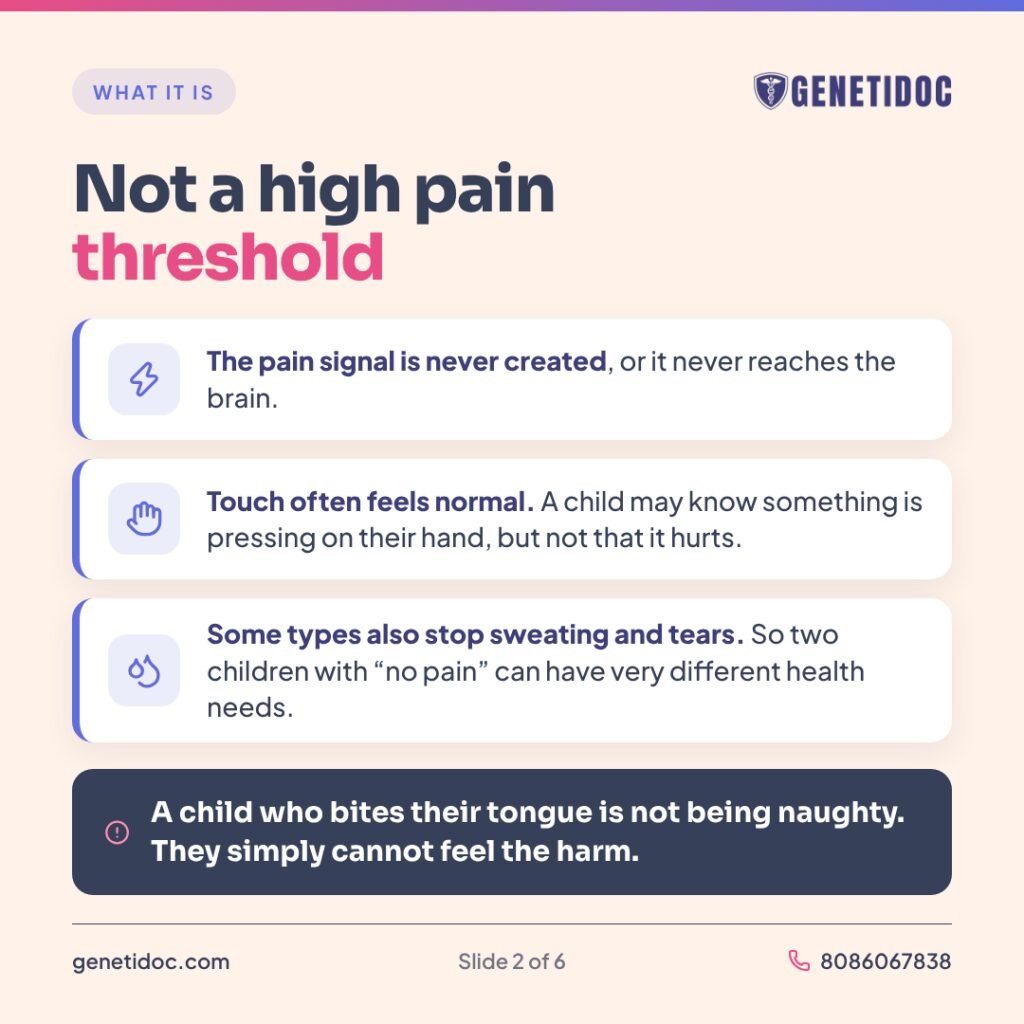
This is different from being “tough” or having a high pain threshold. In CIP, the pain signal is never created or never reaches the brain. A child may feel touch normally. They may know that something is pressing on their hand. But they do not feel that it hurts.
Doctors often group CIP with a related family of conditions called hereditary sensory and autonomic neuropathies (HSAN). Let us break that term down:
- Hereditary – passed down through genes
- Sensory – affecting the nerves that carry feelings such as pain and temperature
- Autonomic – affecting the “automatic” nerves that control sweating, tears and body temperature
- Neuropathy – a problem with nerves
Some types of CIP affect only pain. Others also affect sweating and tear production. This is why two children with “no pain” can have very different health needs.
How rare is it?
CIP is extremely rare. No reliable population figure exists. Specialists in the United Kingdom have informally estimated it at around one in a million people, based on fewer than 30 known cases in that country. In India, the condition has been described mainly through individual case reports from hospitals in Pune, Puducherry, Madurai, Eastern India and elsewhere. Many of these reports describe children born to parents who are blood relatives.
Why Does It Happen? The Genetics Explained Simply
To feel pain, your body needs special nerve cells called nociceptors. These are “danger detectors” in the skin, joints, bones and organs. When they sense damage, they fire an electrical signal to the spinal cord and brain. The brain then reads that signal as pain.
CIP happens when a gene needed for this system does not work. Depending on the gene, one of two things goes wrong:
- The danger-detector nerves never form properly while the baby is growing in the womb. This happens with the NTRK1, NGF and PRDM12 genes.
- The nerves form, but cannot send the signal. This happens with the SCN9A gene. It makes a tiny “gate” on pain nerves (a sodium channel) that lets the electrical signal start. Without a working gate, the nerve stays silent.
The SCN9A discovery is so important that researchers around the world are now studying this gate as a target for new painkillers.
How is it inherited?
Most types of CIP are autosomal recessive. In plain terms:
- Every person has two copies of each gene, one from each parent.
- A child is affected only when both copies of the gene are not working.
- Each parent usually carries one non-working copy. They are called carriers. Carriers are healthy and feel pain normally.
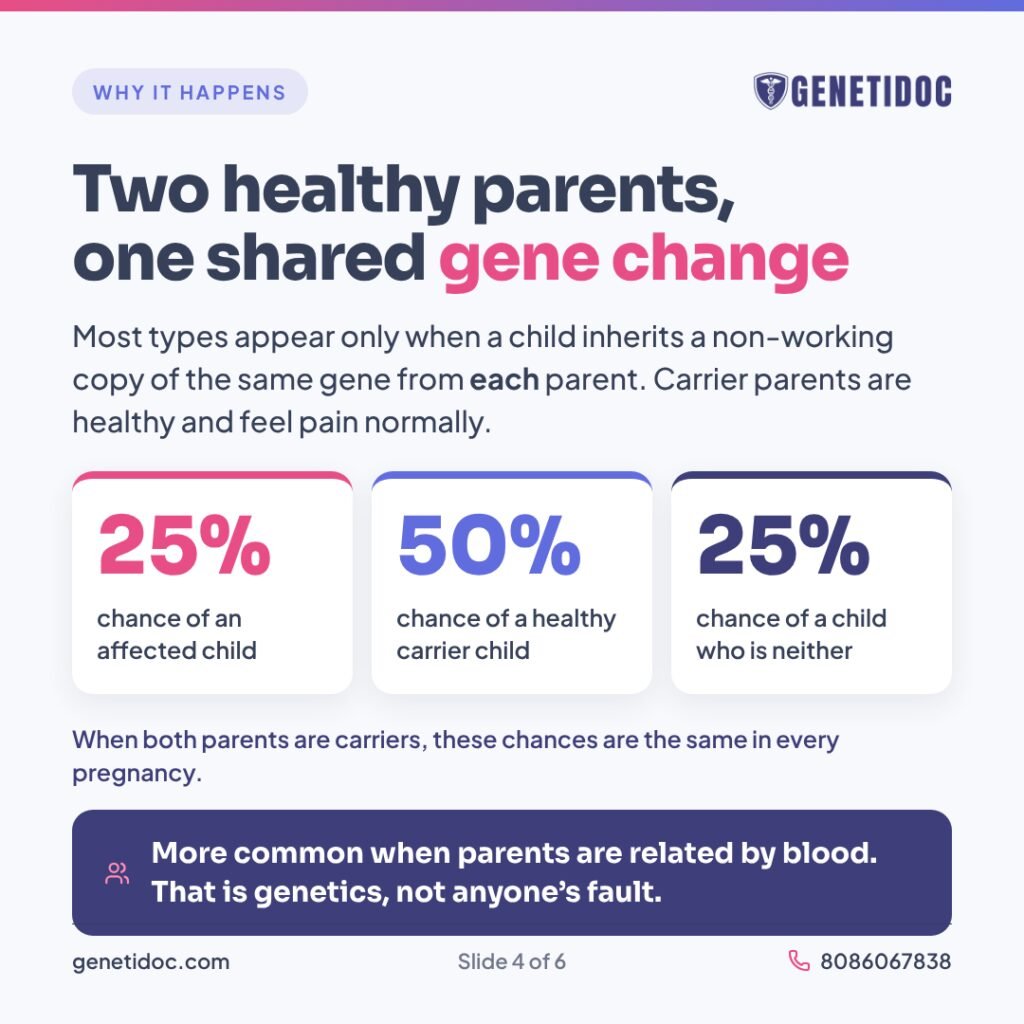
When both parents are carriers, each pregnancy has:
- A 25% chance of an affected child
- A 50% chance of a child who is a healthy carrier
- A 25% chance of a child who is neither affected nor a carrier
These chances are the same in every pregnancy. Having one affected child does not “use up” the risk.
Recessive conditions are more common when parents are related by blood, such as in cousin or uncle–niece marriages. This is because related parents are more likely to carry the same rare gene change passed down from a shared ancestor. This pattern appears again and again in Indian case reports of CIP.
A small number of types, such as the one caused by the SCN11A gene, are autosomal dominant. Here, one changed copy is enough to cause the condition. These often arise as a brand-new (de novo) change in the child, with neither parent affected.
“When parents learn that both of them carry the same gene change, the first question is almost always, ‘Whose side did this come from?’ The honest answer is that no one is to blame. Every one of us silently carries a few recessive gene changes. When parents are related, the chance that both carry the same one is simply higher. That is genetics, not fault.”
— Dr. Roshan Daniel, Clinical Geneticist and Founder, Genetidoc
The Main Types of Congenital Insensitivity to Pain
CIP is not one disease. It is a group of conditions caused by different genes. The gene involved shapes the child’s sweating, intelligence, eye health and long-term outlook.
| Gene | Other name | Inheritance | Sweating | Learning and intelligence | Distinctive features |
| SCN9A | Channelopathy-associated insensitivity to pain | Recessive | Normal | Usually normal | Loss of sense of smell; joint damage over time; tears and blink reflex usually normal |
| NTRK1 | Congenital insensitivity to pain with anhidrosis (CIPA), HSAN type IV | Recessive | Absent (anhidrosis) | Learning difficulty in most | Recurrent high fevers; slow-healing corneal ulcers; dry, thickened skin; hyperactivity and poor attention are common |
| PRDM12 | HSAN type VIII | Recessive | Reduced in some | Usually normal | Absent blink reflex and reduced tears; tongue and lip injuries; skin infections |
| NGF | HSAN type V | Recessive | Variable | Variable | Ranges from a CIPA-like picture to pain loss with normal sweating and intellect |
| SCN11A | HSAN type VII | Dominant (often new in the child) | Variable | Usually normal | Slow movement milestones; mild weakness; bowel problems; itching |
Researchers continue to find new genes. A 2021 study that used broad genetic testing found a cause in all 13 patients studied, across nine different genes. Some of those genes were not on standard test panels at the time. This is one reason why choosing the right test matters so much.
Congenital insensitivity to pain with anhidrosis (CIPA)
CIPA is the type most often reported from India. “Anhidrosis” means the body cannot sweat. Sweating is how we cool down. A child who cannot sweat can overheat quickly in hot weather, during an illness or after exercise. Their temperature can climb very high without any infection.
This is the most serious risk in CIPA. An older review of 31 published patients found that about one in five children died from very high fever, most of them before the age of three. Today, early diagnosis and careful temperature control at home aim to prevent this. It is the single biggest reason why an early, accurate diagnosis matters.
Signs Parents Usually Notice First
Most babies with CIP look completely normal at birth. The signs appear as the child starts teething, crawling and walking. Here are the warning signs most often described:
In babies and toddlers
- Biting the tongue, lips or fingertips – often starting when the first teeth come in. Some children lose the tip of the tongue or damage their fingertips.
- Not crying after injuries – falls, cuts, vaccinations or blood tests cause little or no reaction.
- Burns without complaint – especially in types where the child also cannot sense heat.
- Unexplained high fevers – especially in hot weather, with dry skin and no sweating (seen in CIPA).
- Red, watery or cloudy eyes – the child does not blink or rub the eye when it is injured, so small scratches can become corneal ulcers.
- Frequent skin, ear or bone infections – often because small wounds go unnoticed.
In older children and adults
- Painless fractures – a child may keep walking on a broken leg. The fracture is found only when the limb swells or changes shape.
- Swollen, damaged joints – repeated unnoticed injury can wear down the ankles, knees, hips and spine. Doctors call these Charcot joints.
- Limping or not using a limb – sometimes the only sign of a hidden fracture or bone infection.
- Loss of the sense of smell – typical of the SCN9A type.
- Learning or attention difficulties – common in CIPA.
Illustrative scenario (composite, not a specific patient)
A 14-month-old boy is brought to his paediatrician with his third episode of very high fever that summer. Blood tests show no infection. His parents mention that he has bitten the tip of his tongue raw since his teeth came in, and that he did not cry after touching a hot iron. His skin feels dry even when he is very hot. His parents are first cousins. These features together, fever without sweating, self-biting and no pain response, strongly suggest CIPA. The paediatrician refers him to a clinical geneticist for genetic testing.
Why Diagnosis Needs an Expert
Diagnosing CIP is harder than it sounds. There are no agreed clinical criteria for it. Doctors have to show that a child truly does not respond to a stimulus that would be painful for anyone, and that the lack of response is not explained by something else.
International experts warn that some children have been wrongly labelled as unable to feel pain after being tested with a stimulus that was not painful enough. Diagnosis is also harder in young children and in children with learning difficulties, who may not show pain in the usual way. Nerve conduction studies, a common nerve test, are often normal in CIP, so a normal nerve test does not rule it out.
Please do not test your child’s pain response at home. Pinching, pricking or burning a child to “check” can cause real injury, and it does not give a reliable answer. Leave assessment to a doctor trained in it.
Conditions that can look similar
A clinical geneticist will think about other conditions that share some features with CIP:
- Hypohidrotic ectodermal dysplasia – causes reduced sweating and fevers, but pain is felt normally. Teeth and hair are often affected.
- Familial dysautonomia (HSAN type III) – reduced pain, along with feeding problems, vomiting episodes and unstable blood pressure.
- Lesch–Nyhan syndrome – severe self-biting, but with high uric acid, abnormal movements and major developmental delay.
- Osteogenesis imperfecta (brittle bone disease) – many fractures, but they are painful.
- Leprosy – still relevant in India. It causes loss of feeling in patches of skin with visible skin changes and thickened nerves, not a lifelong, whole-body absence of pain.
- Injury from abuse or neglect – repeated injuries may raise concern, but these children feel pain normally and the injury pattern is different. A correct genetic diagnosis protects families from being wrongly suspected.
- Autism and intellectual disability – some children show pain differently or react less, but the pain system itself is working.
“Many of these children have already seen a paediatrician, a dentist, an orthopaedic surgeon and an eye specialist before anyone connects the dots. Each specialist sees one piece of the picture: a bitten tongue, a fracture, an eye ulcer, a fever. The diagnosis becomes clear only when someone looks at the whole child and the whole family history together.”
— Dr. Roshan Daniel, Clinical Geneticist and Founder, Genetidoc
Genetic Testing for Congenital Insensitivity to Pain
Genetic testing is the only way to confirm the exact type of CIP. It is done on a simple blood sample. Testing can be done at any age once the doctor suspects the condition.
Which test is used?
The choice of test depends on how clearly the child’s features point to one gene:
- Single-gene testing – used when the features strongly suggest one gene. For example, a child with normal intelligence and no sense of smell may be tested for SCN9A first.
- Multi-gene panel – a test that looks at many genes linked to CIP and HSAN at once. This is often the practical first choice, because the types overlap and some children have only mild features.
- Whole exome sequencing – reads almost all the genes that make proteins. It is useful when the picture is unusual, when a panel is negative, or when another condition is possible. In India, clinical exome sequencing has been used to confirm CIPA and find new gene changes.
- Deletion/duplication analysis – some families have a whole section of a gene missing, which standard sequencing can miss. Your geneticist will add this when needed.
Testing is usually done first in the affected child. Once the gene change is found, the parents are tested for that exact change to confirm they are carriers.
What results can mean
- Positive – a disease-causing change is found. This confirms the diagnosis and the type.
- Variant of uncertain significance (VUS) – a change is found, but science cannot yet say whether it causes the condition. A VUS cannot confirm or rule out CIP. It should not be used for family testing or pregnancy decisions until it is clarified.
- Negative – no reportable change was found in what was tested. It does not prove the condition is not genetic. New CIP genes are still being discovered, so stored data can be reanalysed later.
If no genetic cause is found, international guidance suggests storing the child’s DNA. Testing methods improve every year, and a stored sample can be retested later without another blood draw.
Turnaround time and cost
A multi-gene panel usually takes about 3 to 4 weeks. Whole exome sequencing usually takes about 1 to 2 months, depending on the laboratory and whether the parents are tested at the same time. Cost depends on the type of test chosen, which is another reason to choose the test carefully rather than simply ordering the cheapest or the broadest one.
Why the laboratory and interpretation matter
With a condition this rare, the value of a test lies in the interpretation, not the report alone. A good result depends on:
- Picking a test that covers all the relevant genes, including newer ones
- An accredited laboratory with experience in rare neurological conditions
- A clinical geneticist who matches the result to the child’s actual features
- Genetic counseling that explains what the result means for the child, the parents and future pregnancies
A low-cost test that misses a gene, or a report handed over without explanation, can leave a family with a false sense of reassurance or with fear and confusion.
“A genetic report is only as useful as the question it was designed to answer. In a condition like this, the gene list matters, the deletion analysis matters, and above all, the match between the result and the child in front of you matters. A report alone does not make a diagnosis. Interpretation does.”
— Dr. Roshan Daniel, Clinical Geneticist and Founder, Genetidoc
How a Genetic Diagnosis Changes Care
There is currently no cure for CIP. But a confirmed diagnosis changes a great deal in daily life:
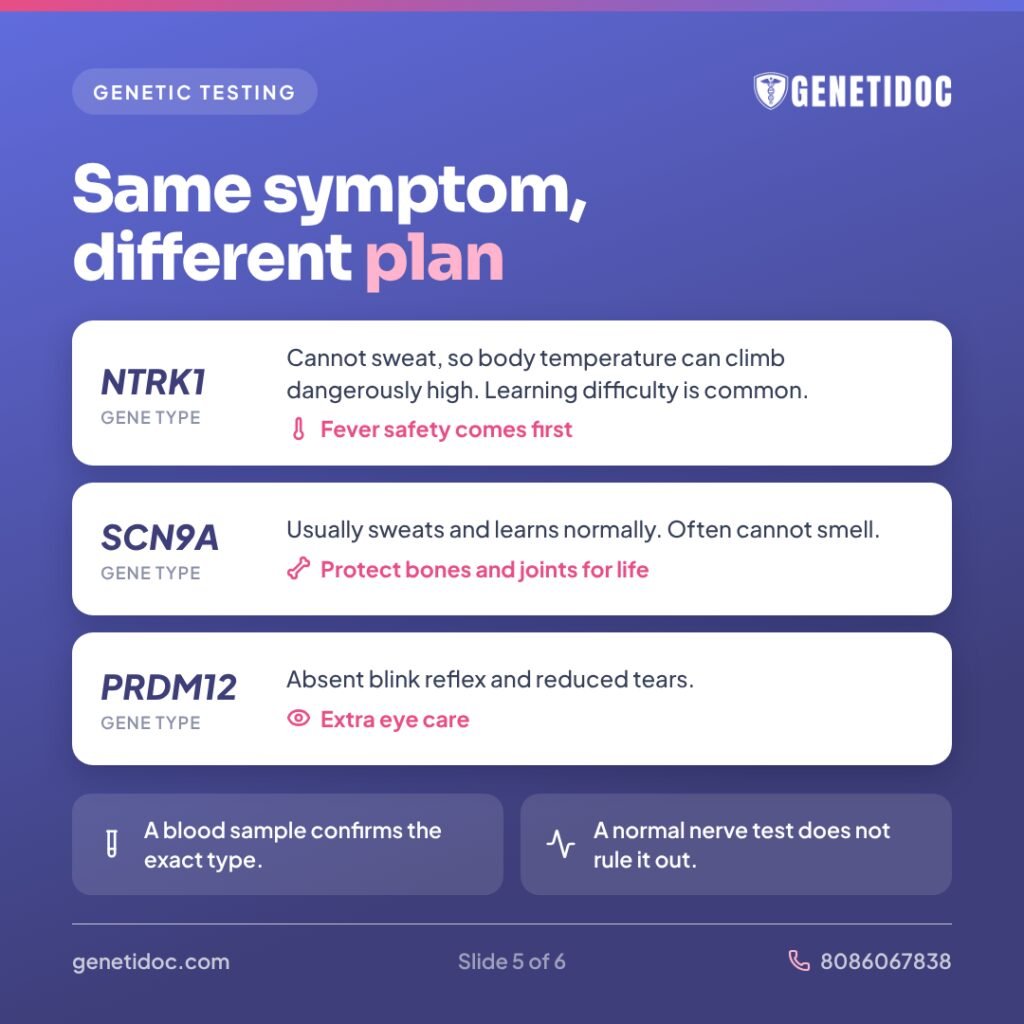
- It tells you which risks to focus on. A child with CIPA needs strict fever and temperature control. A child with SCN9A-related CIP usually sweats normally but needs close attention to joints and bones. A child with PRDM12-related CIP needs extra eye care.
- It sets expectations about learning. Families of children with CIPA can plan early support for learning and attention. Families of children with types that usually spare intelligence can be reassured.
- It ends the search. Many families have spent months or years moving between doctors. A diagnosis gives a name, a plan and a community.
- It protects the family. Repeated injuries can bring suspicion from schools, relatives or hospitals. A written diagnosis explains what is happening.
- It opens up family planning. Parents and relatives can be tested, and options for future pregnancies become available.
“Knowing the exact gene changes the whole conversation with a family. For a child with CIPA, our first priority is fever safety. For a child with the SCN9A type, who usually sweats and learns normally, our focus moves to protecting the bones and joints for life. Same symptom, very different plan.”
— Dr. Roshan Daniel, Clinical Geneticist and Founder, Genetidoc
Living With Congenital Insensitivity to Pain: Practical Care
There are no formal international treatment guidelines for CIP. Care focuses on preventing injury, spotting hidden injuries early and treating problems quickly. It works best with a team that may include a paediatrician, orthopaedic surgeon, eye specialist, dentist, skin specialist, developmental specialist and clinical geneticist.
1. Temperature and fever control (especially CIPA)
- Keep the child in a cool environment during hot Indian summers.
- Check temperature regularly during illness, hot weather and after play.
- Cool a high temperature with a lukewarm bath or cooling methods your doctor advises.
- Protect the child from very cold conditions too, as body temperature can also drop.
2. Daily body checks
- Check the skin, hands, feet, mouth and eyes every day for cuts, burns, swelling or redness.
- Watch for limping, a swollen joint or a limb the child stops using. These need a doctor’s review and often an X-ray, even if the child seems fine.
3. Eye care
- Use lubricating eye drops if advised.
- See an eye specialist at least once a year, and sooner if the eye looks red or cloudy.
4. Dental care
- Dental check-ups at least every six months.
- For severe self-biting, dentists may smooth sharp tooth edges, fit a mouth guard or, in some cases, remove teeth.
5. Bones and joints
- Yearly review by an orthopaedic doctor.
- Avoid high-impact and contact sports that put repeated strain on joints.
- A low threshold for X-rays, because fractures are often silent.
6. Skin and infection care
- Moisturise dry skin, as cracks can let infections in.
- Clean wounds early and see a doctor for any sign of infection.
- Good handwashing helps reduce skin infections.
7. A safer home and school
- Guard heaters, stoves and hot water. Pad sharp furniture edges.
- Tell teachers and caregivers about the diagnosis so that they check for injuries rather than waiting for the child to complain.
- As the child grows, teach them to look at their own body and report swelling, bleeding or changes in shape.
8. Surgery and hospital care
- Always tell surgeons and anaesthetists about the diagnosis. A child who feels no pain still needs proper sedation during procedures.
- In CIPA, the hospital team should take care to avoid overheating.
Illustrative scenario (composite, not a specific patient)
A nine-year-old girl with normal schoolwork has had two ankle fractures that were found only because her ankle looked swollen. She has never been able to smell food cooking. Genetic testing finds two non-working copies of SCN9A. Her family now knows she sweats normally and is not at risk of dangerous fevers, so their focus shifts to her joints, yearly bone reviews and choosing low-impact activities such as swimming. Her parents are confirmed as carriers and receive counseling before planning another pregnancy.
What Does It Mean for the Rest of the Family?
Parents
In recessive types, both parents are usually carriers. They are healthy and need no treatment for themselves. Knowing their carrier status helps them understand the 25% chance in each future pregnancy.
Brothers and sisters
Siblings who seem to have unusual injuries, high fevers or no reaction to pain should be assessed. Healthy adult siblings can choose carrier testing before planning their own families.
Extended family
Each brother or sister of a carrier parent has a 50% chance of also being a carrier. This matters most in families where marriages within the family are common.
Planning a future pregnancy
Once the family’s exact gene change is known, couples can consider:
- Prenatal diagnosis – testing a pregnancy for the known gene change.
- Preimplantation genetic testing (PGT) – used with IVF to test embryos for the known gene change before one is transferred to the womb.
- Continuing a pregnancy without testing, with plans for early assessment of the baby.
These are personal choices. A genetic counselor’s job is to explain each option clearly and support the couple in whatever they decide. The decision always belongs to the family.
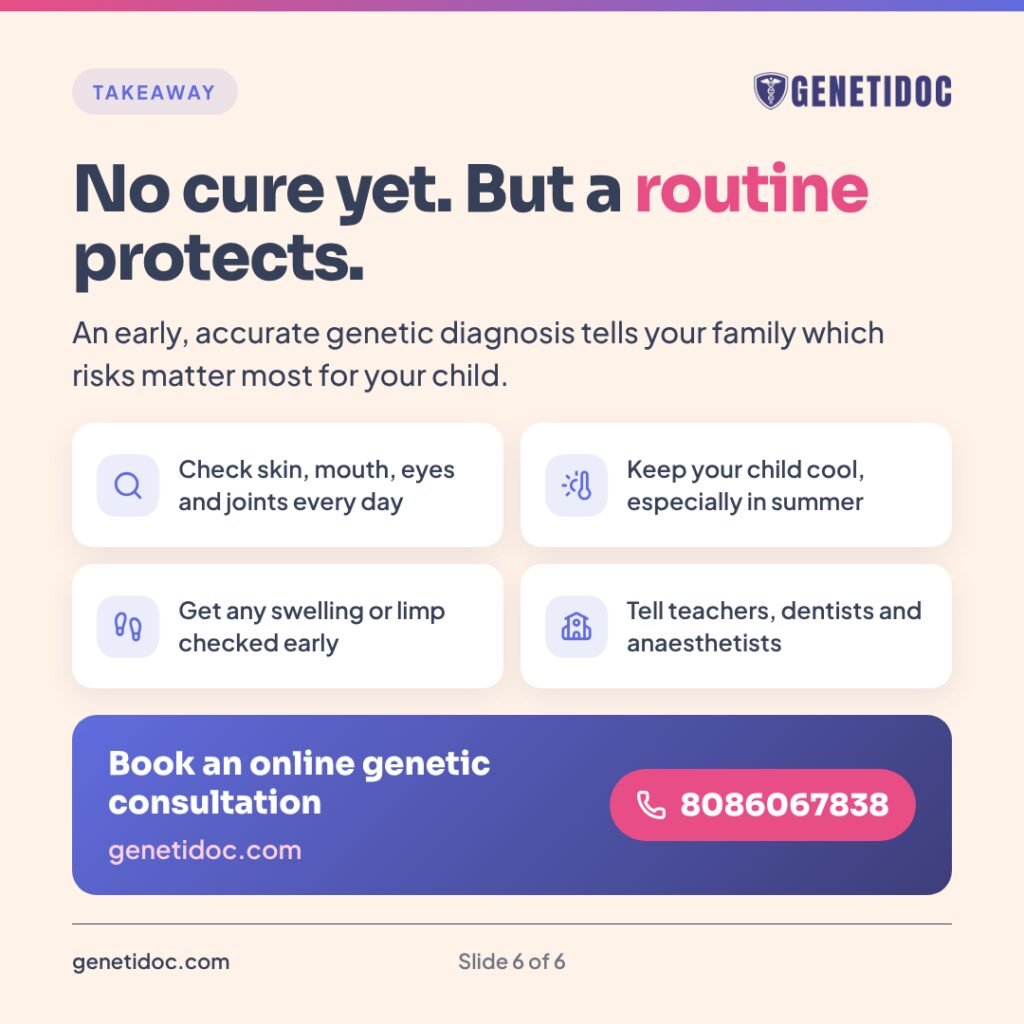
“Parents of a child who cannot feel pain live in a state of constant watchfulness, and many quietly blame themselves for every injury. We tell them: you cannot prevent every fall, and an injury does not mean you have failed. What protects your child is a routine. Check the skin, mouth, eyes and joints every day, keep your child cool, and get any swelling or limp checked early.”
— Dr. Roshan Daniel, Clinical Geneticist and Founder, Genetidoc
Common Misconceptions
- “Feeling no pain sounds like a gift.” It is not. Without pain, injuries go unnoticed, infections spread and joints wear down.
- “The child is just tough or naughty.” CIP is a medical condition. Self-biting is not bad behaviour. The child simply cannot feel the harm.
- “They will grow out of it.” CIP is lifelong. What improves with age is the child’s ability to understand and protect their own body.
- “Something in the pregnancy caused this.” CIP is genetic. Nothing the mother ate, did or felt during pregnancy caused it.
- “It is someone’s fault.” Carriers have no way of knowing their status without testing. No one is to blame.
- “A normal nerve test means it is not CIP.” Standard nerve tests are often normal in CIP. Genetic testing is the confirmatory test.
When Should You See a Clinical Geneticist?
Consider a genetics consultation if your child has:
- Repeated self-biting of the tongue, lips or fingers
- Injuries, burns or fractures without crying or complaint
- Repeated unexplained high fevers with dry skin and no sweating
- Repeated eye ulcers or eye injuries without rubbing or crying
- Swollen or deformed joints without a clear cause
- A brother, sister or relative with similar features
Also consider genetic counseling if you are a couple who already has an affected child, if you are related by blood and planning a pregnancy, or if CIP runs in your extended family.
Frequently Asked Questions
1. What is congenital insensitivity to pain?
It is a group of very rare inherited conditions in which a person cannot feel physical pain from birth, because the nerves that carry pain signals do not form or do not work.
2. Can people with congenital insensitivity to pain feel touch?
Usually, yes. Many can feel touch and pressure. Some types also reduce the ability to sense heat and cold.
3. What causes congenital insensitivity to pain?
Changes in genes such as SCN9A, NTRK1, PRDM12, NGF and SCN11A. Most types are inherited from two healthy carrier parents.
4. What is congenital insensitivity to pain with anhidrosis?
Also called CIPA or HSAN type IV, it is a type caused by the NTRK1 gene. It causes no pain sensation, inability to sweat, recurrent high fevers and, in most children, learning difficulties.
5. Is congenital insensitivity to pain curable?
There is no cure yet. Careful prevention of injury, temperature control, eye and dental care and regular check-ups greatly reduce complications.
6. What is the life expectancy?
It depends on the type and the care received. Very high fever is the main early danger in CIPA. Many people with types that do not affect sweating live into adulthood, with joint damage as the main long-term problem.
7. How is it diagnosed?
Through a specialist clinical assessment followed by genetic testing, usually a multi-gene panel or exome sequencing on a blood sample.
8. Is it more common in consanguineous marriages?
Yes. Most types are recessive, so they are more likely when parents are related by blood and carry the same gene change.
9. If we have one affected child, what is the chance for the next pregnancy?
For recessive types, the chance is 25% in each pregnancy. Genetic counseling can explain testing options for future pregnancies.
10. Can congenital insensitivity to pain be detected before birth?
Yes, if the family’s exact gene change is already known. Prenatal diagnosis or preimplantation genetic testing with IVF can then be offered.
11. Do children with this condition have normal intelligence?
It depends on the type. The SCN9A and PRDM12 types usually spare intelligence. Most children with the NTRK1 type (CIPA) have some learning difficulty.
12. Can a woman with congenital insensitivity to pain have a baby?
Yes. Affected women can become pregnant and deliver normally. Labour is painless, so the care team should watch closely for injuries such as pelvic fractures after delivery.
Key Takeaways
- Congenital insensitivity to pain is a group of rare genetic conditions, not a single disease.
- The gene involved decides whether the child also has fever risk, learning difficulty or eye problems.
- In India, it is often seen in families where parents are related by blood.
- Diagnosis needs an expert assessment and the right genetic test, interpreted carefully.
- There is no cure, but daily checks, fever control, eye, dental and bone care prevent many complications.
- Genetic counseling helps parents understand the risk for future pregnancies and the options available.
Concerned That Your Child Does Not React to Pain?
If your child bites their tongue or fingers, has injuries without crying, or gets repeated high fevers without sweating, an early genetic evaluation can confirm the cause and guide safe daily care. Genetidoc’s clinical geneticists review your child’s history, recommend the right test, arrange home sample collection and explain the results with you in a genetic counseling session online, in your preferred language.
Book an online consultation with a Genetidoc clinical geneticist
Have questions about rare diseases? Join the discussion on the rare diseases forum
Related Reading
- Nutrigenomics: How Your Genes Shape Your Response to Diet
- Parkinson’s Disease: When Genetics Plays a Role
- Single Gene vs Panel Testing Explained
- Why Identical Twins Are Not Always Genetically Identical
- Personalized Medicine: The Role of Genetic Testing in Your Care
References
- Schon KR, Parker APJ, Woods CG. Congenital Insensitivity to Pain Overview. In: Adam MP, et al., editors. GeneReviews®. University of Washington, Seattle; 2018 (revised 2020). NCBI Bookshelf NBK481553.
- Drissi I, Woods WA, Woods CG. Understanding the genetic basis of congenital insensitivity to pain. British Medical Bulletin. 2020;133(1):65–78. doi:10.1093/bmb/ldaa003.
- Cox JJ, Reimann F, Nicholas AK, et al. An SCN9A channelopathy causes congenital inability to experience pain. Nature. 2006;444:894–898.
- Online Mendelian Inheritance in Man (OMIM). Insensitivity to pain, congenital, with anhidrosis; #256800.
- Genetic landscape of congenital insensitivity to pain and hereditary sensory and autonomic neuropathies. Brain. 2023;146(12):4880–4890.
- Yu H, Wu J, Cong J, et al. Congenital insensitivity to pain associated with PRDM12 mutation: two case reports and a literature review. Frontiers in Genetics. 2023;14:1139161.
- Rahalkar MD, Rahalkar AM, Joshi SK. Case series: Congenital insensitivity to pain and anhidrosis. Indian Journal of Radiology and Imaging. 2008;18(2):132.
- Sreenivasan V, Karunakar P, Madhileti S, et al. A rare case of congenital insensitivity to pain with anhidrosis. Jawaharlal Institute of Postgraduate Medical Education and Research, Puducherry (PubMed 38659257).
- Guha G, Chattopadhyay D, Guha S, et al. Congenital insensitivity to pain and anhidrosis: a series of three cases from Eastern India. 2015.
This article is for educational purposes and does not replace a medical consultation. Please speak to a qualified clinical geneticist for advice about your child’s specific situation.