
Your child is three. He is not talking yet and only recently started taking a few steps. He laughs easily and flaps his hands when he is excited. Over the past year, you have heard many explanations: “late walker,” “speech delay,” “maybe autism.” Then one evening, you notice something new. He breathes very fast for a few seconds, then seems to hold his breath. His lips look slightly blue before he breathes normally again.
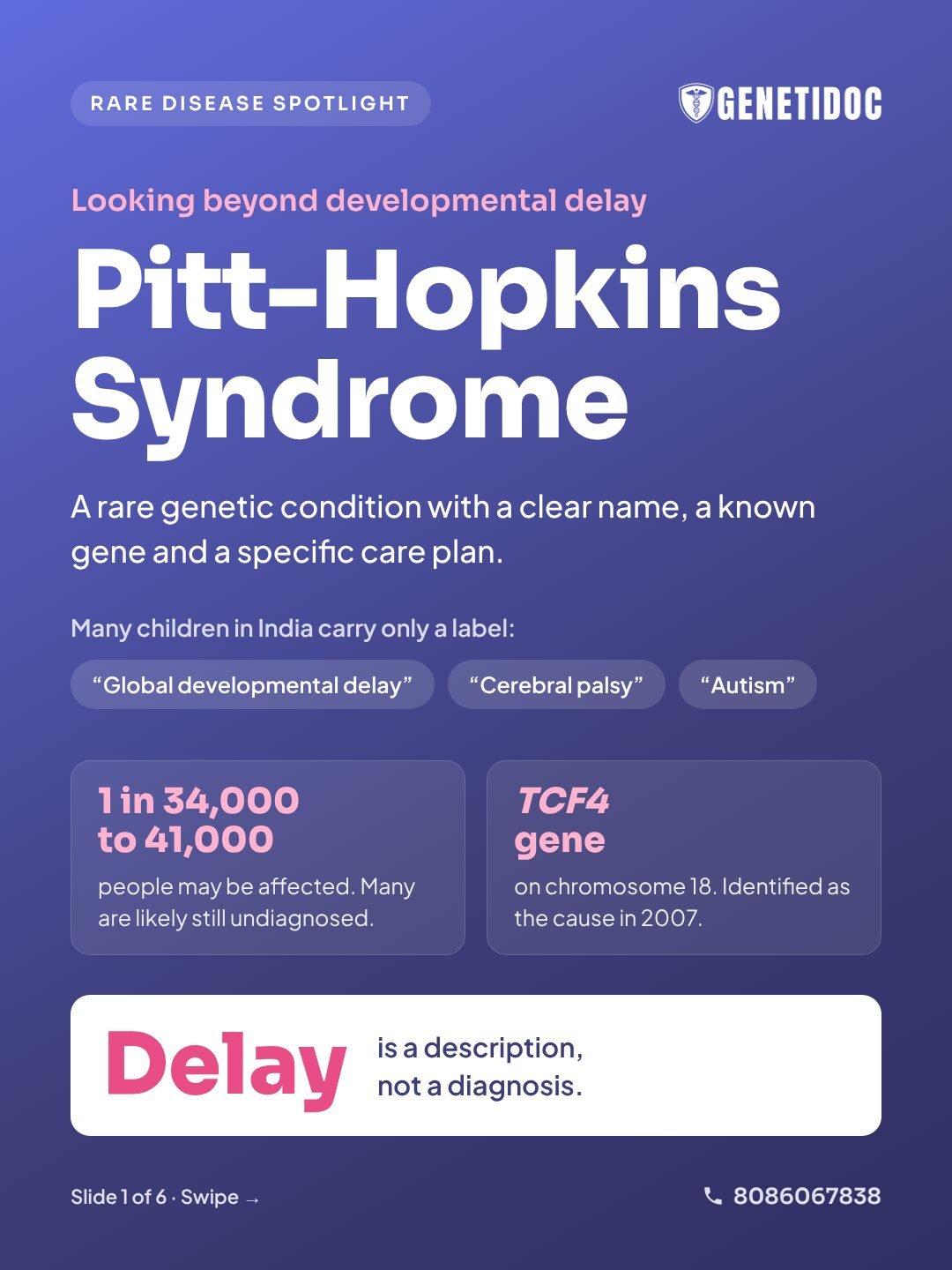
Developmental delay is a description, not a diagnosis. Behind it there are hundreds of possible causes, and some of them are genetic conditions with a clear name, a known gene and a specific care plan. Pitt-Hopkins syndrome is one of them.
This guide explains, in plain language, what Pitt-Hopkins syndrome is, the signs that set it apart from other causes of delay, how it is confirmed with genetic testing in India, what it means for your family’s future pregnancies, and what care and research look like today.
Quick Answer: What Is Pitt-Hopkins Syndrome?
Pitt-Hopkins syndrome is a rare genetic condition that affects brain development. It causes moderate-to-severe developmental delay and intellectual disability, very limited or absent speech, a cheerful and excitable personality, distinctive facial features and, in many children, episodes of fast breathing followed by breath-holding. It is caused by a change in, or loss of, one copy of the TCF4 gene on chromosome 18. In almost all families, this change happens for the first time in the child. It is not inherited from the parents.
What Is Pitt-Hopkins Syndrome?
Pitt-Hopkins syndrome was first described in 1978 by two Australian doctors, David Pitt and Ian Hopkins. For nearly 30 years, the cause was unknown. In 2007, researchers found that the condition is caused by problems with the TCF4 gene.
Because the gene was discovered so recently, many doctors have never seen a child with Pitt-Hopkins syndrome. Several hundred people have been described in the medical literature worldwide. Researchers estimate that it may affect roughly 1 in 34,000 to 41,000 people, which suggests that many people with the condition are still undiagnosed. In India, published reports are very few. It is very likely that many Indian children with Pitt-Hopkins syndrome are living with labels such as “global developmental delay,” “cerebral palsy” or “autism” without a precise diagnosis.
What Does the TCF4 Gene Do?
Think of your DNA as a library of instruction manuals. Each gene is one manual.
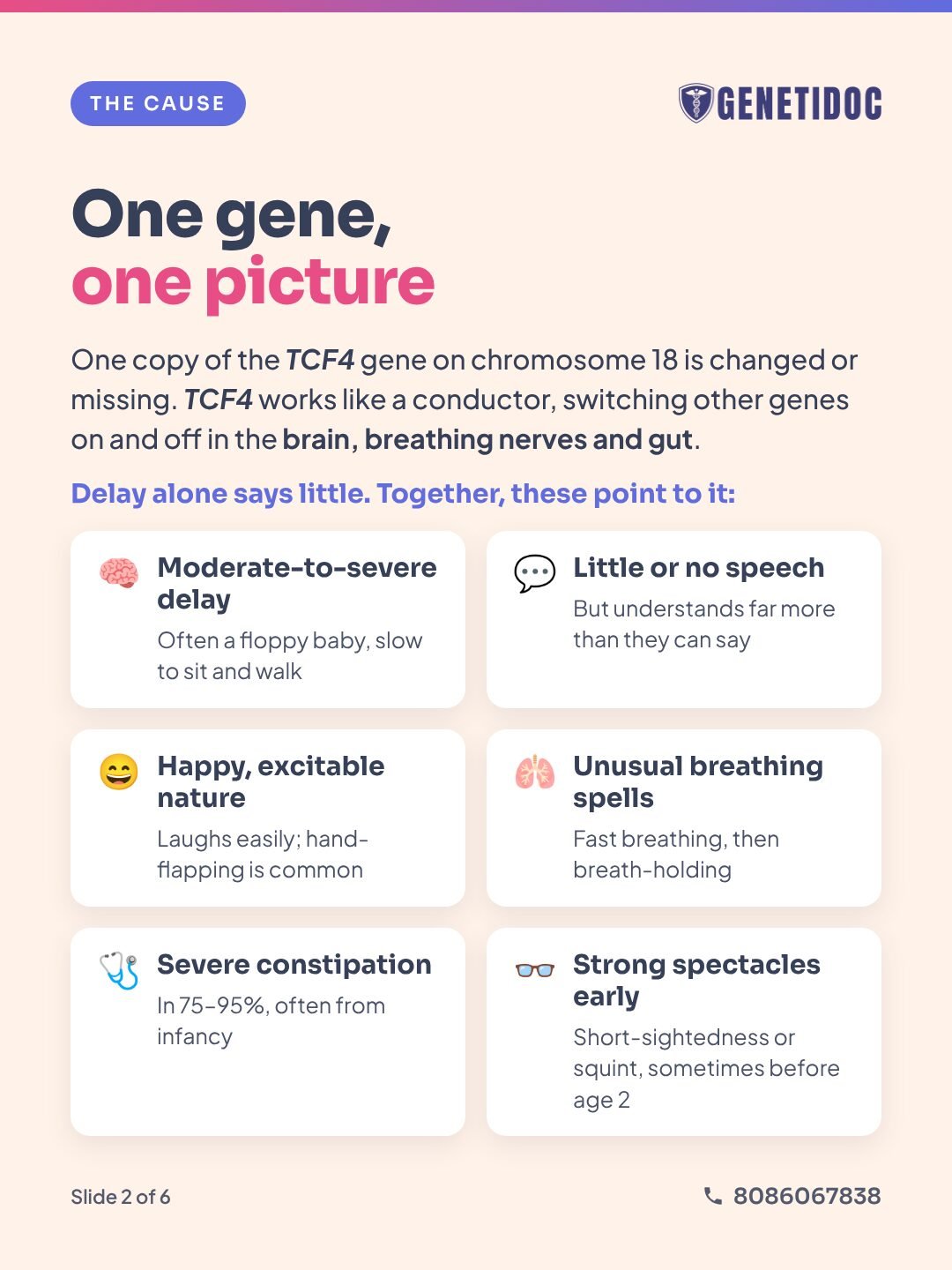
The TCF4 gene makes a protein called transcription factor 4. A transcription factor is a protein that switches other genes on and off. You can think of it as a conductor that tells many other genes when to play. It is especially important while the brain is developing, and it also plays a role in the nerves that control breathing and the bowel.
Every person has two copies of TCF4, one from each parent. In Pitt-Hopkins syndrome, one copy does not work or is missing. The single remaining copy cannot make enough protein. Doctors call this haploinsufficiency: half the normal amount is not enough.
This one fact explains most of what families see. It explains why development is affected, why breathing control can be unusual, and why constipation is so common. These are different parts of the body, all relying on the same “conductor.”
Signs and Symptoms: Looking Beyond Developmental Delay
Almost every child with Pitt-Hopkins syndrome has developmental delay. But delay alone tells a doctor very little. What points towards Pitt-Hopkins syndrome is a combination of features.
1. Development, Speech and Movement
- Developmental delay and intellectual disability: usually moderate to severe. Babies are often floppy (low muscle tone) and slow to sit and crawl.
- Speech: most children do not develop spoken language, or say only a few words. Importantly, most understand far more than they can say. Doctors call this “receptive language stronger than expressive language.”
- Walking: most children walk late. In published studies, the average age of walking is between 4 and 6 years. Some walk earlier, and a minority never walk independently. When they do walk, the gait is often unsteady and wide-based.
2. A Happy, Excitable Personality
Many parents describe their child as smiling and laughing often, and easily excited. Hand-flapping, hand-to-mouth movements and other repetitive movements are common. Many children also have features of autism. As children grow older, some develop anxiety, sleep problems or difficult behaviour, which can be helped with the right support.
3. Distinctive Facial Features
Children with Pitt-Hopkins syndrome often share certain facial features. These are usually subtle in infancy and become clearer with age:
- deep-set eyes
- a prominent nasal bridge and a broad, rounded nasal tip
- a wide mouth with full lips and widely spaced teeth
- a prominent lower face and well-developed chin
- cup-shaped or thick ears
Trained clinical geneticists are skilled at recognising these patterns. In many infants, the shape of the nose and lower face is the earliest clue. These features do not affect health. They help with recognition.
4. The Breathing Pattern
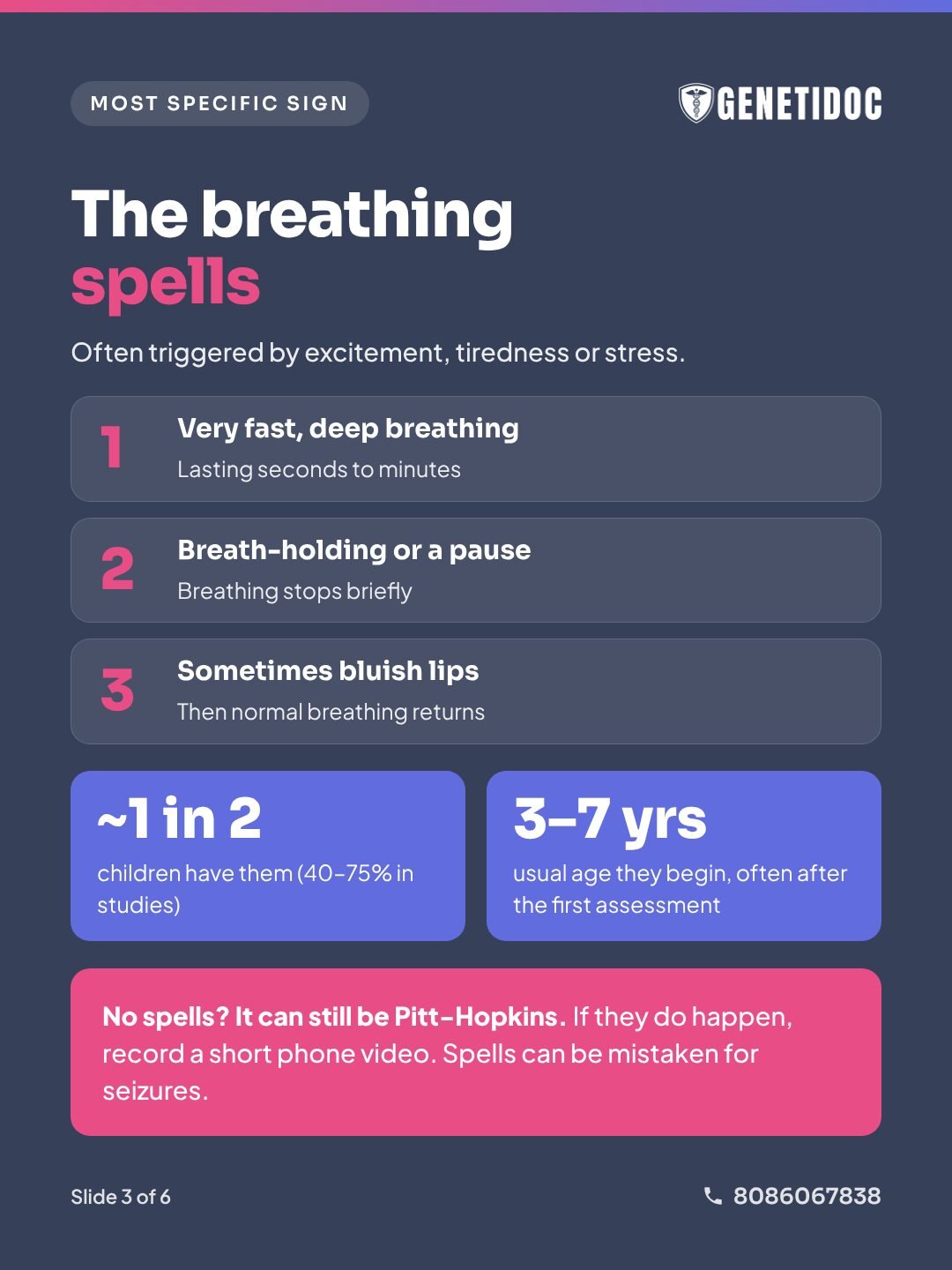
This is the feature most specific to Pitt-Hopkins syndrome, and the one that most often confuses families. Episodes typically look like this:
- a burst of very fast, deep breathing (hyperventilation), often lasting seconds to minutes
- followed by breath-holding or a pause in breathing (apnea)
- sometimes with bluish lips during the pause, before normal breathing resumes
Episodes usually happen when the child is awake. They are often triggered by excitement, tiredness or stress. Four facts help parents put this in perspective:
- Breathing problems affect around half of children with Pitt-Hopkins syndrome (published figures range from about 40% to 75%). A child without breathing episodes can still have the condition.
- They usually begin between the ages of 3 and 7 years. This means they are often absent when a child is first assessed for delay.
- Many episodes do not need treatment. Treatment is considered when episodes are frequent, long, affect sleep, or cause low oxygen levels.
- Over many years, a small proportion of people develop clubbing (widened, rounded fingertips) from repeated drops in oxygen. This is a sign to review breathing more closely.
Breathing episodes can be mistaken for seizures, and the two can also occur in the same child. A short phone video of an episode is one of the most useful things a parent can bring to an appointment.
5. Other Health Features
- Constipation: very common (reported in 75% to 95%), often starting in infancy and lasting for life. It is linked to how TCF4 affects the nerves of the gut.
- Eye problems: severe short-sightedness (myopia) or squint (strabismus) affects about half of children. Myopia can be strong and can appear before the age of 2. A child who cannot say “I can’t see” depends on regular eye checks.
- Seizures: occur in roughly a third to a half of people. They usually respond well to standard anti-seizure medicines.
- Sleep problems: difficulty falling or staying asleep is common.
- Other features: drooling, reflux, small hands and feet, scoliosis (a curved spine), flat feet or ankle instability, and undescended testes in boys.
“Developmental delay is where the question begins, not where it ends. When a child has delay together with unusual breathing spells, severe constipation, strong spectacles at a young age and a very sociable smile, those are not separate problems. They are one picture, and a clinical geneticist is trained to see it as one.”
Dr. Roshan Daniel, Clinical Geneticist and Founder, Genetidoc
Conditions That Look Similar
Pitt-Hopkins syndrome overlaps with several other genetic conditions. This is why examination alone cannot confirm it. The most common look-alikes are:
| Condition | Gene | What overlaps | What often differs |
| Angelman syndrome | UBE3A (chromosome 15) | Happy personality, absent speech, seizures, unsteady walking | Different facial features, small head size, no typical breathing spells |
| Rett syndrome | MECP2 | Breathing irregularities, hand movements, absent speech | Mainly girls, with loss of skills after early normal development |
| Mowat-Wilson syndrome | ZEB2 | Delay, absent speech, smiling personality, constipation | Distinct facial features, often Hirschsprung disease and heart defects |
| Pitt-Hopkins-like syndromes | CNTNAP2, NRXN1 | Severe delay, breathing anomalies, seizures | Usually recessive inheritance, with very different family risk |
Other conditions such as Kleefstra syndrome (EHMT1), CDKL5 and FOXG1 disorders, and Joubert syndrome can also overlap. Getting the exact diagnosis matters, because each condition has its own health checks, inheritance pattern and family implications.
When Should a Child Be Evaluated for Pitt-Hopkins Syndrome?
Ask your paediatrician or neurologist about a genetic evaluation if your child has moderate-to-severe developmental delay together with any of the following:
- episodes of very fast breathing or breath-holding while awake
- little or no speech by age 3, with good understanding and a sociable, smiling nature
- distinctive facial features, or a doctor has commented that your child “looks syndromic”
- severe, long-lasting constipation from infancy
- strong myopia (high-power spectacles) at a very young age
- an autism diagnosis together with significant delay in walking or other motor skills
- an earlier genetic test that was “normal” but doctors still suspect a genetic cause
Illustrative Scenario: “We Were Told He Would Catch Up”
This is a composite of a common pattern described in the medical literature, not an individual patient.
A boy in Tamil Nadu was a floppy baby who sat at 14 months and was not walking at 3 years. He had no words but clearly understood simple instructions, and he laughed easily. His parents were told he would catch up. He also had stubborn constipation since infancy, and at 2 years he was prescribed strong spectacles.
At age 4, his mother recorded a video of him breathing very fast and then holding his breath. His neurologist referred him for genetic evaluation. A chromosomal microarray showed a small deletion on chromosome 18 that included the TCF4 gene, confirming Pitt-Hopkins syndrome.
The diagnosis did not change who he was, but it changed his care. He now has a planned eye review, a bowel management routine, a sleep assessment and a picture-based communication system at school. His parents were tested and found not to carry the deletion, and they received counseling about the low chance of it happening again.
When Testing May Not Be the Right First Step
Not every child with delay needs testing for Pitt-Hopkins syndrome specifically. A child with mild, steadily improving delay and no other features may first need hearing and vision checks, developmental assessment and time. A clinical geneticist decides which test, if any, fits the child’s features. Testing without that judgement can produce confusing results or miss the diagnosis altogether.
How Pitt-Hopkins Syndrome Is Diagnosed
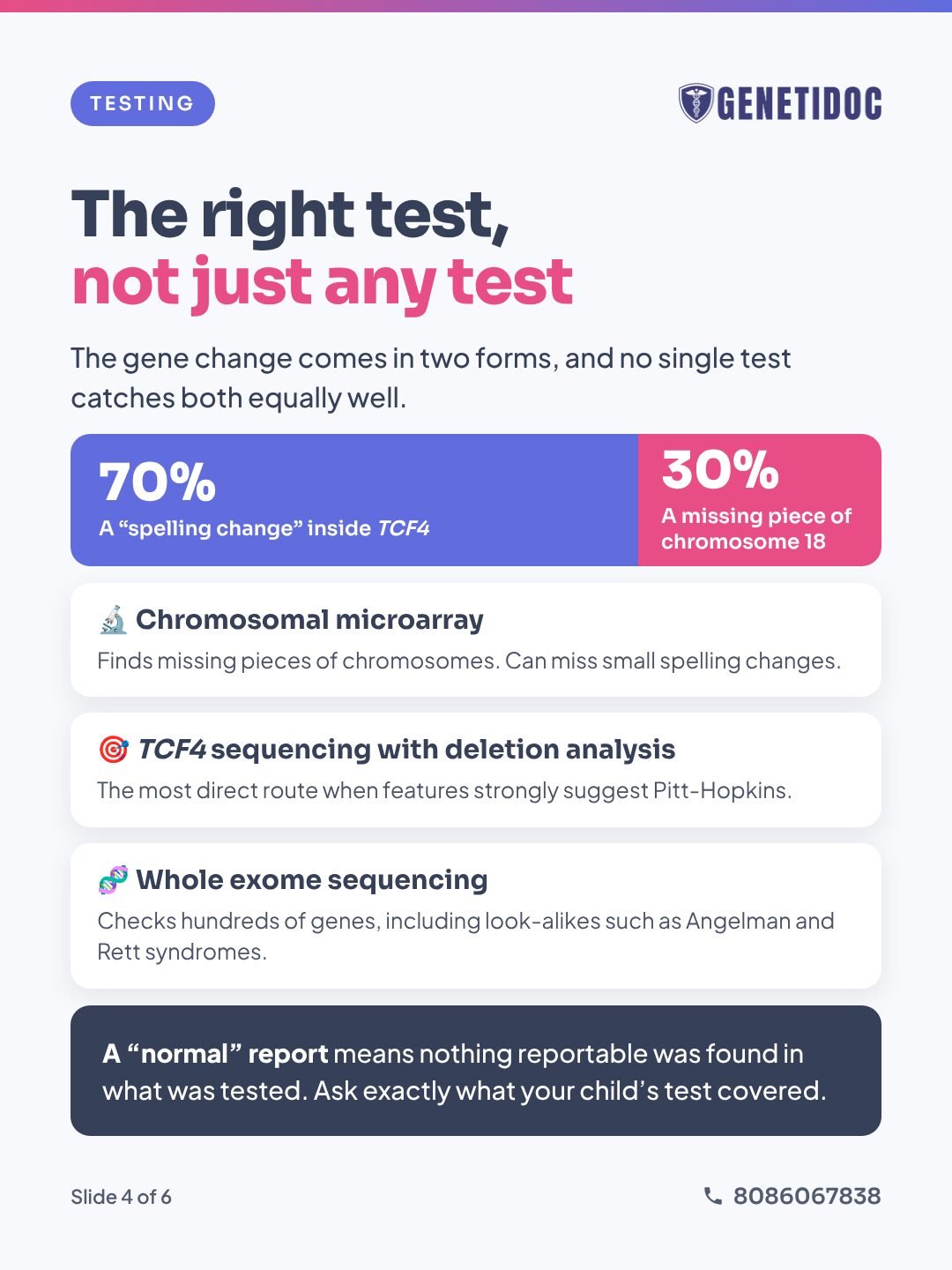
Pitt-Hopkins syndrome is suspected from the child’s history and examination. It is confirmed by genetic testing that shows one of two things:
- A disease-causing change within the TCF4 gene (a “spelling mistake” in the gene). This accounts for about 70% of cases.
- A deletion: a missing piece of chromosome 18 (at a location called 18q21.2) that includes all or part of TCF4. This accounts for about 30% of cases.
This split is the key to choosing the right test. No single test catches both kinds of change equally well.
Comparing the Main Test Options
| Test | What it finds | What it can miss |
| Chromosomal microarray analysis (CMA) | Missing or extra pieces of chromosomes, including 18q21.2 deletions | Small spelling changes inside TCF4 |
| TCF4 sequencing with deletion/duplication analysis | Spelling changes and smaller missing pieces of TCF4 | Other conditions, if the diagnosis is not Pitt-Hopkins |
| Neurodevelopmental gene panel or whole exome sequencing | TCF4 plus hundreds of other genes behind look-alike conditions | Very small deletions of one or two sections of the gene |
| Karyotype | Rearranged chromosomes that can disrupt TCF4 | Small changes. Used mainly when suspicion is strong and other tests are normal |
In practice, the starting point depends on the child:
- If the features strongly suggest Pitt-Hopkins syndrome, targeted TCF4 testing that covers both spelling changes and deletions can be the most direct route.
- If the child has non-specific developmental delay, a chromosomal microarray and/or whole exome sequencing is usually more useful, because it looks for many conditions at once.
- If an earlier test was negative but the picture still fits, a geneticist checks exactly what that test covered before deciding whether to add a microarray, reanalyse the data or move to genome sequencing.
Pitt-Hopkins syndrome is increasingly diagnosed in South Asia using these tools. A 2026 report from Pakistan, for example, described a child diagnosed through a chromosomal microarray that found a TCF4 deletion. The authors highlighted how valuable this test is in resource-limited settings.
“In Pitt-Hopkins syndrome, a third of children have a missing piece of chromosome rather than a spelling change in the gene. A test that only reads spellings can come back ‘normal’ in exactly those children. The right test depends on the child’s features, and a normal report only means nothing reportable was found in what was tested.”
Dr. Roshan Daniel, Clinical Geneticist and Founder, Genetidoc
How Long Does Testing Take, and What Does It Cost?
Turnaround times:
- Targeted tests and gene panels typically take a few weeks (often 3 to 4).
- Whole exome sequencing often takes around 1 to 2 months, including expert interpretation.
Cost: In general, a targeted single-gene test costs less than whole exome sequencing. Your genetic counselor will explain the cost of the recommended test before anything is ordered. Samples can be collected at home.
The cheapest test is not always the most economical. A test that misses the diagnosis often leads to repeat testing, more waiting and more cost later.
Understanding the Report
- Pathogenic or likely pathogenic: a change known or very likely to cause Pitt-Hopkins syndrome. Together with the child’s features, this confirms the diagnosis.
- Variant of uncertain significance (VUS): a change whose effect is not yet clear. A VUS is not a diagnosis. Testing the parents can help. A new change present only in the child, with a matching clinical picture, can support reclassification. A VUS is never used to make decisions about a future pregnancy.
- Negative: no reportable change was found in what was tested. It does not mean the condition is not genetic. If doctors still suspect a genetic cause, the data can be reanalysed after 6 months to a year, or further testing can be considered.
“A variant of uncertain significance is a question, not an answer. We never let a family make a pregnancy decision on a VUS. We test the parents, we compare the result with the child in front of us, and we revisit it as science improves. Sometimes the honest answer is ‘not yet,’ and families deserve to hear that clearly.”
Dr. Roshan Daniel, Clinical Geneticist and Founder, Genetidoc
Is Pitt-Hopkins Syndrome Inherited?
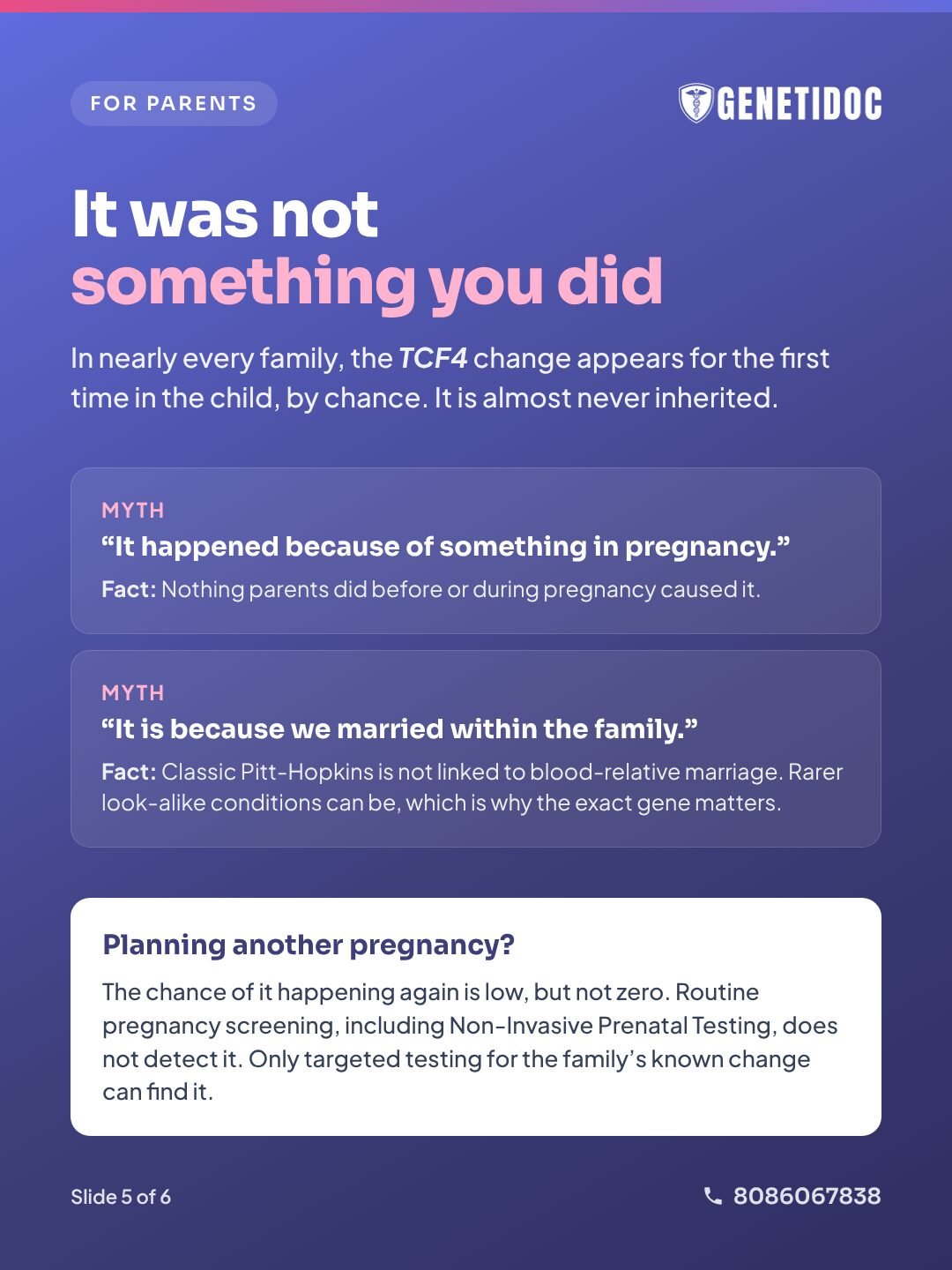
Quick answer: Almost never. Pitt-Hopkins syndrome is described as autosomal dominant, meaning one changed copy of TCF4 is enough to cause it. But in nearly every family, the change is de novo. It appeared for the first time in the child, in the egg, the sperm or very early after conception. Nothing the parents did before or during pregnancy caused it.
In many Indian families, a child’s disability is quietly blamed on the mother, on something that happened during pregnancy, or on “the family line.” Genetics tells a different story.
Pitt-Hopkins syndrome is also not linked to consanguineous (blood-relative) marriage. This matters in India, where consanguinity is common in some communities and parents often assume it is to blame. Consanguinity raises the risk of recessive conditions, where both parents carry a change. Classic Pitt-Hopkins syndrome does not work that way. The recessive “Pitt-Hopkins-like” conditions caused by CNTNAP2 or NRXN1 are different, which is one more reason the exact gene must be identified.
“Almost every parent asks, in some way, ‘Was it something I did?’ With Pitt-Hopkins syndrome, the answer is no. The change in TCF4 arose by chance, for the first time in their child. Saying that clearly, and showing them the genetics behind it, lifts a weight many mothers have carried for years.”
Dr. Roshan Daniel, Clinical Geneticist and Founder, Genetidoc
What Is the Chance of It Happening Again?
Once the child’s TCF4 change is known, both parents can be tested for that exact change. This is a quick, targeted test.
- If both parents test negative: the chance of another affected child is low, but not zero. Rarely, a parent carries the change in some egg or sperm cells but not in their blood (germline mosaicism), and a blood test cannot detect this.
- If a parent carries the change: this is rare, but it has been reported, sometimes in a parent with very mild features. Each pregnancy then has a 50% chance of inheriting it, and detailed genetic counseling is needed.
Options for a Future Pregnancy
Couples who want another child have options, which a genetic counselor can explain in detail:
- Prenatal diagnosis. In a future pregnancy, a sample from the placenta (chorionic villus sampling) or the fluid around the baby (amniocentesis) can be tested for the family’s specific change. These procedures are done at specialist fetal medicine centres.
- Preimplantation genetic testing (PGT). With in vitro fertilisation (IVF), embryos can be tested for the family’s change before transfer.
- Natural conception without testing. Some couples choose this after understanding the low recurrence risk. That decision is theirs to make.
Two important points:
- Routine pregnancy screening, including Non-Invasive Prenatal Testing (NIPT), does not screen for Pitt-Hopkins syndrome. Only targeted testing for the family’s known change can do that.
- Prenatal or embryo testing is reliable only when the child’s diagnosis is definitive.
How a Diagnosis Changes Care
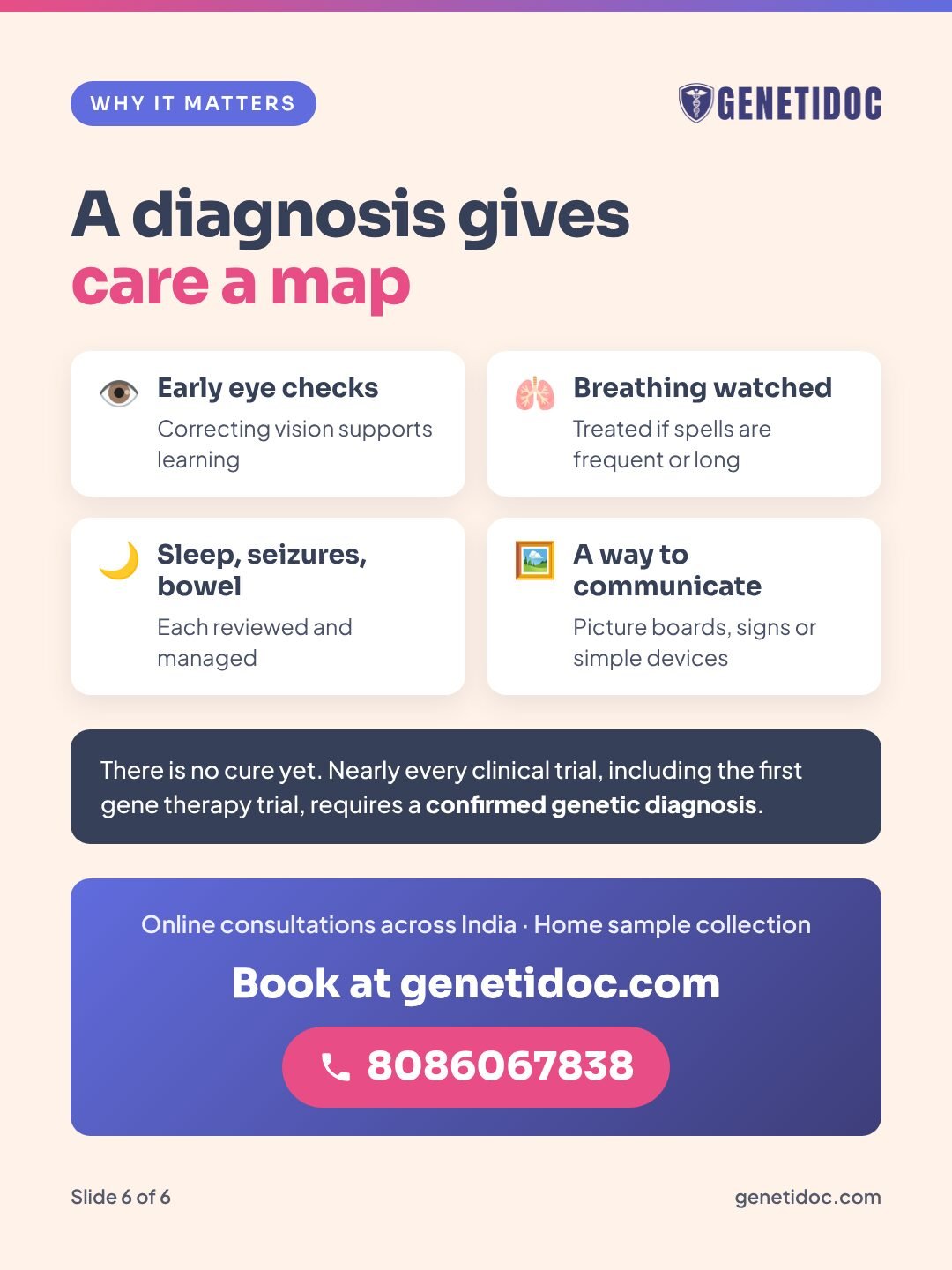
There is no cure for Pitt-Hopkins syndrome yet. But a confirmed diagnosis changes care in practical ways. In 2019, an international group of experts published the first consensus statement on diagnosing and managing Pitt-Hopkins syndrome. It stresses that physical health and behaviour need to be cared for together, by a coordinated team.
Health Checks After Diagnosis
- Eyes: an eye examination at diagnosis and regularly afterwards, to correct myopia and squint early. Good vision supports learning and communication.
- Breathing: episodes are monitored. If they are frequent, long or affect oxygen levels, medicines such as acetazolamide have been reported to reduce them. Long-term use needs regular blood checks. Clubbing or breathlessness on exertion should prompt a lung review.
- Sleep: a sleep study (polysomnography) if there are signs of disturbed breathing during sleep or persistent sleep problems. Enlarged tonsils and adenoids, if present, may need treatment.
- Seizures: a neurology review, with an electroencephalogram (EEG, a brain-wave test) if seizures are suspected. Seizures usually respond well to standard medicines.
- Bowel: a daily constipation routine with fluids, fibre and, often, regular medicines. Untreated constipation can cause pain, poor sleep and behaviour changes in a child who cannot explain discomfort.
- Bones and movement: regular checks for scoliosis and ankle or foot problems, with physiotherapy and supportive footwear.
- Development and behaviour: ongoing developmental assessment and behaviour support as needs change with age.
Therapies and Communication
Early therapy makes a real difference to daily life:
- Physiotherapy for strength, balance and walking
- Occupational therapy for hand use, self-care and sensory needs
- Speech and communication therapy, with a strong emphasis on augmentative and alternative communication (AAC): picture boards, sign-based systems or simple devices that let a child express choices and needs
Because children with Pitt-Hopkins syndrome usually understand much more than they can say, a way to communicate is one of the most important gifts therapy can give. It also reduces frustration, which often lies behind difficult behaviour.
In India, families can also apply for a Unique Disability ID (UDID) card under the Rights of Persons with Disabilities Act, 2016. This can help with access to government schemes, therapy support and educational accommodations. A confirmed diagnosis and specialist reports make this process easier.
“A diagnosis gives the care team a map. It tells us to check the eyes early, watch the breathing, take constipation seriously and, above all, give the child a way to communicate. Many children with Pitt-Hopkins syndrome understand far more than they can say. Our job is to make sure the people around them know that.”
Dr. Roshan Daniel, Clinical Geneticist and Founder, Genetidoc
What Is the Long-Term Outlook?
Parents often ask whether their child will talk, walk or live a long life. Here is what is currently known:
- Progress continues. Pitt-Hopkins syndrome is not generally a degenerative condition. Children keep learning new skills, though more slowly than other children.
- Walking: most children eventually walk, often between 4 and 6 years of age.
- Speech: most remain minimally verbal, but many communicate well with gestures, pictures and devices.
- Adulthood: adults with Pitt-Hopkins syndrome are well described in the medical literature. Reliable long-term life expectancy figures do not yet exist, because the condition was only recently defined. Good management of breathing, seizures, nutrition and infections supports long-term health.
- Range: severity varies. Milder cases, with more speech and independence, have been reported.
Research and Clinical Trials: Where Things Stand
Research into Pitt-Hopkins syndrome has moved quickly in recent years. Because the condition is caused by too little TCF4 protein, several approaches aim to restore it.
- Gene therapy: The first gene therapy trial for Pitt-Hopkins syndrome, the Phase 1/2 UNITE study of MZ-1866, has begun dosing patients. It delivers working copies of TCF4 into the fluid around the brain. In 2026, the US Food and Drug Administration granted it orphan drug and rare paediatric disease designations. It is still experimental, and its safety and benefit are being studied.
- Repurposed medicines: Studies of existing drugs, such as vorinostat, are being planned.
- Timing: Laboratory research suggests that earlier treatment may work better, which is one more reason early diagnosis matters.
These treatments are not yet approved anywhere and are not currently available in India. However, nearly every trial requires a confirmed genetic diagnosis. A precise result today keeps doors open for tomorrow.
Common Myths About Pitt-Hopkins Syndrome
- Myth: “It happened because of something during pregnancy.” Fact: It is caused by a gene change that almost always arises by chance.
- Myth: “It is because we married within the family.” Fact: Classic Pitt-Hopkins syndrome is not caused by consanguinity.
- Myth: “He will catch up on his own.” Fact: Children keep progressing, but early therapy and communication support make a large difference.
- Myth: “The breathing spells mean the condition is getting worse.” Fact: Breathing episodes are part of the condition and often settle or are managed. They do not mean the brain is deteriorating.
- Myth: “She doesn’t understand us.” Fact: Most children understand much more than they can say.
- Myth: “The genetic test was normal, so it is not genetic.” Fact: The test may not have covered the right type of change. Ask exactly what was tested.
Why Expert Interpretation and Genetic Counseling Matter
For a rare condition like Pitt-Hopkins syndrome, the report is only the beginning. The value of genetic testing comes from what it changes for the child and family. That depends on:
- Choosing the right test, so a deletion or a gene change is not missed
- Choosing an accredited laboratory with complete methods and careful interpretation
- Clinical correlation: matching the result to the child’s actual features, especially when the report shows a VUS
- Genetic counseling: explaining inheritance, recurrence risk and pregnancy options clearly, without pressure
At Genetidoc, every result is reviewed by a clinical geneticist and explained in a genetic counseling session, in a language the family is comfortable with. Families also receive a written summary they can share with their child’s paediatrician, neurologist, therapists and school.
“Our role is not to decide for a family. It is to make sure they understand their child’s diagnosis and every option ahead of them, from daily care to future pregnancies. The decisions belong to the family. We make sure they are informed ones.”
Dr. Roshan Daniel, Clinical Geneticist and Founder, Genetidoc
Families can connect with others and ask questions on the Genetidoc Rare Disease Forum. For more on the tests mentioned here, see our forum sections on whole exome sequencing, preimplantation genetic testing and amniocentesis.
Frequently Asked Questions About Pitt-Hopkins Syndrome
1. What causes Pitt-Hopkins syndrome?
It is caused by a change in, or deletion of, one copy of the TCF4 gene on chromosome 18. This gene controls many other genes involved in brain, breathing and gut development.
2. What are the main symptoms of Pitt-Hopkins syndrome?
Moderate-to-severe developmental delay, little or no speech, a happy and excitable personality, distinctive facial features, episodes of fast breathing and breath-holding, constipation, myopia and sometimes seizures.
3. At what age do the breathing problems start?
Usually between 3 and 7 years. They affect around half of children, so a child without breathing episodes can still have Pitt-Hopkins syndrome.
4. Is Pitt-Hopkins syndrome inherited?
Almost never. In nearly all families, the TCF4 change appears for the first time in the child. Parents are tested to confirm this.
5. Which genetic test confirms Pitt-Hopkins syndrome?
TCF4 sequencing with deletion analysis, a chromosomal microarray, or whole exome sequencing can confirm it. The right choice depends on how strongly the features suggest Pitt-Hopkins syndrome.
6. Is Pitt-Hopkins syndrome a type of autism?
Many children have autism features, and some centres classify it within the autism spectrum. But it is a distinct genetic condition with its own health needs, so a precise diagnosis matters.
7. How is Pitt-Hopkins syndrome different from Angelman syndrome?
Both cause absent speech and a happy personality. They differ in facial features, head size, the typical breathing spells of Pitt-Hopkins syndrome, and the gene involved. Genetic testing separates them.
8. Will a child with Pitt-Hopkins syndrome walk and talk?
Most children walk, often between 4 and 6 years. Most remain minimally verbal but can communicate well using pictures, signs or devices.
9. What is the life expectancy in Pitt-Hopkins syndrome?
Adults with Pitt-Hopkins syndrome are well described, but reliable long-term life expectancy data do not yet exist. Good care of breathing, seizures and nutrition supports long-term health.
10. Is there a cure or treatment for Pitt-Hopkins syndrome?
There is no cure yet. Symptoms such as seizures, constipation, myopia and breathing episodes are treatable. Gene therapy is being studied in clinical trials.
11. Can Pitt-Hopkins syndrome be detected during pregnancy?
Only if the family’s specific TCF4 change is already known, through chorionic villus sampling or amniocentesis. Routine screening, including NIPT, does not detect it.
12. My child’s genetic test was normal, but doctors still suspect Pitt-Hopkins syndrome. What now?
Check whether the test looked for both gene changes and deletions. A clinical geneticist can advise whether a chromosomal microarray, reanalysis or further testing is needed.
Key Takeaways
- Pitt-Hopkins syndrome is a rare genetic cause of developmental delay, caused by loss of one working copy of the TCF4
- Delay plus breathing spells, severe constipation, early myopia, absent speech and a cheerful nature form a recognisable picture.
- Breathing episodes usually begin between 3 and 7 years, so their absence does not rule the condition out.
- About 70% of cases are gene changes and 30% are deletions, so the choice of test matters.
- It is almost always de novo. It is not caused by anything parents did, and not by consanguinity.
- Diagnosis guides eye, breathing, sleep, seizure, bowel and communication care, and opens the door to future trials.
What to Do Next
- Record short videos of any breathing episodes, unusual movements or suspected seizures.
- Write down your child’s milestones, with the ages at which they were reached.
- Gather previous reports, including MRI, EEG, eye examinations and any genetic tests.
- Ask your paediatrician or neurologist for a referral to a clinical geneticist.
- If a genetic test was already done, find out exactly what it covered.
- If you are planning another pregnancy, book genetic counseling before conceiving.
Developmental Delay With Breathing Spells or No Speech? Ask About Pitt-Hopkins Syndrome
If your child has developmental delay along with unusual breathing episodes, little or no speech, or features doctors have called “syndromic,” Genetidoc’s clinical geneticists can assess whether Pitt-Hopkins syndrome or a related condition could be the cause. They will recommend the right test, not just any test, and explain the result in a language you are comfortable with.
Already have a TCF4 or chromosomal microarray report, or planning another pregnancy after a diagnosis? Our team can review the report, test parents for the family’s specific change and walk you through your options.
Consultations are online, so families anywhere in India can see a clinical geneticist, with home sample collection.
Book a Pitt-Hopkins syndrome genetic consultation:
Related Reading From Genetidoc
- Noonan Syndrome: Symptoms, Causes and Genetic Testing Explained
- Developmental Delay: When to Consider a Genetic Evaluation
- What Defines a Rare Genetic Disease? A Clear Guide
- Skipping Generations: What Families Should Know
- Congenital Insensitivity to Pain: When a Child Cannot Feel Pain
- Congenital Insensitivity to Pain: When a Child Cannot Feel Pain
References
- Sweetser DA, Elsharkawi I, Yonker L, et al. Pitt-Hopkins Syndrome. In: Adam MP, et al., editors. GeneReviews®. Seattle (WA): University of Washington, Seattle. Available at: https://www.ncbi.nlm.nih.gov/books/NBK100240/
- Zollino M, Zweier C, Van Balkom ID, et al. Diagnosis and management in Pitt-Hopkins syndrome: First international consensus statement. Clinical Genetics. 2019;95(4):462–478. doi:10.1111/cge.13506
- Pitt D, Hopkins I. A syndrome of mental retardation, wide mouth and intermittent overbreathing. Australian Paediatric Journal. 1978;14(3):182–184.
- Amiel J, Rio M, de Pontual L, et al. Mutations in TCF4, encoding a class I basic helix-loop-helix transcription factor, are responsible for Pitt-Hopkins syndrome. American Journal of Human Genetics. 2007;80(5):988–993.
- Zweier C, Peippo MM, Hoyer J, et al. Haploinsufficiency of TCF4 causes syndromal mental retardation with intermittent hyperventilation (Pitt-Hopkins syndrome). American Journal of Human Genetics. 2007;80(5):994–1001.
- Zweier C, de Jong EK, Zweier M, et al. CNTNAP2 and NRXN1 are mutated in autosomal-recessive Pitt-Hopkins-like mental retardation. American Journal of Human Genetics. 2009;85(5):655–666.
- MedlinePlus Genetics. Pitt-Hopkins syndrome. US National Library of Medicine. https://medlineplus.gov/genetics/condition/pitt-hopkins-syndrome/
- National Organization for Rare Disorders (NORD). Pitt-Hopkins Syndrome. Updated 2025. https://rarediseases.org/rare-diseases/pitt-hopkins-syndrome/
- Nasir A, Afroze B, Ilyas S, Ansar Z, Hasan Z. Pitt–Hopkins syndrome (PTHS): a case report from Pakistan. Journal of the Pakistan Medical Association. 2026;76(7):1163–1165. doi:10.47391/JPMA.30215
- Zhao T, Wu S, Shen Y, et al. Chinese pediatric patients with Pitt–Hopkins syndrome: a retrospective study. Orphanet Journal of Rare Diseases. 2024. doi:10.1186/s13023-024-03055-7
- gov. Phase 1/2 Study of MZ-1866, an AAV-9 Gene Therapy Delivered by Intracerebroventricular Injection to Participants With Pitt Hopkins Syndrome (NCT07135050).
- Massachusetts General Hospital for Children. Caring for Your Child With Pitt Hopkins Syndrome: General Care Guidelines. https://www.massgeneral.org/children/pitt-hopkins/general-pitt-hopkins-care-guidelines
This article is for educational purposes and does not replace personalised medical advice. Please consult a qualified clinical geneticist for evaluation and testing decisions.