
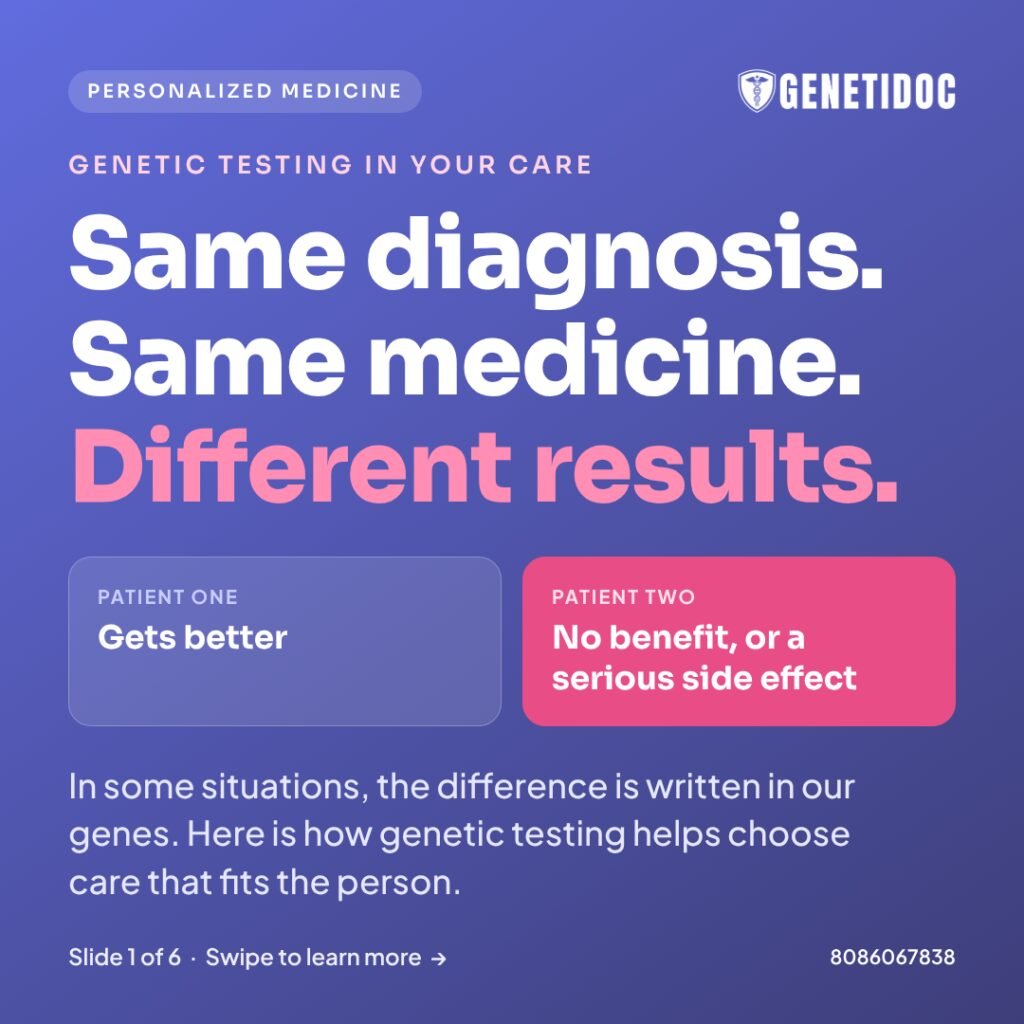
Two people walk into a clinic with the same diagnosis. They are given the same medicine at the same dose. One gets better. The other has no benefit, or a serious side effect.
For a long time, medicine treated this as bad luck. Today we know that, in some situations, the difference is written in our genes.
Personalized medicine is the idea of using that information to make better decisions for each patient. Genetic testing is one of its most powerful tools. But it is also one of the most misunderstood. This article explains what personalized medicine really means, the five main ways genetic testing changes care, where it genuinely helps patients in India, and where it does not.
Quick answer: What is personalized medicine?
Personalized medicine (also called precision medicine) is an approach to healthcare that uses information about a person’s genes, together with their symptoms, family history, lifestyle and environment, to choose the right test, the right treatment and the right prevention plan for that person. Genetic testing is a central part of it: it can confirm a diagnosis, guide the choice of medicine or dose, identify cancer treatments likely to work, and show which family members need closer screening.
Personalized Medicine vs Precision Medicine: Is There a Difference?
You will see both terms online, often used to mean the same thing. “Personalized medicine” is the older term. Many experts now prefer “precision medicine” for an important reason.
“Personalized” can sound as if a new medicine is made uniquely for you. That is almost never the case. In reality, personalized medicine helps doctors choose, from treatments and screening plans that already exist, the ones most likely to work and least likely to harm a particular person.
In this article we use “personalized medicine” because it is the term most patients search for. The meaning is the same.
What patients often expect, and what genetics can really do
Many people hear “personalized medicine” and expect one DNA test that will predict every illness, list the perfect medicine for every condition and design a custom diet. That is not what genetic testing does today. It is far more useful to think of it this way:
- It answers specific questions well. “Why does my child have these symptoms?”, “Is this cancer linked to an inherited change?” and “Is carbamazepine safe for me?” are questions genetics can often answer clearly.
- It answers vague questions poorly. “What diseases will I get?” or “What is the best diet for my genes?” usually cannot be answered reliably by any current test.
- It adds to medical care; it does not replace it. Your symptoms, examination, scans, blood tests and family history remain just as important as your genes.
The best results come when there is a clear question, the right test is chosen to answer it, and the result is interpreted in the context of the whole person.
Genetic testing is one part, not the whole
Personalized medicine does not mean “do a DNA test and follow the report.” A genetic result is one piece of information. It becomes useful only when a specialist puts it together with your symptoms, examination, other test results and family history. This is called clinical correlation, and it is what separates a useful genetic result from a confusing one.
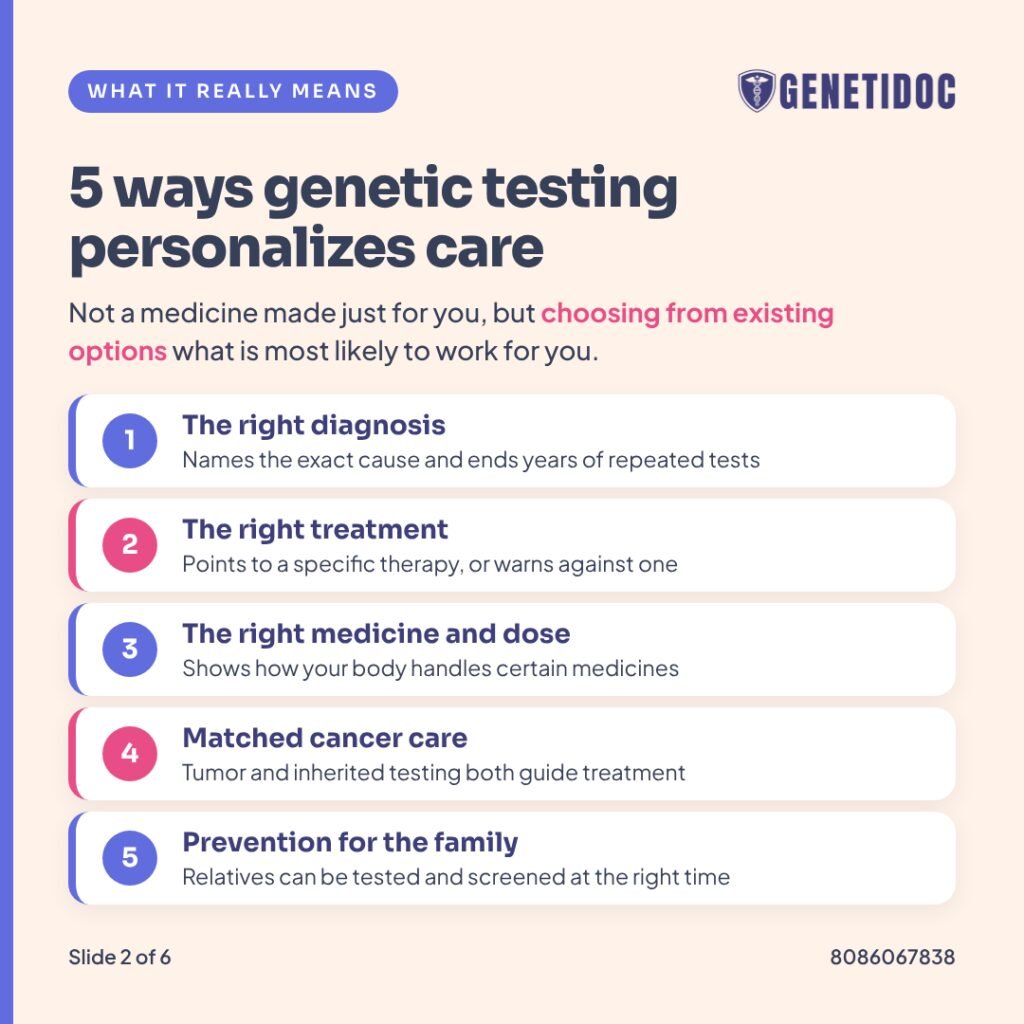
5 Ways Genetic Testing Personalizes Your Care
- Finding the right diagnosis. A genetic test can name the exact cause of a condition, ending years of uncertainty and repeated investigations.
- Choosing the right treatment. Some genetic diagnoses point to a specific treatment, or warn against a treatment that would otherwise be used.
- Choosing the right medicine and dose. Pharmacogenomics studies how inherited differences change the way your body handles certain medicines.
- Matching cancer treatment to the tumor and to inherited risk. Testing the tumor, and testing for inherited cancer risk, can both change treatment decisions.
- Personalizing prevention for you and your family. A known inherited risk changes when and how you are screened, and allows relatives to be tested for the same change.
Let us look at each one in practical terms.
1. The Right Diagnosis: Where Personalized Care Begins
You cannot personalize treatment for a condition you have not correctly identified. For many inherited conditions, a precise genetic diagnosis is the starting point for everything else.
A genetic diagnosis can:
- Explain symptoms that have puzzled several specialists
- Stop further unnecessary tests and scans
- Tell the treating team which complications to watch for
- Give families an accurate picture of what to expect
- Show whether other family members, or future children, could be affected
Choosing the right test is itself personalized
There is no single “genetic test.” The right test depends on how closely a person’s features match a known condition.
- Single-gene test: when the features clearly point to one gene, such as the SMN1 gene in spinal muscular atrophy or the DMD gene in Duchenne muscular dystrophy.
- Multi-gene panel: when several genes can cause a similar picture, such as inherited heart conditions or hereditary cancer. Panels usually take about 2 to 4 weeks.
- Exome sequencing: when the picture is broad or does not fit one condition, as in some children with developmental delay or skeletal conditions.
- Whole genome sequencing: generally a next step when a genetic condition is strongly suspected but an exome has not found the answer, rather than a first test.
Picking the biggest test is not always the best choice. A broader test produces more uncertain findings, takes longer and costs more. The goal is the test most likely to answer the patient’s question.
2. The Right Treatment: When a Diagnosis Changes Management
For some conditions, a genetic diagnosis directly changes what treatment a person receives. A few well-established examples:
Monogenic diabetes
Some people diagnosed with type 1 or type 2 diabetes actually have a form caused by a change in a single gene, called monogenic diabetes. This is often suspected when diabetes starts young and runs through several generations.
- Babies with diabetes caused by changes in the KCNJ11 or ABCC8 genes can often switch from insulin injections to tablets called sulfonylureas, with better sugar control.
- People with diabetes caused by HNF1A or HNF4A changes often respond very well to low-dose sulfonylurea tablets, and some can stop insulin.
- People with a GCK change usually have mild, stable high sugar levels that typically need no diabetes medicine at all outside pregnancy.
Any change in diabetes treatment must be made by the treating doctor. But without the genetic diagnosis, these options would not even be considered.
Genetic epilepsies
In children with Dravet syndrome, usually caused by changes in the SCN1A gene, a group of commonly used seizure medicines called sodium channel blockers (such as carbamazepine, phenytoin and lamotrigine) can make seizures worse. A genetic diagnosis helps the neurologist avoid these and choose better options early.
Rare diseases with specific therapies
A growing number of rare genetic conditions now have specific treatments. Examples include enzyme replacement therapy for some lysosomal storage disorders (such as Gaucher disease, Pompe disease and some types of mucopolysaccharidosis), special diets for some inherited metabolic disorders, and gene-targeted treatments for spinal muscular atrophy.
These treatments depend on an exact diagnosis. In India, the National Policy for Rare Diseases, 2021, provides financial support for treating notified rare diseases at designated Centres of Excellence, and a confirmed diagnosis is the first step towards accessing it.
Inherited heart and cholesterol conditions
A genetic diagnosis of an inherited heart rhythm condition or familial hypercholesterolemia (inherited very high cholesterol) changes how early treatment starts, which activities are safe and how closely the person is monitored. After diagnosis, the patient continues care with their cardiologist, now with a clear plan.
“Many people tell us they are fit, so high cholesterol can’t be their problem, or that diet alone will fix it. In familial hypercholesterolemia, it usually won’t. Knowing the genetic cause changes how seriously it is treated, and who else in the family needs a cholesterol test.”
— Team Genetidoc
3. The Right Medicine and Dose: Pharmacogenomics
Pharmacogenomics is the study of how your genes affect the way your body processes medicines. Some people break down a medicine too fast, so it does not work. Others break it down too slowly, so it builds up and causes side effects. A few people carry immune system variants that cause a dangerous reaction to one specific drug.
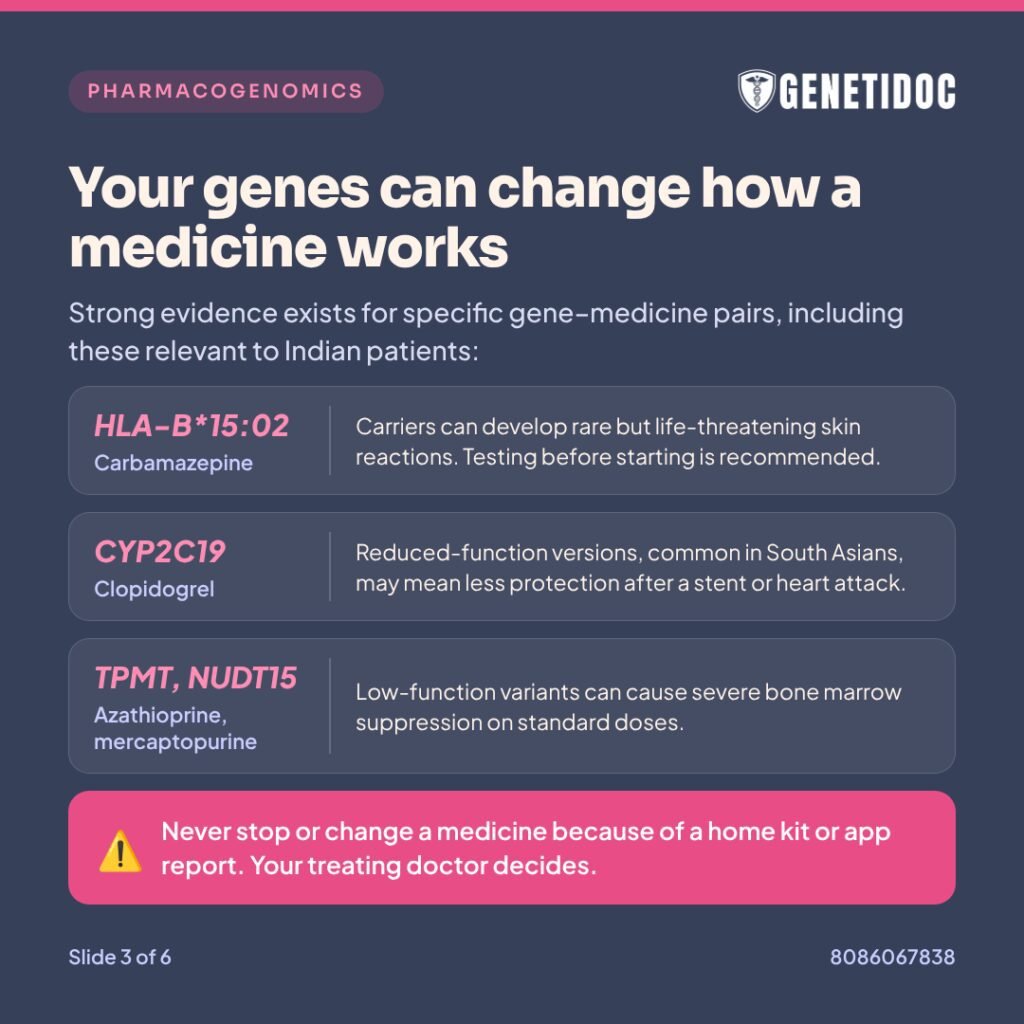
International expert groups, such as the Clinical Pharmacogenetics Implementation Consortium, publish guidelines on how to adjust medicine choice or dose for specific gene results. Examples especially relevant to Indian patients include:
HLA-B*15:02 and carbamazepine
Carbamazepine is widely used in India for epilepsy and for a painful nerve condition called trigeminal neuralgia. In people who carry an immune gene variant called HLA-B*15:02, carbamazepine can trigger Stevens-Johnson syndrome or toxic epidermal necrolysis. These are rare but life-threatening skin reactions.
The United States Food and Drug Administration recommends testing for HLA-B*15:02 before starting carbamazepine in people from populations where this variant is more common. Research in Indian patients, including a study of patients largely of South Indian origin, has found a strong link between HLA-B*15:02 and these reactions, even though the variant is relatively uncommon in the population overall. The researchers recommended testing regardless of ancestry.
CYP2C19 and clopidogrel
Clopidogrel is a blood thinner commonly given after a heart attack or after a stent is placed. The body must activate it using an enzyme made by the CYP2C19 gene. People with reduced-function versions of this gene, which are relatively common in South Asian populations, may get less protection from clopidogrel. Guidelines suggest an alternative medicine may be preferred for some of these patients.
TPMT and NUDT15 and thiopurines
Thiopurine medicines, such as azathioprine and mercaptopurine, are used for some childhood leukemias and autoimmune conditions. People with low-function variants in the TPMT or NUDT15 genes can develop severe bone marrow suppression on standard doses. NUDT15 variants are more common in people of Asian ancestry. Testing allows the dose to be adjusted safely from the start.
A note of caution about “lifelong medicine reports”
Pharmacogenomic tests are now widely advertised in India, sometimes as a one-time report covering every medicine you will ever take. Pharmacogenomics is genuinely useful, but a few points matter:
- Strong evidence exists for a specific list of gene–medicine pairs, not for every medicine.
- Your genes are only one factor. Age, kidney and liver function, other medicines and the condition being treated all affect the right dose.
- Most evidence comes from studies in non-Indian populations, and some variants common in Indian communities may not be well covered by every test.
- Results must be interpreted by your doctor in the context of your treatment.
- Some reports list dozens of medicines with “use with caution” labels, including gene–medicine pairs with weak evidence. This can cause needless worry, or lead people to avoid a medicine they actually need.
A practical approach: pharmacogenomic testing is most useful when it is linked to a real treatment decision, such as before starting a medicine with a strong, guideline-backed gene–drug link, or after an unexplained serious side effect or treatment failure. If a pharmacogenomic report already exists, keep it with your medical records and show it to every doctor who prescribes for you, so they can judge which parts apply. A clinical geneticist can advise whether pharmacogenomic testing is relevant to your treatment and which genes are worth testing.
“Never stop or change a medicine because of a home kit or app report. The accuracy of the result has to be confirmed first, and any change has to be decided by the doctor treating you.”
— Team Genetidoc
4. Personalized Cancer Care: Tumor Testing and Inherited Testing
Cancer is where personalized medicine has made the biggest difference so far. It is also where patients are most often confused, because there are two very different types of genetic testing.
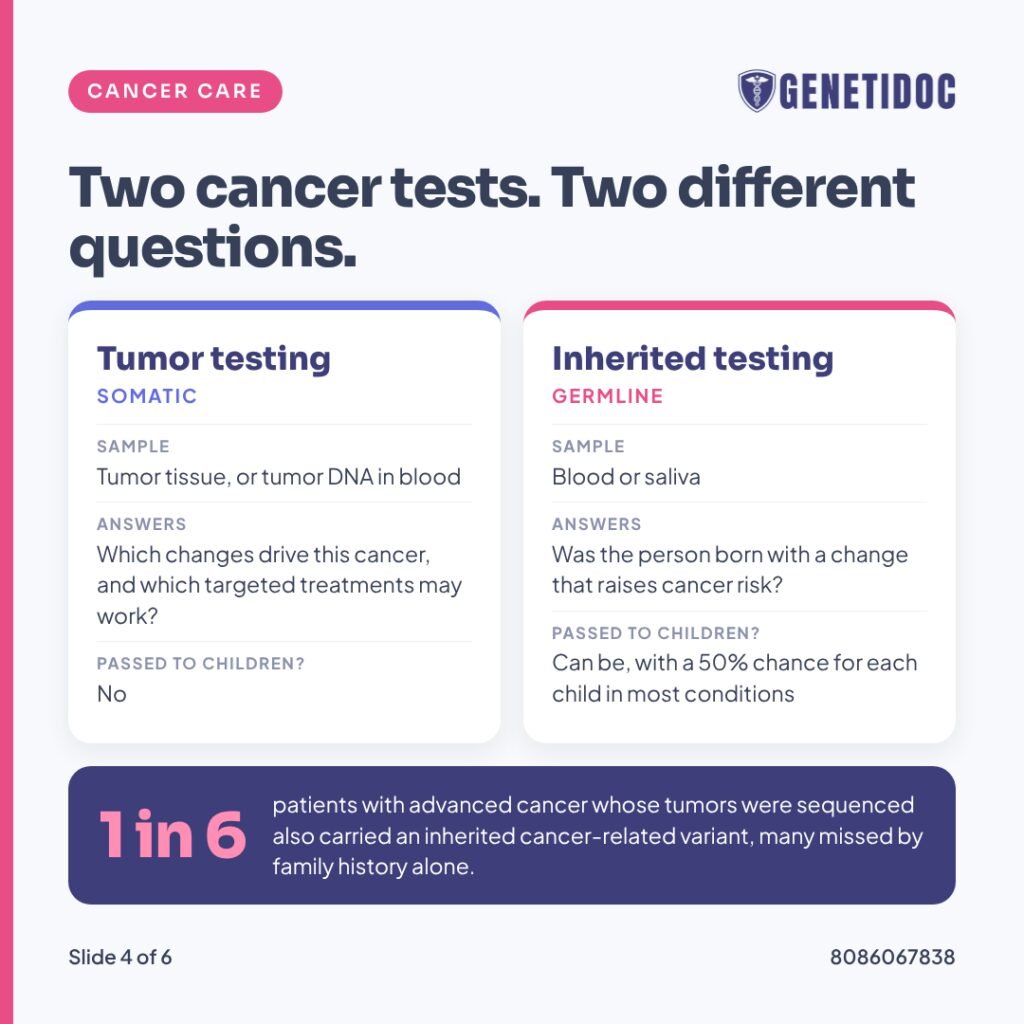
| Tumor (somatic) testing | Inherited (germline) testing | |
| Sample | Tumor tissue or tumor DNA in blood | Blood or saliva |
| Question it answers | Which changes are driving this cancer, and which targeted treatments may work? | Was the person born with a change that raises cancer risk? |
| Passed to children? | No | Can be (50% chance for each child, for most conditions) |
| Relevance to family | Usually none on its own | Relatives can be tested for the same change |
“A genetic change found only in the tumor does not prove that the cancer was inherited. Testing the tumor and testing for inherited risk answer two different questions, and families often confuse the two.”
— Team Genetidoc
How tumor testing personalizes treatment
Tumor testing looks for changes inside the cancer cells. Some of these changes can be blocked by targeted medicines. For example, certain lung cancers with changes in the EGFR gene respond to tablets that target that change. Tumor testing is usually arranged by the oncologist.
Tumor testing can also give a clue to inherited risk. In a large study of patients with advanced cancer whose tumors were sequenced, about 1 in 6 also carried an inherited cancer-related variant, and many of these would have been missed using family history alone. When a tumor report suggests a possible inherited change, confirmatory germline testing and genetic counseling are the next step.
How inherited testing changes cancer treatment
- BRCA1 and BRCA2: people with breast, ovarian, prostate or pancreatic cancer who carry an inherited BRCA variant may be eligible for a class of medicines called PARP inhibitors. The result can also shape surgical decisions, such as whether to consider removing both breasts or the ovaries to lower future cancer risk.
- Lynch syndrome: cancers in people with Lynch syndrome often have a feature called mismatch repair deficiency, which can make them respond to immunotherapy. A diagnosis also changes how often colonoscopy is needed. Aspirin for prevention may be discussed individually with carriers.
- Li-Fraumeni syndrome (TP53): because people with this condition are more sensitive to radiation, the diagnosis can affect choices between breast-conserving surgery with radiotherapy and mastectomy, and favors MRI-based screening over X-ray-based scans.
Following international guidelines from the National Comprehensive Cancer Network, every person diagnosed with colorectal cancer should be evaluated for Lynch syndrome, regardless of age. For colorectal, endometrial and breast cancer presentations, our team usually recommends a broad hereditary cancer panel rather than a single-syndrome test, since several syndromes can overlap. This typically takes about 3 weeks.
5. Personalized Prevention: You and Your Family
The same genetic result that guides one person’s treatment can protect many relatives. Once a disease-causing variant is confirmed in a family, close relatives can be offered testing for that one specific variant. This is called cascade testing. It is usually faster than a full panel, often around 1 week.
For a relative who tests positive, screening becomes personalized. Depending on the condition, this may mean:
- Starting breast MRI or colonoscopy earlier than the general population
- Considering risk-reducing surgery at the right time
- Starting cholesterol treatment early in familial hypercholesterolemia
- Regular heart rhythm checks and specific lifestyle precautions in inherited heart conditions
For a relative who tests negative for the known family variant, the news is equally valuable. Their risk is usually close to that of the general population, and they can often avoid years of unnecessary extra screening.
For most adult-onset cancer conditions, children are offered testing only after they turn 18, so they can decide for themselves. There are exceptions for conditions that can affect children, such as Li-Fraumeni syndrome and some inherited heart rhythm conditions, where earlier testing may be discussed.
Personalized planning for future pregnancies
When a disease-causing variant is confirmed, couples planning a pregnancy can consider prenatal diagnosis or preimplantation genetic testing during in vitro fertilization (IVF) to test for that specific variant. Carrier screening can also be matched to a couple’s community background and family history.
Illustrative Examples
The following are illustrative examples created to explain common situations. They are not the stories of real patients.
Example 1: Diabetes that did not behave like type 1
A 19-year-old was diagnosed with type 1 diabetes and started on insulin. Her father and grandmother both developed diabetes in their twenties. Her blood tests did not show the antibodies usually seen in type 1 diabetes. A genetic test found an HNF1A variant. Her endocrinologist gradually moved her to a low-dose tablet, and her father was tested for the same variant.
Example 2: One cancer diagnosis, a whole family’s plan
A 42-year-old woman with ovarian cancer has a hereditary cancer panel, which finds a BRCA1 variant. Her oncologist considers a PARP inhibitor as part of her treatment. Her sister and two adult cousins are offered targeted testing for the same variant. The sister who tests positive begins high-risk breast screening and discusses risk-reducing surgery with her doctors. The cousin who tests negative returns to routine screening.
Example 3: A safer start to an epilepsy medicine
An adult newly diagnosed with trigeminal neuralgia is about to start carbamazepine. The neurologist arranges HLA-B*15:02 testing first. The result is positive, so a different medicine is chosen, avoiding the risk of a severe skin reaction.
When Genetic Testing May Not Change Your Care
Honest personalized medicine also means knowing when a test will not help. Genetic testing may add little when:
- The question is pure curiosity. For a healthy person with no symptoms and no family red flags, sequencing the whole genome “just to know” rarely changes management, and often produces uncertain findings that cause worry.
- The condition is mainly lifestyle-driven. For common conditions such as most type 2 diabetes or high blood pressure, everyday factors usually matter far more than any single gene.
- The result would not change the plan. If treatment and screening would be the same whatever the result, testing may not be worthwhile.
- The test is a wellness report. Consumer diet, fitness, skin or personality reports have no clinical use. A dietitian is a better guide for diet and exercise.
“For a healthy person with no red flags, we don’t sequence the whole genome out of curiosity. We take a careful personal and family history and offer the test that actually answers their question, such as a focused risk panel or carrier screening matched to their community.”
— Team Genetidoc
What about polygenic risk scores?
Some tests combine thousands of common variants into a “risk score” for conditions such as heart disease or diabetes. These scores are an active area of research. Most were developed using data from people of European ancestry and are less accurate in other populations, including South Asians. They should not be used on their own to make medical decisions.
The Limitations Patients Should Know About
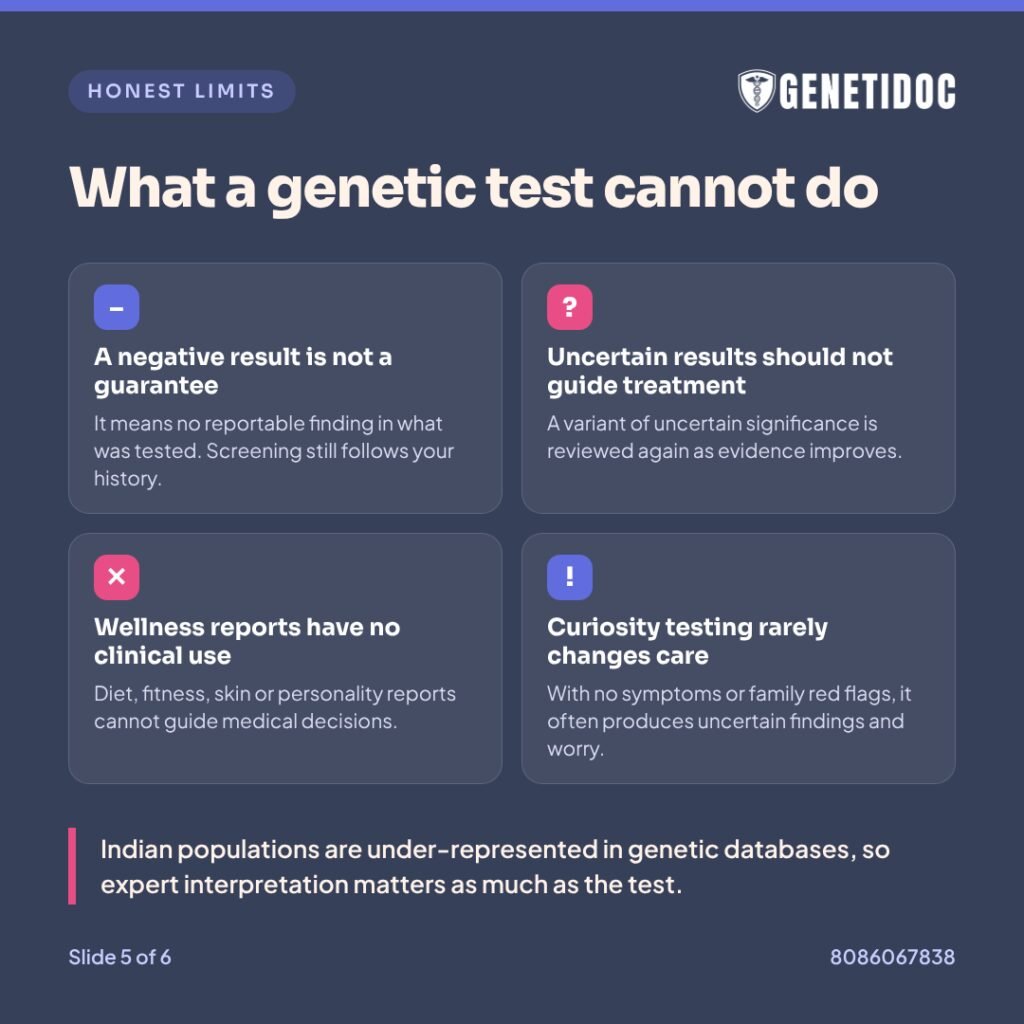
A negative result is not a guarantee
A negative result means no reportable finding was found in what was tested. It does not mean you will never develop the condition. Your screening should still follow your personal and family history.
“A negative result means there was no reportable finding in what we tested. It does not mean a person will never develop the condition. Families often read it that way, so we explain this very carefully.”
— Team Genetidoc
Uncertain results are common
A variant of uncertain significance is a genetic change for which there is not yet enough evidence to say whether it causes disease. It should not be used to make treatment decisions or to test healthy relatives. Care is based on your symptoms and family history until the variant is reclassified. Our team usually advises a review 6 months to 1 year later.
Indian populations are under-represented
Most large genetic databases come from people of European ancestry. Indian communities are genetically diverse, with many community-specific variants. A variant that looks rare and suspicious may be common and harmless in a particular Indian community, or the reverse. This is one reason expert interpretation by a clinical geneticist familiar with Indian populations matters.
Access and cost
Most families in India pay for genetic testing themselves, and some targeted treatments are expensive or not widely available. This makes choosing the right test the first time even more important. A well-chosen test avoids paying for broad testing that does not answer the question.
Why Interpretation Matters More Than the Report
A genetic report is data. Personalized medicine happens when that data is turned into a clear plan for you. That takes three things:
- The right test: chosen after a detailed personal and family history, not picked from a price list.
- The right laboratory: an accredited laboratory that confirms reportable findings before issuing a report.
- The right interpretation: a clinical geneticist who matches the result to your actual features, explains what it does and does not mean, and connects it to your treating doctor.
A low-cost test with no interpretation can leave a family with a report they cannot use, or worse, one they misunderstand. The value of genetics comes from actionable insight, not from the report alone.
What happens at Genetidoc
- Online consultation: a clinical geneticist reviews your history, reports and family tree by video, often in your preferred Indian language.
- Pre-test counseling: you learn what the test can find, what it cannot, and what each possible result would mean for you.
- Home sample collection: samples are collected at home and tested at accredited partner laboratories.
- Post-test counseling: the result is explained in the context of your health and family.
- A written summary: prepared by the genetic counselor and checked by the clinical geneticist, covering the result, recommended screening and next steps. You can share it with your treating doctor and use it to inform relatives.
Common Myths About Personalized Medicine
Myth: “Personalized medicine means a medicine made just for me.”
Fact: It usually means choosing, from existing options, the treatment and screening most likely to suit you.
Myth: “One DNA test will tell me everything about my health.”
Fact: Different questions need different tests. No single test covers every condition or every type of genetic change.
Myth: “A tumor test tells me whether my cancer runs in the family.”
Fact: Tumor testing and inherited testing answer different questions. Inherited risk needs germline testing.
Myth: “A positive result means I will definitely get the disease.”
Fact: Many inherited variants raise risk without making disease certain. Your specific risk is explained individually.
Myth: “A negative result means I am completely safe.”
Fact: It means no reportable finding was found in what was tested. Your screening should still follow your history.
Who Should Consider Genetic Testing to Personalize Care?
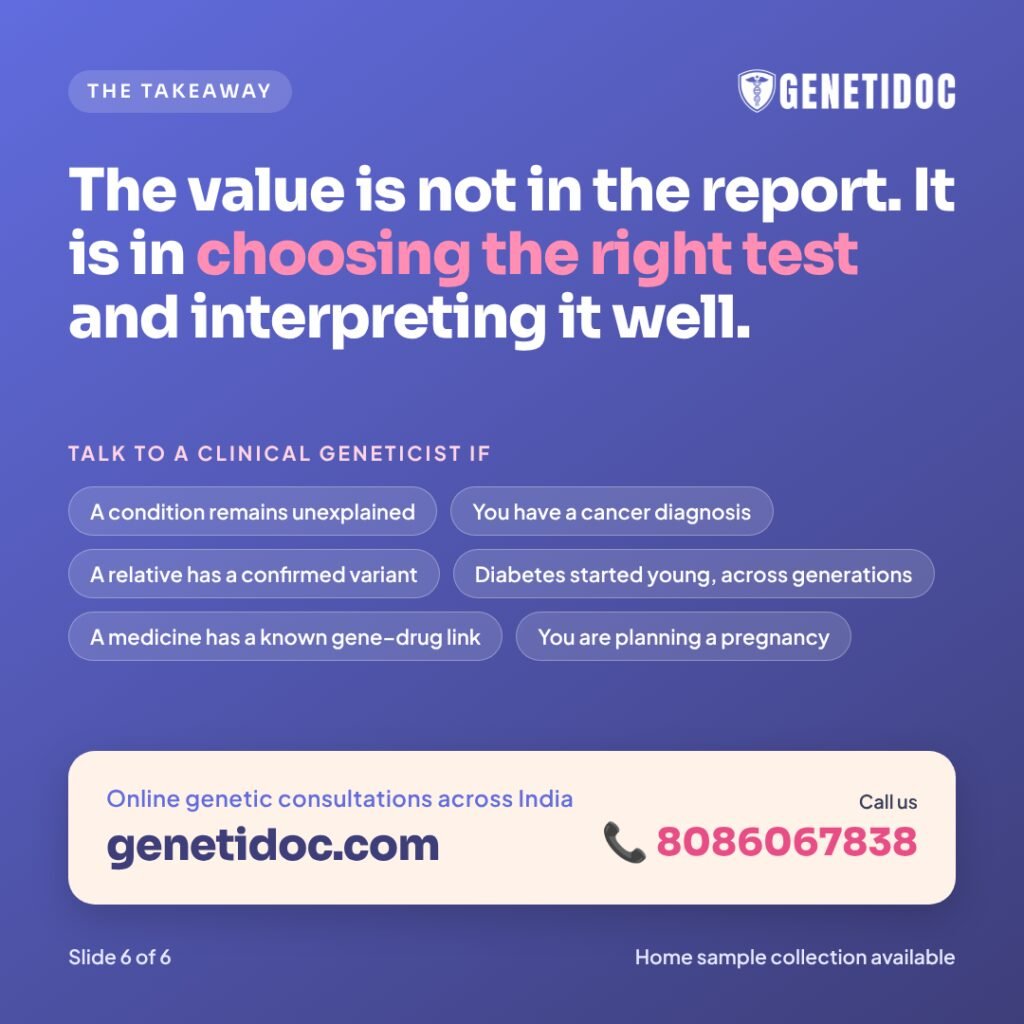
Talk to a clinical geneticist if:
- You or your child has a condition that remains unexplained despite several investigations
- The same condition repeats in several family members
- You have been diagnosed with cancer, especially at a young age, more than one cancer, or with relatives who have had cancer
- A close relative has a confirmed disease-causing genetic variant
- A relative died suddenly at a young age, often labelled as a “heart attack”
- Diabetes started young and runs through several generations
- Your doctor is starting a medicine with a known gene–drug interaction
- You are planning a pregnancy and have a family history or a related (consanguineous) marriage
Frequently Asked Questions
What is personalized medicine in simple words?
It means using information about your genes, health and family history to choose the tests, treatments and screening most likely to work for you.
Is personalized medicine the same as precision medicine?
Yes, the terms are used for the same idea. “Precision medicine” is the newer term many experts prefer.
How does genetic testing help in personalized medicine?
It can confirm a diagnosis, guide medicine choice and dose, identify cancer treatments likely to work, and show which relatives need closer screening.
Can a DNA test tell which medicine will work for me?
For some medicines, yes. Pharmacogenomic testing has strong evidence for a specific list of gene–medicine pairs, such as carbamazepine and clopidogrel. It cannot predict your response to every medicine.
Should I get tested before starting carbamazepine?
Testing for HLA-B*15:02 is recommended internationally before starting carbamazepine in populations where the variant is more common, and research supports it in Indian patients. Discuss it with your neurologist.
Is a one-time “lifelong medicine report” worth it?
It can be useful if the results are accurate and interpreted by your doctor, but strong evidence exists only for specific gene–medicine pairs. Testing is most valuable when it is linked to a real treatment decision.
What is the difference between tumor testing and inherited genetic testing?
Tumor testing looks at changes in the cancer to guide treatment. Inherited testing looks at changes you were born with that may affect your future risk and your family’s.
Can genetic testing change cancer treatment?
Yes. Inherited BRCA variants can make some patients eligible for PARP inhibitors, and Lynch syndrome-related cancers may respond to immunotherapy. Results can also shape surgical choices.
Do healthy people need genetic testing for personalized medicine?
Not routinely. Testing is most useful when there are symptoms, a family history or a specific medical decision to make. A clinical geneticist can advise whether any test is useful for you.
How long do genetic test results take?
It depends on the test. Testing for one known family variant takes about 1 week, multi-gene panels usually 2 to 4 weeks, and exome sequencing 1 to 2 months.
Will my genetic result affect my family?
An inherited result can be relevant to blood relatives. Close relatives can be offered testing for the same variant, which helps personalize their screening too.
Are home DNA kits useful for personalized medicine?
Not for medical decisions. Kit results need clinical confirmation, and wellness reports have no clinical use. Never change a medicine based on a kit result.
What if my result is uncertain?
A variant of uncertain significance should not guide treatment. Care follows your symptoms and history, and the result is reviewed again later as evidence improves.
Key Takeaways
- Personalized medicine uses genetic and clinical information to choose the right test, treatment and prevention plan for each person.
- Genetic testing personalizes care in five main ways: diagnosis, treatment choice, medicine and dose, cancer treatment, and family prevention.
- Tumor testing and inherited testing answer different questions.
- Pharmacogenomics is useful for specific gene–medicine pairs, such as HLA-B*15:02 and carbamazepine, but not for every medicine.
- A negative result is not a guarantee, and an uncertain result should not guide treatment.
- The value lies in choosing the right test and interpreting it expertly, not in the report alone.
Wondering whether a genetic test could change your treatment, or your family’s screening?
Whether you have a cancer diagnosis, an unexplained condition, a strong family history or a tumor report you don’t understand, our clinical geneticists can review your history, advise which test, if any, will actually change your care, and explain the result alongside your treating doctor’s plan. Consultations are online across India, with home sample collection.
Book a personalized genetic risk and treatment consultation.
Join the Conversation
Related Reading on Genetidoc
- Genetic Eye Disease in Children: When to Test
- Facial Features and Genetic Syndromes: A Guide for Parents
- Is Genetic Testing Useful for Unexplained Infertility?
- Family History of Dementia: When to Seek Genetic Counseling
- APOE and Alzheimer’s Risk: Separating Fact from Fear
- GM1 Gangliosidosis: Why Early Diagnosis Matters
References
- MedlinePlus Genetics, United States National Library of Medicine. What is the difference between precision medicine and personalized medicine?
- Phillips EJ, et al. Clinical Pharmacogenetics Implementation Consortium guideline for HLA genotype and use of carbamazepine and oxcarbazepine: 2017 update. Clinical Pharmacology & Therapeutics. 2018;103(4):574–581.
- Khor AH, Lim KS, Tan CT, Wong SM, Ng CC. HLA-B*15:02 association with carbamazepine-induced Stevens-Johnson syndrome and toxic epidermal necrolysis in an Indian population: a pooled-data analysis and meta-analysis. Epilepsia. 2014;55(11):e120–e124.
- Aggarwal R, et al. HLA-B*1502 is associated with carbamazepine induced Stevens-Johnson syndrome in North Indian population. Human Immunology. 2014;75(11):1120–1122.
- Lee CR, et al. Clinical Pharmacogenetics Implementation Consortium guideline for CYP2C19 genotype and clopidogrel therapy: 2022 update. Clinical Pharmacology & Therapeutics. 2022;112(5):959–967.
- Relling MV, et al. Clinical Pharmacogenetics Implementation Consortium guideline for thiopurine dosing based on TPMT and NUDT15 genotypes: 2018 update. Clinical Pharmacology & Therapeutics. 2019;105(5):1095–1105.
- Greeley SAW, et al. ISPAD Clinical Practice Consensus Guidelines 2022: The diagnosis and management of monogenic diabetes in children and adolescents. Pediatric Diabetes. 2022;23(8):1188–1211.
- Pearson ER, et al. Switching from insulin to oral sulfonylureas in patients with diabetes due to Kir6.2 mutations. New England Journal of Medicine. 2006;355(5):467–477.
- Miller IO, Sotero de Menezes MA. SCN1A Seizure Disorders. In: GeneReviews. University of Washington, Seattle.
- Robson M, et al. Olaparib for metastatic breast cancer in patients with a germline BRCA mutation. New England Journal of Medicine. 2017;377(6):523–533.
- Le DT, et al. Mismatch repair deficiency predicts response of solid tumors to PD-1 blockade. Science. 2017;357(6349):409–413.
- Mandelker D, et al. Mutation detection in patients with advanced cancer by universal sequencing of cancer-related genes in tumor and normal DNA vs guideline-based germline testing. JAMA. 2017;318(9):825–835.
- National Comprehensive Cancer Network. NCCN Clinical Practice Guidelines in Oncology: Genetic/Familial High-Risk Assessment: Colorectal, Endometrial, and Gastric; and Breast, Ovarian, Pancreatic, and Prostate.
- Martin AR, et al. Clinical use of current polygenic risk scores may exacerbate health disparities. Nature Genetics. 2019;51:584–591.
- Nakatsuka N, et al. The promise of discovering population-specific disease-associated genes in South Asia. Nature Genetics. 2017;49:1403–1407.
- Ministry of Health and Family Welfare, Government of India. National Policy for Rare Diseases, 2021.