
👩⚕️ “Doctor, My Son Was Diagnosed With a Brain Tumor at 22. Could This Be Genetic?”
This is one of the most emotional and complex questions families face.
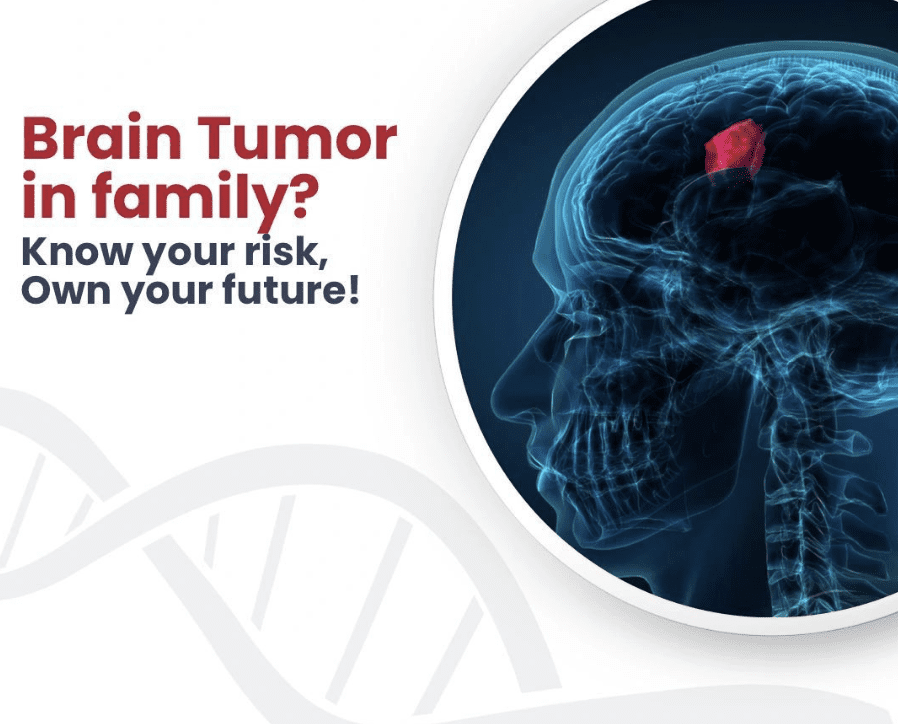
While most brain tumors are not inherited, about 5% can be hereditary, meaning they run in families due to specific gene mutations.
Recognizing the hereditary forms of brain tumors is crucial — because early diagnosis and preventive surveillance can save both lives and quality of life.
1️⃣ How Common Is Hereditary Brain Tumor?
Brain tumors are relatively rare, but when they occur at a young age, in multiple relatives, or along with other cancers, it raises suspicion of a hereditary cause.
Only about 1 in 20 brain tumors are linked to inherited genetic changes.
However, identifying these families has huge implications — not only for the affected person but for their siblings, parents, and children.
2️⃣ What Are the Common Hereditary Syndromes Linked to Brain Tumors?
Hereditary brain tumors are usually part of broader genetic syndromes that affect multiple organs. The key ones include:
-
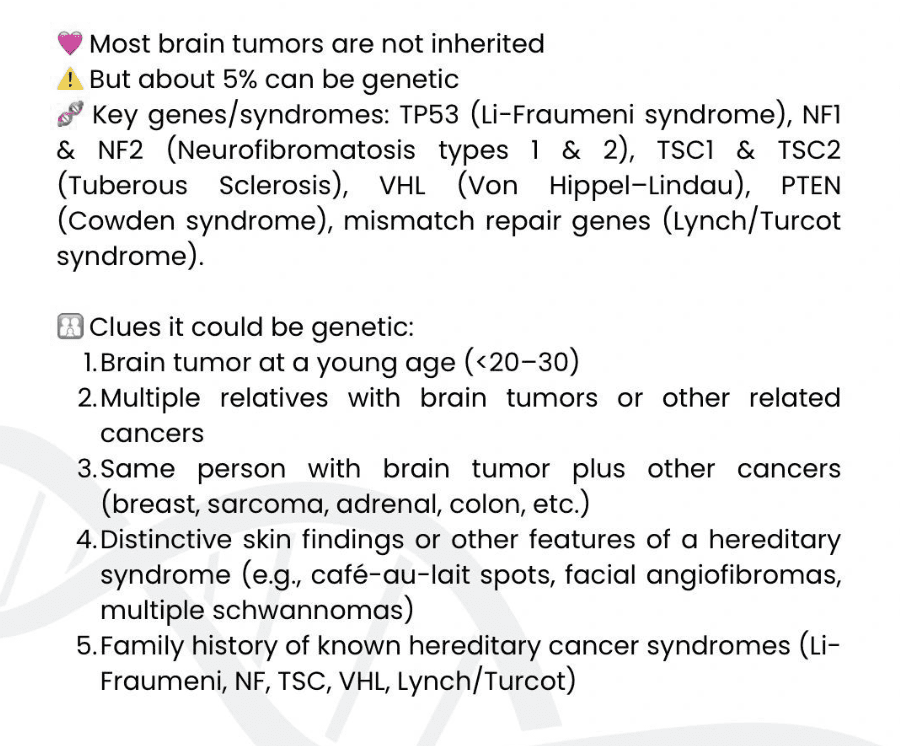
Li-Fraumeni Syndrome (TP53 gene): Increases risk of brain, breast, sarcoma, and adrenal cancers.
-
Neurofibromatosis Type 1 (NF1): Characterized by café-au-lait spots, skin nodules, and optic gliomas.
-
Neurofibromatosis Type 2 (NF2): Causes bilateral vestibular schwannomas (tumors on hearing nerves).
-
Tuberous Sclerosis (TSC1, TSC2): Leads to benign brain, kidney, heart, and skin tumors.
-
Von Hippel–Lindau Syndrome (VHL): Causes hemangioblastomas in brain/spinal cord and cysts/tumors in kidneys and pancreas.
-
Cowden Syndrome (PTEN gene): Associated with benign brain growths (Lhermitte-Duclos disease) and thyroid/breast cancers.
-
Lynch/Turcot Syndrome (MMR genes): Involves colon or brain tumors due to mismatch repair gene defects.
Each syndrome has its own pattern of tumors, skin findings, and family inheritance — making genetic evaluation essential.
3️⃣ What Are the Clues That It Could Be Genetic?
You should suspect hereditary brain tumor risk if any of these apply:
-
Brain tumor diagnosed before age 20–30
-
Multiple relatives with brain tumors or related cancers (breast, colon, sarcoma, adrenal, etc.)
-
Same person having a brain tumor plus other cancers
-
Distinctive skin findings – like café-au-lait spots (NF1), facial angiofibromas (TSC), or multiple schwannomas (NF2)
-
Family history of known genetic syndromes, e.g., Li-Fraumeni, NF, TSC, VHL, or Lynch/Turcot
Even if one clue fits, a genetic counseling session can clarify the next steps.
4️⃣ Why Do Hereditary Brain Tumors Matter?
Because they can appear early, recur, or be part of multisystem disorders.
Unlike sporadic cases, hereditary forms often affect both sides of the body (bilateral), cause multiple tumors, or appear in association with other organ growths.
Detecting these early allows doctors to:
-
Monitor for new tumors proactively
-
Avoid unnecessary radiation exposure (which can worsen risks in some syndromes)
-
Offer targeted therapies and family testing
5️⃣ What Is Genetic Counseling and Testing?
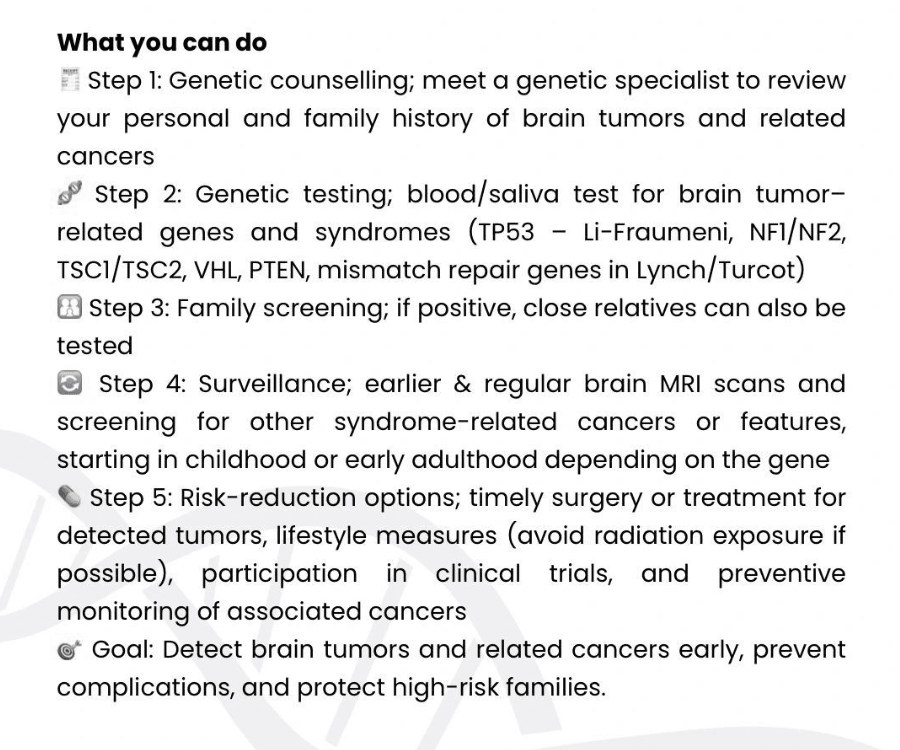
Before doing any test, meeting a genetic counselor or clinical geneticist is vital.
They will:
-
Review your family’s cancer and tumor history
-
Identify patterns suggestive of a genetic cause
-
Discuss which genes or panels to test
-
Explain results and implications for relatives
Genetic testing is simple — usually a blood or saliva test analyzing genes like TP53, NF1, NF2, TSC1, TSC2, VHL, PTEN, and mismatch repair genes.
Results may be:
-
Positive – confirming a known hereditary cause
-
Negative – no mutation found
-
Uncertain (VUS) – a variant of unclear meaning (to be followed up later)
6️⃣ What Happens If I Test Positive?
A positive result doesn’t mean you currently have cancer — it means you’re at higher risk.
It allows early and personalized management, including:
-
Brain MRI scans starting in childhood or early adulthood
-
Regular check-ups for other associated cancers (e.g., breast, colon, adrenal)
-
Timely surgery for detected tumors while small
-
Avoidance of unnecessary radiation, especially in syndromes like Li-Fraumeni
-
Lifestyle modifications: adequate rest, no tobacco, balanced diet
-
Participation in clinical trials or preventive studies
🎯 Goal: Detect brain and related tumors early, prevent complications, and protect high-risk families.
7️⃣ What If My Test Is Negative?
A negative test can be reassuring, but not conclusive.
Some families have undiscovered genes or mosaic patterns that may not be detectable with standard tests.
If you have a strong family history, doctors may still recommend:
-
Periodic brain MRIs
-
Physical exams for syndromic signs (like NF skin spots or angiomas)
-
Family tracking — noting who developed what and when
Genetic understanding evolves — retesting every few years can sometimes reveal new findings.
8️⃣ What About Family Screening?
If one family member has a confirmed hereditary brain tumor, first-degree relatives (parents, siblings, children) have a 50% chance of carrying the same mutation.
Testing them allows:
-
Early diagnosis before symptoms
-
Avoidance of high-risk exposures (like unnecessary X-rays or radiation)
-
Family-wide reassurance for those who test negative
Family-based prevention ensures that the next generation starts with awareness, not fear.
9️⃣ Can Hereditary Brain Tumors Be Prevented?
While you can’t “turn off” a gene, you can reduce risk and detect early.
At Genetidoc Genetic Clinic and DNA Testing Lab, the recommended approach is:
-
Genetic counseling – review family and medical history
-
Genetic testing – identify gene/syndrome involved
-
Family screening – test close relatives
-
Surveillance – early & regular MRI scans, starting at the age recommended for each syndrome
-
Risk reduction – lifestyle modification, avoiding radiation when possible, and proactive surgery or treatment
🩺 Goal: Detect tumors early, prevent secondary complications, and improve long-term survival.
🌷 Real-World Example
A 26-year-old woman presented with a brain tumor (glioma).
Her father had a sarcoma at 35, and her aunt had breast cancer at 40.
Genetic testing revealed a TP53 mutation, confirming Li-Fraumeni syndrome.
As a result:
-
Her siblings underwent testing (one tested positive).
-
Regular MRI screenings were started for her brother.
-
Radiation was avoided in treatment due to increased sensitivity.
Today, both siblings are healthy and under continuous preventive follow-up — all because one genetic test changed how the family’s story unfolded.
💬 Frequently Asked Questions
Can brain tumors skip generations?
Sometimes yes. Incomplete penetrance means a person can carry the gene but never develop cancer — yet still pass it to their children.
Is radiation dangerous for people with Li-Fraumeni or NF?
Yes. In certain syndromes, radiation can trigger new tumors. Doctors use alternative treatments whenever possible.
Are all hereditary brain tumors cancerous?
No. Many, like in tuberous sclerosis or NF, are benign but still need monitoring due to pressure or nerve involvement.
Can hereditary brain tumors affect children?
Yes. Some syndromes begin in childhood. That’s why pediatric or family-wide screening is key.
Are these conditions treatable?
Yes. Advances in imaging, genetics, and precision therapy mean most hereditary tumors are manageable — especially when found early.
🌼 The Emotional Side of Testing
Hearing “hereditary” can feel heavy — especially for families already coping with illness.
But genetic awareness brings control, not fear.
It turns uncertainty into a proactive plan for monitoring, treatment, and reassurance for loved ones.
Support groups and genetic counseling help families navigate both the science and the emotions involved.
🌸 Awareness Saves Lives
Hereditary brain tumors are uncommon but critical to recognize.
By combining genetic insight with preventive care, families can stay one step ahead of even the most serious conditions.
If your family has a history of brain tumors, early-onset cancers, or genetic syndromes, don’t ignore it.
A consultation today could protect generations tomorrow.
💙 Take Action — Know Your Risk, Own Your Future
If you or a loved one were diagnosed with a brain tumor at a young age — or have a family history of multiple cancers — genetic testing can guide the way forward.