
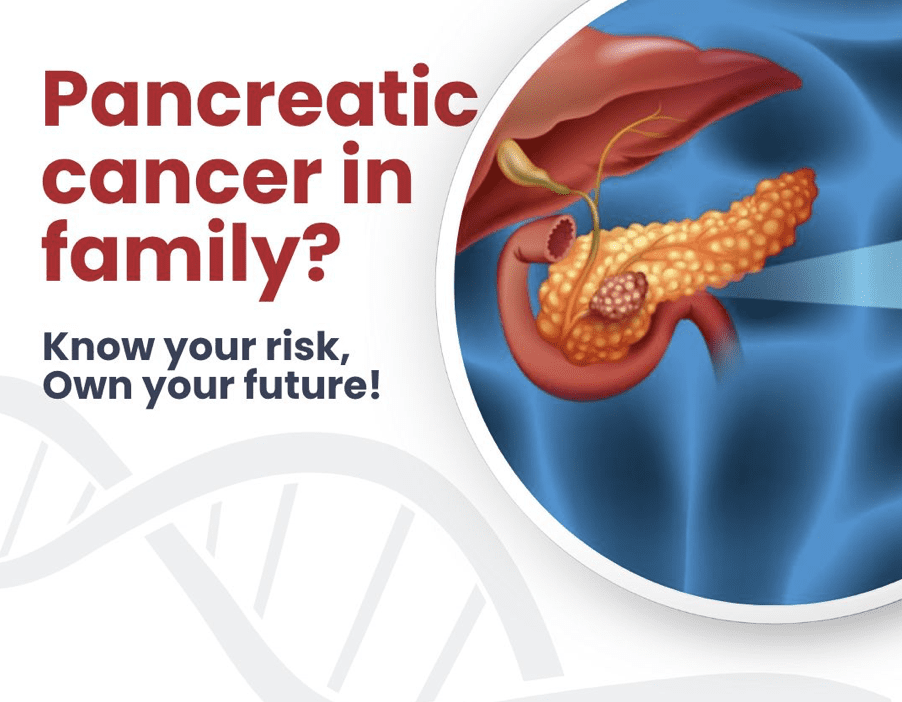
👩⚕️ “My Father and Uncle Had Pancreatic Cancer. Does That Mean I Will Too?”
A 39-year-old woman came to my clinic with this very question after losing two close relatives to pancreatic cancer.
It’s a fear that many families share — and it’s understandable.
Pancreatic cancer often develops quietly and is usually detected late, but when it runs in families, it doesn’t have to be a silent killer.
Awareness, genetic testing, and early screening can make a life-saving difference.
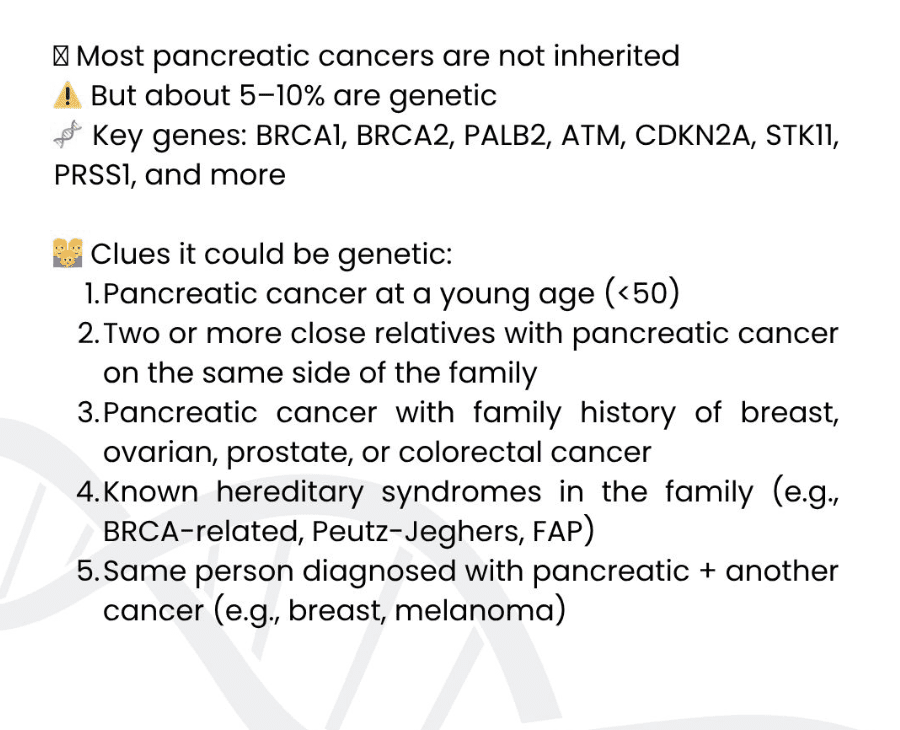
1️⃣ How Common Is Hereditary Pancreatic Cancer?
Most pancreatic cancers happen by chance.
However, about 5–10% are hereditary, caused by gene mutations passed down in families.
These gene changes affect the body’s ability to repair DNA or control cell growth.
The most important ones include:
-
BRCA1 and BRCA2 – known for breast and ovarian cancers, but also linked to pancreatic cancer
-
PALB2 and ATM – DNA repair genes
-
CDKN2A, STK11, PRSS1 – associated with syndromes like Peutz-Jeghers and hereditary pancreatitis
When one of these genes is altered, it can significantly raise lifetime pancreatic cancer risk.
2️⃣ What Are the Signs It Could Be Genetic?
Certain family patterns point to hereditary risk.
Talk to a genetic expert if you notice any of these:
-
Pancreatic cancer diagnosed before age 50
-
Two or more close relatives with pancreatic cancer on the same side of the family
-
Pancreatic cancer with a family history of breast, ovarian, prostate, or colorectal cancer
-
Known hereditary syndromes in the family (e.g., BRCA-related, Peutz-Jeghers, FAP)
-
One person diagnosed with pancreatic and another cancer (like breast or melanoma)
The more these patterns appear, the stronger the reason to seek genetic counseling.
3️⃣ Why Is Pancreatic Cancer Often Missed Until Late?
The pancreas lies deep in the abdomen and early tumors rarely cause symptoms.
By the time signs like jaundice, weight loss, back pain, or digestive changes appear, cancer is often advanced.
That’s why identifying who is at higher genetic risk is so crucial — those individuals can undergo targeted early screening long before symptoms start.
4️⃣ What Is Genetic Counseling and Why It’s the First Step
Before testing, you’ll meet a genetic counselor or clinical geneticist who will:
-
Review your personal and family cancer history
-
Explain how genetic testing works and what results mean
-
Help decide which family member should test first
-
Offer emotional support and clear next steps
This session ensures that testing is personalized and meaningful — not just a lab report, but a roadmap for prevention.
5️⃣ What Does Genetic Testing Involve?
Genetic testing is simple and non-invasive — usually a blood or saliva sample.
It looks for mutations in genes such as BRCA1, BRCA2, PALB2, ATM, CDKN2A, STK11, and PRSS1.
You’ll receive one of three results:
-
Positive – a known harmful mutation is found; risk is higher.
-
Negative – no harmful change detected; standard population risk.
-
Uncertain (VUS) – a change whose meaning isn’t yet known.
If a mutation is found, your doctor can design a personalized screening and prevention plan.
6️⃣ What Happens If My Test Is Positive?
A positive test result is not a diagnosis — it’s an opportunity.
It means your risk is higher, but now you can take action before symptoms start.
Your care plan might include:
-
Early and regular screening with MRI/MRCP or endoscopic ultrasound (EUS), usually starting at age 50 or 10 years before the youngest case in your family.
-
Lifestyle changes: maintaining a healthy weight, avoiding smoking, controlling diabetes.
-
Participation in clinical trials for early detection or preventive therapies.
-
Preventive surgery in select, very high-risk cases (like hereditary pancreatitis).
🎯 Goal: Detect cancer early or reduce the risk in high-risk families.
7️⃣ What If My Test Is Negative?
If your test is negative but your family history is strong, your doctor might still recommend periodic screening.
Some families carry undiscovered or complex genetic factors, and vigilance remains key.
Even without a mutation, you can lower your risk by:
-
Eating a balanced, fiber-rich diet
-
Avoiding tobacco and heavy alcohol
-
Keeping blood sugar under control
-
Staying physically active
These small steps can make a big difference in long-term pancreatic health.
8️⃣ How Can My Family Members Benefit?
If you test positive, your first-degree relatives (parents, siblings, children) each have a 50% chance of carrying the same mutation.
Testing them helps:
-
Identify who’s truly at risk
-
Start screening early in those who need it
-
Avoid unnecessary anxiety in those who test negative
This is why hereditary cancer management is truly a family-centered approach.
9️⃣ How Is Hereditary Pancreatic Cancer Linked to Other Cancers?
Pancreatic cancer doesn’t exist in isolation — it often appears in families already facing other cancers.
For example:
-
BRCA mutations can cause breast, ovarian, prostate, and pancreatic cancers.
-
STK11 mutations (Peutz-Jeghers syndrome) cause multiple polyps and higher risk of pancreatic, colon, and stomach cancers.
-
CDKN2A mutations increase the risk for both melanoma and pancreatic cancer.
Recognizing these patterns helps doctors look beyond one organ and protect the entire family.
🔟 Can Hereditary Pancreatic Cancer Be Prevented?
While there’s no guaranteed way to prevent pancreatic cancer, early identification and risk reduction work remarkably well.
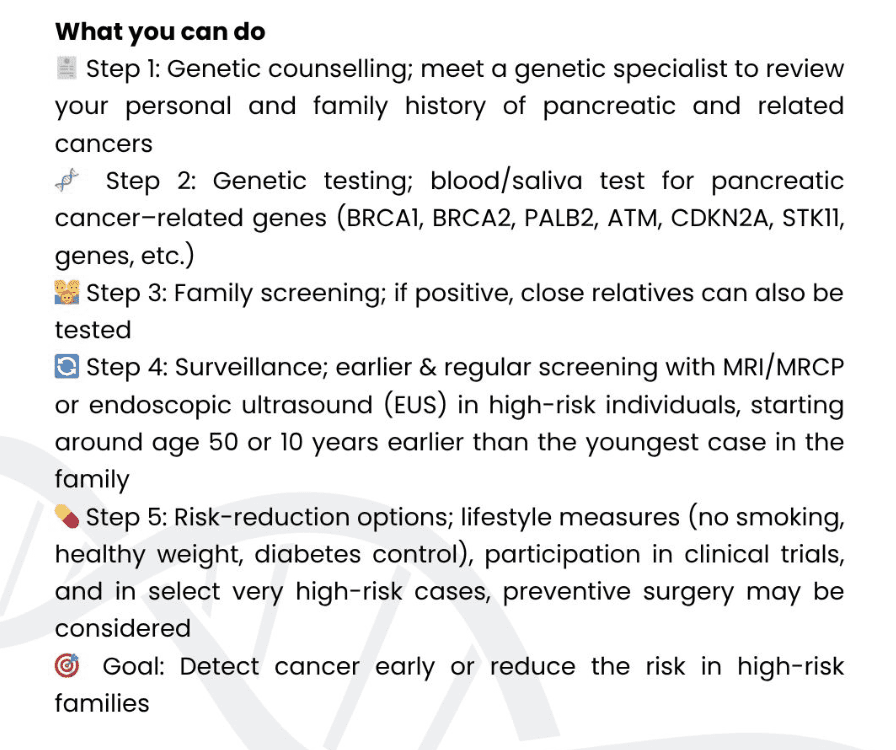
At Genetidoc Genetic Clinic and DNA Testing Lab, our 5-step model ensures comprehensive prevention:
-
Genetic counseling – to assess your personal and family history
-
Genetic testing – for pancreatic cancer–related genes
-
Family screening – to identify and protect relatives
-
Surveillance – with MRI, MRCP, or EUS starting early
-
Risk-reduction strategies – lifestyle, diabetes control, and preventive options in select cases
🩺 Goal: Detect cancer early or reduce the risk altogether.
🌷 Real-World Example
A 42-year-old man whose mother and grandmother both died of pancreatic cancer underwent genetic testing and found a BRCA2 mutation.
He joined a high-risk screening program with MRI scans every year.
Two years later, a small pre-cancerous lesion was detected and removed completely.
His siblings were tested, and one sister—also positive—began early screening, preventing another tragedy.
That’s the power of genetic awareness — one test changed the outcome for an entire family.
💬 Frequently Asked Questions
Can pancreatic cancer genes come from either parent?
Yes. You can inherit them from your mother or father, even if that parent never had cancer.
If I carry a BRCA mutation, should I also worry about breast or ovarian cancer?
Yes. BRCA1/2 mutations increase risks for several cancers. That’s why genetic testing often benefits the whole family, men and women alike.
Is pancreatic screening painful or risky?
No. MRI, MRCP, and endoscopic ultrasound are safe, painless imaging tools used in specialized centers.
Does diabetes increase pancreatic cancer risk?
Yes. Long-standing diabetes or sudden-onset diabetes after age 50 can sometimes signal underlying pancreatic changes. Always report new symptoms to your doctor.
Is there a blood test for early detection?
No single blood test is reliable yet, but researchers are studying markers like CA19-9 and genetic panels in high-risk groups.
🌼 The Emotional Side of Testing
Pancreatic cancer is often associated with fear — but genetic testing replaces fear with knowledge.
Families who once faced uncertainty can now act with clarity, confidence, and hope.
At Genetidoc Genetic Clinic and DNA Testing Lab, every positive test is paired with counseling, follow-up plans, and psychological support — because genetics is about caring for people, not just DNA.
🌸 Awareness Saves Lives
Hereditary pancreatic cancer can be silent, but it’s not invisible if you know where to look.
Every family that learns its genetic risk takes one step closer to prevention.
If pancreatic cancer runs in your family, early testing could change your story — and your future.
💙 Take Action — Know Your Risk, Own Your Future
If you have a family history of pancreatic cancer, don’t wait.
A single consultation with a genetic expert can give you the clarity you need to protect yourself and your loved ones.