
Quick answer
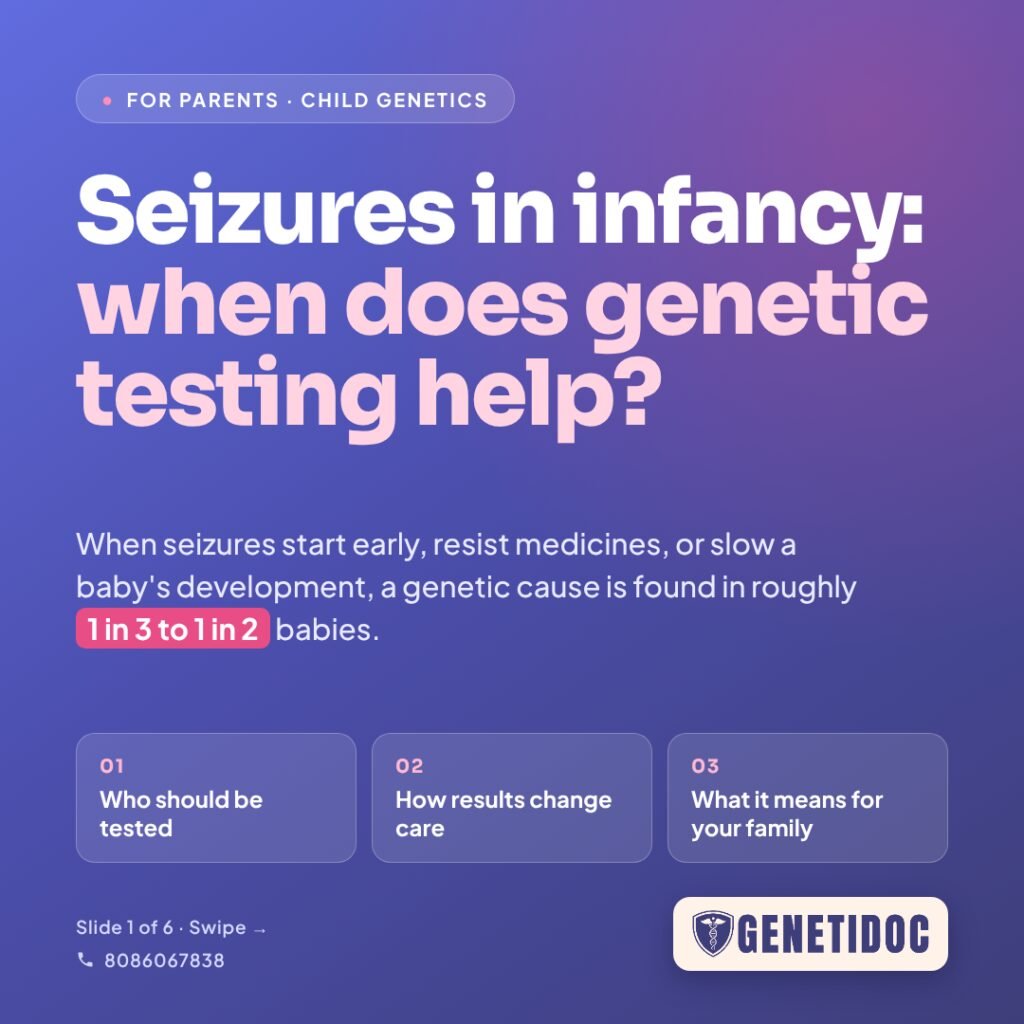
| Genetic testing helps most when a baby has seizures that start in the first months of life, keep coming back without a clear cause, do not respond well to medicines, or come with slow development or regression. In these babies, a genetic cause is found in roughly one in three to one in two cases. A diagnosis can change which medicine is used, point to a treatable cause such as a vitamin-responsive epilepsy, give a clearer picture of what lies ahead, and tell parents the chance of the condition happening again in a future pregnancy. Testing is usually not needed for a single simple seizure with fever, or for seizures clearly caused by low blood sugar, infection, or a birth injury. |
Watching your baby have a seizure is one of the most frightening things a parent can go through. Many families tell us they remember every second of it: the stiffening, the jerking, the staring, the rush to the hospital.
Then come the questions. Why did this happen? Will it happen again? Is it epilepsy? Did we do something wrong? And then, often, a doctor mentions something new: genetic testing.
This article explains, in plain language, when genetic testing is useful for babies with seizures, which test is usually right, what the results can and cannot tell you, and how a diagnosis can change your child’s care. It is written for parents and families in India, drawing on published research and the day-to-day experience of our clinical genetics team.
Are seizures in babies always epilepsy?
No. This is the first thing we explain to most families.
A seizure is a sudden burst of abnormal electrical activity in the brain. In babies, it can look like stiffening, rhythmic jerking of an arm or leg, lip-smacking, staring, unusual eye movements, or sudden clusters of body-bending movements called spasms.
Epilepsy means a tendency to have repeated seizures that are not triggered by an immediate cause. Seizures in infancy broadly fall into two groups:
- Provoked (acute symptomatic) seizures. These have a clear, immediate trigger, such as low blood sugar, low calcium, an infection of the brain, bleeding in the brain, or lack of oxygen around the time of birth. In India, these causes are still among the most common reasons for seizures in newborns. Treating the cause usually matters more than genetic testing.
- Unprovoked seizures and epilepsy. Here, no immediate trigger explains the seizures. This is the group in which genetic causes are common.
There is also a third, very common situation: febrile seizures. These are seizures triggered by fever, and they affect roughly 2 to 5 in every 100 children between 6 months and 5 years of age. A single, short, simple febrile seizure in an otherwise healthy, normally developing child usually does not need genetic testing.
How often is a baby’s epilepsy genetic?
Much more often than most families expect. Over the last decade, genetic testing has shown that a large share of epilepsies starting in infancy are caused by a change in a single gene, or by a small missing or extra piece of a chromosome.
Indian research shows similar results to studies from other countries:
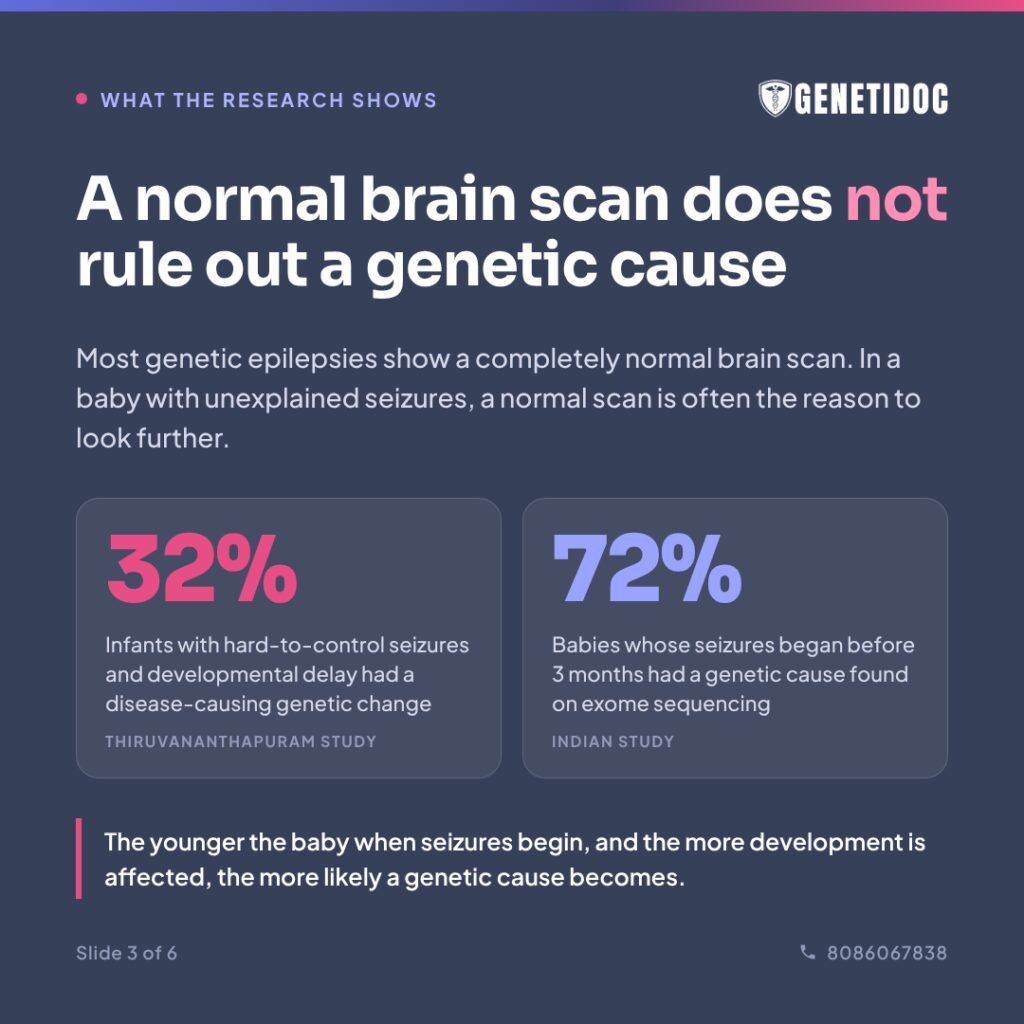
- A study of infants with difficult-to-control seizures and developmental delay from Thiruvananthapuram found a disease-causing genetic change in about 32 percent of children.
- An Indian study of babies whose seizures started before three months of age, tested step by step with exome sequencing, found a genetic cause in about 72 percent.
- Large international reviews show that the chance of finding a cause is highest when seizures start early and are accompanied by developmental delay.
In simple terms: the younger the baby when seizures begin, and the more the seizures affect development, the more likely a genetic cause becomes.
| “Many parents are told that a normal brain scan means everything is fine. But most genetic epilepsies have a completely normal MRI. A normal scan does not rule out a genetic cause; it is often the reason to look for one.”
— Dr. Roshan Daniel, Clinical Geneticist and Founder, Genetidoc |
When should a baby with seizures have genetic testing?
International guidelines, including the evidence-based guideline from the National Society of Genetic Counselors, recommend genetic testing for people with epilepsy that has no clear explanation. The case is strongest in infants.
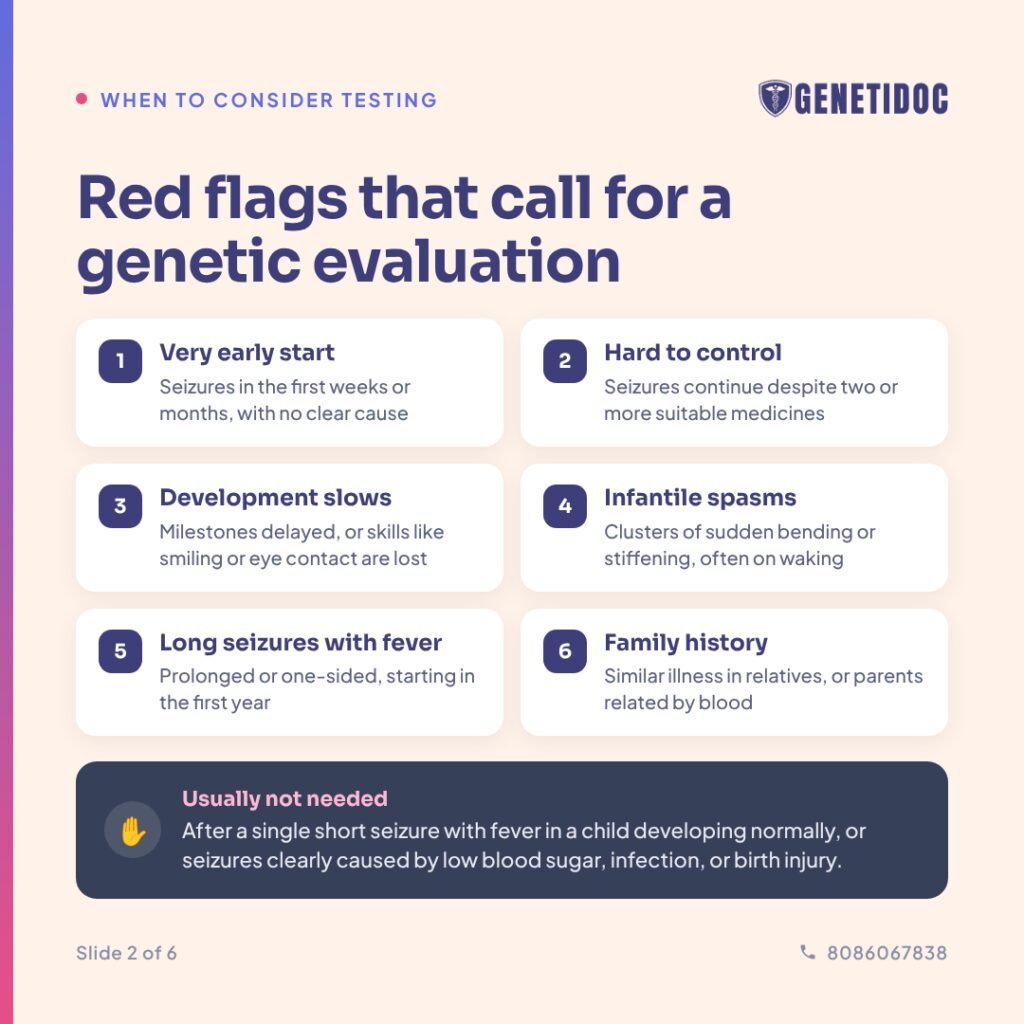
Your child’s doctor or a clinical geneticist is likely to recommend testing if your baby has one or more of the following:
- Seizures starting in the first weeks or months of life without a clear cause such as low sugar, infection, or birth injury.
- Seizures that keep coming despite two or more appropriate medicines (called drug-resistant epilepsy).
- Developmental delay or regression, meaning the baby is slow to reach milestones, or loses skills they already had, such as smiling, holding the head up, or eye contact.
- Infantile spasms, which are clusters of sudden bending or stiffening movements, often on waking, usually starting between 3 and 12 months of age.
- Prolonged or repeated seizures with fever starting in the first year, especially seizures affecting one side of the body. This pattern can suggest Dravet syndrome.
- A specific pattern on the electroencephalogram (EEG), the brain-wave test, that the neurologist recognizes as linked to a genetic epilepsy syndrome.
- Other features alongside seizures, such as unusual facial features, birth defects, skin patches, a very small or large head, or problems with muscle tone.
- A family history of seizures, developmental delay, or unexplained infant deaths, or parents who are related by blood (consanguineous marriage).
When genetic testing may not be needed
Good genetic care means knowing when not to test, too. Testing is usually not the first step when:
- A child has had a single, short febrile seizure and is developing normally.
- Seizures are clearly explained by an immediate cause, such as low blood sugar, low calcium, meningitis, or a well-documented birth-related brain injury, and stop once that cause is treated.
- A brain scan shows a clear non-genetic explanation, such as a stroke or bleed, and the overall picture fits.
That said, the picture can change. If seizures continue long after the trigger is treated, if development does not progress as expected, or if the “explanation” doesn’t quite fit, genetic testing may still be worth discussing later. A clinical geneticist can help decide.
Common genetic causes of seizures in infancy
Hundreds of genes are linked to epilepsy. You don’t need to know them all, but it helps to understand a few of the conditions doctors look for most often, because several of them change treatment directly.
Conditions where a specific treatment exists
- Pyridoxine-dependent epilepsy (ALDH7A1) and PNPO These are rare conditions in which the baby’s body cannot process vitamin B6 normally. Seizures often start in the newborn period and do not respond to usual medicines, but can respond dramatically to specific forms of vitamin B6. Early recognition matters.
- Biotinidase deficiency. This is an inherited condition in which the body cannot recycle the vitamin biotin. It can cause seizures, skin rash, and hair loss, and is treated with biotin supplements. It can be picked up on newborn screening.
- Glucose transporter type 1 deficiency (SLC2A1). In this condition, sugar cannot get into the brain properly. A special high-fat, low-carbohydrate diet, called the ketogenic diet, gives the brain an alternative fuel and is the main treatment.
Conditions where the gene guides the choice of medicine
- Dravet syndrome (SCN1A). This usually starts in the first year with long seizures, often triggered by fever or warm baths. Certain commonly used seizure medicines, called sodium channel blockers, can make seizures worse in this condition, so knowing the diagnosis helps doctors avoid them and choose medicines that are known to work better.
- KCNQ2-related epilepsy. KCNQ2 is the most common genetic cause of seizures in newborns. Some babies have a mild, self-limiting form that settles in the first year; others have a more severe form. In many babies with the severe form, sodium channel blockers work well.
- SCN2A and SCN8A-related epilepsies. Depending on the exact change and the age at which seizures begin, some medicines may help or may be less suitable. This is a good example of why expert interpretation matters.
- Tuberous sclerosis complex (TSC1 and TSC2). This condition causes benign growths in the brain and other organs and is a common cause of infantile spasms. A specific medicine is often preferred for spasms in this condition, and the diagnosis also triggers check-ups of the heart, kidneys, eyes, and skin.
Conditions where diagnosis mainly guides outlook and support
- STXBP1, CDKL5, and PCDH19-related conditions, which are part of a group called developmental and epileptic encephalopathies (DEE). In these conditions, the genetic change affects both seizures and development. STXBP1 was the most commonly identified gene in one Indian cohort of babies with very early-onset seizures.
- Small missing or extra pieces of chromosomes, which can cause seizures along with developmental delay and other features.
- Inherited metabolic disorders, which are more common in families where parents are related by blood.
| Illustrative example (composite scenario, not a specific patient)
An eight-month-old girl has her third long seizure, each one starting during a fever and affecting one side of her body. Her MRI and first EEG are normal, and she is developing well. She has been started on a common seizure medicine, but the seizures are becoming more frequent. Genetic testing finds a disease-causing change in SCN1A, confirming Dravet syndrome. Her neurologist switches her to medicines better suited to the condition, and her parents receive a written plan for managing fevers and emergency seizures at home. The diagnosis also prepares the family for the developmental support she may need as she grows. |
Which genetic test is right for a baby with seizures?
There is no single “epilepsy test.” The right choice depends on your baby’s age, the type of seizures, the EEG and MRI findings, other features, and family history. Here are the main options:
| Test | What it looks for | When it is typically used |
| Single-gene test | Changes in one specific gene | When the features strongly point to one condition, or to test relatives for a change already found in the family |
| Chromosomal microarray | Small missing or extra pieces of chromosomes | When seizures come with developmental delay, birth defects, or unusual facial features |
| Epilepsy gene panel | A selected group of genes known to cause epilepsy | When the seizure pattern fits a well-defined group of conditions |
| Whole exome sequencing | The protein-coding parts of nearly all genes | Often the preferred first test for unexplained infant-onset epilepsy, especially with developmental delay |
| Trio exome sequencing | Exome of the baby and both parents, analyzed together | Helps identify changes that are new in the child and speeds up interpretation |
| Whole genome sequencing | Almost the entire genetic code, including regions the exome does not cover | Usually a next step when earlier testing is negative but a genetic cause is still strongly suspected |
The National Society of Genetic Counselors guideline suggests that, for unexplained epilepsy, exome or genome sequencing is generally preferable to a gene panel as the first test, because so many different genes can cause similar-looking seizures. In practice, the choice also depends on what is available and affordable for each family. This is where a clinical geneticist’s input helps.
At the same time, genetic testing does not replace other important tests. Blood, urine, and sometimes spinal fluid tests for metabolic disorders are often done alongside genetic testing, because some of these results come back quickly and point to treatable causes.
What can an exome test miss?
An exome is powerful, but it is not a complete search of everything. Parents should know about these limitations:
- Larger missing or extra pieces of DNA may not be reliably detected, because exome testing reads short stretches of the gene at a time. A chromosomal microarray is better for these.
- Changes present in only some of the body’s cells (called mosaicism) may be missed if they are at a low level in the blood sample.
- Changes outside the protein-coding parts of genes, or problems involving how genes are switched on and off, can fall outside what an exome reads.
- Repeated stretches of DNA that are abnormally long cannot be measured accurately with standard exome methods.
This is why a negative result does not always mean “not genetic.” It means no reportable cause was found in what was tested.
| “The value of a genetic test is not in the report itself. It lies in choosing the right test for the right child, reading the result alongside the seizures, the EEG and the development, and turning that into a decision the family and the neurologist can act on.”
— Dr. Roshan Daniel, Clinical Geneticist and Founder, Genetidoc |
How a genetic diagnosis can change your baby’s treatment
This is the question parents ask most: “Will the result actually change anything?” Often, it does. Published research shows that a genetic diagnosis changes management for a meaningful share of infants with epilepsy.
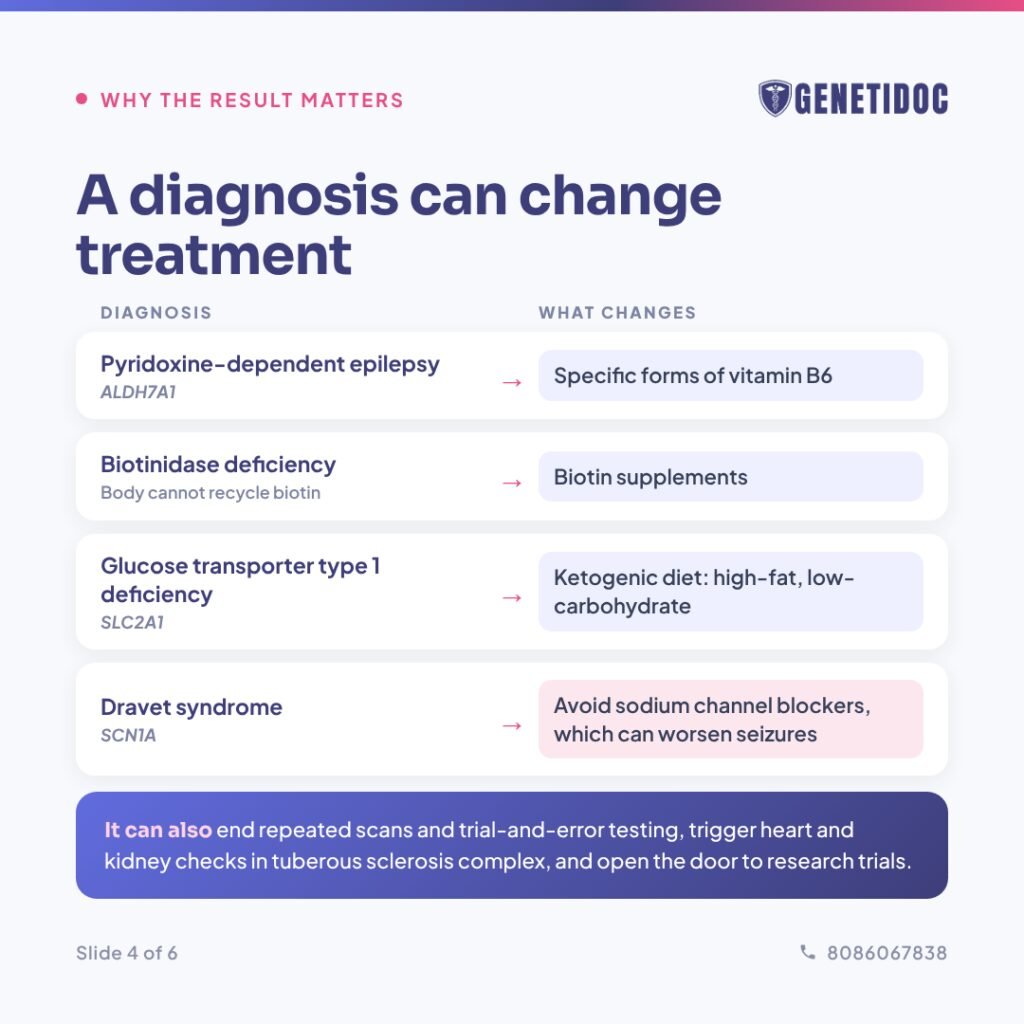
A genetic diagnosis can:
- Point to a targeted treatment, such as vitamin B6 forms for pyridoxine-dependent epilepsy, biotin for biotinidase deficiency, or the ketogenic diet for glucose transporter type 1 deficiency.
- Guide medicine choice, such as avoiding sodium channel blockers in Dravet syndrome, or choosing them in some KCNQ2– and SCN2A-related epilepsies.
- Stop the search, so the child is spared repeated scans, spinal taps, and trial-and-error testing.
- Trigger checks for related problems, such as heart and kidney screening in tuberous sclerosis complex.
- Open the door to new therapies and research. Several gene-specific treatments are being studied worldwide, and some trials require a confirmed genetic diagnosis.
| Illustrative example (composite scenario, not a specific patient)
A baby boy starts having seizures on his second day of life. His blood sugar, calcium, and infection tests are normal, and his MRI is normal. He needs several medicines in the neonatal intensive care unit. A trio exome finds a new (de novo) change in KCNQ2 that was not present in either parent. His neurologist adjusts his medicines based on the result, and his seizures come under better control. His parents learn that the change arose for the first time in their son, which helps them understand that nothing they did caused it. |
Benefits beyond medicine: outlook, answers, and peace of mind
Even when no specific treatment exists, a diagnosis still matters:
- A clearer picture of the future. Knowing the condition helps doctors explain what to expect for development, learning, and seizure control, and plan therapies such as physiotherapy, occupational therapy, and speech therapy early.
- An end to the diagnostic search. Many families describe years of tests and doctor visits before a diagnosis. A clear answer brings that to an end.
- Freedom from guilt. Many mothers in particular blame themselves for something they ate, a medicine they took, or a stressful pregnancy. A genetic diagnosis often shows that the cause was nothing they did.
- Connection with others. A named condition lets families connect with support groups and other parents whose children have the same diagnosis.
| “One of the most important things we tell parents is that most of these genetic changes are nobody’s fault. They are not caused by anything a mother did or did not do in pregnancy. Letting go of that guilt is often the first step to caring for the child with a clear mind.”
— Dr. Roshan Daniel, Clinical Geneticist and Founder, Genetidoc |
Understanding the report: positive, negative, or uncertain
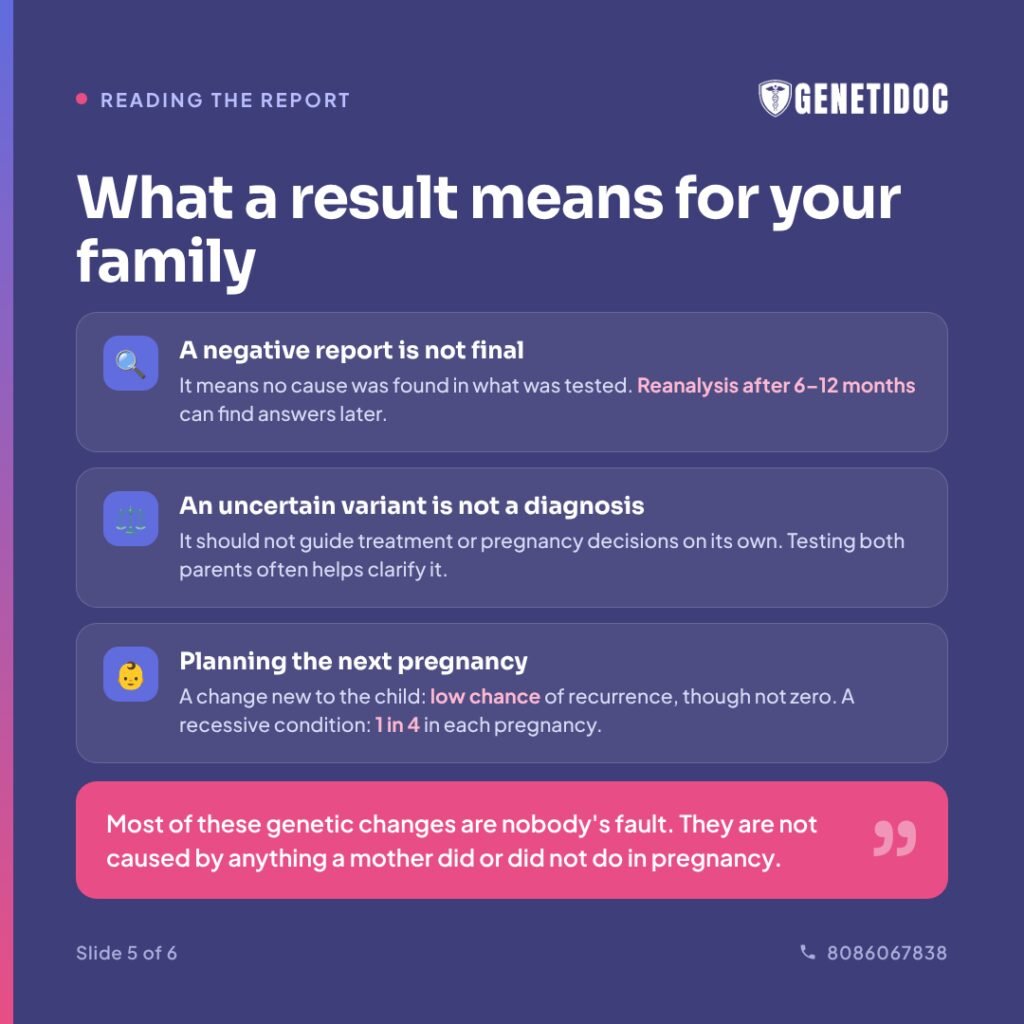
A genetic report usually falls into one of three categories:
1. Positive (a cause is found)
A “pathogenic” or “likely pathogenic” change has been found that explains the seizures. The next step is to understand what this means for treatment, outlook, and the family.
2. Negative (no cause found)
No reportable cause was found in what was tested. As explained above, this does not mean the epilepsy is “not genetic.” It may mean the cause lies in a part of the DNA the test did not cover, or in a gene not yet linked to epilepsy.
3. Variant of uncertain significance
A variant of uncertain significance is a genetic change that the laboratory cannot yet classify as harmful or harmless, because there is not enough scientific evidence. Team Genetidoc finds this the hardest result to explain to families, and also one of the most important to explain well. It should not be used to make treatment or pregnancy decisions on its own. Testing the parents often helps clarify it.
Why reanalysis matters
Genetic knowledge grows every year. New epilepsy genes are discovered, and uncertain variants are reclassified as evidence builds. Team Genetidoc advises families with a negative or uncertain result to return for review after six months to a year, or sooner if new symptoms appear. The existing data can often be re-examined without repeating the whole test. Reanalysis typically takes around three to four weeks. Keep a copy of your child’s report and raw data, and keep your contact details up to date with your clinic.
What it means for your family and future pregnancies
Parents almost always ask: “Will this happen to our next child?” The answer depends on how the genetic change came about.
- New (de novo) changes. Many severe infant epilepsies are caused by a change that appears for the first time in the child and is not present in either parent’s blood. The chance of it happening again is low. It is not zero, though, because rarely a parent may carry the change in some of their egg or sperm cells without having it in their blood. This is called germline mosaicism.
- Recessive conditions. Some conditions, including several metabolic and vitamin-related epilepsies, happen when a child inherits one non-working copy of a gene from each parent. Each parent is a healthy carrier. In each pregnancy there is a 1 in 4 chance of an affected child. This pattern is more common when parents are related by blood.
- Inherited from a parent. Some milder epilepsy syndromes run in families, and a parent may have had seizures in infancy that settled.
- X-linked conditions. Some genes sit on the X chromosome, and the pattern of risk differs for boys and girls.
Once the exact cause is confirmed, families can plan future pregnancies with real options. These include preimplantation genetic testing with in vitro fertilization (IVF), where embryos are tested before transfer, or prenatal diagnosis during pregnancy through chorionic villus sampling or amniocentesis. Genetidoc does not perform these invasive procedures itself but guides families through the options and coordinates with their obstetric team. These options only become reliable once a definite diagnosis is made. They are not based on an uncertain variant.
| “A genetic diagnosis for one child often protects the next. When we know the exact change, parents can plan their next pregnancy with accurate information instead of fear.”
— Dr. Roshan Daniel, Clinical Geneticist and Founder, Genetidoc |
The Indian context: what families should know
Consanguinity and recessive conditions
In many communities in India, marriages between relatives are common. This raises the chance of recessive conditions, including some metabolic and vitamin-responsive epilepsies. If parents are related by blood, mention this to your doctor. It can change which test is chosen and how results are read.
Common reasons diagnosis gets delayed
- Families are told the child “will outgrow it” without a proper evaluation.
- The child goes through many medicines, one after another, before anyone considers a genetic cause.
- Repeated MRIs and EEGs are done while the genetic question remains unasked.
- Low-cost tests are chosen without expert guidance, giving incomplete or poorly interpreted reports.
- Cost and access to specialist clinical geneticists are real barriers, a challenge recognized in published research on resource-limited settings.
Cost and value
The cost of genetic testing varies widely in India, depending on whether a single gene, a panel, an exome, or a genome is tested, and on whether parents are tested too. A broader test costs more but can avoid repeated tests later. Because costs depend on the specific test and laboratory, it is best to discuss options with a clinical geneticist who can recommend the test most likely to give a useful answer for your child.
| Illustrative example (composite scenario, not a specific patient)
A one-year-old with seizures and slow development has had three MRIs and several EEGs over many months, and has tried four medicines. A low-cost epilepsy panel ordered earlier came back “negative.” When the family meets a clinical geneticist, a detailed history reveals that the parents are first cousins and an older sibling had a similar illness. A broader test, read with this history in mind, finds a recessive metabolic cause. Both parents are confirmed as carriers, and the family can now plan future pregnancies with accurate information. |
What to expect: the testing process step by step
- Consultation with a clinical geneticist. The doctor reviews your baby’s seizure history, EEG, MRI, development, and earlier test reports, and builds a three-generation family history. Most Genetidoc consultations take place online by video, so both parents can join from wherever they are, and families can usually speak with a doctor in their preferred Indian language.
- Pre-test counseling. You learn which test is recommended and why, what it can and cannot find, possible results, and whether you want to know about unrelated but medically important findings.
- Sample collection. Usually a small blood sample from the baby and often from both parents. Home sample pickup can be arranged, so a clinic visit is usually not needed just for the blood test.
- Laboratory analysis. Gene panels typically take around three to four weeks, and exome sequencing around one to two months, depending on the test and laboratory. Faster options may be available for critically ill babies, so ask your doctor.
- Post-test counseling. The clinical geneticist explains the result in plain language and what it means for treatment, outlook, and the family. Genetidoc provides an individualized written summary that families can share with their child’s neurologist and relatives.
- Follow-up. This includes coordination with your child’s neurologist, testing of relatives where useful, planning for future pregnancies, and reanalysis when needed.
Why the right test, the right lab, and expert interpretation matter
Two babies can have the same genetic report and need very different decisions. That is because genetic results only make sense when read alongside the child’s actual features.
Problems we commonly see when testing is done without expert input include:
- The wrong test is chosen, for example, a narrow panel when the picture called for a microarray or exome.
- A negative result is treated as final, and the search stops even though the cause may be outside what was tested.
- An uncertain variant is treated as a diagnosis, leading to wrong conclusions or unnecessary worry.
- A real finding is missed because the report was never matched against the child’s seizure type and EEG.
Choosing an accredited laboratory, and having a clinical geneticist interpret the result together with your child’s neurologist, makes the difference between a piece of paper and a decision that improves care.
| “If your baby’s seizures started early, are hard to control, or are affecting development, please don’t wait and watch for too long. An early genetic evaluation can save months of uncertainty, and sometimes it changes treatment in a way that matters.”
— Dr. Roshan Daniel, Clinical Geneticist and Founder, Genetidoc |
Practical advice for parents
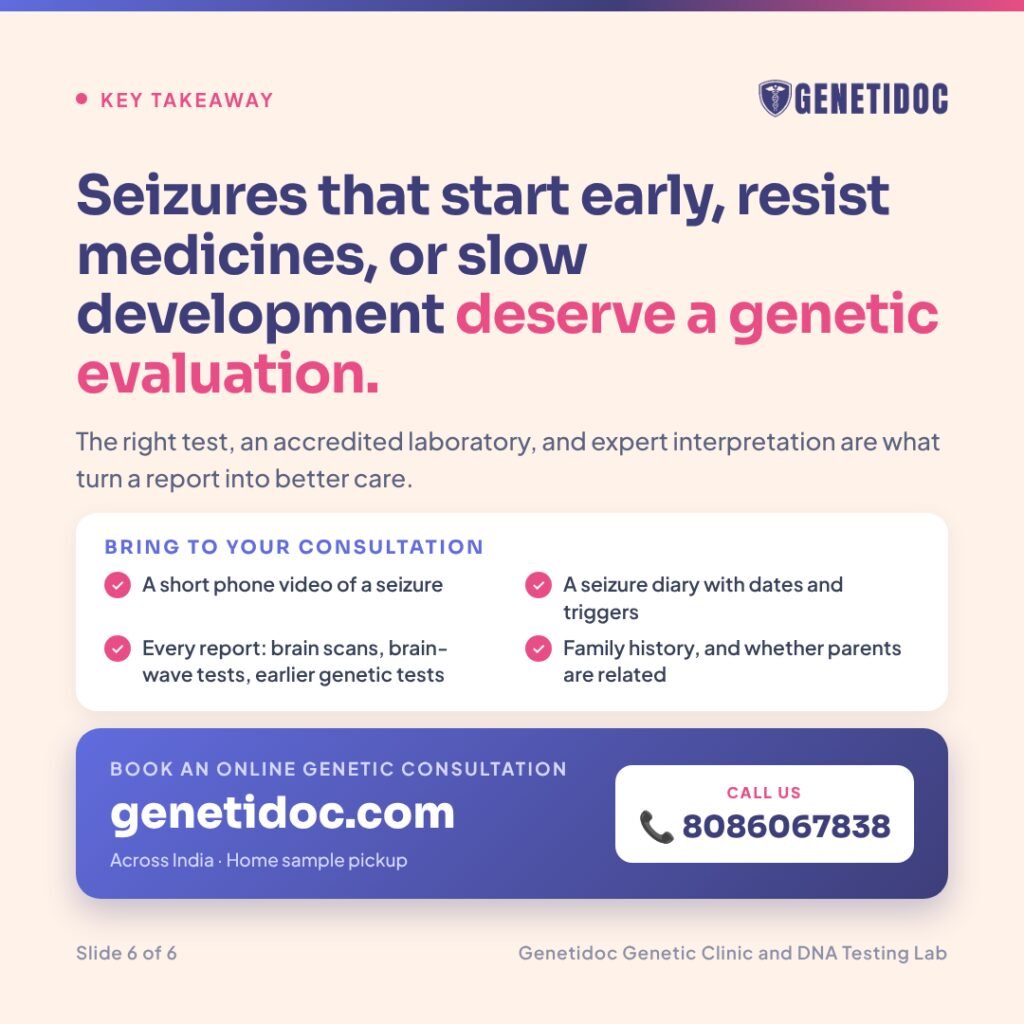
- Record the seizures. A short phone video of a seizure is one of the most useful things you can bring to any doctor.
- Keep a seizure diary with dates, duration, triggers such as fever, and medicine changes.
- Bring every report, including the newborn unit discharge summary, EEGs, MRIs, metabolic tests, and any earlier genetic reports.
- Note family history, including seizures, developmental problems, infant deaths, or miscarriages in the extended family, and whether the parents are related.
- Ask whether testing is right now if seizures began early, are not controlled, or development is slowing.
- Don’t stop at a negative report. Ask whether reanalysis or a broader test makes sense.
- Talk to a clinical geneticist before planning another pregnancy if your child has an unexplained epilepsy.
Key takeaways
- Not every seizure in a baby is epilepsy, and not every baby with seizures needs genetic testing.
- Genetic causes are common when seizures start early, are hard to control, or affect development, and a cause is found in roughly a third to a half of such babies.
- A normal MRI does not rule out a genetic cause.
- A diagnosis can change treatment, sometimes dramatically, and also brings clarity about outlook and future pregnancies.
- A negative result is not the end of the road, and reanalysis can find answers later.
- The right test, an accredited laboratory, and expert interpretation with genetic counseling are what turn a report into better care.
Has your baby had seizures without a clear cause?If your baby’s seizures started in the first months of life, keep returning despite medicines, or are affecting development, or if you’ve received an epilepsy gene report you don’t fully understand, our clinical geneticists can help. We review your child’s seizure history, EEG, MRI, and any earlier test results; recommend the test most likely to give a useful answer; and explain what the result means for treatment and your family’s future.
|
Book an infant seizure genetic evaluation with Genetidoc.
Have questions first? Join the conversation with other families and experts in the Genetidoc Rare Disease Forum’s Whole Exome Sequencing discussion or the main Rare Disease Forum.
Frequently asked questions
1. Are seizures in babies usually genetic?
Not always. Many seizures in newborns have immediate causes such as low blood sugar, infection, or birth-related brain injury. But when seizures are unprovoked, start early, and keep recurring, a genetic cause is found in roughly one in three to one in two babies.
2. Does my child need genetic testing after a febrile seizure?
Usually not. A single short febrile seizure in a child who is developing normally rarely needs genetic testing. Testing is considered if febrile seizures are prolonged, repeated, affect one side of the body, start before one year of age, or come with developmental concerns.
3. My baby’s MRI is normal. Can the seizures still be genetic?
Yes. Most genetic epilepsies have a normal MRI. A normal scan with unexplained seizures is often a reason to consider genetic testing.
4. Which is the best genetic test for infant epilepsy?
For unexplained epilepsy starting in infancy, exome sequencing (often with both parents, called trio exome) is generally preferred as a first test. A single-gene test may be enough when one condition is strongly suspected, and a chromosomal microarray is useful when seizures come with developmental delay or birth defects. A clinical geneticist can advise on the best option for your child.
5. Can genetic testing change my baby’s epilepsy treatment?
Yes, in many cases. A diagnosis can point to treatments such as specific forms of vitamin B6, biotin, or the ketogenic diet, help doctors choose or avoid certain medicines, and trigger screening for related health problems.
6. How long do epilepsy genetic test results take in India?
It depends on the test and laboratory. Gene panels typically take about three to four weeks, and exome sequencing about one to two months. Faster processing may be available for critically ill babies.
7. If the genetic test is negative, does that mean the epilepsy is not genetic?
No. A negative result means no reportable cause was found in what was tested. The cause may lie in a region the test does not cover, or in a gene not yet linked to epilepsy. Reanalysis after six months to a year, or a broader test, can sometimes find the answer.
8. What is a variant of uncertain significance?
It is a genetic change that the laboratory cannot yet classify as harmful or harmless. It should not be used alone to make treatment or pregnancy decisions. Testing the parents and periodic reanalysis often help clarify it over time.
9. Did something I did during pregnancy cause my baby’s genetic epilepsy?
Almost always, no. Many genetic epilepsies are caused by changes that arise for the first time in the child, or are inherited without either parent knowing. They are not caused by food, medicines, stress, or activities during pregnancy.
10. Will our next baby also have seizures?
It depends on the cause. If the change is new in the child, the chance of recurrence is low but not zero. If it is a recessive condition, the chance is 1 in 4 in each pregnancy. Once the exact cause is known, options such as preimplantation genetic testing or prenatal diagnosis can be discussed.
11. Should we get tested if we are related by blood?
If you have a child with unexplained seizures and you are related by blood, genetic testing is especially useful, because recessive causes are more likely. Couples who are related and planning a pregnancy can also consider carrier screening.
12. Do we need to visit the clinic in person for testing?
Usually not. Genetidoc consultations are mostly online, and blood samples can be collected at home. An in-person visit may be suggested if a detailed physical examination is needed.
Related reading from Genetidoc
- Twin Pregnancy and Genetic Screening: A Complete Guide for Expecting Parents in India
- Chimerism: When One Person Carries Two Sets of DNA
- Male BRCA Carriers: An Overlooked Risk Group
- Cowden Syndrome and the PTEN Gene: Signs, Cancer Risks, Testing and Screening Explained
- Autism Spectrum Disorder and Genetic Testing: A Guide for Indian Families
- Marfan Syndrome: Symptoms, Diagnosis and Genetic Testing Explained
References
- Smith L, Malinowski J, Ceulemans S, et al. Genetic testing and counseling for the unexplained epilepsies: An evidence-based practice guideline of the National Society of Genetic Counselors. Journal of Genetic Counseling. 2023;32(2):266–280.
- Zuberi SM, Wirrell E, Yozawitz E, et al. ILAE classification and definition of epilepsy syndromes with onset in neonates and infants: Position statement by the ILAE Task Force on Nosology and Definitions. Epilepsia. 2022;63(6):1349–1397.
- Sheidley BR, Malinowski J, Bergner AL, et al. Genetic testing for the epilepsies: A systematic review. Epilepsia. 2022;63(2):375–387.
- Genotype-phenotype correlates of infantile-onset developmental and epileptic encephalopathy syndromes in South India: A single centre experience. Epilepsy Research. 2020;166:106398. doi:10.1016/j.eplepsyres.2020.106398.
- Etiologies, clinical profile and yield of genetic evaluation in an Indian cohort of neonatal and early onset developmental and epileptic encephalopathy. International Child Neurology Congress 2022 proceedings.
- Genetic testing for infantile-onset epilepsies in resource-limited settings. Seminars in Pediatric Neurology. 2025;55:101204. doi:10.1016/j.spen.2025.101204.
- Subcommittee on Febrile Seizures, American Academy of Pediatrics. Neurodiagnostic evaluation of the child with a simple febrile seizure. Pediatrics. 2011;127(2):389–394.
- Richards S, Aziz N, Bale S, et al. Standards and guidelines for the interpretation of sequence variants: a joint consensus recommendation of the American College of Medical Genetics and Genomics and the Association for Molecular Pathology. Genetics in Medicine. 2015;17(5):405–424.
- GeneReviews® (University of Washington, Seattle): SCN1A Seizure Disorders; KCNQ2-Related Disorders; Pyridoxine-Dependent Epilepsy – ALDH7A1; Glucose Transporter Type 1 Deficiency Syndrome; Tuberous Sclerosis Complex. Available at ncbi.nlm.nih.gov/books/NBK1116.
This article is for educational purposes and does not replace personal medical advice. If your baby is having a seizure that lasts more than five minutes, has trouble breathing, or does not wake up normally afterwards, seek emergency care immediately.