👩⚕️ “Doctor, My Baby Was Diagnosed With Retinoblastoma. Could This Be Genetic?”
Retinoblastoma — the most common eye cancer in children — is often diagnosed before the age of five.
While many cases occur by chance, about 40% are hereditary, meaning the genetic mutation causing the cancer can be passed from parent to child.
Understanding this difference between sporadic and hereditary forms is crucial.
With early detection and proper genetic counseling, most children survive and retain good vision — and future generations can be protected.
1️⃣ What Is Retinoblastoma?
Retinoblastoma is a rare cancer of the retina, the light-sensitive layer at the back of the eye that helps us see.
It usually presents in infants and toddlers, and in most cases, only one eye is affected (called unilateral).
However, in hereditary cases, both eyes may be involved (bilateral retinoblastoma), and other parts of the brain (pineal region) may occasionally be affected.
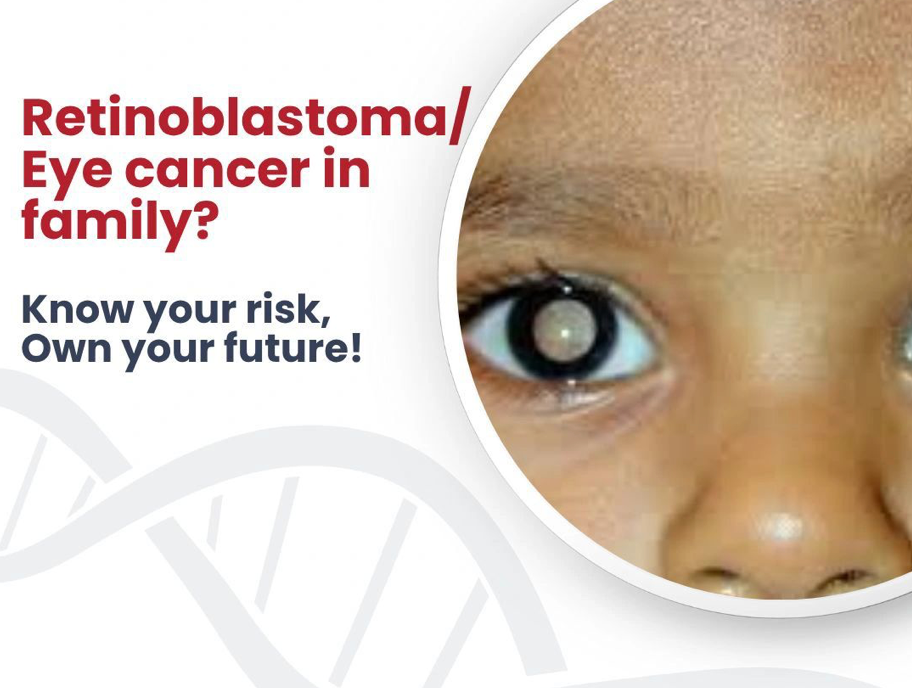
A white reflex in photographs (known as leukocoria) or a squint (lazy eye) is often the first sign parents notice.
2️⃣ How Is Retinoblastoma Genetic?
Hereditary retinoblastoma occurs due to a mutation in a gene called RB1 — a tumor suppressor gene that normally keeps cell growth under control.
If a child inherits one faulty copy of RB1 from a parent, the remaining copy can get damaged early in life, allowing retinal cells to grow uncontrollably.
In these children, every cell in the body carries the RB1 mutation, which explains why they are also at risk for other cancers such as:
-
Osteosarcoma (bone cancer)
-
Pineoblastoma (brain tumor)
-
Soft-tissue sarcomas
3️⃣ How Common Is It?
-
Retinoblastoma affects roughly 1 in 15,000 to 20,000 live births worldwide.
-
About 60% of cases are sporadic, meaning no family history.
-
The remaining 40% are hereditary, linked to RB1 or related genetic mutations.
-
Children with hereditary RB1 mutations may develop bilateral or multifocal tumors, often at a younger age (within the first year of life).
4️⃣ Clues That Eye Cancer May Be Hereditary
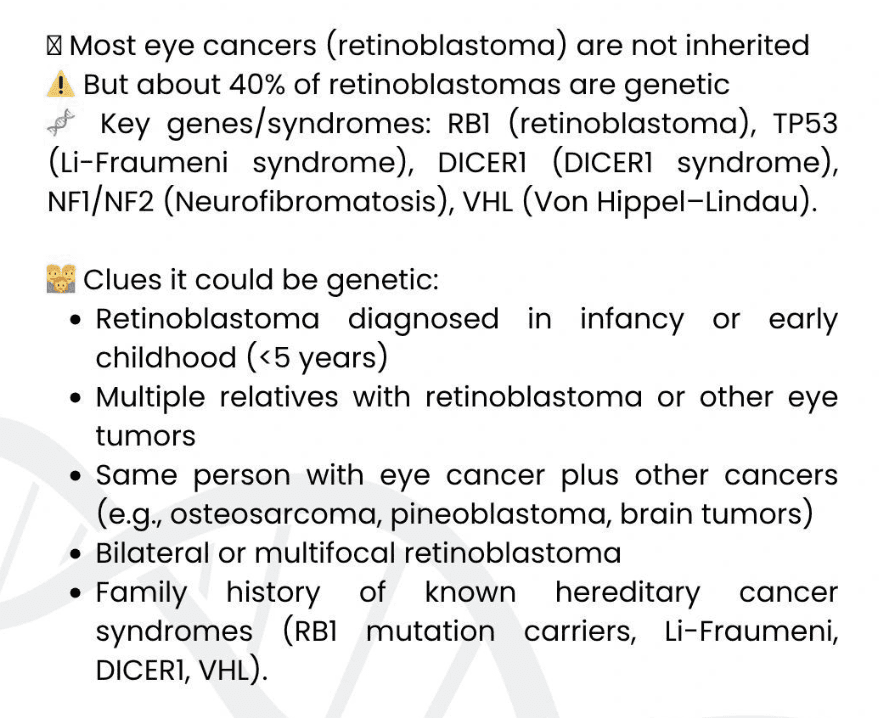
You should suspect a genetic cause if:
-
Retinoblastoma is diagnosed before age 1–2 years
-
Both eyes are affected (bilateral retinoblastoma)
-
Multiple tumors are seen within the same eye
-
A parent, sibling, or close relative had eye cancer in childhood
-
The same person develops retinoblastoma plus another tumor, like osteosarcoma or brain cancer
-
There’s a known RB1 mutation in the family
If any of these clues apply, genetic testing is strongly recommended — even if the child’s cancer has already been treated.
5️⃣ Why Genetic Testing Is Important
Genetic testing does more than confirm a diagnosis — it helps families plan, protect, and prevent.
-
Confirms if the cancer is hereditary (RB1 mutation present)
-
Determines risk to siblings and future children
-
Guides screening frequency for eye and other cancers
-
Reduces unnecessary procedures in unaffected family members
In hereditary cases, each child has a 50% chance of inheriting the RB1 mutation if one parent carries it.
Testing both the affected child and parents helps identify who else in the family needs monitoring.
6️⃣ What Happens During Genetic Counseling and Testing?
A clinical geneticist or genetic counselor will:
-
Collect your family history (including eye or childhood cancers)
-
Discuss inheritance patterns and possible outcomes
-
Recommend blood or saliva tests to check the RB1 gene
-
Explain results and what they mean for the child and family
The results can be:
-
Positive: Confirms a genetic cause (familial retinoblastoma)
-
Negative: Sporadic case (no mutation found)
-
VUS (Variant of Uncertain Significance): Needs reanalysis later as science advances
7️⃣ What If My Child’s Test Is Positive?
If the RB1 mutation is confirmed:
-
Parents and siblings should be offered testing
-
Regular eye exams (every few months in infancy) can catch tumors before vision loss
-
Brain imaging (MRI) may be done to rule out pineoblastoma
-
Screening continues through childhood for recurrence or new tumors
-
Lifestyle guidance is provided to minimize future cancer risks (e.g., avoid radiation exposure when possible)
🎯 Goal: Prevent blindness, detect new tumors early, and protect family members who might carry the gene.
8️⃣ What If the Test Is Negative?
If no RB1 mutation is detected, the case is likely sporadic and limited to the affected eye.
Even so, doctors often continue close monitoring for a few years to ensure no recurrence or new tumor appears.
A negative test also means siblings and future children are not at increased risk, and no special genetic follow-up is needed.
9️⃣ Can Retinoblastoma Be Prevented?
While we can’t prevent the genetic mutation itself, we can prevent blindness and advanced disease by early detection.
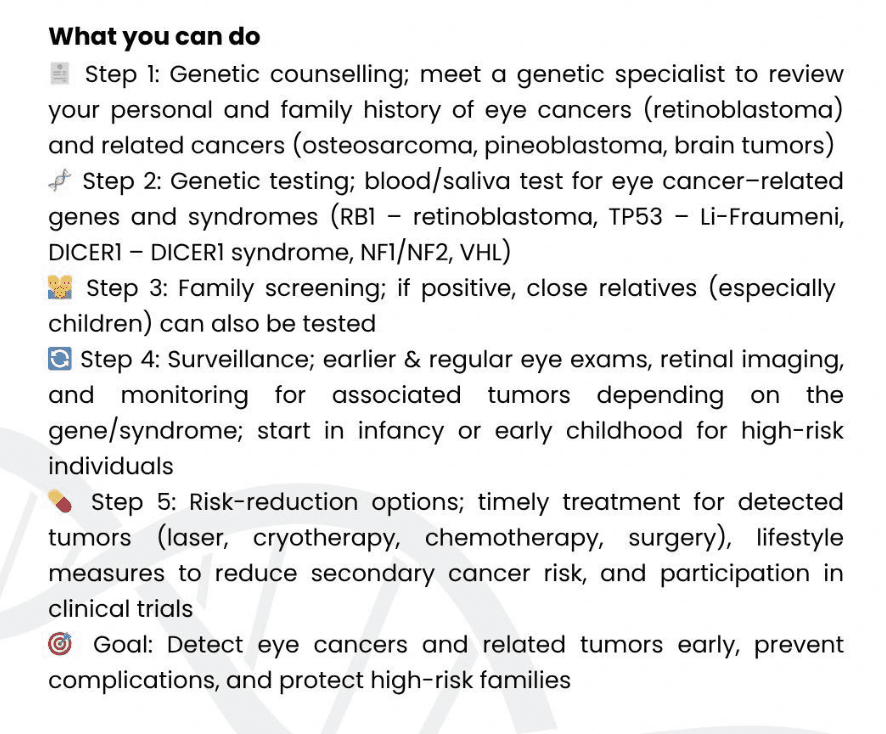
At Genetidoc Genetic Clinic and DNA Testing Lab, we follow a stepwise approach:
-
Genetic Counseling: Review family and cancer history
-
Genetic Testing: Identify RB1 or related gene changes
-
Family Screening: Test siblings and at-risk relatives
-
Surveillance: Early and regular eye exams from birth
-
Treatment: Laser, cryotherapy, chemotherapy, or surgery as needed
🩺 Goal: Detect tumors early, preserve sight, and prevent secondary cancers.
🌷 Real-World Example
A 9-month-old boy was diagnosed with bilateral retinoblastoma.
Genetic testing revealed a pathogenic RB1 mutation, which was also found in his father — who had lost one eye as a child.
Armed with this knowledge:
-
The boy’s younger sibling was tested immediately (negative).
-
The family enrolled in a follow-up program for lifelong screening.
-
Early detection saved the child’s vision and avoided radiation therapy.
This is the power of genetics in prevention — one diagnosis safeguarded an entire family.
💬 Frequently Asked Questions
Is retinoblastoma always inherited?
No. Around 60% are sporadic. Only 40% have a hereditary cause.
If my child has retinoblastoma, will my next child get it too?
Only if an RB1 mutation is inherited. Genetic testing can clarify this risk precisely.
What are the early signs parents should watch for?
White reflex in photos (leukocoria), squint, eye redness, or poor vision.
Can children with hereditary RB1 mutation live normal lives?
Yes. With regular check-ups and early treatment, most live full, healthy lives with good vision.
Should adult RB1 carriers be followed up lifelong?
Yes — periodic screening for secondary cancers such as bone and soft-tissue sarcomas is recommended.
🌼 Emotional Impact and Family Support
Discovering hereditary cancer in a child can be overwhelming.
But with early detection and supportive care, more than 95% of children survive.
Genetic testing offers reassurance — helping families understand risks, plan pregnancies safely, and monitor newborns early.
Support groups, counseling, and multidisciplinary care make the journey easier for families.
🌸 Awareness Saves Sight and Lives
Hereditary retinoblastoma is one of the best examples of how genetics and early screening can save both life and vision.
Parents, pediatricians, and eye specialists should work together to identify high-risk children early — long before symptoms become severe.
A simple genetic test can prevent years of uncertainty and irreversible blindness.
💙 Take Action — Protect Your Child’s Vision and Future
If your family has a history of retinoblastoma or childhood eye tumors, talk to a genetic specialist today.
Early detection can save both sight and life.