
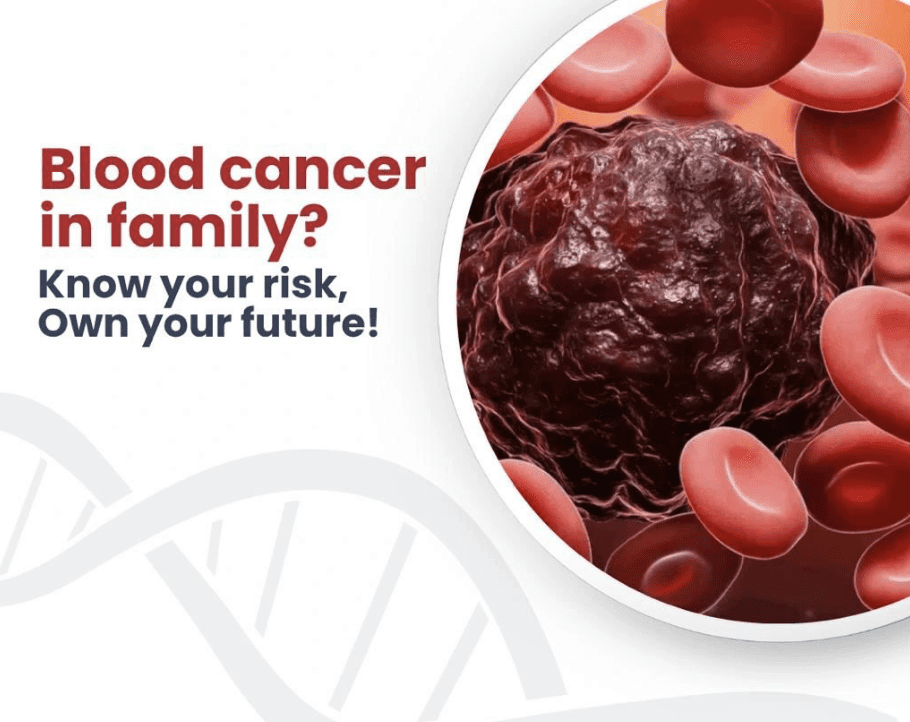
👩⚕️ “Doctor, My Son Was Diagnosed With Leukemia at 25. Could It Be in Our Genes?”
Most people think of leukemia and lymphoma as random or environmentally triggered diseases.
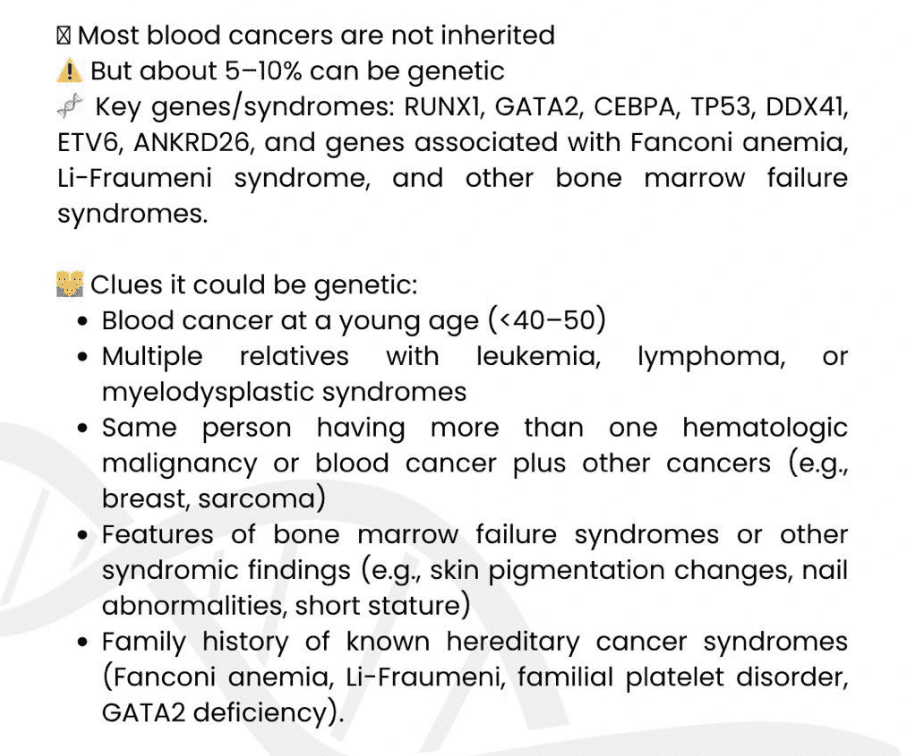
However, about 5–10% of blood cancers have a hereditary genetic basis, meaning the risk can pass through generations.
Recognizing these inherited patterns can help doctors detect cancer earlier, prevent relapses, and screen family members before symptoms appear.
1️⃣ How Common Is Hereditary Blood Cancer?
Blood cancers — such as leukemia, lymphoma, and myelodysplastic syndromes (MDS) — are usually sporadic.
But research shows that 1 in 10 cases can be linked to a genetic predisposition.
Unlike solid tumors, hereditary blood cancers are often missed because the signs are subtle — family members may have low platelets, mild anemia, or bone marrow changes long before cancer appears.
2️⃣ What Are the Main Genes and Syndromes Involved?
Several key genes are known to cause inherited blood-cancer susceptibility:
-
RUNX1: Familial platelet disorder with a risk of acute myeloid leukemia (AML)
-
GATA2: GATA2 deficiency syndrome — causes bone-marrow failure and immunodeficiency
-
CEBPA: Inherited mutations increase AML risk at a young age
-
DDX41: Common in adult familial MDS/AML cases
-
ETV6 & ANKRD26: Linked to low platelet counts and childhood leukemia
-
TP53: Causes Li-Fraumeni syndrome, predisposing to leukemia, sarcoma, breast, and brain tumors
-
Fanconi Anemia Genes: Cause bone-marrow failure, congenital anomalies, and very early leukemia
In short, hereditary blood cancers often come under “familial myeloid neoplasms” or “bone-marrow failure syndromes.”
3️⃣ Clues That Blood Cancer May Be Genetic
You should consider genetic causes if you notice any of the following:
-
Leukemia, lymphoma, or MDS diagnosed before age 40–50
-
Multiple relatives with blood cancers on the same side of the family
-
A single person with more than one blood malignancy, or blood cancer plus another (breast, sarcoma, colon, etc.)
-
Features of bone-marrow failure – skin pigmentation changes, short stature, nail abnormalities, frequent infections, or unexplained cytopenias
-
Family history of known genetic syndromes such as Fanconi anemia, Li-Fraumeni, or GATA2 deficiency
Even if one clue fits, meeting a clinical geneticist can clarify whether genetic testing is warranted.
4️⃣ Why Does Identifying a Hereditary Cause Matter?
Because it changes everything — from treatment plans to donor selection in bone-marrow transplantation.
-
Treatment adjustment: Some mutations, like GATA2 or TP53, affect chemotherapy response.
-
Transplant planning: If one sibling is a potential donor, they must be tested first — carrying the same mutation could cause relapse.
-
Surveillance for family members: Early testing detects cytopenias or marrow abnormalities long before cancer starts.
In essence, genetic diagnosis personalizes both treatment and prevention.
5️⃣ What Is Genetic Counseling and Testing?
A genetic counselor or clinical geneticist reviews your family’s cancer pattern and decides which tests are needed.
Testing is usually done on blood or saliva, analyzing relevant genes such as:
RUNX1, GATA2, CEBPA, TP53, DDX41, ETV6, ANKRD26, and Fanconi anemia genes
The report may show:
-
Positive – a mutation explaining the family’s risk
-
Negative – no variant found (yet surveillance still advised)
-
VUS (Variant of Uncertain Significance) – needs re-analysis later
Proper pre- and post-test counseling ensures that results are interpreted in context.
6️⃣ What If the Test Is Positive?
A positive result doesn’t mean you have cancer — it means you’re predisposed.
With this knowledge, doctors can set up personalized monitoring:
-
Complete blood counts (CBCs) every 6–12 months
-
Bone-marrow evaluations if counts change
-
Avoidance of toxic exposures (benzene, radiation, unnecessary chemo)
-
Lifestyle optimization: balanced diet, no smoking, and prompt infection control
-
Regular check-ups with a hematologist-geneticist team
🎯 Goal: Detect early marrow changes before transformation into leukemia.
7️⃣ What If the Test Is Negative?
A negative test is reassuring but doesn’t rule out hereditary risk completely.
Sometimes the causal gene is still unknown.
Families with strong histories should still undergo:
-
Annual CBC and physical exams
-
Documentation of family history updates
-
Periodic re-testing as new genes are discovered
Remember — a negative test today may be positive tomorrow as science advances.
8️⃣ How Does Family Screening Help?
If a hereditary mutation is found, first-degree relatives (parents, siblings, children) should also be offered testing.
This identifies:
-
Relatives who need close follow-up
-
Safe bone-marrow donors (mutation-free)
-
Opportunities for preventive monitoring
For example, in a RUNX1-positive family, even asymptomatic members can develop AML later — early detection enables timely transplant before crisis.
9️⃣ Can Hereditary Blood Cancers Be Prevented?
While we can’t “switch off” a gene, we can intervene early and intelligently.
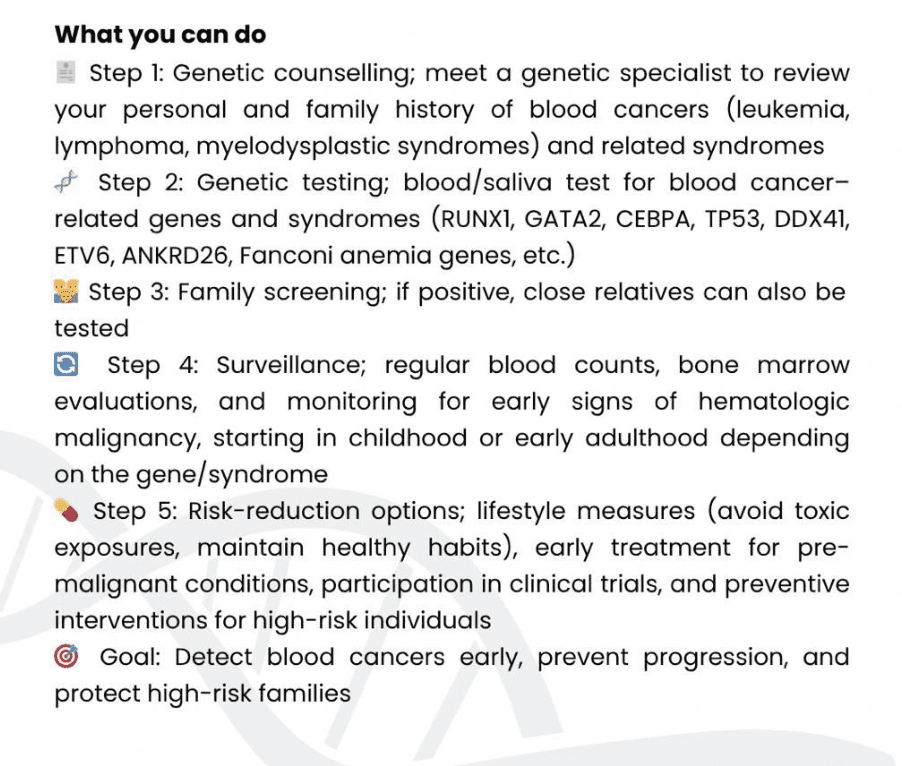
At KIMSHEALTH Department of Clinical Genetics & Precision Medicine, the 5-step plan is:
-
Genetic Counseling: Evaluate family patterns and risk
-
Genetic Testing: Confirm inherited mutations
-
Family Screening: Test close relatives
-
Surveillance: Routine CBCs, marrow evaluations, and physical exams
-
Risk Reduction: Avoid toxic exposures, maintain healthy habits, and treat infections promptly
🩸 Goal: Detect malignancy early, prevent transformation, and protect high-risk families.
🌷 Real-World Example
A 35-year-old man developed acute myeloid leukemia. His father had MDS, and his aunt had low platelets for years.
Genetic testing revealed a RUNX1 mutation, confirming Familial Platelet Disorder with predisposition to AML.
His healthy sister tested negative — making her a safe bone-marrow donor.
Because of early genetic identification, transplantation was curative, and future family planning became informed and confident.
💬 Frequently Asked Questions
Can leukemia or lymphoma really run in families?
Yes. Roughly 1 in 10 cases have a hereditary component.
Do all inherited blood cancers start in childhood?
No. Some, like DDX41 or RUNX1-related cases, present in adults.
Can I still donate blood or bone marrow if I carry a mutation?
Usually no — carriers are not considered safe donors due to potential long-term risk.
Are these tests costly or invasive?
No. They’re done using blood or saliva samples, and prices have reduced substantially.
Can lifestyle or diet make a difference?
Yes. Avoiding chemicals, radiation, and infections helps protect the bone marrow, especially in genetically susceptible individuals.
🌼 The Emotional Side of Genetic Awareness
Learning that blood cancer might be hereditary can be scary — but it also opens a door to prevention, family protection, and empowerment.
Families who understand their genes can plan early, choose safe donors, and avoid unnecessary loss.
🌸 Awareness Saves Lives
Hereditary blood cancers are uncommon, but when detected early, they’re highly manageable.
Modern genetics allows doctors to act before leukemia develops — turning uncertainty into clarity and prevention.
If multiple family members have leukemia, MDS, or unexplained low counts, don’t ignore it.
Get evaluated — knowledge today can save lives tomorrow.
💙 Take Action — Know Your Risk, Protect Your Bloodline
A single genetic consultation can help your family identify risk, guide treatment, and plan for the future.