
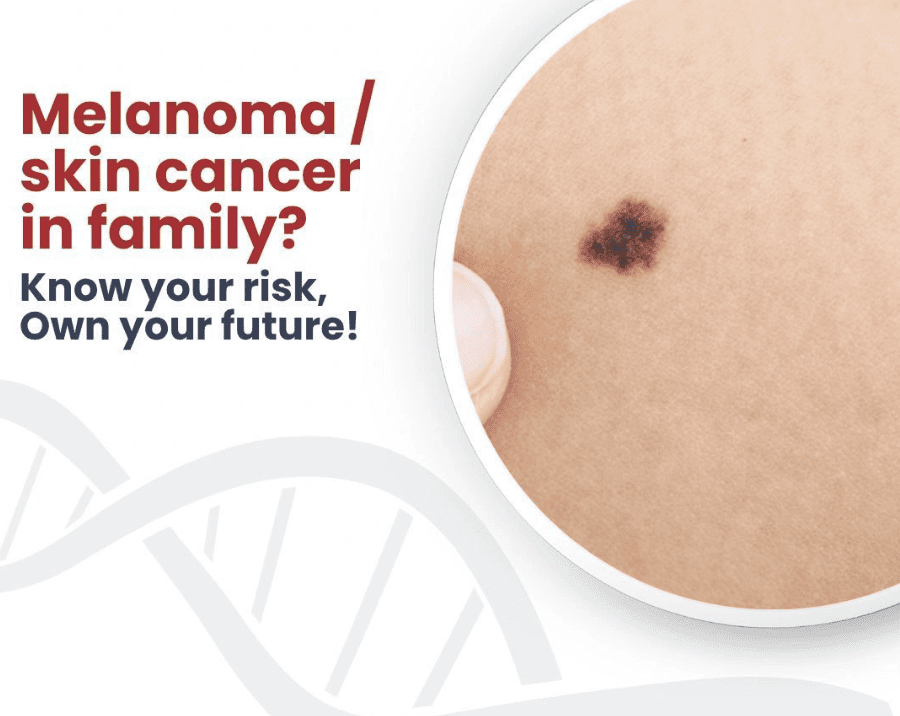
👩⚕️ “Doctor, My Daughter Developed a Skin Melanoma at 28. Could It Be Hereditary?”
Most skin cancers occur due to sun exposure, UV damage, or environmental factors.
However, around 5–10% of melanomas are hereditary, caused by genetic mutations that increase susceptibility within families.
Identifying hereditary forms is vital — not just for the affected person, but for their siblings, children, and even future generations.
1️⃣ How Common Is Hereditary Melanoma?
Melanoma is one of the most aggressive forms of skin cancer, but also one of the most preventable and detectable — when caught early.
While most cases occur sporadically due to UV exposure, 1 in 10 cases are inherited.
In families with hereditary melanoma, several members may develop:
-
Melanoma at young ages (before 40)
-
Multiple melanomas in the same person
-
Pancreatic or kidney cancer in addition to skin cancers
-
Numerous or atypical moles (known as dysplastic nevus syndrome)
2️⃣ What Causes Hereditary Melanoma?
Hereditary melanoma happens when specific gene mutations affect the body’s ability to control cell growth or repair DNA damage caused by UV light.
The most important genes include:
-
CDKN2A – the most common hereditary melanoma gene, linked to FAMMM syndrome (Familial Atypical Multiple Mole Melanoma)
-
CDK4 – increases melanoma risk, often alongside multiple moles
-
BAP1 – linked to BAP1 tumor predisposition syndrome, causing skin, eye (uveal), mesothelioma, and kidney cancers
-
MITF – increases risk for melanoma and kidney cancer
-
PTEN – linked to Cowden syndrome, involving skin, thyroid, and breast tumors
-
BRCA2 or TP53 – rarely involved but important in broad hereditary cancer syndromes
These mutations don’t cause cancer by themselves, but they increase vulnerability, especially when combined with UV exposure.
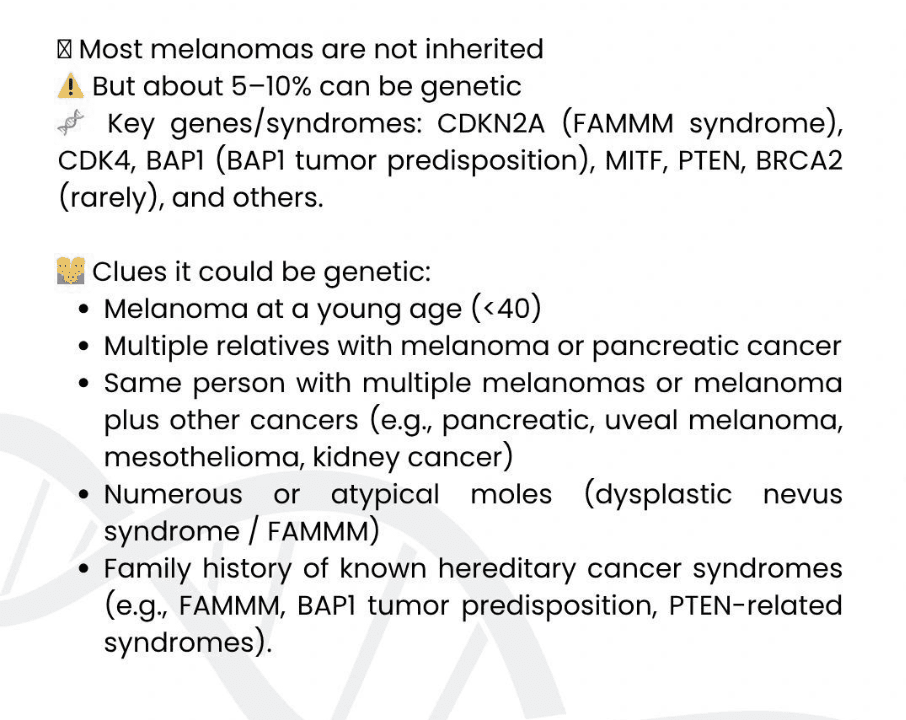
3️⃣ What Are the Clues That It Could Be Genetic?
You or your family should consider genetic evaluation if you notice any of these:
-
Melanoma diagnosed at a young age (<40 years)
-
Multiple relatives with melanoma or pancreatic cancer on the same side of the family
-
The same person has multiple melanomas or melanoma plus another cancer (like pancreatic, uveal melanoma, mesothelioma, or kidney cancer)
-
Numerous or atypical moles (FAMMM syndrome)
-
Family history of known hereditary cancer syndromes, e.g., CDKN2A/FAMMM, BAP1 tumor predisposition, or PTEN-related syndromes
If one or more of these fit, a genetic consultation is strongly recommended.
4️⃣ What Is FAMMM Syndrome?
Familial Atypical Multiple Mole Melanoma (FAMMM) is the most common inherited melanoma syndrome, caused by mutations in CDKN2A.
Typical features include:
-
Dozens of irregular, asymmetric, or large moles
-
A family history of melanoma and/or pancreatic cancer
-
Melanoma developing at younger ages than usual
People with FAMMM need yearly dermatologic exams, mole mapping, and strict sun protection to reduce risk.
5️⃣ What Is BAP1 Tumor Predisposition Syndrome?
The BAP1 gene helps control cell growth and repair DNA.
Inherited BAP1 mutations can cause:
-
Skin cancers (melanoma, basal cell carcinoma)
-
Uveal melanoma (eye cancer)
-
Mesothelioma (pleural/peritoneal)
-
Renal cell carcinoma
BAP1-related conditions can affect multiple family members across generations and require ongoing multi-organ surveillance.
6️⃣ How Does Genetic Counseling and Testing Help?
Before testing, a genetic counselor or specialist will review:
-
Your personal and family history of cancers
-
Which genes are most relevant for your situation
-
The potential implications for family members
Testing is usually done via a blood or saliva sample and screens for melanoma-related genes (CDKN2A, CDK4, BAP1, MITF, PTEN, BRCA2, etc.).
Results can be:
-
Positive – confirms a hereditary mutation
-
Negative – no mutation detected
-
VUS – uncertain significance, requiring follow-up later
Once a mutation is identified, doctors can tailor individual and family screening protocols.
7️⃣ What If My Test Is Positive?
A positive result doesn’t mean you already have cancer — it means you carry a higher lifetime risk and need proactive care.
Doctors may recommend:
-
Full-body skin exams every 6–12 months
-
Dermoscopic mapping of moles
-
Eye exams for uveal melanoma (especially if BAP1 positive)
-
Pancreatic imaging or screening for FAMMM families
-
Lifestyle changes:
-
Avoid direct sun between 10 a.m. and 4 p.m.
-
Use SPF 50+ sunscreen daily
-
Avoid tanning beds
-
Wear protective clothing and hats
-
🎯 Goal: Detect melanoma and related cancers early, prevent progression, and protect high-risk families.
8️⃣ What If My Test Is Negative?
A negative test provides reassurance but doesn’t eliminate risk.
Some families may still carry unknown or undiscovered mutations.
In such cases, doctors recommend continued:
-
Annual skin checks
-
Photographic mole tracking
-
UV protection practices
-
Education for family members on early signs (new or changing moles, asymmetry, bleeding)
Genetic science evolves fast — sometimes re-testing in a few years can uncover new findings.
9️⃣ How Can Family Screening Help?
If you have a confirmed hereditary mutation, first-degree relatives (parents, siblings, and children) each have a 50% chance of carrying the same gene.
Family testing allows:
-
Early identification of high-risk relatives
-
Early mole monitoring for children
-
Avoidance of preventable UV exposure
-
Emotional reassurance for those who test negative
Prevention becomes a family mission rather than an individual fight.
🔟 Can Hereditary Melanoma Be Prevented?
While genes can’t be changed, environmental control and vigilance can dramatically lower risk.
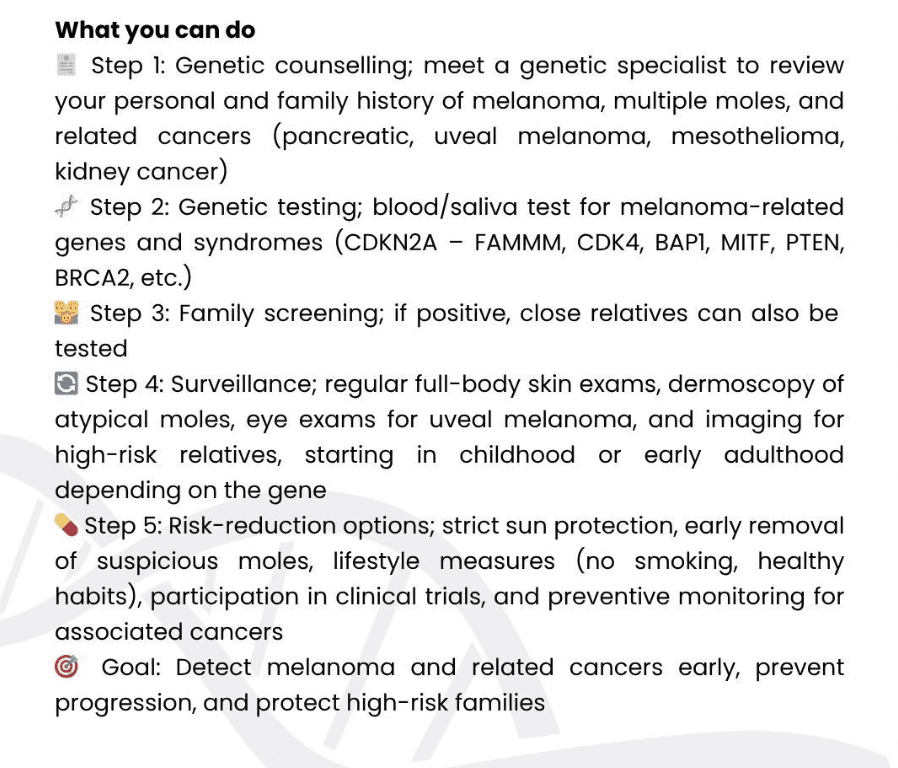
At Genetidoc Genetic Clinic and DNA Testing Lab, we use a 5-step approach:
-
Genetic Counseling: Review of family and personal cancer history
-
Genetic Testing: Identify melanoma-related mutations
-
Family Screening: Early testing for relatives
-
Surveillance: Regular skin, eye, and imaging checks based on gene type
-
Risk Reduction: Lifestyle measures, sun protection, and early mole removal
🌷 Real-World Example
A 35-year-old woman developed two melanomas within five years.
Her father had pancreatic cancer at 50. Genetic testing found a CDKN2A mutation confirming FAMMM syndrome.
Now, her siblings and children undergo yearly dermatology and pancreatic check-ups — and her daughter, who tested negative, lives without unnecessary anxiety.
One test reshaped the family’s entire preventive care strategy.
💬 Frequently Asked Questions
Can melanoma really run in families?
Yes. If multiple relatives have melanoma, especially at younger ages or alongside pancreatic cancer, it may be hereditary.
Is sun exposure still relevant in hereditary cases?
Absolutely. UV radiation increases risk dramatically, even in those with genetic mutations.
Can children be tested?
Usually, yes — especially if the family mutation is known and melanoma risk starts early. Pediatric dermatology follow-up is essential.
Are other cancers linked with hereditary melanoma?
Yes. Pancreatic, kidney, uveal melanoma (eye), and mesothelioma are commonly linked in certain syndromes.
Can I prevent melanoma completely?
While you can’t eliminate risk entirely, early detection and rigorous UV protection can prevent most advanced cases.
🌼 The Emotional Side of Genetic Awareness
Learning that melanoma runs in the family can feel overwhelming — especially when sunlight itself seems like the enemy.
But awareness transforms fear into empowerment.
Families who know their genetic risk can act early — checking moles, wearing protection, and teaching children sun-safe habits from day one.
🌸 Awareness Saves Lives
Melanoma is one of the few cancers you can literally see developing — and also one of the most curable if caught early.
For hereditary cases, knowing your genes allows prevention instead of reaction.
If you have a family history of melanoma, multiple moles, or pancreatic cancer — take the first step.
A small test can protect your entire family’s future.
💛 Take Action — Know Your Risk, Protect Your Skin
Your skin tells a story — make sure it’s a healthy one.
Book a genetic consultation today to understand your risk and take control of prevention.