
| Quick answer
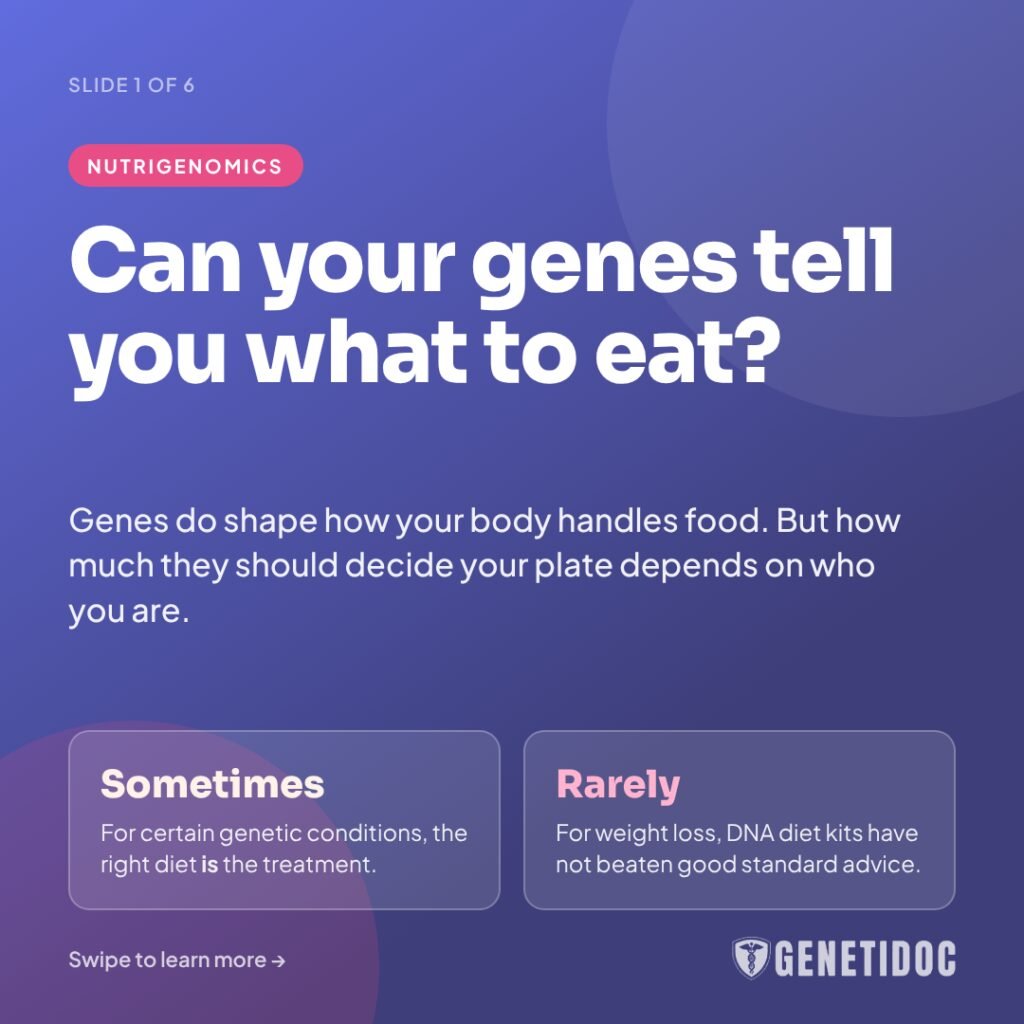
Nutrigenomics is the science of how your genes and the food you eat affect each other. Your genes do shape how your body handles some nutrients. For a small group of genetic conditions, such as phenylketonuria, galactosemia and glucose-6-phosphate dehydrogenase deficiency, the right diet is the actual treatment, and genetic diagnosis can be life-changing. For everyday goals like weight loss, the common “DNA diet” tests sold online have not been shown to work better than good, standard dietary advice. Genes matter, but for most people, family history, blood tests and a qualified dietitian tell you far more about what to eat. |
“Your DNA, your diet.” “Eat right for your genes.” “Unlock the meal plan written in your DNA.”
Advertisements like these are now common in India. For a few thousand rupees, a cheek swab promises to tell you whether to eat low-carb or low-fat, how much coffee you can drink, and which vitamins you need.
It’s an appealing idea. We all know people who eat the same food and get very different results. So is your ideal diet really written in your genes?
The honest answer is: sometimes, dramatically so, and most of the time, much less than the marketing suggests. This guide explains the science in plain language. It covers where genes truly decide what a person should eat, where the evidence is still weak, and how Indian families can make sense of it all.
What Is Nutrigenomics?
Nutrigenomics is the study of how food and nutrients interact with your genes. Researchers use the term in two closely related ways:
- Nutrigenetics: how differences in your DNA change the way your body responds to food. For example, why one person’s cholesterol rises sharply on a high-fat diet while another person’s barely moves.
- Nutrigenomics (in the narrow sense): how the food you eat switches genes on or off and changes how your cells work.
In everyday use, and in most advertisements, “nutrigenomics” covers both ideas. When a company sells a “nutrigenomics test,” it is usually testing your DNA (nutrigenetics) and turning the result into diet advice.
A quick refresher: genes and variants
Your genes are instructions for building proteins, including the enzymes that digest and process food. Everyone has small spelling differences in their DNA, called variants. Most variants are harmless and very common. A few change how well an enzyme works.
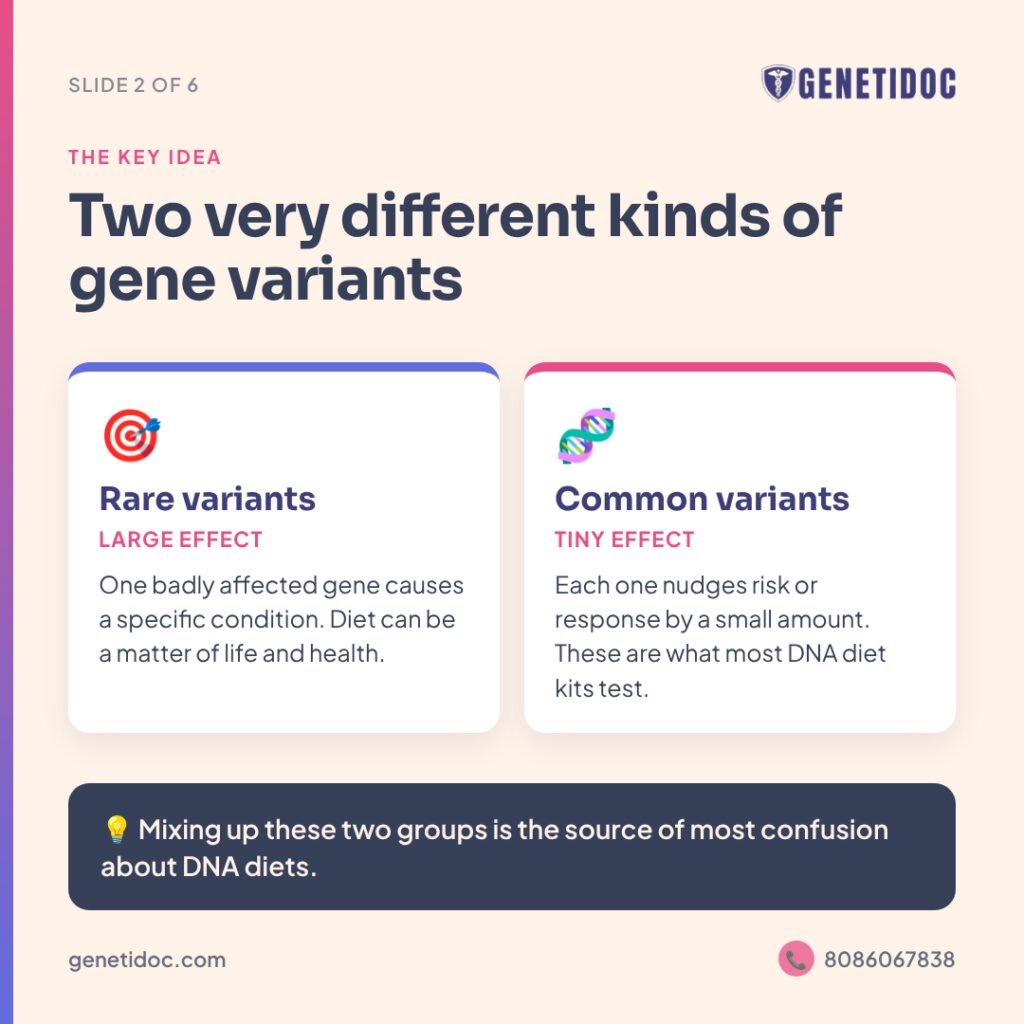
This is the key to understanding nutrigenomics. Genetic variants fall into two very different groups:
- Rare variants with a large effect. One gene, badly affected, causes a specific condition. Diet can be a matter of life and health.
- Common variants with a tiny effect. Each one nudges risk or response by a small amount. These are what most DNA diet kits test.
Mixing up these two groups is the source of most confusion about DNA diets.
Where Genes Truly Decide Diet: Genetic Conditions Where Food Is Treatment
This is the part of nutrigenomics that is proven, practical and, in some cases, life-saving. In the conditions below, a single gene change means the body cannot safely handle a particular food or nutrient. Diagnosing the condition and changing the diet can prevent serious harm.
| Genetic conditions where diet is part of treatment
1. Phenylketonuria: a lifelong low-protein, low-phenylalanine diet with a special formula. 2. Classic galactosemia: removal of galactose, which means stopping breast milk and regular formula in affected babies. 3. Maple syrup urine disease: careful restriction of three amino acids found in protein. 4. Urea cycle disorders: controlled protein intake, along with medicines. 5. Glycogen storage disease type I: frequent feeds and slow-release starch to prevent low blood sugar. 6. Hereditary fructose intolerance: avoiding fructose, table sugar and sorbitol. 7. Glucose-6-phosphate dehydrogenase deficiency: avoiding fava beans and certain medicines. 8. Celiac disease: a strict lifelong gluten-free diet once diagnosed. 9. Familial hypercholesterolemia: a heart-healthy diet, almost always along with cholesterol-lowering medicine. 10. Lactase non-persistence: adjusting dairy intake to personal tolerance. |
Inborn errors of metabolism in babies and children
Inborn errors of metabolism are inherited conditions in which a missing or weak enzyme stops the body from breaking down part of food. The unprocessed substance builds up and becomes toxic, often to the brain.
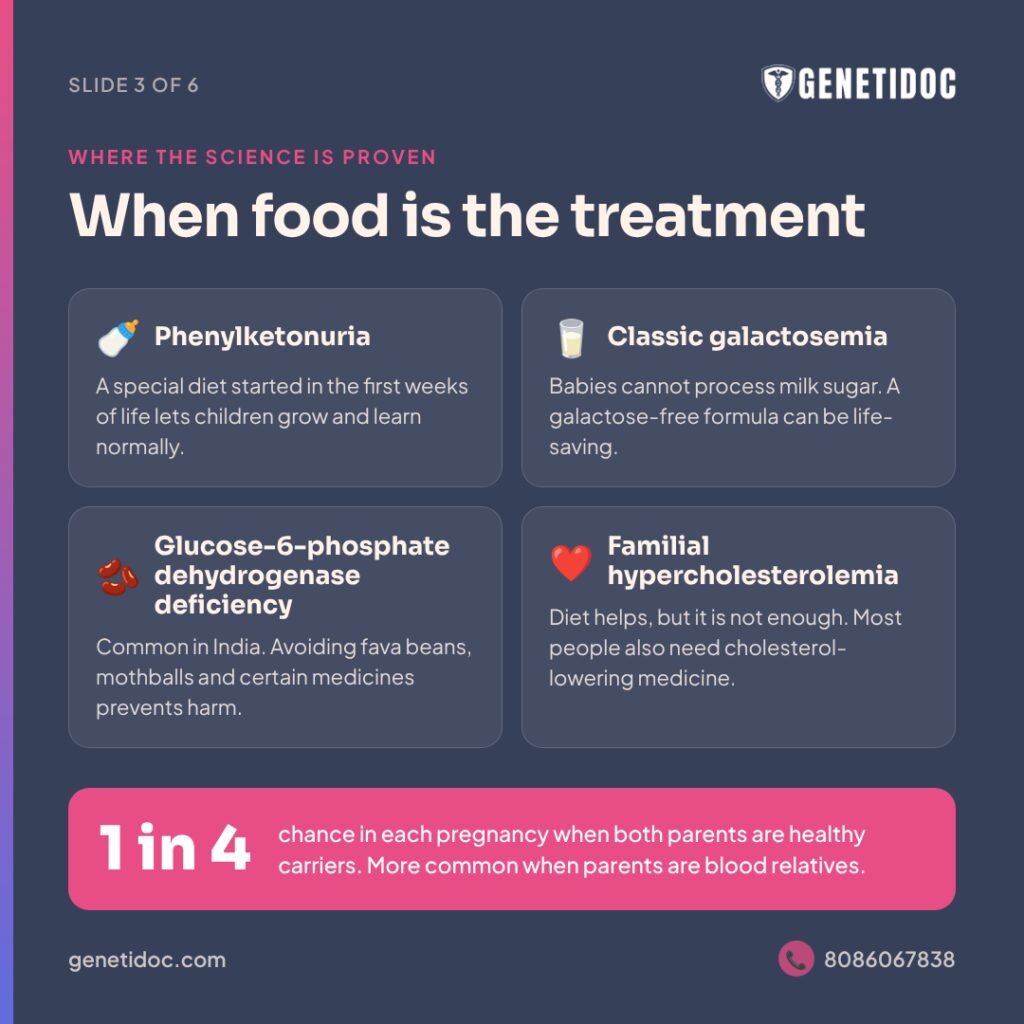
Take phenylketonuria, caused by changes in both copies of the PAH gene. Affected babies cannot break down phenylalanine, a building block found in protein. Without treatment, it builds up and causes severe, permanent intellectual disability. With a special diet started in the first weeks of life, children can grow and learn normally.
Classic galactosemia, caused by changes in the GALT gene, is another example. Affected newborns cannot process galactose, a sugar in milk, including breast milk. They can become seriously ill within days of feeding, with jaundice, vomiting, liver damage and life-threatening infections. Switching to a galactose-free formula under medical care can be life-saving.
Most of these conditions are autosomal recessive. Both parents are usually healthy carriers, and each pregnancy has a 1 in 4 chance of an affected child. They are more common when parents are blood relatives, which is relevant for many Indian families.
| “This is where nutrigenomics has proven its worth. When a baby has phenylketonuria or galactosemia, the right diet started early can mean the difference between severe disability and a normal life. That is a genetic diagnosis changing what goes on the plate, and it should be the standard we use when we talk about genes and diet.”
— Dr. Roshan Daniel, Clinical Geneticist, Genetidoc |
Why newborn screening matters in India
Many of these conditions can be picked up by a simple heel-prick blood test in the first days of life, before any symptoms appear. In India, newborn screening is growing but is not yet universal. What is covered varies by state, hospital and program.
Parents can ask their pediatrician or delivery hospital whether newborn screening is offered and which conditions it includes. A positive screening result is not a diagnosis. It needs confirmatory testing, which can include genetic testing, and expert follow-up.
Glucose-6-phosphate dehydrogenase deficiency: a common Indian example
Glucose-6-phosphate dehydrogenase (G6PD) deficiency is one of the most common inherited enzyme conditions in the world, and it is common in India. G6PD protects red blood cells from damage. When it is low, certain foods, medicines and chemicals can make red blood cells break down suddenly. This is called hemolysis, and it causes anemia, dark urine and jaundice.
- Large Indian studies report an overall frequency of roughly 2% to 8.5%, depending on the population studied.
- In some tribal communities, rates of up to 27% have been reported, especially in regions where malaria has been common.
- The G6PD gene sits on the X chromosome, so boys are affected more often than girls.
For people with G6PD deficiency, nutrigenomics is very practical. They are advised to avoid fava beans (broad beans), naphthalene mothballs, and specific medicines, including some antimalarials, some antibiotics and certain pain medicines. Their doctor or pharmacist should check new medicines first. Most people with G6PD deficiency live completely normal lives once they know which triggers to avoid.
Celiac disease: genes that are necessary but not enough
Celiac disease is an immune reaction to gluten, the protein in wheat, barley and rye. A community study from northern India found it in about 1 in 100 people. A larger national study found it far less often in southern India. Yet the celiac-risk genes were about equally common in the north and the south. The difference followed how much wheat people ate. This is a clear example of genes and diet working together: the genes set the stage, and the food decides whether the condition appears.
Almost everyone with celiac disease carries one of two immune-system gene types, called HLA-DQ2 and HLA-DQ8. But this genetic test is useful in an unusual way:
- A negative result is very powerful. If you carry neither type, celiac disease is extremely unlikely. Guidelines put the negative predictive value above 99%.
- A positive result means very little on its own. Up to 40% of the general population carry these gene types, and most never develop celiac disease.
So the genetic test helps doctors rule out celiac disease in confusing cases. For example, it helps when someone has already started a gluten-free diet before being tested. Celiac disease itself is diagnosed with blood antibody tests and, often, an intestinal biopsy, not with a DNA test alone. Never start a gluten-free diet before testing. It can make the diagnosis much harder.
Familial hypercholesterolemia: when diet alone is not enough
Familial hypercholesterolemia is an inherited condition that causes very high “bad” cholesterol (low-density lipoprotein, or LDL cholesterol) from birth. It sharply raises the risk of early heart attacks. Genetic testing is generally considered when LDL cholesterol is above 190 mg/dL in adults or above 160 mg/dL in children, especially with a family history of early heart disease.
This condition shows an important limit of diet. A healthy diet helps, but it cannot overcome the effect of the gene on its own. Most people with familial hypercholesterolemia need cholesterol-lowering medicine.
| “Families often believe that if they eat carefully, very high cholesterol will settle on its own. With familial hypercholesterolemia, diet is important, but it is not enough. This is a genetic condition, and treating it properly usually means medicine, regular follow-up, and checking the cholesterol of relatives too.”
— Dr. Roshan Daniel, Clinical Geneticist, Genetidoc |
Lactose and milk
Most Indian adults gradually make less lactase, the enzyme that digests milk sugar, because of a genetic switch near the LCT gene. This is a normal human variation, not a disease, and most people still tolerate curd, ghee and small servings of milk. We explain this in detail in our guide to the genetics of lactose intolerance.
The Grey Zone: Common Gene Variants in DNA Diet Tests
Most DNA diet kits do not test for the conditions above. Instead, they read dozens or hundreds of common variants. Each one has been linked, in some studies, to a small difference in weight, cholesterol, blood sugar or nutrient levels. Here are the genes you’ll see most often on these reports, and what the evidence actually says.
FTO: the “obesity gene”
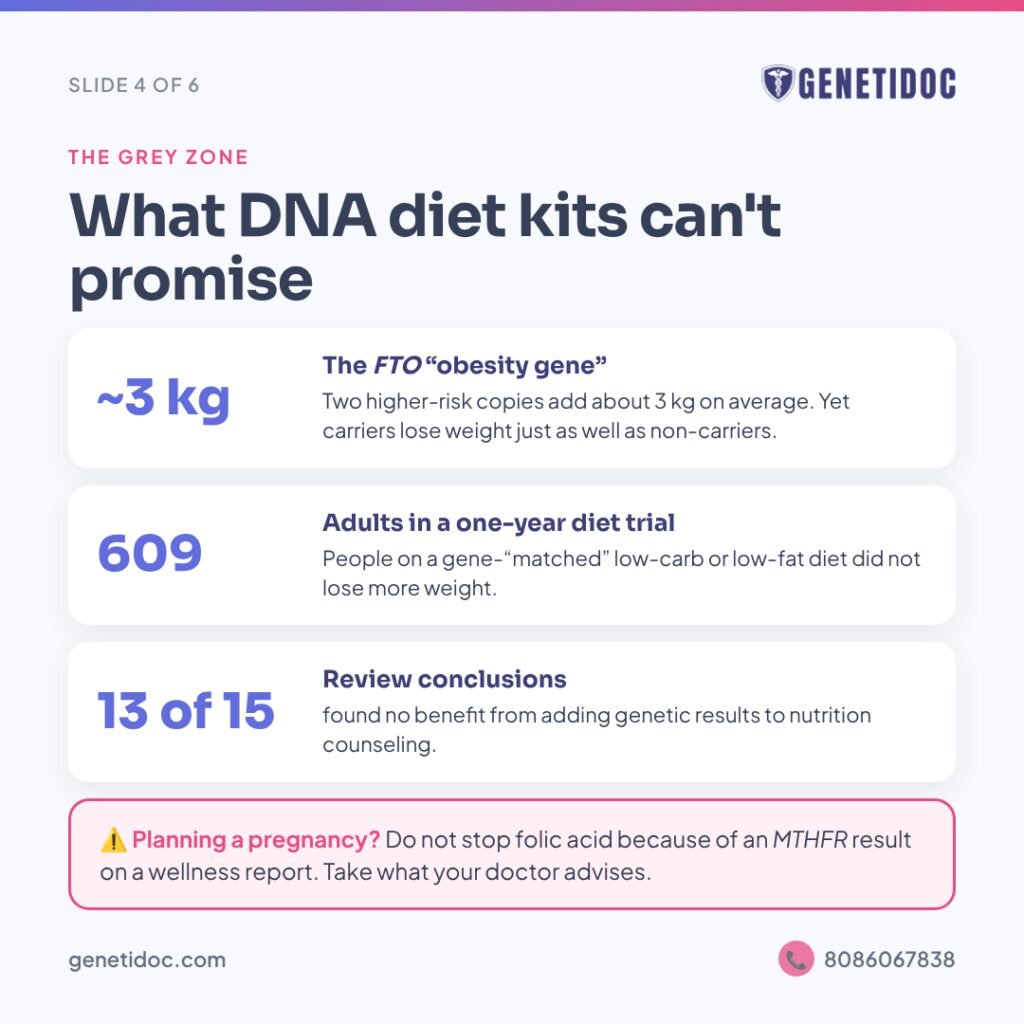
The FTO gene has the strongest link of any common variant to body weight. People with two copies of the higher-risk version weigh, on average, about 3 kg more than people with none. That’s a real but small effect, and much less than the effect of the food environment and lifestyle.
The more useful question is: does knowing your FTO result help you lose weight? A large analysis of nearly 9,600 people from eight trials found that carriers of the higher-risk version lost just as much weight as non-carriers with diet, exercise or medicine. Your FTO result does not mean you can’t lose weight, and it doesn’t change which approach works.
MTHFR and folic acid
The MTHFR gene helps the body process folate, a B vitamin. Very common variants in this gene slightly reduce how well the enzyme works. Many reports and websites link these variants to miscarriage, blood clots, birth defects and much more, and some advise avoiding regular folic acid.
Major medical bodies disagree. The American College of Medical Genetics and Genomics and the American College of Obstetricians and Gynecologists both advise against routine testing for these common MTHFR variants. That includes testing for recurrent pregnancy loss or clotting risk, because the results do not change care.
| Important for women planning pregnancy
Folic acid before and during early pregnancy helps prevent serious birth defects of the brain and spine. Do not stop or change folic acid because of an MTHFR result on a wellness report. Take the folic acid your doctor advises. If you have had recurrent pregnancy losses, ask for a proper evaluation. An MTHFR result is not an explanation. |
APOE: cholesterol, and a much bigger issue
Research suggests that people who carry the APOE ε4 version may see a somewhat larger rise in cholesterol from saturated fat. But the advice for everyone is already the same: limit saturated fat for heart health.
There’s a bigger concern. APOE ε4 is also the best-known genetic risk factor for Alzheimer’s disease. A diet report that includes APOE may tell you about your dementia risk without any warning or counseling. That is information many people would want to think about carefully before learning it. We discuss this in our article on APOE and Alzheimer’s risk.
Low-carb or low-fat “genotypes”
Some kits claim they can tell whether your body suits a low-carbohydrate or low-fat diet. This was tested directly in the DIETFITS trial, published in the Journal of the American Medical Association. It randomly assigned 609 adults to a healthy low-fat or healthy low-carbohydrate diet for a year.
- Both groups lost similar amounts of weight: about 5 to 6 kg on average.
- People whose genes supposedly “matched” their diet did not lose more weight than people whose genes didn’t match.
The diet that works is usually the healthy one you can stick to, not the one your genotype supposedly favors.
Caffeine, salt, vitamins and more
Reports often add genes linked to caffeine processing (CYP1A2), diabetes risk (TCF7L2), salt sensitivity, vitamin D or iron. Some of these links are scientifically interesting. But in most cases, the practical advice ends up the same as general healthy-eating guidance. If you want to know your vitamin D, vitamin B12, iron or blood sugar level, a blood test measures it directly.
Does Gene-Based Diet Advice Actually Work? What the Evidence Shows
Researchers have now tested the idea directly in clinical trials, not just in studies linking genes to traits.
- The Food4Me trial randomly assigned over 1,600 European adults to general healthy-eating advice or to personalized advice. Personalized advice did improve diets more than general advice. But adding genetic information did not make it any more effective than personalizing on current eating habits alone.
- The Academy of Nutrition and Dietetics reviewed the randomized trials. Of 15 conclusions on dietary outcomes, 13 found no significant effect of adding genetic test results to nutrition counseling. There were also no differences in weight, cholesterol or blood sugar measures.
- One small positive signal came from that review. People told they carried higher-risk variants were sometimes more likely to cut down on salt or alcohol. Genetic information may motivate some people, but that is not the same as genes telling you what to eat.
Another well-known study fed the same foods to 800 people. Their blood sugar responses varied widely: one person’s spike after rice was another person’s gentle rise. But much of that difference was linked to gut bacteria, sleep, activity and the rest of the meal, not just DNA.
| Question | Single-gene conditions | Common variants in DNA diet kits |
| Size of effect | Large; one gene can cause disease | Very small for each variant |
| Does diet change outcomes? | Yes, often dramatically | Not shown beyond standard healthy advice |
| Who should test? | People with symptoms, abnormal results or a family history | No clear clinical group |
| Right test | Clinical genetic testing, chosen by a specialist | Usually not needed |
| Who guides diet? | Metabolic and clinical teams with specialist dietitians | A qualified dietitian, using your blood tests and habits |
| “Diet, fitness and skin reports from wellness DNA kits have no clinical use in our practice. If you want to improve your diet, the most useful step is to see a qualified dietitian, with your blood reports and your family history in hand. Save genetic testing for the questions where it truly changes care.”
— Dr. Roshan Daniel, Clinical Geneticist, Genetidoc |
Nutrigenomics in the Indian Context
Most research comes from European populations
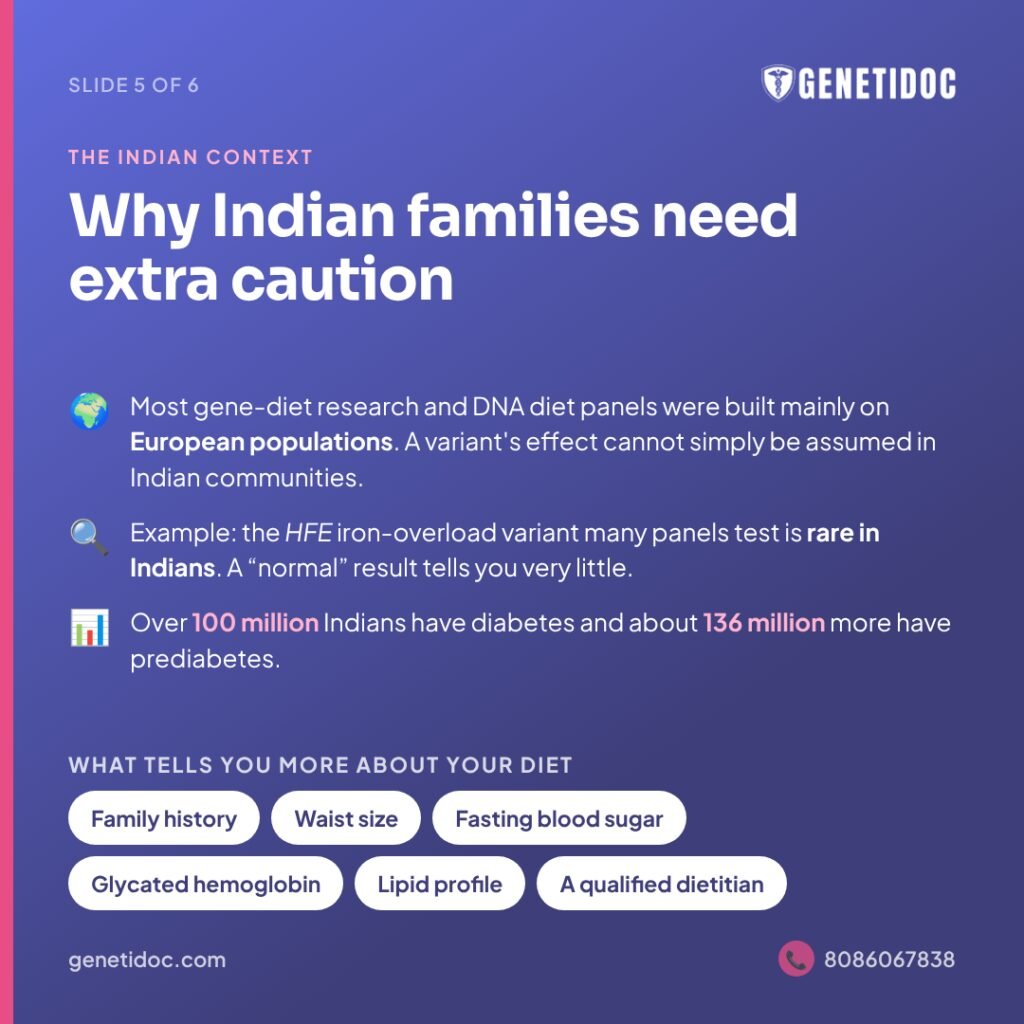
Most gene-diet studies, and the variants chosen for DNA diet panels, were developed mainly in people of European ancestry. India has thousands of distinct communities with different genetic backgrounds, diets and lifestyles. A variant’s effect in one population cannot simply be assumed in another.
A clear example is hereditary hemochromatosis, an iron overload condition. Many wellness panels test the HFE C282Y variant, which causes most cases in Northern Europeans. Indian studies have found this variant to be rare. When iron overload is inherited in Indians, it is usually caused by other genes. A “normal” HFE result on a wellness report tells an Indian user very little.
| “Most consumer DNA panels are built on markers studied in European populations, and to our knowledge none are designed around the founder variants found in Indian communities. A reassuring result from such a panel can be falsely reassuring. A low-risk report is not a guarantee, and it should never replace a family history or a blood test.”
— Dr. Roshan Daniel, Clinical Geneticist, Genetidoc |
India’s metabolic picture
The national ICMR-INDIAB study, published in 2023, estimated that over 100 million Indians have diabetes and about 136 million more have prediabetes. South Asians tend to develop diabetes at a lower body weight than people of European ancestry, which is why Indian guidelines use lower body mass index cut-offs for overweight and obesity.
Genes certainly contribute to this pattern. But for an individual, the most useful information already comes from simple, inexpensive measures: family history, waist size, fasting blood sugar, HbA1c (a blood test showing average sugar over three months) and a lipid profile. These tell you your actual risk today, and they show whether your diet is working.
Regulation and privacy
Indian researchers have pointed out that nutrigenomic testing in India still lacks clear regulatory frameworks and standard testing panels. Before giving your DNA to any company, read how your data will be stored, shared or sold. Data breaches do happen. In 2023, a credential-stuffing attack on the consumer DNA company 23andMe exposed data linked to about 6.9 million users.
When Genetic Testing Is Useful for a Diet-Related Concern
Clinical genetic testing, chosen and interpreted by a specialist, is worth considering when:
- A newborn or child becomes unwell with feeding. Examples are vomiting, poor feeding, drowsiness, seizures, an unusual body odor, jaundice or low blood sugar, especially after milk or protein.
- A newborn screening result is abnormal. Confirmatory testing and early specialist care are urgent.
- A child has developmental delay alongside feeding problems, or regression after illness or fasting.
- Cholesterol is very high (LDL above 190 mg/dL in adults or 160 mg/dL in children), or relatives died young of heart attacks or sudden cardiac death.
- Diabetes appears in a young, lean person with a strong family history across generations. This can point to a single-gene form called maturity-onset diabetes of the young, where the right diagnosis can change treatment.
- Celiac disease is uncertain, for example after starting a gluten-free diet before testing.
- A family member has a known diet-treatable genetic condition, or the parents are blood relatives and planning a pregnancy.
- Unexplained hemolysis or jaundice follows certain foods or medicines.
When Genetic Testing Is Unlikely to Help
- Choosing a weight-loss diet
- Deciding between low-carb and low-fat eating
- Picking supplements or “superfoods”
- Planning workouts or fitness goals
- Deciding whether to take folic acid in pregnancy (take it, as advised by your doctor)
- Replacing blood tests for vitamins, sugar, cholesterol or iron
In these situations, a dietitian and your blood reports will give you more accurate, more personal advice than a DNA diet report.
Illustrative Scenarios
The scenarios below are illustrative composites created to explain common patterns. They are not real patients.
Scenario 1: A wellness report that says “slow folate processor”
A 29-year-old woman planning her first pregnancy buys an online DNA diet kit. The report flags an MTHFR variant and suggests she avoid regular folic acid. She is worried and unsure what to take. Her obstetrician explains that this common variant does not change standard advice and that folic acid before pregnancy is important. She continues the folic acid her doctor prescribed.
Scenario 2: A baby who became ill after starting feeds
A newborn becomes drowsy, jaundiced and feeds poorly within the first week. Newborn screening and further tests point to galactosemia, and genetic testing confirms changes in both copies of the GALT gene. The baby is switched to a galactose-free formula and recovers. The parents, who are both carriers, receive genetic counseling about the 1 in 4 chance in each future pregnancy and the testing options available.
Scenario 3: “My genes say I’m low risk, so my cholesterol must be fine”
A 35-year-old man’s wellness report says he is “low genetic risk” for high cholesterol. A routine check shows LDL cholesterol well above 190 mg/dL, and his father had a heart attack at 44. Clinical genetic testing for familial hypercholesterolemia confirms the diagnosis. He starts treatment with his cardiologist, and his siblings are advised to check their cholesterol.
Scenario 4: A boy with dark urine after a new medicine
A 7-year-old boy develops pale skin, dark urine and jaundice a few days after starting a medicine. Blood tests show hemolysis, and G6PD deficiency is confirmed. His family is given a list of foods, medicines and chemicals to avoid. He is otherwise healthy. His mother is told she is likely a carrier, and other relatives are offered testing.
Why the Right Test and Expert Interpretation Matter
“Genetic test” covers very different things, from a cheek-swab wellness panel to clinical sequencing that can diagnose a rare metabolic disorder. Getting real value from genetics depends on:
- Choosing the right test for the question. A wellness panel cannot diagnose phenylketonuria, galactosemia or familial hypercholesterolemia. Clinical testing is chosen based on your symptoms, blood results and family history.
- An accredited laboratory with proper quality checks, where reportable findings are confirmed.
- Interpretation in context. A gene result means little without your symptoms, test results and family history alongside it.
- Genetic counseling before and after testing. This helps you understand what a result can and cannot tell you, what it means for relatives, and what your options are. The decisions remain yours.
| “The value of genetics is never the report itself. It is choosing the right test, getting it done in an accredited laboratory, and having someone interpret it alongside your symptoms and family history. When a family member has the same condition, when you are planning a pregnancy, or when a child is unwell, go straight to clinical testing rather than an online kit.”
— Dr. Roshan Daniel, Clinical Geneticist, Genetidoc |
Already Have a DNA Diet Report? What to Do Next
- Don’t make major changes on the report alone. In particular, don’t stop prescribed medicines or folic acid, and don’t start restrictive diets or high-dose supplements.
- Look for anything medical. If the report mentions a disease-causing variant, for example in a cholesterol or iron gene, it needs confirmation through clinical testing and a specialist review.
- Get the basic blood tests. Blood sugar, HbA1c, a lipid profile and vitamin levels, as advised by your doctor, show your real status today.
- See a qualified dietitian for an eating plan based on your health, culture, budget and food habits.
- Think about privacy. Check what the company does with your DNA data and request deletion if you prefer.
- Talk to a clinical geneticist if you have a family history of a genetic condition, very high cholesterol, early heart disease or diabetes in young relatives, or if parents are blood relatives and planning a pregnancy.
Common Myths About Genes and Diet
- Myth: “My genes mean I can’t lose weight.”
Fact: People carrying the higher-risk FTO variant lose weight just as well with diet, exercise or medicine. - Myth: “A DNA test can tell me the perfect diet.”
Fact: Trials have not shown that gene-matched diets work better than healthy, standard advice. - Myth: “My report says low risk, so I don’t need blood tests.”
Fact: A low-risk genetic result is not a guarantee. Blood tests measure what is actually happening in your body. - Myth: “An MTHFR variant means I should avoid folic acid.”
Fact: Routine MTHFR testing is not recommended, and folic acid remains important before and during pregnancy. - Myth: “Genes don’t affect diet at all.”
Fact: In conditions like phenylketonuria, galactosemia and G6PD deficiency, genes decide what is safe to eat.
Key Takeaways
- Nutrigenomics studies how genes and food affect each other, and the science is real.
- For a group of single-gene conditions, genetic diagnosis and the right diet can prevent serious illness, especially when found early in babies.
- Common variants in DNA diet kits have small effects. Trials show adding them does not improve diet advice for weight, sugar or cholesterol.
- Most gene-diet research comes from European populations, so results may not apply directly to Indian communities.
- For everyday diet decisions, family history, blood tests and a qualified dietitian are more useful than a DNA diet report.
- When there are red flags, choose clinical genetic testing with expert interpretation and genetic counseling.

Frequently Asked Questions
1. What is nutrigenomics?
Nutrigenomics is the study of how genes and food interact: how your DNA affects your response to nutrients, and how food influences the activity of your genes.
2. What is the difference between nutrigenomics and nutrigenetics?
Nutrigenetics looks at how your genetic variants change your response to food. Nutrigenomics, in the narrow sense, looks at how food affects gene activity. Most tests sold as “nutrigenomics” are actually nutrigenetic tests.
3. Can my genes tell me what to eat?
For certain genetic conditions, such as phenylketonuria, galactosemia and G6PD deficiency, yes. For most healthy people, common gene variants have not been shown to improve diet advice beyond standard healthy-eating guidance.
4. Is a DNA diet test worth it?
For weight loss or general wellness, current evidence does not show added benefit. Blood tests, family history and a qualified dietitian usually give more useful, personal advice.
5. Can a DNA test help me lose weight?
Not on its own. Trials such as DIETFITS found that matching a diet to your genotype did not increase weight loss. A sustainable, healthy diet you can follow matters most.
6. Is the FTO gene the obesity gene?
The FTO gene has the strongest common genetic link to body weight, but the effect is small, about 3 kg for two risk copies. Carriers lose weight as well as non-carriers.
7. Should I avoid folic acid if I have an MTHFR variant?
No. Major medical guidelines do not recommend routine MTHFR testing, and folic acid remains important before and during pregnancy. Follow your doctor’s advice.
8. Which genetic conditions are treated with diet?
Examples include phenylketonuria, galactosemia, maple syrup urine disease, urea cycle disorders, glycogen storage disease, hereditary fructose intolerance, G6PD deficiency and celiac disease, which has a genetic basis.
9. Is there a genetic test for celiac disease?
Yes, HLA-DQ2 and HLA-DQ8 typing. A negative result makes celiac disease very unlikely, but a positive result alone does not diagnose it. Diagnosis needs blood tests and often a biopsy.
10. Are DNA diet tests accurate for Indians?
The lab reading may be technically accurate, but most variants were studied in European populations. Their meaning for Indian communities is often uncertain, and some, like the HFE C282Y variant, are rare in India.
11. Can diet alone control familial hypercholesterolemia?
Usually not. A healthy diet helps, but most people with familial hypercholesterolemia need cholesterol-lowering medicine and regular follow-up.
12. When should I see a clinical geneticist about genes and diet?
See one if a child is unwell with feeding, a newborn screening test is abnormal, cholesterol is very high, diabetes runs strongly in young family members, or a relative has a diet-treatable genetic condition.
| Worried About a Genetic Condition That Affects What Your Family Can Eat?
If a child became unwell after feeds, a newborn screening result came back abnormal, cholesterol is very high in your family, or you have a genetic report you don’t know how to read, a clinical geneticist can help. They’ll tell you whether genetic testing is needed, which test is right, and what the result means for your family’s diet and health. |
Have a question about DNA diet tests or consumer genetic kits? Ask our specialists on the Genetidoc Rare Disease Forum: Direct-to-Consumer Genetic Testing.
Related Reading
- Parkinson’s Disease: When Genetics Plays a Role
- Single Gene vs Panel Testing Explained
- Why Identical Twins Are Not Always Genetically Identical
- Personalized Medicine: The Role of Genetic Testing in Your Care
- Genetic Eye Disease in Children: When to Test
References
- Academy of Nutrition and Dietetics Evidence Analysis Center. Effect of incorporating genetic testing results into nutrition counseling and care: systematic review. J Acad Nutr Diet. 2020. doi:10.1016/j.jand.2020.04.001. Summary at andeal.org/genomics
- Braakhuis A, Monnard CR, Ellis A, Rozga M. Consensus report of the Academy of Nutrition and Dietetics: incorporating genetic testing into nutrition care. J Acad Nutr Diet. 2020. doi:10.1016/j.jand.2020.04.002
- Gardner CD, Trepanowski JF, Del Gobbo LC, et al. Effect of low-fat vs low-carbohydrate diet on 12-month weight loss in overweight adults and the association with genotype pattern or insulin secretion: the DIETFITS randomized clinical trial. JAMA. 2018;319(7):667–679.
- Celis-Morales C, Livingstone KM, Marsaux CF, et al. Effect of personalized nutrition on health-related behaviour change: evidence from the Food4Me European randomized controlled trial. Int J Epidemiol. 2017;46(2):578–588.
- Livingstone KM, Celis-Morales C, Papandonatos GD, et al. FTO genotype and weight loss: systematic review and meta-analysis of 9563 individual participant data from eight randomised controlled trials. BMJ. 2016;354:i4707.
- Frayling TM, Timpson NJ, Weedon MN, et al. A common variant in the FTO gene is associated with body mass index and predisposes to childhood and adult obesity. Science. 2007;316(5826):889–894.
- Hickey SE, Curry CJ, Toriello HV. ACMG Practice Guideline: lack of evidence for MTHFR polymorphism testing. Genet Med. 2013;15(2):153–156. Reaffirmed with addendum: Genet Med. 2020;22(12):2125.
- American College of Obstetricians and Gynecologists. Practice Bulletin No. 197: Inherited thrombophilias in pregnancy. Obstet Gynecol. 2018;132(1):e18–e34.
- Masson LF, McNeill G, Avenell A. Genetic variation and the lipid response to dietary intervention: a systematic review. Am J Clin Nutr. 2003;77(5):1098–1111.
- Zeevi D, Korem T, Zmora N, et al. Personalized nutrition by prediction of glycemic responses. Cell. 2015;163(5):1079–1094.
- Kumar P, Yadav U, Rai V. Prevalence of glucose-6-phosphate dehydrogenase deficiency in India: an updated meta-analysis. Egypt J Med Hum Genet. 2016;17(3):295–302.
- Devendra R, Gupta V, Shanmugam R, et al. Prevalence and spectrum of mutations causing G6PD deficiency in Indian populations. Infect Genet Evol. 2020;86:104597.
- Mukherjee MB, Colah RB, Martin S, Ghosh K. Glucose-6-phosphate dehydrogenase (G6PD) deficiency among tribal populations of India: country scenario. Indian J Med Res. 2015;141(5):516–520.
- Pallav K, Kabbani T, Tariq S, et al. Clinical utility of celiac disease-associated HLA testing. Dig Dis Sci. 2014;59(9):2199–2206.
- Rubio-Tapia A, Hill ID, Kelly CP, et al. ACG clinical guidelines: diagnosis and management of celiac disease. Am J Gastroenterol. 2013;108(5):656–676.
- Makharia GK, Verma AK, Amarchand R, et al. Prevalence of celiac disease in the northern part of India: a community based study. J Gastroenterol Hepatol. 2011;26(5):894–900.
- Ramakrishna BS, Makharia GK, Chetri K, et al. Prevalence of adult celiac disease in India: regional variations and associations. Am J Gastroenterol. 2016;111(1). doi:10.1038/ajg.2015.398
- Kaur G, Rapthap CC, Xavier M, et al. Distribution of C282Y and H63D mutations in the HFE gene in healthy Asian Indians and patients with thalassaemia major. Natl Med J India. 2003;16(6):309–310.
- Anjana RM, Unnikrishnan R, Deepa M, et al. Metabolic non-communicable disease health report of India: the ICMR-INDIAB national cross-sectional study (ICMR-INDIAB-17). Lancet Diabetes Endocrinol. 2023;11(7):474–489.
- Regier DS, Greene CL. Phenylalanine hydroxylase deficiency. In: GeneReviews. University of Washington, Seattle. ncbi.nlm.nih.gov/books/NBK1504
- Berry GT. Classic galactosemia and clinical variant galactosemia. In: GeneReviews. University of Washington, Seattle. ncbi.nlm.nih.gov/books/NBK1518
- Indian dietitians’ perspectives on implementing nutrigenomics in India. Genes Nutr. 2024. doi:10.1186/s12263-024-00760-7
This article is for educational purposes and does not replace personal medical advice. Please consult a qualified doctor for diagnosis and treatment.